In the first 60 seconds of a lithium battery fire, your goal is to contain it safely. Don’t try to put it out with water, as this can cause violent reactions and release toxic gases. Instead, use a specialized Class D dry powder extinguisher, which smothers the fire by cutting off oxygen. Acting quickly with the right tools can prevent the fire from spreading; keep learning to understand the safest response options.

Get backup power and energy gear delivered free with Prime
- Fast, free delivery on millions of items
- Prime Video, Amazon Music and more included
- Member-only deals all year
Key Takeaways
- Quickly assess the fire; small fires may be suppressed with appropriate extinguishers within the first minute.
- Water is generally unsafe; it reacts violently with lithium, releasing hazardous gases.
- Use specialized Class D dry powder extinguishers designed for combustible metals like lithium.
- Evacuate and call emergency services if the fire is large or uncontrollable.
- Proper preparation and knowledge of fire suppression agents improve response effectiveness in the initial critical moments.
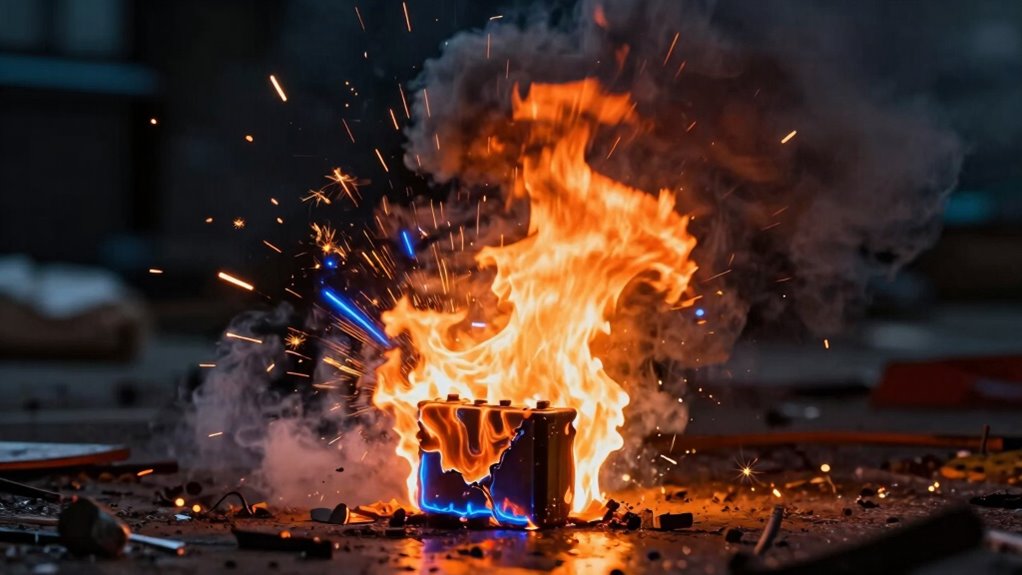
Lithium battery fires often seem to dominate headlines, but the reality is more nuanced than the sensational stories suggest. When you hear about these fires, it’s easy to assume they’re unstoppable infernos, but understanding the facts can help you respond better and improve battery safety. The first critical minutes are essential; knowing what works in those initial seconds can make a difference between containment and disaster.
In the event of a lithium battery fire, your primary goal is to suppress the flames quickly and safely. Traditional fire suppression methods, like water, are generally not recommended because they can react violently with the burning lithium, releasing dangerous gases or intensifying the fire. Instead, specialized fire suppression agents, such as Class D dry powder fire extinguishers designed for combustible metals, are more effective. These powders smother the fire by isolating it from oxygen, preventing the fire from spreading further. Familiarizing yourself with these tools and ensuring they’re accessible can substantially improve your battery safety measures.
Use Class D dry powder extinguishers to safely smother lithium battery fires by isolating oxygen.
Within the first 60 seconds, your response should focus on quickly evaluating the situation. If the fire is small and contained, using a suitable fire extinguisher immediately can halt the progression. However, never attempt to extinguish a lithium battery fire with water, as this can cause a violent reaction, releasing hazardous fumes. If you’re unsure or the fire has already grown large, the safest approach is to evacuate the area and call emergency services. Remember, your safety always comes first, and professional firefighting teams are equipped with the right gear and suppression agents to handle such fires safely. Understanding fire suppression options and their proper use can make all the difference in an emergency.
Prevention is just as crucial as response. Good battery safety practices, like avoiding punctures, overcharging, or exposing batteries to high temperatures, reduce the risk of fire starting in the first place. Regular inspection and proper storage can prevent many incidents. Additionally, knowing your fire suppression options—such as having a Class D extinguisher nearby—can give you the confidence to act swiftly if a fire does break out.
Class D dry powder fire extinguisher for lithium batteries
As an affiliate, we earn on qualifying purchases.
As an affiliate, we earn on qualifying purchases.
Frequently Asked Questions
Can Lithium Battery Fires Be Completely Extinguished?
Lithium battery fires can’t be completely extinguished once they fully ignite, but you can prevent escalation with proper fire prevention strategies. Early intervention, like using Class D fire extinguishers, helps control small fires. Additionally, proper battery recycling reduces risks, and keeping batteries in cool, ventilated areas minimizes fire chances. Remember, quick action is key—know how to respond and avoid trying to fully put out large fires yourself.
What Is the Safest Way to Handle a Lithium Battery Fire?
When facing a lithium battery fire, you should prioritize fire suppression techniques like using a Class D fire extinguisher or smothering the flames with sand or a fire blanket. Stay calm and act quickly, ensuring your emergency preparedness includes knowing how to handle such fires safely. Keep a fire extinguisher nearby, and never use water, as it can intensify the blaze. Your prompt, informed response can make all the difference.
How Do Different Fire Extinguishers Affect Lithium Battery Fires?
You can control lithium battery fires with the right fire extinguisher types, understanding their roles in battery fire suppression. CO2 extinguishers displace oxygen, smothering flames, while Class B foam suppresses heat and prevents re-ignition. Avoid water, which worsens the fire, and never use ABC dry chemical extinguishers. By choosing the proper fire extinguisher, you act quickly, prevent escalation, and protect lives and property from devastating battery fires.
Are There Legal Restrictions on Lithium Battery Fire Safety Measures?
You need to guarantee your safety measures meet legal compliance and adhere to regulatory standards. Laws vary by region, so check local regulations regarding lithium battery fire safety. Using approved fire extinguishers and following proper storage protocols are often mandated. Staying informed about current safety requirements helps you avoid penalties and ensures effective fire response. Always consult relevant authorities or safety guidelines to confirm your measures align with legal expectations.
How Long Does a Lithium Battery Fire Typically Last Without Intervention?
A lithium battery fire can burn fiercely for 10 to 30 minutes without intervention, like a wildfire spreading unchecked. Battery degradation worsens the risk, making fires harder to control over time. Fire suppression techniques like foam or CO2 can help, but swift action is key. You need to act fast, as delays allow the flames to grow, risking more damage and making extinguishment even tougher.
Conclusion
In the chaos of a lithium battery fire, knowing what really works is your lifeline. Remember, quick action is your shield—using the right extinguisher and staying safe can turn the tide like a captain steering through stormy seas. Don’t let panic be your compass; stay calm, act fast, and trust the facts. With the right knowledge, you’re better equipped to face the flames and keep yourself safe in those vital first 60 seconds.
Halloween Picks
halloween
As an affiliate, we earn on qualifying purchases.