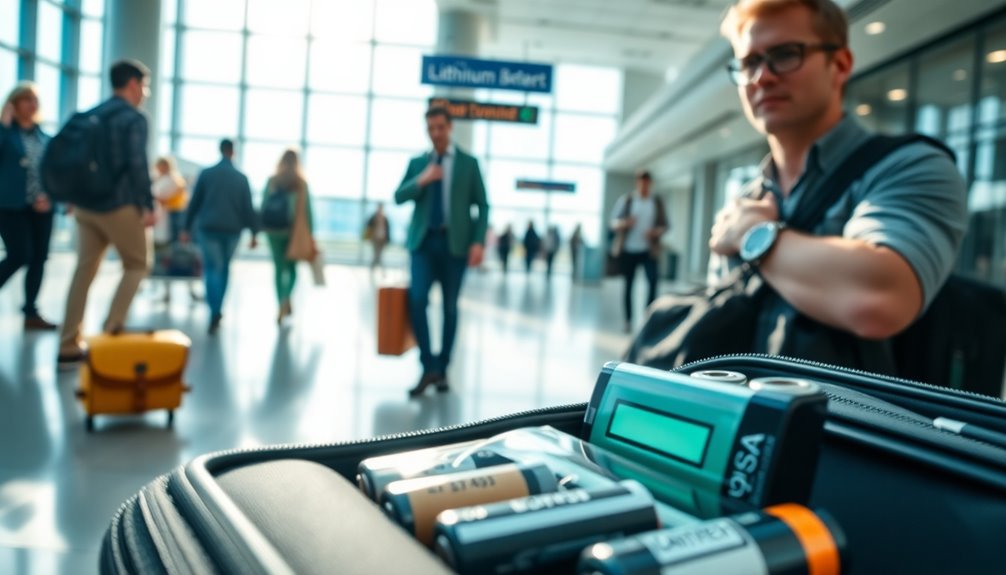

Yes, you can bring batteries on planes, but there are specific rules you need to follow. Lithium-ion batteries must be in your carry-on luggage, and loose batteries shouldn't be packed in checked bags. If you have spare batteries, store them in plastic cases to prevent short circuits. For batteries over 100 watt-hours, you'll need special airline approval. Always turn off devices with batteries during the flight to avoid accidental activation. To make your travel easier, it's important to know all the details about your batteries and their limits. There's more to discover about traveling safely with them!

Get backup power and energy gear delivered free with Prime
- Fast, free delivery on millions of items
- Prime Video, Amazon Music and more included
- Member-only deals all year
Key Takeaways
- Lithium-ion batteries must be installed in devices for checked luggage; loose batteries are prohibited.
- Carry spare batteries in your carry-on; they should be in plastic cases to prevent short circuits.
- Batteries over 100 watt-hours require special airline approval; those exceeding 300 watt-hours are banned.
- Always cover battery terminals with tape or keep them installed in devices to ensure safety.
- Turn off devices with batteries and regularly inspect for damage to minimize fire risks during travel.
Batteries in Checked Luggage
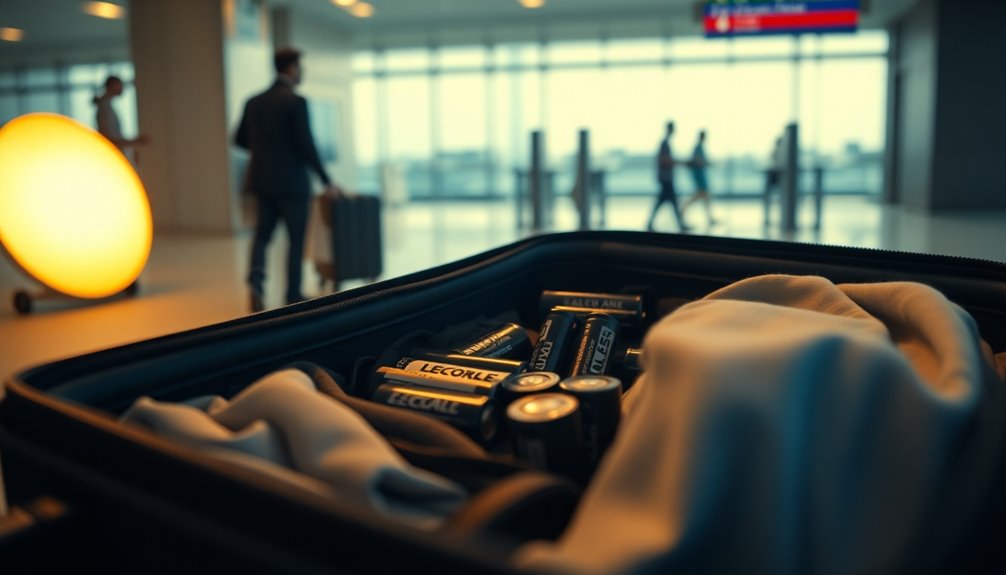
When packing for a flight, you should know that lithium-ion batteries can only go in your checked luggage if they're installed in devices, like laptops.
This means loose or spare batteries aren't allowed in checked bags; they need to be in your carry-on instead.
To guarantee safety during transport, the FAA recommends covering battery terminals with tape. If you can't tape the terminals, make certain the battery remains installed in the device to avoid exposure.
Following these safety regulations is essential, as it helps minimize the risks of potential fires associated with lithium batteries during air travel.
Always double-check your luggage to comply with these rules and travel worry-free!
Batteries in Carry-On Luggage
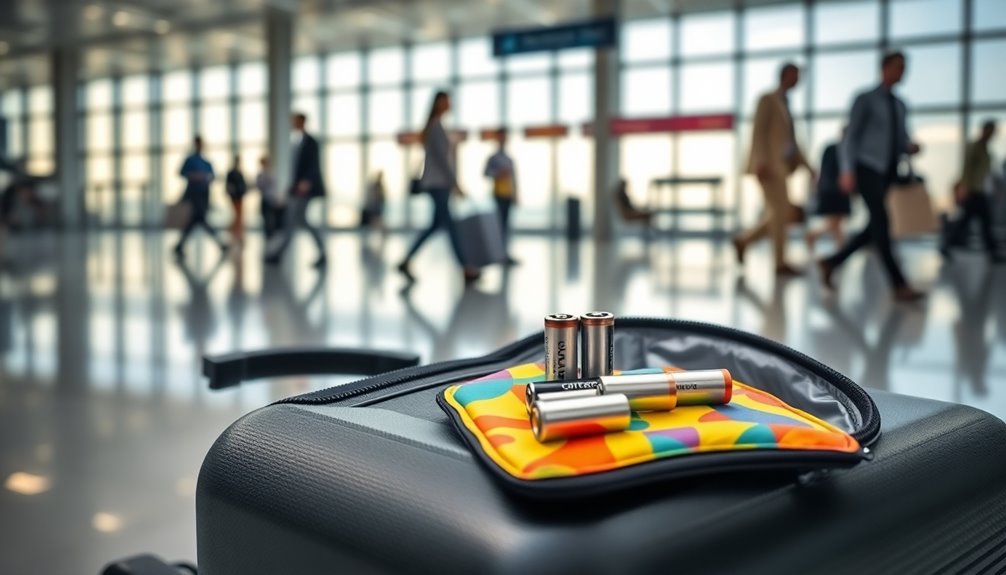
While traveling, it's crucial to know how to properly pack your batteries in carry-on luggage.
You can transport installed lithium-ion batteries, but make sure to carry any loose or spare rechargeable batteries in the cabin. To prevent short circuits, store those loose batteries in plastic cases or bags.
There are no limits on the number of batteries you can bring, but remember that specific restrictions apply based on the battery's watt-hour rating. Additionally, chargers for installed batteries need to go in your carry-on as well.
If you have batteries with a capacity exceeding 100 watt-hours, you'll need special approval from the airline before bringing them on board. Always check the regulations to guarantee a smooth flight.
Motivations Behind the Regulations
The regulations governing battery transport on planes primarily stem from safety concerns following several incidents involving lithium-ion batteries. Between 2006 and 2011, a series of aircraft fires highlighted the risks.
Here are the key motivations behind these regulations:
- UPS Cargo Plane Fire (2006): This incident resulted in an emergency landing, showcasing the dangers of lithium batteries.
- UPS Crash in Dubai (2010): A fatal accident due to a lithium-ion battery fire emphasized the need for stricter rules.
- Korea Strait Incident (2011): Another fire incident further motivated the implementation of safety measures.
These regulations aim to enhance overall safety during air travel by minimizing the risk of fire hazards associated with batteries.
Staying informed about these rules helps guarantee your safety and that of others onboard.
Understanding Battery Capacity
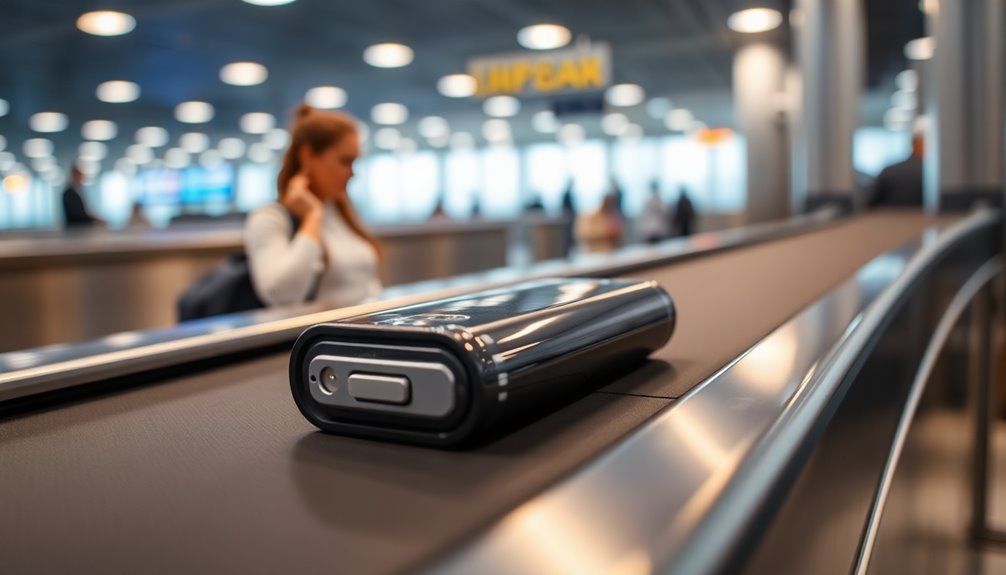
Understanding battery capacity is essential for ensuring a smooth travel experience, especially since it directly affects how long your devices will last before needing a recharge.
Battery capacity is usually measured in ampere-hours (Ah) or milliampere-hours (mAh), indicating how much charge a battery can store and deliver.
If you're traveling with higher capacity batteries rated above 100 watt-hours, be aware that they may face restrictions. Batteries exceeding 300 watt-hours are prohibited in both carry-on and checked luggage.
Knowing the capacity of your lithium-ion batteries helps you determine their lifespan and performance.
Safety Tips for Air Travel
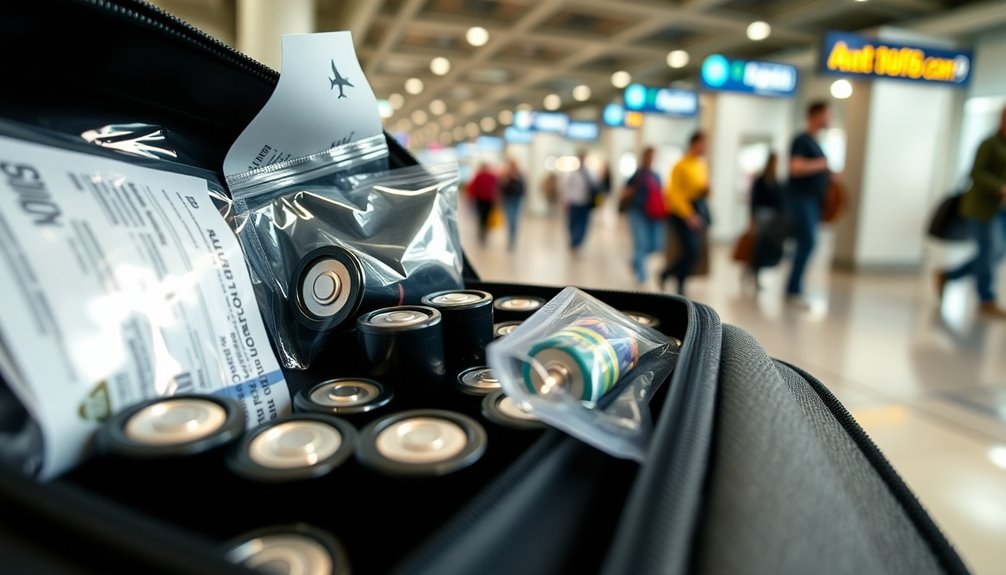
When packing for a flight, keeping safety in mind is essential, especially regarding batteries. Follow these tips to guarantee a safe journey:
- Carry-on Only: Always pack lithium batteries in your carry-on luggage. They're banned in checked bags unless installed in a device.
- Turn Off Devices: Make sure all devices with batteries are turned off to prevent accidental activation during the flight.
- Store Spare Batteries Safely: Keep spare lithium batteries in their original packaging or insulated to avoid short circuits and terminal exposure.
Additionally, limit the capacity of lithium batteries in your carry-on to 100 watt-hours, and regularly inspect your devices for any signs of damage or overheating.
Safe travels!
Frequently Asked Questions
Can Airport Security Detect Batteries?
Yes, airport security can detect batteries during screening.
They use advanced technology to spot both installed and loose batteries in your luggage. Security personnel are trained to recognize the shape and density of batteries, which helps them identify potential hazards.
If your battery looks damaged or suspicious, expect additional inspections. To avoid delays, make certain you pack your batteries properly according to airline regulations.
Stay informed to guarantee a smooth travel experience.
What Type of Battery Is Not Allowed on Airplanes?
When you're packing for your flight, remember that certain types of batteries aren't allowed on airplanes.
Loose lithium-ion batteries over 100 watt-hours, damaged batteries, and lithium metal batteries with more than 2 grams of lithium are prohibited.
Non-rechargeable lithium batteries can't go in checked luggage unless they're installed in devices.
If your batteries don't meet FAA safety regulations, you mightn't be able to bring them on board.
Always check before you fly!
Can I Fly With AA Batteries in My Carry-On?
Yes, you can fly with AA batteries in your carry-on.
Just keep them in their original packaging or insulated cases to avoid short circuits.
If you're bringing rechargeable lithium-ion AA batteries, make sure they're under 100 watt-hours to meet airline regulations.
Always check your airline's specific guidelines, as policies can vary.
Finally, verify that any devices using these batteries are turned off to prevent accidental activation during your flight.
Why Do Airlines Ask if You Have Batteries?
Ever wondered why airlines ask about batteries? They're not just being nosy; they're prioritizing your safety.
Airlines inquire about batteries to identify potential fire hazards, especially with lithium-ion types. By knowing what you're carrying, they can guarantee compliance with safety regulations.
Additionally, they want to educate you on proper packing methods to prevent issues, like overheating or short circuits.
Conclusion
As you prepare for your flight, think of your batteries like precious gems—valuable yet delicate. By knowing the rules for packing them in checked and carry-on luggage, you're not just following regulations; you're safeguarding your journey. Keep those safety tips close, like a warm blanket on a chilly night, and let your travels soar without a hitch. With a little care, your adventure can be as smooth as a bird gliding through the sky. Safe travels!
Evergreen bestsellers Picks
bestsellers
As an affiliate, we earn on qualifying purchases.