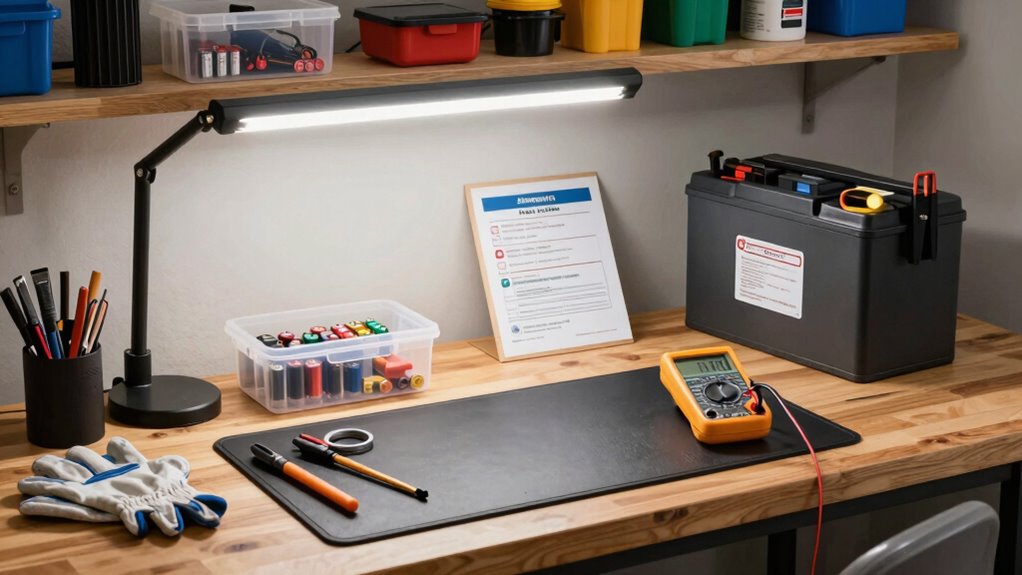

To build a safer battery workbench at home, choose sturdy, heat-resistant surfaces and guarantee good ventilation to disperse fumes. Organize tools and supplies in labeled containers, keeping flammable materials away. Always use safety gear like gloves and goggles within easy reach. Equip the area with grounded outlets, surge protectors, and a fire extinguisher for electrical safety. Regularly inspect equipment and follow proper procedures for handling damaged batteries. Continue exploring these steps to create a secure workspace that minimizes risks.

Get backup power and energy gear delivered free — and shop member deals
- Fast, free delivery on millions of items
- Access to Prime Big Deal Days deals on October 6–7
- Prime Video, Amazon Music and more included
Key Takeaways
- Use non-flammable, heat-resistant surfaces like treated wood or metal for stability and fire safety.
- Ensure proper ventilation to disperse fumes during charging and discharging processes.
- Organize tools and supplies with clear labels, keeping flammable materials away from the work area.
- Equip the workbench with grounded outlets, surge protectors, and insulated tools for electrical safety.
- Keep safety gear, fire extinguishers, and spill kits easily accessible for quick response to emergencies.
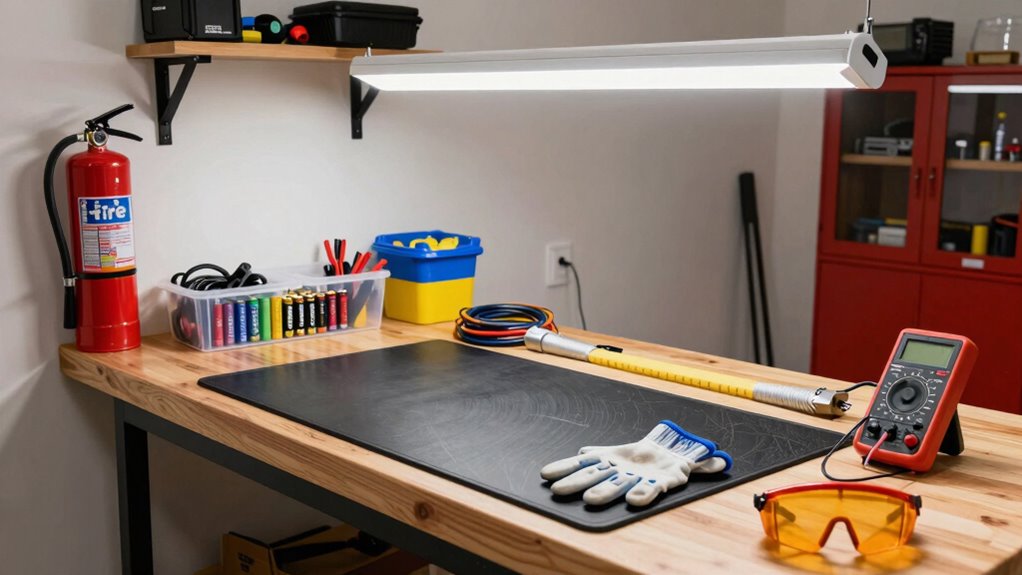
Creating a dedicated battery workbench at home is essential for guaranteeing safety while working with batteries. When you set up a specific area, you reduce the risk of accidents and keep your workspace organized. Proper workspace organization is crucial because it minimizes clutter, prevents accidental short circuits, and makes it easier to find tools and components quickly. A well-structured workbench allows you to focus on your work without unnecessary distractions, which directly contributes to battery safety.
A dedicated, organized workbench reduces accidents and enhances safety when working with batteries.
Start by choosing a sturdy, non-flammable surface for your workbench. Metal or treated wood works best since these materials resist heat and are less likely to catch fire if sparks or overheating occur. Make sure your work area is well-ventilated to disperse any fumes or gases released during battery charging or discharging. Adequate airflow is an often overlooked aspect of safety but is essential to prevent the buildup of potentially dangerous gases. Ensuring proper ventilation can significantly reduce the risk of hazardous gas accumulation. Having a clear understanding of biodiversity and its importance can motivate more environmentally conscious safety practices during your work. Additionally, understanding the chemical properties of batteries can help you handle materials more safely and prevent accidents.
Next, organize your tools and supplies in a way that keeps them accessible yet safe. Use labeled containers for batteries, chargers, and safety equipment like gloves and goggles. Keep all flammable materials, such as paper towels or cleaning supplies, away from your battery workspace. Incorporating safety protocols and procedures can further enhance your safety and preparedness. Incorporate a fire extinguisher nearby, specifically rated for electrical and chemical fires, so you’re prepared for emergencies. Having safety gear within arm’s reach reinforces good practices and reminds you to handle batteries with care.
Electrical safety is paramount, so guarantee your workbench is equipped with properly grounded outlets and surge protectors. Avoid overloading circuits, and never work on batteries with damaged or leaking cells. When connecting batteries, use insulated tools to prevent accidental short circuits, and double-check your wiring before powering up. Regularly inspect all your equipment for wear and tear, replacing any damaged items immediately. These steps help maintain a safe environment and protect your workspace from potential hazards.
Labeling your workbench sections can further enhance safety. Designate areas for charging, discharging, storage, and maintenance. Clear labels help prevent mix-ups and ensure you follow proper procedures. Keep a spill kit nearby, including baking soda or neutralizing agents, to quickly address acid spills or leaks. Additionally, proper workspace organization can help you identify potential hazards before they become serious problems. By maintaining a clean, organized workspace, you not only improve battery safety but also make your work more efficient and enjoyable.
As an affiliate, we earn on qualifying purchases.
Frequently Asked Questions
What Are the Best Types of Fire Extinguishers for Battery Workbenches?
For your battery workbench, the best fire extinguisher types are Class C extinguishers designed for electrical fires, and multi-purpose ABC extinguishers for broader safety. Always follow safety precautions by keeping these extinguishers accessible, regularly inspecting them, and ensuring you’re trained to use them properly. This way, you’re prepared for any battery-related fire emergencies, minimizing risks and maintaining a safe workspace.
How Often Should I Inspect My Battery Workbench for Safety?
You should inspect your battery workbench weekly to guarantee everything’s in top shape. Regular checks help spot potential issues with battery storage, safety signage, and fire extinguishers before they become problematic. Look for signs of wear, leaks, or damage, and confirm safety labels are visible and accurate. Staying vigilant keeps your workspace secure, prevents accidents, and maintains a safe environment for everyone working with batteries.
Are There Specific Ventilation Requirements for Working With Batteries?
Yes, there are specific ventilation requirements when working with batteries. You should guarantee your workspace meets ventilation standards that promote proper airflow and reduce harmful fumes. Use exhaust fans or vents to optimize airflow and prevent buildup of gases like hydrogen, which can be explosive. Regularly check that ventilation systems work effectively, and keep the area well-ventilated during and after battery work to maintain safety.
Can I Build a Battery Workbench in a Small Garage or Basement?
You can absolutely build a battery workbench in a small garage or basement; just imagine a compact, organized space where everything’s within reach. Use clever storage solutions like wall-mounted shelves or pegboards to maximize your limited area. Guarantee good ventilation and a fire-resistant surface. With careful planning, your small space can become a safe, efficient workspace, turning even a cozy corner into the perfect spot for battery projects.
What Personal Protective Equipment Is Essential During Battery Maintenance?
During battery maintenance, you should always wear protective gloves and eye protection. Gloves prevent contact with corrosive acids and hazardous materials, while eye protection shields your eyes from sparks, splashes, or debris. Always guarantee your gloves are insulated and rated for chemical resistance. Likewise, use safety goggles or a face shield to protect against potential splashes or explosions. Prioritize these essentials to keep yourself safe during maintenance tasks.
Conclusion
By taking these simple steps, you turn your workspace into a fortress of safety, where the sparks of innovation fly free without igniting chaos. Your battery workbench becomes a sanctuary, a carefully crafted haven where potential hazards are tamed like wild stallions, allowing your passion for projects to flourish. Remember, a well-built workbench isn’t just a surface—it’s the sturdy backbone of your creative journey, guarding your pursuits like a vigilant guardian in the shadows.
Fall Picks
fall essentials
As an affiliate, we earn on qualifying purchases.