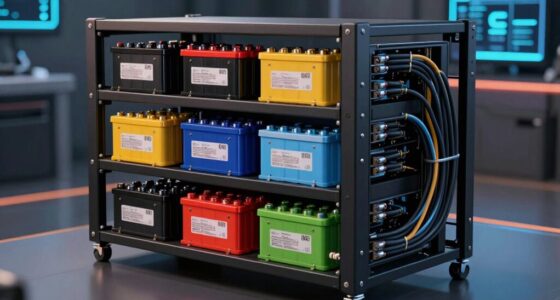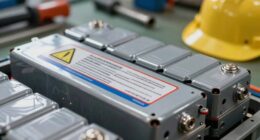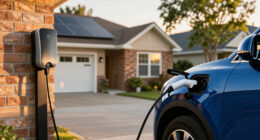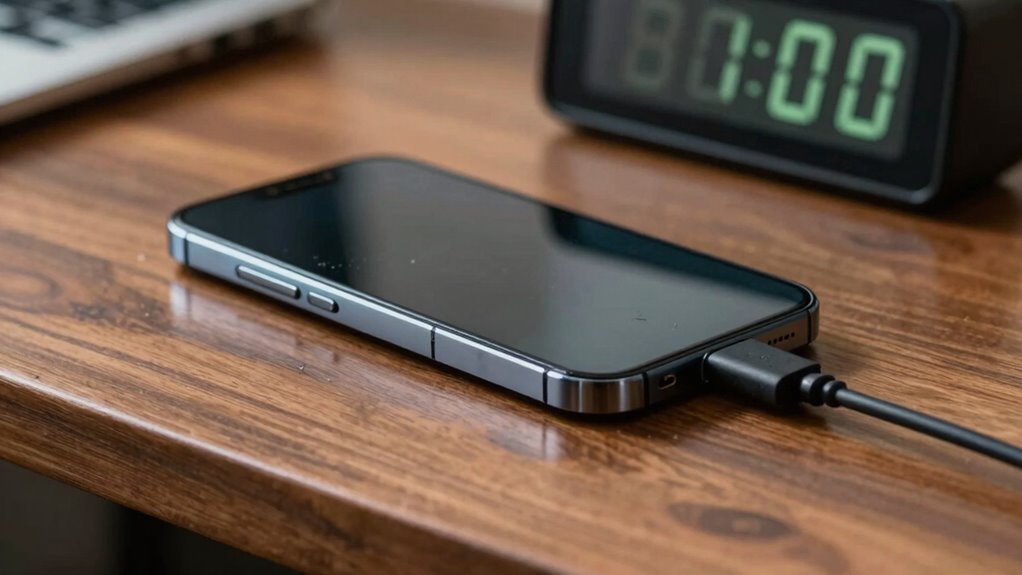

Over time, your charging speed can slow down due to hidden issues like battery aging, which reduces its ability to accept power quickly. Faulty or low-quality cables limit current flow, while dirty or damaged charging ports create resistance. Environmental factors like heat or cold also impact efficiency. These issues often go unnoticed but markedly affect recharge times. Keep an eye on these unseen culprits if you’re enthusiastic to learn how to regain faster charging.

Get backup power and energy gear delivered free with Prime
- Fast, free delivery on millions of items
- Prime Video, Amazon Music and more included
- Member-only deals all year
Key Takeaways
- Battery aging reduces capacity and slows down charging efficiency over time.
- Damaged or incompatible charging cables restrict current flow, lowering charging speeds.
- Dirt, dust, or corrosion in the charging port impedes proper connection.
- Extreme temperatures accelerate battery wear and impair charging performance.
- Lack of regular maintenance or using poor-quality accessories can cause unnoticed slowdowns.
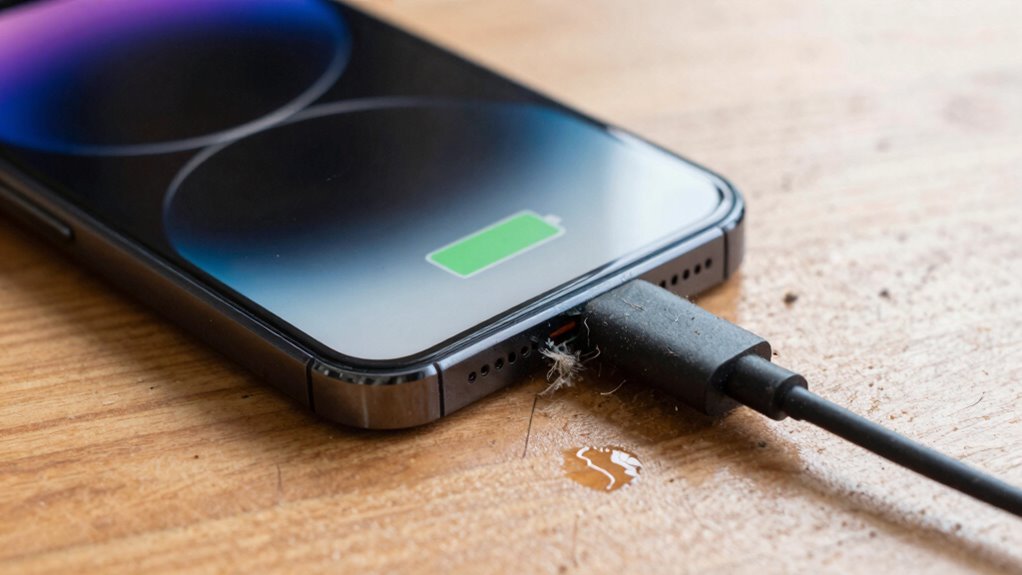
Over time, the charging speed of your electronic devices tends to slow down, affecting how quickly your gadgets regain power. You might notice your phone or tablet taking longer to reach a full charge than it used to, and that’s often linked to factors you might overlook. One of the main culprits is battery degradation. As batteries age, their capacity diminishes, and their ability to accept charge efficiently decreases. This isn’t just about the battery running out faster; it also impacts how quickly it can be replenished. When a battery’s health declines, it struggles to draw in power at the same rate as when it was new, which can make charging feel sluggish even if your charger is working fine. So, if your device seems to take forever to charge now, battery degradation might be the hidden cause.
Another often-overlooked factor is cable quality. Not all charging cables are created equal, and using a low-quality or damaged cable can considerably slow down charging speeds. Cheaper cables might not support fast-charging protocols or may have subpar internal wiring that limits the flow of electricity. Over time, cables can also wear out, with frayed insulation or bent connectors that interfere with proper power transfer. When you use a damaged or incompatible cable, even the best charger won’t deliver peak performance. Investing in a high-quality cable, preferably one that matches your device’s charging standards, can make a noticeable difference in how quickly your device refills its battery.
Additionally, the condition of your charging port plays a role. Dust, lint, or corrosion inside the port can hinder the connection between your device and the charger, reducing charging efficiency. Sometimes, it’s not just the cable or battery but the port’s physical condition that causes slow charging. Regularly inspecting and cleaning the port can help maintain ideal charging speeds. Moreover, understanding how battery health impacts charging efficiency can help you better manage your device’s longevity.
Environmental factors, such as temperature, also influence charging performance. Excessive heat or cold can affect both the battery’s ability to accept charge and the overall health of your device. Charging in high temperatures can accelerate battery degradation, while cold environments often slow down the chemical reactions inside the battery, leading to slower charging.
In essence, while battery degradation and cable quality are major reasons your charging speed drops over time, they’re part of a bigger picture. Regular maintenance, using quality accessories, and understanding your device’s limitations can help you keep charging times reasonable. Recognizing these hidden culprits ensures you’re better equipped to troubleshoot or prevent slow charging, keeping your devices running efficiently for longer.
fast charging cables for smartphones
As an affiliate, we earn on qualifying purchases.
As an affiliate, we earn on qualifying purchases.
Frequently Asked Questions
Does Temperature Affect Charging Speed Decline?
Yes, temperature affects your charging speed decline. When it’s too hot or cold, your device’s thermal management system works harder to protect the battery chemistry, which can slow down charging. Excessive heat speeds up battery degradation, reducing charging efficiency, while cold temperatures make the battery less receptive to charge. Maintaining ideal thermal conditions helps preserve charging speed and battery health over time.
Can Using Third-Party Chargers Cause Faster Degradation?
Using third-party chargers can cause faster degradation if they’re not compatible with your device’s brand. Poorly-made or incompatible chargers may supply inconsistent power, stressing your battery and reducing its lifespan. Always check for brand compatibility and quality before using third-party chargers. Opting for certified, compatible chargers guarantees safe, efficient charging and helps prevent accelerated battery wear over time.
How Does Battery Age Impact Charging Efficiency?
You might think battery age doesn’t matter, but it really impacts charging efficiency. As your battery ages, its capacity decreases, meaning it can’t hold as much charge. This leads to longer charging times and fewer charging cycles before performance drops. Over time, the internal chemistry degrades, causing slower charging speeds. So, even with the best chargers, an older battery just won’t charge as quickly, emphasizing the importance of monitoring battery health.
Do Firmware Updates Improve Charging Speed Over Time?
Yes, firmware updates can improve your charging speed over time. They often fix software glitches that slow down charging and include firmware optimization to enhance battery performance. By updating your device regularly, you guarantee it runs smoothly, reducing issues that cause slow charging. Keep an eye out for updates from your manufacturer, as they can markedly improve your charging efficiency and overall device longevity.
Is It Better to Charge to 80% Regularly?
Yes, it’s better to charge to 80% regularly because it helps preserve your battery capacity over time. Maintaining healthy charging habits, like avoiding full charges or deep discharges, minimizes stress on your battery. By keeping your charge level around 80%, you reduce wear and tear, which prolongs battery life and ensures consistent charging speed. This simple habit helps your device stay efficient longer.
Conclusion
As your device’s battery ages, it’s like a garden slowly losing its bloom—slowing your charging speed and dimming performance. Hidden culprits, from battery wear to software quirks, quietly sap your power’s potential. But now that you know these secrets, you can nurture your device back to health, giving it the fresh vigor of spring. Don’t let time’s silent thief steal your speed—tend to your battery and keep your tech thriving.
Columbus Day / Indigenous Peoples' Day Picks
long weekend sales
As an affiliate, we earn on qualifying purchases.