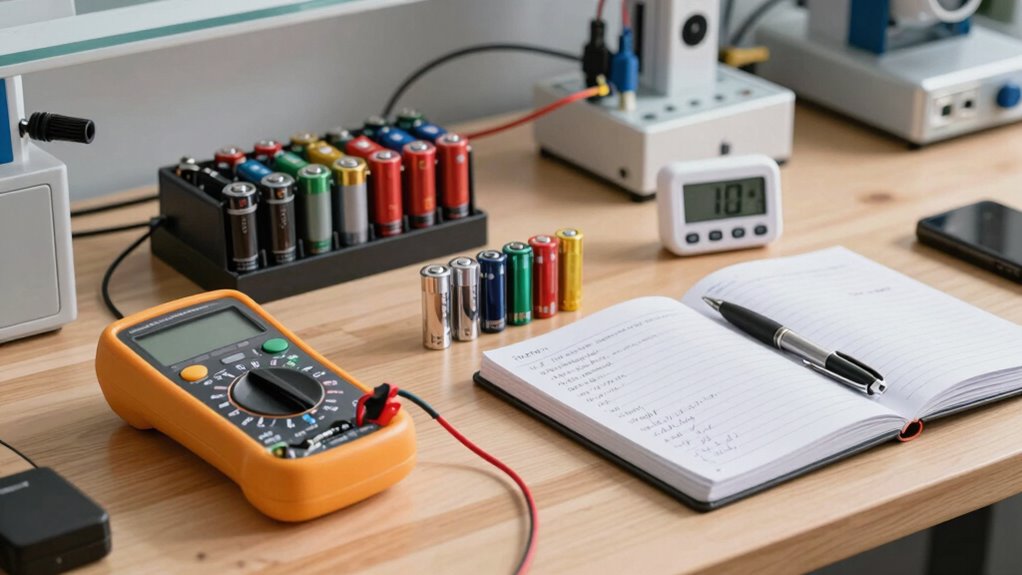

To create a battery testing routine you’ll actually follow, start by matching testing frequency to your usage—weekly, bi-weekly, or monthly. Keep testing simple by regularly checking voltage and capacity, and set a schedule that fits your operational needs. Incorporate basic maintenance tasks like cleaning terminals and checking connections at each test. Track your results over time and adjust as needed. Continue exploring how to optimize your routine for long-term battery health and reliability.

Get backup power and energy gear delivered free with Prime
- Fast, free delivery on millions of items
- Prime Video, Amazon Music and more included
- Member-only deals all year
Key Takeaways
- Set a consistent testing schedule aligned with your battery usage pattern (weekly, bi-weekly, monthly).
- Use simple tools like a multimeter for quick voltage checks and plan thorough capacity tests periodically.
- Track and record battery performance data to identify early signs of deterioration.
- Incorporate routine maintenance tasks, such as cleaning terminals and checking connections, into your schedule.
- Adjust your routine based on battery age and cycle count to ensure ongoing reliability and longevity.
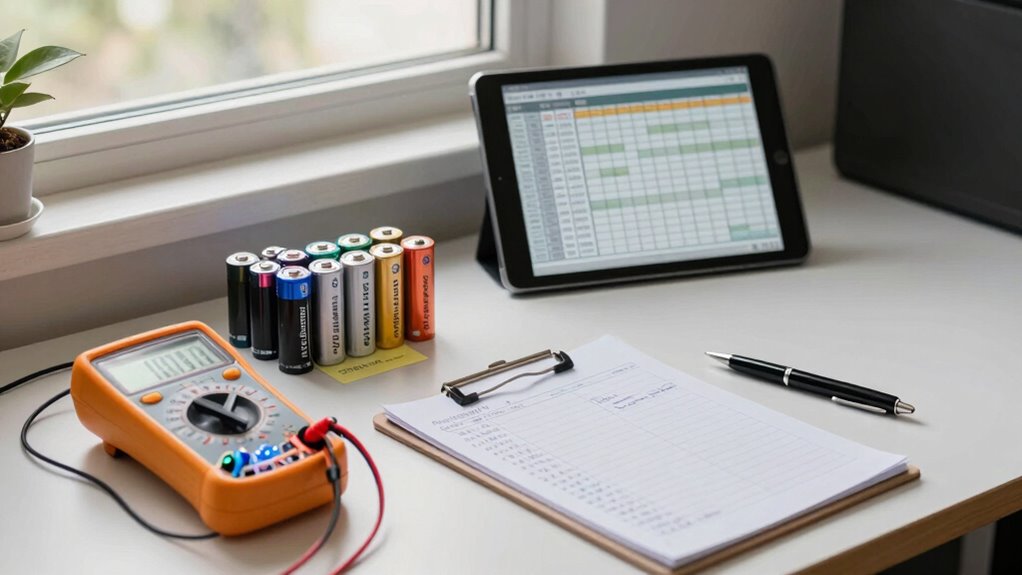
Establishing a reliable battery testing routine is vital to guarantee your batteries perform at their best and last longer. When you stay consistent with testing, you catch problems early, extend the life of your batteries, and avoid unexpected failures. To do this effectively, you need a clear plan that covers essential aspects like battery maintenance and understanding charging cycles. Regular testing isn’t just about checking voltage; it’s about evaluating overall health, capacity, and performance under real-world conditions. By doing so, you can identify signs of deterioration before they cause issues, saving you time and money.
Start by setting a schedule that fits your usage patterns. For example, if you rely heavily on batteries for daily operations, test them weekly or bi-weekly. If they’re used less frequently, monthly checks might suffice. Consistency is key to catching degradation early. Incorporate simple battery maintenance tasks into your routine—clean terminals, check for corrosion, and ensure connections are tight. These basic steps improve performance and provide more accurate test results. When testing, focus on measuring voltage and capacity. Use a multimeter for voltage checks, but for a thorough view, conduct capacity tests that simulate actual usage. This helps you understand how much energy your batteries can hold and deliver, providing a clearer picture of their health.
Understanding charging cycles is vital because they directly influence battery longevity. Every charge and discharge cycle puts stress on the battery’s chemistry. For maximum battery health, avoid deep discharges and overcharging. Keep track of how many cycles your batteries go through, and plan replacements or maintenance based on manufacturer recommendations. If you notice a significant drop in capacity after a certain number of cycles, it’s a sign you should start planning for a replacement or consider recalibrating the battery. Properly managing charging cycles also involves using the right chargers and settings—overcharging can cause damage, while undercharging may lead to incomplete capacity utilization. Additionally, monitoring your battery health metrics can help you make more informed decisions about maintenance and replacements. Regularly reviewing battery performance data is also crucial to detect early signs of decline and optimize your testing routine. Incorporating accurate measurement tools and understanding their proper use further ensures your routine remains effective and reliable. Implementing proper storage practices can further help preserve battery condition during periods of inactivity. Being aware of battery chemistry can also aid in selecting the appropriate charging and maintenance methods for different types of batteries.
digital multimeter for batteries
As an affiliate, we earn on qualifying purchases.
As an affiliate, we earn on qualifying purchases.
Frequently Asked Questions
What Tools Do I Need for Battery Testing?
To test your battery effectively, you’ll need a multimeter to measure voltage and check its health, and a battery analyzer for detailed insights on battery lifespan and charging cycles. A load tester can help assess performance under real-world conditions. Keep a notebook or app to log results. These tools help monitor how your battery ages, ensuring you catch issues early and extend its charging cycles, keeping it in top shape longer.
How Often Should I Test My Batteries?
Think of your batteries as the heartbeat of your devices—regular checkups keep them alive and thriving. You should test your batteries every 3 to 6 months, depending on usage and type. This testing frequency helps you gauge their true lifespan, preventing unexpected failures. Stay proactive, and you’ll extend their longevity, ensuring your gadgets stay energized and reliable when you need them most.
Can I Test All Types of Batteries the Same Way?
You can’t test all types of batteries the same way because different batteries, like lithium-ion or lead-acid, have unique characteristics affecting their lifespan and charging cycles. For example, lithium-ion batteries need specific testers that measure voltage and capacity without damaging them. By tailoring your testing methods to each battery type, you can better assess their health, extend their lifespan, and avoid unnecessary replacements, ensuring peak performance.
How Do I Interpret Battery Test Results Accurately?
Interpreting battery test results is like reading a roadmap; it guides you through understanding battery health. Focus on key indicators such as voltage, capacity, and internal resistance. A declining battery lifespan signals it’s nearing the end, often after numerous charging cycles. If the test shows reduced capacity or frequent voltage drops, your battery’s performance is waning. Regular testing helps you spot these signs early, so you can replace or maintain batteries proactively.
What Safety Precautions Are Necessary During Testing?
During testing, you need to prioritize safety by wearing appropriate safety gear like gloves and goggles to protect against potential leaks or explosions. Make certain of proper ventilation to avoid buildup of harmful fumes, especially with batteries that emit gases. Keep a fire extinguisher nearby, work in a well-ventilated area, and avoid sparks or open flames. Following these precautions helps prevent accidents and keeps you safe throughout the testing process.
Conclusion
By establishing a clear, consistent battery testing routine, you guarantee your devices stay reliable and perform at their best. Remember, batteries typically lose about 20% of their capacity after 300 to 500 full charge cycles. This means regular testing isn’t just about maintenance; it’s about catching issues early and extending your battery’s lifespan. Stick to your routine, and you’ll save money and avoid unexpected failures, keeping your gear running smoothly when you need it most.
Columbus Day / Indigenous Peoples' Day Picks
long weekend sales
As an affiliate, we earn on qualifying purchases.