
Start by looking for signs like slow starts, dim lights, or electrical issues. Then, inspect the battery visually for corrosion, damage, or swelling, and clean the terminals if needed. Next, check the voltage with a multimeter—around 12.6 volts means it’s healthy. Try proper charging methods to see if the battery responds. If problems persist, a professional load test will confirm the battery’s health. Keep going to discover detailed steps for each part of the process.

Get backup power and energy gear delivered free with Prime
- Fast, free delivery on millions of items
- Prime Video, Amazon Music and more included
- Member-only deals all year
Key Takeaways
- Observe vehicle performance and electrical symptoms to identify potential battery issues early.
- Conduct a physical inspection for corrosion, damage, or swelling on the battery and terminals.
- Use a multimeter to measure voltage; a reading below 12.6 volts indicates possible battery failure.
- Attempt a controlled recharge or jump-start to assess if the battery can recover.
- Perform a professional load test to confirm battery health before replacement.
Ever wonder if your car’s battery is failing? When your vehicle starts to slow down, or if you notice dimming lights and sluggish electronics, it’s time to check your battery. The first step is understanding the battery’s life span and how different charging methods might affect its performance. A typical car battery lasts about three to five years, but extreme temperatures, frequent short trips, and leaving accessories on can shorten this lifespan. Knowing this helps you decide whether a replacement is necessary or if a simple recharge could do the trick.
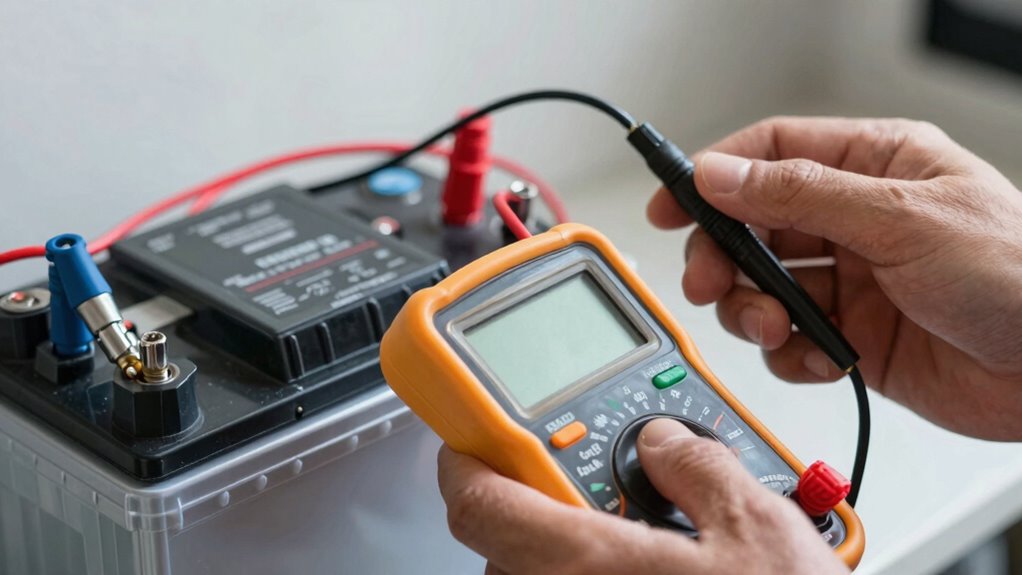
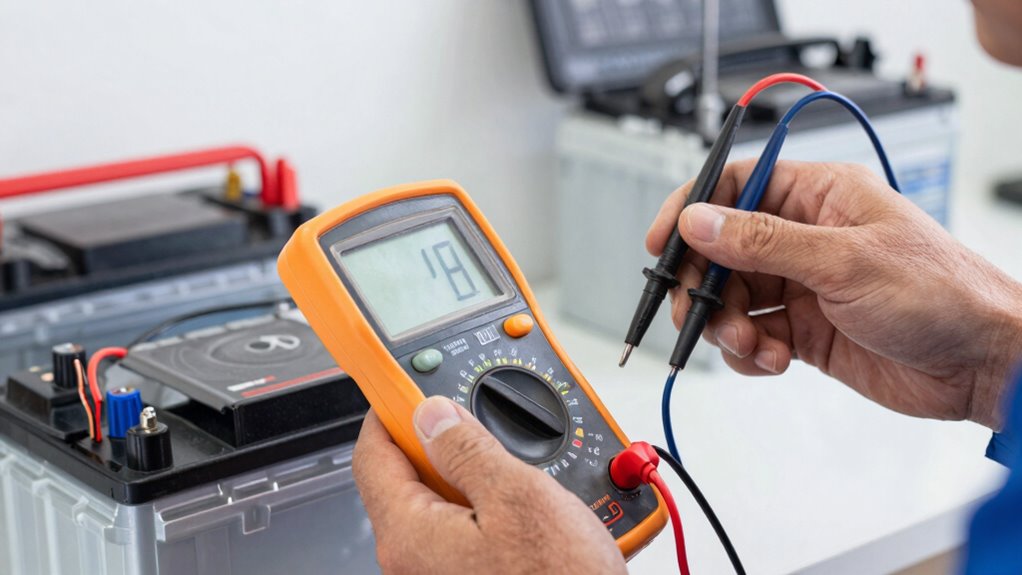
To begin, inspect the battery’s physical condition. Look for corrosion around the terminals, which appears as a white or bluish powder. Corrosion hampers the flow of electricity, causing starting issues. If you see buildup, clean the terminals carefully with a mixture of baking soda and water, using a brush. Once cleaned, tighten any loose connections. Next, check the battery’s voltage with a multimeter. A healthy, fully charged battery should read around 12.6 volts. If it shows noticeably less, it might be drained or failing. Keep in mind, a low reading could be due to recent charging or cold weather, so weigh the context.
Inspect for corrosion and clean terminals; check voltage with a multimeter to assess battery health.
Testing the battery’s charge is essential, but you also need to acknowledge the effectiveness of charging methods. If you use a trickle charger or a jump-start, observe how the battery responds. A slow, steady charge via a reliable charger can help restore some battery life if it’s not too old or damaged. Conversely, quick jumps or improper charging techniques might not fully recharge the battery and could even cause damage. If your battery struggles to hold a charge after multiple attempts, it’s likely time for a replacement. Additionally, understanding the impact of charging methods on battery health can help you avoid unnecessary wear and tear. Proper charging techniques and battery maintenance can significantly extend the lifespan of your vehicle’s battery. Regularly monitoring your battery’s condition and understanding battery lifespan can help prevent unexpected breakdowns.
Finally, if you’re still uncertain, take your vehicle to a professional for a load test. This test mimics the electrical demands of starting your engine and determines whether the battery can sustain the required power. A bad battery will fail this test, confirming the need for a new one. Remember, even if your battery is relatively new, frequent electrical issues or slow starts indicate it’s time to assess the battery’s health thoroughly. Incorporating technology-enhanced support in diagnostics can provide more accurate insights into your battery’s condition. Taking these steps in the right order ensures you accurately diagnose the problem, saving you time and preventing unnecessary replacements. When in doubt, seeking expert advice is always a wise move to keep your vehicle running smoothly.
As an affiliate, we earn on qualifying purchases.
Frequently Asked Questions
Can a Bad Battery Cause Car Starting Issues?
Yes, a bad battery can cause car starting issues. When your battery has corrosion or is failing, it struggles to supply enough power to start your engine. Alternator failure can worsen this problem by not recharging the battery properly. If your car won’t start, check for corrosion on the terminals and test the battery’s health, as these issues often lead to starting difficulties. Replacing or repairing these components usually resolves the problem.
How Long Does a Battery Test Typically Take?
A battery test typically takes about 10-15 minutes. Think of it like checking the health of a swimmer before a race—quick but revealing. During the test, your mechanic examines battery chemistry and tests charging methods to assess capacity. This process quickly uncovers if your battery can hold a charge or if it’s failing, helping you decide whether you need a replacement or just a recharge.
Should I Replace a Battery Just Based on Age?
You shouldn’t replace a battery solely based on age, as modern batteries can last longer with proper maintenance. Instead, consider testing its performance first. If it’s failing, recycle the old one responsibly through battery recycling programs, and guarantee proper battery storage for future use. Age isn’t the only factor; a detailed test helps you determine if replacement is truly necessary, saving you money and reducing waste.
Can Extreme Temperatures Affect Battery Performance?
Extreme temperatures can considerably impact battery lifespan and performance. When it’s hot, your battery may overheat, leading to faster degradation, while cold weather can cause it to lose capacity and struggle to start your vehicle. Temperature impact is vital—both heat and cold accelerate wear and tear. You should regularly check your battery under these conditions, as extreme temperatures can disguise or worsen underlying issues, reducing overall reliability.
Is It Safe to Test a Battery at Home?
Yes, it’s generally safe to do DIY testing on your battery if you follow proper battery safety precautions. Always wear protective gear and work in a well-ventilated area. Make sure you understand the testing procedures before starting, and use the right tools to avoid sparks or short circuits. If you’re unsure or uncomfortable, it’s best to seek professional help to guarantee safety and accurate results.
Conclusion
Remember, testing your battery systematically can save you time and prevent unnecessary replacements. Did you know that nearly 50% of battery failures are caused by poor connections or corrosion rather than the battery itself? By following the proper check order—visual inspection, voltage test, load test—you’ll catch the real culprit quickly. Stay proactive, and you’ll keep your vehicle running smoothly without surprises. Regular checks can extend your battery’s lifespan and make sure you’re never stranded unexpectedly.
Fall Picks
fall essentials
As an affiliate, we earn on qualifying purchases.