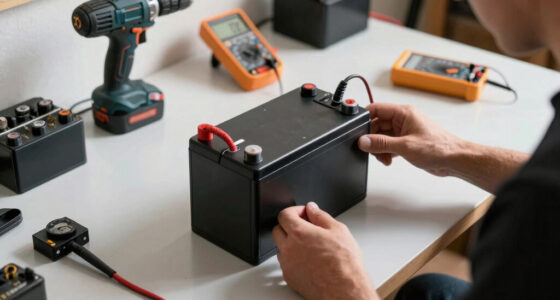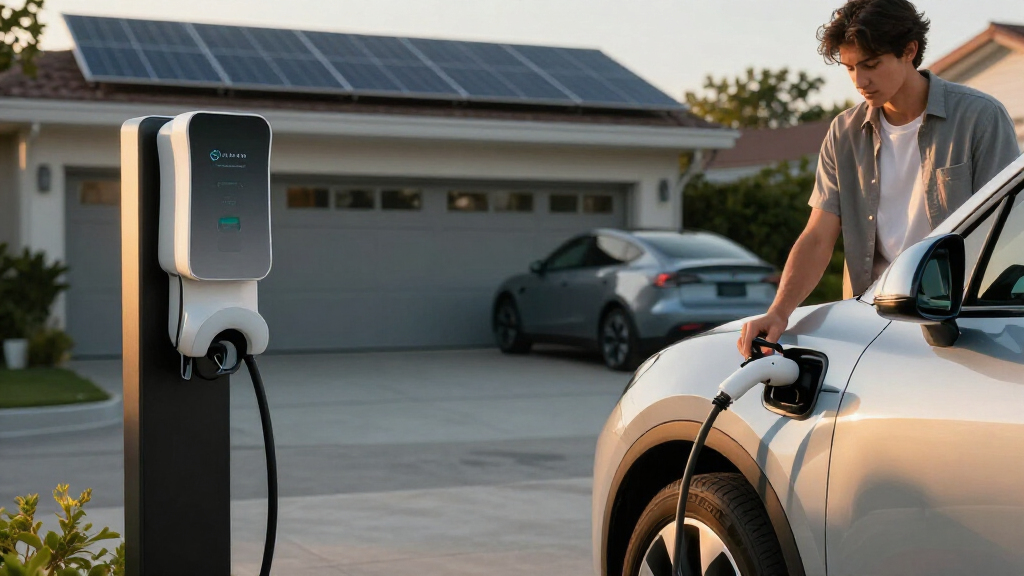
For fleet managers comparing EV fleet charging stations, the best choice depends less on headline power than on how many vehicles need service, what management tools a site requires, and how much electrical capacity is available. I rank the Enphase IQ EV Charger 2 first for its commercial focus, OCPP support, built-in cellular connectivity, and metering; the EV Range 32A is a stronger fit when access control and driver payments matter more than high output; and the Enphase HCS-D40 stands apart by sharing one charger between two vehicles.

Get backup power and energy gear delivered free with Prime
- Fast, free delivery on millions of items
- Prime Video, Amazon Music and more included
- Member-only deals all year
The main tradeoff is between fleet management and billing, higher charging output, and practical site constraints. An 80A or 22.1 kW unit cannot deliver its full output unless the vehicle and electrical installation support it. A lower-output charger may serve parked fleet vehicles well overnight, while a dual-port unit can stretch limited wall space and circuits. I also include the Autel MaxiCharger 80A for a high-power single-port setup and the Victron station for buyers who prioritize compact design and wireless monitoring, while noting where their listed fleet-management details are thinner.
Key Takeaways
Best commercial management package: Enphase IQ EV Charger 2 combines OCPP 1.6J and 2.0.1, cellular and Wi-Fi connectivity, and revenue-grade energy metering.
Best for payment-enabled public or shared fleet access: EV Range offers RFID or app access, custom pricing, idle fees, and driver payments through its network.
Best for two vehicles at one installation point: Enphase HCS-D40 can charge two EVs at up to 16A each, or one vehicle at up to 32A.
Best high-power single-port option: Autel provides up to 80A and 19.2 kW, but its full output calls for a recommended 100A circuit and a compatible vehicle.
Check the Victron’s fleet fit carefully: It lists 22 kW output and Wi-Fi/Bluetooth, but the provided specifications do not describe OCPP, fleet billing, or a commercial warranty term.
| Enphase IQ EV Charger 2, 80A Commercial Level 2 EV Charger |  | Best Overall for Connected Commercial Fleet Management | Charger type: Hardwired Level 2 | Maximum power: 22.1 kW | Maximum current: 80A | VIEW LATEST PRICE | See Our Full Breakdown |
| EV Range Commercial Level 2 EV Charging Station, 32A, 240V, J1772, OCPP 1.6J |  | Best for Driver Payments and Shared Access | Charging level: Level 2 | Output: 32A at 240V AC | Connector: J1772 | VIEW LATEST PRICE | See Our Full Breakdown |
| Enphase Level 2 Dual EV Charger (HCS-D40), 32 Amp, 240 V, Hardwired, 25 ft Cables, J1772 |  | Best for Serving Two Vehicles at One Installation Point | Model: HCS-D40 | Charging level: Level 2 | Input: 240V | VIEW LATEST PRICE | See Our Full Breakdown |
| Autel MaxiCharger 80A Level 2 EV Charger, Hardwired, J1772 |  | Best for High-Power Single-Port Charging | Charging level: Level 2 | Maximum output: 80A / 19.2 kW | Voltage: 240V | VIEW LATEST PRICE | See Our Full Breakdown |
| Victron Energy EV Charging Station, 170-265 VAC 22 kW, Wi-Fi and Bluetooth Enabled |  | Best Compact Connected Option, With Fleet Details to Verify | Listed power output: Up to 22 kW | Listed current: 32A | Input voltage range: 170–265 VAC | VIEW LATEST PRICE | See Our Full Breakdown |
| EV fleet charging station | Cable length | Warranty | Charging level |
|---|---|---|---|
| Enphase IQ EV Charger 2 | 25 ft | 5 years | — |
| EV Range Commercial Level 2 EV | 25 ft | 2 years | Level 2 |
| Enphase Level 2 Dual EV Charge | 25 ft each | 5-year limited | Level 2 |
| Autel MaxiCharger 80A Level 2 | 25 ft | 5 years | Level 2 |
| Victron Energy EV Charging Sta | — | — | — |
More Details on Our Top Picks
Enphase IQ EV Charger 2, 80A Commercial Level 2 EV Charger
I rank the Enphase IQ EV Charger 2 first because its listed features address several operational needs at once: fleet software connectivity, energy measurement, and high-output Level 2 charging. It supports OCPP 1.6J and 2.0.1, connects through Wi-Fi or built-in 4G LTE, and includes revenue-grade energy metering. For a depot or workplace that needs a clearer way to connect stations to a charging management system and allocate energy use, those details make it a more complete commercial proposition than the Autel 80A, whose supplied description emphasizes app control and monitoring rather than OCPP or billing-grade metering.
Its maximum output is listed as 22.1 kW at 80A, with a 25-foot cable and indoor or outdoor installation. That capacity can help vehicles with compatible onboard chargers recover more energy during a limited parking window. It does not mean every fleet vehicle will charge at that rate: the vehicle, circuit, and site load all constrain the real result. Compared with the 32A EV Range unit, this Enphase has much higher potential output and broader management integration, but it does not have EV Range’s explicitly described driver-payment and custom-pricing service.
The other meaningful distinction is connectivity resilience. Built-in cellular can keep the station connected where fleet Wi-Fi is unavailable or unreliable, although cellular service and the management arrangement still need to be verified for the actual deployment. The hardwired installation is a permanent-site choice, not a plug-in option, and the 80A output may call for substantial electrical capacity. I would shortlist it for fleets that can plan infrastructure around connected, centrally managed charging. A small operation seeking a basic lower-power wall station may find its capacity and installation demands unnecessary.
Pros:- Supports OCPP 1.6J and 2.0.1 for integration with compatible charging management systems.
- Built-in 4G LTE plus Wi-Fi can provide a connection option beyond on-site wireless.
- Revenue-grade energy metering supports billing and cost allocation workflows.
- Up to 22.1 kW and a 25-foot cable suit high-output, indoor or outdoor installations.
Cons:- Hardwired installation requires electrical planning and professional installation.
- The maximum output depends on the site supply and the vehicle’s charging capability.
- The supplied details do not state driver payment or idle-fee features like EV Range’s network.
Best for: Fleet depots and workplaces that need OCPP-compatible management, reliable connectivity options, energy measurement, and high-output Level 2 charging.
Not ideal for: Small fleets seeking a simple, low-capacity installation, or sites unable to support a hardwired charger and its potential electrical load.
- Charger type:Hardwired Level 2
- Maximum power:22.1 kW
- Maximum current:80A
- Connectivity:4G LTE cellular and Wi-Fi
- OCPP:OCPP 1.6J and 2.0.1
- Cable length:25 ft
- Installation:Indoor or outdoor; hardwired
- Warranty:5 years
Our verdict“I would choose the IQ EV Charger 2 for a fleet that values connected management and energy accounting as much as charging output.”
EV Range Commercial Level 2 EV Charging Station, 32A, 240V, J1772, OCPP 1.6J
The EV Range Commercial Level 2 is my pick for fleets where the challenge is managing shared access or charging that serves outside drivers, rather than maximizing charge rate. Its platform supports driver payments, custom pricing, idle fees, and monthly revenue deposits. RFID and app access give operators ways to control use, while OCPP 1.6J offers a stated protocol for charging-network integration. These are more directly relevant to monetized or publicly accessible charging than the high-output focus of the Autel MaxiCharger.
At 32A and 240V, this is a more modest single-port station than either 80A unit. That can suit vehicles parked for longer periods, but fleets with short turnaround windows should compare expected energy needs against this output. Its 25-foot J1772 cable and NEMA 4, IK10-rated enclosure bring practical flexibility for varied parking layouts and exposed installations. The enclosure ratings also distinguish it from the Victron listing, whose supplied details do not state comparable protection ratings.
The management features come with an important dependency: network functions require EV Range sign-up. I would confirm service availability, operational terms, and how the network handles payments before planning a fleet around them. The unit can be wall- or pedestal-mounted, but the pedestal is sold separately, so a freestanding installation needs extra planning. Tesla vehicles need an adapter. Compared with the Enphase IQ, EV Range has clearer payment features but lower output and fewer stated OCPP versions. It makes most sense when access and revenue handling lead the brief; fleets that need higher throughput or broader management-system choices should compare the Enphase commercial model first.
Pros:- EV Range network supports driver payments, custom pricing, idle fees, and monthly revenue deposits.
- RFID and app access options support controlled use by fleet drivers or the public.
- NEMA 4 and IK10 enclosure ratings suit a range of outdoor and high-contact settings.
- A 25-foot J1772 cable and wall-or-pedestal mounting give installers placement flexibility.
Cons:- Network functions require EV Range sign-up.
- The pedestal is not included for freestanding installations.
- 32A output is lower than the 80A Autel and 80A Enphase options.
- Tesla vehicles require a separate adapter.
Best for: Shared fleet, workplace, or public charging operators who need RFID/app access and network-based payments, pricing, or idle-fee controls.
Not ideal for: Fleets requiring high charging output, standalone network features without enrollment, or a pedestal included in the box.
- Charging level:Level 2
- Output:32A at 240V AC
- Connector:J1772
- Cable length:25 ft
- Network protocol:OCPP 1.6J
- Access control:RFID or app
- Enclosure:Polycarbonate, NEMA 4, IK10
- Mounting:Wall or pedestal; pedestal sold separately
- Warranty:2 years
Our verdict“I recommend EV Range when payment-enabled access matters more than high charging output or a built-in pedestal.”
Enphase Level 2 Dual EV Charger (HCS-D40), 32 Amp, 240 V, Hardwired, 25 ft Cables, J1772
The Enphase HCS-D40 earns its place by addressing a different fleet problem from the single-port stations: how to serve two parked vehicles from one charger installation. It can deliver up to 32A to one vehicle or 16A to each of two vehicles. That sharing arrangement is useful for workplaces, service depots, or small fleets where cars sit for several hours and parking positions are close together. Unlike EV Range, it does not lead with driver payments or network pricing; its distinguishing value is the dual-cable layout.
Each J1772 cable is 25 feet, and the NEMA 4 enclosure is designed for demanding weather exposure. The station is hardwired and UL 2594 certified, with a stated five-year limited warranty. Those details make it a durable-looking choice for a fixed site, but the split-output behavior deserves a realistic capacity check: when both vehicles charge at once, each receives less current than one vehicle would receive alone. Compared with the IQ EV Charger 2 or Autel 80A, it cannot match their maximum single-vehicle output. Its advantage is two simultaneous connections, not fast charging for two vehicles.
The HCS-D40 may help reduce the number of separate wall-mounted units in a space, although the listing describes a large wall-mounted form and professional electrical work is required. I would choose it when predictable overnight or long-dwell charging makes shared power acceptable. Fleets with tight turnaround schedules should examine whether 16A per vehicle is enough, or choose a higher-output station per parking position. Buyers who need central software management, OCPP, or per-driver billing should also compare EV Range and the Enphase IQ, since those capabilities are not detailed for this model.
Pros:- Two J1777 charging cables let it serve two vehicles simultaneously.
- Can provide 32A to one vehicle or split output at 16A per vehicle.
- NEMA 4-rated enclosure and UL 2594 certification suit fixed commercial installations.
- 25-foot cables offer reach across many common parking layouts.
Cons:- Power is shared at 16A per vehicle when both ports are in use.
- Hardwired installation requires a qualified electrician.
- Its large wall-mounted form may need more mounting space than a compact single-port unit.
Best for: Small fleets and workplaces with two adjacent vehicles that can share charging capacity during long parking periods.
Not ideal for: High-turnover fleets that need maximum charging speed for two vehicles, or operators requiring specified OCPP and payment features.
- Model:HCS-D40
- Charging level:Level 2
- Input:240V
- Maximum current:32A to one vehicle; 16A each to two
- Power:7.7 kW listed
- Connectors:Two J1772 cables
- Cable length:25 ft each
- Enclosure:NEMA 4
- Warranty:5-year limited
Our verdict“I would pick the HCS-D40 when two vehicles can share a station and parking time matters more than maximum per-vehicle output.”
Autel MaxiCharger 80A Level 2 EV Charger, Hardwired, J1772
The Autel MaxiCharger 80A is the straightforward choice in this group for a fleet that needs one vehicle to take as much Level 2 power as the site and vehicle can support. Its listed maximum is 80A, or 19.2 kW, with a 25-foot J1772 cable. That makes it a stronger high-output single-port pick than EV Range’s 32A station and a reasonable alternative to the Enphase IQ EV Charger 2. The Enphase, however, is the better-documented commercial management option because it lists OCPP, cellular connectivity, and revenue-grade metering.
Autel supplies app functions for scheduling, remote control, energy monitoring, and station management. Those tools can help an operator review use and adjust charging behavior, but the supplied description does not specify OCPP, payment processing, or multi-station management integration. I would treat the app as useful station-level control, not assume that it covers every fleet software requirement. The charger is CSA- and UL-certified and includes a five-year warranty, giving it clearer stated certification and warranty details than the Victron listing.
The main tradeoff is infrastructure. For the full 80A output, a 100A circuit is recommended, and the unit is hardwired, so installation planning and professional electrical work are part of the decision. Fleet vehicles may also be unable to accept the charger’s full rate. The J1772 connector covers many North American EVs and plug-in hybrids, but Tesla vehicles need a separate NACS adapter. Compared with the HCS-D40, Autel favors one vehicle receiving higher potential power rather than two vehicles sharing a station. That makes it a better fit for a dedicated high-demand parking bay than a tight two-car layout.
Pros:- Up to 80A and 19.2 kW for high-output Level 2 charging.
- App supports scheduling, remote controls, energy monitoring, and station management.
- 25-foot J1772 cable serves a broad range of North American EVs and plug-in hybrids.
- CSA and UL certification plus a five-year warranty are stated.
Cons:- A 100A circuit is recommended to reach full 80A output.
- Hardwired installation is best handled by a professional electrician.
- Tesla vehicles require a separate NACS adapter.
- The supplied details do not specify OCPP or payment processing.
Best for: Fleets with a dedicated charging bay, compatible vehicles, and electrical capacity for high-output single-port Level 2 charging.
Not ideal for: Sites with limited electrical service, fleets needing two simultaneous ports, or operators who require stated OCPP and payment features.
- Charging level:Level 2
- Maximum output:80A / 19.2 kW
- Voltage:240V
- Connector:SAE J1772
- Cable length:25 ft
- Ports:1
- Installation:Hardwired; 100A circuit recommended for full output
- Certifications:CSA and UL
- Warranty:5 years
Our verdict“I would choose Autel for high-power single-vehicle charging when the site can support it and fleet billing is not the main requirement.”
Victron Energy EV Charging Station, 170-265 VAC 22 kW, Wi-Fi and Bluetooth Enabled
The Victron Energy EV Charging Station stands out for its compact, lightweight listed design and built-in Wi-Fi and Bluetooth. Its stated output reaches 22 kW, and the wide 170–265 VAC input range gives it a distinctive electrical specification compared with the fixed 240V models here. For an installer or operator already familiar with Victron equipment, wireless monitoring may be useful. But I rank it fifth because the information provided is less explicit about fleet operation than the other options: it does not state OCPP support, access controls, billing, port count, connector type, or a commercial warranty term.
That gap matters in a fleet roundup. EV Range specifically describes payment and driver-access tools; the Enphase IQ lists OCPP, cellular connectivity, and revenue-grade metering; Autel describes station management in its app. Victron’s Wi-Fi and Bluetooth are useful connectivity signals, but they should not be treated as proof of multi-station management or fleet billing. I would verify the full electrical and software documentation before specifying it for a shared depot, especially if the charger needs to work with a particular charging management system.
The listing states a 32A current rating alongside a 22 kW output. Since those figures depend on the installation and electrical configuration, I would ask the manufacturer or installer to confirm the output available at the intended site rather than plan around the headline number alone. The product information identifies CE certification, while the supplied material does not state a defined manufacturer warranty term. That makes it a more cautious choice for a fleet buyer than the Enphase HCS-D40, which has a stated five-year limited warranty and clearer dual-port behavior. I see Victron as a possible fit for a compact connected installation where the missing commercial details can be confirmed, not the safest default for a fleetwide rollout.
Pros:- Compact listed weight of 1.38 kg may simplify handling and mounting.
- Wi-Fi and Bluetooth provide wireless monitoring and control connectivity.
- Wide listed input range of 170–265 VAC.
- The listing states output up to 22 kW.
Cons:- Supplied details do not specify OCPP, fleet billing, or access-control features.
- Connector type and port count are not stated in the provided specifications.
- A defined manufacturer warranty term is not provided in the supplied information.
- The listed 32A current and 22 kW output should be confirmed for the intended electrical setup.
Best for: Operators seeking a compact connected charger who can confirm connector, management-system, electrical, certification, and warranty requirements before purchase.
Not ideal for: Fleet buyers who need documented OCPP, driver access controls, payment features, confirmed port details, or a clearly stated commercial warranty.
- Listed power output:Up to 22 kW
- Listed current:32A
- Input voltage range:170–265 VAC
- Connectivity:Wi-Fi and Bluetooth
- Weight:1.38 kg
- Model:EVC300400300
- Certification stated:CE
- Warranty information:Manufacturer warranty details not specified in supplied listing
Our verdict“I would consider Victron only after confirming its fleet software, connector, output, and warranty fit for the specific site.”
How We Picked
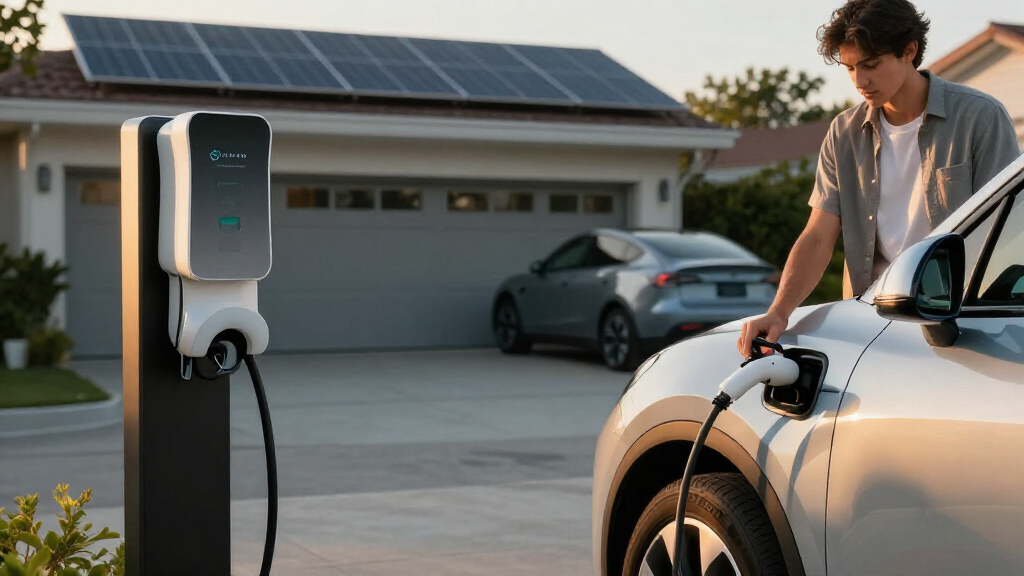
I ranked these options by how well their stated features address the daily realities of fleet charging: supplying multiple vehicles, controlling who can charge, tracking energy use, supporting billing or management software, and fitting the site’s electrical capacity. Commercial suitability is not just a question of maximum kilowatts. A fleet that returns vehicles to a depot overnight may value access control and predictable energy records more than one vehicle’s fastest possible Level 2 session.
I gave particular weight to network and management capabilities, including OCPP support, app or RFID access, cellular connectivity, metering, and stated payment tools. That is why the Enphase IQ EV Charger 2 ranks first: among these five, it presents the clearest combination of commercial connectivity, load-management integration, OCPP versions, and revenue-grade measurement. EV Range ranks close behind for a different reason: its network description specifically includes driver payments, custom pricing, and idle fees. Those features suit shared or public-facing charging, though they depend on signing up for that network.
I also compared charging architecture and site fit. The HCS-D40 earns a distinct place because it can serve two vehicles, even though power is split when both charge. Autel stands out for a high-output single port but needs a substantial circuit for its maximum rating. Victron’s compact, connected design may appeal to some installations, yet the information supplied gives less evidence of fleet-specific management support. I have not treated unlisted features as included, and I have not assumed that a vehicle can accept a charger’s maximum output.
Finally, I considered the practical costs of deployment without using price as a ranking factor: hardwired installation, separate adapters, mounting hardware, environmental ratings, warranty information, and the need for network enrollment. The order favors fleet usefulness and clarity of fit, not a single specification. Buyers should confirm electrical design, vehicle charging limits, software compatibility, local code requirements, and service terms before selecting a site-wide system.
Factors to Consider When Choosing Best EV Fleet Charging Stations
Before choosing a station, I would start with the fleet’s parking pattern and charging workflow, then check whether the site can supply the required power. A high-output unit is useful only when the vehicle, electrical service, and management setup can make use of it. The differences between these five options are clearest when compared against those operational questions.
Match output to dwell time and vehicle capability
Maximum charger output is not a guaranteed vehicle charging rate. The vehicle’s onboard AC charger, the available circuit, and site load all affect how quickly a battery gains energy. Autel and Enphase IQ offer high stated output, while EV Range and the HCS-D40 are 32A-class choices. A fleet that leaves vehicles parked overnight may not need the highest rate; a pool vehicle that returns briefly between assignments may benefit from more power if it can accept it. I would compare typical daily energy use and parking duration before selecting equipment, then have an electrician confirm the site capacity.
Choose one port, shared ports, or separate stations
The HCS-D40 serves two vehicles, but its output drops to 16A per vehicle when both are charging. That arrangement can work for long-dwell parking, but it differs from installing two independent high-output stations. The single-port Autel and Enphase IQ put their capacity toward one vehicle at a time, while EV Range also provides one J1772 port. Count parking bays, cable reach, and simultaneous charging demand rather than assuming that a dual-cable unit doubles available power.
Decide how much fleet software and billing matter
If you need charging-network integration, compare specific protocols and operating features rather than relying on the word “smart.” Enphase IQ lists OCPP 1.6J and 2.0.1, cellular and Wi-Fi, and revenue-grade metering. EV Range lists OCPP 1.6J, RFID/app access, and payment and idle-fee functions through its network. Autel describes app-based monitoring and station management, while the Victron information supplied here identifies Wi-Fi and Bluetooth but not OCPP or fleet billing. I would confirm that the charger, network, and fleet management software can work together before ordering multiple units.
Plan the electrical installation and mounting
Hardwired installation is common across these models, so the electrical design affects both deployment time and achievable output. Autel recommends a 100A circuit for its full 80A output. The Enphase IQ also offers up to 80A, with maximum power subject to site and vehicle limits. EV Range can be wall- or pedestal-mounted, but the pedestal is separate. Check panel capacity, conduit routes, cable reach, mounting height, outdoor exposure, and local code with a qualified electrician. A rating such as NEMA 4 or IK10 is useful information about enclosure suitability, but it does not replace site-specific installation planning.
Check connector coverage and adapters
J1772 compatibility is listed for EV Range, HCS-D40, and Autel; the Autel and EV Range descriptions say Tesla vehicles require an adapter. The supplied Victron details do not state its connector type, so that must be confirmed. A fleet with mixed vehicle makes should check the connector on every vehicle, any adapter policy, cable reach, and whether drivers can safely manage adapters. Do not assume a connector detail from another model in the same brand’s range applies to the exact station being purchased.
Weigh warranty and documentation against rollout scale
Warranty and certification details help distinguish a small trial from a fleetwide procurement. The Enphase models list five-year warranty coverage, Autel lists five years, and EV Range lists two years. Victron’s provided listing does not specify a manufacturer warranty term. Confirm coverage, service process, and software support directly for the specific model and installation region. For larger deployments, request documentation on connectivity, metering accuracy, network fees or operating terms, and replacement support before making a standard charger choice.
Frequently Asked Questions
Which EV fleet charging station is the best overall?
I rank the Enphase IQ EV Charger 2 first for fleets that need a balanced commercial feature set: OCPP 1.6J and 2.0.1, Wi-Fi and cellular connectivity, revenue-grade energy metering, and up to 22.1 kW. It is not automatically right for every site; output depends on vehicle and electrical capacity, and installation is hardwired. EV Range may be a better choice when payment and idle-fee features matter most.
Which station is best for charging two fleet vehicles at once?
The Enphase HCS-D40 has two J1772 cables and can charge two vehicles simultaneously at up to 16A each, or one vehicle at up to 32A. It fits long-dwell parking better than fast-turnover operations because power is shared. A fleet needing higher power for each vehicle should compare separate stations or higher-capacity site designs instead of treating the dual-port layout as twice the output.
Which option supports driver payments or public charging access?
EV Range is the clearest match among these five for payment-enabled access. Its network supports driver payments, custom pricing, idle fees, and monthly revenue deposits, with RFID or app access controls. These network functions require EV Range sign-up, so I would confirm service availability and terms before planning a public or shared fleet installation around them.
Is an 80A or 22 kW Level 2 charger always faster for a fleet?
No. Actual charging speed depends on the vehicle and electrical installation as well as the charger’s maximum rating. A vehicle may accept less power than the station can supply, and site capacity can limit the charger’s output. High-output models such as Autel and Enphase IQ make sense when the vehicle and site can use their capacity and charging time is constrained; lower output can still suit vehicles parked for extended periods.
What should I confirm before selecting the Victron station for fleet use?
I would confirm the connector type, port count, OCPP or other management-system compatibility, actual output at the planned installation, and manufacturer warranty. The supplied product information lists Wi-Fi, Bluetooth, 170–265 VAC input, and up to 22 kW, but it does not state several fleet-specific details that the Enphase IQ and EV Range describe. Those gaps do not prove the features are absent; they mean I would request documentation before specifying it for a fleet rollout.
Conclusion
For a fleet that needs connected management, energy measurement, and high output, I would start with the Enphase IQ EV Charger 2. Choose EV Range when payment-enabled access, idle fees, and shared use are the priority. For two nearby vehicles with long parking windows, the Enphase HCS-D40 offers a useful shared-port format, while Autel suits a dedicated bay where one compatible vehicle can benefit from higher power and the site can support the recommended circuit. I would shortlist Victron only after confirming the missing connector, fleet software, output, and warranty details.
Before committing to a fleetwide installation, I would verify vehicle charging limits, electrical capacity, connector requirements, cable reach, software compatibility, and warranty terms. The right station is the one that fits how your vehicles are parked and managed—not simply the one with the largest power figure.