
Solar attic fans cut heat buildup and moisture without adding a cent to your electric bill, but choosing the wrong size or mount type wastes money fast. After comparing 15 leading models, the VEVOR 50W with smart sensors and remote control stands out as the best overall pick thanks to its 3000 CFM output and automation features. The OmniPV Smart Hybrid Pro is the stronger choice if you want premium hybrid power, while the HONGUAN 34W IP65 model is the easiest entry point for smaller attics. The main tradeoffs in this category come down to airflow versus solar wattage, whether you need nighttime AC backup, and whether your roof works better with a roof-mount or gable-mount design. Keep reading for the full breakdown of all 15 fans.

Get backup power and energy gear delivered free with Prime
- Fast, free delivery on millions of items
- Prime Video, Amazon Music and more included
- Member-only deals all year
Key Takeaways
- CFM ratings alone are misleading: several 40W fans claim 2000 CFM, but the higher-wattage VEVOR 50W and OmniPV 50W models deliver that airflow more consistently in real afternoon heat.
- Hybrid AC backup is the biggest differentiator in this lineup — models like the Remington 40W Builder with adapter and the iLIVING HYBRID keep ventilating at night and on cloudy days, which matters most in humid climates.
- Roof-mount dominates this list, but the VEVOR 14-inch gable model is the only strong option for homeowners who want to avoid cutting a hole in their roof or who have complex rooflines.
- IP65 or better weatherproofing separated durable picks from risky ones — the HONGUAN 34W IP65 unit outclasses unsealed competitors for coastal and storm-prone regions.
- Built-in thermostats and smart sensors turned out to be worth paying extra for: fans with automatic temperature control (VEVOR and OmniPV models) prevent heat-driven overwork and extend motor life.


| solar attic fan | Airflow | Power | Motor |
|---|---|---|---|
| HONGUAN 40W Solar Attic Fan | 2000 CFM | 40W | — |
| 40W Solar Attic Fan with Therm | 2000 CFM | — | Weatherproof brushless copper |
| Remington Solar 20-Watt Roof M | — | 20 Watts (solar) | — |
| OmniPV Smart Hybrid Solar Atti | 2850 CFM | — | Rare earth permanent magnet brushless DC |
| VEVOR 50W Solar Attic Fan with | 3000 CFM | 50W solar with MPPT controller | — |
| Remington Solar Builder Series | — | — | — |
| iLIVING HYBRID Ready Smart The | 1150 CFM | 40 watts solar | IP68 waterproof brushless |
| VEVOR 14" Gable Mount Solar At | 1300 CFM | — | — |
| Remington Solar 30 Watt Roof M | — | 30 watt solar panel | — |
| HONGUAN 34W Solar Attic Fan | 1200 CFM | 34W monocrystalline solar | — |
| 40W Solar Attic Fan | 1800–2000 CFM | 40W solar panel | Heavy-duty pure copper |
| VEVOR 35W Solar Attic Fan with | 2400 CFM | — | Brushless DC |
| OmniPV Solar Hybrid Attic Fan | 2100 CFM | 40W solar panel with AC adapter backup | Brushless DC |
| Solar Attic Fan 32W 1600 CFM R | 1600 CFM | 32W monocrystalline solar panel | 100% copper brushless, IP68 waterproof |
| DC HOUSE 32 Watt Solar Attic F | 2500 CFM | 32W solar panel | Brushless copper |
More Details on Our Top Picks
HONGUAN 40W Solar Attic Fan, 2000 CFM with AC Adapter and MPPT Controller
This HONGUAN model stands out for raw airflow at a mid-tier power draw, pushing a claimed 2000 CFM across attics up to 2500 sq.ft. The hybrid solar/AC design means it isn’t limited to sunny afternoons — the AC adapter keeps air moving overnight, which matters if summer heat lingers past sunset. Compared with the Remington Solar 20W Builder Series, you get roughly double the ventilation capacity, but you give up that model’s simpler all-solar install and add wiring complexity. The adjustable thermostat (68°F–113°F) and dual energy-saving/performance modes give real control, though performance mode depends on the adapter rather than pure solar harvest.
The tradeoff: mounting hardware and wiring make this a more involved install than lighter competitors, and DIYers on steep or fragile roofs may want professional help.
Pros:- 2000 CFM airflow handles attics up to 2500 sq.ft
- Hybrid solar/AC power supports both day and night operation
- Adjustable thermostat with two ventilation modes
- IP65 waterproof build and multi-angle panel for better sun capture
Cons:- Performance mode requires the AC/DC adapter, limiting pure solar output
- Installation is more complex due to mounting hardware and wiring
Best for: Homeowners with large attics or workshops up to 2500 sq.ft who need serious daytime airflow plus optional overnight operation
Not ideal for: Buyers wanting a simple, set-and-forget solar-only unit — the performance mode’s dependence on the AC adapter adds wiring work and complicates installation
- Power:40W
- Airflow:2000 CFM
- Coverage Area:2500 sq.ft
- Thermostat Range:68°F–113°F
- Dimensions:19.29 x 19.39 x 10.63 inches
- Weight:29.9 pounds
Our verdict“A strong pick for large attics where high airflow and hybrid operation matter more than install simplicity.”
40W Solar Attic Fan with Thermostat and MPPT Controller, 12″ Roof Vent Fan, 2000 CFM, Dual Power Auto-Switch
What separates this 12-inch fan from the HONGUAN 40W is its auto-switching dual power system: when solar fades, it flips to grid power on its own, so ventilation continues without you touching anything. That makes it the better choice for anyone who wants genuine 24/7 operation without managing adapters manually. The 0–70° adjustable panel lets you chase the sun across seasons, and the hail-resistant metal housing over a brushless copper motor suggests durability the lighter DC HOUSE 32W unit can’t match at this airflow level. Its MPPT controller squeezes more from weak morning light than standard controllers.
The honest drawback: airflow still dips in energy-saving mode on overcast days, and there’s no battery backup, so nighttime operation is grid-tied, not off-grid.
Pros:- Automatic dual solar/AC switching delivers true 24/7 ventilation
- Wide 0–70° panel adjustment for seasonal sun optimization
- Hail-resistant metal housing with weatherproof brushless copper motor
- MPPT controller with two modes and four speed settings
Cons:- No battery backup — night operation requires grid power
- Airflow drops in energy-saving mode under weak sunlight
Best for: Homeowners who want uninterrupted, hands-off attic ventilation with automatic solar-to-grid switching
Not ideal for: Off-grid cabins or sheds without AC access — the performance mode and nighttime operation both depend on the grid adapter
- Solar Power:40W
- Fan Diameter:12 inches
- Airflow:2000 CFM
- Cooling Coverage:Up to 2500 sq ft
- Solar Panel Adjustment:0–70° horizontal and vertical
- Thermostat Range:68–113°F
- Motor:Weatherproof brushless copper
- Adapter Cable Length:196.9 in (16.41 ft)
Our verdict“The easiest path to around-the-clock attic cooling if you have grid power available at the roofline.”
Remington Solar 20-Watt Roof Mount Attic Fan – Round Builder Series
The Remington 20W Builder Series takes the opposite philosophy from the hybrid units in this lineup: no adapters, no controllers to configure, just solar. That simplicity is its strength. The built-in humidistat and thermostat handle moisture and heat automatically — a humidity response most competitors here lack — and the quiet brushless motor means you won’t hear it from the bedroom below. The extra-large steel flashing is a genuine differentiator for roof longevity, doing more to prevent leaks than the plastic-housed alternatives. Backed by a 15-year limited warranty, it’s built for install-and-forget reliability.
The obvious tradeoff is capacity: at 20W it moves far less air than the HONGUAN or OmniPV units, and nighttime operation requires a separately sold hybrid adapter, which undercuts its plug-free appeal if you want cooling after dark.
Pros:- Runs entirely on free solar power with zero operating cost
- Built-in humidistat plus thermostat for automatic moisture and heat control
- Near-silent brushless motor
- Heavy-duty steel flashing and 15-year limited warranty
Cons:- Hybrid nighttime adapter sold separately
- 20W output moves far less air than 40W+ competitors in this roundup
Best for: Homeowners with modest attics who want a proven, low-maintenance solar-only fan with strong leak protection
Not ideal for: Large or poorly insulated attics needing high CFM, or anyone expecting nighttime ventilation without buying the extra adapter
- Power:20 Watts (solar)
- Motor Type:Brushless
- Controls:Built-in humidistat and thermostat
- Flashing:Extra-large steel flashing
- Dimensions:22.5″ x 22.5″
- Warranty:15 years limited
Our verdict“The most hassle-free choice for smaller attics where reliability and leak protection beat raw airflow.”
OmniPV Smart Hybrid Solar Attic Exhaust Fan Pro, 2850 CFM 50W Solar Panel
The OmniPV Pro is the highest-capacity true hybrid in this batch, moving 2850 CFM across spaces up to 4,000 sq.ft — beyond what the VEVOR 50W claims and roughly 40% more coverage than the HONGUAN 40W. Its rare-earth magnet brushless motor runs on as little as 1W of solar, meaning it keeps spinning on heavily overcast days when lesser fans stall. The wide thermostat range (50°F–104°F) also starts lower than most, useful in shoulder seasons when you want moisture control without waiting for extreme heat. Rust-proof aluminum alloy construction targets a 10-plus-year rooftop life.
However, the bendable mounting plate and stainless steel wind-resistant cables make installation genuinely fiddly — this is the most involved setup here, and unusual roof profiles may frustrate a first-timer.
Pros:- 2850 CFM covers spaces up to 4,000 sq.ft
- Rare-earth brushless motor runs on as little as 1W for cloudy-day performance
- Wide 50–104°F thermostat range with flexible ±45° panel positioning
- Rust-proof aluminum alloy built for 10+ years of rooftop use
Cons:- Installation requires bending the mounting plate and securing wind-resistant cables
- Thermostat caps at 104°F, lower than the 113°F ceiling of competing models
Best for: Owners of large homes, workshops, or barns up to 4,000 sq.ft who want maximum airflow and premium build quality
Not ideal for: DIY installers uncomfortable bending mounting plates and tensioning cables, or buyers with compact attics that don’t need this capacity
- Airflow:2850 CFM
- Solar Panel:50W
- Coverage Area:Up to 4,000 sq ft
- Thermostat Range:50–104°F
- Motor:Rare earth permanent magnet brushless DC
- Panel Adjustment:-45° to +45° horizontal, 0° to 60° vertical
- Material:Rust-proof aluminum alloy
- AC Adapter:12V 2A
Our verdict“The top choice when maximum ventilation and long-term durability justify a more demanding installation.”
VEVOR 50W Solar Attic Fan with 3000 CFM, Smart Temperature & Smoke Sensors, Remote Control
VEVOR’s 50W unit matches the OmniPV Pro on paper with 3000 CFM of airflow, but its real hook is intelligence: a built-in smoke-detection shutoff, plus temperature and humidity sensors that manage ventilation automatically. The smoke sensor is a genuinely unusual safety layer — if a roof fire starts, the fan won’t feed it fresh air. A 32-foot remote control adds convenience the thermostat-knob models here can’t offer, and the MPPT controller maximizes harvest on marginal days. Like the 40W dual-power fan, it switches to electric power at sunset automatically for continuous operation.
The catch is control rigidity: the auto on/off threshold is fixed at 26°C (about 79°F) with no stated customization, which limits tuning for cold-climate moisture control. Roof installation may also require professional help.
Pros:- 3000 CFM airflow with MPPT controller for efficient solar harvest
- Smoke-detection shutoff adds a genuine safety layer
- Remote control with 32-foot range
- Hail- and lightning-resistant adjustable panel; fits metal and masonry roofs
Cons:- Fixed 26°C temperature threshold with no mentioned customization
- Roof installation may require professional help
Best for: Tech-minded homeowners who value automated sensors, remote operation, and an extra fire-safety layer alongside strong airflow
Not ideal for: Tinkerers who want precise thermostat customization — the fixed 26°C auto threshold limits fine-tuning
- Power:50W solar with MPPT controller
- Airflow:3000 CFM
- Sensors:Temperature, humidity, smoke detection
- Remote Control Range:32 feet (9.75 meters)
- Auto On/Off Threshold:26°C (approx. 79°F)
- Power Source:Solar with automatic electric backup at sunset
- Roof Compatibility:Metal and masonry roofs
Our verdict“The smartest fan in the lineup — pick it if sensors and automation matter more than thermostat flexibility.”
Remington Solar Builder Series 40 Watt Solar Attic Fan with 110V Adapter
This option stands out for one reason above all: it runs around the clock. Where the standard Remington Solar 30 Watt model shuts down after sunset unless you buy a hybrid adapter separately, this version ships with the 110V adapter included, so humid air keeps moving through the night — exactly when moisture problems tend to build. The built-in humidistat and thermostat work together, which matters in humid climates where temperature alone doesn’t tell the whole story. Compared with the iLIVING HYBRID Ready, which also charges extra for nighttime operation, this Remington’s value proposition is the bundled adapter plus a limited lifetime warranty. The tradeoff: it’s single speed, so buyers wanting multi-speed tuning like the HONGUAN 34W offers should look elsewhere.
Pros:- 110V adapter included for automatic nighttime operation
- Combined humidistat and thermostat respond to both heat and moisture
- Quiet brushless motor with hail and weather resistance
- Extra-large 22.5″ x 22.5″ steel flashing reduces roof leak risk
Cons:- Surge protector required or the adapter warranty is voided
- Single speed with a manual controller despite remote-control labeling
Best for: Homeowners in humid climates who need 24-hour attic ventilation without buying add-on kits
Not ideal for: Buyers who want variable speed control or precise airflow tuning — this is single speed only
- Power Source:Solar with 110V adapter
- Wattage:40 watts
- Motor Type:Brushless
- Noise Level:0.08 sones
- Mounting Type:Roof mount
- Special Features:Adjustable solar panel, humidistat, thermostat
- Warranty:Limited lifetime on fan; 1 year on adapter
Our verdict“This model makes the most sense for buyers who want true day-and-night ventilation out of the box rather than paying extra for an adapter later.”
iLIVING HYBRID Ready Smart Thermostat Solar Roof Attic Exhaust Fan, 14″, 40-Watt
Where most solar attic fans in this lineup back their motors with limited or short warranties, this iLIVING model puts a 15-year warranty behind its IP68 waterproof brushless motor — the strongest long-term coverage here. Its 1150 CFM output handles attics up to 2900 square feet, a broader claimed coverage than the VEVOR gable fan’s 1850 sq. ft. despite similar airflow. The four-position adjustable panel (0° to 45°) is more granular than fixed panels on cheaper units, letting you squeeze more output from a low-sun roof pitch. The catch is baked into the name: it’s hybrid ready, not hybrid. The AC/DC adapter for nighttime use is sold separately, unlike the Remington Builder Series, which includes one. Daylight-only operation is the default unless you spend more.
Pros:- 15-year warranty on IP68 waterproof brushless motor
- 1150 CFM airflow rated for attics up to 2900 sq. ft.
- Smart thermostat with adjustable 50°F–122°F range and disable function
- Four-position solar panel angle for better sun capture
Cons:- AC/DC adapter kit for night operation sold separately
- Only runs during daylight without the adapter purchase
Best for: Owners of large attics who prioritize long-term motor durability and can live with daytime-only operation
Not ideal for: Buyers who want nighttime ventilation included — the adapter kit costs extra
- Fan Diameter:14 inches
- Power:40 watts solar
- Airflow:1150 CFM
- Coverage Area:Up to 2900 sq. ft.
- Thermostat Range:50°F–122°F
- Solar Panel Adjustment:0°/15°/30°/45°
- Motor:IP68 waterproof brushless
- Warranty:15 years
Our verdict“This pick makes the most sense for large attics where motor longevity matters more than 24-hour coverage.”
VEVOR 14″ Gable Mount Solar Attic Exhaust Fan with Adjustable Thermostat
Almost every fan in this roundup is a roof mount, which means cutting a hole in your shingles and trusting the flashing. This VEVOR takes a different route: it’s a gable mount, installing on a vertical wall where the risk of roof leaks largely disappears. That alone makes it better suited to homeowners with existing gable vents or tile roofs that are expensive to penetrate. Its 1300 CFM actually beats the iLIVING’s 1150 CFM, though its claimed coverage is smaller at 1850 sq. ft. The included mounting bracket means a reasonably handy DIYer can install it without professional tools — a contrast to the Remington roof-mount models, which often benefit from a roofer’s help. The limitation is structural: if your attic has no gable end, this format simply won’t work.
Pros:- Gable mounting avoids cutting into the roof itself
- 1300 CFM airflow with adjustable thermostat
- Steel housing and aluminum alloy blades resist corrosion
- Protective mesh keeps out birds, leaves, and debris
Cons:- Gable mount only — incompatible with many roof configurations
- No night operation or AC adapter option
Best for: Homeowners with existing gable vents or leak-averse roof types who want DIY installation
Not ideal for: Homes without a gable end, or buyers wanting nighttime operation — this is solar-only
- Fan Diameter:14 inches
- Power Source:Solar
- Airflow:1300 CFM
- Coverage Area:Up to 1850 sq. ft.
- Thermostat:Adjustable
- Housing Material:High-strength steel
- Mounting:Gable mount with 14-inch bracket
Our verdict“If your attic has a gable end and you’d rather not touch your shingles, this is the fan built for that job.”
Remington Solar 30 Watt Roof Mount Solar Attic Fan
Compared with its 40-watt Builder Series sibling, this Remington trims the panel size and drops the included adapter, leaving a straightforward daylight-only roof fan that does the fundamentals well. For many attics, that’s honestly enough — most heat buildup happens when the sun is shining, and the built-in humidistat and thermostat mean it responds to conditions without any babysitting. The same 22.5″ x 22.5″ steel flashing carries over from the larger model, which is the feature I’d weigh most heavily on any roof penetration, since flashing size drives leak prevention. It even includes Texas Windstorm documentation for coastal-code buyers. The compromises are real though: no nighttime operation without a separately sold adapter, and roof installation is harder than the VEVOR gable fan’s bracket approach.
Pros:- Runs entirely on free solar energy to cut cooling costs
- Built-in humidistat and thermostat for automatic operation
- Extra-large steel flashing helps prevent roof leaks
- Limited lifetime warranty with 30-day money-back guarantee
Cons:- No night operation without a separately sold hybrid adapter
- Roof installation may require professional help
Best for: Budget-conscious homeowners who mainly need daytime heat relief and solid leak protection
Not ideal for: Humid climates where overnight moisture removal matters — it won’t run at night without an extra purchase
- Power:30 watt solar panel
- Built-in Controls:Humidistat and thermostat
- Motor Type:Brushless
- Flashing Size:22.5″ x 22.5″ steel
- Night Operation:Optional hybrid adapter (sold separately)
- Weather Resistance:Hail and weather resistant; Texas Windstorm Document included
- Warranty:Limited lifetime; 30-day money-back guarantee
Our verdict“A sensible pick if you want a dependable, no-frills solar fan for daytime attic heat rather than 24-hour climate control.”
HONGUAN 34W Solar Attic Fan, 1200 CFM, 10-Inch
With a 10-inch fan diameter, this is the smallest unit in this batch, and that compactness is the point: it fits garages, sheds, and greenhouses where a 14-inch roof fan would be overkill or outright oversized. Unlike the iLIVING HYBRID Ready, the AC/DC adapter is included, so day-and-night operation works out of the box. The MPPT controller with two modes and four speed settings gives more operational control than the single-speed Remington Builder Series — Mode I sips energy, Mode II prioritizes airflow. Panel tilt adjusts across a wide 1°–70° range, more flexibility than iLIVING’s 0°–45°. The tradeoff is capacity: at 1200 CFM against higher-output rivals like the HONGUAN 40W’s 2000 CFM, and Performance Mode depends on the AC adapter rather than solar alone.
Pros:- Hybrid solar and included AC power for day and night operation
- Two modes with MPPT controller and four speed settings
- Multi-angle panel adjusts 1°–70° horizontally and vertically
- IP65 waterproof rating suitable for roof mounting
Cons:- Performance Mode depends on the AC/DC adapter rather than solar power
- Solar output varies with sunlight and panel placement
Best for: Owners of garages, sheds, greenhouses, and small attics who want tunable hybrid ventilation
Not ideal for: Large attics needing maximum airflow — 1200 CFM is modest for big spaces
- Power:34W monocrystalline solar
- Airflow:1200 CFM
- Fan Diameter:10 inches
- Coverage Area:Up to 1800 sq. ft.
- Power Source:Solar + AC/DC adapter (included)
- Modes:Mode I (Energy Saving), Mode II (Performance, speeds 1-4)
- Thermostat Range:68°F to 113°F
- Panel Adjustment:1° to 70° horizontal and vertical
Our verdict“For smaller outbuildings and compact attics where adjustable, always-available ventilation beats raw airflow, this is the right-sized choice.”
40W Solar Attic Fan – 12 Inch 2000 CFM Solar Powered Roof Exhaust Fan
Zero-configuration operation is the whole pitch here: no controller, no thermostat, no wiring — the fan spins up at sunrise and winds down at dusk entirely on its own. For buyers who want ventilation without fiddling with settings, this model removes every decision except placement. The 12-inch metal blades and pure copper motor push 1800–2000 CFM, which puts it in the same airflow class as the HONGUAN 40W but without that unit’s MPPT controller — meaning slightly less output in weak light, in exchange for fewer parts that can fail. The IP65, hail-resistant housing is genuinely reassuring in storm-prone regions. The tradeoff is real, though: unlike the OmniPV Hybrid with its AC adapter, this fan goes silent at sunset, so humid evenings get no relief.
Pros:- Genuine plug-and-play setup with no wiring, controllers, or thermostats to configure
- Strong 1800–2000 CFM airflow from a 40W panel and 12-inch metal blades
- IP65 rating and hail-resistant metal housing suit harsh weather regions
- Versatile enough for attics, greenhouses, sheds, and barns
Cons:- Daylight-only operation with no AC or battery backup
- Output drops noticeably on overcast days without an MPPT controller
Best for: Homeowners who want a true no-wiring, set-and-forget attic fan for garages, sheds, or barns
Not ideal for: Anyone in a humid climate needing evening ventilation — there is no battery or AC backup for night operation
- Power:40W solar panel
- Airflow:1800–2000 CFM
- Blade Size:12 inches (metal)
- Motor:Heavy-duty pure copper
- Weather Resistance:IP65, hail-resistant metal housing
- Controller:None (automatic sunrise/dusk operation)
- Installation:Pre-connected, cable-free DIY setup
Our verdict“This pick makes the most sense for buyers who value effortless installation and automatic operation over nighttime or fine-tuned performance.”
VEVOR 35W Solar Attic Fan with 2400 CFM Airflow
What separates this VEVOR from simpler units like the 40W cable-free model above is its MPPT controller plus built-in thermostat. The MPPT circuit squeezes more usable power out of marginal morning and afternoon light, while the thermostat only spins the fan once attic temps pass 79°F — sparing the motor from running pointlessly on cool days. At 2400 CFM from just 35 watts, it out-moves several higher-wattage competitors here, and the brushless DC motor keeps noise and wear low. The adjustable panel tilts for better sun capture, and it mounts on both metal and masonry roofs. Compared with the OmniPV Hybrid, you lose the AC adapter option for night running — this one is strictly solar. Fixed roof installation also demands more skill than a gable-mount alternative.
Pros:- MPPT controller maximizes output in weak sunlight compared with non-MPPT rivals
- High 2400 CFM airflow from a modest 35W panel
- Thermostat-driven automatic operation prevents unnecessary running
- Adjustable, weather-resistant panel handles hail and lightning
Cons:- No remote control or app adjustment
- Daylight-only operation with no hybrid power option
- Roof-cutting installation may require professional help
Best for: Owners of large attics who want automatic, temperature-triggered ventilation without wasting cycles on cool days
Not ideal for: Renters or anyone unwilling to cut a roof penetration — fixed installation is required and demands DIY confidence or a pro
- Wattage:35 watts
- Airflow:2400 CFM
- Motor:Brushless DC
- Controller:MPPT with auto thermostat (starts at 26°C / 79°F)
- Mounting:Fixed roof mount
- Compatible Roofs:Metal and masonry
- Weather Resistance:Waterproof, hail and lightning resistant panel
Our verdict“This model is better suited to hands-on homeowners with big attics who want smart, self-managing ventilation at a mid-range wattage.”
OmniPV Solar Hybrid Attic Fan, 40W 2100 CFM with AC Adapter
The included AC adapter is the feature that justifies this pick’s place: unlike every daylight-only model in this roundup, the OmniPV can keep ventilating after dark, which matters most in humid climates where evening moisture does the real damage. Airflow lands at 2100 CFM from a brushless DC motor — more than the 32W single-power fans, slightly less than the OmniPV Smart Hybrid Pro’s 2850 CFM, but at a lower complexity level. The 75°F thermostat automates on/off switching, and the aluminum alloy body resists UV and corrosion, making it a standout option for coastal properties. Mounting flexibility is another plus: roofs, gables, or extractor setups all work. The tradeoff is that night mode draws household electricity, eroding some of the zero-cost appeal of pure solar units.
Pros:- Hybrid solar-plus-AC design enables 24-hour ventilation
- Corrosion-resistant aluminum alloy suits coastal environments
- Built-in 75°F thermostat for fully automatic operation
- Multiple mounting options including gable and extractor installations
Cons:- Nighttime operation consumes household electricity
- Slightly lower airflow than premium hybrid competitors like the OmniPV Pro
Best for: Homeowners in humid or coastal areas who need ventilation to continue after sunset
Not ideal for: Buyers chasing truly zero electricity costs — the AC adapter mode adds to your power bill at night
- Power:40W solar panel with AC adapter backup
- Airflow:2100 CFM
- Motor:Brushless DC
- Thermostat:Auto on/off at 75°F / 24°C
- Housing:Aluminum alloy, anti-UV and corrosion resistant
- Mounting:Roof, gable vent, or extractor setups
- Weatherproofing:Waterproof design
Our verdict“This option stands out for buyers who refuse to accept sunset shutdown and want flexible mounting in one package.”
Solar Attic Fan 32W 1600 CFM Roof Vent Exhaust Fan
Few fans in this lineup can claim a 130 mph wind rating and a hail-tested steel housing, and that’s the core argument for this 32W unit. While its 1600 CFM trails the VEVOR 35W’s 2400 CFM, its engineering prioritizes survivability: an IP68 waterproof copper brushless motor, reinforced aluminum blades, and operation from -40°F to 150°F. Buyers in hurricane corridors or hail belts get peace of mind that lighter-built rivals can’t match. The monocrystalline panel with factory-integrated wiring keeps installation clean, and 43 dB noise means you’ll barely notice it running. The honest tradeoff is raw power — for very large attics, the DC HOUSE 32W moves nearly 1000 more CFM. This is the pick when durability outranks maximum airflow on your priority list.
Pros:- 130 mph wind resistance and hail-tested steel housing for extreme weather
- IP68 waterproof copper brushless motor for long-term reliability
- Quiet 43 dB operation
- Wide operating range from -40°F to 150°F
Cons:- Lower airflow than similarly priced higher-CFM competitors
- Needs a roof section with strong direct sun for best results
Best for: Homeowners in hurricane, hail, or extreme-temperature zones who need a fan that survives what the weather throws at it
Not ideal for: Owners of very large attics — 1600 CFM is modest compared with 2500+ CFM rivals in this roundup
- Power:32W monocrystalline solar panel
- Airflow:1600 CFM
- Motor:100% copper brushless, IP68 waterproof
- Noise Level:43 dB
- Housing:Impact-resistant steel, hail tested
- Wind Resistance:130 mph
- Operating Temperature:-40°F to 150°F
Our verdict“Compared with higher-CFM options, this pick makes the most sense where weather resilience matters more than peak output.”
DC HOUSE 32 Watt Solar Attic Fan – 2500 CFM, Metal Shell
Getting 2500 CFM out of a 32-watt panel is the standout trick here — that’s more airflow than the 40W 12-inch model manages with 25% more panel, and enough coverage for attics up to 3000 square feet. The five-blade design paired with a brushless copper motor keeps noise at 43 dB, matching the storm-rated 32W fan but delivering substantially more movement. The IP68-rated metal shell shrugs off hail and harsh weather, and it runs on pure solar with zero electricity cost. Compared with the OmniPV Hybrid, you give up after-dark operation entirely — this is strictly a daylight performer — and like all solar fans, output sags under heavy cloud. But for pure ventilation value in a big attic, it’s hard to beat the airflow-to-wattage ratio.
Pros:- Excellent 2500 CFM output from only 32 watts of panel
- Covers spaces up to 3000 sq ft
- Quiet 43 dB brushless copper motor
- IP68 metal housing with hail and weather resistance
Cons:- Performance drops on cloudy days
- No hybrid power option for evening operation
Best for: Owners of large attics, warehouses, or sunrooms up to 3000 sq ft who want maximum ventilation from a modest panel
Not ideal for: Anyone needing nighttime humidity control — there’s no AC or battery backup option
- Power:32W solar panel
- Airflow:2500 CFM
- Coverage:Up to 3000 sq ft
- Motor:Brushless copper
- Blades:5
- Noise Level:43 dB
- Weather Resistance:IP68 metal shell, hail resistant
- Installation:Fixed roof mount
Our verdict“This model is better suited to large-space owners who want the most airflow per solar watt and don’t need night running.”
How We Picked
I evaluated each fan against the factors that actually determine long-term satisfaction: realistic airflow relative to attic size, solar panel wattage and efficiency, build and weather resistance, mounting flexibility, and smart features like thermostats, smoke detection, and hybrid AC switching. A fan rated for 2000 CFM paired with an undersized 32W panel will underperform the same rating on a 50W panel, so I weighted wattage-to-CFM ratio heavily rather than trusting headline numbers alone.
Ranking also reflected practical ownership concerns: ease of installation, warranty-relevant build details like metal housings and IP ratings, and whether hybrid or thermostat features justified the price premium. Models that solved a specific buyer problem — nighttime operation, gable mounting, small-space ventilation — earned higher placement within their niche even when their raw specs were lower.
Factors to Consider When Choosing Solar Attic Fans
Before settling on a specific fan, it helps to understand how attic ventilation actually works and where buyers commonly go wrong. The right choice depends as much on your attic size, roof type, and climate as it does on the fan itself.Match CFM to Your Attic’s Real Volume
The most common mistake is buying a fan sized for the wrong space. The standard guideline calls for roughly 700 to 900 CFM per 1000 square feet of attic, adjusted for steep roofs or dark shingles that absorb more heat. A 1150 CFM fan like the iLIVING 14-inch model handles a modest attic, but stretching it across a 2500-square-foot space leaves the attic under-ventilated and the motor working harder than it should. At the other end, over-sizing wastes money and can pull conditioned air out of your living space if intake vents can’t keep up. Always calculate your attic’s square footage first, then shop within the right CFM band.
Solar Wattage Determines Real-World Output
Two fans can both claim 2000 CFM, yet perform very differently depending on the panel driving them. A 32W or 34W panel may only hit rated airflow under peak midday sun, while a 40W to 50W panel reaches useful speeds earlier and later in the day. Panel quality and controller type matter too — an MPPT controller, included on several models in this lineup, extracts more power in partial shade than cheaper PWM controllers. If you live somewhere with frequent clouds or short winter days, spending more on wattage pays off in consistent performance rather than frustrating intermittent operation.
Roof Mount Versus Gable Mount
Most solar attic fans are roof-mounted, which gives the panel direct sun exposure and shortens the duct path, but requires cutting a hole in your roof — a job that leaks if flashed poorly. Gable-mounted fans install at an existing vent opening, making them far less invasive and easier to service, though the panel may need a longer cable to reach sunny roof sections. If your roof is under warranty, complex in design, or made of tile or slate, a gable option like the VEVOR 14-inch model avoids expensive roofer fees. Homeowners with simple asphalt shingle roofs and full sun exposure get the best performance from roof mounts.
Do You Need Hybrid or Nighttime Operation?
Pure solar fans shut down at sunset, which is fine in hot, dry climates where heat is the only enemy. In humid regions, though, moisture continues accumulating overnight, and a fan that stops at dusk can let condensation and mold take hold. Hybrid models with an AC adapter or dual-power auto-switch — like the Remington 40W with 110V adapter or the OmniPV hybrid — keep air moving around the clock, using grid power only when solar drops off. This feature adds cost and a small electrical bill impact, so weigh it against your climate rather than paying for it by default.
Thermostats, Sensors, and Smart Controls
A fan without temperature control runs whenever the sun shines, even when the attic is already cool — that’s wasted wear on the motor. Built-in thermostats that trigger around 75 to 85°F extend motor life and match ventilation to actual need. Higher-end models add remote controls, app integration, or smoke sensors, the last of which can double as a safety feature by venting smoke during a fire event. These extras cost more upfront, but they reduce maintenance visits to the attic and give you visibility into performance without climbing a ladder.
Build Quality and Weather Resistance
An attic fan lives in one of the harshest environments in your home: extreme heat, freeze-thaw cycles, driving rain, and UV exposure. Look for metal housings, stainless fasteners, and an IP65 rating or better on the fan assembly, since water intrusion is the top cause of premature failure. Coastal buyers should also consider salt-air corrosion resistance, favoring powder-coated metal shells over painted plastics. A cheaper fan that fails in three years costs more than a well-built one that lasts ten, so treat durability as a value factor rather than an optional upgrade.
Frequently Asked Questions
Can a solar attic fan replace my ridge vents or soffit vents?
No, and this misunderstanding causes real problems. A powered fan needs adequate intake ventilation — usually soffit or eave vents — to pull fresh air through the attic. If intake is insufficient, the fan can actually draw conditioned air from your living space through ceiling leaks, increasing your cooling costs instead of lowering them. Before installing any fan, calculate your net free vent area and make sure intake roughly matches or exceeds exhaust capacity. In attics with strong passive ventilation from ridge vents, a solar fan may add less benefit than expected, so evaluate the whole ventilation system first.
Is hybrid AC power worth the extra cost?
It depends almost entirely on your climate. In hot, arid regions like the Southwest, attic heat dissipates quickly after sunset, so a solar-only fan covers the peak problem hours and hybrid power adds little. In the Southeast, Midwest, or anywhere with high overnight humidity, moisture control is just as important as heat control, and a fan that stops at dusk lets humidity accumulate for ten or more hours daily. Hybrid models like the Remington 40W with 110V adapter or the OmniPV dual-power units run on grid power only when needed, so the electricity cost is minimal. If you’ve noticed condensation, musty smells, or mold in your attic, hybrid operation is likely worth it.
How much attic space can one fan actually cover?
As a working rule, plan on 700 to 900 CFM per 1000 square feet of attic footprint, and treat manufacturer coverage claims — sometimes listed up to 3000 square feet — with some skepticism, since those assume ideal sun exposure and favorable venting. A 1150 CFM fan suits roughly 1300 to 1600 square feet, a 2000 CFM unit handles 2200 to 2800, and the 3000 CFM models can serve larger attics or spaces with extra heat load from dark roofing or poor insulation. Also factor in roof pitch, because steep roofs create more air volume than flat ones at the same footprint. When in doubt, slightly oversize rather than undersize, and confirm intake venting can support the airflow.
Do solar attic fans work on cloudy days or in winter?
Output drops sharply without direct sun. A fan running on a 40W panel might produce only 20 to 40 percent of its rated airflow under heavy overcast, which is often enough to clear mild moisture but not enough for serious ventilation. Models with MPPT controllers handle low-light conditions better than basic controllers because they optimize the mismatched power available. In winter, most fans barely run — which is actually fine in cold climates where you don’t want to vent away heat, but problematic in humid winters where moisture control matters. Buyers in cloudy regions like the Pacific Northwest should lean toward hybrid models or higher-wattage panels to compensate.
Can I install a solar attic fan myself, or do I need a roofer?
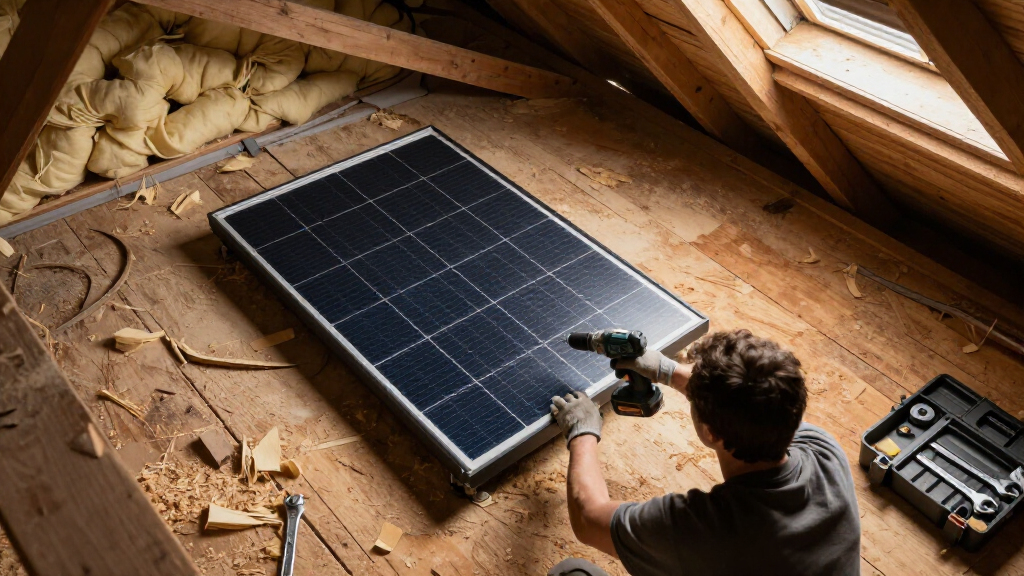
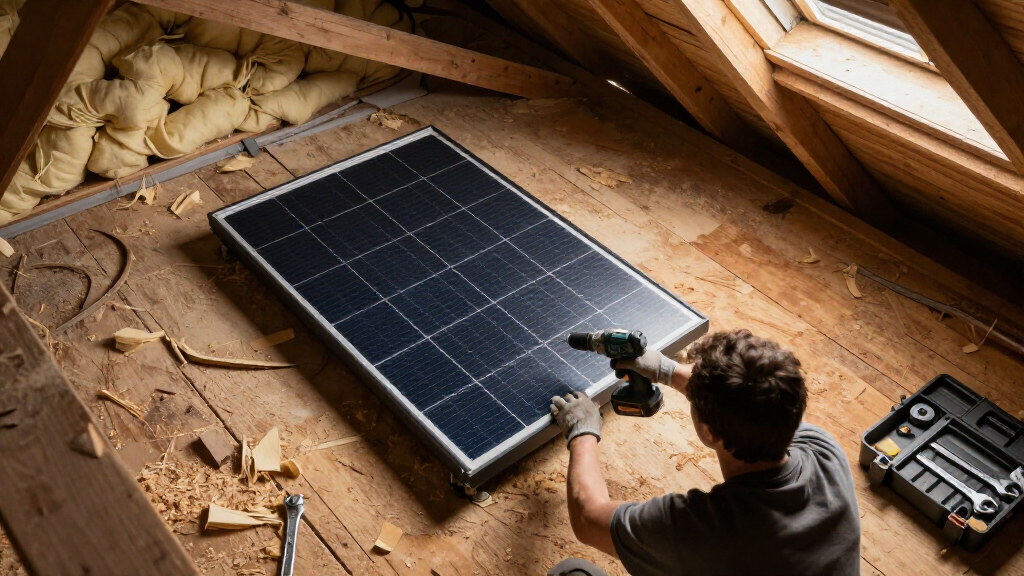
Gable-mounted fans are genuinely DIY-friendly, since they attach to an existing vent opening with basic tools and no roof penetration — the VEVOR gable model fits this category. Roof-mounted fans require cutting a hole in your roofing, installing flashing, and sealing against leaks, which is where most self-installs go wrong. A poorly flashed fan can cause water damage that far exceeds the cost of professional installation, and some roofing warranties are voided by owner-made penetrations. If your roof is under warranty, made of tile or metal, or still relatively new, hire a roofer for the mount. Otherwise, a confident DIYer with shingle roofing experience can handle it in an afternoon.
Conclusion
For most homeowners, the VEVOR 50W with smart temperature and smoke sensors is the best overall pick — its 3000 CFM output, automation, and remote control deliver set-and-forget ventilation for mid-size and large attics. The DC HOUSE 32W metal-shell fan takes the value crown, covering up to 3000 square feet at a lower price point if you’re willing to give up smart features. On the premium side, the OmniPV Smart Hybrid Pro justifies its cost with 2850 CFM and dual-power operation for buyers in humid climates who need round-the-clock ventilation.
Beginners and small-attic owners should start with the HONGUAN 34W IP65 model, which pairs simple installation with genuine weatherproofing at modest capacity. For specific needs: the VEVOR 14-inch gable fan is the clear choice if you want to avoid cutting your roof, the Remington 40W Builder with AC adapter solves nighttime moisture problems, and the iLIVING HYBRID suits compact spaces where its 1150 CFM is more than enough. Match the fan to your attic size and climate first — those two factors eliminate most of this list on their own.
Halloween Picks
halloween
As an affiliate, we earn on qualifying purchases.