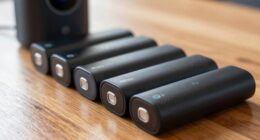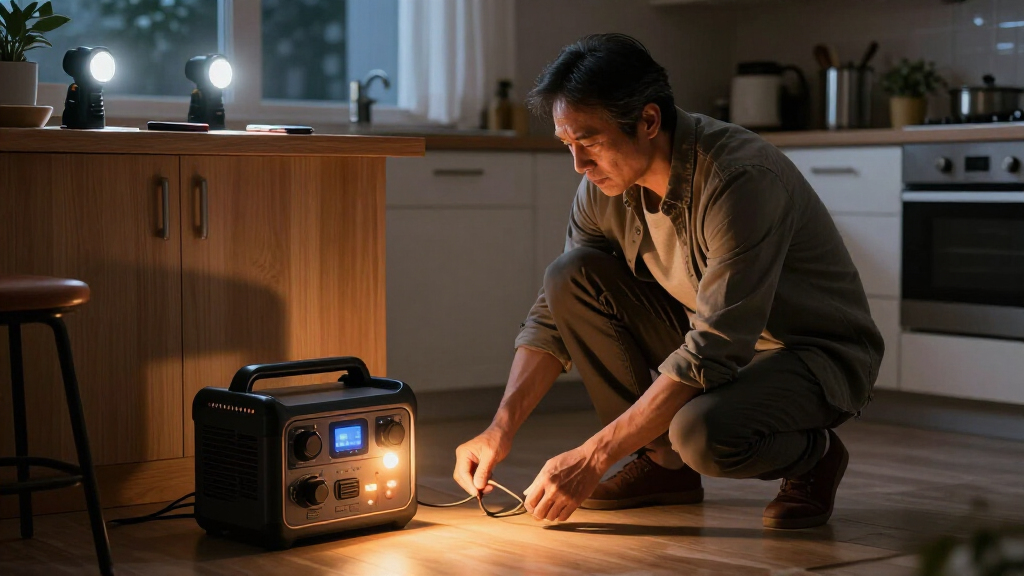

When the power goes out, the right portable power station keeps your fridge running, your phones charged, and your CPAP or medical devices working until the grid comes back. For whole-home essentials, the Jackery HomePower 3600 Plus stands out with its 3584Wh capacity and 3600W output — enough to run a refrigerator, a microwave, and lights at the same time. The Anker SOLIX S2000 is the smarter mid-size choice for most households, while the budget-friendly Anker SOLIX C1000 Gen 2 balances capacity against cost for apartment dwellers. The main tradeoff in this category is capacity versus price and portability: big units run more appliances for longer but cost more and weigh over 80 pounds, while small units like the MARBERO M82 or Daran 89.6Wh only cover phones and laptops. Keep reading for the full breakdown of all 14 models and which one fits your backup plan.

Get backup power and energy gear delivered free with Prime
- Fast, free delivery on millions of items
- Prime Video, Amazon Music and more included
- Member-only deals all year
Complete the kit


Key Takeaways
- Capacity splits this lineup into three tiers: whole-home (Jackery HomePower 3600 Plus at 3584Wh), mid-size essentials coverage (Anker SOLIX S2000, Jackery Explorer 1000 v2, EcoFlow Delta 3 Classic, Anker SOLIX C1000), and small emergency units (MARBERO M82, Daran, ALLWEI 256Wh) that only power phones, routers, and laptops.
- Inverter wattage matters as much as battery size: a 500W GRECELL or 300W ALLWEI cannot start a refrigerator even with a full battery, while 1500W-3600W models like the Explorer 1000 v2 and HomePower 3600 Plus handle appliances with surge demands.
- LiFePO4 chemistry appears in most 2026 models (the 1000W 1024Wh unit, Daran, ALLWEI, Anker) and offers roughly double the cycle life of older NMC packs in the Jackery Explorer 300 — a real factor for a device that sits unused for years between outages.
- Bundled solar panels (Jackery Solar Generator 300 with 40W, Solar Generator 1000 v2 with 200W) add recharge independence for extended outages, but the 40W panel is too small to meaningfully recharge during a multi-day blackout.
- The Jackery Explorer 300 and the 1000W 1024Wh generic unit illustrate the price-positioning spread: the entry Jackery costs more per watt-hour due to brand reliability, while lesser-known brands trade brand support for capacity.
| Jackery HomePower 3600 Plus Power Station, 3584Wh, 3600W AC Output |  | Best Overall for Whole-Home Backup | Capacity: 3584Wh (expandable to 21kWh per unit, 43kWh multi-unit) | AC Output: 3600W continuous, 7200W parallel | Voltage: 120V, 240V capable in parallel | VIEW LATEST PRICE | See Our Full Breakdown |
| 1000W Portable Power Station, 1024Wh LiFePO4 Battery |  | Best Value for Essential Backup | Capacity: 1024Wh | AC Output: 1000W continuous, 2×110V outlets | Battery Chemistry: LiFePO4 (automotive-grade) | VIEW LATEST PRICE | See Our Full Breakdown |
| GRECELL Portable Power Station 500W, 519Wh Solar Generator |  | Best Budget Emergency Kit | Capacity: 519Wh (140,400mAh) | AC Output: 500W pure sine wave, 2×110V outlets | Ports: 2 AC, 3 USB-A QC3.0, 1 USB-C PD 60W, 2 DC, 1 car port, 1 wireless charger | VIEW LATEST PRICE | See Our Full Breakdown |
| LIBRIDS Portable Power Station 640Wh with 1200W Surge |  | Best for Uninterruptible Device Power | Capacity: 640Wh | AC Output: 600W continuous, 1200W surge | Battery Chemistry: LiFePO4 | VIEW LATEST PRICE | See Our Full Breakdown |
| Jackery Explorer 300 Portable Power Station, 292Wh |  | Best Compact and Portable | Capacity: 292Wh | AC Output: 300W rated, 600W peak surge | Battery Chemistry: LiFePO4 | VIEW LATEST PRICE | See Our Full Breakdown |
| Jackery Explorer 1000 v2 Portable Power Station, 1070Wh, 1500W |  | Best for Fast Recharging Between Outages | Capacity: 1,070Wh | AC Output: 1,500W continuous / 3,000W surge | Battery Chemistry: LiFePO4, 4,000+ cycles to 70% | VIEW LATEST PRICE | See Our Full Breakdown |
| Anker SOLIX S2000 Portable Power Station, 2,010Wh, 1,500W |  | Best Long-Duration Fridge Backup | Capacity: 2,010Wh | AC Output: 1,500W continuous / 3,000W peak | Battery Chemistry: 314Ah LFP, 10,000 cycles, ~15-year lifespan | VIEW LATEST PRICE | See Our Full Breakdown |
| Anker SOLIX C1000 Gen 2 Portable Power Station, 1,024Wh |  | Best Balanced Mid-Size Pick | Capacity: 1,024Wh | AC Output: 2,000W continuous / 3,000W peak | Battery Chemistry: LiFePO4, 4,000 cycles to 80% | VIEW LATEST PRICE | See Our Full Breakdown |
| Jackery Solar Generator 300 with 40W Solar Panel |  | Best Small Emergency Kit | Capacity: 292Wh | Output: 300W rated / 600W peak surge | Battery Chemistry: LiFePO4, 4,000+ cycles to 70% | VIEW LATEST PRICE | See Our Full Breakdown |
| Daran Portable Power Station 89.6Wh LiFePO4, 100W |  | Best Desk-Sized Backup | Capacity: 89.6Wh | Output: 100W continuous / 200W peak | Battery Chemistry: LiFePO4, 3,500+ cycles | VIEW LATEST PRICE | See Our Full Breakdown |
| MARBERO Portable Power Station M82, 88Wh Solar Generator with 120W Surge |  | Best Ultra-Light Emergency Kit Add-On | Capacity: 88Wh (24,000mAh) | Output Wattage: 80W continuous, 120W surge | Total Output Ports: 8 | VIEW LATEST PRICE | See Our Full Breakdown |
| Jackery Solar Generator 1000 v2 with 200W Solar Panel |  | Best Solar-Ready Kit for Real Outages | Capacity: 1,070Wh | AC Output: 1,500W (3,000W surge peak) | Battery Type: LFP (LiFePO4), 4,000+ cycles | VIEW LATEST PRICE | See Our Full Breakdown |
| EF ECOFLOW Portable Power Station Delta 3 Classic, 1024Wh 1800W AC |  | Best for Sensitive Electronics and UPS Duty | Capacity: 1,024Wh | AC Output: 1,800W (3,600W surge), X-Boost to 2,600W | Battery Type: LiFePO4, rated 10+ years | VIEW LATEST PRICE | See Our Full Breakdown |
| ALLWEI Portable Power Station 300W, 256Wh LiFePO4 Solar Generator |  | Best Budget Pick for CPAP and Overnight Essentials | Capacity: 256Wh | Continuous Output: 300W (600W peak surge) | Battery Type: LiFePO4 (LFP), 3,000 cycles | VIEW LATEST PRICE | See Our Full Breakdown |
| portable power stations for home backup | Capacity | Weight | AC Output | Battery Chemistry |
|---|---|---|---|---|
| Jackery HomePower 3600 Plus Po | 3584Wh (expandable to 21kWh per unit, 43kWh multi-unit) | — | 3600W continuous, 7200W parallel | LFP with ceramic membrane cells |
| 1000W Portable Power Station | 1024Wh | 27.73 lbs | 1000W continuous, 2×110V outlets | LiFePO4 (automotive-grade) |
| GRECELL Portable Power Station | 519Wh (140,400mAh) | — | 500W pure sine wave, 2×110V outlets | — |
| LIBRIDS Portable Power Station | 640Wh | — | 600W continuous, 1200W surge | LiFePO4 |
| Jackery Explorer 300 Portable | 292Wh | 7.5 lbs | 300W rated, 600W peak surge | LiFePO4 |
| Jackery Explorer 1000 v2 Porta | 1,070Wh | 23.8 lbs | 1,500W continuous / 3,000W surge | LiFePO4, 4,000+ cycles to 70% |
| Anker SOLIX S2000 Portable Pow | 2,010Wh | 35.7 lbs | 1,500W continuous / 3,000W peak | 314Ah LFP, 10,000 cycles, ~15-year lifespan |
| Anker SOLIX C1000 Gen 2 Portab | 1,024Wh | 11.3 kg (24.9 lbs) | 2,000W continuous / 3,000W peak | LiFePO4, 4,000 cycles to 80% |
| Jackery Solar Generator 300 wi | 292Wh | 7.5 lbs | — | LiFePO4, 4,000+ cycles to 70% |
| Daran Portable Power Station 8 | 89.6Wh | 2.54 lbs | — | LiFePO4, 3,500+ cycles |
| MARBERO Portable Power Station | 88Wh (24,000mAh) | 3.2 lbs | — | — |
| Jackery Solar Generator 1000 v | 1,070Wh | 23.8 lbs | 1,500W (3,000W surge peak) | — |
| EF ECOFLOW Portable Power Stat | 1,024Wh | 26.7 lbs | 1,800W (3,600W surge), X-Boost to 2,600W | — |
| ALLWEI Portable Power Station | 256Wh | 6.4 lbs | — | — |
More Details on Our Top Picks
Jackery HomePower 3600 Plus Power Station, 3584Wh, 3600W AC Output
This option stands out as the only unit in this lineup that can genuinely back up an entire household rather than a few devices. With 3600W of continuous output and 7200W in parallel, it runs power-hungry appliances like dryers, heaters, and well pumps that would instantly trip the Anker SOLIX S2000 or the Jackery Explorer 1000 v2. Capacity is the real story here: 3584Wh expandable to 21kWh per unit, enough to carry a small family through multi-day outages without rationing. The plug-and-play manual transfer switch setup means no electrician visit, and the luggage-style wheels make a unit this size movable without back strain. The tradeoffs are real, though — this is a big financial commitment, the parallel capability requires buying additional hardware, and it is massive overkill if you only need to keep a router and mini fridge alive.
Pros:- 3600W output (7200W parallel) runs large appliances other units cannot start
- Expandable from 3584Wh up to 43kWh for extended outages
- LFP cells rated for 6,000 cycles and cold-weather operation down to -4°F
- Wheels and telescopic handle make repositioning manageable
Cons:- Premium-tier investment that dwarfs the cost of smaller units in this guide
- Parallel and expansion features require purchasing additional batteries and connectors
- Far heavier than compact options despite the wheeled design
Best for: Homeowners who want refrigerator-plus-appliance coverage through multi-day outages without a permanent generator installation
Not ideal for: Apartment dwellers or renters who only need phone, laptop, and router power — the capacity goes unused and the size demands storage space
- Capacity:3584Wh (expandable to 21kWh per unit, 43kWh multi-unit)
- AC Output:3600W continuous, 7200W parallel
- Voltage:120V, 240V capable in parallel
- Battery Chemistry:LFP with ceramic membrane cells
- Cycle Life:6,000 cycles (10-year lifespan)
- Recharge Time:2 hours hybrid AC+DC, 4 hours solar
- Design:Luggage-style with wheels and telescopic handle
Our verdict“Buy this if a blackout means keeping your whole house running; skip it if your backup needs stop at a mini fridge.”
1000W Portable Power Station, 1024Wh LiFePO4 Battery
This model hits the sweet spot between the small-capacity units like the GRECELL 519Wh and the pricier name-brand midsize options like the EF ECOFLOW Delta 3 Classic. With 1024Wh of LiFePO4 capacity, it keeps a mini fridge, router, and lights running for two to three days — the core of a realistic home backup plan — at a no-name-brand price point. The 3000+ cycle rating means it will still be useful a decade from now, unlike older lithium-ion chemistry. Compared with the GRECELL, you get double the runtime and double the output headroom; compared with the EcoFlow, you give up app control and faster charging but keep the essentials. The limitations are straightforward: 1000W caps what you can run (no microwaves or hair dryers), the 60W USB-C port is slow by current standards, and full solar recharge takes 6–8 hours with the panel sold separately.
Pros:- 1024Wh capacity covers 2–3 days of essential loads at a value price
- Automotive-grade LiFePO4 rated for 3000+ cycles
- Runs up to 5 devices at once and is Starlink compatible
- Clean power output suitable for sensitive electronics and medical devices
Cons:- 60W USB-C charging is slow for modern laptops
- Solar panels sold separately and full solar recharge takes 6–8 hours
- Generic brand means less established support network than Jackery or Anker
Best for: Budget-conscious households building their first outage kit around a fridge, router, lights, and phones
Not ideal for: Anyone wanting to run heating appliances, microwaves, or power tools — the 1000W ceiling rules them out
- Capacity:1024Wh
- AC Output:1000W continuous, 2×110V outlets
- Battery Chemistry:LiFePO4 (automotive-grade)
- USB Ports:1×60W PD USB-C, 2×USB-A
- Solar Input:Up to 300W
- Cycle Life:3000+ cycles to 80% capacity
- Weight:27.73 lbs
Our verdict“The smart pick for buyers who want real multi-day essential coverage without paying for brand-name features they will never use.”
GRECELL Portable Power Station 500W, 519Wh Solar Generator
Where the Jackery Explorer 300 is built for portability, the GRECELL 519Wh is built for sitting in a closet until the lights go out. Its 500W pure sine wave output covers the outage basics — router, TV, fans, LED lighting, and CPAP machines — and the port selection is unusually generous for this tier: 10 devices at once, including QC 3.0 USB-A, 60W USB-C, DC barrel ports, and even a wireless charging pad on top. That sheer variety beats pricier midsize units from bigger brands. The honest tradeoffs: 500W cannot start a microwave or most refrigerators (the 1024Wh value pick above handles that job), recharge times run 6–8 hours from the wall, and you must remember to cycle the battery every three months or it will slowly self-discharge to empty in storage. The AC inverter also drains the pack if left switched on between outages.
Pros:- Powers up to 10 devices simultaneously with a wider port variety than pricier rivals
- Pure sine wave output safe for CPAP and sensitive electronics
- Three recharge methods including solar and car charging
- Wireless charging pad adds convenience no other unit here offers
Cons:- 500W output ceiling excludes refrigerators and heating appliances
- 6–8 hour wall recharge and required quarterly maintenance cycling
- AC output drains the battery if left on between uses
Best for: Households wanting an affordable, set-and-forget emergency station for communications, lighting, and medical devices like CPAP machines
Not ideal for: Anyone expecting refrigerator backup — 500W output and 519Wh capacity cannot support it
- Capacity:519Wh (140,400mAh)
- AC Output:500W pure sine wave, 2×110V outlets
- Ports:2 AC, 3 USB-A QC3.0, 1 USB-C PD 60W, 2 DC, 1 car port, 1 wireless charger
- Solar Input:Compatible with 100W–200W panels
- Recharge Time:6–7 hours AC, 6–9 hours solar (100W)
- Safety:BMS with temperature, overvoltage, and short-circuit protection
Our verdict“A sensible low-cost emergency box for staying connected and lit during short outages, as long as you accept it will never run a fridge.”
LIBRIDS Portable Power Station 640Wh with 1200W Surge
The feature that separates this unit from everything else in this guide is the built-in 10ms UPS function. For anyone running a desktop computer, NAS, or medical device where even a flicker matters, the LIBRIDS switches to battery faster than most equipment can register the outage — something the Anker SOLIX C1000 Gen 2 and others at this capacity typically cannot match. The 1.5-hour AC recharge is also the fastest in this batch, meaning you can refill between rolling blackouts instead of waiting most of a day like GRECELL owners. The 4000+ cycle LiFePO4 battery and 5-year warranty signal confidence in longevity. What holds it back: 600W continuous output limits appliance use, the 640Wh capacity sits awkwardly between small and midsize, and the indoor-only rating plus metal enclosure mean no camping duty and extra heft when carrying it between rooms.
Pros:- 10ms UPS switchover prevents shutdowns for computers and networking gear
- 1.5-hour full AC recharge is fastest in this lineup
- 4000+ cycle LiFePO4 battery backed by a 5-year warranty
- Pure sine wave output safe for medical equipment
Cons:- 600W continuous output excludes most kitchen appliances
- Indoor-use-only label removes outdoor and camping flexibility
- 640Wh capacity is a modest step up over smaller units for the price of a midsize
Best for: Remote workers and small-office owners who need computers and networking gear to ride through outages without shutting down
Not ideal for: Campers and outdoor users — the indoor-only rating and heavier metal build make it a poor travel companion
- Capacity:640Wh
- AC Output:600W continuous, 1200W surge
- Battery Chemistry:LiFePO4
- UPS Switch Time:10ms
- Recharge Time:1.5 hours via AC
- Ports:8 total including 4 AC-style outputs
- Warranty:5 years
Our verdict“The right pick when zero-interruption power for electronics matters more than raw capacity or portability.”
Jackery Explorer 300 Portable Power Station, 292Wh
At 7.5 pounds, the Explorer 300 is the unit you can actually grab with one hand when the lights flicker — every other station in this roundup requires two hands and some planning. For home backup, it plays a specific role: keeping a phone, laptop, Wi-Fi router, or CPAP machine alive during short outages, or serving as the go-bag companion for longer emergencies where mobility matters. Compared with the similarly small MARBERO M82 or ALLWEI 300W, the Explorer 300 offers a genuine brand ecosystem — Jackery’s solar panels pair seamlessly, reaching 80% charge in about 2.8 hours with a 100W panel. The upgraded LiFePO4 chemistry with 4000+ cycles is impressive at this size. But do not oversell it: 292Wh will not touch a refrigerator, the 300W output ceiling rules out anything with a heating element, and the capacity-to-price ratio is worse than the GRECELL or 1024Wh value picks if you never carry it anywhere.
Pros:- 7.5-pound weight with integrated handle makes it the most portable option here
- LiFePO4 chemistry rated for 4000+ cycles and 11+ years of service
- Charges up to 6 devices across AC, USB-C PD 100W, USB-A, and car ports
- Seamless pairing with Jackery’s solar panel ecosystem
Cons:- 292Wh capacity covers hours, not days, of essential loads
- 300W output cannot run most kitchen appliances
- Poor capacity-per-dollar compared with larger units if portability is never used
Best for: Renters, campers, and anyone who wants grab-and-go outage power for communications and CPAP rather than appliances
Not ideal for: Households backing up a refrigerator or any heating appliance — 292Wh and 300W fall well short
- Capacity:292Wh
- AC Output:300W rated, 600W peak surge
- Battery Chemistry:LiFePO4
- Cycle Life:4000+ cycles to 70% capacity
- Ports:2 AC, 1 USB-C PD 100W, 2 USB-A, 1 car port
- Weight:7.5 lbs
- Solar Charging:80% in ~2.8 hours with 100W panel (panel sold separately)
Our verdict“Choose this when lightweight, grab-it-and-go backup for devices is the goal; choose almost anything else in this guide when capacity is.”
Jackery Explorer 1000 v2 Portable Power Station, 1070Wh, 1500W
When the power flickers on and off during a storm, recharge speed matters as much as capacity, and that’s where the Explorer 1000 v2 pulls ahead of rivals like the EF ECOFLOW Delta 3 Classic. A full refill in roughly an hour with emergency charging enabled means this unit is ready for the next outage while slower competitors are still at half capacity. The 1,070Wh LFP battery with 4,000-cycle lifespan covers a fridge, lights, and phones for an evening, and the 23.8 lb foldable design makes it easy to move to wherever it’s needed.
The tradeoff is output: at 1,500W continuous, it can’t run power-hungry appliances the way the Jackery HomePower 3600 Plus can. And solar charging only works with Jackery’s own panels, which locks you into their ecosystem if off-grid recovery is part of your plan.
Pros:- One-hour emergency full recharge via the Jackery app minimizes downtime between outages
- 4,000-cycle LFP battery rated for 10+ years of backup duty
- Light 23.8 lb build with foldable handle is genuinely portable around the house
- Quiet 30 dB overnight charging mode won’t disrupt sleep
Cons:- Solar charging limited to Jackery-branded panels only
- 1,500W ceiling rules out high-wattage appliances
- Fast charging must be manually enabled in the app each time; default is a slower 1.7 hours
Best for: Suburban homeowners who face repeated short outages and want a station topped back up quickly between them
Not ideal for: Households running large appliances like well pumps or window AC units — 1,500W output will trip or refuse to start them
- Capacity:1,070Wh
- AC Output:1,500W continuous / 3,000W surge
- Battery Chemistry:LiFePO4, 4,000+ cycles to 70%
- AC Recharge:1 hour (emergency mode) / 1.7 hours default
- Ports:3 AC, 2 USB-C, 1 USB-A, 1 DC car port
- Weight:23.8 lbs
- Solar Compatibility:Jackery panels only (not included)
Our verdict“A smart pick for buyers whose biggest frustration is a slow-recharging station during back-to-back outages, not raw power.”
Anker SOLIX S2000 Portable Power Station, 2,010Wh, 1,500W
If your outage priority is simple — keep the refrigerator and a few essentials alive — the S2000 is built around exactly that job. Its very low 6W idle draw and higher inverter efficiency translate into roughly 35 hours of fridge runtime, meaning less babysitting and fewer recharge decisions mid-outage. Compared with the Jackery Explorer 1000 v2, you’re getting nearly double the stored energy in a chassis that’s still manageable at 35.7 lbs.
The under-10ms UPS switchover also lets it sit permanently behind a home-office computer or CPAP machine, something smaller units like the Anker SOLIX C1000 Gen 2 also offer but with half the endurance. The catch: 1,500W output caps what you can run simultaneously, and there’s no 12V DC car port, which will annoy anyone with older DC accessories. Solar input tops out at 400W, modest for a battery this size.
Pros:- Up to 35 hours of fridge runtime thanks to 6W idle draw and efficient inverter
- 10,000-cycle LFP cells rated for roughly 15 years of service
- Under 10ms UPS switchover for computers and medical devices
- Compact for its class — 30% smaller than typical 2kWh units
Cons:- No 12V DC car port
- 400W solar input is slow for restoring 2kWh off-grid
- 1,500W output is modest relative to its capacity
Best for: Homeowners who want a set-it-and-forget-it fridge and CPAP backup that can also double as a permanent office UPS
Not ideal for: Buyers planning to run space heaters, microwaves, or power tools — the 1,500W ceiling and slower solar recovery don’t suit heavy loads
- Capacity:2,010Wh
- AC Output:1,500W continuous / 3,000W peak
- Battery Chemistry:314Ah LFP, 10,000 cycles, ~15-year lifespan
- Fridge Runtime:Up to 35 hours (varies by model)
- Solar Input:Up to 400W
- Outlets:8 total, front and rear; no 12V DC port
- UPS Switchover:Under 10ms
- Weight:35.7 lbs
Our verdict“The clear choice when endurance for essentials matters more than raw wattage or expandability.”
Anker SOLIX C1000 Gen 2 Portable Power Station, 1,024Wh
The C1000 Gen 2 strikes the balance most home-backup buyers actually need: 1,024Wh of storage, a 2,000W output that handles microwave and kettle duty, and a 49-minute full recharge via HyperFlash. That output advantage over the Jackery Explorer 1000 v2 (1,500W) is the difference between running one appliance at a time and running a couple together without tripping. Ten ports, including dual-sided outlets, keep an outage setup tidy.
Its 600W solar input with 1.8-hour solar recharge also beats the Jackery’s locked, slower ecosystem, making it friendlier for grid-down scenarios. The limitation versus the Anker SOLIX S2000 is simple math: half the capacity means roughly half the fridge runtime, so multi-day outages will require recharging. TOU mode in the app is a nice touch for those using it daily rather than purely for emergencies.
Pros:- 2,000W output runs appliances the 1,500W class can’t touch
- 49-minute AC full recharge when enabled via the app
- 600W solar input with 1.8-hour full solar recharge
- Under 10ms UPS switchover protects CPAP machines and computers
Cons:- 1,024Wh capacity limits multi-day endurance compared to 2kWh rivals
- Fast charging must be activated in the app rather than being default
- Peak surge of 3,000W is tight for motor-driven appliances like compressors
Best for: Buyers who want one unit that covers an evening outage at home and still fits in the car for camping or tailgating
Not ideal for: Households preparing for multi-day outages without solar or generator recharge — 1kWh runs dry fast under real loads
- Capacity:1,024Wh
- AC Output:2,000W continuous / 3,000W peak
- Battery Chemistry:LiFePO4, 4,000 cycles to 80%
- AC Recharge:Full charge in 49 minutes at 1,600W
- Solar Input:600W (60V max), full in 1.8 hours
- Ports:10 total outlets
- UPS Switchover:Under 10ms
- Weight:11.3 kg (24.9 lbs)
Our verdict“The most well-rounded size-and-power compromise in this lineup for buyers who want one station for home and away.”
Jackery Solar Generator 300 with 40W Solar Panel
Most power stations in this roundup assume you’re backing up appliances; the Solar Generator 300 assumes you just need to stay connected. The 292Wh station at 7.5 lbs paired with an included 40W panel makes this the one true grab-and-go kit — phones, a router, a laptop, and a light can run for a day or two of recovery. The LiFePO4 chemistry with 4,000+ cycles means it won’t degrade sitting in a closet waiting for the next emergency, unlike older NMC small units.
Compared with the standalone Jackery Explorer 300, the bundled panel is the whole point here: a small trickle of solar extends runtime indefinitely in daylight. But the 300W output ceiling is a hard limit — no fridge, no microwave. And the 40W panel needs 7.5 hours of good sun just to reach 80%, so this is a life raft, not a lifeboat.
Pros:- Complete kit with 40W solar panel included, ready out of the box
- Featherweight 7.5 lbs with carry handle for true portability
- LiFePO4 battery rated for 4,000+ cycles and 11+ years
- Six ports including 100W USB-C PD for fast laptop charging
Cons:- 300W output can’t run fridges or most kitchen appliances
- 40W panel is slow — 7.5 hours of sun for 80% charge
- Poor value per watt-hour compared to 1kWh-class stations
Best for: Apartment dwellers and car campers who need communications and device charging covered, with a little solar autonomy included
Not ideal for: Anyone who needs refrigeration during an outage — 292Wh and 300W simply cannot support a fridge
- Capacity:292Wh
- Output:300W rated / 600W peak surge
- Battery Chemistry:LiFePO4, 4,000+ cycles to 70%
- Ports:2 AC, 1 USB-C PD (100W), 2 USB-A, 1 car port (120W)
- Included Panel:40W portable solar panel
- Solar Charge Time:80% in 7.5 hours (40W panel)
- Weight:7.5 lbs
Our verdict“Buy this as a connectivity and lighting lifeline with solar included — not as a whole-home backup.”
Daran Portable Power Station 89.6Wh LiFePO4, 100W
The Daran occupies the smallest niche here: a 2.54 lb, smartphone-sized station that keeps a router, phone, and laptop alive through an outage. Where the Jackery Solar Generator 300 is a grab-and-go kit for the car, the Daran is better thought of as a permanent desk companion — its fanless, silent operation means it can sit in a bedroom or home office without a sound, something no larger station in this lineup can claim. The 89.6Wh LiFePO4 battery and 12-layer BMS protection punch above their weight for reliability.
Be realistic about scope: 100W output and under 90Wh means no fridge, no TV, and not much beyond electronics. Compared with the MARBERO M82 in this same size class, the Daran’s seven ports and dual-input charging give it an edge for work setups, but both are strictly device-level backup. The solar panel isn’t included, and initial conditioning cycles are needed for best performance.
Pros:- Completely silent fanless design suitable for bedrooms and desks
- Genuinely pocket-and-shelf sized at 2.54 lbs
- Seven output ports including dual AC and dual USB-C
- Fast 0–80% recharge in 1.5 hours from multiple input sources
Cons:- 100W ceiling limits use to small electronics only
- Solar panel and cable not included
- Requires initial full charge/discharge cycles for best performance
Best for: Remote workers and students who need a silent, always-ready power brick for a router, laptop, and phone during short outages
Not ideal for: Anyone expecting appliance backup of any kind — 100W and 89.6Wh is electronics-only
- Capacity:89.6Wh
- Output:100W continuous / 200W peak
- Battery Chemistry:LiFePO4, 3,500+ cycles
- Ports:2 AC, 2 USB-C, 2 USB-A, 1 DC5521
- Recharge Time:0–80% in 1.5 hours
- Noise:Fanless, silent operation
- Weight:2.54 lbs
- Safety:12-layer BMS protection
Our verdict“A niche but sensible pick for keeping a work-from-home essentials kit alive quietly — nothing more.”
MARBERO Portable Power Station M82, 88Wh Solar Generator with 120W Surge
Sometimes a full-size station is overkill, and that’s exactly the gap the MARBERO M82 fills. At 3.2 lbs with an ergonomic handle, it’s the kind of unit you toss into a bedside drawer or go-bag for phones, a router, or a small fan during an outage. Its eight simultaneous output ports are generous for this size class — the similarly compact Daran 89.6Wh unit offers fewer connection options. The LED flashlight with SOS mode running up to 68 hours adds genuine emergency value. But the ceiling is low: 88Wh and 80W continuous output means no fridge, no microwave, no CPAP for a full night. Compared with the ALLWEI 256Wh below, it covers roughly a third of the runtime at a fraction of the weight — a fair trade only if portability outranks capacity.
Pros:- Featherlight 3.2 lb design with a carry handle for true grab-and-go use
- Eight simultaneous ports including AC, USB-C PD, and car DC
- Flashlight with SOS mode runs up to 68 hours on the lowest setting
- Pass-through charging lets you top it up while powering devices
Cons:- 88Wh capacity gives only a few phone charges or brief small-device runtime
- 80W continuous output rules out nearly all household appliances
Best for: Apartment dwellers and minimalists who want a grab-and-go power source for phones, lights, and a router during short outages
Not ideal for: Anyone backing up a refrigerator, CPAP machine, or any appliance — 80W continuous output and 88Wh capacity simply can’t handle it
- Capacity:88Wh (24,000mAh)
- Output Wattage:80W continuous, 120W surge
- Total Output Ports:8
- Charging Time:0-80% in 2 hours
- Weight:3.2 lbs
- Dimensions:6.5 x 4.6 x 3.1 inches
- Solar Compatible:Yes (MARBERO 30W or 60W panels)
- Safety:BMS with UL-tested cylindrical batteries
Our verdict“A sensible bedside emergency companion for small electronics, but not a real home-backup player.”
Jackery Solar Generator 1000 v2 with 200W Solar Panel
This is the only entry in this batch that arrives as a complete solar generator kit, and that changes the backup math entirely. The 1,070Wh Explorer 1000 v2 plus a bundled 200W panel means you can keep a fridge cycling through a multi-day outage rather than just riding out a few hours. Charging is where it pulls ahead of rivals like the EcoFlow Delta 3 Classic in convenience-of-use terms: roughly one hour to full in emergency mode, and 80% in about six hours off the included panel. The LFP battery rated for 4,000+ cycles means a decade of seasonal use without meaningful degradation. Tradeoffs exist: the one-hour charge requires manually toggling emergency mode in the app every time, the station and panel ship separately, and 1,500W output can’t match the EcoFlow’s 1,800W for heavier simultaneous loads.
Pros:- Complete kit: station plus 200W solar panel means off-grid recharging out of the box
- Roughly 1-hour full charge in emergency mode
- LFP battery rated for 4,000+ cycles and 10+ years of service
- At 23.8 lbs with a foldable handle, it’s the lightest kilowatt-class option here
Cons:- Emergency fast-charging must be re-enabled in the app each time
- Station and panel ship separately, so deliveries may not arrive together
Best for: Homeowners in outage-prone areas who want a fridge, lights, and devices covered with a renewable recharge loop from day one
Not ideal for: Households running multiple high-draw appliances at once — 1,500W output is solid but not in the EcoFlow Delta 3’s class
- Capacity:1,070Wh
- AC Output:1,500W (3,000W surge peak)
- Battery Type:LFP (LiFePO4), 4,000+ cycles
- Ports:2x USB-C (100W PD), 1x USB-A, 1x DC car port, 3x AC pure sine wave
- Full Charge Time:~1 hour (emergency mode) / 1.7 hours (standard)
- Solar Charge Time:80% in 6 hours with included 200W panel
- Weight:23.8 lbs
- Warranty:5 years
Our verdict“The most outage-ready package in this lineup for buyers who want solar recharging included rather than added later.”
EF ECOFLOW Portable Power Station Delta 3 Classic, 1024Wh 1800W AC
What separates the EcoFlow Delta 3 Classic from the Jackery 1000 v2 kit is its sub-10ms UPS switchover. Plugged in between the wall and a desktop PC, NAS, or medical device, it takes over so fast the equipment never notices the power died — a capability neither the Jackery nor the ALLWEI offers. With 1,800W continuous output (3,600W surge) and X-Boost stretching to 2,600W, it handles refrigerators and microwaves where the Jackery’s 1,500W ceiling gets tight. Recharging is its party trick: 0-80% in 45 minutes via X-Stream AC, the fastest wall-charge figure in this entire roundup. The caveats: the solar panel is an optional extra, and EcoFlow’s own smart extra batteries from the DELTA 2 and DELTA 3 lines aren’t compatible, so expansion paths are narrower than the brand loyalist might expect.
Pros:- Sub-10ms UPS switchover prevents downtime and data loss for sensitive electronics
- 1,800W output with X-Boost up to 2,600W runs heavier appliances than most 1kWh rivals
- 0-80% AC recharge in 45 minutes is best-in-class speed
- LiFePO4 cells rated for 10+ years with smart app control and Storm Alert
Cons:- Solar panel sold separately, unlike the bundled Jackery 1000 v2 kit
- No compatibility with DELTA 2 or DELTA 3 smart extra batteries limits expansion
- At 26.7 lbs it’s the heaviest unit in this batch
Best for: Remote workers and anyone running a PC, network gear, or medical equipment who needs seamless UPS-style protection plus real appliance power
Not ideal for: Buyers counting on battery expansion later — incompatible with DELTA 2 and DELTA 3 series extra batteries
- Capacity:1,024Wh
- AC Output:1,800W (3,600W surge), X-Boost to 2,600W
- Battery Type:LiFePO4, rated 10+ years
- AC Recharge:0-80% in 45 minutes (X-Stream)
- Solar Recharge:~2.5 hours with optional 500W panel
- UPS Switchover:Under 10ms
- Outlets:6 total, including 100W USB-C
- Weight:26.7 lbs
- Dimensions:7.9 x 11.1 x 15.7 inches
Our verdict“The pick for buyers whose priority is protecting computers and medical devices while still covering kitchen essentials.”
ALLWEI Portable Power Station 300W, 256Wh LiFePO4 Solar Generator
The ALLWEI 300W occupies a smart middle ground between the tiny MARBERO M82 and the kilowatt-class giants. Its 256Wh capacity is enough to run a CPAP machine through the night — something the 88Wh MARBERO cannot attempt — and its pure sine wave output makes that safe for sensitive hardware. The LiFePO4 chemistry rated for 3,000 cycles is unusual at this size and price tier; most compact units use shorter-lived cells, so this one should still be going strong in a decade. It trails the Jackery Explorer 300’s 292Wh on raw capacity but counters with more port variety and dual AC-plus-solar recharging. The catch is straightforward: 300W continuous output caps it at modest loads, and the solar panel costs extra, so the off-grid story isn’t free.
Pros:- Pure sine wave AC that’s safe for CPAP machines and laptops
- LiFePO4 battery rated for 3,000 cycles, roughly a decade of service
- Six output ports plus four recharge methods including dual AC+solar
- Compact 6.4 lb build with built-in LED light and SOS mode
Cons:- Solar panel sold separately
- 300W output can’t handle high-wattage appliances
Best for: CPAP users and small-household buyers who need one critical device powered overnight at a modest price point
Not ideal for: Anyone expecting to run a refrigerator, microwave, or power tools — the 300W ceiling will trip instantly
- Capacity:256Wh
- Continuous Output:300W (600W peak surge)
- Battery Type:LiFePO4 (LFP), 3,000 cycles
- Output Ports:1 AC, 2 DC5521, 1 car lighter, 1 USB-A 18W, 1 USB-C PD 60W
- Recharge Time (AC):3.5-4 hours
- Recharge Time (Dual AC + Solar):2-2.5 hours
- Weight:6.4 lbs
- Warranty:5 years
Our verdict“A dependable, long-lived budget option whose pure sine wave output makes it the CPAP user’s choice in this range.”

How We Picked
I evaluated each station against the one question that defines home backup: what can it actually run, and for how long, during an outage? That starts with capacity in watt-hours — a full-size refrigerator needs roughly 500-700Wh per day, and a router plus a few phones barely dents 100Wh. From there I looked at inverter output and surge ratings, since a station that cannot start a compressor motor is useless for food preservation no matter how big its battery is. Battery chemistry was the third filter: LiFePO4 cells with 2,000-plus cycle ratings age far better in a device that may sit on a shelf between emergencies than older NMC packs.
Ranking also factored in recharge speed, UPS-style pass-through capability where present, expandability (the HomePower 3600 Plus supports extra battery packs), and whether bundled solar panels are genuinely useful or just marketing garnish. Finally, I weighed brand support and warranty reputation, because a backup device that fails when the grid does is worse than no backup at all. The ordering reflects a blend of these factors — capacity and output first, then longevity, then value — rather than price alone.
Factors to Consider When Choosing Portable Power Stations For Home Backup
Before picking a specific model, it helps to understand the common mistakes buyers make with home backup power. The biggest one is buying capacity without checking wattage, which leaves people with a full battery that cannot run the appliance they bought it for.Watt-Hours vs. Watts: The Mistake That Ruins Most Purchases
Capacity (Wh) tells you how long a station runs; inverter output (W) tells you what it can run at all. A 519Wh GRECELL with 500W output can power a TV and router for hours but will shut down the moment you plug in a 700W microwave. Meanwhile, a 1070Wh Jackery Explorer 1000 v2 with 1500W output runs that microwave comfortably and still has capacity left over. Always list the running wattage of your must-have appliances first, add 20-30% for surge, then buy capacity to match the runtime you need. Refrigerators are the classic trap: they draw only 100-200W while running but spike to 600-1000W at compressor startup, which is why I gave higher rankings to models with 1500W-plus inverters for essential-appliance backup. A common shortcut is checking the label on each appliance and multiplying watts by expected hours of use — a 10-minute exercise that prevents the most expensive mistake in this category.
Battery Chemistry and Shelf Life
A home backup station spends most of its life sitting idle, and that is where chemistry differences show up. LiFePO4 batteries (used in the Anker SOLIX C1000 Gen 2, EcoFlow Delta 3 Classic, Daran, ALLWEI, and the 1024Wh generic unit) typically rate for 2,000-4,000 charge cycles before dropping to 80% capacity, while older NMC packs in units like the Jackery Explorer 300 are often rated closer to 500-800 cycles. For a device topped up a few times a year and cycled only during outages, LiFePO4 chemistry also degrades less from sitting at full charge. The practical takeaway: an older-generation NMC station may cost less upfront but could lose meaningful capacity within five years of shelf storage. One habit that extends any station’s life is storing it at 50-70% charge and topping it off every three to four months rather than leaving it plugged in permanently at 100%.
Recharge Speed and Pass-Through Charging
During a multi-day outage, how quickly you can refill the battery becomes as important as its size. Models with fast AC input — the EcoFlow Delta 3 Classic and Anker SOLIX C1000 Gen 2 both recharge a full 1kWh-class battery in well under two hours — let you take advantage of brief grid returns or a neighbor’s outlet. Pass-through charging (running devices while the station recharges) effectively doubles runtime when solar or grid input is available. Solar recharge is the other half of this equation: a 200W panel like the one bundled with the Jackery Solar Generator 1000 v2 can genuinely offset daily fridge consumption in decent sun, while a 40W panel is realistically only a trickle-charge accessory. If you expect extended outages — storms, wildfire shutoffs, unreliable rural grid — budget for a real solar input, not a bundled token panel.
Weight, Portability, and Where You’ll Store It
Home backup does not sound like a portability category, but it matters more than buyers expect. The Jackery HomePower 3600 Plus weighs enough that you will want it permanently parked on the floor where you plan to use it, while the 88Wh MARBERO M82 or 89.6Wh Daran can live in a closet and be carried to wherever they’re needed in seconds. Match the weight to your plan: fixed whole-home backup wants a heavy station in a central location, apartment dwellers want something one person can move down a stairwell during an evacuation. Wheel kits and handles (common on 2000Wh-plus models) change the equation — a station on wheels can be repositioned even at 80 pounds. Also think about ventilation: stations discharge a small amount of heat under heavy load and should not be sealed inside a cabinet.
Brand Support, Warranty, and Total Cost of Ownership
A power station is a five-to-ten-year purchase, and warranty terms vary widely — Jackery and Anker back their LiFePO4 models with multi-year coverage, while lesser-known brands like LIBRIDS, GRECELL, and generic listings often carry shorter or murkier support. That is not automatically disqualifying: the GRECELL 500W offers honest capacity for occasional-outage use at a fraction of the price of a name-brand equivalent. The right question is what failure costs you — for medical devices or freezer-contents protection, brand reliability is worth paying for; for a backup-to-the-backup that powers a router, it is not. Also factor in expandability: the HomePower 3600 Plus accepts add-on battery packs, which means you can buy into the platform now and grow capacity later instead of replacing the whole unit. That upgrade path often beats buying a second, cheaper station, since a single large unit avoids juggling two systems mid-outage.
Sizing by Household: A Practical Framework
Rather than guessing, map your household into one of three backup tiers. Tier one is communications backup — phone, router, laptop, a few LED lights — which needs only 90-300Wh and is well served by the MARBERO M82, Daran, ALLWEI, or Jackery Explorer 300. Tier two is essentials backup — refrigerator, router, some lighting, intermittent small appliances — which realistically needs 1000-2000Wh and 1500W-plus output, putting the Explorer 1000 v2, EcoFlow Delta 3 Classic, and Anker SOLIX C1000 Gen 2 in range. Tier three is near whole-home backup with heating equipment, multiple appliances, and multi-day endurance, which is where the Anker SOLIX S2000 and Jackery HomePower 3600 Plus earn their price. The mistake I see most often is tier-three expectations on a tier-one budget: people buy a 300Wh station and expect it to run a fridge overnight. Buy one tier above your honest minimum, because runtime estimates always shrink in real outages when family members plug in ‘just one more thing.’
Frequently Asked Questions
Can a 1000Wh power station actually run my refrigerator during an outage?
In most cases, yes, for a limited window — but check two numbers first. A typical modern refrigerator draws 100-200W while running but needs 600-1000W momentarily when the compressor starts, so your station’s inverter must handle that surge; 1500W models like the Jackery Explorer 1000 v2, EcoFlow Delta 3 Classic, and Anker SOLIX C1000 Gen 2 clear this bar comfortably, while 500W units like the GRECELL do not. On runtime, a fridge cycles on and off, consuming roughly 1-1.5kWh per day, meaning a 1000Wh station gives you a realistic 16-24 hours of fridge coverage, not the 8-10 hours a naive watts-division calculation suggests. To stretch that, keep the fridge closed, raise its temperature setting slightly, and pre-chill contents before storms. For multi-day fridge backup, you either need a 2000Wh-plus station or a solar panel capable of replacing daily consumption, which realistically means 200W or more of panel.
Is a bigger station always better for home backup?
No, and oversizing carries real costs beyond price. Large stations like the Jackery HomePower 3600 Plus weigh a great deal, take up permanent floor space, and their extra capacity goes to waste if your actual outage need is a router and a couple of lamps — a job the MARBERO M82 or Daran handles for a fraction of the money. Undersized stations fail differently: they cannot start compressors and run dry in hours. The right approach is to inventory your must-run devices, calculate daily watt-hour needs, and add about 30% margin for real-world inefficiency and family behavior. There is also a maintenance angle — bigger batteries represent more money sitting idle for years, so matching capacity to genuine risk matters if you face brief outages rather than multi-day events. One balanced strategy is a mid-size 1000Wh-class unit for essentials plus a small 90Wh unit as a grab-and-go emergency bag item.
Are the bundled solar panels in solar generator kits worth it?
It depends entirely on panel wattage relative to your consumption. The 200W panel bundled with the Jackery Solar Generator 1000 v2 is genuinely useful — in decent sunlight it can replace most or all of a refrigerator’s daily draw, turning a one-day station into an indefinite essentials system. By contrast, the 40W panel in the Jackery Solar Generator 300 kit is a trickle charger that needs multiple full sunny days to refill 292Wh, which is fine for topping off during a long outage but will not keep pace with any real load. My guidance: treat anything under 100W as convenience charging, and treat 200W-plus as true outage sustainment. Also remember solar input depends on window access, weather, and panel angle — during the storms that cause outages, sunlight is often scarce, so solar extends backup rather than replacing grid recharging entirely.
Should I choose LiFePO4 or is an older NMC battery fine for backup use?
For a station that sits unused most of the year, LiFePO4 is the better bet, and here is why: it tolerates being held at full charge, handles more charge cycles (typically 2,000-4,000 versus 500-800 for NMC), and degrades more slowly with age even when barely used. Since home backup stations age on the shelf rather than through daily cycling, calendar aging matters more than cycle ratings, and LiFePO4 wins on that front too. The Jackery Explorer 300, with its older NMC pack, still makes sense for light communications backup where you accept shorter service life, and its lower cost reflects that. If you plan to keep the station for more than five years or want to use it for occasional camping between outages, the chemistry premium for LiFePO4 (standard on the Anker SOLIX C1000 Gen 2, EcoFlow Delta 3 Classic, and ALLWEI) pays for itself in usable lifespan. One caveat: LiFePO4 stations are often slightly heavier per watt-hour, which matters if you’re carrying it far.
How many watts do I need for a CPAP machine or medical device overnight?
CPAP machines are surprisingly modest loads — most draw 30-60W without a heated humidifier, and 60-100W with one, meaning an 8-hour night uses roughly 250-800Wh at most. A small station like the 256Wh ALLWEI covers a basic CPAP setup for one night, while a 292Wh Jackery Explorer 300 handles a heated-humidifier setup with margin; for multi-night security or additional devices, a 640Wh LIBRIDS or a 1000Wh-class station removes all anxiety. Two cautions for medical use: confirm your device runs on AC through the inverter (some stations’ modified sine wave output can cause issues with sensitive equipment, though most modern stations output pure sine wave), and always keep the station above 50% charge in case an outage starts at night. For any life-critical equipment, I recommend doubling your calculated capacity and choosing a brand with strong warranty support, since a failure carries consequences beyond spoiled food.
Conclusion
After comparing all 14 stations, the right pick depends less on specs and more on what outage you are actually preparing for. Best overall goes to the Jackery HomePower 3600 Plus — its 3584Wh capacity and 3600W output are the only setup in this lineup that genuinely backs up a household rather than a handful of devices. Best value belongs to the Anker SOLIX C1000 Gen 2, which delivers 1000Wh-class essentials backup with fast recharging and LiFePO4 longevity at a mid-tier price; the EcoFlow Delta 3 Classic is a close runner-up if recharge speed tops your list. Best premium honors go to the Anker SOLIX S2000 for buyers who want near whole-home coverage with brand reliability short of the 3600 Plus price tag.
For beginners and budget buyers, the GRECELL 500W offers the most honest capacity per dollar for light-duty backup, while the Jackbar-class small units — the MARBERO M82 and Daran 89.6Wh — make ideal first stations or grab-and-go emergency kits for apartments. Best for CPAP and medical overnight use is the 640Wh LIBRIDS or Jackery Explorer 300, sized right for one or two nights of low-wattage medical equipment. And if you want solar-sustained backup for multi-day events, the Jackery Solar Generator 1000 v2 with its 200W panel is the only bundle here where the solar input genuinely matches the battery. Whatever you choose, size one tier above your honest minimum — real outages always demand more than the estimate.
Fall Picks
fall essentials
As an affiliate, we earn on qualifying purchases.