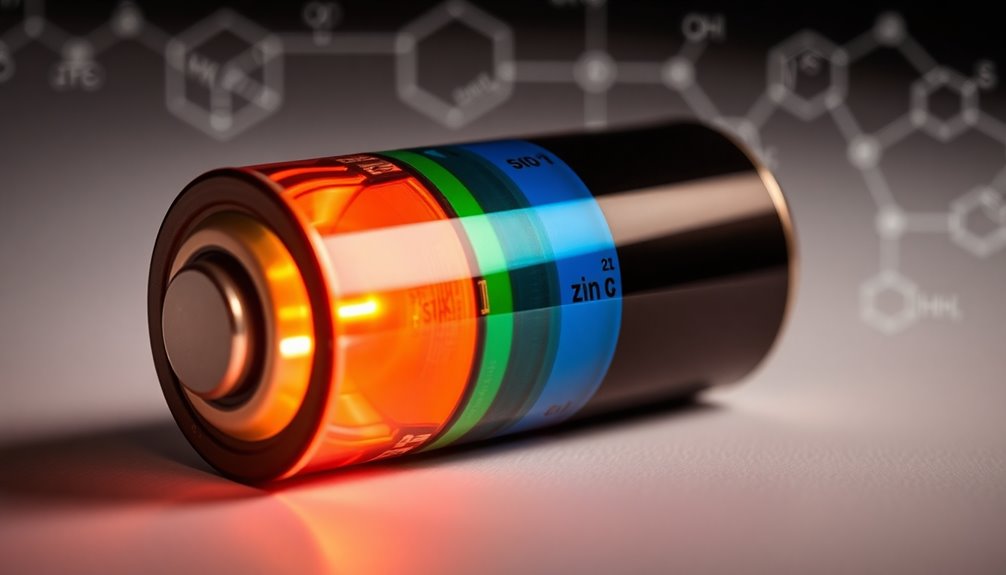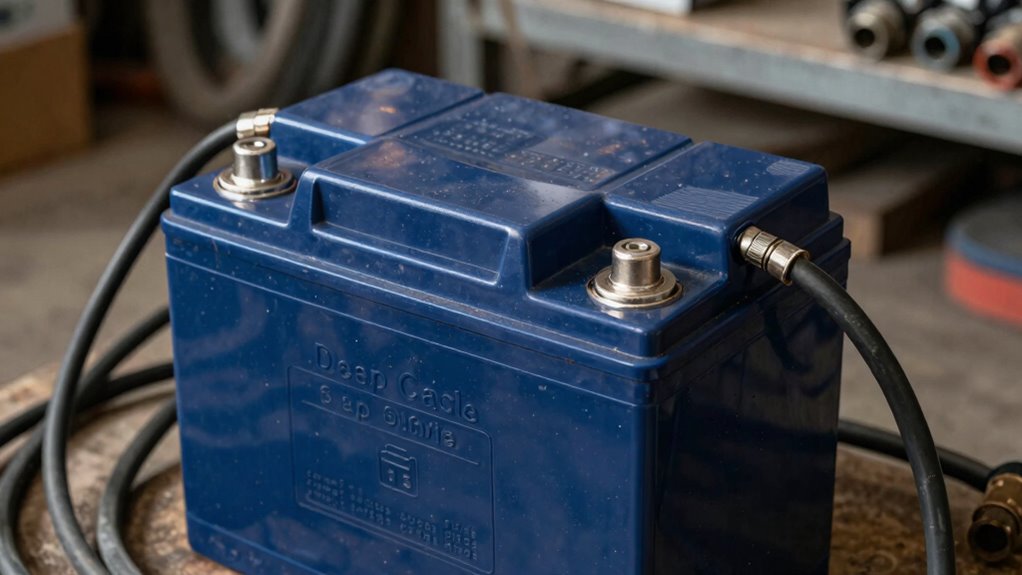

In battery marketing, “deep cycle” means the battery is built to handle long, repeated discharges without losing capacity. Unlike regular car batteries that deliver quick bursts of power, deep cycle batteries provide steady power over extended periods and can be discharged considerably each cycle. This makes them ideal for renewable energy and off-grid setups. To get the most out of these batteries and understand their true value, keep exploring their features and benefits further.

Get backup power and energy gear delivered free — and shop member deals
- Fast, free delivery on millions of items
- Access to Prime Big Deal Days deals on October 6–7
- Prime Video, Amazon Music and more included
Key Takeaways
- “Deep cycle” indicates the battery’s ability to be discharged deeply multiple times without significant capacity loss.
- It is designed for sustained, long-term energy output, unlike batteries meant for short bursts of power.
- Deep cycle batteries can handle frequent deep discharges, enhancing their longevity and performance.
- Their marketing emphasizes durability, cycle life, and suitability for renewable energy and off-grid applications.
- The term highlights the battery’s capacity to provide reliable power over extended periods through repeated use.
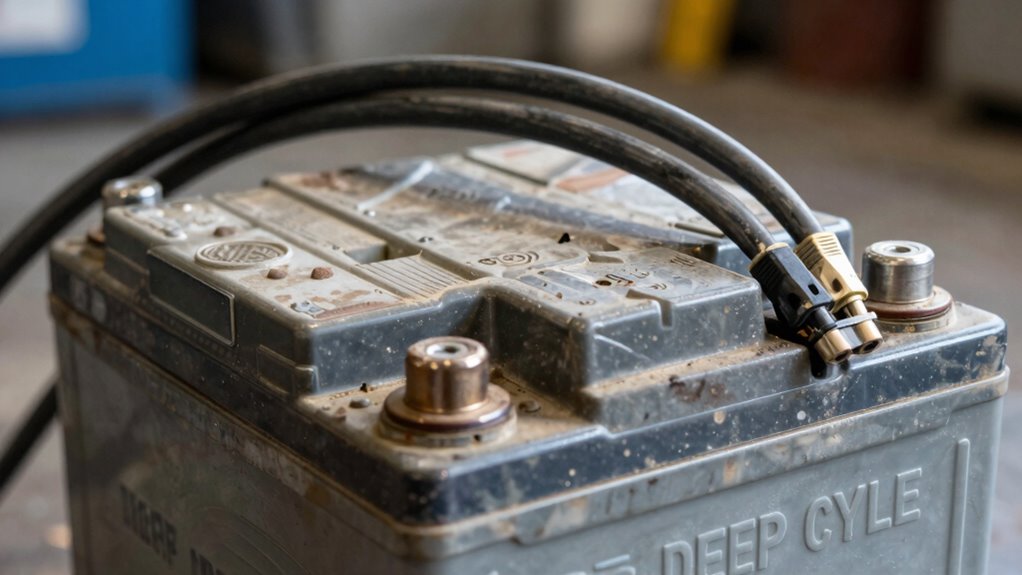
Have you ever wondered what makes deep cycle batteries essential for renewable energy systems, RVs, and marine applications? At their core, these batteries are designed to provide sustained power over long periods, making them ideal for energy storage and continuous use. Unlike traditional car batteries that deliver short bursts of high power, deep cycle batteries are built to be discharged and recharged repeatedly without losing their capacity. This durability is what gives them their reputation for long battery longevity, which is crucial when you depend on them to power your off-grid cabin, boat, or mobile home. When you understand the true meaning behind “deep cycle,” you realize it’s all about their ability to handle deep discharges while maintaining reliable performance over time.
The concept of energy storage is central to what makes deep cycle batteries stand out. They store large amounts of energy in a compact, durable form, allowing you to tap into that power whenever needed. This capacity is vital for renewable energy systems, where solar panels or wind turbines generate electricity during the day, and you need a reliable way to store that energy for use at night or during cloudy days. The deeper the battery can cycle—meaning the more it can be discharged and recharged—the more efficient your energy system becomes. You get more usable power from each cycle, which increases overall system efficiency and reduces the frequency of battery replacements. This aspect directly ties into battery longevity, as batteries built for deep cycling tend to last longer if they’re properly maintained and not discharged too deeply or recharged too aggressively. Recognizing the importance of battery durability helps ensure you choose the right type for your needs. Additionally, understanding the discharge cycle capacity of a battery can help you better plan your energy needs and avoid premature battery failure.
In practical terms, when you’re shopping for a deep cycle battery, look beyond just the capacity. Consider how many cycles it can endure over its lifespan. A high-quality deep cycle battery is engineered to withstand numerous deep discharges without rapid capacity loss. This resilience isn’t just about durability; it’s about ensuring consistent, reliable energy storage for years to come. The longer your battery lasts, the more cost-effective and dependable your renewable energy setup or mobile power system becomes. Knowing the technology behind deep cycle batteries can help you better understand their construction and performance characteristics. Understanding what “deep cycle” truly means helps you make smarter choices, ensuring your investment in energy storage solutions pays off with sustained performance and extended battery longevity. Furthermore, advancements in battery technology continue to improve their lifespan and efficiency, making them even more suitable for demanding applications. Ultimately, it’s about choosing a battery that’s built to go the distance, powering your needs with consistent, dependable energy for years ahead.
As an affiliate, we earn on qualifying purchases.
Frequently Asked Questions
How Do Deep Cycle Batteries Differ From Other Battery Types?
Deep cycle batteries differ from other types because they’re designed to provide consistent power over long periods, making them ideal for renewable energy or RVs. Their battery chemistry allows for deep discharges without damage, and manufacturing quality guarantees durability over many cycles. Unlike starter batteries, deep cycle models handle repeated, deep discharges well, providing reliable energy storage and longevity, especially when built with high-quality materials and precise manufacturing standards.
What Applications Are Ideal for Deep Cycle Batteries?
You should consider deep cycle batteries for renewable energy systems, off-grid power solutions, and solar setups. They excel at providing consistent, reliable energy over extended periods, making them ideal for applications that require frequent discharges and recharges. Whether you’re running a cabin off the grid, powering a boat, or setting up a solar energy system, deep cycle batteries deliver the durability and endurance needed for sustained power needs.
How Long Do Deep Cycle Batteries Typically Last?
Deep cycle batteries typically last between 3 to 5 years, depending on usage and maintenance. You can prolong their lifespan by following proper maintenance tips, like keeping them charged, avoiding deep discharges, and regularly checking water levels if applicable. Proper care ensures you maximize your battery’s performance and longevity, helping you get the most out of your investment and reducing the need for early replacements.
Can Deep Cycle Batteries Be Recharged Quickly?
Yes, deep cycle batteries can be recharged quickly, but it depends on their charging speed. High-quality batteries often support faster charging, reducing downtime. Keep in mind, proper battery recycling is essential for environmental safety, especially after multiple charge cycles. To optimize recharge times, use compatible chargers and avoid overcharging, which can damage the battery. Always follow manufacturer guidelines for safe and efficient charging.
Are Deep Cycle Batteries Environmentally Friendly?
Deep cycle batteries are generally eco-friendly because they support sustainable practices like battery recycling, which reduces waste and conserves resources. By choosing deep cycle batteries, you contribute to environmentally conscious efforts, as they last longer and can be properly recycled at the end of their lifespan. Implementing eco-friendly practices with your batteries helps minimize harmful environmental impacts and promotes a greener, more sustainable future.
Conclusion
Think of a deep cycle battery as a steady lighthouse, guiding you through the darkest nights and roughest seas. Its true strength lies in its resilience, quietly powering your adventures when others fade away. When you choose a deep cycle, you’re investing in a reliable beacon that endures time and challenge, illuminating your journey with unwavering energy. Embrace this symbol of endurance, and let your battery be the steadfast light that keeps your dreams afloat.
Fall Picks
fall essentials
As an affiliate, we earn on qualifying purchases.