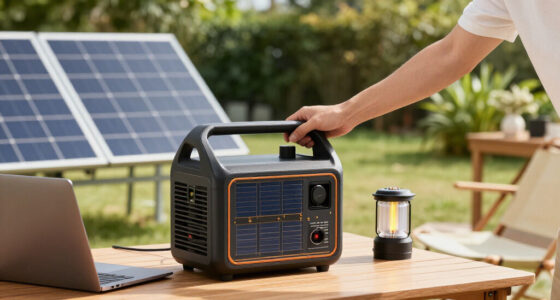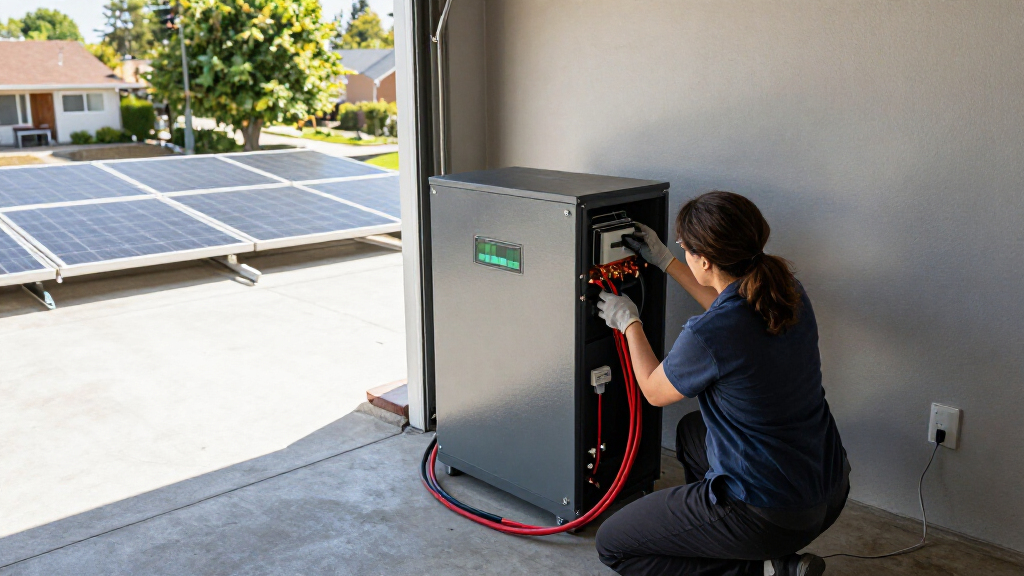
The best commercial battery energy storage systems in this roundup range from expandable server-rack batteries to bundled systems with hybrid inverters. My best overall pick is the ECO-WORTHY Powermega 48V 314Ah system with a 10kW hybrid inverter, which pairs substantial storage with integrated power conversion. For larger installations, the ECO-WORTHY Cubix100 six-pack stands out for its 600Ah battery bank, while the EF ECOFLOW TITAN Plus is a more packaged backup option with a Smart Home Panel 10. The main tradeoffs are storage capacity versus usable output, modularity versus setup complexity, and a ready-made bundle versus greater freedom to select components. Read on for how the 14 options differ and which buyer each one suits.

Get backup power and energy gear delivered free with Prime
- Fast, free delivery on millions of items
- Prime Video, Amazon Music and more included
- Member-only deals all year
Key Takeaways
- The Powermega 48V 314Ah system with 10kW hybrid inverter is my best overall pick because it combines a substantial battery with power conversion in one package; buyers who already own compatible equipment may prefer a battery-only option.
- The Cubix100 six-pack prioritizes a larger battery bank at 600Ah, while the Cubix100 battery with 12,000W hybrid inverter emphasizes higher inverter output; those are different needs, not interchangeable advantages.
- Many entries cluster around 16kWh per battery, including several 314Ah models, so compatibility, configuration, and support matter more than small capacity-label differences.
- Packaged systems simplify component matching, but products such as the standalone AOUSK, VEVOR, and WattCycle batteries leave inverter selection and system integration to the buyer.
- Commercial buyers should verify site-specific power, installation, and operating requirements: a large energy capacity alone does not establish peak output, three-phase compatibility, certifications, or suitability for a particular business.
| AOUSK 48V 314Ah LiFePO4 Lithium Battery, 16.08 kWh |  | Best for Inverter Integration | Chemistry: LiFePO4 | Model: 51.2V314Ah A | Capacity: 314 Ah | VIEW LATEST PRICE | See Our Full Breakdown |
| EF ECOFLOW TITAN 5017Wh Portable Power Station with Smart Home Panel 10 |  | Best for Circuit-Level Backup | Battery chemistry: Lithium iron phosphate (LFP) | Capacity: 5,017Wh | Continuous output: 7,200W | VIEW LATEST PRICE | See Our Full Breakdown |
| EF ECOFLOW TITAN Plus Home Backup System with Two Extra Batteries and Smart Home Panel 10 |  | Best Turnkey Expandable Backup Package | Included components: TITAN Plus power station, two extra batteries, Smart Home Panel 10 (240V) | Battery chemistry: Lithium iron phosphate (LFP) | Listed battery capacity: 15kWh | VIEW LATEST PRICE | See Our Full Breakdown |
| VEVOR 51.2V 400Ah LiFePO4 Server Rack Battery with 100A BMS |  | Best Rack-Format Option | Model: LPS48100-B | Battery chemistry: LiFePO4 | Voltage: 51.2V | VIEW LATEST PRICE | See Our Full Breakdown |
| VPauexii 51.2V 314Ah LiFePO4 Battery, 16.07kWh |  | Best for Built-In Fire Suppression | Model: 51.2V314Ah B | Battery chemistry: LiFePO4 | Voltage: 51.2V | VIEW LATEST PRICE | See Our Full Breakdown |
| ECO-WORTHY Cubix100 48V 600Ah LiFePO4 Server Rack Battery System, 6-Pack |  | Best for Scalable Commercial Capacity | Chemistry: LiFePO4 | Battery voltage: 51.2V | Configuration: 6 batteries, 100Ah each | VIEW LATEST PRICE | See Our Full Breakdown |
| KEEPKNOW PowerUltra 48V 314Ah LiFePO4 Battery with 16.07 kWh Capacity |  | Best for Integrated Monitoring and Enclosure Protection | Chemistry: LiFePO4 | Nominal voltage: 48V; model listed as 51.2V | Capacity and energy: 314Ah; 16.07 kWh | VIEW LATEST PRICE | See Our Full Breakdown |
| VPauexii 51.2V 314Ah LiFePO4 Battery, 16.07kWh | | Best for Buyers Prioritizing a Simple Single-Battery Bank | Chemistry: LiFePO4 | Voltage: 51.2V | Capacity: 314Ah | VIEW LATEST PRICE | See Our Full Breakdown |
| ECO-WORTHY Powermega 48V 314Ah LiFePO4 Battery System with 10kW Hybrid Inverter |  | Best Integrated Battery-and-Inverter Package | Chemistry: LiFePO4 | Battery configuration: 2 batteries, 314Ah each | Battery voltage: 51.2V | VIEW LATEST PRICE | See Our Full Breakdown |
| WattCycle 51.2V 400Ah LiFePO4 Server Rack Battery, 20.48kWh, 4-Pack |  | Best Compact Rack-Build Pick | Configuration: 4-pack | Chemistry: LiFePO4 | Voltage: 51.2V | VIEW LATEST PRICE | See Our Full Breakdown |
| ECO-WORTHY Powermega 51.2V 314Ah LiFePO4 Battery, 16.07kWh |  | Best Expandable Standalone Battery | Chemistry: LiFePO4 | Nominal voltage: 51.2V | Capacity: 314Ah | VIEW LATEST PRICE | See Our Full Breakdown |
| ECO-WORTHY 48V Home Backup Power System with 30,720Wh Battery and 10kW Inverter |  | Best Complete High-Capacity Backup Kit | Battery chemistry: LiFePO4 | Battery configuration: Six 51.2V 100Ah batteries | Total storage: 30,720Wh; 600Ah | VIEW LATEST PRICE | See Our Full Breakdown |
| ECO-WORTHY 48V Home Backup Power System with 10,240Wh LiFePO4 Batteries and 5,000W Inverter |  | Best Modular Starter System | Battery chemistry: LiFePO4 | Battery configuration: Two 51.2V 100Ah batteries | Total storage: 10,240Wh; 200Ah | VIEW LATEST PRICE | See Our Full Breakdown |
| ECO-WORTHY Cubix100 48V 600Ah LiFePO4 Battery with 12,000W Hybrid Inverter |  | Best for High-Demand Whole-Home Backup | Battery chemistry: LiFePO4 | Battery configuration: Six 51.2V 100Ah batteries | Total battery capacity: 600Ah; 30.72kWh | VIEW LATEST PRICE | See Our Full Breakdown |
| commercial battery energy storage system | Chemistry | Weight | Battery chemistry |
|---|---|---|---|
| AOUSK 48V 314Ah LiFePO4 Lithiu | LiFePO4 | 291 lb | — |
| EF ECOFLOW TITAN 5017Wh Portab | — | 119 lb | Lithium iron phosphate (LFP) |
| EF ECOFLOW TITAN Plus Home Bac | — | 121.3 lb | Lithium iron phosphate (LFP) |
| VEVOR 51.2V 400Ah LiFePO4 Serv | — | — | LiFePO4 |
| VPauexii 51.2V 314Ah LiFePO4 B | — | — | LiFePO4 |
| ECO-WORTHY Cubix100 48V 600Ah | LiFePO4 | — | — |
| KEEPKNOW PowerUltra 48V 314Ah | LiFePO4 | 288.81 lbs | — |
| VPauexii 51.2V 314Ah LiFePO4 B | LiFePO4 | 291 lbs | — |
| ECO-WORTHY Powermega 48V 314Ah | LiFePO4 | — | — |
| WattCycle 51.2V 400Ah LiFePO4 | LiFePO4 | — | — |
| ECO-WORTHY Powermega 51.2V 314 | LiFePO4 | — | — |
| ECO-WORTHY 48V Home Backup Pow | — | 677.5 lb | LiFePO4 |
| ECO-WORTHY 48V Home Backup Pow | — | 236.9 lb | LiFePO4 |
| ECO-WORTHY Cubix100 48V 600Ah | — | — | LiFePO4 |
More Details on Our Top Picks
AOUSK 48V 314Ah LiFePO4 Lithium Battery, 16.08 kWh
The AOUSK 314Ah is a strong fit for commercial-style installations that need a substantial battery block and several ways to connect it to monitoring and inverter equipment. Its RS485 and CAN interfaces, alongside RS232, Bluetooth, Wi-Fi, and a built-in display, give system designers more integration options than the EF ECOFLOW TITAN, which packages storage with a power station and home circuit panel instead. Up to 15 units can be paralleled, giving a path to larger storage banks without changing battery models.
The tradeoff is physical: 291 pounds makes positioning a planned installation task, despite the built-in wheels and handles. The stated energy capacity also varies slightly between the title and description, so buyers should confirm the exact specification before sizing a system. This is a better match for a fixed, inverter-based setup than for frequent relocation.
Pros:- 200A BMS with six-layer protection and breakers on both poles.
- RS485 and CAN support integration with compatible inverter systems.
- Display, app, and PC connectivity provide several monitoring routes.
- Supports parallel connection of up to 15 units.
Cons:- At 291 pounds, installation and repositioning require suitable equipment and planning.
- Capacity is listed as 16.07 kWh in the description and 16.08 kWh in the title.
- The battery is not a complete power system with an included inverter or circuit panel.
Best for: Commercial and light-industrial installers building a fixed 48V battery bank who need CAN or RS485 inverter communication and room to expand.
Not ideal for: Buyers who need a frequently moved battery or turnkey circuit-level backup; its 291-pound weight and separate inverter-system requirements make it less convenient than the EF ECOFLOW TITAN package.
- Chemistry:LiFePO4
- Model:51.2V314Ah A
- Capacity:314 Ah
- Energy storage:16.07 kWh listed in description; 16.08 kWh in title
- BMS:200 A
- Cycle life:Up to 6,000 cycles at 80% state of health
- Communication:Bluetooth, Wi-Fi, RS232, RS485, CAN
- Parallel connection:Up to 15 units
- Weight:291 lb
Our verdict“Choose the AOUSK when inverter communication and expandable 48V storage matter more than easy handling or an all-in-one backup package.”
EF ECOFLOW TITAN 5017Wh Portable Power Station with Smart Home Panel 10
The EF ECOFLOW TITAN stands apart from the AOUSK and VPauexii batteries because it pairs storage with a 7,200W split-phase power station and a Smart Home Panel 10. That package can back up up to 10 household circuits, so buyers get a more direct route to managed backup than they do with a standalone battery that needs a compatible inverter and system design. AC, solar, and generator charging also give operators multiple ways to replenish it.
Its starting capacity is 5,017Wh, much smaller than the roughly 16kWh single batteries in this lineup. Expansion to 30kWh is available, but it calls for as many as five additional batteries, and the described circuit backup requires panel installation. At 119 pounds, the unit is still a substantial piece of equipment to place. I’d choose it for integrated backup, not as a simple rack battery for a larger commercial bank.
Pros:- 7,200W continuous output supplies 120V/240V split-phase power.
- Included Smart Home Panel 10 supports backup for up to 10 circuits.
- Accepts AC, solar, and generator charging.
- Expandable capacity reaches up to 30kWh.
Cons:- Base capacity of 5,017Wh is well below the single-unit capacity of the AOUSK and VPauexii batteries.
- Reaching 30kWh requires up to five additional expansion batteries.
- The circuit-backup arrangement requires Smart Home Panel installation.
Best for: Small businesses or property owners who want split-phase backup for selected circuits with app-managed control and multiple charging sources.
Not ideal for: Installers seeking a high-capacity standalone 48V battery for a custom commercial bank; the 5,017Wh base capacity and required expansion hardware make that a less direct fit.
- Battery chemistry:Lithium iron phosphate (LFP)
- Capacity:5,017Wh
- Continuous output:7,200W
- Output voltage:120V/240V split-phase
- Expandable capacity:Up to 30kWh
- Maximum solar input:4kW
- Smart Home Panel:Supports up to 10 circuits
- Certifications:UL 9540 certified; tested to UL 9540A
- Weight:119 lb
Our verdict“Pick the TITAN when managed circuit backup and integrated split-phase output matter more than starting with a large standalone battery capacity.”
EF ECOFLOW TITAN Plus Home Backup System with Two Extra Batteries and Smart Home Panel 10
Compared with the standalone TITAN in this lineup, the TITAN Plus bundle arrives with two extra batteries and a 240V Smart Home Panel 10, so it starts closer to an extended backup installation rather than a 5kWh base setup. Its listed 15kWh capacity and 7,200W continuous split-phase output suit sites that need both more stored energy and circuit management. AC, solar, and generator charging add flexibility when grid power is unavailable.
The bundle is also more integrated than the AOUSK 314Ah battery, but that convenience comes in a less modular format for buyers building around an existing inverter. The system can expand to 30kWh, though the stated 10kW output depends on solar PV input; it is not the battery-only output rating. At 121.3 pounds, it also needs a practical installation plan. Confirm included capacity and expansion requirements before designing around it, since the specifications describe both 15kWh included and a 5–30kWh expansion range.
Pros:- Bundle includes two extra batteries and a 240V Smart Home Panel 10.
- Provides 7,200W continuous 120V/240V split-phase output.
- Supports AC, solar, and generator charging.
- Capacity can expand up to 30kWh.
Cons:- At 121.3 pounds, the system is not easy to move or position without planning.
- The listed 10kW output depends on solar PV input, rather than representing the stated continuous output.
- Capacity details describe both 15kWh included and a 5–30kWh range, so buyers should verify the configured system.
Best for: Property operators who want a packaged split-phase backup system with multiple batteries, a circuit panel, and charging options already specified together.
Not ideal for: Commercial battery-bank builders who already have an inverter or need rack-format equipment; the bundled power station and panel may add components they do not need.
- Included components:TITAN Plus power station, two extra batteries, Smart Home Panel 10 (240V)
- Battery chemistry:Lithium iron phosphate (LFP)
- Listed battery capacity:15kWh
- Expandable capacity:5kWh to 30kWh
- Continuous output:7,200W
- Voltage:120V/240V
- Maximum solar input:8kW
- Smart Home Panel:10 circuits; supports 5 split-phase loads via the 5P8 port
- Weight:121.3 lb
Our verdict“Choose the TITAN Plus bundle if you want a larger packaged backup system and panel control, rather than a standalone battery for an existing inverter installation.”
VEVOR 51.2V 400Ah LiFePO4 Server Rack Battery with 100A BMS
The VEVOR 400Ah system suits buyers who prefer a server-rack arrangement over a single large-format battery. Its total capacity comes from four 100Ah batteries, a configuration that can make modular placement more workable than the 291-pound AOUSK unit. LCD and app monitoring, along with RS485 and CAN communication, support basic system oversight and inverter integration; the listed UL1973 and UL9540 certifications add relevant documentation for stationary storage planning.
The main compromise is output capability: the system’s 100A maximum charge/discharge current is more limited than the AOUSK and VPauexii batteries’ 200A BMS ratings, which may constrain power demands depending on system voltage and design. The 400Ah figure also depends on all four batteries, rather than one 400Ah battery. At 103.6 pounds, it remains heavy equipment, and rack compatibility does not remove the need to plan installation and wiring.
Pros:- Four-battery configuration provides 400Ah at 51.2V.
- Designed for standard server-rack compatibility.
- LCD and app monitoring report operating information.
- Includes RS485 and CAN communication and lists UL1973 and UL9540 certifications.
Cons:- Maximum charge/discharge current is 100A, below the 200A BMS ratings of the AOUSK and VPauexii options.
- The 400Ah total depends on a configuration of four 100Ah batteries.
- Weighs 103.6 pounds, requiring care during handling and installation.
Best for: Solar and backup installers who want a server-rack-compatible 51.2V battery arrangement with app monitoring, communication ports, and listed UL certifications.
Not ideal for: Sites with high charge or discharge demands that need more than the stated 100A current limit, or buyers expecting one self-contained 400Ah battery.
- Model:LPS48100-B
- Battery chemistry:LiFePO4
- Voltage:51.2V
- Total capacity:400Ah
- Battery configuration:4 × 100Ah
- Maximum charge/discharge current:100A
- Cycle life:Over 6,000 cycles
- Communication:RS485, CAN, Bluetooth, Wi-Fi
- Certifications:UL1973, UL9540
Our verdict“Pick the VEVOR when rack compatibility and a four-battery layout suit your installation, but compare its 100A current limit with your inverter and load requirements.”
VPauexii 51.2V 314Ah LiFePO4 Battery, 16.07kWh
The VPauexii 314Ah has a similar capacity and 200A BMS rating to the AOUSK, but distinguishes itself with a listed automatic aerosol fire suppression system and a 250A breaker. For buyers comparing large-format batteries for a fixed installation, those specified safety features may carry more weight than AOUSK’s wheels and handles. It also offers LCD, Wi-Fi, and Bluetooth monitoring, plus CAN, RS485, and RS232 ports, and supports parallel connection of up to 15 units.
The manufacturer states a cycle life of over 10,000 cycles at 80% depth of discharge; that claim depends on operating conditions and should not be treated as a guaranteed service life. Like the AOUSK, this is a substantial standalone battery rather than a complete inverter-and-panel system such as the EF ECOFLOW TITAN Plus. Large installations also require multiple units, and the five-year warranty is the stated coverage period. Buyers should check inverter compatibility and installation requirements before sizing a bank.
Pros:- Includes a 250A breaker and a stated automatic aerosol fire suppression system.
- 200A BMS supports substantial battery-system current capacity.
- LCD, Wi-Fi, and Bluetooth provide multiple monitoring options.
- CAN, RS485, and RS232 ports support integration, with parallel connection up to 15 units.
Cons:- Large-scale storage requires purchasing and integrating multiple battery units.
- The stated cycle life depends on the recommended operating conditions and is a manufacturer claim.
- Unlike the EF ECOFLOW TITAN Plus, it does not include a power station or circuit panel.
Best for: Installers choosing a large-format 51.2V battery for a fixed solar or backup bank who prioritize listed fire suppression and multiple inverter communication options.
Not ideal for: Buyers who need an integrated power station and circuit panel, or who require independently verified cycle-life performance beyond the manufacturer’s stated conditions.
- Model:51.2V314Ah B
- Battery chemistry:LiFePO4
- Voltage:51.2V
- Capacity:314Ah
- Energy storage:16.07kWh
- BMS and breaker:200A BMS; 250A breaker
- Parallel connection:Up to 15 units
- Communication:RS485, CAN, RS232; Bluetooth and Wi-Fi monitoring
- Cycle life:Manufacturer states over 10,000 cycles at 80% depth of discharge
Our verdict“Choose the VPauexii if you want a standalone 16.07kWh-class battery with specified fire suppression and broad communications, not a bundled backup system.”
ECO-WORTHY Cubix100 48V 600Ah LiFePO4 Server Rack Battery System, 6-Pack
The Cubix100 is the strongest fit here for buyers who want 30.72 kWh in a coordinated battery bank with room to grow. Its six 51.2V batteries support CAN and RS485 integration, while Bluetooth and Wi-Fi monitoring give operators more ways to check system status. Compared with the WattCycle 4-pack, this package starts with more nominal storage and offers stated parallel expansion up to 32 units, making it more suited to larger projects than a compact rack build. The tradeoff is that the rack itself is not included, so buyers need to plan the enclosure and installation separately. The six units may also arrive in separate shipments, which can complicate project scheduling. Its listed certifications and included RSD button add useful system-level credentials, but compatibility with the chosen inverter still needs checking.
Pros:- Six batteries provide 30.72 kWh of nominal capacity.
- Parallel expansion is supported up to 32 units.
- Bluetooth, Wi-Fi, CAN, and RS485 provide varied monitoring and integration options.
- Includes an RSD button, parallel and communication cables, grounding wires, and terminal covers.
Cons:- The server rack is not included.
- The six batteries may arrive in separate packages at different times.
- Inverter and site-system compatibility must be confirmed before installation.
Best for: Commercial and agricultural site operators building a 48V storage bank that may expand beyond the initial 30.72 kWh.
Not ideal for: Buyers seeking a turnkey system with a rack or inverter included, or projects that cannot accommodate staggered delivery of six batteries.
- Chemistry:LiFePO4
- Battery voltage:51.2V
- Configuration:6 batteries, 100Ah each
- Total capacity:30.72 kWh
- Maximum parallel expansion:32 units, up to 163.8 kWh
- Communications:CAN, RS485, Bluetooth, Wi-Fi
- Certifications:UL9540, UL1973, CEC listed
- Warranty:10 years
- Rack:Not included
Our verdict“Choose the Cubix100 when scalable storage and included connection accessories matter more than receiving a complete rack-and-inverter package.”
KEEPKNOW PowerUltra 48V 314Ah LiFePO4 Battery with 16.07 kWh Capacity
The PowerUltra differentiates itself through monitoring built into the battery: a 7-inch touchscreen sits alongside Bluetooth and Wi-Fi app access. Its IP65 enclosure and aerosol fire suppression also make it more feature-rich at the unit level than the VPauexii 51.2V 314Ah battery, whose supplied details focus mainly on capacity and chemistry. That added equipment comes with substantial physical demands: at nearly 289 pounds, this is a freight-delivered battery, not an easy unit to position by hand. Handles and casters help with movement, but they do not remove the need to plan access and placement. Its 200A smart BMS and RS485, CAN, and RS232 interfaces suit projects needing configurable system communication, though inverter compatibility remains a buyer-side check. Compared with the ECO-WORTHY Cubix100, it offers less initial energy and less stated expansion headroom, but a more self-contained monitoring setup.
Pros:- 7-inch touchscreen plus Bluetooth and Wi-Fi app monitoring.
- IP65 enclosure and built-in aerosol fire suppression.
- 200A smart BMS with multiple electrical and temperature protections.
- Supports parallel expansion up to 15 units.
Cons:- Weighs 288.81 pounds and requires freight delivery.
- Solar charging requires at least 1500W according to the supplied product information.
- Communication with an inverter depends on system compatibility.
Best for: Facility operators who want a single high-capacity battery with local touchscreen monitoring, app access, and a protected enclosure.
Not ideal for: Installers with narrow access routes or limited lifting and freight-handling capacity, and buyers whose inverter lacks confirmed interface compatibility.
- Chemistry:LiFePO4
- Nominal voltage:48V; model listed as 51.2V
- Capacity and energy:314Ah; 16.07 kWh
- BMS:200A smart BMS
- Parallel expansion:Up to 15 units
- Communications:RS485, CAN, RS232
- Monitoring:7-inch HD touchscreen, Bluetooth, Wi-Fi app
- Weight:288.81 lbs
Our verdict“Pick the PowerUltra if built-in monitoring and enclosure protection outweigh the challenge of moving and integrating a very heavy battery.”
VPauexii 51.2V 314Ah LiFePO4 Battery, 16.07kWh
The VPauexii is a comparatively straightforward choice for a project that needs 16.07 kWh from one LiFePO4 battery and does not require a bundled inverter or elaborate monitoring package. That simplicity is also its main limitation: unlike the KEEPKNOW PowerUltra, the supplied product details do not specify a touchscreen, wireless monitoring, BMS rating, or communication interfaces. Buyers should not assume those capabilities without confirming them with the manufacturer. The listed weight of 291 pounds calls for serious delivery and placement planning, and the stated dimensions—510 x 276 x 852 inches—appear unusually large and should be verified before ordering. Warranty information is also inconsistent, with both five-year and 12-year terms mentioned. Compared with the PowerUltra, this option provides similar stated energy but far less documented integration detail, so it suits buyers willing to clarify specifications before designing the system.
Pros:- Provides 16.07 kWh of stated energy capacity in one battery.
- Uses LiFePO4 chemistry.
- Batteries are included for operation.
- A single-unit format may simplify capacity planning for projects that do not need a multi-battery pack.
Cons:- At 291 pounds, it requires careful freight, access, and placement planning.
- The supplied dimensions appear unusually large and need verification.
- The product information gives conflicting five-year and 12-year warranty terms and omits key integration details.
Best for: Project owners who need a single 16.07 kWh LiFePO4 battery and can confirm installation dimensions, warranty terms, and system interfaces before purchase.
Not ideal for: Commercial installers who need clearly documented communications, BMS specifications, or verified enclosure dimensions to finalize a system design.
- Chemistry:LiFePO4
- Voltage:51.2V
- Capacity:314Ah
- Energy capacity:16.07 kWh
- Listed dimensions:510 x 276 x 852 inches; verify with seller
- Weight:291 lbs
- Manufacturer:Changsha Jubei Energy Co., Ltd.
- Model:51.2V314Ah B
- Warranty information:Five-year and 12-year terms are both mentioned
Our verdict“Consider the VPauexii only if its basic capacity fits your project and the seller confirms its dimensions, warranty, and integration specifications in writing.”
ECO-WORTHY Powermega 48V 314Ah LiFePO4 Battery System with 10kW Hybrid Inverter
Unlike the battery-only options in this group, the Powermega packages two 314Ah batteries with a 10kW hybrid inverter, giving buyers a more complete starting point for solar storage, backup, or off-grid use. Its 120V single-phase and 240V split-phase outputs make it more directly useful for varied site loads than the WattCycle 4-pack, which is presented as a rack battery system rather than an inverter bundle. The package also lists Bluetooth and Wi-Fi monitoring, active balancing, aerosol fire suppression, and a circuit breaker. The tradeoff is reduced freedom to choose each major component independently; buyers should check inverter behavior and communications against their equipment and load plan. The supplied usable-energy figure is 30 kWh+, while the battery count and capacity call for careful confirmation of the final system configuration. Deliveries may arrive in multiple packages, and the inverter exterior version may vary with inventory.
Pros:- Bundles two 314Ah LiFePO4 batteries with a 10kW hybrid inverter.
- Provides 120V single-phase or 240V split-phase output.
- Bluetooth, Wi-Fi, and an LCD provide system monitoring.
- Lists active balancing, circuit-breaker protection, aerosol fire suppression, and an alarm.
Cons:- The complete order may arrive in multiple packages at different times.
- The inverter exterior version is selected based on inventory.
- Buyers need to confirm configuration, inverter compatibility, and usable-energy details for their intended loads.
Best for: Small commercial sites, workshops, and off-grid property operators seeking batteries and a hybrid inverter in one coordinated package.
Not ideal for: Projects that already have a selected inverter, require a specific inverter model or exterior version, or need independently sourced system components.
- Chemistry:LiFePO4
- Battery configuration:2 batteries, 314Ah each
- Battery voltage:51.2V
- Usable energy:30 kWh+
- Inverter output:10,000W; 20,000W peak
- Output:120V single-phase or 240V split-phase, pure sine wave
- Communications:RS485, CAN, RS232
- Monitoring:Built-in Bluetooth and Wi-Fi; LCD display
- Energy certification:UL1973
Our verdict“Choose the Powermega package if you need an inverter and substantial battery storage together, rather than a battery bank for an existing system.”
WattCycle 51.2V 400Ah LiFePO4 Server Rack Battery, 20.48kWh, 4-Pack
The WattCycle 4-pack offers a 20.48 kWh nominal bank in four 3U batteries, a practical middle ground between one large battery and the six-unit ECO-WORTHY Cubix100. Each unit has its own 100A BMS, 3A active balancing, LCD touchscreen, and Bluetooth monitoring, so operators can check individual batteries while building a rack system. CAN, RS232, and RS485 ports support integration with compatible equipment, though the inverter must match those interfaces. Compared with the Cubix100, WattCycle provides less stated starting capacity and a shorter, five-year warranty, but its four-battery configuration may suit buyers who want a smaller modular bank. The rack cabinet is not included, and buyers need to confirm that their enclosure and system wiring fit the 3U format. Its 6000+ cycle-life figure is useful for comparison, but actual service life depends on operating conditions.
Pros:- Four batteries provide 20.48 kWh of nominal energy.
- 3U rack format supports modular installation in a compatible cabinet.
- Each battery includes a 100A BMS and 3A active balancing.
- LCD touchscreen, Bluetooth, CAN, RS232, and RS485 offer monitoring and integration options.
Cons:- Rack cabinet or enclosure is not included.
- Five-year warranty is shorter than the 10-year terms listed for the Cubix100 and PowerUltra.
- Communications depend on compatibility with the inverter and other system equipment.
Best for: Commercial or off-grid operators who want a modular 20.48 kWh rack battery bank with per-unit displays and active balancing.
Not ideal for: Buyers needing an included cabinet, longer stated warranty coverage, or a battery system bundled with an inverter.
- Configuration:4-pack
- Chemistry:LiFePO4
- Voltage:51.2V
- Total capacity and energy:400Ah; 20.48 kWh nominal
- Energy per battery:5120Wh
- Continuous current:100A per battery
- Rack format:3U
- Monitoring and communications:3.2-inch LCD, Bluetooth, CAN, RS232, RS485
- Warranty:5 years
Our verdict“Choose the WattCycle pack for a modular, mid-capacity rack build with per-battery monitoring, provided you already have a suitable cabinet and compatible inverter.”
ECO-WORTHY Powermega 51.2V 314Ah LiFePO4 Battery, 16.07kWh
I’d shortlist the Powermega 16.07kWh battery for commercial or larger off-grid projects that already have a compatible inverter and need storage they can scale. Its 200A active-balancing BMS, circuit breaker, and aerosol fire-suppression modules add layers of system protection, while CAN and RS485 support inverter communication. The touchscreen plus Wi-Fi and Bluetooth give operators several ways to check battery status. Compared with the ECO-WORTHY 30,720Wh backup kit, this is a battery rather than a complete inverter-and-storage package, so it leaves more equipment selection to the buyer. Its expansion path reaches 15 parallel units, but the resulting installation calls for careful system design. Palletized truck delivery and the battery’s size also make logistics a real part of the purchase.
Pros:- 16.07kWh capacity per battery with expansion up to 15 parallel units
- 200A active-balancing BMS plus a two-pole circuit breaker
- Aerosol fire-suppression modules add a dedicated safety feature
- Touchscreen, Wi-Fi, Bluetooth, CAN, and RS485 support monitoring and integration
Cons:- Requires a compatible inverter and system components, unlike ECO-WORTHY’s bundled backup systems
- Large, heavy format requires palletized truck delivery and a suitable receiving address
Best for: Commercial site operators and off-grid installers who already have a compatible inverter and want to add substantial storage in parallel.
Not ideal for: Buyers seeking a ready-to-run backup package or those whose delivery location cannot accommodate a palletized truck shipment.
- Chemistry:LiFePO4
- Nominal voltage:51.2V
- Capacity:314Ah
- Energy:16.07kWh
- BMS:200A smart BMS with active cell balancing
- Expansion:Up to 15 units in parallel; up to 241kWh
- Safety and certification:Two-pole circuit breaker, aerosol fire-suppression modules, UL 1973
- Monitoring and communications:7-inch HD touchscreen, Wi-Fi, Bluetooth, RS485, CAN
- Warranty:10 years
Our verdict“Choose the Powermega if you need a scalable 16.07kWh battery for an existing inverter system and can handle pallet delivery.”
ECO-WORTHY 48V Home Backup Power System with 30,720Wh Battery and 10kW Inverter
For buyers who want storage and power conversion in one package, this ECO-WORTHY system pairs 30.72kWh of LiFePO4 storage with a 10kW pure sine wave inverter. Its 120V or 120/240V output can suit a broader range of backup loads than the single-inverter ECO-WORTHY 10,240Wh kit, while dual MPPT controllers and a 200A charger bring solar charging and battery charging into the same system. App monitoring over Wi-Fi and Bluetooth gives operators a convenient view of battery status. Expansion is substantial—up to six inverters and 32 batteries—but the 677.5-pound total weight and separately shipped components make installation and delivery more involved. I’d rank it for capacity and integrated functionality, not for sites that need a compact or easily relocated system.
Pros:- 30,720Wh total storage across six 51.2V 100Ah LiFePO4 batteries
- 10,000W pure sine wave inverter supports 120V or 120/240V output
- Dual independent MPPT controllers and a 200A battery charger
- App monitoring and expansion support for up to six inverters and 32 batteries
Cons:- At 677.5 pounds, the system needs substantial space and installation planning
- Components ship separately, which can complicate coordination and assembly
- More equipment than needed for sites with modest backup loads
Best for: Property managers and off-grid operators seeking a bundled, high-capacity system with split-phase output and room to expand.
Not ideal for: Small businesses or DIY buyers without space and handling support for a 677.5-pound system and separately shipped components.
- Battery chemistry:LiFePO4
- Battery configuration:Six 51.2V 100Ah batteries
- Total storage:30,720Wh; 600Ah
- Inverter output:10,000W; 20,000W peak
- Output voltage:120V single-phase or 120/240V split-phase
- Solar charging:Two independent MPPT controllers
- Battery charger:Maximum 200A
- Expansion:Up to six inverters and 32 batteries
- Weight:677.5 lb
Our verdict“Pick this kit when you want a bundled 30.72kWh backup system with split-phase output and have the space and support to install it.”
ECO-WORTHY 48V Home Backup Power System with 10,240Wh LiFePO4 Batteries and 5,000W Inverter
This ECO-WORTHY kit is a more approachable entry point to integrated battery backup than the company’s 30,720Wh system: it combines 10.24kWh of storage with a 5,000W pure sine wave inverter and a 100A MPPT controller. That smaller initial setup can suit a site with defined, moderate backup loads, while the ability to parallel inverters and add batteries leaves a path to larger installations. A single inverter supplies 120V, though; 208V or 240V configurations require multiple inverters, which adds cost and system complexity without changing the fact that the larger ECO-WORTHY kit offers split-phase output in its package. Bluetooth and Wi-Fi app monitoring are useful for routine checks, but the 236.9-pound weight and separately shipped components still call for planned installation rather than casual portability.
Pros:- Includes two 51.2V 100Ah LiFePO4 batteries and a 5,000W inverter
- Pure sine wave output and integrated 100A MPPT controller
- Bluetooth and Wi-Fi app monitoring
- Expansion supports up to six inverters and 32 batteries
Cons:- Single-inverter output is 120V; 208V or 240V requires additional inverters
- Less starting storage and inverter output than ECO-WORTHY’s 30,720Wh, 10kW kit
- At 236.9 pounds, it is not a portable backup unit, and components ship separately
Best for: Small commercial sites and off-grid property owners who want an integrated 48V system for moderate loads with a staged expansion plan.
Not ideal for: Businesses needing 120/240V split-phase output from the initial single-inverter setup or those with loads beyond its 5,000W continuous inverter rating.
- Battery chemistry:LiFePO4
- Battery configuration:Two 51.2V 100Ah batteries
- Total storage:10,240Wh; 200Ah
- Inverter output:5,000W; 10,000W peak
- Output voltage:120V with one inverter; 208V or 240V with multiple inverters
- MPPT controller:100A; PV input range 120–500V DC
- Expansion:Up to six inverters and 32 batteries
- Communications:CAN, RS485, Bluetooth, and Wi-Fi
- Weight:236.9 lb
Our verdict“Choose this kit for moderate 120V loads when you want an integrated system that can grow, but select the larger ECO-WORTHY kit for packaged split-phase output.”
ECO-WORTHY Cubix100 48V 600Ah LiFePO4 Battery with 12,000W Hybrid Inverter
The Cubix100 stands out in this group for its 12kW hybrid inverter paired with 30.72kWh of storage, a combination aimed at larger loads rather than a modest backup circuit. Its 24kW peak output can help accommodate short bursts from demanding appliances, while the six-battery configuration provides more stored energy than the ECO-WORTHY 10,240Wh starter kit. Compared with ECO-WORTHY’s 30,720Wh system with a 10kW inverter, the Cubix100 keeps the same stated battery capacity but raises continuous inverter output and lists UL9540, UL1741, ETL, and CEC credentials. The tradeoff is a more involved rack-based installation: communication setup may challenge DIY users, and components ship separately. Its expansion ceiling is large, but growing to that scale requires deliberate electrical and installation planning.
Pros:- 12,000W continuous and 24,000W peak inverter output
- 30.72kWh total LiFePO4 storage across six batteries
- UL9540, UL1741, ETL, and CEC certifications are specified
- Expansion supports up to 32 batteries and six inverters
Cons:- Rack-based installation and communication setup may require professional support
- Components ship separately, which can delay commissioning
- Higher output and large storage capacity may exceed the needs of smaller sites
Best for: Commercial property owners and experienced installers who need high inverter output for multiple demanding loads and value listed system certifications.
Not ideal for: DIY buyers seeking a simple setup, or sites that do not need 12kW output and would be better served by a smaller integrated kit.
- Battery chemistry:LiFePO4
- Battery configuration:Six 51.2V 100Ah batteries
- Total battery capacity:600Ah; 30.72kWh
- Inverter power:12,000W continuous; 24,000W peak
- Battery charger:Maximum 200A
- Certifications:UL9540, UL1741, ETL, CEC
- Communications:CAN, RS485, Bluetooth, and Wi-Fi
- Expansion:Up to 32 batteries and six inverters
- Warranties:Battery: 10 years; inverter: 5 years
Our verdict“Choose the Cubix100 for high-demand backup where its 12kW inverter, 30.72kWh storage, and listed certifications justify a more involved installation.”
How We Picked
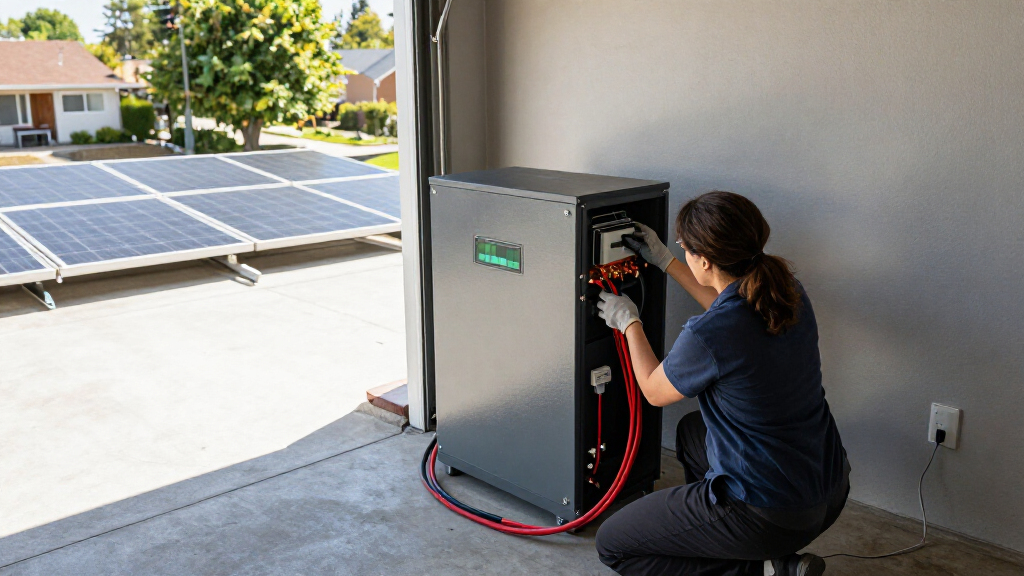
I compared these systems by the factors that shape a real commercial purchase: stated energy capacity, inverter inclusion and output where specified, battery-bank scale, modularity, and how much equipment a buyer must source separately. I also considered usability and the likely installation burden. A battery-only product can be a better fit for an experienced integrator, but it is not automatically a better complete storage system than a bundle that includes power conversion.
The ranking favors products that offer a clear fit between storage and system components, followed by options with distinct scale or setup advantages. That puts the Powermega system with a 10kW hybrid inverter at the top as a balanced package, while larger Cubix100 configurations rank well for buyers needing greater storage or inverter output. Portable and home-backup packages remain useful for smaller or less complex sites, but rank below dedicated battery-bank options for commercial expansion. Product names and listed specifications do not establish commercial certification or site compatibility, so buyers should confirm those details with the manufacturer and a qualified installer before purchase.
| commercial battery energy storage system | Battery chemistry |
|---|---|
| AOUSK 48V 314Ah LiFePO4 Lithiu | — |
| EF ECOFLOW TITAN 5017Wh Portab | Lithium iron phosphate (LFP) |
| EF ECOFLOW TITAN Plus Home Bac | Lithium iron phosphate (LFP) |
| VEVOR 51.2V 400Ah LiFePO4 Serv | LiFePO4 |
| VPauexii 51.2V 314Ah LiFePO4 B | LiFePO4 |
| ECO-WORTHY Cubix100 48V 600Ah | — |
| KEEPKNOW PowerUltra 48V 314Ah | — |
| VPauexii 51.2V 314Ah LiFePO4 B | — |
| ECO-WORTHY Powermega 48V 314Ah | — |
| WattCycle 51.2V 400Ah LiFePO4 | — |
| ECO-WORTHY Powermega 51.2V 314 | — |
| ECO-WORTHY 48V Home Backup Pow | LiFePO4 |
| ECO-WORTHY 48V Home Backup Pow | LiFePO4 |
| ECO-WORTHY Cubix100 48V 600Ah | LiFePO4 |
Factors to Consider When Choosing Best Commercial Battery Energy Storage Systems
Choosing a commercial storage system starts with the job it must do, not the largest capacity figure on a product page. I would first define the loads, runtime, and connection requirements, then compare complete-system capability against the cost and flexibility of assembling compatible components. These checks help prevent a battery bank from being undersized, mismatched, or unsuitable for the building.
Size for Both Energy and Power
Energy capacity describes how much electricity a battery can store, while power output describes how much it can supply at one time. A site may have ample stored energy but still be unable to run equipment with a high startup draw or several loads at once. List critical loads, their running demand, startup surges, and the hours they need backup. Then check usable capacity and inverter output rather than assuming the advertised battery capacity is all available to your loads. Oversizing storage without enough inverter capacity can leave the hardest-to-start equipment unsupported. I would ask for a load calculation before choosing between a high-capacity bank and a bundle with a specified inverter.
Confirm Electrical and Building Compatibility
Voltage, phase, and connection type can determine whether a system fits a commercial site at all. A 48V or 51.2V battery does not by itself confirm compatibility with a particular inverter, service panel, or three-phase installation. Verify the supported battery communications protocol, inverter pairing, maximum current, and required protective equipment. Ask an electrician or system integrator to check local electrical rules and any utility interconnection requirements before ordering. A common mistake is treating a household backup bundle as a turnkey commercial installation. The right choice depends on the building’s actual service and the intended operating mode.
Decide Between a Bundle and a Battery-Only Bank
Bundled systems can reduce the work of selecting an inverter and coordinating components, which may suit a first-time buyer or a simpler backup project. Battery-only options offer more freedom to use an existing inverter or build around site-specific requirements, but that flexibility shifts compatibility checks and integration work to the buyer. Compare the complete bill of materials, including inverter, controls, cabling, disconnects, and installation labor. Do not assume a product advertised as a system includes every component needed for operation. A lower component count can mean a simpler project, while an open configuration may be preferable when a qualified installer is designing a larger installation.
Plan Expansion and Redundancy Before Buying
Modularity affects both future growth and how a system handles maintenance. Before choosing a single large unit or multi-battery pack, confirm how many batteries can operate together, whether they must match, and whether expansion requires additional controls or inverter capacity. Ask what happens to service if one battery needs repair; a multi-unit arrangement may offer more flexibility, but only if the system is designed to isolate units safely. Avoid assuming that two products with similar voltage and capacity can be combined. Written compatibility guidance from the manufacturer or integrator is more useful than a general claim of expandability. For a growing business, plan the next stage at the time of the initial design.
Check Certifications, Warranty, and Service Path
Commercial suitability requires more than a capacity specification. Confirm the certifications required for your location and application, warranty coverage for the intended duty cycle, and who handles technical support or replacement. Ask for documentation on operating temperature, installation clearances, maintenance, and battery management protections. A product name or listing alone cannot confirm compliance with building codes, fire requirements, or utility rules. Clarify whether the warranty covers the complete system or only the battery, and whether professional installation is required. These details may matter more over the life of a business installation than a modest difference in rated capacity.
Match the System to the Job, Not a Single Use Case
Backup, peak management, and renewable-energy storage place different demands on a battery system. Backup prioritizes critical-load coverage and reliable changeover; peak management depends on power limits, usage schedules, and controls; solar storage also requires compatible charging equipment and a workable operating strategy. A portable power station may be convenient for a limited, movable load, but it is not automatically a substitute for a permanently installed commercial system. Estimate daily energy use and how often the battery will cycle, then check whether the manufacturer supports that operating pattern. Buyers should define the primary task and any secondary role before comparing products. A system designed around the wrong duty can disappoint even when its capacity appears generous.
Frequently Asked Questions
Can a 48V or 51.2V battery system run a commercial building?
It can support selected loads, but voltage and capacity alone do not show that a system can power an entire building. The inverter’s continuous and surge output, the building’s service configuration, and the loads that need backup all affect the answer. Many commercial sites also require three-phase equipment or controls not specified by a battery listing. Have an electrician or system integrator assess the site and confirm compatibility before buying. Treat broad backup claims as a starting point, not proof of whole-building capability.
Should I choose a battery-only product or a bundle with an inverter?
A bundle can make component selection easier when its inverter output and connections match the site, while a battery-only product gives an integrator more choice. The bundle is not automatically simpler if it lacks a connection your building requires or cannot support the intended loads. With a standalone battery, include the inverter, controls, safety equipment, and installation in your project plan. Ask the supplier to confirm approved pairings and communications compatibility in writing. Choose based on the complete installed design, not just the battery’s stated capacity.
How much battery capacity does my business need for backup?
Start by identifying which loads must remain on and how long they need to operate. Add their energy use over that period, then account for conversion losses, usable battery limits, and any startup surges that affect inverter sizing. A business backing up refrigeration or network equipment may have a very different requirement from one trying to keep an entire facility running. The 16kWh-class batteries in this roundup provide a useful comparison point, but that label cannot replace a site load calculation. Ask a qualified installer to size both storage and power output.
Can I add more batteries later to expand a system?
Expansion depends on the battery’s supported configuration, inverter limits, communications, and manufacturer rules. Similar voltage or capacity does not prove that batteries from different models or production batches can safely operate together. Confirm the maximum number of units, supported combinations, and any requirements for matching age or state of charge. Also check whether the inverter and wiring can handle the planned future bank. If growth is likely, ask for the expansion plan before selecting the first battery rather than assuming it will be straightforward later.
What should I verify before using one of these systems for a business?
Confirm that the system and installation meet applicable electrical, fire, and building requirements for your location and use. Verify inverter compatibility, required phase, protection equipment, operating temperature limits, and the supplier’s warranty and support process. Ask whether the stated capacity is nominal or usable and whether the product is supported for the intended cycling pattern. A home backup designation does not by itself establish suitability for commercial service. Have a qualified installer review the documentation and site design before placing an order.
Conclusion
For the best overall balance, I recommend the ECO-WORTHY Powermega 48V 314Ah system with a 10kW hybrid inverter, provided its specifications match the site. For larger battery-bank needs, the ECO-WORTHY Cubix100 six-pack is the standout value-oriented direction in this lineup, while buyers seeking a higher-output bundled configuration should compare the Cubix100 with 12,000W hybrid inverter. For a more packaged backup experience, the EF ECOFLOW TITAN Plus is the best fit for buyers who value an integrated home-backup setup over a conventional rack-bank approach. For beginners, I would start with a bundled inverter system, then confirm installation requirements with a qualified professional; experienced integrators may prefer a standalone VEVOR, AOUSK, or WattCycle battery. For any commercial site, the final choice should follow a load assessment and a check of electrical compatibility, certifications, and support—not capacity alone.