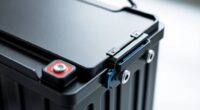
Flooded lead-acid batteries cost less upfront and are easier to repair, but they require regular maintenance like checking electrolyte levels and topping off with distilled water. Sealed lead-acid batteries are maintenance-free, spill-proof, and easier to handle, though they tend to be more expensive initially. Your choice depends on whether you prioritize low maintenance or lower initial costs. To discover the key advantages and disadvantages of each type, keep exploring further.

Get backup power and energy gear delivered free — and shop member deals
- Fast, free delivery on millions of items
- Access to Prime Big Deal Days deals on October 6–7
- Prime Video, Amazon Music and more included
Key Takeaways
- Flooded batteries are cost-effective initially but require regular maintenance like water refilling, unlike sealed batteries which are maintenance-free.
- Sealed lead-acid batteries offer easier handling and spill-proof operation, ideal for applications needing minimal upkeep.
- Flooded batteries generally have a lower upfront cost but higher long-term maintenance expenses; sealed batteries tend to be more durable with higher initial costs.
- Proper maintenance extends flooded battery lifespan, while sealed batteries incorporate advanced sealing for increased durability and reduced corrosion.
- The choice depends on maintenance capacity: flooded batteries suit environments where upkeep is feasible, sealed batteries are better for low-maintenance needs.

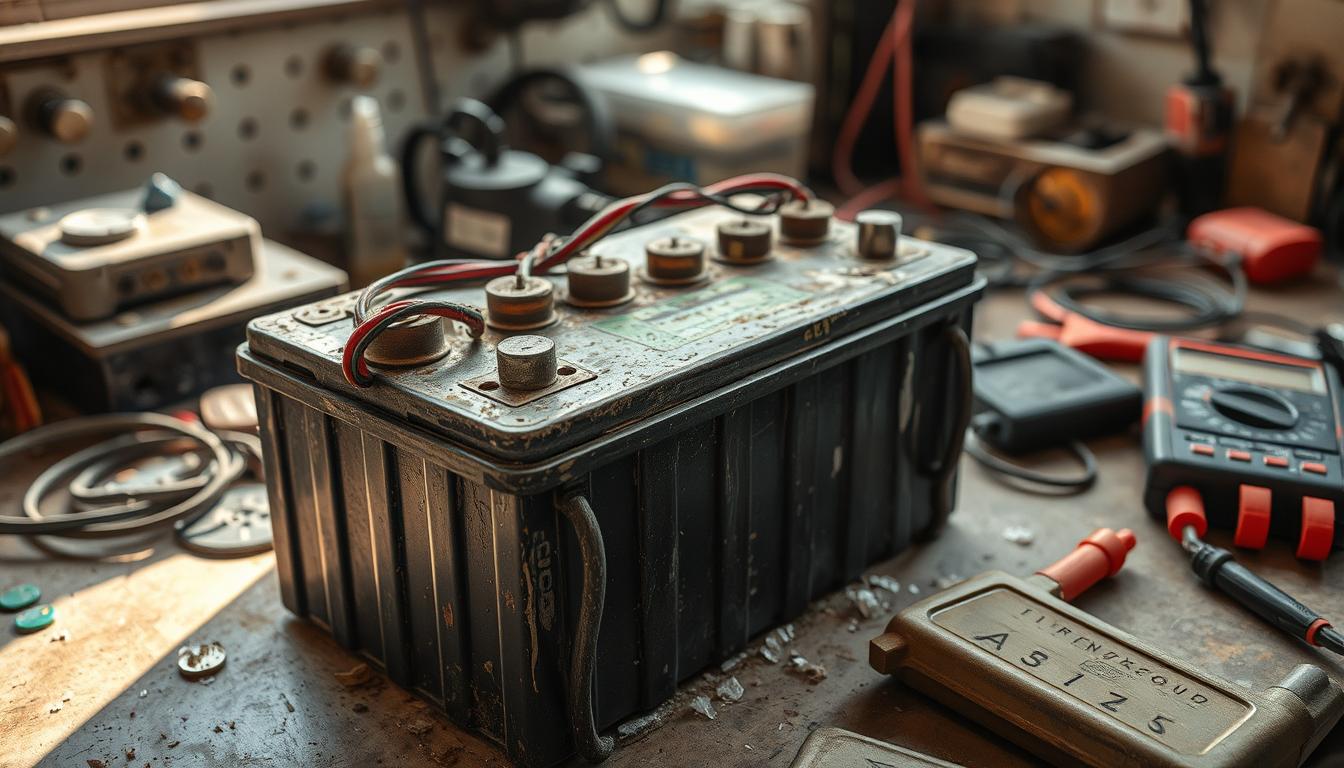
When choosing a lead-acid battery, understanding the differences between flooded and sealed types is essential. Flooded batteries, also known as wet cell batteries, require regular maintenance to ensure optimal performance. You’ll need to check the electrolyte levels periodically and top them off with distilled water as needed. This maintenance requirement can be time-consuming, but it allows you to monitor the battery’s health closely. On the other hand, sealed lead-acid batteries, such as absorbed glass mat (AGM) or gel batteries, are designed to be maintenance-free. They don’t need water added over their lifespan, which makes them more convenient, especially if you prefer a set-it-and-forget-it approach.
Flooded batteries require regular maintenance, while sealed lead-acid types are designed to be maintenance-free and more convenient.
When it comes to cost comparison, flooded batteries are generally less expensive upfront. You pay less initially, making them attractive if you’re on a tight budget. However, keep in mind that their maintenance needs could lead to higher long-term costs. You might spend more on distilled water, cleaning, and possibly replacing batteries sooner if maintenance isn’t kept up properly. Sealed batteries tend to have a higher initial price point, but their maintenance-free design can save you money over time. Since they don’t require regular refilling or cleaning, you avoid additional costs related to upkeep and potential damage caused by neglect.
The maintenance requirements of flooded batteries mean you need to be proactive. Regular checks and fluid top-offs are vital to prevent the plates from drying out or sulfating, which can greatly shorten the battery’s lifespan. If you’re not diligent, you risk reduced performance and the need for earlier replacements. Sealed batteries eliminate this concern because they’re sealed units. They’re designed to be spill-proof and less prone to corrosion, which simplifies handling and reduces the need for routine checks. This makes sealed batteries ideal for applications where ease of use and minimal maintenance are priorities. Additionally, sealed batteries often incorporate advanced sealing technology that enhances their durability and lifespan compared to traditional flooded types.
As an affiliate, we earn on qualifying purchases.
Frequently Asked Questions
How Do Maintenance Costs Compare Over the Battery’s Lifespan?
You’ll find that sealed lead-acid batteries generally have lower maintenance costs over their lifespan because they require less frequent checks and topping off of electrolyte levels. Flooded batteries, on the other hand, demand regular maintenance, which adds to their long-term costs. Although sealed batteries might be more expensive upfront, their longevity and reduced upkeep can make them more cost-effective over time.
Which Battery Type Is More Environmentally Friendly?
You might think sealed lead-acid batteries are greener because they’re maintenance-free, but flooded batteries are actually more environmentally friendly. They’re easier to recycle due to established recycling practices, and their chemical emissions are better managed with proper disposal. Sealed batteries contain gases and require special handling, making their environmental impact higher. So, if you prioritize eco-friendliness, flooded lead-acid batteries hold the advantage through responsible recycling and reduced chemical emissions.
Can Sealed Batteries Be Repaired if Damaged?
Sealed batteries generally can’t be repaired if damaged because their design prevents opening without breaking the seal, making repairs difficult and unsafe. If you notice battery leakages or damage, it’s best to replace them rather than attempt repairs, as repair feasibility is limited. Attempting to fix a sealed lead‑acid battery risks exposure to hazardous materials and may compromise safety, so always prioritize proper disposal and replacement.
What Are the Safety Concerns for Each Battery Type?
Oh, the irony is rich—sealed batteries seem so safe, yet a battery explosion or acid leakage can still happen if mishandled. For flooded batteries, acid leaks pose a significant risk, requiring careful maintenance. Sealed batteries reduce spillage but can still explode if overcharged or damaged. Always wear protective gear, handle with care, and follow safety precautions to prevent dangerous incidents, no matter the type.
How Do Temperature Variations Affect Performance?
Temperature variations critically affect your battery’s performance due to its thermal stability and temperature sensitivity. When it’s too hot, your flooded or sealed lead‑acid battery may lose capacity or overheat, risking damage or failure. Cold temperatures reduce chemical activity, decreasing efficiency and power output. To guarantee peak performance, keep your battery within the recommended temperature range, and avoid exposing it to extreme heat or cold, which can harm its longevity and reliability.
Conclusion
Choosing between flooded and sealed lead-acid batteries depends on your needs. Did you know sealed batteries require up to 80% less maintenance? They’re more convenient, but flooded types often last longer and are easier to repair. If you prioritize low upkeep, sealed batteries are your go-to. However, if durability and cost-effectiveness matter, flooded batteries might be better. Ultimately, understanding these pros and cons helps you make smarter energy choices for your setup.
Fall Picks
fall essentials
As an affiliate, we earn on qualifying purchases.