
Active balancing helps your multi-cell lithium systems by redistributing energy between cells, preventing uneven discharges. This means you get more uniform charge levels, which boosts performance and extends battery life. By keeping cells in sync, it reduces risks like overheating and voltage drops, ensuring reliable operation. Plus, you’ll enjoy longer usage times for devices like smartphones and electric vehicles. Stick around, and you’ll discover even more advantages of integrating active balancing into your energy management strategy.

Get backup power and energy gear delivered free with Prime
- Fast, free delivery on millions of items
- Prime Video, Amazon Music and more included
- Member-only deals all year
Key Takeaways
- Active balancing redistributes energy among cells, ensuring uniform charge levels and preventing individual cell overworking or underutilization.
- It extends battery lifespan by improving overall cell performance and reducing risks of voltage drops and overheating.
- By optimizing charging cycles, active balancing reduces energy waste, leading to longer usage periods for devices and electric vehicles.
- This technology enhances safety and reliability, contributing to predictable and stable energy output across the battery pack.
- Continuous monitoring in advanced battery management systems allows real-time adjustments, maximizing efficiency and longevity of multi-cell lithium systems.
As lithium-ion batteries power everything from smartphones to electric vehicles, effective energy management becomes essential. You know that each individual cell in a battery pack can perform differently due to variations in manufacturing, age, and usage conditions. This inconsistency can lead to issues like reduced capacity and shorter overall lifespan. That’s where active balancing comes in—it optimizes cell performance and enhances energy efficiency, making your battery system more reliable.
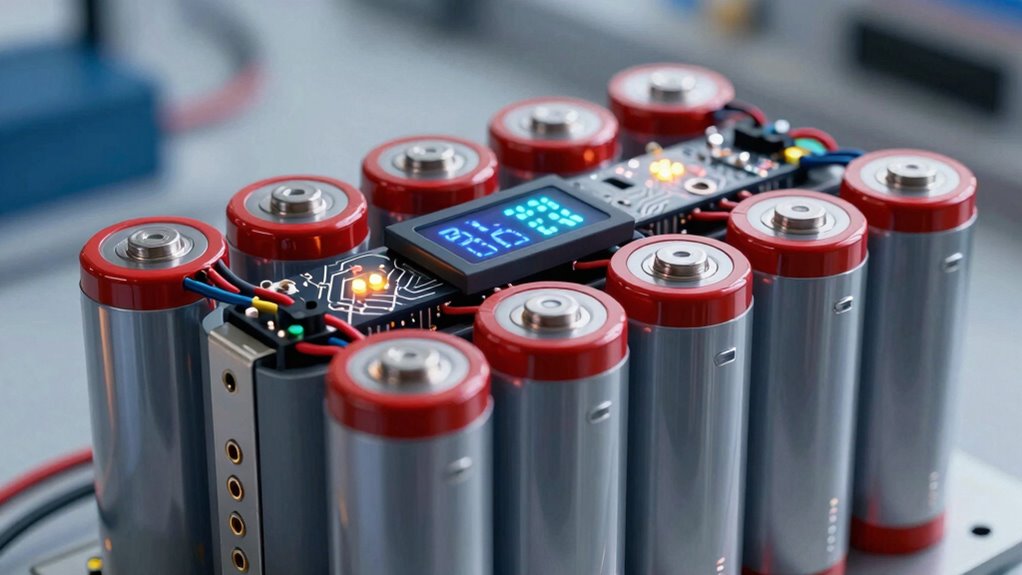
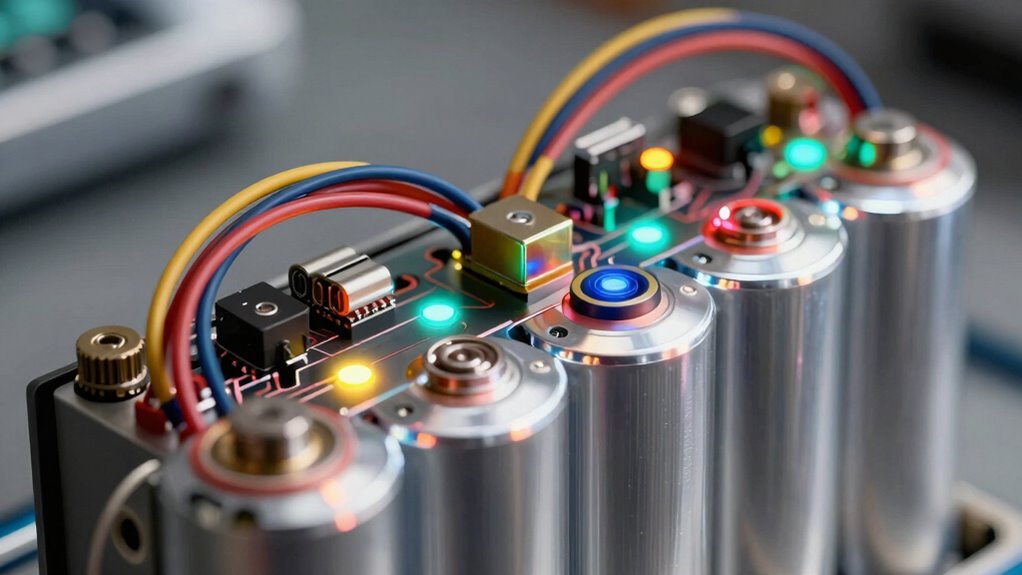
Active balancing systems work by redistributing energy between cells rather than just letting them discharge at their own rates. When one cell is fully charged and another is lagging, active balancing moves energy from the stronger cell to the weaker one. This process guarantees that all cells stay at similar charge levels, maximizing the performance of the entire battery pack. By maintaining balance, you prevent any single cell from being overworked or underutilized, which can cause premature failure.
Active balancing redistributes energy among battery cells, ensuring uniform charge levels and prolonging overall performance and lifespan.
You might wonder how this translates to real-world benefits. First off, when you improve cell performance through active balancing, you’re effectively extending the lifespan of your battery. Since each cell operates more evenly, you reduce the risk of voltage drops and overheating. This not only enhances safety but also means you can rely on your devices for longer periods. Imagine the convenience of a smartphone that lasts all day or an electric vehicle that can drive further without frequent charging.
Moreover, energy efficiency is a significant factor that active balancing addresses. When cells are well-balanced, the energy output becomes more predictable and stable. This leads to optimized charging cycles and reduced energy waste. In an electric vehicle, for instance, this can translate to higher mileage per charge, allowing you to travel longer distances without the need for frequent recharges. Additionally, cell balancing helps to prevent uneven aging of individual cells, further contributing to the overall health of the battery system. Incorporating advanced battery management systems can further enhance these benefits by continuously monitoring and adjusting cell conditions in real time.
Incorporating active balancing into lithium-ion systems isn’t just an upgrade; it’s a necessity for anyone looking to get the most out of their battery technology. Whether you’re powering a smartphone or an electric vehicle, the benefits of improved cell performance and energy efficiency are hard to ignore. By investing in active balancing technology, you’re not just enhancing your battery’s capabilities—you’re guaranteeing that it serves you better and lasts longer. So, if you’re serious about maximizing energy management in your devices, active balancing is the way to go.
multi-cell lithium battery active balancing system
As an affiliate, we earn on qualifying purchases.
As an affiliate, we earn on qualifying purchases.
Frequently Asked Questions
What Are the Main Advantages of Active Balancing Over Passive Balancing?
Active balancing offers key advantages over passive balancing, mainly in energy efficiency and thermal management. With active balancing, you redistribute energy among cells, reducing energy waste and improving overall battery performance. This method also helps maintain ideal temperatures, preventing overheating and extending battery life. By minimizing voltage discrepancies, you enhance the system’s reliability, ensuring that your multi-cell lithium system operates more effectively and efficiently over time.
How Does Active Balancing Impact Battery Lifespan?
You might think of your battery like a fine wine—it gets better with age! Active balancing greatly impacts battery lifespan by enhancing battery efficiency. By redistributing energy from stronger cells to weaker ones, it prevents overcharging and undercharging. This process helps maintain ideal performance and reduces wear, ultimately leading to lifespan extension. So, if you want your battery to last longer and perform better, active balancing’s the way to go!
Can Active Balancing Be Retrofitted to Existing Systems?
Yes, you can retrofit active balancing to existing systems, but it depends on retrofit feasibility and system compatibility. First, assess your current battery configuration and management system. If they’re compatible, you can integrate active balancing components without major overhauls. However, keep in mind that retrofitting might require additional adjustments to guarantee peak performance and safety. Always consult with a professional to evaluate your specific setup before proceeding with any modifications.
What Are the Costs Associated With Implementing Active Balancing?
Implementing active balancing can involve significant costs, including the initial investment in technology and potential installation fees. You’ll need to conduct a thorough cost analysis to understand the long-term benefits versus short-term expenses. Additionally, be prepared for implementation challenges, like ensuring compatibility with your existing system and training personnel. While the upfront cost might seem high, the efficiency gains could offset expenses over time, making it a worthwhile consideration.
How Does Active Balancing Affect Charging Times?
They say “time is money,” and active balancing can greatly impact your charging times. By improving charging efficiency through effective balancing techniques, you guarantee each cell reaches its ideal state quicker. This minimizes the time you spend waiting for a full charge, ultimately enhancing your battery’s performance. With active balancing, you’re not just charging; you’re maximizing the lifespan and reliability of your lithium system while reducing overall downtime.
Conclusion
Active balancing in multi-cell lithium systems isn’t just a game-changer; it’s like giving your battery a superhero cape! By ensuring every cell performs at its peak, you’re not only enhancing efficiency but also extending lifespan. This technology prevents energy wastage and mitigates risks of failure, making your system more reliable. Embracing active balancing guarantees that your lithium system runs smoother than a well-oiled machine, powering your devices longer and with greater consistency.
Halloween Picks
halloween
As an affiliate, we earn on qualifying purchases.