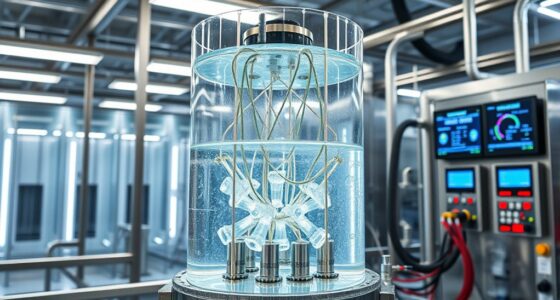
Battery predictive maintenance is becoming increasingly popular because it helps you extend battery life and improve performance by catching issues early. By constantly monitoring parameters like temperature and voltage, you can prevent costly failures and reduce downtime. This approach also optimizes charging, minimizes heat and degradation, and uses data analytics for better decision-making. If you want to understand how this technology can boost your energy systems and cut costs, there’s more to explore below.

Get backup power and energy gear delivered free with Prime
- Fast, free delivery on millions of items
- Prime Video, Amazon Music and more included
- Member-only deals all year
Key Takeaways
- Increasing adoption of electric vehicles and renewable energy systems drives demand for reliable battery maintenance.
- Predictive analytics enable early detection of battery issues, reducing downtime and costly repairs.
- Enhanced monitoring technologies improve charging efficiency and extend battery lifespan.
- Data-driven insights support proactive maintenance, preventing battery failures before they occur.
- Growing focus on energy efficiency and cost savings makes predictive maintenance a strategic choice.

As battery technology advances and the demand for reliable energy storage grows, predictive maintenance is becoming increasingly popular. You might notice that batteries are now more than just power sources; they’re essential components in everything from electric vehicles to renewable energy systems. To keep these systems running smoothly, you need to understand the importance of maintaining battery health. Predictive maintenance helps you do just that by using data and analytics to anticipate issues before they cause failures. This approach directly impacts your battery’s lifespan, guaranteeing it functions at its best for as long as possible, and it also enhances charging efficiency, which is critical for energy management and cost savings.
With predictive maintenance, you gain insights into how your batteries are performing in real time. You can track various parameters such as temperature, voltage, and current, which influence overall health and longevity. By analyzing this data, you can identify early signs of deterioration, like capacity loss or increased internal resistance, that typically precede battery failure. Acting on this information allows you to schedule maintenance proactively, rather than waiting for a complete breakdown. This proactive approach helps extend the battery’s lifespan because you’re addressing problems early, preventing excessive wear and tear that shorten overall durability. Additionally, understanding battery health is crucial for optimizing performance and planning maintenance schedules effectively. Incorporating predictive analytics further enhances your ability to forecast potential issues and optimize operational efficiency.
Charging efficiency is another key benefit of predictive maintenance. When you monitor your batteries continuously, you can optimize charging cycles to reduce stress and heat generation during charging. Over time, improper or inefficient charging can degrade battery health, reducing both lifespan and efficiency. By guaranteeing that charging is performed under ideal conditions, you maximize energy transfer and minimize energy loss. This not only conserves energy but also ensures your batteries are ready to perform when you need them most. Additionally, predictive analytics can help you adapt charging protocols based on real-time conditions, making the process smarter and more efficient. Recognizing battery degradation patterns early through data analysis is essential for maintaining optimal charging performance. Furthermore, understanding the internal resistance of batteries can help in fine-tuning charging strategies for better overall health. Incorporating advanced monitoring techniques can provide deeper insights into battery performance, enabling even more precise maintenance actions.
As an affiliate, we earn on qualifying purchases.
Frequently Asked Questions
How Accurate Are Current Battery Predictive Maintenance Models?
Current battery predictive maintenance models are quite accurate, especially when they incorporate detailed data on battery degradation. You can expect these models to effectively forecast potential failures and optimize maintenance schedules. The key is data accuracy; the more precise and thorough your data, the better the predictions. While no system is perfect, advancements in algorithms and sensor technology continue to improve the reliability of these models, helping you prevent unexpected battery failures.
What Industries Benefit Most From Battery Predictive Maintenance?
You’ll find that industries like electric vehicles, renewable energy storage, and telecommunications benefit most from battery predictive maintenance. It helps you monitor battery aging and optimize charging cycles, preventing failures and extending lifespan. By predicting issues early, you can schedule maintenance proactively, reduce downtime, and save costs. This proactive approach guarantees your batteries operate efficiently, ultimately improving overall system reliability and performance in these sectors.
How Cost-Effective Is Implementing Predictive Maintenance for Batteries?
Implementing predictive maintenance for batteries is highly cost-effective, especially with recent technology advancements. For example, a solar energy company saved thousands by predicting battery failures before they happened, reducing downtime. A thorough cost analysis shows that investing in sensors and analytics pays off quickly through extended battery life and fewer emergency repairs. As technology advances, these systems become more affordable, making predictive maintenance an even smarter choice for optimizing operational costs.
What Are the Main Challenges in Adopting Predictive Maintenance?
You face challenges like ensuring sensor calibration for accurate readings and managing complex data integration across various systems. These issues can lead to unreliable predictions and increased costs. Additionally, you might struggle with the high initial investment and the need for skilled personnel. Overcoming these obstacles requires ongoing calibration, robust data management strategies, and staff training to fully realize predictive maintenance benefits.
How Does Predictive Maintenance Impact Battery Lifespan?
You might find it surprising, but predictive maintenance actually extends your battery’s lifespan by addressing issues early. By monitoring battery aging and optimizing maintenance scheduling, you prevent sudden failures and reduce overuse. This proactive approach guarantees your batteries stay healthier longer, saving you money and downtime. With timely interventions, you maximize efficiency and durability, proving that foresight truly preserves power and performance over time.
Conclusion
As you embrace battery predictive maintenance, you’ll discover it’s transforming how you manage energy, preventing failures before they happen. This approach isn’t just a trend; it’s a game-changer that saves you time, money, and headaches—like having a crystal ball for your batteries. With technology advancing rapidly, staying ahead means you can enjoy seamless operations and unbeatable reliability. Get on board now, because missing out would be like watching the future happen without you!
Halloween Picks
halloween
As an affiliate, we earn on qualifying purchases.