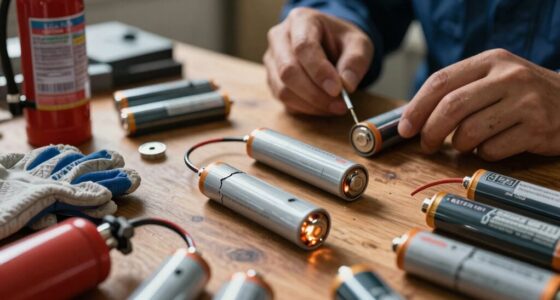
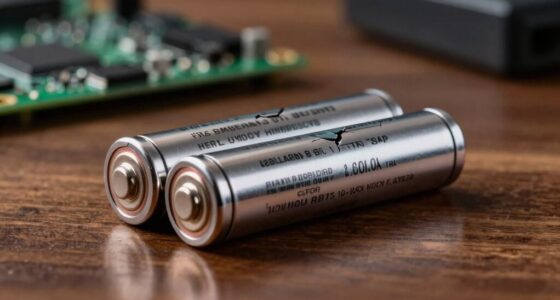
Understanding thermal runaway is vital for your safety, as it’s a chain reaction where small temperature rises cause internal chemical reactions in batteries to accelerate uncontrollably, often leading to fires or explosions. Causes include physical damage, manufacturing defects, or high heat, which destabilize the internal components and break down electrolytes. Preventing it involves managing temperature, using quality batteries, avoiding overcharging, and keeping batteries away from heat or damage. Staying informed gives you the tools to protect yourself and your devices.

Get backup power and energy gear delivered free with Prime
- Fast, free delivery on millions of items
- Prime Video, Amazon Music and more included
- Member-only deals all year
Key Takeaways
- Thermal runaway is a chain reaction in batteries caused by internal temperature rise and chemical reactions.
- Damage, manufacturing defects, or high temperatures can destabilize battery components, initiating reactions.
- Overheating releases flammable gases and pressure, risking fires or explosions if not properly managed.
- Prevention includes proper temperature management, avoiding overcharging, physical protection, and regular inspections.
- Understanding battery chemistry and safety practices helps prevent reactions from escalating into thermal runaway.

Thermal runaway occurs when a small increase in temperature triggers a chain reaction that causes the temperature to rise uncontrollably. This process is particularly dangerous in batteries, especially lithium-ion types, where internal chemical reactions can spiral out of control. As the temperature climbs, these chemical reactions accelerate, releasing more heat and gases, which can lead to the battery overheating, catching fire, or even exploding. Understanding how these reactions happen is crucial for maintaining battery safety and preventing catastrophic failures.
Thermal runaway is a dangerous chain reaction in batteries caused by uncontrollable temperature increases.
At the core of thermal runaway are chemical reactions within the battery. When a battery experiences damage, manufacturing defects, or improper handling, its internal components can become unstable. For example, if the separator between the positive and negative electrodes fails, or if the battery is exposed to high temperatures, it can initiate a series of chemical reactions. These reactions break down the electrolyte and other materials, releasing energy in the form of heat. As heat builds up, it causes further reactions to occur more rapidly, creating a vicious cycle. This is why managing the temperature of batteries during charging, discharging, and storage is critical. Proper battery safety measures—such as using quality cells, avoiding overcharging, and keeping batteries away from heat sources—are essential in preventing these dangerous reactions from initiating.
The problem intensifies when the heat generated by initial chemical reactions reaches a point where it causes the internal components to decompose further. This decomposition releases flammable gases and increases the internal pressure. If the pressure isn’t relieved, the battery casing can rupture, releasing flammable materials and gases that can ignite or explode. This is why manufacturers design batteries with safety features like vents or thermal cutoffs, which activate before the situation escalates. As a user, you should always follow recommended charging procedures, avoid puncturing or damaging batteries, and store them in cool, dry environments to mitigate risks.
In essence, controlling the chemical reactions within a battery is key to preventing thermal runaway. By maintaining proper battery safety practices, you help ensure that internal chemical reactions remain stable and controlled. Regularly inspecting batteries for signs of damage or swelling, avoiding exposure to extreme conditions, and using the correct charger all contribute to preventing a small thermal event from turning into a dangerous crisis. When you prioritize battery safety and understand the chemical reactions at play, you greatly reduce the risk of thermal runaway and keep yourself and your surroundings safe from potential hazards. Understanding the chemical reactions behind these processes is vital for effective prevention.
As an affiliate, we earn on qualifying purchases.
Frequently Asked Questions
Can Thermal Runaway Occur in All Battery Types?
Thermal runaway can occur in many battery types, but not all equally. You should consider the battery chemistry, as lithium-ion batteries are more prone to it than others like lead-acid or nickel-metal hydride. To stay safe, always follow proper safety protocols, including proper handling, storage, and charging procedures. Being cautious helps prevent thermal runaway, reducing the risk of fires or explosions.
How Quickly Does Thermal Runaway Develop Once Triggered?
Once triggered, thermal runaway can escalate at a mind-boggling speed, leading to thermal escalation and rapid ignition within seconds or minutes. You might see temperatures soar from normal to explosive levels almost instantaneously, causing flames and smoke to burst out with terrifying speed. This rapid development leaves little time for intervention, making it essential to prevent triggers and handle batteries with extreme caution to avoid catastrophic consequences.
Are There Specific Conditions That Make Thermal Runaway More Likely?
You’re more likely to experience thermal runaway if your battery has a fragile architecture or if environmental factors like high temperatures, humidity, or physical damage are present. Poor design or compromised insulation can accelerate heat buildup, increasing risk. Extreme temperatures, especially heat exposure, create conditions that make thermal runaway more probable. To reduce risk, verify your battery’s architecture is robust, and avoid exposing it to harsh environmental conditions.
What Are the Long-Term Effects of Thermal Runaway Damage?
Thermal runaway damage can cause long-term effects like accelerated battery degradation, reducing capacity and lifespan. It may also jeopardize the structural integrity of the battery, leading to potential safety hazards. You might notice diminished performance over time, and the damaged cells could pose risks of further failures or fires. Addressing thermal runaway early helps preserve your battery’s health and ensures safer, more reliable operation in the long run.
Can Thermal Runaway Be Completely Prevented in High-Risk Environments?
While it’s challenging to promise absolute safety, you can considerably reduce risks by implementing robust preventative strategies and strict safety protocols. In high-risk environments, diligent monitoring, proper battery management, and regular maintenance help mitigate thermal runaway chances. Although no method guarantees complete prevention, proactive measures enhance safety and minimize potential damage, allowing you to operate with greater confidence and peace of mind, even in demanding conditions.
Conclusion
By understanding thermal runaway, you’re like a gardener tending to a delicate plant—careful monitoring keeps it from bursting into flames. Recognize the warning signs before they ignite, and take proactive steps to prevent chaos. Think of prevention as building a sturdy fence around a fragile garden; it shields your safety from destructive sparks. Stay vigilant and informed, and you’ll keep your energy storage safe, preventing small sparks from turning into raging wildfires.
Halloween Picks
halloween
As an affiliate, we earn on qualifying purchases.