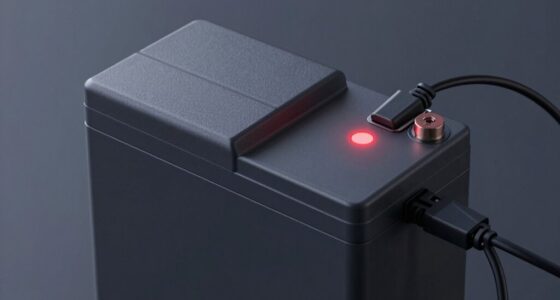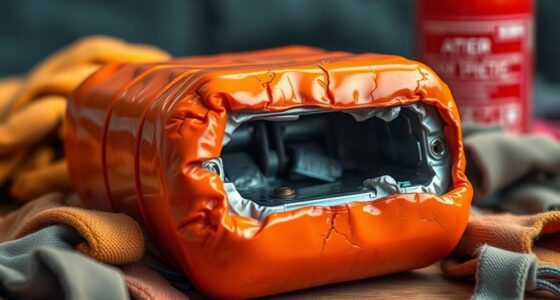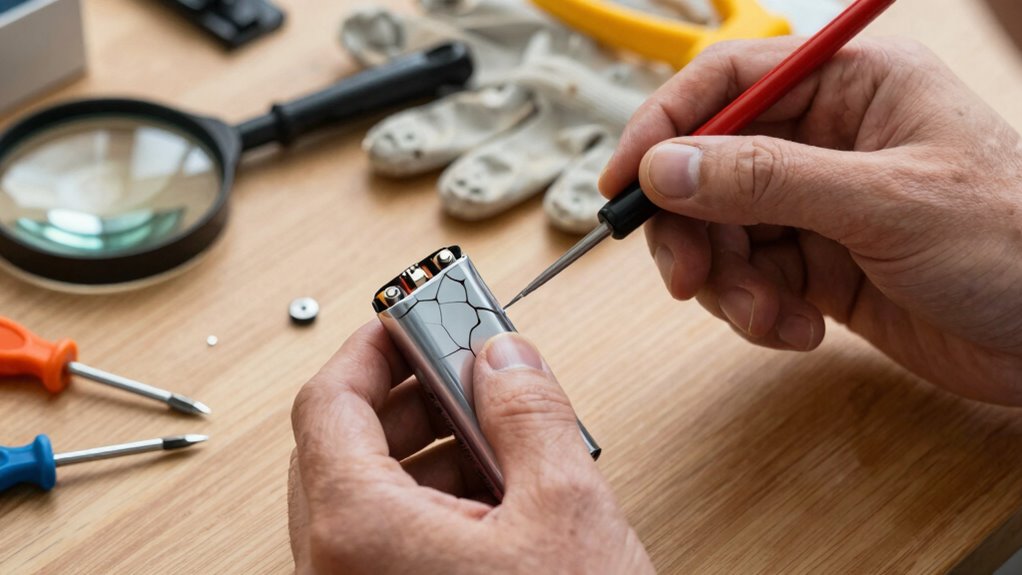

Before attempting a DIY battery fix, understand the risks involved, like leaks, fires, or chemical exposure, especially with lithium-ion batteries. Handle batteries carefully, wear protective gear, and work in a ventilated area away from flammable materials. Avoid opening sealed batteries or fixing swollen ones yourself, as these can be dangerous. Use the correct charger and troubleshoot minor issues first. If you’re curious about safe repair practices and when to seek help, you’ll find valuable tips if you keep exploring.

Get backup power and energy gear delivered free with Prime
- Fast, free delivery on millions of items
- Prime Video, Amazon Music and more included
- Member-only deals all year
Key Takeaways
- Always wear protective gear and work in a well-ventilated area to avoid chemical exposure and fire hazards.
- Confirm the battery’s damage signs—swelling, leaks, or corrosion—indicate it should be replaced, not repaired.
- Use the correct charger and avoid overcharging to prevent overheating, swelling, or fires during charging.
- Understand that opening sealed batteries can cause dangerous chemical leaks and void warranties.
- Seek professional help for internal damage or chemical issues, and never attempt complex repairs without proper knowledge.
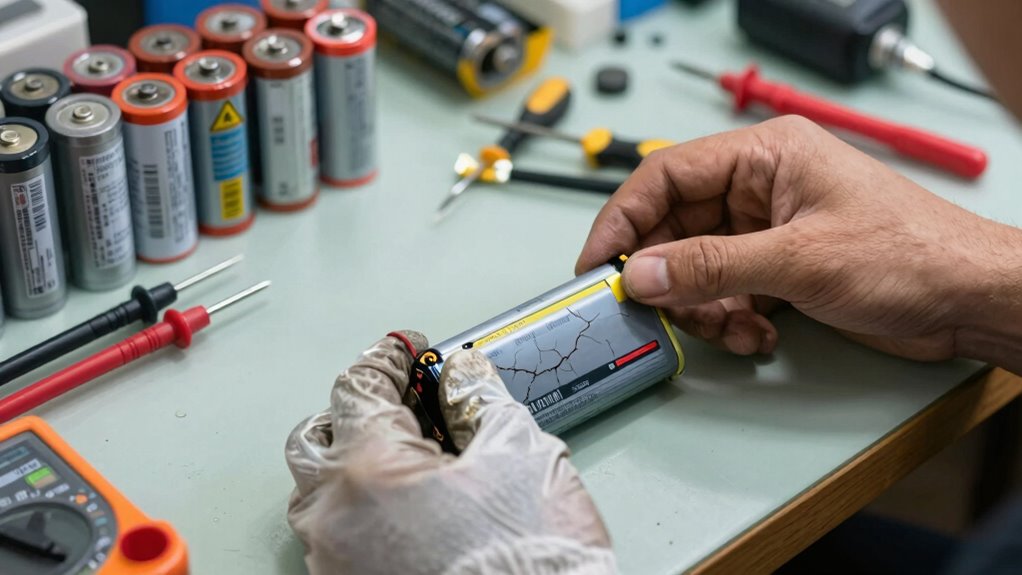
Have you ever wondered if you can fix your battery at home instead of replacing it outright? While DIY fixes can seem tempting, especially when you’re trying to save money and time, it’s essential to understand the risks involved. Battery safety should always be your top priority. Batteries, particularly lithium-ion types, contain chemicals and components that can be hazardous if mishandled. Improper handling, puncturing, or attempting repairs without proper knowledge can lead to leaks, fires, or even explosions. Before diving into any DIY repair, make sure you’re well-versed in safe handling procedures, such as wearing protective gloves and eye gear, working in a well-ventilated area, and keeping flammable materials away.
Attempting DIY battery repairs is risky; prioritize safety, proper handling, and consider professional help for internal damage.
Charging tips are equally important to consider. If your battery isn’t holding a charge, it might seem straightforward to just give it a quick boost, but doing so improperly can cause further damage. Always use the correct charger specified for your device or battery type. Overcharging or using incompatible chargers can lead to overheating, swelling, or damage to the internal cells. Before attempting any fix, fully understand the charging cycle and the manufacturer’s recommendations. Sometimes, what appears to be a battery problem can simply be a charging port issue or software glitch, so troubleshooting these areas first can save you unnecessary risks.
When contemplating a DIY fix, it’s critical to assess whether the problem is repairable or if replacement is a safer option. For example, if your battery shows signs of swelling, leaks, or corrosion, it’s best to replace it rather than trying to repair it yourself. Attempting to open or repair a swollen or damaged battery can be extremely dangerous. If you decide to proceed with a repair, start by thoroughly researching the specific battery type and its internal components. Many batteries are sealed units that shouldn’t be tampered with, and opening them can void warranties or cause dangerous chemical exposure. Additionally, understanding battery safety protocols and the specific chemical hazards involved is crucial before attempting any repairs. It’s also helpful to familiarize yourself with proper disposal methods for damaged batteries to prevent environmental harm. Being aware of these chemical hazards can help you avoid accidental exposure or injury during repairs.
Lastly, keep in mind that not all issues are fixable at home. Sometimes, the best course of action is to consult a professional or replace the battery altogether. DIY fixes can be effective for minor issues like cleaning terminals or resetting a device, but for anything involving internal damage or chemical components, safety should come first. Knowing the proper battery safety protocols and adhering to correct charging tips can help you avoid accidents and prolong your battery’s lifespan. It’s also wise to seek out trusted repair resources or professional services when in doubt, ensuring your safety and device longevity. When in doubt, don’t hesitate to seek expert advice—your safety is worth more than a quick fix.
Products Worth Considering

Bose QuietComfort Wireless Bluetooth Headphones with Active Noise Cancellation, Mic, USB‑C Charging, Deep Bass, 24‑Hour Battery – White Smok

Apple AirPods Pro 3 Wireless Earbuds with Active Noise Cancellation

Apple iPad Air (2025) 13‑inch Wi‑Fi 256 GB – Space Gray (M3 chip)
As an affiliate, we earn on qualifying purchases.
Frequently Asked Questions
Is It Safe to Repair Lithium-Ion Batteries at Home?
Repairing lithium-ion batteries at home isn’t safe because of battery safety concerns and repair risks. You might accidentally cause a fire, leak harmful chemicals, or damage the battery further. Lithium-ion batteries are sensitive and require specialized tools and knowledge. Unless you’re a trained professional, it’s best to avoid DIY fixes. Instead, consider seeking expert help or replacing the battery through authorized service centers to guarantee safety.
How Can I Identify a Faulty Battery Before Attempting a Fix?
You can identify a faulty battery by performing simple battery testing methods, like checking for reduced capacity or shorter run times. Look for faulty indicators such as swelling, leaking, or overheating during use. If your device’s battery drains quickly, won’t hold a charge, or shows physical damage, it’s likely faulty. Always prioritize safety and consider professional testing if you suspect issues, rather than attempting repairs yourself.
What Tools Are Necessary for DIY Battery Repairs?
Imagine holding a battery, its edges sharp and unpredictable. To guarantee safety, gather essential tools like insulated screwdrivers, a multimeter, and gloves. Proper tool maintenance is vital—keep them clean and in good condition. Always prioritize battery safety by working in a well-ventilated area and avoiding shortcuts. With these tools and precautions, you can confidently perform minor repairs while minimizing risks and protecting yourself from potential hazards.
Are There Legal Restrictions on Repairing Certain Types of Batteries?
Yes, there are legal restrictions on repairing certain batteries, especially lithium-ion ones, due to safety and environmental concerns. You might need a repair certification to handle or fix these batteries legally. Always prioritize proper battery recycling methods and avoid DIY repairs on high-voltage or hazardous batteries. Check local regulations before attempting repairs, and consider professional services to guarantee safety and compliance with environmental laws.
How Do I Dispose of a Damaged or Repaired Battery Safely?
You should dispose of damaged or repaired batteries safely by taking them to a certified battery recycling facility. Avoid throwing them in regular trash because they contain hazardous waste that can harm the environment. Contact your local waste management authority for specific disposal instructions. Proper battery recycling guarantees hazardous materials are handled responsibly, preventing potential leaks, fires, or environmental contamination. Never attempt DIY disposal methods for damaged batteries.
Conclusion
Before attempting any DIY battery fix, remember that improper repairs can be dangerous and may void your warranty. Always prioritize safety and know your limits. Did you know that approximately 70% of lithium-ion battery failures are caused by external factors like mishandling or improper repair? Staying informed and cautious can save you time, money, and potential hazards. When in doubt, consulting professionals is the smartest move—you’ll protect yourself and extend your battery’s lifespan.