
The best portable generator overall in this roundup is the WEN DF680iX: its dual-fuel inverter design balances useful output with quieter, cleaner power than conventional open-frame generators. For larger home loads, the DuroMax XP13000EH offers a much higher-output gas-and-propane option, while the EcoFlow DELTA 3 Max provides silent, exhaust-free power for buyers who can work within battery capacity. Your main tradeoff is between sustained power and refueling convenience, portability and output, or engine power and quiet, emissions-free operation. Read on for the full breakdown, selection criteria, and advice on matching a generator to the loads you actually need to run.

Get backup power and energy gear delivered free with Prime
- Fast, free delivery on millions of items
- Prime Video, Amazon Music and more included
- Member-only deals all year
Complete the kit


Key Takeaways
- The lineup splits into two different categories: 11 products use fuel-burning engines, while four are battery power stations; their output, noise, runtime, and operating limits are not directly interchangeable.
- The WEN DF680iX stands out as the most balanced engine pick: dual-fuel capability and inverter output give it a broader use case than small gas-only models, though it cannot match the largest conventional units for heavy home loads.
- For high-demand backup, output capacity changes the ranking: the DuroMax XP13000EH and Westinghouse WGen11500TFc suit larger loads better than compact inverter generators, at the cost of greater size, weight, and engine noise.
- Battery power stations trade runtime flexibility for quiet operation: the EcoFlow DELTA 3 Max and Jackery HomePower 3600 Plus offer larger storage than the Jackery Explorer 300, which is better suited to small electronics than household backup.
- “Portable” covers a wide range: the Oxseryn 2800-Watt and WEN 3600-Watt inverter models fit lighter-duty needs, while 13,000-watt-class generators are better treated as movable backup equipment than easy carry-along power.
| Oxseryn 4400-Watt Gas-Powered Inverter Generator |  | Best Lightweight Gas Inverter | Peak wattage: 4,400 watts | Running wattage: 3,400 watts | Engine: 208 cc, 4-stroke | VIEW LATEST PRICE | See Our Full Breakdown |
| DuroMax XP13000EH 13,000-Watt Dual-Fuel Portable Generator |  | Best for High-Load Home Backup | Starting wattage: 13,000 watts | Running wattage: 10,500 watts | Engine: 500 cc OHV, 4-stroke | VIEW LATEST PRICE | See Our Full Breakdown |
| EcoFlow DELTA 3 Max Portable Power Station, 2048Wh LFP Battery |  | Best Fast-Charging Mid-Capacity Power Station | Battery capacity: 2,048Wh | Battery chemistry: LiFePO4 (LFP) | Standard output: 2,400W | VIEW LATEST PRICE | See Our Full Breakdown |
| Jackery HomePower 3600 Plus Portable Power Station, 3584Wh, 3600W AC Output |  | Best Expandable Battery Backup | Battery capacity: 3,584Wh | Output wattage: 3,600W | Parallel output: Up to 7,200W | VIEW LATEST PRICE | See Our Full Breakdown |
| BLUETTI Elite 100 V2 Portable Power Station, 1024Wh, 1800W |  | Best Compact, Quiet Power Station | Battery capacity: 1,024Wh | Battery chemistry: LiFePO4 | AC output: 1,800W | VIEW LATEST PRICE | See Our Full Breakdown |
| Westinghouse 6500 Watt Dual Fuel Home Backup Portable Generator |  | Best for Balanced Home and RV Backup | Fuel types: Gasoline and propane | Running output: 5,300 watts gasoline; 4,800 watts propane | Peak output: 6,500 watts gasoline; 5,800 watts propane | VIEW LATEST PRICE | See Our Full Breakdown |
| PowerSmart 3800-Watt Portable Inverter Generator |  | Best Compact Inverter for Electronics | Fuel type: Gasoline | Starting output: 3,800 watts | Running output: 3,200 watts | VIEW LATEST PRICE | See Our Full Breakdown |
| WEN DF680iX 6800-Watt Dual-Fuel Portable Inverter Generator |  | Best Dual-Fuel Inverter for Clean, Flexible Power | Fuel types: Gasoline and propane | Gasoline output: 6,800 surge watts; 5,100 rated watts | Propane output: 6,000 surge watts; 4,500 rated watts | VIEW LATEST PRICE | See Our Full Breakdown |
| Westinghouse WGen9500DF Dual Fuel Portable Generator |  | Best High-Output Dual-Fuel Backup | Fuel types: Gasoline and propane | Gasoline output: 12,500 peak watts; 9,500 running watts | Propane output: 11,200 peak watts; 8,500 running watts | VIEW LATEST PRICE | See Our Full Breakdown |
| Westinghouse WGen11500TFc 14,500-Watt Tri-Fuel Portable Generator |  | Best for Maximum Output and Fuel Choice | Fuel types: Gasoline, propane, and natural gas | Peak output: 14,500 watts | Running output: 11,500 watts | VIEW LATEST PRICE | See Our Full Breakdown |
| WEN 3600-Watt Portable Inverter Generator, RV-Ready, Quiet and Lightweight with Fuel Shut Off (56360i) |  | Best Lightweight Gas Inverter | Surge output: 3,600 watts | Engine: 149 cc, 4-stroke | Fuel tank: 1.6 gallons | VIEW LATEST PRICE | See Our Full Breakdown |
| Jackery Explorer 1000 v2 Portable Power Station, 1070Wh, 1500W |  | Best Mid-Size Battery Power Station | Battery capacity: 1,070 Wh | Battery chemistry: LFP (LiFePO4) | AC output: 1,500 W | VIEW LATEST PRICE | See Our Full Breakdown |
| Oxseryn 2800-Watt Portable Inverter Generator |  | Best for Quiet, Low-Load Camping | Peak output: 2,800 watts | Running output: 2,000 watts | Engine: 79.8 cc, 4-stroke OHV | VIEW LATEST PRICE | See Our Full Breakdown |
| Westinghouse WGen3600cv Portable Generator, 4650 Peak Watts, RV Ready, Gas Powered with CO Sensor |  | Best for Longer RV and Home Backup Runs | Peak output: 4,650 watts | Running output: 3,600 watts | Engine: 212 cc, 4-stroke OHV | VIEW LATEST PRICE | See Our Full Breakdown |
| Jackery Explorer 300 Portable Power Station, 292Wh |  | Best Compact Power Station | Capacity: 292 Wh | Battery chemistry: LiFePO4 | Peak output: 600 W | VIEW LATEST PRICE | See Our Full Breakdown |
| portable generator | Weight | Engine | Fuel tank |
|---|---|---|---|
| Oxseryn 4400-Watt Gas-Powered | 56 pounds | 208 cc, 4-stroke | 2 gallons |
| DuroMax XP13000EH 13,000-Watt | 234 pounds | 500 cc OHV, 4-stroke | — |
| EcoFlow DELTA 3 Max Portable P | — | — | — |
| Jackery HomePower 3600 Plus Po | 77.2 pounds | — | — |
| BLUETTI Elite 100 V2 Portable | 25 pounds | — | — |
| Westinghouse 6500 Watt Dual Fu | — | 274 cc, 4-stroke OHV | 4.7 gallons |
| PowerSmart 3800-Watt Portable | 47 pounds | — | 1.19 gallons |
| WEN DF680iX 6800-Watt Dual-Fue | — | 224 cc | — |
| Westinghouse WGen9500DF Dual F | — | 457 cc, 4-stroke OHV | 6.6 gallons |
| Westinghouse WGen11500TFc 14,5 | — | 550 cc, 4-stroke OHV | 9.5 gallons |
| WEN 3600-Watt Portable Inverte | 46 pounds | 149 cc, 4-stroke | 1.6 gallons |
| Jackery Explorer 1000 v2 Porta | 23.8 pounds | — | — |
| Oxseryn 2800-Watt Portable Inv | About 40 pounds | 79.8 cc, 4-stroke OHV | 1.1 gallons |
| Westinghouse WGen3600cv Portab | 100.6 pounds | 212 cc, 4-stroke OHV | 4 gallons |
| Jackery Explorer 300 Portable | 7.5 pounds | — | — |
More Details on Our Top Picks
Oxseryn 4400-Watt Gas-Powered Inverter Generator
The Oxseryn is a practical middle ground for buyers who want a fuel-powered generator without stepping up to a heavy home-backup unit. Its 3,400 running watts can cover several everyday essentials or support an RV setup, while the 56-pound weight is far easier to manage than the 234-pound DuroMax XP13000EH. A 2-gallon tank is paired with an advertised up to 14 hours at 25% load in ECO mode, making light-duty overnight use plausible without frequent refueling. It also offers AC, DC, and RV outlets, so it is more adaptable than a basic household-outlet-only option. The tradeoff is limited fuel capacity and a stated noise level under 72 dBA at 23 feet; buyers seeking quiet conversation nearby or substantial whole-home backup should look elsewhere.
Pros:- 3,400 running watts support more than small-device charging.
- At 56 pounds, it is much easier to transport than the DuroMax XP13000EH.
- AC, 12V DC, and RV outlets suit varied setups.
- Advertised runtime reaches 14 hours at 25% load with ECO mode.
Cons:- The 2-gallon tank limits fuel capacity for heavier or extended use.
- Noise is listed as under 72 dBA at 23 feet, which may be intrusive at a quiet campsite.
- The one-year warranty is shorter than the five-year warranties listed for the EcoFlow and Jackery power stations.
Best for: RV owners and campers who need gasoline power for moderate loads and want a generator one person can move.
Not ideal for: Households seeking high-output backup for multiple large appliances, or campers who prioritize especially quiet operation.
- Peak wattage:4,400 watts
- Running wattage:3,400 watts
- Engine:208 cc, 4-stroke
- Fuel:Gasoline
- Fuel tank:2 gallons
- Advertised runtime:Up to 14 hours at 25% load with ECO mode
- Outlets:2 × 120V AC, 1 × 12V DC, 1 × RV
- Weight:56 pounds
Our verdict“Choose the Oxseryn for portable gasoline power and RV flexibility, but skip it if you need quiet operation or heavy-duty home backup.”
DuroMax XP13000EH 13,000-Watt Dual-Fuel Portable Generator
For buyers who put backup capacity ahead of easy transport, the DuroMax XP13000EH stands apart from the smaller Oxseryn 4400. Its 10,500 running watts and 13,000 starting watts can serve much larger loads, while gasoline-or-propane operation gives owners another fuel option during an outage. The electric start and transfer-switch-ready 50-amp outlet also make it better suited to a home backup plan than a compact camping generator. That capability comes with a substantial portability penalty: at 234 pounds, its wheels and folding handle help with repositioning but do not make it a lightweight carry-around choice. The listed three-hour runtime also makes fuel planning important. I would rank it for stationary backup needs, not for campers who want the simpler, lighter Oxseryn or a quiet battery station.
Pros:- 10,500 running watts provide far more capacity than the Oxseryn 4400.
- Runs on gasoline or propane, adding fuel flexibility during outages.
- Electric start and a transfer-switch-ready 50-amp outlet suit home backup setups.
- No-flat tires and a foldable handle help move it over short distances.
Cons:- At 234 pounds, it is difficult to lift or transport without help.
- The listed runtime is three hours, so extended use calls for active fuel planning.
- Its large output and engine are excessive for light camping or charging small devices.
Best for: Homeowners preparing for outages who need to run several substantial appliances and want gasoline and propane flexibility.
Not ideal for: Campers, frequent solo movers, and buyers who need long operation between refueling without confirming runtime for their intended load.
- Starting wattage:13,000 watts
- Running wattage:10,500 watts
- Engine:500 cc OHV, 4-stroke
- Fuel:Gasoline or propane
- Voltage:240 volts
- Listed runtime:3 hours
- Features:Electric start, CO sensor, low-oil shutdown, hour meter
- Weight:234 pounds
Our verdict“Pick the DuroMax when high-output, dual-fuel home backup matters more than easy portability or long listed runtime.”
EcoFlow DELTA 3 Max Portable Power Station, 2048Wh LFP Battery
The EcoFlow DELTA 3 Max suits buyers who want generator-style backup without storing gasoline or running an engine. Its 2,048Wh LFP battery and 2,400W output give it more stored energy than the BLUETTI Elite 100 V2, making it the stronger fit for longer sessions with household devices or RV equipment. The advertised 0–80% charge in about 1.13 hours can shorten the gap between uses, and a 10ms transfer time supports backup for compatible equipment. X-Boost is listed up to 3,400W, but that is a special mode rather than the standard 2,400W output, so I would not treat it as equivalent to a full-time higher-output generator. Solar panels are optional, and the stated runtime depends on the load. Compared with the wheeled Jackery HomePower 3600 Plus, this is a smaller-capacity, lower-output choice.
Pros:- 2,048Wh LFP battery offers twice the stated capacity of the BLUETTI Elite 100 V2.
- Fast charging reaches 80% in about 1.13 hours.
- App-based energy management helps monitor usage and charging schedules.
- 10ms transfer time supports backup use for compatible equipment.
Cons:- Standard output is 2,400W; the 3,400W figure applies to X-Boost mode.
- Solar panels are not included.
- Battery capacity still limits long outages unless charging is available.
Best for: RV users and households who want a rechargeable, fuel-free power source with more capacity than a compact one-kilowatt-hour station.
Not ideal for: Buyers who need sustained output above 2,400W, want solar panels included, or require long-duration power without a recharge plan.
- Battery capacity:2,048Wh
- Battery chemistry:LiFePO4 (LFP)
- Standard output:2,400W
- X-Boost output:Up to 3,400W
- Charging time:0–80% in about 1.13 hours
- Transfer time:10ms
- Listed runtime:10 hours
- Warranty:5 years
Our verdict“Choose the EcoFlow for fast-recharging, fuel-free backup with more capacity than a compact power station, while keeping its standard output limit in mind.”
Jackery HomePower 3600 Plus Portable Power Station, 3584Wh, 3600W AC Output
The Jackery HomePower 3600 Plus is the capacity-first battery option in this group. Its 3,584Wh battery and 3,600W output exceed the EcoFlow DELTA 3 Max on both stored energy and standard output, making it a better match for longer backup sessions or heavier appliances. It can also expand, and two units in parallel can provide 240V operation and up to 7,200W, a path the smaller BLUETTI Elite 100 V2 does not offer in the supplied specs. AC, solar, gas-generator, and hybrid charging give owners multiple ways to replenish it. The cost of that capacity is a 77.2-pound body: wheels and a telescopic handle help, but it is still a bulky item to lift. Solar panels are optional, and 240V requires a second unit connected in parallel.
Pros:- 3,584Wh capacity and 3,600W output exceed the EcoFlow DELTA 3 Max figures.
- Expandable capacity supports larger backup plans.
- AC, solar, gas-generator, and hybrid charging provide several recharge routes.
- Wheels and a telescopic handle make rolling easier than carrying.
Cons:- The 77.2-pound weight makes lifting and loading difficult.
- 240V operation requires units connected in parallel.
- Solar panels are optional rather than included.
Best for: Households and RV owners who want substantial battery capacity, expansion options, and several ways to recharge.
Not ideal for: Buyers who need a lightweight carry-in power source, require 240V from a single unit, or want an included solar panel.
- Battery capacity:3,584Wh
- Output wattage:3,600W
- Parallel output:Up to 7,200W
- Voltage:120V; 240V in parallel
- Battery type:LFP
- Charging options:Hybrid AC+DC, AC, solar, gas generator
- Expandable capacity:Up to 21kWh per unit or 43kWh with multiple units
- Weight:77.2 pounds
Our verdict“Choose the Jackery for expandable, high-capacity battery backup if you can accommodate its weight and the extra unit needed for 240V.”
BLUETTI Elite 100 V2 Portable Power Station, 1024Wh, 1800W
The BLUETTI Elite 100 V2 is the portability pick for buyers who value low noise and easy handling over long-duration capacity. At 25 pounds, it is far easier to move than the 77.2-pound Jackery HomePower 3600 Plus, and its 1,024Wh LFP battery and 1,800W AC output suit devices, small appliances, and shorter backup needs. Fast AC charging reaches 80% in about 45 minutes, while UPS switchover of 10ms or less supports use with compatible equipment. Its 11 ports and app connectivity add flexibility for a compact unit. The compromise is less stored energy and lower standard output than the EcoFlow DELTA 3 Max. The 30dB figure applies to silent mode, not complete silence, and vehicle fast charging requires a separate BLUETTI Charger 1.
Pros:- At 25 pounds, it is much easier to carry than the Jackery HomePower 3600 Plus.
- AC fast charging reaches 80% in about 45 minutes.
- UPS switchover is 10ms or less for compatible backup equipment.
- Eleven ports, app control, and a 30dB silent-mode rating suit varied, quiet-use setups.
Cons:- The 1,024Wh capacity is less than the EcoFlow DELTA 3 Max and Jackery HomePower 3600 Plus.
- Standard AC output is 1,800W, limiting use with higher-demand appliances.
- Vehicle fast charging requires a separate BLUETTI Charger 1.
Best for: Campers, apartment residents, and outage-conscious users who want a light, quiet power station for electronics and moderate loads.
Not ideal for: Households seeking multi-day backup or power for larger appliances; its capacity and 1,800W standard output trail the EcoFlow and Jackery.
- Battery capacity:1,024Wh
- Battery chemistry:LiFePO4
- AC output:1,800W
- Surge output:3,600W
- Power Lifting output:2,700W
- AC fast charging:80% in approximately 45 minutes
- UPS switchover:10ms or less
- Weight:25 pounds
Our verdict“Pick the BLUETTI for a quiet, lightweight station for shorter outages and camping, not for high-load or extended home backup.”
Westinghouse 6500 Watt Dual Fuel Home Backup Portable Generator
The Westinghouse WGen5300DFcv is a practical middle ground for buyers who need more sustained output than a compact inverter can provide but don’t need a large, heavy-duty unit. It supplies 5,300 running watts on gasoline or 4,800 on propane, with 30A outlets for both an RV and transfer-switch connection. That makes it more adaptable for home outages than the PowerSmart 3800, while remaining less imposing than the Westinghouse WGen9500DF. A 4.7-gallon tank is listed for up to 14.5 hours of operation, though actual runtime depends on load. The tradeoff is that this is a conventional, gasoline-or-propane generator rather than a lightweight inverter model, and its propane output is lower. I’d choose it for flexible backup, not frequent solo transport.
Pros:- Runs on gasoline or propane, giving owners a fuel alternative during outages.
- Separate 30A RV and transfer-switch-ready outlets support two common backup uses.
- Up to 14.5 hours of stated runtime on gasoline can reduce refueling interruptions at lighter loads.
- CO shutdown, low-oil shutdown, and covered outlets add useful operating safeguards.
Cons:- Propane output falls to 4,800 running watts, below its gasoline rating.
- A conventional generator is less suited to quiet, close-quarters use than inverter options such as the PowerSmart 3800.
- Its home-backup output and outlet capacity are below the Westinghouse WGen9500DF.
Best for: Households that want dual-fuel outage coverage and RV owners who need a generator with a dedicated 30A connection.
Not ideal for: Buyers who prioritize a light, easy-to-carry generator or need the higher output and 50A connection offered by the Westinghouse WGen9500DF.
- Fuel types:Gasoline and propane
- Running output:5,300 watts gasoline; 4,800 watts propane
- Peak output:6,500 watts gasoline; 5,800 watts propane
- Engine:274 cc, 4-stroke OHV
- Fuel tank:4.7 gallons
- Runtime:Up to 14.5 hours
- Key outlets:120V household duplex, 30A TT-30R RV, 30A L14-30R transfer-switch-ready
- Safety features:CO shutdown and automatic low-oil shutdown
Our verdict“Choose this Westinghouse for dual-fuel home or RV backup with useful 30A connections, but skip it if portability or maximum household output matters more.”
PowerSmart 3800-Watt Portable Inverter Generator
At 47 pounds, the PowerSmart 3800 is the most carry-friendly fuel generator in this group, and its inverter output makes it a better match for sensitive electronics than the larger conventional Westinghouse WGen9500DF. Its less-than-3% THD rating, USB ports, and 12V DC output suit a mixed load of phones, computers, and small appliances. The 3,200 running watts can cover a modest camping setup or selected household essentials, but this is not a whole-home backup choice. Its 1.19-gallon tank also means shorter stretches between refills than the Westinghouse WGen5300DFcv’s larger tank. I’d favor it when handling and cleaner power matter more than long runtime or fuel flexibility; gasoline-only operation limits options during supply disruptions.
Pros:- At 47 pounds, it is easier to lift and move than the larger Westinghouse home-backup models.
- Less than 3% THD is suited to sensitive electronics.
- Includes household, twist-lock, DC, and USB connections for varied small loads.
- Eco Mode and a stated 59 dBA noise level support more considerate use around campsites.
Cons:- Gasoline-only operation offers less fuel flexibility than the dual-fuel Westinghouse WGen5300DFcv and WEN DF680iX.
- The 1.19-gallon tank limits time between refills.
- Its 3,200 running watts are not intended for high-demand home backup.
Best for: Campers, tailgaters, and homeowners needing a portable source for electronics and a modest selection of essential loads.
Not ideal for: Households seeking extended outage coverage, dual-fuel operation, or enough capacity for larger appliances and broad home backup.
- Fuel type:Gasoline
- Starting output:3,800 watts
- Running output:3,200 watts
- Total harmonic distortion:Less than 3%
- Noise level:59 dBA at 23 feet
- Fuel tank:1.19 gallons
- Weight:47 pounds
- Outlets:120V 20A duplex, 120V 30A L5-30R, 12V DC, dual 5V USB
Our verdict“Pick the PowerSmart for portable, cleaner inverter power for electronics and smaller loads, not for long-running or whole-home backup.”
WEN DF680iX 6800-Watt Dual-Fuel Portable Inverter Generator
The WEN DF680iX combines the fuel choice of a conventional backup generator with the low-distortion output of an inverter: its THD is listed below 1.2% at full load. That makes it a stronger fit for sensitive electronics than the Westinghouse WGen9500DF, while its 5,100 gasoline running watts provide more capacity than the compact PowerSmart 3800. It also includes a 30A RV outlet, 120/240V outlet, electric start, and CO shutdown, so it can serve camping and home-backup roles. Wheels and a telescoping handle help with movement, though they don’t make this a small, carry-by-hand unit. Runtime is a compromise: gasoline operation is listed at up to 6.1 hours at half load, while propane can run longer with a 20-pound tank but produces less power.
Pros:- Gasoline and propane operation provide a choice of fuel sources.
- Low stated THD is a good fit for sensitive electronics.
- Electric start, recoil backup, and CO shutdown support convenient and safer operation.
- RV, household, 120/240V, USB, and DC connections cover varied uses.
Cons:- Rated output is lower on propane than on gasoline.
- Gasoline runtime is listed at up to 6.1 hours at half load, so extended use may require more frequent refueling.
- A 240V parallel connection kit is sold separately.
Best for: RV owners and homeowners who want dual-fuel flexibility, inverter-quality power, and enough output for several substantial loads.
Not ideal for: Buyers who need very long gasoline runtime, a lightweight generator for frequent lifting, or the higher running output of the Westinghouse WGen9500DF.
- Fuel types:Gasoline and propane
- Gasoline output:6,800 surge watts; 5,100 rated watts
- Propane output:6,000 surge watts; 4,500 rated watts
- Engine:224 cc
- Total harmonic distortion:Under 0.3% at no load; under 1.2% at full load
- Runtime:Up to 6.1 hours at half load on gasoline; up to 9 hours at half load on a 20-pound propane tank
- Starting:Keyless electric start with recoil backup
- Key outlets:120/240V L14-30R, 120V TT-30R RV, two 120V household outlets, DC and USB
Our verdict“Choose the WEN DF680iX when clean inverter power and two-fuel flexibility matter more than long gasoline runtime or maximum capacity.”
Westinghouse WGen9500DF Dual Fuel Portable Generator
The WGen9500DF is for buyers who need substantially more capacity than the WGen5300DFcv: it delivers 9,500 running watts on gasoline and includes a 50A outlet alongside transfer-switch and household connections. Its gasoline, propane, and recoil starting options make operation more flexible than the simpler Westinghouse model, while remote starting can save a trip outside when the generator is set up appropriately. A 6.6-gallon tank is rated for up to 12 hours, though the listed figure varies with load. This is a conventional generator, not an inverter like the WEN DF680iX, so buyers prioritizing low-distortion power for sensitive equipment may prefer that alternative. The WGen9500DF’s larger engine and frame also mean more storage and handling demands.
Pros:- High running output supports more household loads than the Westinghouse WGen5300DFcv.
- Gasoline and propane operation add fuel flexibility.
- Remote, electric, and recoil starting offer several ways to start the unit.
- 50A and transfer-switch-ready outlets support substantial home-backup connections.
Cons:- The large engine and 6.6-gallon tank make storage and transport more demanding.
- It is a conventional generator rather than an inverter model with the WEN DF680iX’s lower stated THD.
- Some assembly is required.
Best for: Homeowners who need high-output outage backup, want gasoline or propane capability, and have space to store a large generator.
Not ideal for: Campers or buyers who need a compact, low-distortion inverter generator; the WEN DF680iX is a better fit for those priorities.
- Fuel types:Gasoline and propane
- Gasoline output:12,500 peak watts; 9,500 running watts
- Propane output:11,200 peak watts; 8,500 running watts
- Engine:457 cc, 4-stroke OHV
- Fuel tank:6.6 gallons
- Runtime:Up to 12 hours
- Starting methods:Remote, electric, and recoil
- Key outlets:Two 120V 20A GFCI, 120V 30A L14-30R, 120/240V 50A 14-50R
Our verdict“Choose the WGen9500DF for high-output dual-fuel home backup if you can accommodate its size and don’t need inverter-level power quality.”
Westinghouse WGen11500TFc 14,500-Watt Tri-Fuel Portable Generator
Among these five, the WGen11500TFc offers the broadest fuel choice and the highest stated running output: 11,500 watts on gasoline, with propane and natural gas also supported. That makes it a more capable backup option than the dual-fuel WGen9500DF for households with larger loads, while natural-gas compatibility can be useful where a suitable supply is available. Remote and push-button electric starting reduce the need to pull-start a large engine, and the CO sensor adds a safety feature. Its 9.5-gallon tank is rated for up to 19 hours at 25% load, not at full output. Despite its portable designation, the 550cc engine and large fuel tank make this a substantial machine; it is a poor fit for buyers who need a generator they can routinely lift or move alone.
Pros:- Tri-fuel operation provides more fuel options than the gasoline-and-propane WGen9500DF.
- 11,500 running watts on gasoline suit larger backup loads.
- Remote and push-button electric starting make operation easier than recoil-only starting.
- CO sensing, low-oil shutdown, GFCI outlets, and a fuel gauge add useful operating features.
Cons:- Its large engine and 9.5-gallon tank make storage and movement difficult compared with smaller generators.
- The listed 19-hour runtime applies at 25% load, not full output.
- An automatic transfer switch is sold separately.
Best for: Homeowners with high backup-power demands who want gasoline, propane, and natural gas options and have room for a large generator.
Not ideal for: Campers, apartment dwellers, or anyone seeking a light and quiet portable unit; buyers needing a complete automatic transfer setup must also arrange that equipment separately.
- Fuel types:Gasoline, propane, and natural gas
- Peak output:14,500 watts
- Running output:11,500 watts
- Engine:550 cc, 4-stroke OHV
- Fuel tank:9.5 gallons
- Runtime:Up to 19 hours at 25% load
- Total harmonic distortion:Less than 5%
- Starting:Push-button electric and remote start
- Key outlets:30A L14-30R and 50A 14-50R
Our verdict“Pick the WGen11500TFc for high-demand backup and three-fuel flexibility if you have space for a large generator and a separate transfer setup.”
WEN 3600-Watt Portable Inverter Generator, RV-Ready, Quiet and Lightweight with Fuel Shut Off (56360i)
The WEN 56360i pairs 2,900 running watts with a 46-pound body, making it a strong fit for buyers who need more than small-device power but still want to move a gas generator without a second person. Its TT-30R outlet connects to many travel trailers, while clean inverter output is suited to laptops and other sensitive electronics. Compared with the Oxseryn 2800-Watt, it offers more running power and a slightly higher listed noise level; the Oxseryn is lighter on power needs and claims longer runtime at a low load. The WEN’s fuel shutoff helps use up carburetor fuel before storage, but its 1.6-gallon tank gives up to five hours at half load, so frequent refueling is part of the deal. It is not a whole-home backup choice.
Pros:- At 46 pounds, it is easier to carry and store than the 100.6-pound Westinghouse WGen3600cv.
- 2,900 rated watts and a TT-30R outlet suit many travel-trailer and camping setups.
- Low-THD inverter output is designed for sensitive electronics.
- Fuel shutoff, eco mode, and low-oil shutdown support easier upkeep and protected operation.
Cons:- The 1.6-gallon tank provides up to five hours at half load, so extended use requires refueling.
- Its 2,900 running watts fall short of larger conventional generators for heavy household loads.
- Parallel operation requires a separately sold connection kit.
Best for: Campers and travel-trailer owners who want a portable gasoline inverter with an RV outlet, clean power, and enough output for several everyday loads.
Not ideal for: Buyers seeking long unattended backup runtime or power for large household loads; its five-hour half-load runtime and 2,900 rated watts limit that role.
- Surge output:3,600 watts
- Engine:149 cc, 4-stroke
- Fuel tank:1.6 gallons
- Runtime:Up to 5 hours at half load
- Weight:46 pounds
- Noise:65 dBA at quarter load
- Outlets:Two 120V receptacles, one TT-30R RV receptacle, one 12V DC outlet, and two 5V USB ports
Our verdict“Choose the WEN if you want a carryable gas inverter for camping or trailer use, but not if long runtime or high-capacity home backup is the priority.”
Jackery Explorer 1000 v2 Portable Power Station, 1070Wh, 1500W
The Jackery Explorer 1000 v2 is the middle ground for buyers who want quiet, fuel-free power without stepping up to the larger capacity and output of options such as the EcoFlow DELTA 3 Max. Its 1,070Wh LFP battery and 1,500W AC output can support small appliances and several personal devices, while the 23.8-pound weight and foldable handle make it more portable than a gas generator like the Westinghouse WGen3600cv. App-controlled charging includes an emergency mode that can bring charging time to one hour; the default is 1.7 hours. That speed comes with a setup caveat, and battery capacity still limits how long high-wattage devices can run. Solar panels are not included, and solar charging is restricted to Jackery panels, narrowing expansion choices.
Pros:- LFP battery is rated to retain over 70% capacity after 4,000 charge cycles.
- Three pure-sine-wave AC outlets plus USB and DC ports accommodate several device types.
- At 23.8 pounds, it is substantially easier to carry than the Westinghouse WGen3600cv.
- App offers emergency, quiet overnight, and energy-efficiency charging modes.
Cons:- One-hour charging requires enabling emergency charging in the app; default charging takes 1.7 hours.
- Solar panels are not included, and solar charging supports Jackery panels only.
- A 1,070Wh battery cannot match a fuel generator’s sustained output when refueling is available.
Best for: Campers and households seeking quiet short-duration backup for electronics and modest appliances, with a rechargeable battery they can carry between locations.
Not ideal for: People who need multi-day backup, high-wattage appliances for long periods, or broad third-party solar compatibility.
- Battery capacity:1,070 Wh
- Battery chemistry:LFP (LiFePO4)
- AC output:1,500 W
- Surge output:3,000 W
- Weight:23.8 pounds
- AC outlets:Three 120V pure sine wave
- USB ports:Two USB-C (up to 100 W each) and one USB-A
- Charging time:1 hour with emergency charging enabled; 1.7 hours by default
- Solar compatibility:Jackery panels only; panel not included
Our verdict“Pick the Explorer 1000 v2 for quiet, portable battery backup and device charging, but choose a larger power station or gas generator for longer, heavier loads.”
Oxseryn 2800-Watt Portable Inverter Generator
With 2,000 running watts, a roughly 40-pound frame, and a stated noise level below 58 dBA at 23 feet, the Oxseryn suits campers who need fuel-powered output without carrying a full-size generator. Its claimed runtime of up to nine hours at 25% load is especially relevant for lights, phones, and modest electronics, though that figure should not be mistaken for runtime under heavier demand. Compared with the WEN 56360i, this model is lighter on rated output but lists longer low-load runtime and lower noise; the WEN adds a TT-30R RV outlet and more running watts. Oxseryn’s less-than-3% THD rating supports common electronics, and its USB-C port adds convenience. The 1.1-gallon tank limits reserve for sustained loads, and frequent high-altitude users need a separate kit.
Pros:- About 40 pounds, making it lighter than the WEN 56360i and much lighter than conventional backup generators.
- Up to nine hours of stated runtime at 25% load suits low-demand overnight use.
- Less than 3% THD and USB-C output support electronics and modern devices.
- ECO mode, fuel indicator, fuel shutoff, and parallel function add useful operating flexibility.
Cons:- The 1.1-gallon tank limits fuel reserve for heavier or prolonged loads.
- The high-altitude kit is not included for frequent use above 4,000 feet.
- Its 2,000 running watts and listed outlets do not provide the WEN 56360i’s dedicated TT-30R RV connection.
Best for: Campers and tailgaters who prioritize a lighter gas inverter, lower stated noise, and overnight power for modest loads.
Not ideal for: Travel-trailer owners needing a TT-30R outlet or households expecting sustained high loads and longer runtime between refills.
- Peak output:2,800 watts
- Running output:2,000 watts
- Engine:79.8 cc, 4-stroke OHV
- Fuel tank:1.1 gallons
- Runtime:Up to 9 hours at 25% load
- Noise:Under 58 dBA at 23 feet
- Weight:About 40 pounds
- Outlets:Two 120V AC, one 12V DC, one USB, and one Type-C
- Total harmonic distortion:Less than 3%
Our verdict“Choose the Oxseryn for quieter, low-load camping power in a compact package, but look elsewhere for RV-specific hookups or sustained high output.”
Westinghouse WGen3600cv Portable Generator, 4650 Peak Watts, RV Ready, Gas Powered with CO Sensor
The Westinghouse WGen3600cv favors runtime and conventional-generator output over easy lifting. Its 3,600 running watts and up to 14 hours from a four-gallon tank make it better suited to extended backup or travel-trailer use than the WEN 56360i, whose lighter inverter design offers cleaner power for sensitive electronics but less rated output and shorter listed runtime. The Westinghouse includes both a TT-30R RV outlet and an L5-30R outlet, plus automatic carbon monoxide shutdown. That capacity comes at a clear portability cost: at 100.6 pounds, it is not a grab-and-go machine, and the wheel kit is not included. Buyers should also factor in gasoline handling and exhaust placement. The included oil and tool kit reduce setup friction, but this model is a poor match for quiet campsites or anyone needing to carry a generator frequently.
Pros:- 3,600 running watts provide more sustained output than the WEN 56360i.
- Four-gallon tank supports up to 14 hours of stated runtime.
- TT-30R and L5-30R outlets suit RV and other 30A connections.
- Automatic CO shutdown and included oil and tool kit support safer, simpler setup.
Cons:- At 100.6 pounds, it is difficult to move without a separately supplied wheel kit.
- As a gasoline generator, it produces exhaust and is not suited to indoor use or quiet settings.
- Unlike inverter models such as the WEN 56360i, the supplied specifications do not state a low-THD output rating for sensitive electronics.
Best for: Travel-trailer owners and households wanting longer gasoline-powered backup runs, multiple 30A outlet types, and automatic CO shutdown.
Not ideal for: Campers who need quiet inverter power or buyers who must lift and carry a generator regularly; the unit weighs 100.6 pounds and lacks a wheel kit out of the box.
- Peak output:4,650 watts
- Running output:3,600 watts
- Engine:212 cc, 4-stroke OHV
- Fuel tank:4 gallons
- Runtime:Up to 14 hours
- Weight:100.6 pounds
- Voltage and frequency:120V, 60 Hz
- Outlets:Two 5-20R duplex, one TT-30R, and one L5-30R
- CO protection:Automatic carbon monoxide shutdown
Our verdict“Pick the WGen3600cv for longer-running RV or residential backup where output matters more than carrying ease, but skip it for frequent transport or quiet camping.”
Jackery Explorer 300 Portable Power Station, 292Wh
The Explorer 300 is the most carry-friendly option in this group: at 7.5 pounds, it is easy to pack for a day outdoors or keep ready for phones, a laptop, and camera batteries. Its 292Wh capacity and 300W rated output make it a personal-device power source, not a substitute for the Jackery Explorer 1000 v2 or a gas generator. The larger Jackery provides over three times the battery capacity and five times the rated AC output, making it the more flexible choice for appliances; the Explorer 300 wins when low weight and compactness matter more than runtime. It offers six ports, including 100W USB-C, and supports solar charging, but the panel is sold separately. Its 300W output ceiling rules out many higher-draw devices, and its small battery drains quickly under sustained use.
Pros:- At 7.5 pounds, it is far easier to carry than the Explorer 1000 v2 or any gas generator in this lineup.
- Six ports, including 100W USB-C, support several personal electronics at once.
- LiFePO4 battery is rated for over 4,000 charge cycles to 70% capacity.
- Solar charging is supported for off-grid recharging when a compatible panel is available.
Cons:- The 292Wh capacity and 300W rated output restrict runtime and device choice.
- Solar panels are not included.
- Its small capacity is less suited to household backup than the Explorer 1000 v2.
Best for: Day hikers, photographers, and travelers who need a lightweight way to recharge phones, cameras, drones, and laptops away from an outlet.
Not ideal for: Households seeking outage backup for appliances or anyone who needs to run devices drawing more than 300W for extended periods.
- Capacity:292 Wh
- Battery chemistry:LiFePO4
- Peak output:600 W
- Weight:7.5 pounds
- Ports:Two AC outlets, one USB-C PD, two USB-A, and one car port
- USB-C output:Up to 100 W
- Solar charging:80% in about 2.8 hours with a 100W panel or 7.5 hours with a 40W panel
Our verdict“Choose the Explorer 300 for lightweight personal-device charging, but step up to the Explorer 1000 v2 for appliances or longer backup.”
How We Picked
I ranked these 15 products by how well their design fits a realistic portable-power job, rather than treating peak wattage as the only measure. I compared usable output, fuel options or battery capacity, portability, outlet and RV usefulness, noise-related design, and features that affect day-to-day operation. For engine models, I also weighed whether an inverter design or conventional generator configuration better suits sensitive electronics, extended backup, and the buyer’s tolerance for noise and maintenance. For power stations, I considered stored energy and output alongside the fact that they run without fuel or exhaust but must be recharged.
The order reflects role and versatility, not a claim that one generator suits every buyer. Models that combine practical output with useful flexibility rank ahead of more specialized picks; high-output units rise for home backup but fall for easy transport, while compact battery models make sense for light loads but cannot replace large fuel-powered generators. I treated transfer-switch readiness, tri-fuel capability, CO sensors, RV outlets, and fuel shutoff as meaningful advantages only when they address a clear use case. Buyers should confirm exact running watts, outlet requirements, and manufacturer instructions before connecting equipment or a home circuit.
Factors to Consider When Choosing Best Portable Generators
Start with the job, not the generator’s headline wattage. Portable generators in this roundup range from a small battery station for personal electronics to fuel-powered equipment intended for substantial backup loads. These broader checks can prevent a mismatch that product specifications alone may not make obvious.
Size for running loads and startup surges
List the appliances you expect to use at the same time, then separate their continuous draw from the extra power some motors need to start. Refrigerators, pumps, and air conditioners can demand a brief surge that exceeds their normal operating wattage. A generator rated for a large peak number may still fall short if its running output is too low for your chosen combination. Avoid adding every appliance in the house if you only need a few essentials during an outage. Check the appliance labels and generator’s running-watt rating, then leave headroom for startup and unexpected loads.
Choose fuel or battery storage around outage length
Gas and dual-fuel generators can keep producing power while fuel is available, but require safe fuel storage, ventilation, and routine engine care. Propane can be convenient to store, though the generator’s output and runtime may vary by fuel and operating conditions. A battery power station avoids exhaust and engine upkeep, but its stored energy is finite; high-wattage appliances can drain it quickly. Think through how you would recharge a battery during a multi-day outage, including whether the grid or another charging source will be available. For frequent long outages, fuel availability may matter more than a quiet, maintenance-light design.
Treat portability as weight, setup, and storage
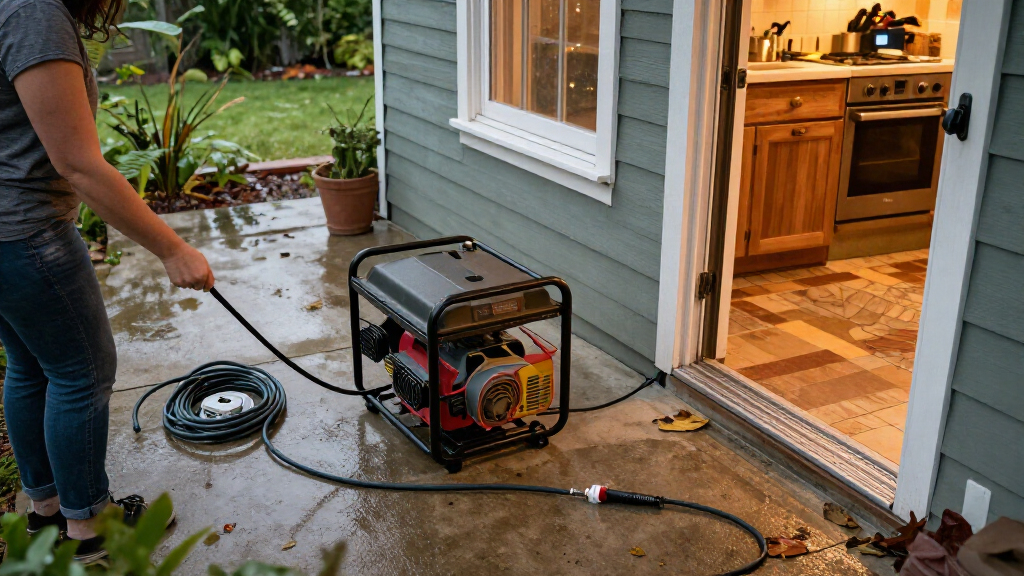
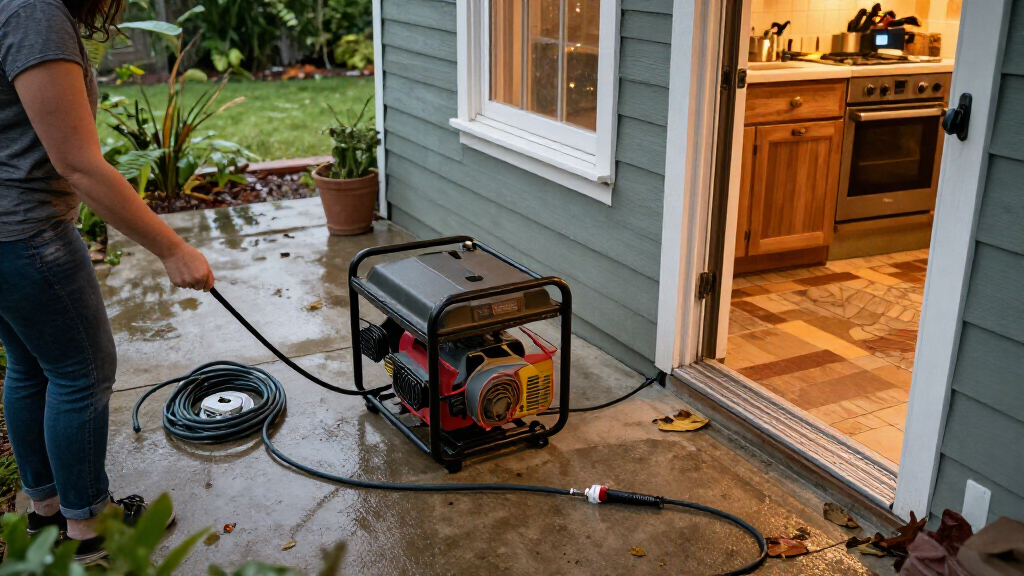
“Portable” does not mean easy for one person to lift. Compact inverter generators and smaller power stations are easier to move and store, while high-output open-frame units can be better suited to a fixed place outside the home. Check the product’s weight, wheel or handle arrangement, and the route between storage and the operating location. Also plan for where it will run: fuel-burning generators must operate outdoors, away from doors, windows, and vents, never inside a home or garage. A unit that meets your power needs but cannot be safely positioned or moved may be the wrong fit.
Match inverter output and noise to the setting
Inverter generators are often a better match for camping, RV use, and electronics when quiet operation and steadier output matter. Conventional generators can provide more power for their size class, but their open-frame design and engine operation may make them louder and less suited to quiet campsites. Noise can also affect neighbors during an outage, so check the manufacturer’s sound information and understand that distance and load change what you hear. Do not assume that “inverter” means silent or that every electronic device is automatically safe to connect. Follow the generator and appliance instructions, and use appropriate surge protection where recommended.
Plan the connection before a home outage
A generator outlet that looks compatible does not make a direct connection to household wiring safe. Home backup through a transfer switch or approved interlock needs correctly installed equipment and a qualified setup; never backfeed a wall outlet. Compare the generator’s outlet type and amperage with the intended appliances, cords, or professionally installed transfer equipment. A 30-amp connection may suit selected circuits but will not power every home load at once. Decide which circuits are essential before buying, and confirm compatibility with an electrician rather than relying on a headline wattage figure.
Account for upkeep, weather, and safe operation
Fuel-powered generators require attention even when they spend most of the year in storage: check the manual for oil changes, fuel handling, and periodic operation. Fuel shutoff can help reduce fuel left in the carburetor during storage, but it does not replace routine maintenance. A CO sensor is a useful layer of protection, not permission to run the unit near openings or indoors. Battery stations avoid combustion and oil changes, yet still need appropriate storage and charging care. Before buying, consider where the unit will be stored, how you will maintain or recharge it, and whether the household can operate it safely under stress.
Frequently Asked Questions
Can a portable generator power my whole house?
Some of the high-output fuel models in this roundup can support multiple household loads, but a wattage rating alone does not mean a generator can power every circuit. The combined running draw and motor startup surges determine what can operate together. A safe connection to household wiring requires a compatible transfer switch or approved interlock installed correctly; never connect a generator by feeding a wall outlet. Make a list of essential circuits and ask an electrician to check the required capacity and connection before choosing a model.
Should I choose a battery power station or a gas generator for an outage?
Choose a battery station if quiet, exhaust-free operation and low routine maintenance matter most, and your expected loads fit its output and stored energy. A gas generator is usually a better match for longer outages or heavier loads when you can safely store and replenish fuel. Battery capacity can run down quickly with heating appliances, cooking equipment, or other high-draw devices, so calculate likely usage rather than relying on capacity alone. For a multi-day outage, think through how the station could be recharged as well as what it can power.
Is dual-fuel capability worth choosing over a gas-only model?
Dual-fuel capability gives you another way to run the generator, which can help when one fuel is unavailable or when you prefer storing propane. It does not guarantee equal output or runtime on both fuels, so check the manufacturer’s figures for each option. Propane storage and handling still require care, and gas models need their own maintenance and storage practices. If you already have a reliable fuel plan and value a simpler choice, a gas-only generator may meet your needs without paying for flexibility you will not use.
What size generator do I need for an RV?
Start with the RV appliances you want to run at the same time, especially air conditioning, and check their running and startup demands. Then confirm that the generator has a compatible RV outlet or that an approved connection suits your setup. A compact inverter generator may be easier to transport and more appropriate for campsite use, while a larger model can add capacity but also weight and noise. Check campsite rules and your RV manufacturer’s guidance before purchasing, since a high wattage rating does not guarantee a convenient or compatible connection.
Can I run a portable generator in my garage or near an open window?
No. Fuel-burning generators produce carbon monoxide and must operate outdoors, well away from doors, windows, and vents; an open garage door does not make indoor or garage operation safe. Follow the manufacturer’s placement instructions and use working carbon monoxide alarms inside the home. A built-in CO sensor is an added safeguard, not a substitute for safe placement. If you need power indoors without running an engine, a battery power station avoids exhaust, though its output and runtime are limited by its specifications.
Conclusion
For the broadest mix of useful output and fuel flexibility, my best overall pick is the WEN DF680iX, while the best value for lighter-duty use is the Oxseryn 2800-Watt when portability matters more than whole-home capacity. The best premium battery option is the Jackery HomePower 3600 Plus for buyers prioritizing quiet, exhaust-free power and substantial stored energy; choose the EcoFlow DELTA 3 Max if its output and capacity better fit your planned loads. For a beginner seeking a straightforward small inverter generator, the WEN 3600-Watt is a practical starting point, while the Jackery Explorer 300 suits only modest electronics needs. For heavy home backup, compare the DuroMax XP13000EH and Westinghouse WGen11500TFc against your circuit plan, fuel preferences, and storage space. My final advice: size for the appliances you will actually run, then choose the fuel, noise level, and portability you can live with.