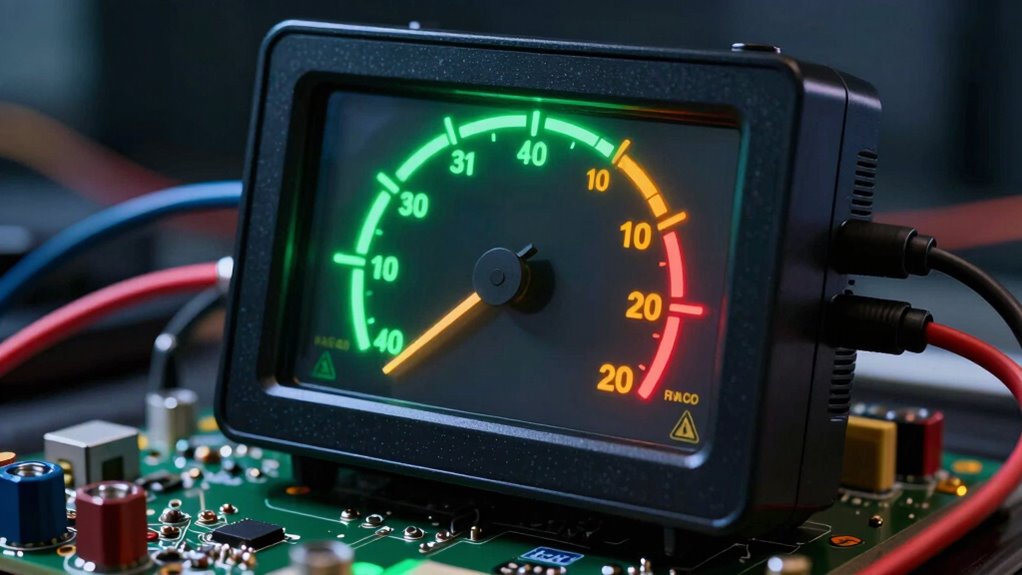

To keep your battery healthy, you should never ignore charging cycles, voltage fluctuations, or sudden jumps in performance. Frequent deep cycles can accelerate aging, while irregular voltage suggests underlying issues. If you notice rapid increases in charge cycles or unstable voltage, it’s a sign to act early and prevent costly damage. Staying aware of these signs helps you maintain ideal device performance. Keep reading to discover key indicators you might overlook and how to address them effectively.
Key Takeaways
- Sudden voltage drops can indicate imminent hardware failure or instability requiring immediate attention.
- Rapidly increasing charging cycles signal accelerated battery aging and the need for replacement.
- Erratic voltage fluctuations may reveal underlying hardware issues or chemical problems.
- Consistently low or decreasing capacity suggests diminishing battery health and potential replacement.
- Unexpected temperature spikes during charging or use can point to safety hazards or malfunctioning cells.
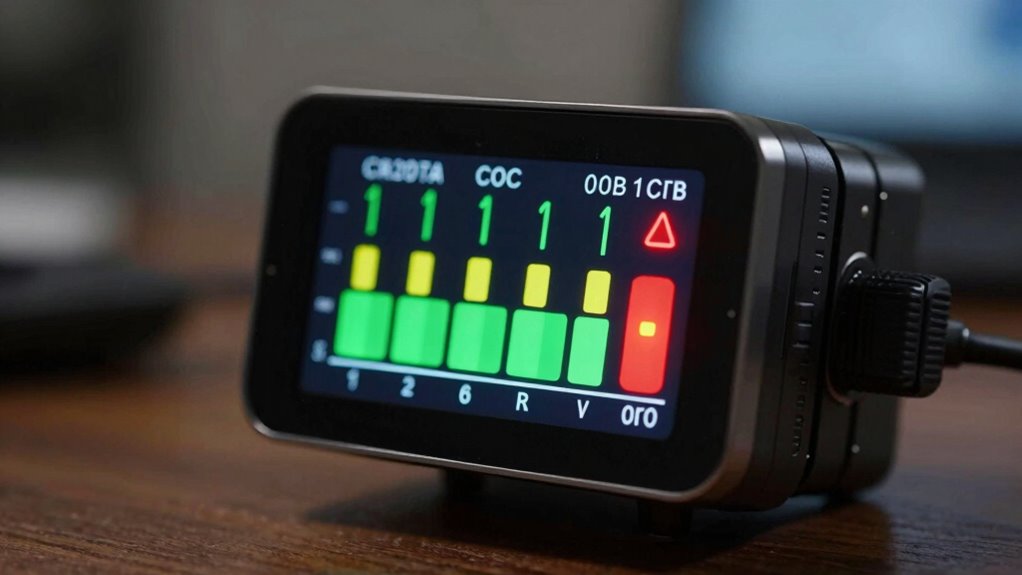
Monitoring your battery’s health isn’t just about reactive measures; it’s about being proactive to extend its life. Keeping tabs on charging cycles and voltage fluctuations provides you with a clearer picture of your battery’s condition. If you see your charging cycles increasing rapidly or voltage readings becoming erratic, it’s time to investigate further. Neglecting these readings can result in deeper damage that’s more expensive to repair or replace. Using a reliable battery monitor, you can set thresholds and alerts that notify you when your battery’s performance dips below acceptable levels. This proactive approach ensures you’re always aware of potential problems before they escalate, helping you optimize your battery’s lifespan and maintain peak performance for as long as possible. Monitoring your battery readings is an essential part of maintaining optimal device performance and avoiding unexpected failures.
Frequently Asked Questions
How Often Should I Check My Battery Monitor Readings?
You should check your battery monitor readings at least once a week to keep track of your battery’s health. Monitoring regularly helps you spot issues with charge cycles and declining battery capacity early. If you notice significant drops or irregular patterns, check more frequently. Keeping an eye on these readings ensures your battery stays in good condition, ultimately extending its lifespan and maintaining ideal performance.
What Causes Sudden Fluctuations in Battery Voltage?
Sudden fluctuations in your battery voltage can feel like an electrical earthquake shaking your system! They’re often caused by unstable voltage stability, rapid changes in load, or poor sensor calibration. When your sensor isn’t calibrated properly, it sends false readings, making fluctuations seem bigger than they really are. Keep your sensor calibrated and monitor your voltage stability closely to avoid these shocking surprises, ensuring your battery remains reliable and steady.
Can Temperature Affect My Battery Monitor Readings?
Yes, temperature can affect your battery monitor readings due to thermal effects. When temperatures rise or fall, it influences the chemical reactions inside the battery, causing voltage changes that your monitor detects. Environmental factors like heat or cold can lead to inaccurate readings, making it seem like the battery’s state of charge is different from reality. To guarantee accurate readings, keep your battery within recommended temperature ranges and consider thermal effects during monitoring.
Are There Specific Signs My Monitor Is Malfunctioning?
Your battery monitor might be malfunctioning if you notice wildly inconsistent readings or sudden drops that seem impossible, like your battery’s draining faster than a desert drought. Check for signs like inaccurate voltage, strange calibration issues, or a display that flickers or freezes. Regular battery calibration can help, but if problems persist, it’s time to recalibrate your monitor or consider replacing it to guarantee your readings stay reliable.
How Do I Interpret Different Battery Health Indicators?
To interpret your battery health indicators, focus on voltage stability and capacity degradation. If the voltage fluctuates unexpectedly or drops below the recommended level, it signals potential issues. Additionally, if your battery’s capacity decreases considerably over time, it’s a sign of degradation. Monitoring these indicators helps you determine if your battery needs servicing or replacement, ensuring ideal performance and preventing unexpected failures.
Conclusion
Never ignore your battery monitor readings—they’re your first line of defense against unexpected failures. A tiny warning light or fluctuating voltage could be the difference between smooth sailing and a complete breakdown. Think of your battery as the heart of your device; neglect it, and you’re risking an electrical catastrophe that could shut down your entire day. Stay vigilant, check those readings regularly, and keep your power flowing smoothly—your device’s life depends on it!