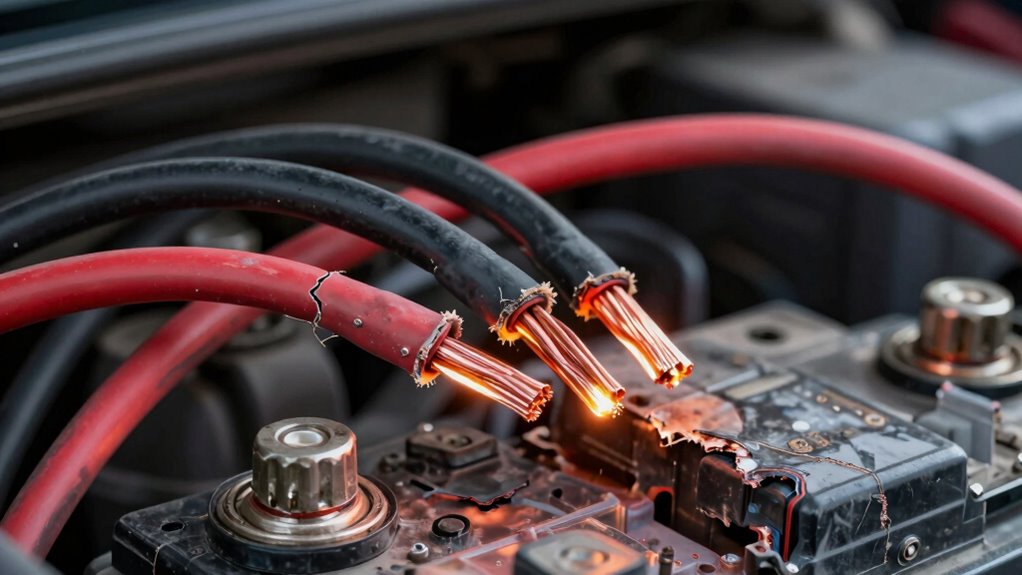

Using the wrong gauge battery cables can cause resistance, leading to excessive heat that damages your electrical system. If your cables are too thin for your power demands, they’ll create increased resistance, which generates heat and risks melting insulation or causing failures. Choosing the correct gauge helps guarantee efficient power flow, reduces heat buildup, and extends cable life. If you want to avoid costly problems, understanding how to select the right gauge is essential—and there’s more to learn.

Get backup power and energy gear delivered free with Prime
- Fast, free delivery on millions of items
- Prime Video, Amazon Music and more included
- Member-only deals all year
Key Takeaways
- Using cables with a too-thin gauge increases resistance, causing heat buildup and potential damage.
- Incorrect cable gauge can lead to inefficient power flow, generating excessive heat at connections.
- Overly thick cables are unnecessary but can still cause heat if not properly connected or routed.
- Matching cable gauge to the vehicle’s current demands prevents overheating and prolongs cable lifespan.
- Properly sized cables reduce resistance, ensuring safe, efficient power transfer without turning into heat.
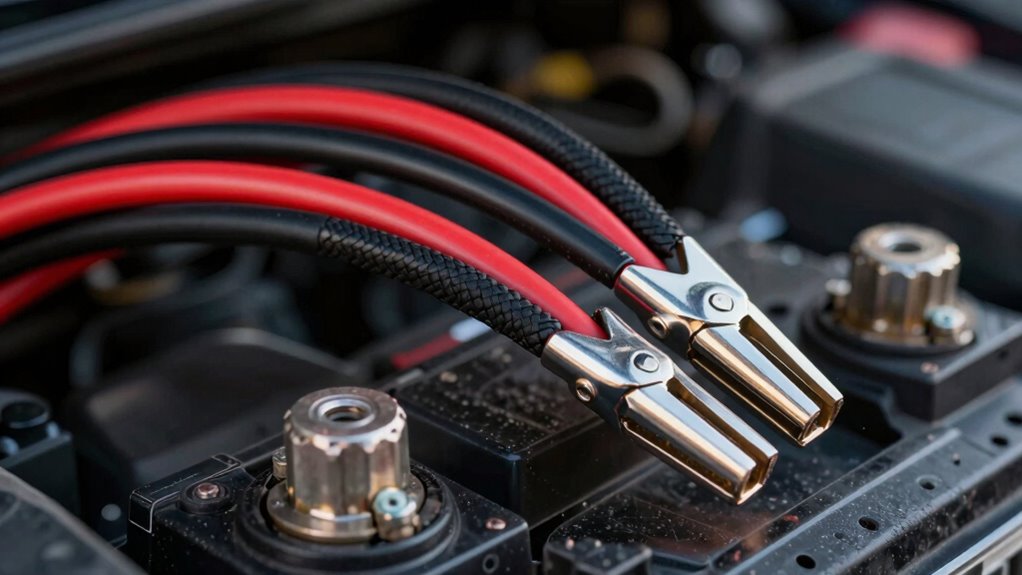
Battery cables are essential components that connect your vehicle’s battery to the electrical system, ensuring power flows smoothly to start the engine and run accessories. Proper cable installation isn’t just about tightening terminals; it’s about ensuring a solid, secure connection that minimizes resistance. When installing new cables or inspecting existing ones, pay close attention to the gauge of the cables you choose. Using the correct gauge is crucial because it directly impacts how efficiently current travels through the cables. If the gauge is too thin for your power demands, the increased resistance causes heat buildup, which can lead to melting insulation or damage to the cable itself. Conversely, oversized cables may be unnecessary and more cumbersome, but they do help prevent voltage drops, especially in high-demand systems.
Corrosion prevention is equally vital. Over time, battery cables are exposed to moisture, salt, and dirt, all of which accelerate corrosion at the terminal joints and along the cable sheath. Corrosion impairs conductivity, forcing your vehicle’s electrical system to work harder, which again produces excess heat. To prevent this, regularly inspect your cables for signs of corrosion, such as white, greenish, or bluish powdery deposits. Applying a protective dielectric grease or petroleum jelly on the terminal ends can help seal out moisture and prevent corrosion from settling in. When installing new cables, always ensure the terminals are clean and free of oxidation before tightening. A clean, tight connection minimizes resistance and reduces heat generation.
The right cable installation also involves ensuring the cables are routed properly, avoiding sharp bends or contact with hot or moving parts. Proper routing prevents wear and tear, which could expose the conductors and allow corrosion to set in. When tightening terminals, avoid over-tightening, as this can damage the terminal or strip the cable lug, leading to poor contact and increased resistance. Remember, a snug, secure connection is key to preventing heat buildup caused by poor conductivity. Regular maintenance, including cleaning terminals and inspecting cable insulation, will keep your battery system running efficiently and safely. Proper cable installation combined with corrosion prevention practices ensures that your vehicle’s electrical system stays reliable, avoids unnecessary heat, and prolongs the lifespan of your battery cables.
As an affiliate, we earn on qualifying purchases.
Frequently Asked Questions
How Do I Determine the Correct Cable Gauge for My Vehicle?
You determine the correct cable gauge by checking your vehicle’s specifications or consulting your owner’s manual. Make sure the cable has proper insulation to withstand heat and prevent corrosion, especially in harsh conditions. Thicker gauges (lower numbers) carry more current and are suitable for high-power applications. Proper gauge selection guarantees efficient power delivery, reduces heat buildup, and prevents corrosion, keeping your vehicle safe and reliable.
Can Using a Smaller Gauge Cable Cause Battery Draining Issues?
Think of using a smaller gauge cable as trying to squeeze a river through a narrow pipe—you risk bottlenecking power, which can drain your battery faster. Smaller cables generate more heat due to increased resistance, and poor cable insulation can lead to corrosion, further impairing flow. This combination causes your battery to work harder, leading to draining issues. Always choose the right gauge, with proper insulation, to keep your system running smoothly.
What Are the Signs of Overheating in Battery Cables?
You’ll notice overheating signs in your battery cables as melted or burnt cable insulation, which can be visibly damaged or discolored. Feel for excessive heat or a strong smell of burning near the cables. Regular corrosion detection helps identify buildup that can cause resistance and heat. If you spot these signs, disconnect the cables immediately to prevent further damage or potential fire hazards.
Is It Safe to Upgrade to a Thicker Gauge Cable Myself?
Think of upgrading your battery cables like choosing a wider river to prevent floods; a thicker gauge cable improves current flow. Yes, you can do a DIY upgrade safely if you understand wire gauge selection and follow proper procedures. Make sure to disconnect the battery, use appropriate tools, and double-check connections. If you’re unsure, consulting a professional guarantees your upgrade enhances safety and performance, avoiding potential heat buildup or damage.
How Does Cable Length Affect the Gauge Choice?
You should choose a thicker gauge cable for longer runs because increased length causes voltage drop and heat buildup. Longer cables need more current capacity to prevent overheating, so opt for a cable with proper insulation to resist corrosion and guarantee durability. Using the right gauge and high-quality insulation helps maintain efficient power flow, reduces heat, and prevents corrosion, making your setup safer and more reliable over time.
Conclusion
Remember, a cable that’s too thin can turn your power into heat, risking damage and danger. Always choose the right gauge for your battery cables—it’s better to be safe than sorry. Don’t put the cart before the horse by skimping on proper wiring; quality matters. When you invest in the correct gauge, you’re not just enhancing performance, but also ensuring safety. After all, a stitch in time saves nine—pay attention to your cables now to avoid bigger problems later.
Halloween Picks
halloween
As an affiliate, we earn on qualifying purchases.