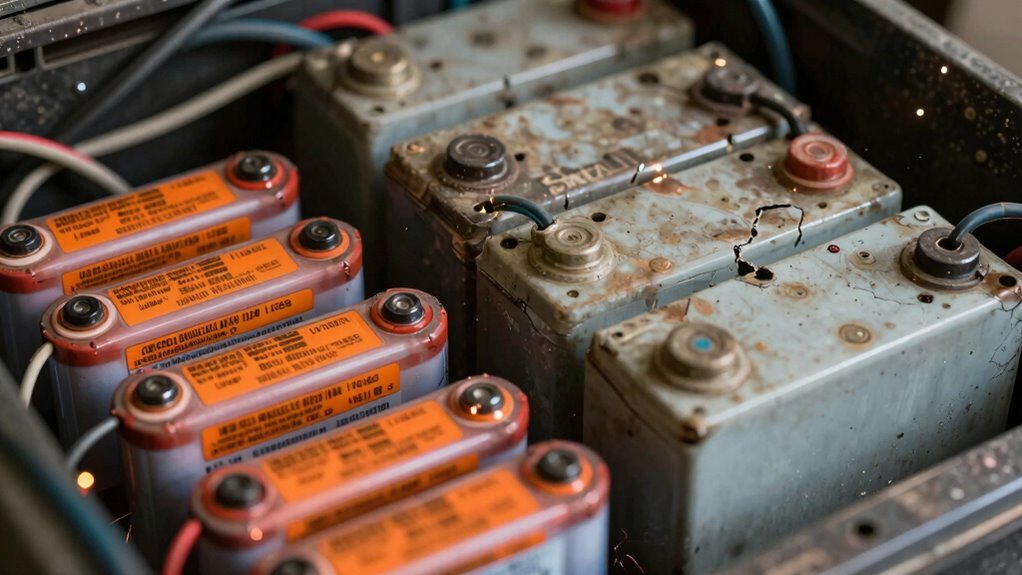

Mixing different battery chemistries in one bank is extremely dangerous because it can cause uneven charging, overheating, or even thermal runaway, which might lead to fires, explosions, or irreversible damage. Different chemistries like lithium-ion, lead-acid, or NiMH have incompatible electrical properties and aging characteristics that worsen safety risks. This practice can bypass safety protections and lead to catastrophic failures. If you want to understand how these hidden dangers could affect you, there’s more to learn behind this issue.

Get backup power and energy gear delivered free — and shop member deals
- Fast, free delivery on millions of items
- Access to Prime Big Deal Days deals on October 6–7
- Prime Video, Amazon Music and more included
Key Takeaways
- Mixing different battery chemistries can cause dangerous electrical imbalances and reverse currents.
- Incompatible chemistries increase risks of overheating, swelling, and thermal runaway.
- Battery management systems often can’t detect or prevent issues from mixed chemistries.
- Mismatched batteries accelerate degradation and failure, posing safety hazards.
- Combining different chemistries should be strictly avoided to prevent fires and explosions.
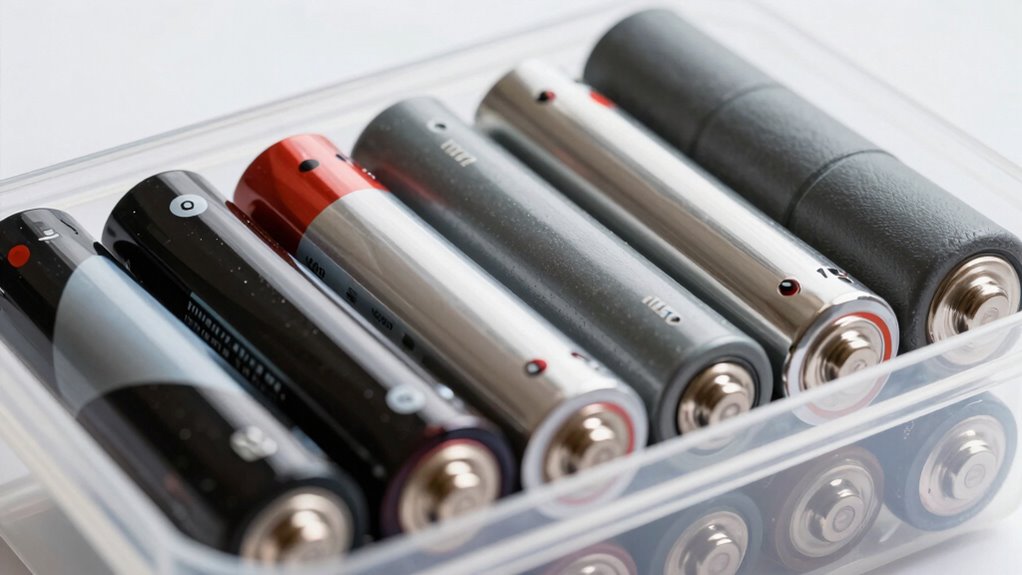
Mixing different types of batteries might seem convenient, but it can pose serious safety risks that many overlook. When you combine batteries with varying chemistries in a single bank, you risk creating a battery mismatch. This mismatch occurs because each chemistry has unique voltage levels, charging behaviors, and discharge characteristics. For example, mixing lithium-ion batteries with lead-acid or NiMH cells can lead to uneven charging and discharging, which strains the batteries and increases the likelihood of failure. The core issue is chemistry incompatibility, where incompatible chemistries don’t share the same electrical properties, making them unsuitable for combined use.
When batteries with different chemistries are connected in parallel or series, the incompatible electrical characteristics can cause one cell or group of cells to overcharge or discharge more rapidly than others. This imbalance puts stress on the batteries and can cause overheating, swelling, or even thermal runaway—a dangerous situation where a battery overheats uncontrollably, potentially leading to fires or explosions. The problem worsens if the batteries are not matched in capacity, age, or state of charge. For instance, a newer lithium-ion cell placed alongside older lead-acid batteries can result in uneven current flow, which accelerates deterioration of the older cells and increases the chance of failure.
You might think that using a battery management system (BMS) can mitigate these risks, but most BMS units are designed for specific chemistries. If you mix incompatible batteries, the BMS may not recognize or properly manage the mismatched cells, allowing dangerous conditions to develop unnoticed. Additionally, the voltage differences between chemistries can cause reverse currents, further damaging the batteries. This can happen even if the batteries are physically connected correctly, simply because the differing electrical properties force unwanted current flow, risking damage or fire.
Using mismatched batteries can bypass BMS protections and cause dangerous reverse currents.
Furthermore, Vetted guidelines emphasize the importance of compatibility and proper management to ensure safety and longevity of your battery bank. Ultimately, the safest approach is to avoid mixing batteries with different chemistries altogether. Always match the batteries in terms of chemistry, capacity, and age, and use dedicated, compatible batteries for your specific application. Doing so ensures that the electrical characteristics align, reducing the risk of battery mismatch and chemistry incompatibility. Properly managing your battery bank not only extends its lifespan but also safeguards your safety, preventing the potentially catastrophic consequences of neglecting these fundamental compatibility issues.
battery management system for lithium-ion batteries
As an affiliate, we earn on qualifying purchases.
As an affiliate, we earn on qualifying purchases.
Frequently Asked Questions
Can Mixed Battery Chemistries Be Safely Stored Together Long-Term?
You shouldn’t store mixed battery chemistries together long-term because battery compatibility varies, which can cause safety issues. Chemisty separation is essential to prevent potential hazards like overheating or fires. When you keep different chemistries apart, you minimize risks and ensure each battery type maintains its performance. Always follow manufacturer guidelines and consider dedicated storage for each chemistry to guarantee safe, long-term storage and avoid dangerous interactions.
What Specific Signs Indicate a Battery Bank Is Compromised?
Imagine your battery bank as a team; if one member starts lagging, it impacts everyone. Visual indicators like bulging, corrosion, or leaks signal trouble. You’ll notice performance decline, such as reduced capacity or unexpected shutdowns. These signs mean the bank’s compromised, risking safety and efficiency. Keep a close eye on these clues, and regularly test your batteries to catch issues early before they cause bigger problems.
How Does Temperature Affect Mixed Battery Chemistry Stability?
Temperature fluctuations can substantially impact mixed battery chemistry stability. When temperatures rise or fall unexpectedly, it stresses the batteries, risking thermal instability. You might notice uneven charging or overheating, which indicates the batteries are struggling to maintain proper function. To keep your bank safe, avoid exposing it to extreme temperatures and guarantee consistent thermal stability, as this helps prevent potential failures and prolongs the lifespan of your batteries.
Are There Any Legal Regulations About Mixing Different Battery Types?
You should know that legal regulations and battery standards strictly govern how you handle different battery types. Regulations often prohibit mixing chemistries because of safety risks, performance issues, and potential legal liabilities. Industry standards set guidelines to guarantee safe storage, charging, and disposal. Always verify local laws and adhere to established battery standards to prevent accidents, ensure compliance, and protect both yourself and your equipment from hazards associated with incompatible battery chemistries.
What Maintenance Practices Can Minimize Risks in Mixed Battery Banks?
To minimize risks in mixed battery banks, you should prioritize regular maintenance scheduling and monitor battery compatibility closely. Inspect connections frequently for corrosion or damage, ensuring all batteries are properly balanced and charged. Avoid mixing different chemistries unless absolutely necessary, and if you do, keep detailed maintenance records. Proper maintenance and vigilant monitoring help prevent failures, extend battery life, and reduce the chances of dangerous malfunctions.
Conclusion
Mixing different battery chemistries might seem convenient, but it’s like blending incompatible puzzle pieces—you risk unintended surprises down the line. To keep your energy storage safe and reliable, stick to uniform chemistries and proper maintenance. Embrace the peace of mind that comes with a well-matched system, avoiding the subtle pitfalls that can quietly disrupt your setup. After all, a little foresight now can prevent a lot of trouble later, keeping your power flowing smoothly.
Fall Picks
fall essentials
As an affiliate, we earn on qualifying purchases.