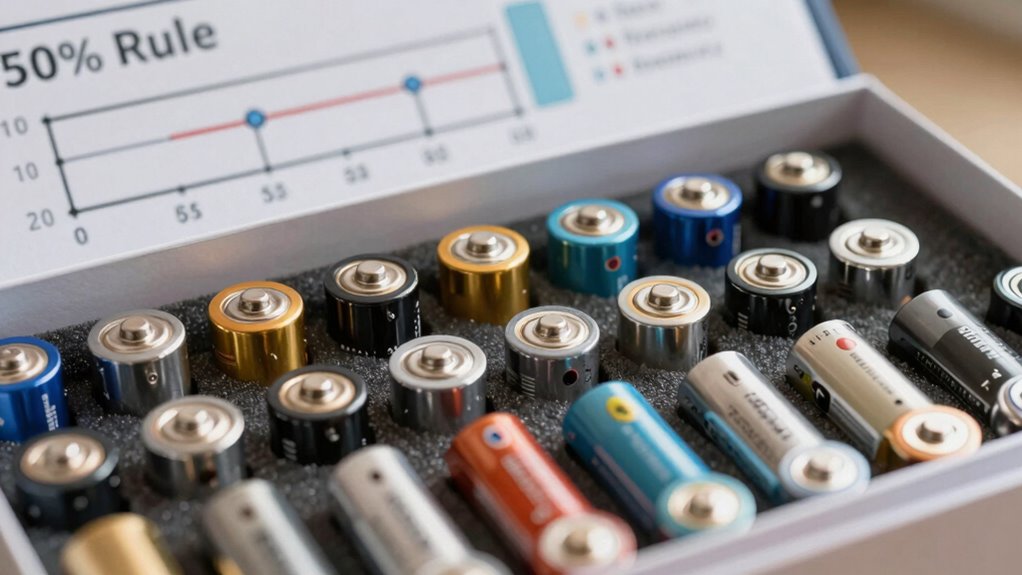

When storing batteries long-term, you should aim to keep them at about 50% charge, known as the ‘50% rule.’ This level helps prevent stress from full charges or complete drains, reducing capacity loss and internal damage. Store your batteries in a cool, dry place away from direct sunlight, and periodically check their charge. Staying aligned with this approach helps prolong their lifespan and maintain performance. To discover more helpful tips, keep exploring this important storage guideline.

Get backup power and energy gear delivered free with Prime
- Fast, free delivery on millions of items
- Prime Video, Amazon Music and more included
- Member-only deals all year
Key Takeaways
- Store batteries at about 50% charge to minimize stress and maintain chemical stability over time.
- Lithium-ion batteries are best kept around 3.7–3.8V, aligning with the 50% charge level.
- Keep batteries in a cool, dry environment at roughly 60°F to slow aging and prevent damage.
- Regularly check and recharge batteries if their charge drops significantly below 50%.
- Use airtight containers and keep batteries clean to protect against moisture and corrosion during storage.

Storing batteries properly for the long term is essential to preserve their performance and lifespan. One of the most important principles to keep in mind is the so-called “50% rule,” which recommends keeping batteries at about half their full charge during extended storage. This isn’t just a random guideline; it’s rooted in understanding battery chemistry and how different storage environments impact their health. When you store a battery fully charged or completely drained, you risk damaging its internal structure, which can lead to decreased capacity or even complete failure over time.
Battery chemistry plays a crucial role in determining how you should store your batteries. For example, lithium-ion batteries, common in smartphones and laptops, tend to perform best when stored at around 3.7 to 3.8 volts per cell—roughly 50% charge. Storing them fully charged can cause stress on the electrodes, while storing them empty can lead to deep discharge damage, especially if left in that state for long periods. Nickel-based batteries, like NiMH, also benefit from being stored at a moderate charge level, about 40-50%, because this helps prevent capacity loss and maintains their ability to hold a charge when you need them again.
Lithium-ion batteries store best at 3.7–3.8V, roughly 50% charge, to prevent stress and damage.
The storage environment is equally critical in maintaining battery health. You should keep batteries in a cool, dry place, ideally around 60°F (15°C), to slow down chemical reactions that can degrade the battery over time. High temperatures accelerate aging and can cause the electrolyte to break down, while excessive cold may temporarily reduce capacity and cause internal stress. Humidity is another factor; storing batteries in a moisture-free environment prevents corrosion and other deterioration. Avoid exposing batteries to direct sunlight or placing them near heat sources, as these conditions can hasten chemical changes that reduce their lifespan.
When preparing to store batteries long-term, make sure they’re clean and free of dirt or corrosion. Use a soft cloth to wipe down terminals if needed. After reaching the optimal charge—about 50%—place the batteries in a sealed plastic bag or container that’s airtight to prevent moisture ingress. Check on the batteries periodically, ideally every few months, and recharge them slightly if their charge drops considerably. This practice aligns with the 50% rule and helps guarantee the internal chemistry remains stable.
Frequently Asked Questions
Does the 50% Rule Apply to All Battery Types?
The 50% rule mainly applies to lithium-ion batteries, but not all battery chemistries. For lithium-ion, maintaining about 50% charge during long storage duration helps preserve capacity and lifespan. Other chemistries like lead-acid or nickel-based batteries have different storage needs; they often require full or near-full charge or specific conditions. Always check your battery type’s recommended storage guidelines to guarantee maximum longevity.
How Often Should I Check Stored Batteries?
You should check your stored batteries at least every 3 to 6 months to guarantee ideal battery maintenance. Regular inspections help you spot issues like corrosion or voltage drops early. Proper storage techniques, like keeping batteries in a cool, dry place and following the 50% charge guideline, extend their lifespan. Staying proactive with these checks prevents damage and keeps your batteries ready for use when needed.
Can Temperature Fluctuations Affect Long-Term Battery Storage?
Temperature fluctuations can markedly impact your stored batteries. They cause thermal expansion and contraction, which may damage internal components over time. To prevent this, you should maintain a stable environment with consistent temperatures. Moisture control is also vital, as humidity can lead to corrosion. Keep batteries in a cool, dry place, and avoid rapid temperature changes to prolong their lifespan and guarantee ideal performance during long-term storage.
Is It Necessary to Recharge Batteries Before Storage?
You should definitely recharge batteries before storage to prevent damage. Imagine a battery’s chemistry slowly degrading when left drained, especially in fluctuating storage environments. If you leave it empty, the chemical reactions can cause irreversible harm, reducing capacity. Recharging to about 50% stabilizes the chemistry, protecting it during long-term storage. Always consider the specific storage environment and battery type to maintain ideal health and readiness when you need it next.
What Are the Signs of Battery Degradation During Storage?
You’ll notice battery degradation during storage if you see a significant drop in battery capacity or difficulty getting a full charge. Corrosion risk also increases, especially at terminals, which can further impair performance. Keep an eye out for swelling, leaks, or corrosion, and regularly check voltage levels. Proper maintenance and periodic checks help prevent these issues, ensuring your batteries stay healthy and ready to use when needed.
Conclusion
Remember, just like the wise gardener tends to their plants, caring for your batteries guarantees they’ll serve you well when needed most. By following the 50% rule, you’re safeguarding your energy’s future, preventing the heartbreak of a dead device. Think of it as an act of preservation—your own small act of patience that pays off in reliability. Stay mindful, stay prepared, and let your batteries be the unsung heroes in your everyday life, just waiting to shine when you call upon them.
Halloween Picks
halloween
As an affiliate, we earn on qualifying purchases.