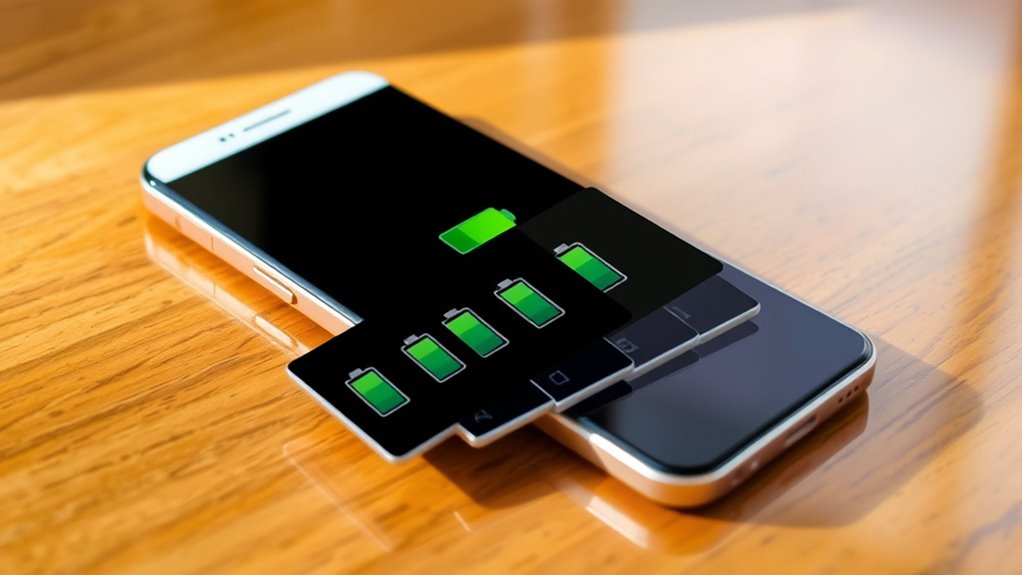

From day one, your battery starts gradually losing capacity due to chemical and physical changes inside. These changes cause it to hold less charge over time, especially with poor charging habits like overcharging or exposing it to heat. As degradation continues, you’ll notice shorter usage times and possible responsiveness issues. Managing your habits can slow this process, but understanding the natural battery life curve helps you stay ahead. If you want to explore what happens next, keep going.

Get backup power and energy gear delivered free with Prime
- Fast, free delivery on millions of items
- Prime Video, Amazon Music and more included
- Member-only deals all year
Key Takeaways
- New batteries start with high capacity, but chemical changes cause gradual capacity loss over time.
- Proper charging habits, like avoiding overcharging and deep discharges, slow degradation.
- Excess heat from fast charging accelerates chemical and physical battery deterioration.
- As capacity declines, devices need more frequent recharges and may experience performance issues.
- Eventually, the battery can’t support device needs, leading to replacement or reduced usability.
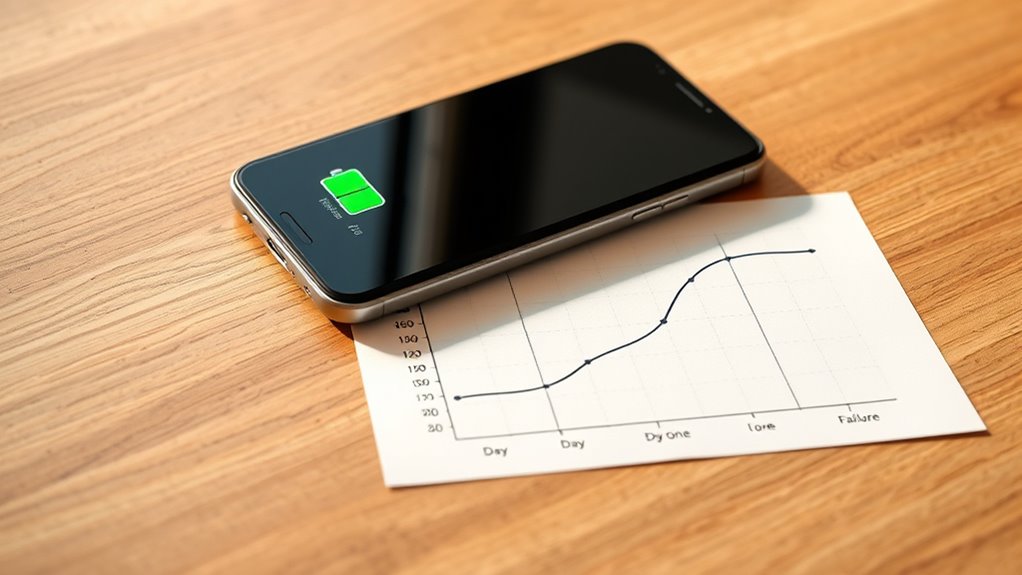
Understanding the battery life curve is essential for optimizing your device’s performance over time. When you first get a new device, you may notice it holds a charge longer and performs better than it will after months of use. This is because batteries undergo a process called battery degradation, which gradually reduces their capacity and efficiency. The way you manage your charging habits plays a significant role in how quickly this degradation occurs. If you constantly overcharge or let your battery drain completely before recharging, you accelerate wear and tear. Conversely, maintaining a balanced charging routine—keeping the battery within 20% to 80%—can slow down the degradation process, extending the overall lifespan of your battery.
From day one, your battery’s performance will follow a predictable pattern: initially, it may seem to perform exceptionally well, often because the battery is fresh and hasn’t experienced much wear. But as you continue to charge and discharge it, you’ll start to notice subtle declines in capacity. This decline results from chemical changes inside the battery, which reduce the amount of energy it can store. These changes are inevitable, but your charging habits can influence how quickly they happen. For instance, frequently leaving your device plugged in for extended periods or using fast chargers repeatedly can generate excess heat, which accelerates battery degradation. On the other hand, adopting gentle charging methods—like avoiding overnight charging or using slower chargers—helps preserve battery health.
Additionally, battery chemistry plays a crucial role in how batteries degrade over time, with different types of batteries exhibiting varying lifespan characteristics. As the battery ages, you’ll see a more pronounced decline in how long it can hold a charge. Tasks that once lasted all day may now require a recharge sooner, and the battery may swell slightly or become less responsive. This is the natural progression along the battery life curve, driven by ongoing chemical and physical changes inside the cells. While this decline is inevitable, understanding how your habits influence it allows you to mitigate some of the effects. For example, limiting deep discharges and avoiding high temperatures during charging can keep your battery healthier for longer.
Eventually, the battery will reach a point where it can no longer support your device’s needs, and you’ll experience frequent recharging or sudden shutdowns. At this stage, replacement becomes necessary, but knowing how your early charging habits and awareness of battery degradation can prolong the curve’s initial, ideal phase gives you a better chance of maintaining peak performance for as long as possible. In essence, managing how you charge and care for your device from the start can make a significant difference in how long your battery serves you well.
Frequently Asked Questions
How Do Software Updates Impact Battery Health Over Time?
Software updates can considerably impact your battery health over time. When you install updates, software optimization and firmware improvements often enhance energy efficiency, reducing power drain. However, some updates might introduce new features or background processes that use more battery, temporarily decreasing performance. Staying current with updates ensures you’re benefiting from the latest improvements, which generally help prolong your device’s battery life and overall longevity.
Can External Temperatures Accelerate Battery Degradation?
Ever notice your phone heats up during a hot day? Temperature effects can speed up battery degradation because external stress causes chemical reactions inside the battery faster. High temperatures make the electrolyte break down quicker, reducing capacity and lifespan. Conversely, cold temperatures can temporarily reduce performance but don’t damage the battery long-term. So, keeping your device out of extreme heat helps prolong its battery life and overall health.
What Are Early Signs of Battery Failure?
You might notice early signs of battery failure through inconsistent charging, rapid battery drain, or the device shutting down unexpectedly. To catch issues early, perform regular battery calibration and monitor your usage patterns. If your battery percentage fluctuates or drops faster than usual, it’s a sign that the battery’s health is declining, and you may need to contemplate replacement or further troubleshooting to extend its lifespan.
How Does Charging Speed Affect Battery Longevity?
Fast charging can be convenient, but it often accelerates battery degradation over time. When you frequently use fast charging, your battery experiences higher heat and stress, which can shorten its overall lifespan. To preserve your battery’s longevity, it’s best to avoid constant fast charging or limit its use. Instead, opt for slower charging methods when possible, helping your battery stay healthier longer and delaying the onset of degradation.
Are There Specific Brands With Longer-Lasting Batteries?
Think of choosing a phone brand like picking a sturdy ship for a long voyage. Some brands, like Apple or Samsung, are known for their brand reliability, offering longer battery lifespan. I’ve seen friends’ devices last years while others needed replacements sooner. You should look for brands with proven track records, as they tend to deliver batteries that stand the test of time, giving you more reliable performance and peace of mind.
Conclusion
As you watch your battery’s life unfold, you see it start strong, shine brightly, and gradually fade. You experience the initial surge, the steady decline, and finally, the quiet end. Each stage mirrors a journey—vibrant, steady, fading—highlighting the natural rhythm of battery life. Embrace this cycle, knowing it’s part of the bigger picture. Like the sun rises, shines, and sets, your battery’s story unfolds in perfect harmony with time.
Halloween Picks
halloween
As an affiliate, we earn on qualifying purchases.