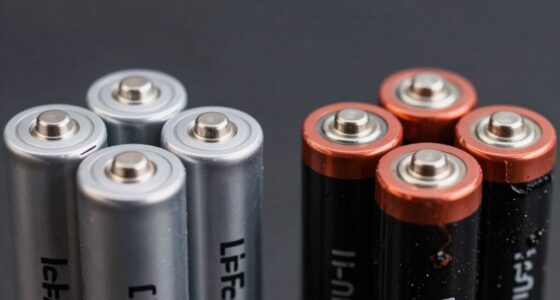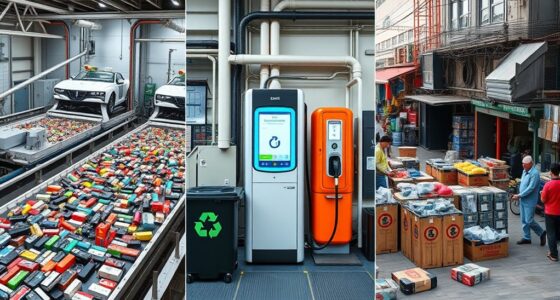
A lifecycle assessment of EV batteries shows their environmental impact across all stages, from extracting raw materials to recycling. Charging, manufacturing, and disposal contribute to CO₂ emissions, water use, and energy consumption. Mining harms ecosystems, and transportation increases carbon footprint. Recycling helps recover valuable materials and cuts demand for new resources. If you keep exploring, you’ll discover more about how innovations are reducing these impacts and making EV batteries more sustainable.

Get backup power and energy gear delivered free with Prime
- Fast, free delivery on millions of items
- Prime Video, Amazon Music and more included
- Member-only deals all year
Key Takeaways
- Lifecycle assessment evaluates environmental impacts of EV batteries from raw material extraction to recycling.
- Manufacturing and raw material extraction are major contributors to CO₂ emissions, water, and energy use.
- Recycling reduces environmental impacts by recovering valuable materials and decreasing reliance on virgin resources.
- Supply chain practices, including responsible sourcing and efficient logistics, significantly influence overall environmental footprint.
- Improving recycling technologies and sustainable supply chain management are key strategies to lower CO₂, water, and energy consumption.
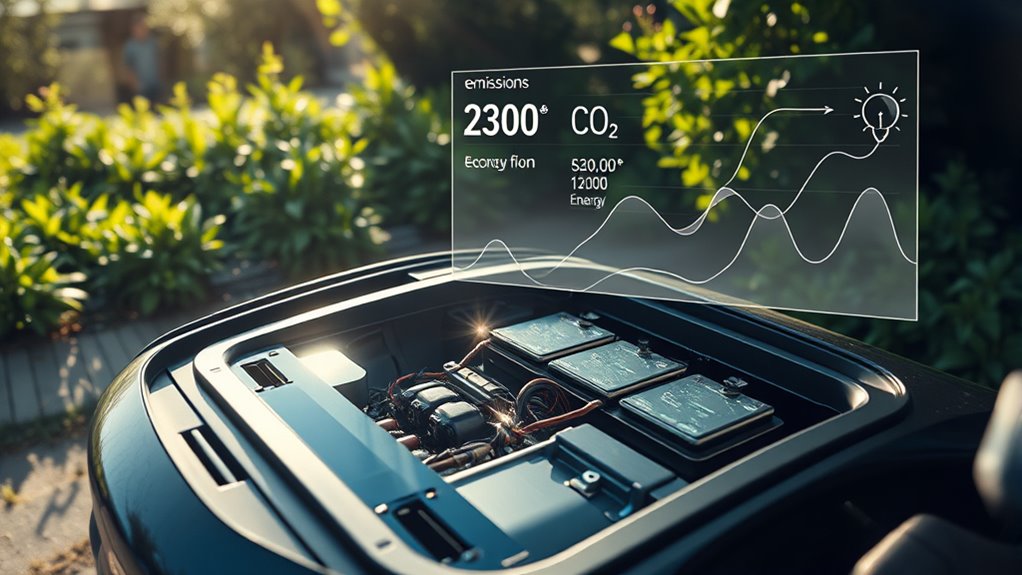
Have you ever wondered what goes into evaluating the true environmental impact of electric vehicle (EV) batteries? It’s more than just how they perform while driving; it involves understanding their entire lifecycle—from raw material extraction to manufacturing, use, and eventual disposal or recycling. When assessing this impact, key factors include CO₂ emissions, water use, and energy consumption. A significant part of this analysis involves exploring how batteries are recycled and how their supply chain impacts the environment.
Battery recycling plays a crucial role in reducing the overall environmental footprint of EV batteries. When batteries reach the end of their life, recycling allows valuable materials like lithium, cobalt, and nickel to be recovered and reused. This process can significantly cut down on the need for new raw material extraction, which is often energy-intensive and environmentally disruptive. Recycling also helps lower CO₂ emissions associated with mining and refining materials, making EV batteries more sustainable in the long run. However, current recycling technologies are still evolving, and the efficiency of recovery varies, which influences the overall environmental benefits. Improving recycling methods can reduce the demand for virgin materials, decrease waste, and lessen water and energy consumption involved in material processing.
Battery recycling reduces raw material demand and lowers environmental impacts of EV batteries.
Supply chain impacts are equally critical when evaluating the environmental footprint of EV batteries. The journey from raw material extraction to battery manufacturing involves multiple stages across different regions, each with its own environmental considerations. Mining operations often consume large amounts of water and energy, and can cause habitat destruction and pollution. Transporting raw materials over long distances adds to the carbon footprint, especially if fossil fuels power those logistics. Manufacturing processes themselves require substantial energy inputs—sometimes from non-renewable sources—which increase CO₂ emissions and water use. Additionally, sourcing raw materials responsibly can help mitigate these impacts and promote more sustainable practices throughout the supply chain. Tightening supply chain sustainability practices, such as sourcing materials responsibly and optimizing logistics, can help mitigate these impacts. Transparent supply chains also allow consumers and manufacturers to make more environmentally conscious choices, promoting cleaner production methods and reducing overall environmental costs.
In your assessment, it’s essential to consider not just the emissions from use but also how the entire lifecycle—from raw material extraction through recycling—contributes to environmental impacts. By focusing on advancements in battery recycling and improving supply chain sustainability, you can better understand and reduce the CO₂, water, and energy footprints of EV batteries. These measures are vital for making electric vehicles truly environmentally friendly and for supporting a shift toward cleaner transportation.
Frequently Asked Questions
How Do Recycling Practices Affect EV Battery Lifecycle Emissions?
Recycling practices considerably reduce EV battery lifecycle emissions by improving recycling efficiency, which minimizes waste and recovers valuable materials. When you prioritize efficient recycling, you lower the need for new resource extraction, cutting CO₂ emissions. Additionally, repurposing batteries for second life applications extends their use, reducing overall environmental impact. By supporting these practices, you help make EV batteries more sustainable, decreasing their long-term carbon footprint and conserving water and energy resources.
What Are the Regional Differences in EV Battery Environmental Impacts?
You’ll notice regional differences in EV battery environmental impacts due to varying policies and supply chain practices. In areas with strong recycling policies, emissions and water use decrease, while regions with cleaner energy grids reduce CO₂ footprints. Supply chain sources also affect impacts; local sourcing cuts transportation emissions. By understanding these regional differences, you can make more eco-conscious choices and advocate for policies that lower environmental impacts globally.
How Does Battery Size Influence Overall Co₂ and Water Footprints?
Think of battery capacity like filling a bathtub; the larger it is, the more impact it has. As your battery size increases, its overall CO₂ and water footprints grow disproportionately, due to footprint scaling. Larger batteries require more raw materials and energy during production, which means higher emissions and water use. So, choosing a smaller battery can markedly reduce environmental impacts without sacrificing performance.
Are There Sustainable Alternatives to Current Lithium-Ion Battery Materials?
You can consider sustainable alternatives like solid-state batteries and alternative chemistries, such as sodium-ion or magnesium-based options. These technologies reduce reliance on lithium and cobalt, lowering environmental impact. Solid-state batteries, in particular, offer improved safety and longevity. By adopting these innovations, you help minimize water use, energy consumption, and CO₂ emissions, making EV batteries more sustainable and environmentally friendly for future transportation needs.
How Do Manufacturing Energy Sources Impact the Lifecycle Assessment Results?
Manufacturing energy sources considerably impact your lifecycle assessment results. If your battery production relies on a cleaner, renewable energy grid, manufacturing emissions decrease, reducing overall environmental impact. Conversely, using fossil fuel-based energy increases emissions and water use during manufacturing. You should prioritize sourcing materials and manufacturing in regions with renewable energy, as this lowers your batteries’ carbon footprint and promotes sustainability throughout their lifecycle.
Conclusion
So, next time you marvel at your shiny EV, remember it’s not just a green superhero—it’s got a carbon footprint, water footprint, and energy bill hiding behind that sleek exterior. Sure, it’s better than gas guzzlers, but don’t forget the “hidden” costs that come with those shiny batteries. Who knew saving the planet would involve such a complex, resource-hungry dance? But hey, at least you’re doing your part—kind of.
Halloween Picks
halloween
As an affiliate, we earn on qualifying purchases.