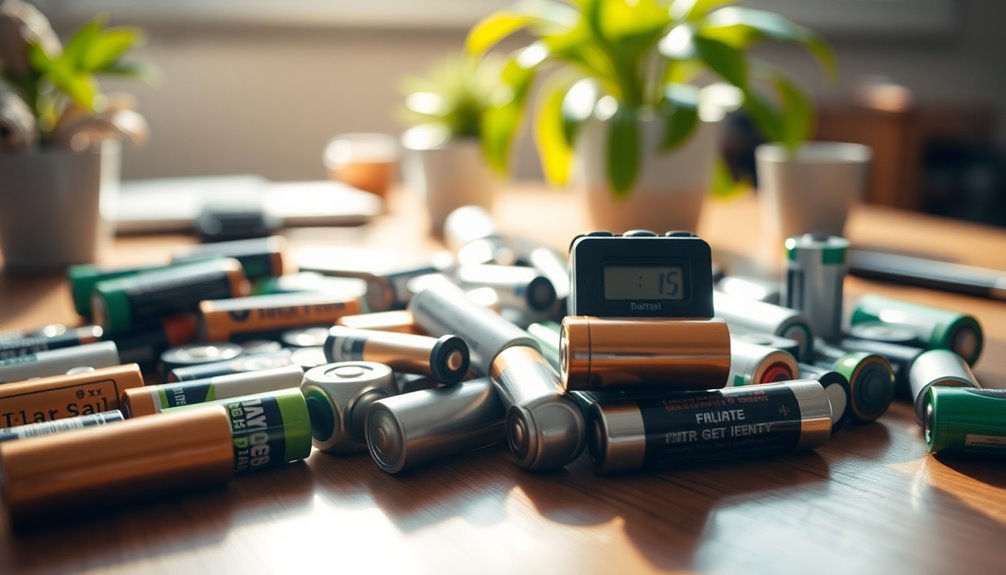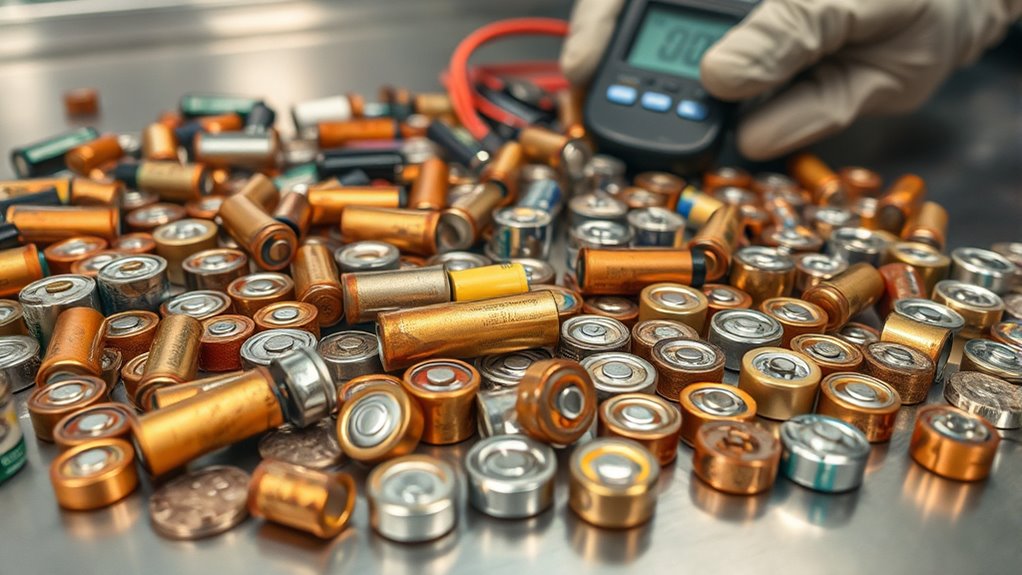

When collecting end-of-life batteries, you should use designated drop-off points and properly labeled containers to guarantee safety and environmental protection. Start by inspecting batteries for damage, leakage, or corrosion, then test their capacity and voltage to evaluate their condition. This helps identify which batteries can be reused or need recycling. Proper assessment enables safe handling and resource recovery, extending battery life through reuse. Keep exploring to learn more about optimizing battery management and sustainability.
Key Takeaways
- Implement organized collection programs through designated drop-off points to ensure safe and responsible battery retrieval.
- Conduct thorough physical and performance inspections to identify damage, leakage, and safety hazards.
- Use testing equipment to evaluate battery capacity, voltage, and internal resistance for health assessment.
- Determine suitability for reuse or recycling based on inspection and testing results.
- Recover valuable materials through proper recycling processes, supporting resource conservation and environmental safety.
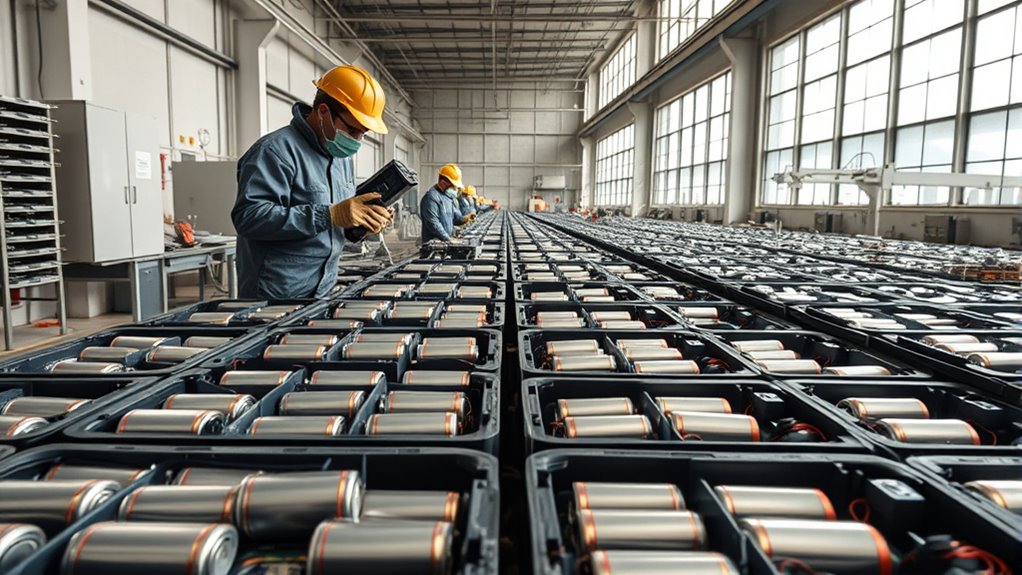
As batteries reach the end of their useful life, proper collection and evaluation become critical steps in managing their environmental impact and potential for reuse. You need to understand how to handle these batteries responsibly to prevent hazardous materials from harming the environment. The first step involves gathering used batteries through well-organized collection programs, which can be set up at recycling centers, retail stores, or community drop-off points. Ensuring that batteries are collected separately from regular waste helps prevent leaks and contamination, making the subsequent assessment process safer and more efficient.
Once collected, batteries must be carefully assessed to determine their condition and potential for reuse. This involves inspecting each unit for physical damage, leakage, or corrosion, which can compromise safety and performance. Testing battery health is essential; you may use specialized equipment to measure capacity, voltage, and internal resistance. This data helps identify batteries that are no longer suitable for their original purpose but could still have value through second life applications. By accurately assessing each battery’s state, you can make informed decisions about whether to recycle it or repurpose it. Additionally, understanding the health status of batteries can guide more sustainable management practices.
Carefully assess batteries’ condition to determine reuse potential and ensure safety and performance.
Battery recycling is a vital part of end-of-life management, especially for batteries no longer fit for their initial use but still capable of serving other functions. Recycling involves breaking down batteries to recover valuable materials like lithium, cobalt, nickel, and other metals. These materials can then be processed and reused in manufacturing new batteries or other products, reducing the demand for virgin raw materials and lowering environmental impact. Proper recycling not only conserves resources but also prevents toxic substances from leaching into soil and water systems.
Furthermore, considering second life applications extends the value of batteries beyond their primary use. When a battery is deemed unsuitable for its original function but still has sufficient capacity, it can be repurposed for less demanding roles. For example, used electric vehicle batteries can be integrated into stationary energy storage systems or backup power supplies. This approach prolongs the battery’s utility, delays disposal, and maximizes resource efficiency. You play a crucial role in facilitating this process by accurately assessing batteries and promoting their reuse in second life applications.
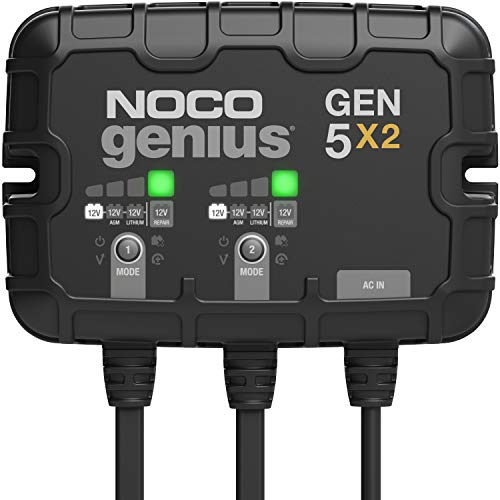
NOCO Genius GEN5X2: 2-Bank, 10A Onboard Battery Charger - 5A Per Bank, 12V Waterproof Marine Charger with Overcharge Protection & Temperature Compensation – for Lead-Acid & Lithium Batteries
- Compact and Powerful: 37% smaller, 43% more powerful than GENM2
- Dual Bank Charging: 10A total, 5A per bank
- Versatile Charging Modes: 12V, AGM, Lithium, Repair modes
As an affiliate, we earn on qualifying purchases.
Frequently Asked Questions
How Can Consumers Safely Store Used Batteries Before Recycling?
To safely store used batteries before recycling, you should follow battery storage tips and safe handling practices. Keep batteries in a cool, dry place away from flammable materials, and avoid storing them in metal containers that could cause short circuits. Cover the terminals with non-conductive tape or place each battery in separate plastic bags. Always handle batteries carefully to prevent leaks or damage, ensuring your safety and proper recycling.
What Are the Environmental Impacts of Improper Battery Disposal?
If you dispose of batteries improperly, you risk releasing hazardous waste that contaminates soil and water, causing serious health issues. This pollution harms ecosystems and can lead to long-term environmental damage. By neglecting proper disposal, you’re contributing to pollution prevention failures, risking dangerous chemical leaks. Protect the environment by recycling batteries responsibly—your actions matter in safeguarding the planet from these preventable impacts.
How Do Different Battery Chemistries Affect Recycling Processes?
Different battery chemistries substantially impact recycling processes. For example, lithium-ion batteries require specialized handling due to their complex chemistries and the risk of thermal runaway, creating recycling challenges. Lead-acid batteries are easier to recycle but need careful separation to prevent environmental contamination. Nickel-metal hydride batteries also pose challenges because of their metal content. Understanding these differences helps you develop effective recycling strategies tailored to each chemistry’s unique needs.
Are There Incentives for Returning End-Of-Life Batteries?
Think of returning end-of-life batteries as planting seeds for a greener future. You’re often rewarded through recycling incentives and collection programs, making it easier to do your part. Many programs offer discounts, rebates, or even cash back, encouraging you to participate. These incentives turn responsible disposal into a win-win, helping conserve resources and reduce environmental impact while giving you tangible benefits for your eco-conscious efforts.
What Advancements Are Being Made in Battery Recycling Technology?
Advancements in battery recycling technology focus on improving battery material recovery and introducing innovative recycling processes. You’ll find new methods like hydrometallurgy and direct recycling that efficiently extract valuable metals while reducing waste. These innovations make recycling faster, more sustainable, and cost-effective, encouraging more responsible disposal. As these technologies develop, you’ll see increased adoption, helping to close the loop on battery life cycles and reduce environmental impacts.
Conclusion
By properly collecting, evaluating, and managing end-of-life batteries, you protect the environment, conserve resources, and guarantee safety. You prevent hazardous leaks, reduce waste, and promote recycling. You embrace responsible practices, support sustainable solutions, and contribute to a cleaner future. By taking these steps, you not only make a difference today but also pave the way for a more sustainable tomorrow. You turn end-of-life challenges into opportunities for positive change.