
You need better coordination between alternators and lithium batteries to guarantee peak vehicle performance and energy efficiency. Mismatched specifications can cause undercharging or overcharging, reducing battery lifespan and overall system efficiency. Proper interaction maximizes power output, especially during high-demand situations. Without the right compatibility, you risk energy waste during charging cycles, which affects performance when accelerating or using multiple accessories. Discovering how to enhance this coordination can greatly improve your system’s effectiveness.
Key Takeaways
- Proper coordination between alternators and lithium batteries ensures optimal charging, preventing undercharging or overcharging that affects performance and lifespan.
- Mismatched specifications can lead to energy waste, reducing overall system efficiency, especially during high-demand situations.
- Lithium batteries have specific charging requirements that older alternators may not support, risking incomplete charging cycles.
- Effective interaction between components maximizes power output and maintains reliability during operation and accessory use.
- Verifying compatibility and consulting experts before upgrades is crucial to avoid future performance issues.
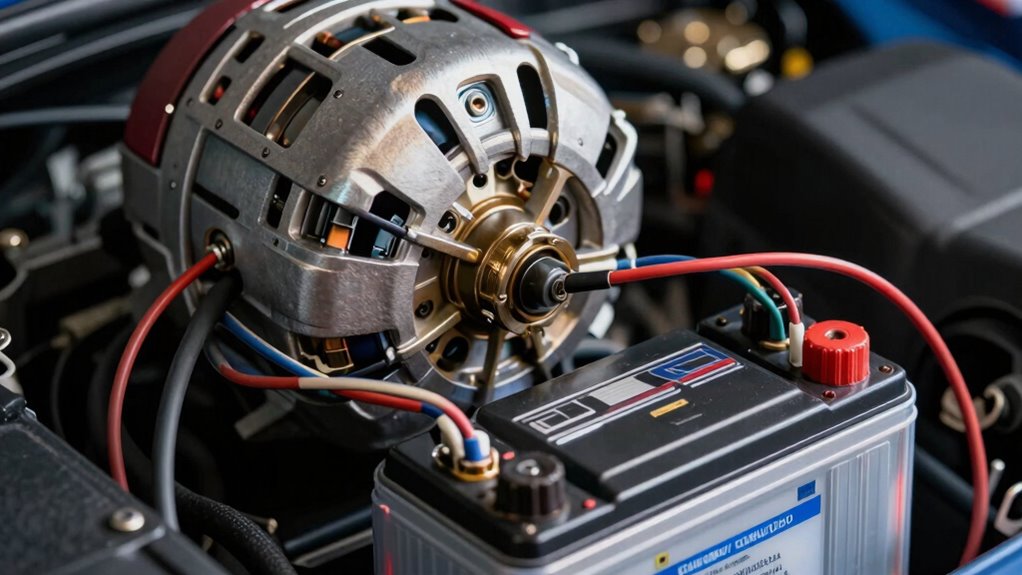
When you think about powering your vehicle or system, understanding how alternators and lithium batteries work together is fundamental. These two components play a significant role in guaranteeing peak performance. However, without proper coordination, you might face issues that can affect your overall energy efficiency. It’s important to recognize that your alternator needs to match the specifications of your lithium battery to enhance their interaction.
Battery management becomes essential in this context. Lithium batteries require specific charging voltages and currents, and your alternator must be capable of delivering these to guarantee the batteries charge correctly. If your alternator isn’t compatible with the lithium battery, you might run into problems like undercharging or overcharging. This mismanagement can lead to reduced lifespan for your battery, affecting its performance and, ultimately, your system’s reliability.
Energy efficiency also plays a significant role here. The better the coordination between your alternator and lithium battery, the more efficient your energy use will be. A well-matched system minimizes wasted energy during charging cycles and maximizes power output when you need it most. If your alternator can’t keep up with your battery’s demands, you’ll notice a drop in performance, especially during high-energy usage situations, such as powering multiple accessories or during acceleration.
Charging cycles should also be on your radar. Lithium batteries have unique charging requirements, including different stages of charging. If your alternator doesn’t provide the right output at each stage, you risk incomplete charging cycles. This not only affects how quickly your battery charges but can also lead to reduced capacity over time. Keeping your charging cycles in check is important for maintaining the efficiency and effectiveness of your energy system.
Lastly, system compatibility can’t be overlooked. If you’re upgrading to a lithium battery, verifying your alternator is compatible is key. Some older alternators may not be designed to handle lithium technology, which could lead to issues down the line. Before making any changes, check the specifications and consult with an expert if needed.
Lithium battery alternator compatibility kit
As an affiliate, we earn on qualifying purchases.
As an affiliate, we earn on qualifying purchases.
Frequently Asked Questions
How Does Temperature Affect Lithium Battery Performance?
Temperature greatly affects lithium battery performance. When it’s too cold, the battery efficiency drops, causing slower charging and reduced power output. Conversely, high temperatures can lead to overheating, which might shorten the battery’s lifespan and increase the risk of failure. To maintain ideal performance, you should keep your lithium battery within the recommended temperature range. Monitoring environmental conditions helps guarantee you get the most out of your battery, enhancing its overall efficiency.
What Is the Lifespan of Lithium Batteries Compared to Traditional Batteries?
Lithium batteries typically last 2-3 times longer than traditional batteries, showcasing impressive lithium longevity. While traditional batteries might offer a lifespan of about 3-5 years, lithium batteries can often reach 8-10 years or more with proper care. This extended lifespan means you’re not only saving money on replacements but also reducing waste. So, if you’re looking for durability, lithium is definitely the way to go!
Can I Use Lithium Batteries in All Vehicles?
You can’t use lithium batteries in all vehicles. Their lithium compatibility varies based on the vehicle type and electrical system. While many modern cars can accommodate lithium batteries, older models might not support them without modifications. Always check your vehicle’s specifications and consult with a professional before making the switch. It’s essential to verify that the battery meets the requirements for your specific vehicle to avoid potential issues.
What Are the Signs of a Failing Alternator?
You might notice your car’s lights flickering while the engine’s running smoothly, which signals potential alternator symptoms. If you experience electrical issues like dimming headlights or a dead battery, it’s time to pay attention. Strange noises, like grinding or whining, can also indicate trouble. Don’t ignore the warning signs; a failing alternator can lead to bigger problems down the road. Stay alert, and you’ll keep your ride running smoothly!
How Do I Properly Maintain a Lithium Battery?
To properly maintain a lithium battery, focus on battery maintenance and effective charging techniques. Always charge it at a moderate rate and avoid letting it drop below 20% capacity. Use a smart charger to prevent overcharging, and store it in a cool, dry place when not in use. Regularly check for any signs of swelling or damage, and keep the terminals clean for peak performance. Following these steps will prolong your battery’s lifespan.
Conclusion
In the dance between alternators and lithium batteries, better coordination is key. When these two work in harmony, they can open up a world of efficiency and reliability. Ignoring their connection, however, can lead to a chaotic performance, leaving you stranded when you least expect it. By fostering a seamless partnership, you’ll not only enhance performance but also extend the life of your battery. So, let’s tune in and make sure they’re always in sync.