
When collecting and transporting batteries, you need to follow strict regulations to guarantee safety and compliance. Use certified packaging designed to prevent leaks, shorts, or damage, and make sure to label everything properly. Transport hazardous batteries like lithium-ion and lead-acid according to agencies’ rules, such as DOT and IATA, which specify safety procedures. Keeping compliant not only protects people and the environment but also helps you efficiently recycle valuable materials—discover how these rules keep everyone safe.

Get backup power and energy gear delivered free — and shop member deals
- Fast, free delivery on millions of items
- Access to Prime Big Deal Days deals on October 6–7
- Prime Video, Amazon Music and more included
Key Takeaways
- Use certified packaging that meets safety standards to prevent leaks, short circuits, and damage during transport.
- Comply with regulations from agencies like DOT and IATA for proper classification, labeling, and documentation.
- Ensure transport providers are trained in hazardous materials handling to minimize risks during shipment.
- Separate batteries such as lithium-ion, nickel-cadmium, and lead-acid from regular waste for safe collection and recycling.
- Following regulations promotes environmental safety, reduces fire and toxic spill risks, and supports sustainable recycling practices.

Battery collection regulations are essential for ensuring proper disposal and recycling of batteries, preventing environmental contamination and health hazards. When you handle batteries, understanding the rules surrounding battery recycling is vital. These regulations are designed to guarantee that batteries are transported safely and processed correctly, reducing the risk of leaks, fires, and toxic exposure. You need to be aware of the specific safety standards that govern the handling and transportation of batteries, especially those classified as hazardous materials. Complying with these standards isn’t just a legal obligation; it’s a responsible practice that protects communities, workers, and ecosystems.
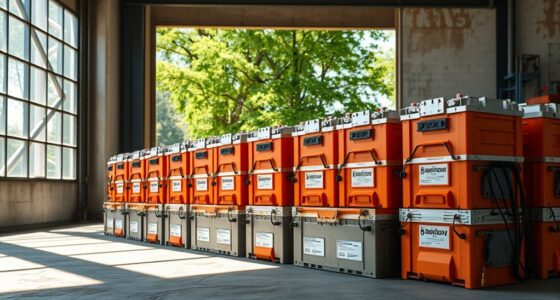
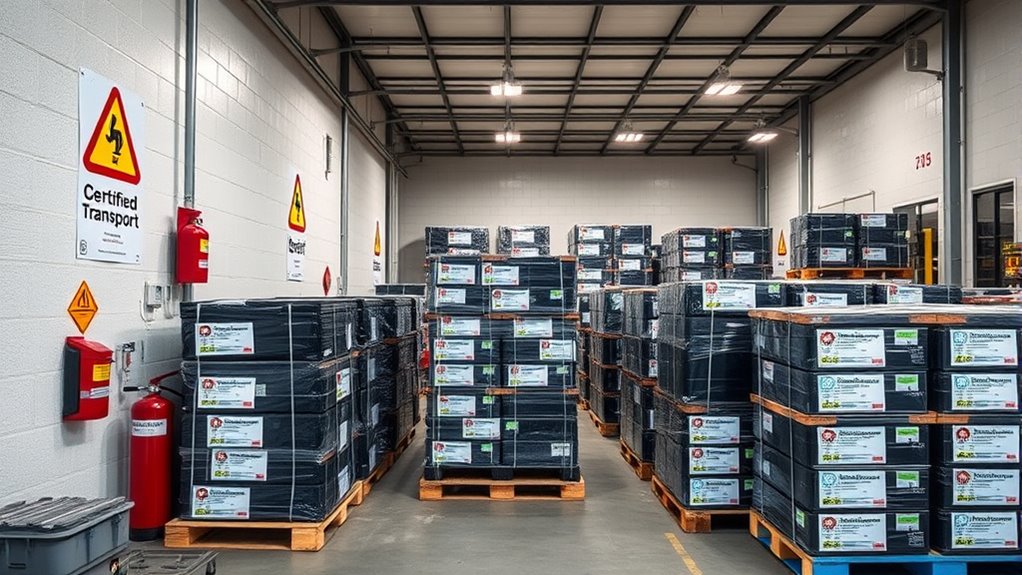
Proper battery recycling begins with recognizing which batteries require special handling. Lithium-ion, nickel-cadmium, and lead-acid batteries contain materials that can be harmful if not managed properly. Regulations mandate that these batteries must be collected separately from regular waste and transported using certified containers and vehicles. You should always use approved packaging that prevents accidental short circuits, leaks, or damage during transit. This is where safety standards come into play—they specify the types of containers, labeling, and documentation required to guarantee safe and compliant transport. Adhering to these standards minimizes risks and simplifies compliance during inspections or audits.
Proper handling and certified packaging are essential for safe battery recycling and compliance.
Transporting batteries as hazardous materials involves strict adherence to regulations set by agencies like the Department of Transportation (DOT) and the International Air Transport Association (IATA). These rules specify how batteries should be classified, labeled, and documented. When you follow these guidelines, you help prevent accidents that could lead to fires or toxic spills. Certified transport providers are trained to handle batteries properly, ensuring that safety standards are met throughout the process. This minimizes the chance of mishandling, which could cause environmental harm or health issues for workers involved in transportation and recycling.
Furthermore, compliance with battery collection regulations promotes a circular economy by facilitating efficient recycling. When batteries are collected and processed correctly, valuable materials such as lithium, cobalt, and nickel can be recovered and reused. This reduces the need for mining new raw materials, lessening environmental impacts. By following the rules around hazardous materials compliance, you contribute to sustainable practices that protect natural resources and public health. Additionally, incorporating self-watering plant pots into recycling initiatives can help promote sustainable practices in community programs.
certified battery shipping packaging
As an affiliate, we earn on qualifying purchases.
As an affiliate, we earn on qualifying purchases.
Frequently Asked Questions
Are There Specific Training Requirements for Transporting Batteries?
Yes, you need specific training to guarantee safe battery transport. You must understand battery safety protocols and comply with carrier restrictions to prevent accidents or hazards. This training covers proper packaging, labeling, and handling procedures for various battery types, especially hazardous ones. By completing these requirements, you help protect yourself, others, and the environment, ensuring safe and compliant transportation of batteries according to regulations.
How Do Regulations Differ Between Domestic and International Shipping?
International standards and customs procedures differ markedly from domestic shipping. When you ship batteries internationally, you must adhere to stricter regulations, like complying with IATA or IMDG codes, which often require specific packaging and labeling. Customs procedures also demand detailed documentation and declarations. You need to understand these differences to guarantee smooth transit, avoid delays, and stay compliant with both international standards and the specific customs requirements of each destination country.
What Are the Penalties for Non-Compliance With Hazardous Materials Laws?
You might think penalties for hazardous waste violations are minor, but they’re serious. If you don’t follow battery disposal regulations, you risk hefty fines, legal actions, or even criminal charges. Non-compliance with hazardous materials laws can lead to shipment delays, environmental cleanup costs, and damage to your reputation. Stay compliant by understanding proper transport and disposal procedures, ensuring safety, and avoiding costly penalties that could impact your business’s future.
Can Batteries Be Shipped via Standard Courier Services?
You can’t ship batteries via standard courier services unless they’re properly packaged and labeled according to regulations. You must use specialized battery packaging to prevent leaks or short circuits and include appropriate shipping labels that indicate hazardous materials. Failure to follow these rules can lead to fines or shipment delays. Always check with your courier and comply with hazardous materials regulations to make certain of safe and legal transportation of batteries.
What Documentation Is Required for Battery Transport Compliance?
To guarantee battery safety and meet packaging standards, you need proper documentation for transport compliance. You should include a shipping paper or bill of lading that clearly identifies the batteries as hazardous materials, along with proper labeling and emergency response info. Additionally, you must provide a material safety data sheet (MSDS) and ensure your packaging meets regulatory standards. These steps help you stay compliant and safely transport batteries via courier or other carriers.
Conclusion
By following these battery collection regulations, you’ll master the art of safe, compliant transport—saving your business from disasters that could dwarf a meteor strike! Certified transport and hazardous materials compliance aren’t just rules; they’re your shield against costly fines and environmental harm. Stay vigilant, stay compliant, and turn your battery collection process into a model of safety and responsibility. Remember, one careless mistake could cause chaos—so stay informed and keep safety at the forefront!
Fall Picks
fall essentials
As an affiliate, we earn on qualifying purchases.