Battery swap networks like Nio’s 2,609 stations and CATL’s Choco‑SEB system are transforming electric vehicle charging by allowing you to quickly exchange depleted batteries for fully charged ones in just minutes. These networks improve convenience, reduce charging times, and support sustainable energy use through smart management and renewable sources. They’re creating smarter, more resilient energy ecosystems that could change how you experience EVs—continue exploring to discover how these innovations are shaping your future transportation options.

Get backup power and energy gear delivered free with Prime
- Fast, free delivery on millions of items
- Prime Video, Amazon Music and more included
- Member-only deals all year
Key Takeaways
- Nio operates over 2,600 automated swap stations across major cities and highways, enabling rapid battery exchanges in about three minutes.
- CATL’s Choco‑SEB system features modular, standardized batteries designed for quick, scalable swaps, supporting network expansion.
- Both Nio and CATL focus on integrating renewable energy sources and off-peak recharging to optimize energy efficiency and sustainability.
- The networks aim to reduce EV charging times, alleviate grid strain, and promote broader adoption of electric vehicles.
- These systems exemplify advancements in smart, resilient energy ecosystems, transforming EV infrastructure and user convenience.
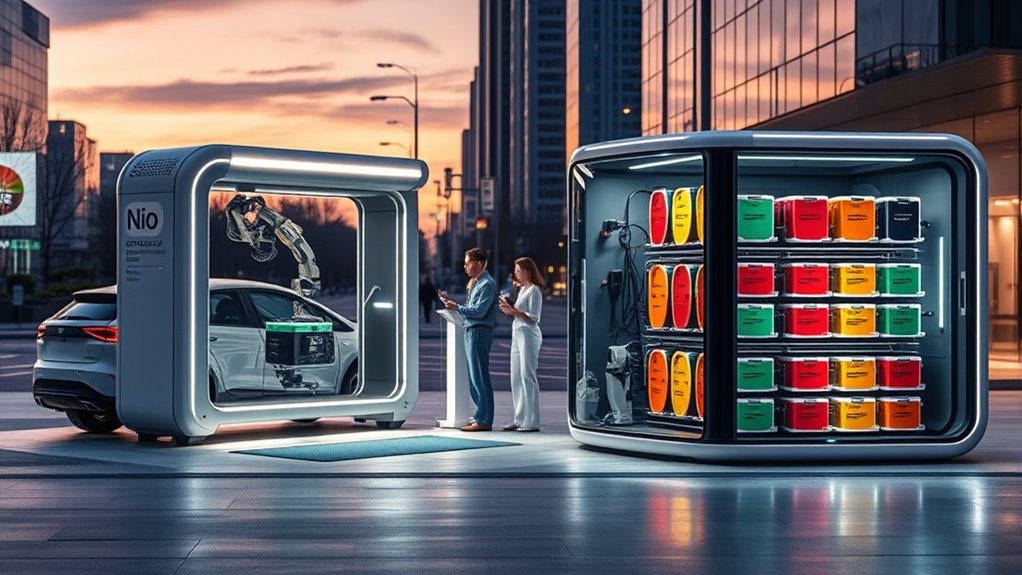
Have you ever wondered how electric vehicle owners can recharge quickly and efficiently? The answer lies in advanced battery swap networks, which are transforming the way we think about automotive infrastructure and energy management. We believe that establishing a robust network of swap stations is crucial for widespread EV adoption and sustainable transportation. Instead of waiting for hours to charge your EV, you can simply visit a swap station where your depleted battery is replaced with a fully charged one in minutes. This innovative approach addresses one of the biggest hurdles for EV adoption: charging time. By establishing a robust network of swap stations, companies like Nio and CATL are creating a seamless experience for drivers, making electric vehicles more practical for everyday use.
Battery swap networks revolutionize EV charging, offering quick, seamless, and practical solutions for everyday drivers.
Nio’s swap stations exemplify this vision. They’ve built an extensive network of automated battery swap stations across major cities and highways. These stations operate with precision, allowing you to pull in, have your battery swapped in about three minutes, and be back on the road almost instantly. This system relies heavily on well-developed automotive infrastructure, which includes specialized robotic arms, standardized battery packs, and real-time data management. It’s this infrastructure that guarantees smooth operation, minimizes downtime, and maintains battery quality. Nio’s approach also emphasizes energy management by efficiently balancing the grid load. During off-peak hours, the stations recharge the batteries, reducing strain on power supplies and optimizing energy use.
Similarly, CATL’s Choco‑SEB system pushes the boundaries of battery swapping technology. It features modular, standardized batteries that can be quickly swapped out thanks to an innovative design that simplifies the exchange process. The system is geared towards creating a flexible, scalable network that integrates seamlessly with existing automotive infrastructure. It supports rapid deployment, allowing automakers and charging providers to expand their networks without extensive overhauls. The emphasis on energy management ensures that the batteries are charged using renewable energy sources whenever possible, reducing carbon footprints and promoting sustainability. The modular nature of the Choco-SEB system also facilitates easier maintenance and upgrades, keeping the network future-proof.
Both Nio and CATL are demonstrating that battery swap networks are not just about convenience; they’re about creating a smarter, more resilient energy ecosystem. By focusing on automotive infrastructure and energy management, they’re addressing the core challenges of EV adoption—charging speed, grid stability, and sustainability. These systems empower drivers with a quick, reliable alternative to traditional charging, helping to accelerate the shift toward cleaner transportation. As these networks expand and improve, you’ll find that electric vehicles become even more integrated into your daily life, offering a fast, efficient, and eco-friendly way to keep moving.
As an affiliate, we earn on qualifying purchases.
Frequently Asked Questions
How Does Battery Swap Technology Impact Vehicle Insurance Policies?
Battery swap technology can lower your vehicle insurance costs by reducing battery-related risks, which may lead to lower battery insurance premiums. It also impacts liability coverage, as insurers might adjust policies to cover swap station damages or accidents involving swapped batteries. You’ll need to clarify coverage for battery damage during swaps and guarantee liability policies account for potential station-related incidents, making your insurance more all-encompassing and tailored to this innovative technology.
What Are the Environmental Benefits of Large-Scale Battery Swapping?
You’ll find that large-scale battery swapping offers significant environmental benefits. It promotes recycling programs by enabling efficient battery reuse and disposal, reducing electronic waste. Additionally, it helps cut emissions by encouraging the use of cleaner energy sources for charging and minimizing the need for manufacturing new batteries. This system supports sustainability efforts, making your transportation greener and more eco-friendly.
How Does Battery Standardization Affect Global Adoption of Swap Stations?
Battery standardization accelerates global adoption of swap stations by ensuring compatibility across different vehicle models and brands. When standards are in place, you can easily swap batteries without worrying about specific sizes or connectors, making the process more convenient. This interoperability attracts more manufacturers and consumers, creating a wider network of swap stations worldwide. Ultimately, standardization simplifies infrastructure, boosts confidence, and promotes faster adoption of electric vehicles globally.
What Are the Long-Term Maintenance Costs for Swap Stations?
You’ll face moderate long-term maintenance costs for swap stations, mainly driven by station durability and replacement costs. Regular upkeep guarantees smooth operation, but parts may need replacing over time, increasing expenses. To keep costs manageable, invest in durable components and schedule routine inspections. Proper maintenance extends station lifespan, reduces unexpected breakdowns, and ultimately helps control your replacement costs, ensuring the swap network remains efficient and cost-effective in the long run.
How Do Customer Experience and Convenience Compare to Charging Stations?
You’ll find battery swap networks more convenient than traditional charging stations because they offer quick, seamless service. With an intuitive user interface, you can easily operate the system, and station accessibility guarantees you don’t have to wait long. Swapping batteries takes minutes, providing an efficient alternative to charging, especially if you’re in a hurry. Overall, the experience is smoother and more user-friendly, making it a practical choice for busy drivers.
Conclusion
You can see how battery swap networks are transforming the EV landscape, like a well-oiled machine that keeps moving forward. With NIO’s 2,609 swap stations and CATL’s Choco‑SEB system, the future shines brighter, promising faster, more convenient charging. These innovations are the heartbeat of a new era, where charging is no longer a hurdle but a seamless part of your journey. Embrace the change—your electric adventure is just beginning.
Fall Picks
fall essentials
As an affiliate, we earn on qualifying purchases.