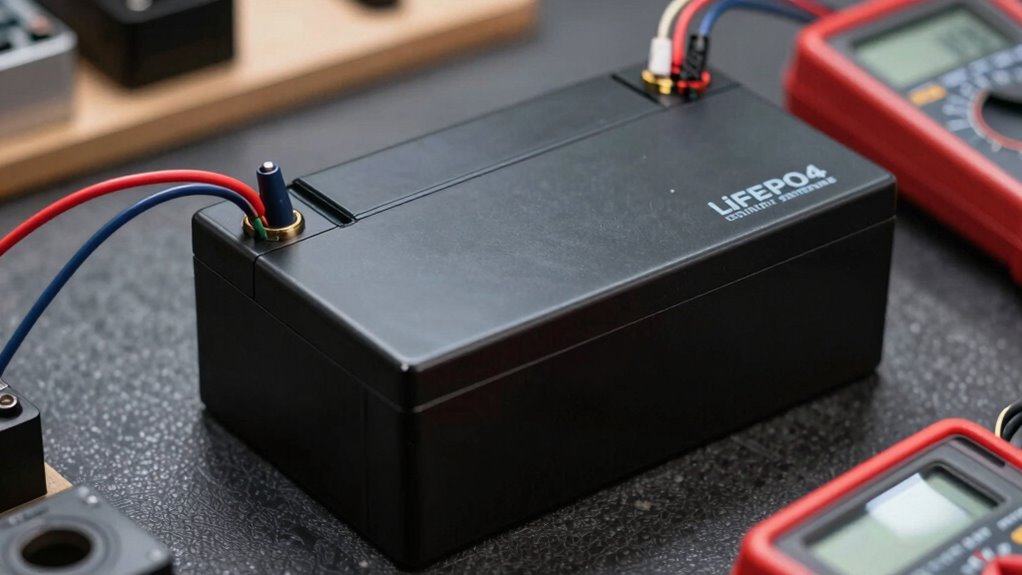

If your LiFePO4 battery hits low-voltage cutoff too early, it’s likely due to incorrect voltage calibration, improper BMS settings, or unbalanced cells. You should verify that your BMS is configured correctly for LiFePO4 chemistry and recalibrate the voltage readings if needed. Also, check and balance the cells to ensure consistent voltage across all. To fix this issue and keep your system running smoothly, consider exploring these adjustments further.

Get backup power and energy gear delivered free with Prime
- Fast, free delivery on millions of items
- Prime Video, Amazon Music and more included
- Member-only deals all year
Key Takeaways
- Incorrect BMS voltage settings or calibration can cause premature low-voltage cutoff.
- Unbalanced cells lead to uneven voltage readings, triggering early shutdowns.
- Faulty or misconfigured BMS may not match LiFePO4 voltage specifications.
- Inaccurate voltage measurements from poor calibration can falsely signal low battery.
- Regular cell balancing and recalibration help prevent false cutoff triggers.

A low-voltage cutoff is vital for protecting your LiFePO4 battery from damage caused by over-discharge. When your battery hits this cutoff point prematurely, it can be frustrating and may indicate underlying issues with how the system manages the battery’s health. Often, the culprit is inadequate battery management or incorrect voltage calibration. Understanding these factors can help you troubleshoot why your battery hits low-voltage cutoffs too early and how to fix the problem effectively.
Battery management plays an essential role in ensuring your LiFePO4 battery operates safely and efficiently. If your battery management system (BMS) isn’t properly set up or calibrated, it might inaccurately read the battery’s voltage, causing the cutoff to trigger sooner than necessary. Proper battery management involves ensuring the BMS is compatible with your specific battery type and that it’s configured correctly. Some BMS units come with adjustable settings for voltage thresholds, so you need to verify that these are aligned with the recommended voltage levels for LiFePO4 chemistry. Misconfigured settings can lead to premature cutoffs, reducing your usable capacity and potentially damaging the battery over time.
Voltage calibration is another critical aspect. Even if your BMS is functioning correctly, inaccurate voltage readings can cause false triggers. You should regularly calibrate your voltage measurement system to ensure it reflects the true state of charge. This involves measuring the actual voltage with a reliable multimeter and comparing it with what your BMS reports. If discrepancies exist, recalibrate the BMS or update its settings accordingly. Proper calibration ensures that your low-voltage cutoff activates only when the battery is genuinely near its critical discharge point, preventing unnecessary interruptions.
Additionally, it’s wise to periodically check your battery’s health and ensure the cells are balanced. Unbalanced cells can cause uneven voltage distribution, which might lead to false low-voltage warnings. Balancing your cells keeps the voltage levels consistent across all cells, which in turn helps maintain accurate voltage readings and prevents early cutoff events. Incorporating proper testing methods can further help diagnose issues with your battery’s performance and longevity.
LiFePO4 battery BMS calibration tool
As an affiliate, we earn on qualifying purchases.
As an affiliate, we earn on qualifying purchases.
Frequently Asked Questions
How Does Temperature Affect Lifepo4 Low-Voltage Cutoff?
Temperature impacts your LiFePO4 battery’s low-voltage cutoff through thermal effects, affecting voltage stability. When it’s cold, the battery’s internal resistance increases, causing voltage drops and triggering the cutoff prematurely. Conversely, high temperatures can lead to voltage fluctuations, risking over-discharge. To guarantee accurate cutoff points, you should monitor temperature and consider thermal management, as maintaining ideal conditions stabilizes voltage and prevents unnecessary shutdowns or damage.
Can Battery Age Influence the Cutoff Point?
Think of your battery as a seasoned traveler; as it ages, its stamina wanes, affecting voltage stability. Over time, the battery’s lifespan diminishes, causing the low-voltage cutoff to trigger sooner. You’ll notice this as early warning signs of reduced performance. Regularly monitoring and maintaining your battery can help manage these effects, but aging inevitably influences the cutoff point, reminding you that even the sturdiest travelers have their limits.
Are There Safety Risks With Early Cutoff Adjustments?
Adjusting your low-voltage cutoff can pose battery safety risks if not done correctly, as improper voltage regulation may lead to over-discharge or damage. To stay safe, confirm any modifications follow manufacturer guidelines and use appropriate equipment. Regularly monitor your battery’s voltage during use, and consult a professional if you’re unsure. Proper voltage regulation is key to maintaining your LiFePO4 battery’s longevity and safety.
What Are the Signs of a Faulty Battery Management System?
If your battery management system (BMS) is faulty, you might notice inconsistent voltage readings, unexpected shutdowns, or difficulty calibrating the battery. BMS diagnostics can reveal irregularities, such as persistent error codes or failure to balance cells properly. These signs indicate the BMS isn’t accurately monitoring your battery’s health, so you should run calibration tests and seek professional repairs to prevent potential damage or safety risks.
How Can I Recalibrate My Battery’s Low-Voltage Setting?
Ever wonder if your battery’s low-voltage cutoff is playing tricks on you? To recalibrate your LiFePO4 battery’s low-voltage setting, start with a proper battery calibration by fully charging and then discharging it under controlled conditions. Next, use a compatible BMS or software to modify the voltage setting. This process ensures your battery’s voltage adjustment aligns with its actual capacity, preventing premature cutoff and extending lifespan.
Conclusion
So, next time your LiFePO4 battery hits low-voltage cutoff too soon, remember to check your settings, make sure proper wiring, and avoid over-discharging. Think of it like tuning a vintage radio—sometimes a simple tweak brings everything back in harmony. Don’t let frustration turn you into a modern-day Sisyphus; with a bit of patience and the right fix, you’ll keep your battery happy and running smoothly. Stay vigilant, and your power source will serve you well for ages to come.
Halloween Picks
halloween
As an affiliate, we earn on qualifying purchases.