TL;DR
DTE Energy plans to use batteries at Ann Arbor’s Veridian at County Farm in Michigan’s first residential virtual power plant pilot. The system is expected to deliver up to about 300 kilowatts for three hours, while testing how home batteries can help meet grid needs and whether the approach can scale.
DTE Energy plans to coordinate home batteries at Veridian at County Farm, a net-zero development in Ann Arbor, in what the project describes as Michigan’s first residential virtual power plant pilot. The utility will be able to draw on stored solar power when grid operators need it, testing whether a group of homes can provide a flexible source of electricity and help manage demand.

Get backup power and energy gear delivered free with Prime
- Fast, free delivery on millions of items
- Prime Video, Amazon Music and more included
- Member-only deals all year
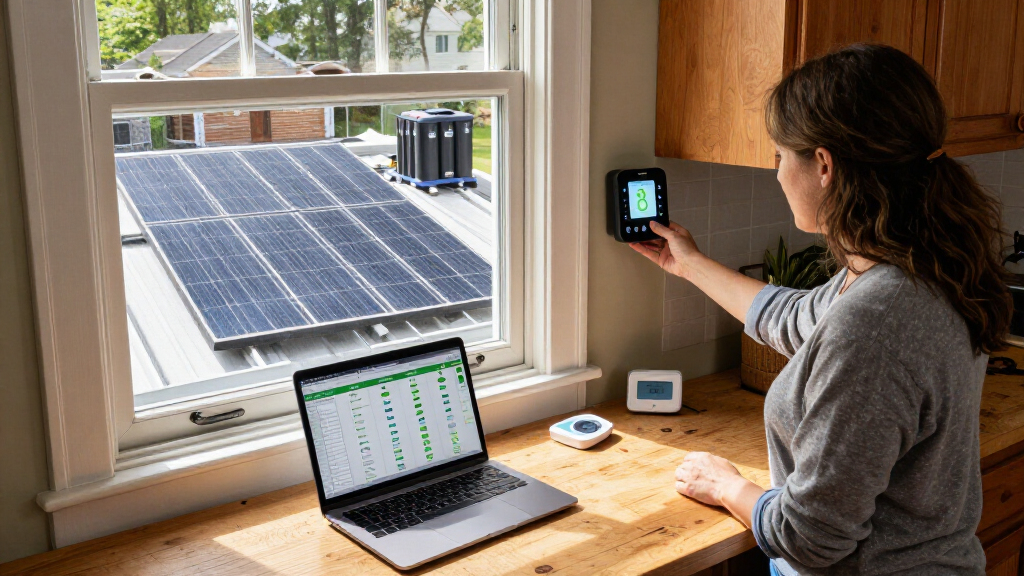
Residents are expected to be able to enroll in the coming weeks. DTE will remotely control participating households’ batteries, which store solar energy for later use, and dispatch their power to the grid when needed. Sonnen USA, the battery manufacturer whose systems are installed at Veridian, is helping DTE operate the pilot through its software.
The project is expected to provide up to about 300 kilowatts for three hours. That is a projected capability, not a report of power already delivered. DTE expects nearly 100 battery-equipped homes ultimately to take part. Thrive Collaborative, the development’s founder, said 44 market-rate homes with solar and batteries had been built out of 120 planned. The community also has 50 affordable housing units, which do not yet have batteries, according to the company.
The pilot is intended to help DTE learn how much electricity the battery fleet can provide and when it can be dispatched. It may also provide participating residents with compensation. Veridian resident Mitch Hall said DTE would pay households for taking part, but the utility did not provide Canary Media with exact payment figures before publication.
Could Michigan Homes Become a Virtual Power Plant?
DTE Energy plans to coordinate batteries at Ann Arbor’s Veridian at County Farm. The pilot will test whether stored solar power from homes can help meet grid needs.
How the pilot works
DTE and Sonnen USA plan to send stored solar power to the grid when needed.
Participating batteries hold solar energy for later use.
DTE will remotely control enrolled households’ batteries with Sonnen software.
The utility can dispatch stored energy when grid operators need it.
What residents could gain
The value to households depends on the pilot’s operating and payment terms.
- Payment for taking part
- Local stored energy available to support the grid
- Exact compensation amounts
- How dispatches affect home backup power
A test, not a proven solution
The pilot is designed to give DTE real operating experience with a residential battery fleet.
Measure available power
DTE will assess how much electricity the batteries can provide and when.
Results will matter
The pilot has not established savings or whether DTE will expand the program.
What to watch next
Enrollment is expected to open in the coming weeks.
How Home Batteries Could Support DTE
A virtual power plant coordinates many smaller energy resources, such as home batteries, so they can act together when the grid needs electricity. If the Veridian pilot works as intended, DTE could call on stored energy during periods of high demand rather than relying as heavily on other resources to meet short-term peaks. That could help limit the need for costly grid upgrades or fossil-fuel peaker plants, though the pilot has not yet established those savings.
For customers, the potential benefits include payment for participating and a grid that can draw on local storage during periods of strain. But the value to households depends on details such as compensation, battery operation and how much stored energy remains available for home use. Those terms were not fully disclosed in the source material.
The wider question is whether utilities can use distributed batteries reliably at meaningful scale. The project’s modest projected output makes it a test, not a replacement for large power plants or transmission infrastructure. Its value is in giving DTE operational experience and data about how a residential fleet performs under real grid conditions.
Products Worth Considering

Bose TV Speaker Compact Soundbar with Bluetooth and HDMI-ARC, Black

Bose TV Speaker (2nd Gen) Compact Soundbar with Bluetooth and HDMI Connectivity

LG 27GR83Q-B 27-inch Ultragear QHD IPS Gaming Monitor
As an affiliate, we earn on qualifying purchases.
From Veridian Homes to Utility Pilot
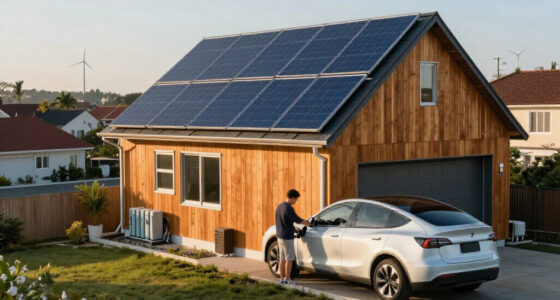
Veridian at County Farm is a fossil-fuel-free, net-zero-energy development in Ann Arbor. Its homes are designed to generate roughly as much solar electricity as they use, with batteries storing daytime generation for use later. The virtual power plant idea would extend that system beyond individual homes, allowing participating batteries to contribute power to the wider grid.
Matt Grocoff, founder of Thrive Collaborative, said he began considering a pilot for the neighborhood in 2019. The project is being developed with DTE and Sonnen USA. DTE chief executive Joi Harris said in a statement that the pilot would test an approach that could provide a lower-cost way to meet growing energy needs and strengthen reliability.
Virtual power plants have existed for years, but adoption has been limited by factors including utility incentives and the cost of residential solar and storage. Interest is growing as electricity demand rises, including from electrification and data centers. An RMI manager cited in the source described distributed energy resources as an immense untapped capacity, while noting that the challenge is to connect them effectively to utility operations.
Sonnen also points to a larger program that grew from an earlier pilot in Utah. The company’s executive vice president Geoff Ferrell said a project that began in 2017 at the Soleil Lofts apartment development expanded into the Wattsmart Battery program, which he said now includes about 7,900 homes and businesses in Utah, Wyoming and Idaho. That example offers a possible model, but it does not establish that the Michigan pilot will follow the same path.
““This pilot is an opportunity to test an approach that could ultimately provide a lower-cost way to meet growing energy needs and strengthen reliability.””
— Joi Harris, DTE Energy president and chief executive officer
Payments, Performance and Scale
The pilot’s start date, enrollment terms and compensation amounts are not specified. DTE did not provide exact customer payment figures to Canary Media before publication, so residents’ expected earnings cannot be stated. It is also not clear how often the utility will dispatch the batteries or what limits will apply to protect households’ backup power and energy needs.
The stated output of up to about 300 kilowatts for three hours is an expectation, not a measured result. The pilot should show how much power participating batteries can actually deliver, how consistently they respond and when their stored energy is available. The material does not establish whether the project will reduce utility costs, lower household bills or lead to a larger DTE program.
Enrollment and Grid Testing
Veridian households are expected to be able to enroll in the coming weeks. DTE and Sonnen will then operate the network and assess how the batteries perform when called on to support the grid. The results should help the utility understand the fleet’s available power and timing, according to Ferrell.
The next meaningful developments will be the pilot’s launch, confirmation of how many homes participate, and evidence of actual dispatches and customer payments. DTE has not announced a decision about expanding the program. Whether the pilot leads to a larger virtual power plant will depend on its operating results and the utility’s assessment of the approach.
Key Questions
What is a virtual power plant?
A virtual power plant coordinates distributed energy resources, such as home batteries, so a utility can use them together to provide electricity when the grid needs it.
Where will the Michigan pilot take place?
The pilot is planned for Veridian at County Farm, a net-zero-energy development in Ann Arbor. DTE expects nearly 100 battery-equipped homes to participate eventually.
How much power is the pilot expected to provide?
The project is expected to provide up to about 300 kilowatts for three hours. That figure is a projection; actual performance has not yet been reported.
Will residents be paid?
Veridian resident Mitch Hall said DTE would pay participating households, but the utility did not provide exact compensation figures before publication. Payment amounts and terms remain unclear.
When will the pilot begin?
Enrollment is expected to open in the coming weeks. The source material does not give a specific launch date or schedule for grid dispatches.
Source: canarymedia.com