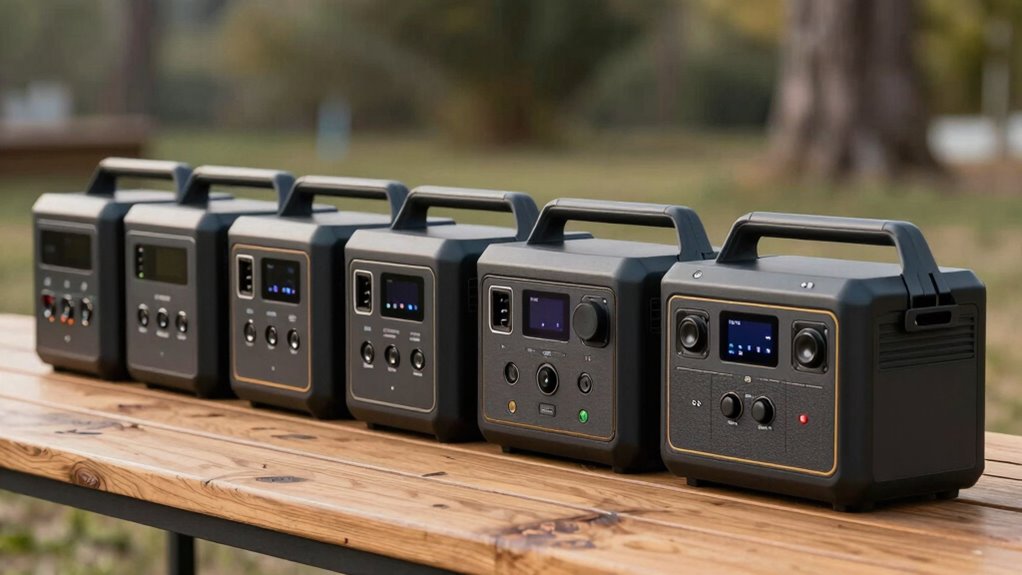

Shopping for a portable power station around 3000Wh means balancing raw capacity against inverter output, battery chemistry, and expansion options. In this comparison, the Jackery Explorer 3600 Plus (3584Wh) stands out as the best overall pick thanks to its 3600W output and expandable design, while the BLUETTI Elite 300 earns the value slot with a compact footprint and premium LiFePO4 cells, and the AFERIY 3840Wh appeals to buyers who want maximum expandability up to 11,520Wh without paying flagship prices. The main tradeoff in this category is weight and portability versus whole-home backup capability, plus the choice between NMC batteries that charge faster and LiFePO4 batteries that last far more cycles. Expandability is another dividing line — some of these units grow with your needs, while others are fixed at their base capacity. Keep reading for the full breakdown of each model’s strengths, weaknesses, and ideal buyer.

Get backup power and energy gear delivered free with Prime
- Fast, free delivery on millions of items
- Prime Video, Amazon Music and more included
- Member-only deals all year
Complete the kit


Key Takeaways
- The Jackery Explorer 3600 Plus earned the top spot because it pairs 3600W of AC output with genuine expandability, where the base Jackery HomePower 3000 matches the inverter wattage but cannot grow beyond 3072Wh.
- LiFePO4 chemistry is now standard at this capacity — five of the six units use it — so the real differentiator became cycle life claims, charge speed, and how well each brand supports expansion batteries.
- The AFERIY and PECRON F3000LFP both offer expansion up to roughly 10,700–11,500Wh, making them the strongest picks for whole-home ambitions, while the BLUETTI Elite 300 and Jackery HomePower 3000 are better treated as fixed-capacity units.
- All six units cluster around 3072–3840Wh, but that difference of roughly 25% capacity matters most for refrigeration runtime during multi-day outages — a real deciding factor, not a spec-sheet footnote.
- At this size class, every unit weighs well over 60 pounds, so buyers should judge ‘portable’ realistically: these are movable stations with wheels or handles, not camping carry-alls.
| Jackery HomePower 3600 Plus Power Station, 3584Wh, 3600W AC Output |  | Best Overall for Whole-Home Backup | Capacity: 3584Wh (expandable to 21kWh per unit, 43kWh parallel) | AC Output: 3600W (7200W parallel) | Voltage: 120V; 240V capable in parallel | VIEW ON AMAZON | See Our Full Breakdown |
| BLUETTI Elite 300 Portable Power Station for RV & Home Backup 3014.4Wh |  | Best for RV Owners | Capacity: 3014.4Wh | AC Output: 2400W (4800W surge) | Battery Chemistry: LiFePO4, 6000+ cycles | VIEW ON AMAZON | See Our Full Breakdown |
| Jackery HomePower 3000 Portable Power Station, 3072Wh, 3600W AC Output |  | Best Value for Home Essentials | Capacity: 3072Wh | AC Output: 3600W (7200W surge) | Battery Chemistry: LiFePO4, 4,000 cycles to 70% capacity | VIEW ON AMAZON | See Our Full Breakdown |
| ABOK Ark3600 Portable Power Station 3600W, 3840Wh LiFePO4 Battery |  | Best Port Selection and Expandable Capacity | Capacity: 3840Wh (expandable to 11,520Wh) | AC Output: 3600W rated, 4500W peak | Output Ports: 15 (1x AC 30A, 4x AC 20A, 4x USB, 2x DC5521, XT60, 12V socket) | VIEW ON AMAZON | See Our Full Breakdown |
| AFERIY 3840Wh Portable Power Station, Expandable Solar Generator to 11520Wh |  | Best Warranty and Safety Certifications | Capacity: 3840Wh (expandable to 11,520Wh) | AC Output: 3600W continuous | Battery Chemistry: LiFePO4 | VIEW ON AMAZON | See Our Full Breakdown |
| PECRON Portable Power Station F3000LFP, 3072Wh Solar Generator |  | Best Expandable Whole-Home Backup | Capacity: 3072Wh (expandable to 10752Wh) | AC Output: 3600W pure sine wave | Battery Chemistry: LiFePO4 | VIEW ON AMAZON | See Our Full Breakdown |
| portable power station 3000wh | Capacity | AC Output | Battery Chemistry | Recharge Time |
|---|---|---|---|---|
| Jackery HomePower 3600 Plus Po | 3584Wh (expandable to 21kWh per unit, 43kWh parallel) | 3600W (7200W parallel) | LiFePO4 with ceramic membrane cells | 2 hrs hybrid AC+DC; 2.5 hrs AC; 4 hrs solar |
| BLUETTI Elite 300 Portable Pow | 3014.4Wh | 2400W (4800W surge) | LiFePO4, 6000+ cycles | 0-80% in 78 minutes |
| Jackery HomePower 3000 Portabl | 3072Wh | 3600W (7200W surge) | LiFePO4, 4,000 cycles to 70% capacity | 1.7 hrs hybrid AC+DC; 2.2 hrs AC; ~9 hrs solar (2x200W) |
| ABOK Ark3600 Portable Power St | 3840Wh (expandable to 11,520Wh) | 3600W rated, 4500W peak | EV-grade LiFePO4, 4,000+ cycles | ~1.29 hrs AC+PV; 3 hrs AC only |
| AFERIY 3840Wh Portable Power S | 3840Wh (expandable to 11,520Wh) | 3600W continuous | LiFePO4 | As fast as 1.5 hours (AC + solar) |
| PECRON Portable Power Station | 3072Wh (expandable to 10752Wh) | 3600W pure sine wave | LiFePO4 | — |
More Details on Our Top Picks
Jackery HomePower 3600 Plus Power Station, 3584Wh, 3600W AC Output
The Jackery HomePower 3600 Plus earns the top spot because it solves the two biggest problems with 3000Wh-class stations at once: capacity ceilings and weight. Its 3584Wh capacity expands to 21kWh per unit (or 43kWh in parallel), which puts it in a different league than the non-expandable BLUETTI Elite 300 when a multi-day outage stretches on. The luggage-style wheels and telescopic handle matter more than they sound — compared with the 92-pound ABOK Ark3600, moving this unit around a house is a one-handed job. Battery chemistry is the other standout: cells rated to resist thermal runaway at 302°F and a 6,000-cycle lifespan beat the 4,000-cycle rating on both the ABOK and PECRON options. The tradeoff is complexity — parallel and 240V operation require extra accessories, and the hybrid charging speeds only hit their quoted numbers under ideal conditions.
Pros:- Class-leading 6,000-cycle LFP cells with high-temp ceramic membrane for safety
- Expandable from 3584Wh up to 43kWh with parallel units
- Lightest 3.6kWh design with wheels and telescopic handle for easy moving
- Four charging paths including 2-hour hybrid AC+DC recharge
Cons:- Parallel operation, 240V output, and expansion batteries all require additional purchases
- Full-home integration (MTS transfer switching) adds cost and setup complexity
Best for: Homeowners who want a single unit that can scale from weekend outages to weeks-long whole-house backup without buying a separate system
Not ideal for: Buyers on a strict per-unit budget or anyone who only needs occasional camping power — the expandability and premium battery chemistry will go unused
- Capacity:3584Wh (expandable to 21kWh per unit, 43kWh parallel)
- AC Output:3600W (7200W parallel)
- Voltage:120V; 240V capable in parallel
- Battery Chemistry:LiFePO4 with ceramic membrane cells
- Cycle Life:6,000 cycles, ~10-year lifespan
- Recharge Time:2 hrs hybrid AC+DC; 2.5 hrs AC; 4 hrs solar
- Charging Options:AC, solar, gas generator, hybrid AC+DC
Our verdict“This is the pick if long outages are a real possibility and you want a system that can grow with your needs rather than be replaced.”
BLUETTI Elite 300 Portable Power Station for RV & Home Backup 3014.4Wh
Where the Jackery 3600 Plus leans toward whole-home scenarios, the BLUETTI Elite 300 is built around life on the road. It is billed as the world’s smallest 3kWh station — roughly 59% smaller than conventional designs — and at 58 pounds with a 14.4 x 12 x 11.7-inch footprint it fits into compartments that would swallow the 92-pound ABOK Ark3600 whole. The TT-30 RV outlet and 12V/30A DC output are the real differentiators: you can plug a camper straight in and run 12V fridges, water pumps, and diesel heaters without adapters. A 10ms UPS switch keeps a home office or CPAP alive during outages, and 0-80% in 78 minutes is faster than anything else in this lineup. The catch is raw power — at 2400W continuous, it cannot run the dryers, heaters, and well pumps the Jackery 3600 Plus handles, and capacity is fixed at 3014Wh with no expansion path.
Pros:- Smallest footprint in its capacity class — easy to store and transport
- Native TT-30 RV outlet plus 12V/30A DC for RV appliances
- 10ms UPS switchover protects computers and medical devices
- 0-80% recharge in as fast as 78 minutes
Cons:- 2400W continuous output is the lowest in this roundup
- No battery expansion — 3014Wh is the ceiling
Best for: RV and campervan owners who want a compact 3kWh unit with native RV ports and fast top-ups between stops
Not ideal for: Households planning to run high-wattage appliances like dryers, space heaters, or well pumps — 2400W output is simply too low
- Capacity:3014.4Wh
- AC Output:2400W (4800W surge)
- Battery Chemistry:LiFePO4, 6000+ cycles
- UPS Transfer:10ms
- Recharge Time:0-80% in 78 minutes
- RV Features:TT-30 outlet, 12V/30A DC output
- Weight / Size:58 lb; 14.4 x 12 x 11.7 in
Our verdict“The best choice when portability and RV integration matter more than maximum wattage or expandability.”
Jackery HomePower 3000 Portable Power Station, 3072Wh, 3600W AC Output
The Jackery HomePower 3000 hits a sweet spot its bigger sibling doesn’t: 3600W of output at a 3072Wh capacity, which is enough to run a fridge for one to two days or a household’s essentials for up to 15 hours. Unlike the BLUETTI Elite 300, it keeps that full 3600W throughput, so kettles and microwaves are not off the table. Charging is quicker than most rivals here — 1.7 hours via hybrid AC+DC — and the UL-certified ≤20ms UPS means a desktop PC or security system survives an outage without a flicker. Its CTB construction makes it 47% smaller and 43% lighter than same-capacity competitors, which matters if you plan to move it between house and RV. The compromises are real though: 4,000 rated cycles trails the 6,000 of the 3600 Plus, capacity is fixed rather than expandable, and solar charging with only 400W of panels is a slow 9-hour affair.
Pros:- Full 3600W output with 7200W surge at a lower capacity tier
- Very fast 1.7-hour hybrid recharge
- UL-certified ≤20ms UPS for sensitive electronics
- Compact and light for its class with TT-30 RV port included
Cons:- 4,000-cycle lifespan trails premium rivals rated at 6,000 cycles
- No expansion battery support — capacity is capped at 3072Wh
Best for: Budget-conscious homeowners who want high 3600W output and fast recharging for essential loads without paying for expandability
Not ideal for: Anyone anticipating multi-week outages or wanting to build a scalable battery bank — the fixed 3072Wh capacity caps long-term runtime
- Capacity:3072Wh
- AC Output:3600W (7200W surge)
- Battery Chemistry:LiFePO4, 4,000 cycles to 70% capacity
- UPS Transfer:≤20ms, UL-certified
- Recharge Time:1.7 hrs hybrid AC+DC; 2.2 hrs AC; ~9 hrs solar (2x200W)
- Ports:AC, dual 100W USB-C PD, USB-A, DC, TT-30 RV
- Weight:59.5 lb
Our verdict“The smart middle pick if you need serious wattage and quick recharges for short-to-medium outages but not a modular power platform.”
ABOK Ark3600 Portable Power Station 3600W, 3840Wh LiFePO4 Battery
If the Jackery HomePower 3000 is about doing the basics efficiently, the ABOK Ark3600 is about doing everything at once. With 15 output ports — including a 30A AC outlet, four 20A outlets, an XT60, and dual DC5521s — it can simultaneously feed a jobsite’s worth of gear in a way the four-outlet Jackery simply cannot. Capacity is the largest single-unit figure here at 3840Wh, expandable to 11,520Wh, putting it in the same scalability conversation as the AFERIY below it but with more outlet variety. Combined AC+solar charging at up to 3500W input delivers a full battery in about 1.29 hours, the quickest claim in this lineup. The price for all that capability is physical: at 92 pounds and 21.6 inches long, it is the heaviest and bulkiest option, and its 4,000-cycle rating and 4500W peak surge both sit below the Jackery 3600 Plus. ABOK is also a younger brand, so long-term support is less proven than Jackery’s or BLUETTI’s.
Pros:- 15 output ports including a 30A AC outlet and XT60 for high-current gear
- 3840Wh expandable to 11,520Wh for serious backup depth
- Fastest full recharge claim here at ~1.29 hours with AC+PV
- Bluetooth app for remote monitoring and control
Cons:- Heaviest and largest unit in the roundup at 92 lb
- Brand has a shorter track record than Jackery or BLUETTI for long-term support
Best for: Users running many devices at once — contractors, off-grid setups, or large households who need maximum outlets and headroom to 11.5kWh
Not ideal for: Anyone who needs to move the station frequently or lift it into a vehicle — at 92 pounds it is genuinely cumbersome despite the wheels
- Capacity:3840Wh (expandable to 11,520Wh)
- AC Output:3600W rated, 4500W peak
- Output Ports:15 (1x AC 30A, 4x AC 20A, 4x USB, 2x DC5521, XT60, 12V socket)
- Battery Chemistry:EV-grade LiFePO4, 4,000+ cycles
- Recharge Time:~1.29 hrs AC+PV; 3 hrs AC only
- Charging Input:AC 1500W, solar 2000W, car 120W
- Weight / Size:92 lb; 21.6 x 12.6 x 18.5 in
Our verdict“Choose this when outlet count and expandable capacity outrank portability and brand pedigree.”
AFERIY 3840Wh Portable Power Station, Expandable Solar Generator to 11520Wh
The AFERIY 3840Wh competes directly with the ABOK Ark3600 on capacity — same 3840Wh base, same 11,520Wh ceiling, same 3600W output — but it differentiates on peace of mind. It carries a UL listing and a 7-year support period, the longest backing in this batch and a meaningful edge over the shorter, less specific warranties elsewhere. Its <10ms UPS transfer is the fastest spec here, edging out both the BLUETTI’s 10ms and the Jackery HomePower 3000’s 20ms — a genuine benefit for medical freezers and desktop workstations. Charging flexibility is strong too, with four input methods and a 1.5-hour full charge under combined AC+solar. What holds it back from ranking higher is portability: at 80.46 pounds with a simple pull handle, it is lighter than the ABOK but far less mobile than the wheeled Jackery units, and the brand’s retail presence and ecosystem of accessories trail the bigger names, so finding expansion batteries or replacement parts can take more effort.
Pros:- UL listed with a 7-year support period, the longest here
- Sub-10ms UPS transfer for sensitive and medical devices
- 3840Wh expandable to 11,520Wh with 15 output ports
- 1.5-hour fast charge and four recharge methods
Cons:- 80+ pounds with a pull handle only — no wheels, hard to move solo
- Smaller brand ecosystem means expansion batteries and support channels are less established
Best for: Buyers prioritizing certified safety, a long 7-year support window, and seamless UPS protection for critical or medical equipment
Not ideal for: Frequent travelers or anyone who values a mature accessory ecosystem — the handle-only transport and smaller brand footprint make it better as a stationary unit
- Capacity:3840Wh (expandable to 11,520Wh)
- AC Output:3600W continuous
- Battery Chemistry:LiFePO4
- UPS Transfer:<10ms
- Recharge Time:As fast as 1.5 hours (AC + solar)
- Ports:15 including AC, USB-C PD 3.0, USB-A, XT60, DC5521, 12V socket
- Certifications / Support:UL Listed, 7-year support period
- Weight / Size:80.46 lb; 22.99 x 12.63 x 18.26 in
Our verdict“A strong stationary backup choice when certifications and warranty length are the deciding factors over mobility.”
PECRON Portable Power Station F3000LFP, 3072Wh Solar Generator
The PECRON F3000LFP earns its spot as the roundup’s most expansion-hungry option. Starting at 3072Wh, it scales up to a genuinely house-scale 10752Wh when paired with PECRON’s EP3800-48V expansion batteries — a ceiling that outgrows even the AFERIY’s 11520Wh rival setup in practical flexibility, since you can add capacity incrementally rather than buying big up front. Its 3600W output matches the Jackery HomePower 3600 Plus, and the 2-hour full recharge at 1800W AC input is faster than most rivals in this capacity class, which matters when a storm window gives you limited time to top up. The 13-port array, including six AC outlets and 100W USB-C, means a whole room of devices stays online without swap games, and the 8-20ms UPS switchover protects desktop PCs and CPAP gear during outages.
The tradeoffs are real: reaching that 10752Wh ceiling requires the separately sold XT120-M cascade cable, an easy detail to miss before checkout, and the base unit’s 2-3 days of essential backup assumes modest loads rather than heavy HVAC use. Compared with the BLUETTI Elite 300, which prioritizes a tidier all-in-one package, the PECRON asks you to plan an ecosystem — but rewards you with a system that grows with your needs.
Pros:- Expandable from 3072Wh to 10752Wh, letting you build a whole-home system in stages
- 2-hour full recharge via 1800W AC input, faster than most 3000Wh-class competitors
- 13 ports including six AC outlets and 100W USB-C for simultaneous multi-device use
- 8-20ms UPS switchover that keeps computers and medical devices running through outages
Cons:- Expansion batteries require a separately sold XT120-M cascade cable, adding hidden cost and complexity
- At 3600W continuous output, running multiple heavy appliances like AC units plus kitchen gear simultaneously can push limits
- Base capacity covers 2-3 days of essentials only under conservative loads, not full-house consumption
Best for: Homeowners building a staged whole-home backup system who want to start at 3072Wh and expand toward 10kWh as budget allows
Not ideal for: Buyers wanting a single self-contained unit with no accessory purchases — the expansion path requires extra cables and batteries sold separately
- Capacity:3072Wh (expandable to 10752Wh)
- AC Output:3600W pure sine wave
- Battery Chemistry:LiFePO4
- AC Charging:1800W max, 0-100% in 2 hours
- Solar Input:1600W max (25-120V)
- Ports:6 AC, 2 USB-C (100W PD), 2 USB-A (18W), 1 carport, 2 DC 5525
- UPS Switch Time:8-20ms
- Warranty:2+3 years
Our verdict“This pick makes the most sense for buyers who see backup power as a long-term, expandable project rather than a one-time purchase.”
How We Picked
My ranking logic for this comparison came down to four buyer-relevant criteria. First, usable capacity and inverter headroom: a 3000Wh station paired with a 3600W inverter can run nearly any household appliance, including power-hungry ones like electric kettles or table saws, so I weighted models that avoid over-load shutdowns more favorably. Second, battery chemistry and cycle life: LiFePO4 cells rated for thousands of cycles represent a decade of occasional backup use, which changes the long-term value equation. Third, expandability: stations that accept expansion batteries protect your investment if your power needs grow, while fixed-capacity units are cheaper up front but dead-end.
Fourth, I evaluated charging flexibility and ecosystem — how fast each unit recharges from AC, whether solar input is robust enough for off-grid recharging in a day, and how mature each brand’s accessory and warranty support is. I then matched each product to a distinct buyer profile rather than ranking them purely on specs, because a 3000Wh station for RV trips has very different requirements than one sitting in a garage for hurricane season. The rankings reflect which model serves its intended buyer best, with the tradeoffs stated plainly.
| portable power station 3000wh | Battery Chemistry |
|---|---|
| Jackery HomePower 3600 Plus Po | LiFePO4 with ceramic membrane cells |
| BLUETTI Elite 300 Portable Pow | LiFePO4, 6000+ cycles |
| Jackery HomePower 3000 Portabl | LiFePO4, 4,000 cycles to 70% capacity |
| ABOK Ark3600 Portable Power St | EV-grade LiFePO4, 4,000+ cycles |
| AFERIY 3840Wh Portable Power S | LiFePO4 |
| PECRON Portable Power Station | LiFePO4 |
Factors to Consider When Choosing Portable Power Station 3000wh
Before committing to any 3000Wh-class power station, it helps to understand the factors that separate a smart purchase from an expensive regret. These are the considerations I weighed during this comparison, framed around mistakes buyers commonly make.Battery Chemistry Shapes Your Entire Ownership Experience
Nearly every serious 3000Wh station now uses LiFePO4 chemistry, but cycle-life ratings still vary meaningfully between brands, and that number determines how many years your investment lasts with regular use. A station rated for 3000 cycles used weekly will outlive one rated for 800 cycles by several years, which matters if you plan to cycle it with solar rather than only using it during rare outages. Chemistry also affects cold-weather performance and how safely the unit can be stored in a garage or vehicle. Buyers sometimes fixate on capacity while ignoring cycle life, effectively choosing a battery that degrades twice as fast. My advice: treat cycle life as a longevity spec, not marketing fluff, especially at this price class.
Inverter Wattage Matters More Than You Think
Capacity tells you how long a station runs; inverter wattage tells you what it can run at all. A 3000Wh station with a 2000W inverter will shut down the moment you add an electric kettle to a running refrigerator, while a 3600W inverter — which most of these units share — handles combined loads comfortably. Also check the surge rating: motors in refrigerators, well pumps, and air compressors draw two to three times their running wattage at startup. Buyers who skip this step end up discovering their ‘whole-home backup’ can’t start their fridge compressor. Match the inverter to your single most demanding appliance, then add headroom for everything running simultaneously.
Expandability: Buy for the Power You’ll Want, Not Just Today’s
One clear pattern in this comparison is the split between fixed-capacity units and expandable platforms. Expansion batteries usually cost less per watt-hour than a second complete station, and they let you scale from occasional outage coverage to serious off-grid capability over time. The catch is that expansion ecosystems are brand-locked — once you buy into one platform, future batteries must match it, so the initial choice carries long-term consequences. Buyers who anticipate adding an EV-charging habit, a well pump, or a full-time RV lifestyle should prioritize expandable models even if the upfront cost stings. If your needs are fixed and modest, a cheaper non-expandable unit is the smarter spend.
Solar Input and Recharge Speed Determine Real Off-Grid Use
A big battery is only as useful as your ability to refill it. Look at the maximum solar input rating: a station accepting 1000W or more of panels can realistically recharge a 3000Wh battery in a single sunny day, while a 400W ceiling means multi-day recharges that break off-grid plans. AC recharge speed matters equally for home backup — a unit that refills in under two hours is ready for the next outage; one that takes six hours may not be. Common mistake: buying panels and a station from mismatched brands with different connectors or voltage windows, then losing half the potential harvest. Verify connector compatibility and maximum voltage before adding panels.
Weight, Form Factor, and ‘Portable’ Reality
Every station in this class weighs between roughly 60 and 100 pounds, and that changes how you should interpret the word portable. Wheels, telescoping handles, and balanced carry handles distinguish units you’ll actually move from ones that live permanently wherever you unbox them. RV owners should measure their storage bays and check weight limits on slide-outs; home-backup buyers should think about where the unit will sit during an outage and whether they can lift it upstairs. None of these are backpacking batteries, and pretending otherwise leads to buyer’s remorse. Decide honestly whether you need a movable station or a stationary one with wheels for occasional repositioning.
UPS Feature and Transfer Switch Compatibility
If your primary use case is home backup, check whether the station offers a UPS or EPS pass-through mode and how fast it switches — a 20-millisecond switchover keeps computers and medical devices running, while a slower transfer may reboot sensitive electronics. Also consider whether the unit supports higher-voltage or multi-circuit integration with a transfer switch, which determines whether it can back up hardwired loads like furnaces rather than just plug-in devices. Buyers frequently discover after purchase that their station can only feed what’s physically plugged into it. Planning this before buying tells you whether you need extra accessories or a different model entirely.
Frequently Asked Questions
How long will a 3000Wh power station actually run my refrigerator during an outage?
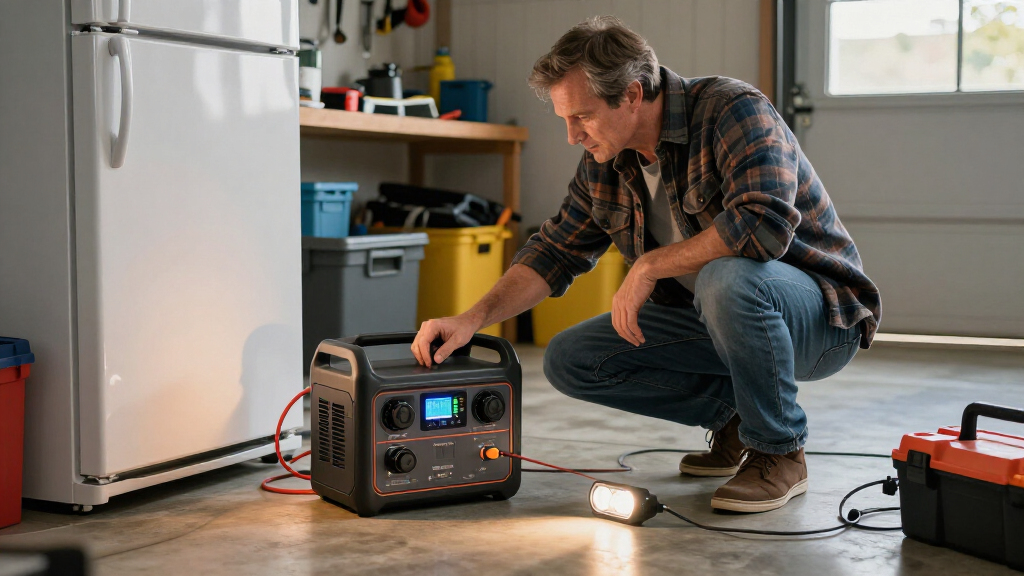
A modern refrigerator draws roughly 100–200W on average because the compressor cycles on and off, which means a 3000Wh station typically delivers 15–24 hours of refrigeration alone — longer for efficient models. Adding a freezer, some LED lights, phone charging, and a Wi-Fi router might reduce that to 12–18 hours. The practical implication: for outages longer than a day, you either need solar panels to recharge during daylight or an expandable platform like the AFERIY or PECRON that can double or triple capacity. Run your own math by checking the yellow EnergyGuide label on your fridge, then multiply average watts by the hours you need and compare against usable capacity, which is typically about 85–90% of the rated figure.
Is it better to buy one 3000Wh station or two smaller ones for the same total capacity?
One larger station almost always wins for home backup because it offers a single high-wattage inverter that can run demanding appliances, simpler management, and better expansion economics. Two smaller stations split your inverter capacity, so neither can individually run a power-hungry appliance, and you double the charging and monitoring chores. However, two smaller units do win in one scenario: portability and redundancy. If one fails or you need power in two places at once — say, an RV and a house — separate stations beat a single heavy unit. For pure emergency preparedness at home, though, the single-station approach with expansion batteries later is the stronger strategy, which is partly why the expandable models rank highly in this comparison.
Can a 3000Wh power station run a space heater or air conditioner?
Most 3000Wh stations can run a resistive space heater — the inverter wattage is sufficient — but the real constraint is runtime, not output. A 1500W heater will drain a 3000Wh battery in under two hours, so heating is one of the least efficient uses of stored power. Small window or portable air conditioners drawing 500–900W fare better, giving three to five hours of cooling, which can bridge the hottest part of a day during an outage. The strategic play is pairing the station with solar input so cooling can continue across multiple days. If climate control during extended outages is your priority, prioritize expandable capacity over base capacity when choosing among these models.
What size solar panel setup do I need to recharge a 3000Wh station in one day?
Assuming five effective sun hours, you need roughly 600–800W of panel capacity to fully refill a 3000Wh battery in a day, factoring in real-world losses of 15–25%. A 400W suitcase panel set will typically take two days, which is fine for casual camping but inadequate during a multi-day outage with daily power draws. Also confirm the station’s maximum solar input rating and voltage window before buying panels — exceeding the voltage limit can damage the charge controller, and mismatched connectors waste time and money. Buying the station brand’s own panels usually costs more but guarantees compatibility; third-party panels work well if you verify voltage, amperage, and connector specs carefully first.
Are 3000Wh power stations safe to keep charged indoors year-round?
LiFePO4-based stations — which describes five of the six units compared here — are thermally stable and generally safe to store indoors at partial charge, making them far friendlier for garage or closet storage than older NMC designs. Best practice is storing at 50–70% charge in a temperature-controlled space and topping up every few months, since the battery management system draws a small standby current over time. Avoid leaving any lithium station in a hot car or freezing garage for months on end, as extreme temperatures accelerate capacity loss even when unused. Check whether the brand offers a storage-mode charge setting, and always keep units away from direct sunlight and moisture. Following these habits preserves the cycle life that justified the purchase in the first place.
Conclusion
Matching the right 3000Wh station to your situation comes down to honestly assessing how you’ll use it. For the best overall pick, the Jackery Explorer 3600 Plus balances capacity, 3600W output, expandability, and a mature ecosystem better than anything else in this lineup. The BLUETTI Elite 300 takes best value — it covers the core 3000Wh use case with solid LiFePO4 cells while skipping the premium features you may never touch. Buyers wanting maximum expandability for whole-home ambitions should look at the AFERIY 3840Wh or PECRON F3000LFP, both of which scale past 10,000Wh for less than buying a second complete station. The ABOK Ark3600 appeals to budget-minded buyers who want maximum raw capacity per dollar and can accept a younger brand ecosystem. Finally, the Jackery HomePower 3000 is the best pick for beginners — it shares the flagship’s inverter output and app experience in a simpler, fixed-capacity package that requires no ecosystem decisions. Whatever you choose, verify your appliance wattage totals and expansion plans before buying, because at this capacity and price, the right match is the one sized to your actual outage, not the biggest number on the box.
Halloween Picks
halloween
As an affiliate, we earn on qualifying purchases.