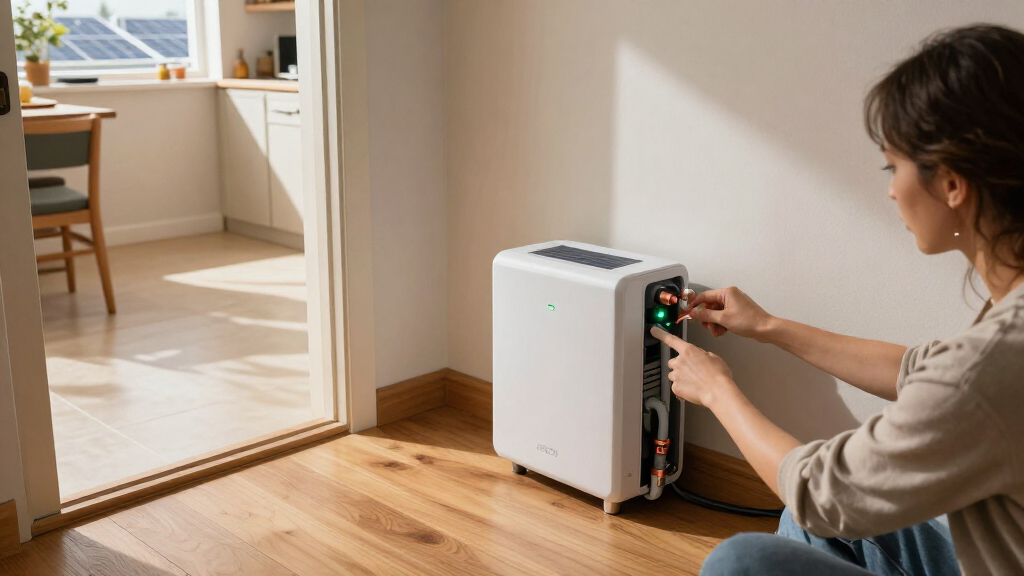

The best home solar battery storage systems balance usable capacity, inverter compatibility, and a setup that fits your home’s power needs. My best overall pick is the Anker SOLIX E10 Power Dock and Extra Battery for its broad expandable capacity, while the 10 kWh hybrid kit stands out as a more integrated option and the Jackery HomePower 3600 Plus suits buyers who want a portable, simpler backup unit. The main tradeoffs are between ready-to-use convenience and build-your-own flexibility, as well as upfront system scale and future expandability. A battery’s capacity alone does not tell you which appliances it can run; inverter output, wiring, and installation requirements matter too. Read on for the full comparison, including who each system suits and where its compromises show.

Get backup power and energy gear delivered free with Prime
- Fast, free delivery on millions of items
- Prime Video, Amazon Music and more included
- Member-only deals all year
Key Takeaways
- The Anker SOLIX E10 leads for expandability: its stated 12–90 kWh range suits buyers planning a larger storage setup, but the broader system is a bigger commitment than a portable power station.
- Complete kits reduce component-matching work: the 10 kWh hybrid kit pairs panels, a 6 kW split-phase inverter, and a battery, while battery-only options require buyers to plan the rest of the system.
- Battery capacity and household power are different measures: the 16.07 kWh AOUSK and 51.2V 314Ah battery listings focus on stored energy, while system kits also specify inverter output or solar-panel capacity.
- Off-grid kits and backup batteries solve different problems: several ECO-WORTHY and SUNGOLDPOWER kits include panels and conversion equipment, whereas rack batteries such as WattCycle’s are components for a larger installation.
- Portability comes with a capacity tradeoff: the Jackery’s 3,584 Wh capacity and 3,600 W output make it easier to situate than a large fixed battery, but it is not in the same storage class as the 10–16 kWh options.
| ECO-WORTHY Solar Panel Kit LiFePO4 Energy Storage System for Home Backup |  | Best for High-Capacity Whole-Home Backup | Battery chemistry: LiFePO4 | Battery configuration: 2 × 48V 314Ah | Stated usable storage: 30kWh+ | VIEW LATEST PRICE | See Our Full Breakdown |
| SUNGOLDPOWER 3000W 24V Off-Grid Solar Kit with Inverter, Panels, and LiFePO4 Batteries |  | Best for Smaller Off-Grid Setups | Inverter power: 3,000W | System voltage: 24V | Inverter output: 120Vac | VIEW LATEST PRICE | See Our Full Breakdown |
| ECO-WORTHY 5 kW Off-Grid Solar System Kit with 2,340 W Panels |  | Best DIY Starter Kit | Solar panel quantity: 12 | Total panel capacity: 2,340W | Inverter: 48V, 5,000W off-grid | VIEW LATEST PRICE | See Our Full Breakdown |
| ECO WORTHY 10000W Output Complete Off-Grid Solar Panel Kit for Home |  | Best for 240V Loads and Expandable Systems | Inverter output: 10,000W continuous; 20,000W peak | Output voltage: 120V / 240V split-phase | Battery: 48V 314Ah LiFePO4 | VIEW LATEST PRICE | See Our Full Breakdown |
| AOUSK 48V 314Ah LiFePO4 Lithium Battery, 16.07 kWh |  | Best Standalone Battery Upgrade | Chemistry: LiFePO4 | Nominal voltage: 51.2V | Capacity: 314Ah | VIEW LATEST PRICE | See Our Full Breakdown |
| 10kWh Hybrid Home Solar Power Storage System Complete Kit with 10 x 550W Panels, 48V 6kW Split-Phase Inverter (MPPT) and 10kWh Lithium Battery |  | Best Complete Hybrid Kit | Battery capacity: 10kWh | Solar panels: 10 × 550W monocrystalline panels | Inverter: 48V, 6kW split-phase pure sine wave with built-in MPPT | VIEW LATEST PRICE | See Our Full Breakdown |
| Dawnice 51.2V 410Ah LiFePO4 Battery and 10kW Hybrid Solar Inverter |  | Best for High-Capacity Hybrid Backup | Battery chemistry: LiFePO4 | Battery voltage and capacity: 51.2V, 410Ah | Energy capacity: 21kWh | VIEW LATEST PRICE | See Our Full Breakdown |
| ECO-WORTHY 10 kW Off-Grid Solar System Kit with 9.36 kWh Daily Output |  | Best Off-Grid System Kit | Solar panels: 12 × 195W N-type bifacial panels | Solar panel system output: 2,340W | Listed daily energy output: 9.36kWh under 4 hours of full sunshine | VIEW LATEST PRICE | See Our Full Breakdown |
| VEVOR 51.2V 400Ah LiFePO4 Server Rack Battery |  | Best Rack-Mount Battery for Monitoring | Battery chemistry: LiFePO4 | Voltage: 51.2V | Capacity: 400Ah (4 × 100Ah) | VIEW LATEST PRICE | See Our Full Breakdown |
| 51.2V 314Ah LiFePO4 Battery – 16.07 kWh |  | Best for Stationary Backup Storage | Manufacturer: Changsha Jubei Energy Co., Ltd | Model: 51.2V314Ah | Chemistry: LiFePO4 | VIEW LATEST PRICE | See Our Full Breakdown |
| Jackery HomePower 3600 Plus Portable Power Station, 3584Wh, 3600W |  | Best Portable Solar-Ready Backup | Battery capacity: 3,584Wh | Output: 3,600W | Parallel output: Up to 7,200W | VIEW LATEST PRICE | See Our Full Breakdown |
| Anker SOLIX E10 Power Dock and Extra Battery, 12–90 kWh |  | Best for Whole-Home Backup | Included battery capacity: 12kWh | Expandable capacity: Up to 90kWh | Continuous output: 7.6kW per unit; scalable to 22.8kW | VIEW LATEST PRICE | See Our Full Breakdown |
| WattCycle 51.2V 100Ah LiFePO4 3U Rack-Mount Battery with 100A BMS and Bluetooth |  | Best Rack-Mount Battery for Custom Systems | Nominal voltage: 51.2V | Capacity: 100Ah | Energy: 5.12kWh | VIEW LATEST PRICE | See Our Full Breakdown |
| ECO-WORTHY Powermega 48V 314Ah LiFePO4 Battery, 2-Pack |  | Best High-Capacity Battery Pair | Pack size: 2 batteries | Energy capacity: 16.07kWh per battery | Voltage: 51.2V | VIEW LATEST PRICE | See Our Full Breakdown |
| ECO-WORTHY 1200W 24V 4.68kWh Lithium Battery Solar System Off-Grid |  | Best Complete Kit for Small Off-Grid Loads | Solar panels: 6 × 195W bifacial panels | Stated daily solar output: Up to 4.68kWh under 4 hours of sunlight | Battery storage: 2 × 12.8V 280Ah LiFePO4 batteries; 7.168kWh total | VIEW LATEST PRICE | See Our Full Breakdown |
More Details on Our Top Picks
ECO-WORTHY Solar Panel Kit LiFePO4 Energy Storage System for Home Backup
For buyers prioritizing stored energy over a compact footprint, this kit pairs two 48V 314Ah LiFePO4 batteries with a 10kW hybrid inverter and six 590W panels. Its stated 30kWh-plus usable storage gives it a much larger reserve than the ECO-WORTHY 5 kW Off-Grid Solar System Kit, which includes a 100Ah battery. Split-phase 120V/240V output also suits homes with both voltage needs, while Wi-Fi monitoring and battery communication ports help with system oversight and inverter integration. The tradeoff is the scale: pallet freight, heavy batteries, and a large panel array make this a substantial installation, not a simple backup purchase. The listing also says one of two inverter exterior versions ships at random, although their stated performance is the same. I’d shortlist it for high-demand backup, with professional planning for installation and compatibility.
Pros:- Two 48V 314Ah LiFePO4 batteries provide stated usable storage above 30kWh.
- 10kW hybrid inverter supports 120V and 240V split-phase output.
- Six 590W panels provide 3,540W of listed solar capacity.
- Battery communication ports and Wi-Fi/Bluetooth monitoring support system visibility and integration.
Cons:- Large, heavy components and pallet freight make delivery and installation more involved.
- The 3,540W panel array may not replenish the large battery bank quickly during limited-sun periods.
- The listing provides limited detail on warranty coverage and installation requirements.
Best for: Homeowners seeking a large LiFePO4 reserve, split-phase output, and an integrated panel-and-inverter package for backup or off-grid use.
Not ideal for: Apartment dwellers, small backup loads, or DIY buyers without room and experience for pallet-delivered equipment and a large solar installation.
- Battery chemistry:LiFePO4
- Battery configuration:2 × 48V 314Ah
- Stated usable storage:30kWh+
- Inverter:10kW hybrid
- Solar panels:6 × 590W N-type
- Total panel capacity:3,540W
- Output:120V / 240V split-phase
- Battery communication:RS485, CAN, RS232, Bluetooth, and Wi-Fi
Our verdict“Choose this kit when you want a large battery reserve and split-phase capability in one package, and have the space and installer support to handle it.”
SUNGOLDPOWER 3000W 24V Off-Grid Solar Kit with Inverter, Panels, and LiFePO4 Batteries
This kit takes a more modest, 120V-only approach than the larger split-phase systems in this roundup. It combines a 3,000W inverter charger, 800W of panels, and two 24V 100Ah LiFePO4 batteries, with an 80A MPPT controller and 40A AC charging built into the package. Its stated 10ms transfer time is useful when a grid or generator connection drops, though the 24V architecture and 3kW output suit cabins, RVs, and selected household loads better than whole-home backup. Compared with the ECO-WORTHY 5 kW kit, it has less inverter capacity, but its AC charger and transfer behavior make it a practical fit for mixed charging sources. The 120–400Vdc MPPT input range calls for careful panel-string design, and the three-year warranty is shorter than the panels’ stated service life.
Pros:- Inverter, MPPT solar charging, AC battery charging, panels, and batteries are included.
- Stated 10ms transfer time supports quick backup response when the grid or generator disconnects.
- LiFePO4 batteries are paired with monocrystalline panels.
- Compact inverter dimensions suit installations where equipment space is limited.
Cons:- 3,000W output and 120V-only service limit the household loads it can support.
- The MPPT requires 120–400Vdc input, so panel configuration needs careful planning.
- The listed three-year warranty is shorter than the panels’ stated service life.
Best for: Cabin, RV, or small-home owners who need a bundled 120V off-grid system with solar and AC charging options.
Not ideal for: Households seeking split-phase 240V service, high-power whole-home backup, or a system without high-voltage panel-string requirements.
- Inverter power:3,000W
- System voltage:24V
- Inverter output:120Vac
- Solar charge controller:80A MPPT
- MPPT voltage range:120–400Vdc
- Solar panels:4 × 200W monocrystalline
- Batteries:2 × 24V 100Ah LiFePO4
- UPS transfer time:10ms
- Warranty:3 years
Our verdict“Pick this kit for a modest 120V cabin or mobile setup with multiple charging sources, not for split-phase whole-home backup.”
ECO-WORTHY 5 kW Off-Grid Solar System Kit with 2,340 W Panels
The appeal here is a complete 48V starter package: panels, inverter, battery, cables, and Z brackets arrive as one system. Twelve 195W panels total 2,340W, while the 5,000W inverter leaves room for brief higher-power loads than the SUNGOLDPOWER 3000W kit can handle. The included 51.2V 100Ah LiFePO4 battery, however, is a relatively small reserve beside the 16.07kWh AOUSK battery listed here; buyers should plan around limited stored energy rather than assume the inverter rating means long backup runtime. The panel array is also smaller than the inverter’s maximum output rating, so the system’s solar input and load expectations need to match. Its included mounting hardware and DIY positioning make it more approachable as a starting system, but 48V component compatibility and installation safety still require attention.
Pros:- Kit includes 12 panels, inverter, LiFePO4 battery, cables, and Z brackets.
- 5,000W inverter rating offers more output headroom than the SUNGOLDPOWER 3,000W kit.
- 48V architecture and included components provide a clear starting point for an off-grid build.
- Panels are listed for roof, ground, or shed mounting.
Cons:- The included 51.2V 100Ah battery offers much less storage than the 16.07kWh AOUSK battery.
- The 2,340W panel array is below the inverter’s 5,000W maximum power rating.
- DIY installation still requires safe wiring and compatibility checks across 48V components.
Best for: DIY-minded cabin, shed, or small-home owners who want a bundled 48V system and can work within a modest battery reserve.
Not ideal for: Buyers needing long-duration whole-home backup or substantial stored energy without adding compatible battery capacity.
- Solar panel quantity:12
- Total panel capacity:2,340W
- Inverter:48V, 5,000W off-grid
- Battery:51.2V 100Ah LiFePO4
- Output voltage:120V
- Panel efficiency:25%
- Connectors:MC4
- Included components:Inverter, battery, 12 panels, cables, and Z brackets
Our verdict“Choose this as a bundled DIY entry point when 5kW inverter capability matters more than a large battery reserve.”
ECO WORTHY 10000W Output Complete Off-Grid Solar Panel Kit for Home
This kit pairs a 10kW split-phase inverter with a single 16.076kWh battery, making it more capable on output than the 5kW ECO-WORTHY kit but less generously stocked than the two-battery ECO-WORTHY 30kWh-plus package. The inverter’s stated 10,000W continuous and 20,000W peak output can suit homes with 120V and 240V loads, while its dual MPPT controllers and battery-free operation offer flexibility as a system is configured. The battery has a 200A BMS, display, wireless monitoring, and stated parallel expansion up to 15 units. That scale-up path is useful, but it does not change the modest 2,950W panel array: the listing’s daily generation figure depends on optimal conditions, and recharging a large battery may take time. Freight delivery and the recommendation for professional installation make this a demanding project for inexperienced installers.
Pros:- 10kW inverter supports 120V/240V split-phase output and lists 20,000W peak output.
- 16.076kWh battery includes a 200A BMS, dual breakers, and wireless monitoring.
- Battery supports stated parallel expansion up to 15 units.
- Dual MPPT controllers and battery-free operation provide configuration flexibility.
Cons:- The included 2,950W panel array may recharge the 16.076kWh battery slowly when sunlight or production is limited.
- Large equipment ships by freight and the listing recommends professional installation.
- Expansion requires added batteries and compatible system planning rather than providing that capacity in the base kit.
Best for: Homeowners who need 120V/240V split-phase output now and want a system with a stated path to add battery capacity later.
Not ideal for: DIY beginners, buyers who need a large solar array for rapid recharge, or homes that cannot accommodate freight-delivered equipment.
- Inverter output:10,000W continuous; 20,000W peak
- Output voltage:120V / 240V split-phase
- Battery:48V 314Ah LiFePO4
- Battery energy:16.076kWh
- Battery management:200A BMS with dual breakers
- Solar panels:5 × 590W bifacial
- Total panel capacity:2,950W
- Battery parallel capacity:Up to 15 units
- Monitoring:Display, Bluetooth, Wi-Fi, and PC connectivity
Our verdict“Choose this for 240V-capable home backup with room to expand storage, provided you plan for professional installation and modest included solar capacity.”
AOUSK 48V 314Ah LiFePO4 Lithium Battery, 16.07 kWh
Unlike the ECO-WORTHY kits in this group, the AOUSK is a battery-only choice: it adds 16.07kWh of storage but does not include panels or an inverter. That makes it a better fit for owners who already have compatible 48V equipment and want to expand storage without replacing their existing setup. Its 200A BMS, dual breakers, and RS485/CAN communication support protection and inverter integration, while the display and Bluetooth/Wi-Fi app provide several ways to check battery status. The stated capacity is far above the 51.2V 100Ah battery supplied with the ECO-WORTHY 5kW kit, but this unit weighs 291 pounds and still needs a suitable charging and inverter system. Up to 15 units can be connected in parallel, though each addition brings more equipment and compatibility work.
Pros:- 16.07kWh capacity offers a substantial storage addition compared with a 100Ah battery.
- 200A BMS and dual breakers provide integrated battery protection.
- Display, Bluetooth, Wi-Fi, RS232, RS485, and CAN support monitoring and system integration.
- Supports parallel connection of up to 15 units.
Cons:- Battery-only purchase requires a compatible inverter, panels, and charging system.
- At 291 pounds, positioning and installation need careful handling.
- Adding parallel units increases system cost and demands compatibility planning.
Best for: Owners of compatible 48V solar systems who need a substantial battery addition and value multiple monitoring and communication options.
Not ideal for: First-time buyers seeking a complete solar setup, or anyone unable to safely position a 291-pound battery.
- Chemistry:LiFePO4
- Nominal voltage:51.2V
- Capacity:314Ah
- Energy storage:16.07kWh
- BMS:200A
- Cycle life:Up to 6,000 cycles at 80% state of health
- Communication:Bluetooth, Wi-Fi, RS232, RS485, and CAN
- Parallel connection:Up to 15 units
- Weight:291 lb
Our verdict“Choose this battery to expand a compatible 48V system with substantial storage, but skip it if you need panels and an inverter in the same package.”
10kWh Hybrid Home Solar Power Storage System Complete Kit with 10 x 550W Panels, 48V 6kW Split-Phase Inverter (MPPT) and 10kWh Lithium Battery
This kit stands out for buyers who want the main parts of a home solar setup in one package: ten 550W panels, a 10kWh lithium battery, and a 6kW split-phase inverter with MPPT. Compared with the Dawnice system, it pairs a smaller battery and inverter with included panels, making it a more self-contained starting point rather than a higher-capacity storage upgrade. Its stated ability to run off-grid or connect to the grid gives owners flexibility, while the inverter’s up-to-98% peak conversion efficiency is intended to limit conversion losses. The tradeoff is that the supplied 10kWh battery may not cover long outages or heavy household loads for as long as Dawnice’s 21kWh battery. At 55kg, the system also calls for careful installation planning and substantial space.
Pros:- Bundles ten 550W panels, a 10kWh lithium battery, and an inverter with built-in MPPT.
- Supports off-grid operation or grid connection for flexible system use.
- Split-phase inverter provides a listed 6kW output capacity.
- Up to 98% peak conversion efficiency is specified for the inverter.
Cons:- The 10kWh battery offers less listed storage than Dawnice’s 21kWh system.
- The 55kg weight and large panel footprint can complicate transport and installation.
- The supplied information does not specify battery chemistry or detailed backup runtime.
Best for: Homeowners starting a hybrid solar installation who want panels, battery, and inverter bundled together for backup and everyday solar use.
Not ideal for: Households with long outages or high overnight consumption that need more than 10kWh of listed storage, or buyers without space and help to handle a 55kg system.
- Battery capacity:10kWh
- Solar panels:10 × 550W monocrystalline panels
- Inverter:48V, 6kW split-phase pure sine wave with built-in MPPT
- Operating modes:Off-grid or grid-tied
- Peak conversion efficiency:Up to 98%
- Maximum voltage:48V DC
- Connector:MC4
- Weight:55kg
- Warranty:10-year limited
Our verdict“Choose this bundled hybrid kit if you want panels, inverter, and 10kWh of storage together, but look to Dawnice for greater stated battery capacity.”
Dawnice 51.2V 410Ah LiFePO4 Battery and 10kW Hybrid Solar Inverter
The Dawnice system earns its place for households that need substantial storage and a hybrid inverter in one package: its 21kWh LiFePO4 battery is more than twice the stated capacity of the 10kWh Hybrid Home Solar Power Storage System. The 10kW inverter supplies 120V/240V pure sine wave output, and support for solar, grid, and generator inputs gives owners more ways to charge than a panel-only setup. Its built-in 200A BMS adds listed battery protections, while parallel operation of up to three units leaves room to expand the inverter setup. The tradeoffs are meaningful: panels are not listed among the included components, and remote inverter monitoring requires an external Wi-Fi module. Its 200A maximum discharge current also sets a limit on battery-side output despite the high storage capacity.
Pros:- Provides 21kWh of LiFePO4 storage with a built-in 200A BMS.
- 10kW pure sine wave inverter supplies 120V/240V AC output.
- Accepts solar, grid, generator, and battery inputs.
- Supports parallel connection of up to three inverter units.
Cons:- Solar panels are not listed as included, so a separate array is needed.
- Remote inverter monitoring and control require an external Wi-Fi module.
- Maximum battery discharge current is limited to 200A.
Best for: Homeowners planning a hybrid backup system with substantial battery storage, generator charging, and 120V/240V loads.
Not ideal for: Buyers seeking a complete panels-to-battery kit or plug-and-play remote inverter monitoring without an additional Wi-Fi module.
- Battery chemistry:LiFePO4
- Battery voltage and capacity:51.2V, 410Ah
- Energy capacity:21kWh
- Inverter output:10kW pure sine wave
- AC output voltage:120V/240V
- Battery management system:Built-in 200A BMS
- Maximum discharge current:200A
- Input sources:PV, grid, generator, and battery
- Parallel operation:Up to 3 units
Our verdict“Choose Dawnice for high-capacity hybrid storage and multiple charging sources, but not if you need panels included or remote monitoring ready out of the box.”
ECO-WORTHY 10 kW Off-Grid Solar System Kit with 9.36 kWh Daily Output
This ECO-WORTHY kit is the clearest fit here for buyers building an off-grid system around a 10,000W inverter. It includes twelve N-type bifacial panels, two 48V (51.2V) 100Ah lithium batteries, mounting brackets, and accessories, while charging and output modes let owners set how solar, mains, and battery power are used. The listed daily output of 9.36kWh assumes four hours of full sunshine; that figure is a planning reference, not a guaranteed daily yield. Compared with the 10kWh Hybrid Home Solar Power Storage System, ECO-WORTHY specifies a larger inverter but only 2,340W of panel capacity, so the inverter’s output rating should not be mistaken for solar generation or battery energy. Professional installation is recommended, and limited sun can sharply affect production.
Pros:- Includes panels, two lithium batteries, inverter, mounting brackets, and accessories.
- 10,000W inverter provides 120V/240V AC output and supports up to six parallel inverters.
- Configurable charging and output modes allow different power priorities.
- Panels are listed with IP68 protection and corrosion-resistant construction.
Cons:- The 9.36kWh daily output figure depends on four hours of full sunshine.
- The 2,340W panel system is much smaller than the inverter’s 10,000W maximum output rating.
- Professional installation is recommended.
Best for: Rural homeowners assembling an off-grid system who want a bundled inverter, batteries, panels, and configurable charging modes.
Not ideal for: Buyers who need a grid-tied system, expect consistent daily production regardless of weather, or want a large solar array matched to the inverter’s 10kW rating.
- Solar panels:12 × 195W N-type bifacial panels
- Solar panel system output:2,340W
- Listed daily energy output:9.36kWh under 4 hours of full sunshine
- Panel conversion efficiency:25%
- Inverter maximum continuous output:10,000W
- Inverter AC output:120V/240V
- Batteries:2 × 48V (51.2V) 100Ah lithium batteries
- Parallel inverters:Up to 6
- Monitoring:Bluetooth and Wi-Fi app; CAN/RS485
Our verdict“Pick this kit for a configurable off-grid build with bundled components, but size expectations around its 2,340W array and sunlight-dependent production.”
VEVOR 51.2V 400Ah LiFePO4 Server Rack Battery
VEVOR is a battery-only choice for buyers who already have a compatible inverter and want 400Ah of LiFePO4 storage with multiple monitoring and communication options. Its LCD and app monitoring, alongside RS485 and CAN, offer more ways to check battery status and connect with a system than the product information provides for the 16.07kWh Changsha Jubei battery. The listed capacity works out to about 20.48kWh at 51.2V, but the 100A maximum charge and discharge current can limit how quickly it supplies or accepts power. That makes compatibility and load planning important, especially for homes with high simultaneous demand. At 103.6lb, this rack-oriented battery is no lightweight, and it does not include panels or an inverter.
Pros:- 400Ah at 51.2V provides about 20.48kWh of nominal energy.
- LiFePO4 chemistry and a 100A BMS are specified.
- LCD, mobile app, Bluetooth, and Wi-Fi support battery monitoring.
- RS485 and CAN communication support system integration.
Cons:- The 100A maximum charge and discharge current may constrain high-load use.
- Weighs 103.6lb, making handling and rack installation more demanding.
- Battery only; panels and inverter must be sourced separately.
Best for: Solar owners with a compatible inverter or rack setup who want a large LiFePO4 battery with LCD, app, and CAN/RS485 monitoring.
Not ideal for: First-time buyers seeking a complete solar-and-storage package, or households that need battery discharge above 100A.
- Battery chemistry:LiFePO4
- Voltage:51.2V
- Capacity:400Ah (4 × 100Ah)
- Nominal energy:About 20.48kWh, calculated from voltage and capacity
- Maximum charge/discharge current:100A
- Cycle life:Over 6,000 cycles
- Monitoring:LCD, mobile app, Bluetooth, and Wi-Fi
- Communication:RS485 and CAN
- Weight:103.6lb
Our verdict“Choose VEVOR if you already have compatible solar equipment and want rack-style storage with broad monitoring, but check that 100A meets your power needs.”
51.2V 314Ah LiFePO4 Battery – 16.07 kWh
This Changsha Jubei battery is aimed at buyers who need a single 16.07kWh LiFePO4 storage unit for a stationary home backup setup. Its capacity is close to the 10kWh Hybrid Home Solar Power Storage System’s battery, but the Jubei product is a battery rather than a full kit: panels and an inverter are not listed as included. That distinction makes it more appropriate for expanding an existing compatible system than for starting from scratch. The stated five-year warranty, with an optional extension to 12 years, gives buyers a defined support term, though the extension’s conditions are not supplied. At 291lb, it is far heavier than the VEVOR rack battery, and the listed dimensions are unusually large, so buyers should verify the product’s physical measurements and plan a fixed installation location before ordering.
Pros:- Provides 16.07kWh of stated energy capacity for home backup storage.
- Uses LiFePO4 battery chemistry.
- Includes a stated five-year warranty with an optional extension to 12 years.
- Designed for stationary home power storage.
Cons:- At 291lb, moving and installing it can require substantial help and sturdy support.
- Panels and inverter are not listed as included.
- The supplied dimensions are unusually large and should be confirmed before planning placement.
Best for: Homeowners adding a sizable battery to an existing compatible solar or backup system who have a permanent, structurally suitable installation spot.
Not ideal for: Buyers who need a complete solar kit, may need to move the battery, or cannot verify that its stated dimensions fit the planned location.
- Manufacturer:Changsha Jubei Energy Co., Ltd
- Model:51.2V314Ah
- Chemistry:LiFePO4
- Voltage:51.2V
- Capacity:314Ah
- Energy:16.07kWh
- Dimensions as supplied:510 × 276 × 852 inches
- Weight:291lb
- Warranty:5 years; optional extension to 12 years
Our verdict“Choose this battery for stationary 16.07kWh storage if your system is compatible and the installation area can support its weight and footprint.”
Jackery HomePower 3600 Plus Portable Power Station, 3584Wh, 3600W
The Jackery HomePower 3600 Plus is the most mobile option in this group: its 3,584Wh battery, 3,600W output and wheeled, telescoping-handle design suit backup that may need to move between rooms or outdoor work areas. It also accepts solar, AC, gas-generator and hybrid charging, so it can recharge through more than one source when grid power is unavailable. Compared with the Anker SOLIX E10, it is easier to reposition and does not depend on a whole-home Power Dock, but its storage and system integration are aimed at portable backup rather than a large, permanently installed home system. The 77.2-pound weight still makes stairs and lifting awkward, and 240V output requires units in parallel. Choose it for flexible, portable power; skip it if you want a fixed whole-house battery installation.
Pros:- 3,584Wh capacity and 3,600W output provide substantial portable backup.
- Solar, AC, gas-generator and hybrid charging offer several ways to recharge.
- Wheels and a telescoping handle make relocation easier than carrying a fixed rack battery.
- LFP chemistry is rated for 6,000 cycles.
Cons:- At 77.2 pounds, it remains difficult to lift or carry up stairs.
- 240V operation requires multiple units in parallel.
- Its portable format is less suited to a permanently integrated whole-home setup than the Anker SOLIX E10.
Best for: Homeowners who want a wheeled battery for essential circuits, occasional outages, and portable solar or generator charging.
Not ideal for: Buyers seeking a turnkey whole-home system with built-in panel integration, or anyone who needs 240V output from a single unit.
- Battery capacity:3,584Wh
- Output:3,600W
- Parallel output:Up to 7,200W
- Voltage:120V; 240V in parallel
- Expandable capacity:Up to 21kWh per unit or 43kWh with multiple units
- Battery chemistry and cycle life:LFP; rated for 6,000 cycles
- Charging options:Hybrid AC+DC, AC, solar and gas generator
- Weight:77.2 pounds
Our verdict“Choose the Jackery for movable, multi-source backup; pick a dedicated home system if whole-panel integration is your priority.”
Anker SOLIX E10 Power Dock and Extra Battery, 12–90 kWh
For buyers prioritizing panel-level backup over portability, the Anker SOLIX E10 is the strongest fit here. Its included Power Dock covers a 200A panel, while the system starts at 12kWh and can expand to 90kWh; that scale gives it a clearer path to backing up more circuits for longer than the Jackery HomePower 3600 Plus. A 20ms-or-less switchover supports a more seamless handoff when grid power drops, and up to 9kW of solar input per unit can serve homes with substantial solar production. The tradeoff is installation complexity: the power module and extra battery ship separately, and professional installation may be needed. It is also a fixed wall- or floor-mounted system, not a portable station. I’d choose it for a planned home installation, not for grab-and-go backup.
Pros:- 12kWh starting capacity can expand to 90kWh for longer backup needs.
- 200A Power Dock is designed to cover a whole-home electrical panel.
- Switchover of 20ms or less supports fast automatic backup.
- Weather-rated design supports outdoor installation, with wall or floor mounting.
Cons:- The power module and extra battery ship separately.
- Professional installation may be needed, adding planning and setup work.
- At 60.6 pounds, the power module is not a portable backup solution.
Best for: Homeowners planning professionally integrated backup for a 200A panel, with room to expand storage as household needs grow.
Not ideal for: Renters, buyers who need a portable power station, or households that want a simple plug-in setup without installation work.
- Included battery capacity:12kWh
- Expandable capacity:Up to 90kWh
- Continuous output:7.6kW per unit; scalable to 22.8kW
- Turbo output:10kW per unit; scalable to 30kW with three units
- Power Dock coverage:200A
- Solar input:Up to 9kW per unit
- Switchover time:20ms or less
- Battery chemistry:LFP
- Mounting:Wall or floor
Our verdict“Choose the E10 if you want expandable, panel-integrated home backup and can accommodate a fixed installation.”
WattCycle 51.2V 100Ah LiFePO4 3U Rack-Mount Battery with 100A BMS and Bluetooth
The WattCycle 3U rack-mount battery makes the most sense for a buyer assembling a compatible 48V-class solar or backup system rather than seeking an all-in-one appliance. Its 5.12kWh capacity fits a standard 19-inch server rack, and CAN, RS485 and RS232 connections give system builders several communication options. Bluetooth and an LCD also make status checks more accessible than on a bare battery. Compared with the much larger ECO-WORTHY Powermega 48V 314Ah, WattCycle is easier to scale incrementally and requires less space per battery, though it provides far less energy in each unit. Its 100A BMS and 91.9-pound weight call for careful system matching and physical handling; a rack or suitable mounting area is required. Skip it if you want an inverter, panels and household integration in one package.
Pros:- Standard 3U, 19-inch rack format suits modular installations.
- Bluetooth and an LCD provide two ways to check battery status.
- CAN, RS485 and RS232 support integration with compatible equipment.
- Supports parallel expansion to as many as 16 batteries.
Cons:- The 91.9-pound battery is difficult to position and install alone.
- A compatible rack or suitable mounting space is required.
- The 100A BMS and 5.12kWh capacity may not suit systems with higher current or storage demands.
Best for: Off-grid and backup-system builders with a compatible 51.2V inverter, a 19-inch rack, and a preference for modular expansion.
Not ideal for: Buyers seeking a complete solar kit or a large single-battery reserve without sourcing compatible equipment separately.
- Nominal voltage:51.2V
- Capacity:100Ah
- Energy:5.12kWh
- Maximum output:5,120W
- BMS current:100A
- Battery chemistry:LiFePO4
- Rack format:3U, 19-inch
- Cycle life:15,000+ cycles at 60% depth of discharge
- Parallel capacity:Up to 16 batteries
Our verdict“Choose WattCycle for a rack-based system that needs modular 5.12kWh batteries, not for a ready-made home solar package.”
ECO-WORTHY Powermega 48V 314Ah LiFePO4 Battery, 2-Pack
For a home system that needs substantial battery reserve without relying on multiple small modules, this ECO-WORTHY Powermega two-pack stands out for its 16.07kWh per battery and UL 1973 certification. Active cell balancing, aerosol fire suppression and a 200A smart BMS add protection and battery-management features that the smaller WattCycle rack battery does not match in a single unit. The touchscreen, Wi-Fi and Bluetooth also provide more monitoring options than a basic battery interface. That capacity comes with a serious installation burden: each battery weighs about 280 pounds, and the pair arrives by truck freight on a pallet. Wheels may help once the batteries are positioned, but they do not remove the need for a suitable route and mounting location. I’d favor it for a planned, high-capacity installation, not a compact or DIY space with limited handling equipment.
Pros:- Each battery provides 16.07kWh of storage, reducing the number of units needed for a large bank.
- UL 1973 certification and a 10-year warranty support a more installation-focused purchase.
- 200A active-balancing BMS and built-in aerosol fire suppression add protection features.
- Touchscreen, Wi-Fi and Bluetooth provide several monitoring methods.
Cons:- Each battery weighs about 280 pounds and arrives by truck freight on a pallet.
- Large dimensions can restrict placement and complicate access during installation.
- A compatible inverter and other system components are still required.
Best for: Homeowners and installers building a large 48V storage bank who have a prepared location and equipment for handling heavy batteries.
Not ideal for: Buyers with narrow access, limited floor space, no freight-handling plan, or a preference for smaller modular batteries such as WattCycle’s 5.12kWh unit.
- Pack size:2 batteries
- Energy capacity:16.07kWh per battery
- Voltage:51.2V
- Battery chemistry:LiFePO4
- BMS:200A smart BMS with active cell balancing
- Certification:UL 1973
- Fire protection:Built-in aerosol fire suppression
- Monitoring:7-inch HD touchscreen, Wi-Fi and Bluetooth
- Parallel expansion:Up to 15 units
Our verdict“Choose the Powermega pair for high-capacity storage when your site and installation plan can accommodate very heavy batteries.”
ECO-WORTHY 1200W 24V 4.68kWh Lithium Battery Solar System Off-Grid
Unlike the Jackery HomePower 3600 Plus, which is a portable power station, this ECO-WORTHY kit combines panels, batteries, an MPPT controller and an inverter for a small off-grid installation. The package includes six 195W bifacial panels and two LiFePO4 batteries with 7.168kWh total storage; its stated daily solar output is up to 4.68kWh under the specified sunlight conditions. That makes it a more integrated starting point for a shed, cabin or modest off-grid load than buying a battery alone. The key limitation is power delivery: despite the inverter’s 3,000W rating, the supplied data lists maximum power of 1,170W. Installation also calls for wiring and controller setup knowledge. I’d reserve it for modest loads and hands-on solar projects, not whole-home backup or high-demand appliances.
Pros:- Combines panels, LiFePO4 batteries, an MPPT controller and an inverter in one kit.
- Six bifacial 195W panels include anti-shade technology.
- Two 12.8V 280Ah batteries provide 7.168kWh of stated total storage.
- The 60A MPPT controller is listed with up to 99% tracking efficiency.
Cons:- Listed maximum power is 1,170W, below what many buyers may expect from a 3,000W inverter.
- Wiring and controller setup require technical knowledge.
- Its 24V system and stated output make it a poor fit for whole-home backup.
Best for: DIY off-grid users powering a cabin, shed or modest daily loads who want panels, storage and power electronics in one kit.
Not ideal for: Households seeking whole-home backup or buyers who need sustained high-wattage output for large appliances.
- Solar panels:6 × 195W bifacial panels
- Stated daily solar output:Up to 4.68kWh under 4 hours of sunlight
- Battery storage:2 × 12.8V 280Ah LiFePO4 batteries; 7.168kWh total
- System voltage:24V
- Charge controller:60A MPPT; up to 99% tracking efficiency
- Listed maximum power:1,170W
- Panel connection:MC4
Our verdict“Choose this kit for modest off-grid loads and a hands-on installation, but look elsewhere for high-output household backup.”
How We Picked
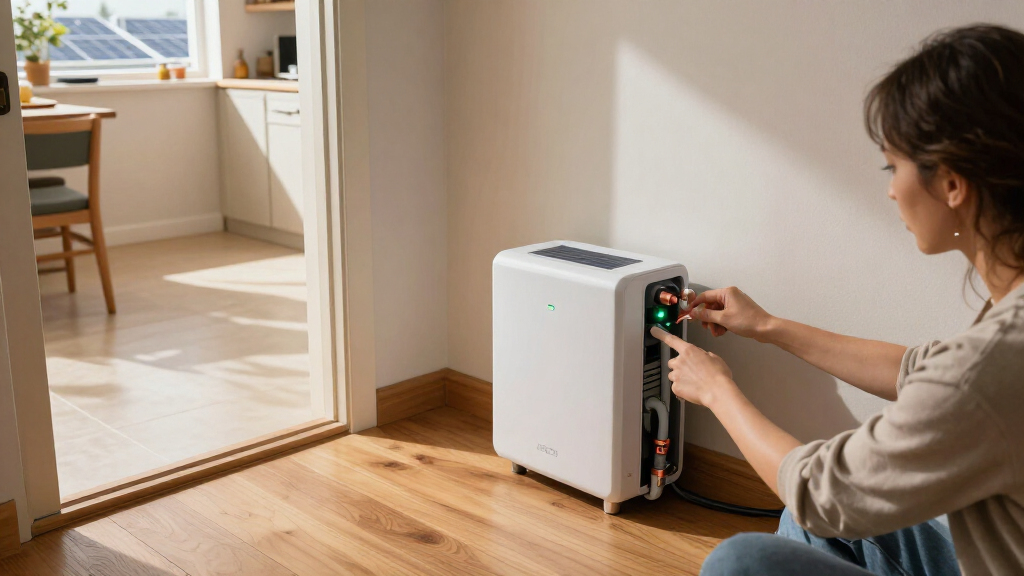
I compared these 15 listings by how directly they address household solar storage, not by treating every battery or kit as interchangeable. The main factors were stated storage capacity, inverter output where provided, included components, system expandability, and the likely work a buyer must do to complete an installation. I also separated complete solar kits from battery-only products and portable power stations, since they serve different roles and require different levels of planning.
The order reflects how useful and clearly specified each option appears for its stated role, with stronger placement for systems that combine meaningful storage with practical system-level details or a clear path to expansion. A high-capacity battery does not automatically rank above a complete kit: buyers still need a compatible inverter, panels or another charging source, and a safe installation plan. Listings that provide less system context may still suit experienced installers, but they are harder to recommend as a straightforward home solution. I treat stated specifications as listing claims and do not assume that a product includes components or capabilities not named in its description.
Factors to Consider When Choosing Best Home Solar Battery Storage Systems
Before choosing a battery, decide what job it needs to do: keep essential circuits running, shift solar energy into evening use, or support a home that operates off-grid. Those goals call for different system sizes and hardware. The following checks help prevent a common mismatch: buying a large battery that cannot deliver enough power, or choosing an impressive inverter with too little stored energy.
Separate Stored Energy From Power Output
Battery capacity, usually expressed in kilowatt-hours, describes how much energy is stored; inverter output, expressed in watts or kilowatts, describes how much power can be supplied at once. A large battery may run a modest load for a long time but still struggle with several high-demand appliances running together if the inverter is undersized. List the appliances you expect to run at the same time, not just the total energy they use over a day. Pay attention to startup surges from equipment such as pumps or compressors, since those can exceed normal running demand. Match both figures to your intended loads before comparing battery capacities. This avoids paying for storage that cannot serve the circuits you care about.
Decide Between a Complete Kit and a Battery Component
A complete kit can simplify sourcing because it may bundle panels, an inverter, batteries, and related equipment, but the included pieces still need to fit your home and local electrical setup. A battery-only product offers more freedom to choose an inverter and solar array, though that flexibility shifts compatibility research and system design to you or your installer. Check whether the listed kit includes mounting hardware, wiring, protection devices, and monitoring, rather than assuming the word “complete” covers every installation need. If you already own solar equipment, a standalone battery may make more sense than buying duplicate panels or an inverter. If you are starting from scratch, compare the full bill of materials rather than a single headline specification.
Size for Your Backup Goal, Not Your Whole House by Default
Start by identifying essential circuits such as refrigeration, lighting, communications, or a selected heating and cooling load. Whole-home backup can require much greater inverter capacity and careful management of simultaneous loads than essential-circuit backup. Estimate how long those selected loads need to run and account for cloudy weather, seasonal solar variation, and periods when panels cannot recharge the battery. Oversizing for a rare outage can add complexity without improving everyday value, while undersizing may leave the most important circuits unsupported. Ask an installer whether the system can isolate backup circuits and how it behaves during an outage. A clear backup plan gives you a more useful target than a general desire for “more capacity.”
Check Voltage, Inverter Compatibility, and Expansion Limits
Battery voltage and communications protocols must match the inverter and system design; a similar voltage label alone does not prove compatibility. Before buying a rack battery or multi-battery pack, confirm approved inverter models, wiring requirements, battery management system communication, and permitted parallel configurations. Expansion claims also need scrutiny: ask whether added modules can be mixed with the original battery and whether capacity or output limits change as the system grows. A modular system can spread purchases over time, but only if future components remain compatible and available. Have an electrician or qualified solar installer review the proposed combination before ordering. This is especially useful when comparing standalone batteries with bundled hybrid kits.
Account for Installation, Location, and Maintenance
Home storage is a fixed electrical system unless the product is specifically designed as a portable power station, so placement and installation affect the experience as much as capacity. Check the manufacturer’s temperature and humidity limits, indoor or outdoor placement guidance, clearances, and protection against water or dust. Confirm the battery’s weight and dimensions can be accommodated where you plan to install it, especially for large rack or high-capacity models. Ask about warranty coverage, service access, firmware or monitoring requirements, and what happens if a battery module needs replacement. Local permitting, utility rules, and electrical work can also shape which configurations are practical. Include these factors in your choice rather than treating installation as an afterthought.
Compare Total System Value and Future Flexibility
A battery’s stated capacity is only one part of system value; usable energy, inverter capability, included hardware, installation needs, and charging options all affect what the setup can do. A packaged kit may cost less to assemble in time and coordination, while a component-based system can be a better fit when you already own compatible equipment. Pay more for expansion or higher output only when you have a clear plan to use those capabilities. Check whether a product can support your intended solar input and whether charging from the grid or a generator is available if that matters to your backup plan. Compare complete system configurations on the same basis, including installation and any components not included in the listing. That makes a modest portable unit, a mid-sized kit, and a large fixed battery easier to judge fairly.
Frequently Asked Questions
Can I connect a battery-only product to my existing rooftop solar panels?
Possibly, but the battery must work with your inverter and the way your solar system is wired. Some existing inverters support battery storage, while others need additional equipment or replacement before they can charge a battery. Check the battery’s voltage, communication requirements, approved inverter list, and charging limits against your current system. Also confirm whether the system can provide backup during a grid outage; a grid-tied solar system may shut down during an outage unless it has suitable islanding equipment. Have a qualified installer check the full system diagram before purchasing.
How much battery capacity do I need to keep essential circuits running overnight?
There is no reliable single capacity figure without knowing your loads and how long they must run. Add the energy use of the circuits you want backed up over the expected outage period, then allow for conversion losses and a reserve rather than planning to use every stated kilowatt-hour. Separately check that the inverter can handle the highest combined load and any appliance startup surge. A small set of essential circuits may need less storage than whole-home backup, even if both households have similar daily electricity use. Reviewing actual consumption data with an installer is more useful than sizing from household size alone.
Is a portable power station a practical substitute for a fixed home battery?
A portable station can make sense for selected devices, occasional outages, or buyers who value mobility and a simpler setup. It is not automatically a replacement for a fixed battery system that connects to household circuits, supports larger loads, or stores energy from a permanently installed solar array. Check how it can be charged, which outlets it provides, whether it supports the loads you intend to run, and whether safe home integration is supported. A portable model such as the Jackery in this roundup has a different role from the larger battery systems and hybrid kits. Choose it for portability and limited backup needs, not on capacity figures alone.
Should I choose a complete solar kit or buy the battery, panels, and inverter separately?
A complete kit can reduce the number of component choices and may make sense when you are building a system from scratch. Separate purchases offer more control and can avoid replacing equipment you already own, but they put compatibility, system design, and sourcing responsibility on you. Compare the exact included parts, solar input limits, inverter output, battery capacity, and any items needed for installation. Do not assume a kit is ready to connect to a home simply because it is described as complete. An installer can verify whether the bundled configuration matches your circuits, location, and local electrical requirements.
What should I verify before expanding a battery system later?
Confirm that the manufacturer permits the planned number of batteries and specifies compatible models, inverter settings, communication links, and wiring methods. Ask whether new modules can be added to an older battery or whether all units must have similar age and state of health. Expansion may increase energy capacity without increasing inverter output, so check whether the system will actually run more appliances at once. Review limits on charging current, solar input, and backup operation as the system grows. A written expansion plan from the installer can prevent a future purchase from becoming an incompatible extra battery.
Conclusion
For buyers who want an expandable storage platform, my best overall recommendation is the Anker SOLIX E10 Power Dock and Extra Battery, while the 10 kWh hybrid home kit is the stronger fit for someone who wants panels, battery, and inverter presented as one system. For a more accessible starting point with portability, the Jackery HomePower 3600 Plus is my best for beginners among these options, provided its capacity and output match the intended loads. My best value pick is the SUNGOLDPOWER 3000W 24V off-grid kit for buyers seeking a bundled, smaller-scale off-grid setup rather than a large whole-home installation. For high-capacity storage or a tailored installation, consider the AOUSK 16.07 kWh battery or Dawnice 10 kW hybrid system, but verify inverter compatibility and installation needs first. The best choice depends less on the biggest capacity number than on whether the system can safely power the loads you care about and fit the rest of your solar setup.