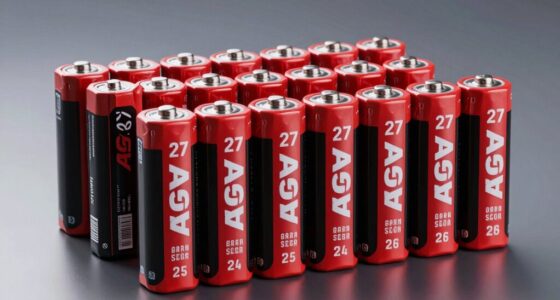
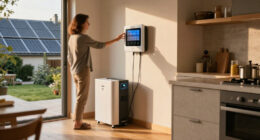
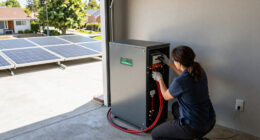
The best battery energy storage systems balance usable capacity, inverter compatibility, expansion options, and installation needs. My best overall pick is the Anker SOLIX E10 Power Dock and Extra Battery for its broad 12–90 kWh capacity range, while the WattCycle 48V 100Ah system stands out for pairing a battery with a high-output split-phase inverter. For buyers building a larger bank, the ECO-WORTHY Cubix100 six-pack offers a different route: a bundled rack system with substantial stated capacity. The main tradeoffs are between an all-in-one setup and modular components, upfront system size and future expansion, and simpler installation versus greater control. Read on for my full comparison and a guide to choosing a system that fits your home, backup plan, and electrical setup.

Get backup power and energy gear delivered free with Prime
- Fast, free delivery on millions of items
- Prime Video, Amazon Music and more included
- Member-only deals all year
Key Takeaways
- The lineup includes both batteries and broader power systems. The Anker SOLIX E10, ECO-WORTHY 10 kW kit, and WattCycle 12 kW system bundle more of the power setup than a standalone rack battery, so compare what is included before comparing capacities.
- Capacity varies widely across the options. The 5.12 kWh 100Ah rack batteries suit smaller or expandable banks, while the 16.07 kWh Powermega and 20.48 kWh WattCycle battery start from a larger storage base.
- Expandable capacity is not the same as a complete system. Several rack batteries support parallel expansion, but buyers still need to check inverter, wiring, controls, and installation requirements.
- High-capacity bundles make more sense for substantial loads. The 400Ah and 600Ah offerings may reduce the need to assemble multiple smaller units, but their size and system compatibility call for careful planning.
- System fit matters more than a headline capacity figure. Voltage, continuous power, communication protocols, certifications, and mounting style can decide whether a battery works smoothly with the rest of a home energy setup.
| 48V (51.2V) 100Ah LiFePO4 Server Rack Battery – 5.12kWh Home Energy Storage with Smart BMS, CAN/RS485 & App Monitoring, Supports up to 16 Batteries in Parallel |  | Best for Scalable Rack Systems | Voltage: 48V (51.2V) | Capacity: 100 Ah | Energy: 5.12 kWh | VIEW LATEST PRICE | See Our Full Breakdown |
| VEVOR 48V 400Ah LiFePO4 Server Rack Battery with 100A BMS (UL9540, UL1973) |  | Best for High Capacity in One Rack Unit | Voltage: 51.2 V | Capacity: 400 Ah | Configuration: 48V 100Ah × 4 | VIEW LATEST PRICE | See Our Full Breakdown |
| MFUZOP 48V 100Ah LiFePO4 Server Rack Battery with 100A BMS |  | Best for Protected, Expandable 100Ah Setups | Nominal voltage: 51.2 V | Capacity: 100 Ah | Energy storage: 5.12 kWh | VIEW LATEST PRICE | See Our Full Breakdown |
| ECO-WORTHY 10 kW Off-Grid Solar Panel Kit with 48 V Battery |  | Best Complete Off-Grid Package | Inverter continuous output: 10,000 W | Inverter peak output: 20,000 W | Output voltage: 120 V or 120/240 V split-phase | VIEW LATEST PRICE | See Our Full Breakdown |
| Anker SOLIX E10 Power Dock and Extra Battery, 12–90 kWh |  | Best for Whole-Home Backup | Starting battery capacity: 12 kWh with 2 packs | Expandable capacity: Up to 90 kWh | Continuous output: 7.6 kW per unit; scales to 22.8 kW | VIEW LATEST PRICE | See Our Full Breakdown |
| WattCycle 48V 100Ah LiFePO4 Battery and 12kW Split-Phase Inverter System |  | Best Integrated Inverter System | Total battery capacity: 10.24kWh | Battery configuration: Two 48V 100Ah server rack batteries | Battery chemistry: LiFePO4 | VIEW LATEST PRICE | See Our Full Breakdown |
| WattCycle 51.2V 400Ah LiFePO4 Server Rack Battery – 20.48 kWh |  | Best Modular Rack Battery Capacity | Energy storage: 20.48kWh | Voltage: 51.2V | Combined capacity: 400Ah | VIEW LATEST PRICE | See Our Full Breakdown |
| ECO-WORTHY Cubix100 48V 600Ah LiFePO4 Server Rack Battery System, 6-Pack |  | Best for Large-Capacity Expansion | Total energy capacity: 30.72kWh | Battery configuration: Six 51.2V 100Ah batteries | Battery chemistry: LiFePO4 | VIEW LATEST PRICE | See Our Full Breakdown |
| SUNGOLDPOWER CoreX 5 Elite 100Ah 51.2V Wall-Mounted Lithium-Ion Battery |  | Best Wall-Mounted Battery | Capacity: 100Ah | Nominal voltage: 51.2V | Maximum power: 5,120W | VIEW LATEST PRICE | See Our Full Breakdown |
| ECO-WORTHY Powermega 51.2V 314Ah LiFePO4 Battery, 16.07 kWh |  | Best Battery for Built-In Safety and Monitoring | Energy: 16.07kWh | Voltage: 51.2V | Capacity: 314Ah | VIEW LATEST PRICE | See Our Full Breakdown |
| battery energy storage system | Voltage | Capacity |
|---|---|---|
| 48V | 48V (51.2V) | 100 Ah |
| VEVOR 48V 400Ah LiFePO4 Server | 51.2 V | 400 Ah |
| MFUZOP 48V 100Ah LiFePO4 Serve | — | 100 Ah |
| ECO-WORTHY 10 kW Off-Grid Sola | — | — |
| Anker SOLIX E10 Power Dock and | — | — |
| WattCycle 48V 100Ah LiFePO4 Ba | — | — |
| WattCycle 51.2V 400Ah LiFePO4 | 51.2V | — |
| ECO-WORTHY Cubix100 48V 600Ah | 51.2V (48V nominal) | — |
| SUNGOLDPOWER CoreX 5 Elite 100 | — | 100Ah |
| ECO-WORTHY Powermega 51.2V 314 | 51.2V | 314Ah |
More Details on Our Top Picks
48V (51.2V) 100Ah LiFePO4 Server Rack Battery – 5.12kWh Home Energy Storage with Smart BMS, CAN/RS485 & App Monitoring, Supports up to 16 Batteries in Parallel
This 5.12 kWh module is a practical starting point for buyers who want to build storage in stages rather than commit to a large battery bank upfront. Its CAN and RS485 connections and app monitoring suit inverter-based solar setups where battery status and system communication matter. Up to 16 units can be paralleled, giving the design room to grow to 81 kWh. Compared with the MFUZOP 48V 100Ah, it offers the same core capacity and similar rack-oriented expandability, while the MFUZOP specifies a circuit breaker and supplied installation accessories. The tradeoff here is handling: at 111 pounds, each module needs sturdy support and careful installation, and its 21-inch depth may constrain compact equipment spaces. I’d choose it for a planned rack bank, not a lightweight or quick-install backup.
Pros:- 5.12 kWh capacity provides a clear building block for a larger battery bank.
- Supports parallel expansion to as many as 16 batteries.
- Smart BMS includes cell balancing and protection against several operating faults.
- CAN, RS485, and app monitoring provide multiple ways to check status and communicate with system equipment.
Cons:- At 111 pounds, installation and repositioning can require help and substantial support.
- The 21 x 15 x 7.08-inch enclosure may be awkward in a small utility space.
- A single unit provides less stored energy than the larger-capacity options in this roundup.
Best for: Solar and off-grid homeowners who want to start with one rack battery and add compatible units as their storage needs grow.
Not ideal for: Buyers who need a light, easily carried battery or lack room and sturdy support for a 111-pound rack module.
- Voltage:48V (51.2V)
- Capacity:100 Ah
- Energy:5.12 kWh
- Cycle life:6000+ cycles
- Cell type:Grade A prismatic LiFePO4
- Parallel support:Up to 16 batteries; 81 kWh total
- Communication:CAN, RS485, and app monitoring
- Weight and dimensions:111 lb; 21 x 15 x 7.08 in
Our verdict“Choose this battery if you want a communications-ready rack module that can grow into a substantial system, and skip it if weight or tight placement is a concern.”
VEVOR 48V 400Ah LiFePO4 Server Rack Battery with 100A BMS (UL9540, UL1973)
The VEVOR’s main appeal is having 400 Ah at 51.2 V in a single rack-format product, rather than piecing together multiple 100 Ah modules like the 48V 100Ah battery in this roundup. Its stated 1C discharge capability and 100 A charge/discharge current point to a system intended for substantial home, solar, or off-grid loads, while the LCD, Bluetooth, Wi-Fi, and app monitoring give owners several ways to check operation. The stated 6000+ cycle life also makes it a more durable-use proposition than a lead-acid bank. The tradeoff is that the listed 100 A current limit may shape how quickly the battery can deliver or accept power, regardless of its large capacity. At 103.6 pounds, it also remains a heavy installation, and buyers should confirm rack and inverter compatibility before committing.
Pros:- 400 Ah capacity offers substantially more storage than a single 100 Ah rack battery.
- LCD, Bluetooth, Wi-Fi, and app support provide multiple monitoring methods.
- Built-in 100 A BMS lists protections for overcharge, over-discharge, overcurrent, and short circuits.
- Stated cycle life is over 6000 cycles.
Cons:- The 103.6-pound weight makes installation and movement difficult.
- The stated 100 A charge/discharge current may constrain power delivery or recharge speed for some systems.
- Compatibility with a particular rack and inverter should be checked before purchase.
Best for: Home solar and off-grid users who want a large 400 Ah battery bank in a rack-oriented format with several monitoring options.
Not ideal for: Buyers with limited lifting help, small enclosures, or systems that need a higher charge or discharge current than the stated 100 A.
- Voltage:51.2 V
- Capacity:400 Ah
- Configuration:48V 100Ah × 4
- Battery chemistry:LiFePO4
- Cycle life:6000+ cycles
- Charge/discharge current:Up to 100 A
- Discharge rate:1C
- Weight:103.6 lb
Our verdict“Pick the VEVOR when a single high-capacity rack battery matters more than easy handling or flexibility in charge and discharge current.”
MFUZOP 48V 100Ah LiFePO4 Server Rack Battery with 100A BMS
The MFUZOP is a strong fit for buyers assembling a 51.2 V rack system who value built-in control and protection details. Alongside its 100 A BMS, it includes a 125 A circuit breaker and power switch, giving the installer additional ways to isolate and manage the battery. Bluetooth monitoring plus CAN/RS485 communication covers both app checks and inverter-linked setups. Compared with the similarly sized 48V 100Ah battery in this roundup, the MFUZOP is lighter at about 94.8 pounds and specifies included power, communication, and grounding cables; the other model lists expansion to 16 batteries, one more than this unit’s stated 15. Its 5.12 kWh capacity is still modest for a home seeking long backup duration, and the rack itself is not included. Buyers should also verify the unusually high 12,000-watt listing against their system design.
Pros:- 125 A circuit breaker and 100 A BMS add distinct protection and control components.
- Bluetooth app monitoring works alongside CAN and RS485 communication.
- Supports parallel expansion to 15 batteries, with stated system capacity up to 76.8 kWh.
- Power, communication, grounding cables, and installation accessories are included.
Cons:- The rack is not included, adding a separate equipment and installation requirement.
- At approximately 94.8 pounds, the battery is still difficult for one person to handle.
- A single 5.12 kWh unit may not provide enough backup duration for larger household loads.
Best for: Solar owners building a modular 51.2 V rack bank who want a circuit breaker, app monitoring, and connection accessories included.
Not ideal for: Buyers seeking a ready-to-install rack enclosure or substantial backup energy from one battery without adding modules.
- Nominal voltage:51.2 V
- Capacity:100 Ah
- Energy storage:5.12 kWh
- Chemistry:LiFePO4
- BMS and circuit breaker:100 A BMS; 125 A circuit breaker
- Communication:CAN/RS485 and Bluetooth app monitoring
- Parallel expansion:Up to 15 batteries; stated system capacity up to 76.8 kWh
- Rack design and weight:3U; approximately 94.8 lb; rack not included
- Warranty:5-year limited warranty
Our verdict“Choose the MFUZOP for a protected, accessory-equipped rack battery that can scale, but plan separately for the rack and any capacity beyond 5.12 kWh.”
ECO-WORTHY 10 kW Off-Grid Solar Panel Kit with 48 V Battery
Unlike the standalone rack batteries here, the ECO-WORTHY package pairs 16.076 kWh of LiFePO4 storage with panels and a split-phase inverter, so it addresses more of an off-grid system in one purchase. The inverter’s 120 V and 240 V output makes it relevant to homes with mixed household loads, while the battery display, wireless connectivity, wheels, and handles can simplify monitoring and movement. Its 2,950 W array is the key compromise: that is far below the inverter’s 10 kW continuous output, so the inverter’s full capacity should not be mistaken for the solar generation available from the included panels. Compared with the Anker SOLIX E10, this kit supplies panels and a higher stated inverter output, while Anker offers modular whole-home backup and far more expandable storage. Professional installation and freight delivery also make this a larger project than buying a battery alone.
Pros:- Includes a 16.076 kWh LiFePO4 battery, five panels, and a 10 kW split-phase inverter.
- 120 V and 240 V output supports a mix of household circuits.
- Battery has a display, wireless connectivity, wheels, and handles.
- Battery supports parallel expansion, and bifacial panels may add yield in suitable conditions.
Cons:- The included 2,950 W PV array is much smaller than the inverter’s 10 kW continuous output.
- Professional installation is recommended, making setup more involved than a standalone battery purchase.
- The system ships by freight on a pallet and needs space for large panels and equipment.
Best for: Off-grid homeowners who need panels, battery storage, and a 120/240 V inverter package and can arrange professional installation.
Not ideal for: Buyers who already own solar or inverter equipment, want a compact battery-only upgrade, or need the included array to match the inverter’s full output.
- Inverter continuous output:10,000 W
- Inverter peak output:20,000 W
- Output voltage:120 V or 120/240 V split-phase
- Battery:48 V, 314 Ah LiFePO4
- Battery energy capacity:16.076 kWh
- Solar array:5 × 590 W panels; 2,950 W total
- Panel conversion efficiency:23.23%
- Battery charging capacity:Up to 200 A
Our verdict“Choose this package if you need an off-grid system with panels, battery, and split-phase output together, but skip it if you expect the included array to supply 10 kW.”
Anker SOLIX E10 Power Dock and Extra Battery, 12–90 kWh
The Anker SOLIX E10 is the most whole-home-oriented choice in this group: its Power Dock supports 200 A backup coverage, and automatic switchover is listed at 20 ms or less. Starting capacity is 12 kWh, with expansion up to 90 kWh, so it can serve buyers who want to add storage over time rather than settle for a fixed-size battery. Each unit provides 7.6 kW continuous output, with higher output available through additional units; the system also accepts up to 9 kW of solar input per unit. Compared with the ECO-WORTHY kit, the E10 focuses on modular home backup rather than including solar panels and an inverter package. That makes the included system less of an all-in-one solar purchase, and professional installation may be needed. Its 12 kWh starting point is also smaller than the ECO-WORTHY kit’s stated 16.076 kWh.
Pros:- Power Dock supports 200 A whole-home backup coverage.
- Storage expands from 12 kWh up to 90 kWh.
- Automatic switchover is listed at 20 ms or less.
- Weatherproof design supports outdoor placement, with wall or floor mounting.
Cons:- Professional installation may be needed for the Power Dock and home backup connection.
- The package does not include solar panels, unlike the ECO-WORTHY off-grid kit.
- The power module and extra battery may be dispatched separately.
Best for: Homeowners seeking a modular, outdoor-capable battery system with whole-home backup coverage and room to expand storage.
Not ideal for: Off-grid buyers who need solar panels included, or households that want more than 12 kWh of starting storage without adding modules.
- Starting battery capacity:12 kWh with 2 packs
- Expandable capacity:Up to 90 kWh
- Continuous output:7.6 kW per unit; scales to 22.8 kW
- Turbo output:10 kW per unit; scales to 30 kW with three units
- Solar input:Up to 9 kW per unit
- Power Dock coverage:200 A whole-home backup
- Automatic switchover:20 ms or less
- Battery chemistry and mounting:LFP; wall or floor mounting
- Operating temperature:-4°F to 131°F
Our verdict“Choose the E10 if whole-home backup and expandable outdoor storage are your priorities, and choose the ECO-WORTHY kit instead if you need panels included.”
WattCycle 48V 100Ah LiFePO4 Battery and 12kW Split-Phase Inverter System
This WattCycle package is the most ready-to-build household backup option in this group because it pairs 10.24kWh of LiFePO4 storage with a 12kW split-phase inverter. Its 120V/240V output suits common household loads, and the under-10ms UPS transfer time is designed to keep supported circuits powered through a brief outage. Dual MPPT inputs accept up to 24,000W of solar, giving a solar-heavy setup room to grow. Compared with the WattCycle 20.48kWh rack battery kit, this system includes an inverter but starts with half the stored energy. Its main tradeoff is the rack-based installation: buyers need room for the batteries and should plan for additional compatible hardware if they expand. It makes the most sense when an all-in-one inverter-and-battery starting point matters more than maximum capacity out of the box.
Pros:- Includes a 12kW inverter with 120V/240V split-phase output.
- Under-10ms UPS transfer is suited to backup for supported household circuits.
- Dual MPPT inputs accept up to 24,000W of solar input.
- Supports expansion to six inverters and twenty batteries.
Cons:- The two rack batteries require suitable rack space and installation planning.
- Expansion depends on purchasing additional compatible batteries and inverters.
Best for: Homeowners building a 120V/240V backup or off-grid system who want an included inverter, fast transfer, and substantial solar input.
Not ideal for: Buyers who need more than 10.24kWh immediately or lack space and equipment for rack-mounted batteries.
- Total battery capacity:10.24kWh
- Battery configuration:Two 48V 100Ah server rack batteries
- Battery chemistry:LiFePO4
- Inverter output:12kW
- Output voltage:120V/240V split-phase
- Solar input:Up to 24,000W via dual MPPT controllers
- UPS transfer time:Under 10ms
- Expansion:Up to 6 inverters and 20 batteries
- Warranty:5 years
Our verdict“Choose this WattCycle package if you want a split-phase inverter and battery storage together, rather than the higher capacity of a battery-only rack kit.”
WattCycle 51.2V 400Ah LiFePO4 Server Rack Battery – 20.48 kWh
With 20.48kWh across four batteries, this WattCycle kit suits buyers who want a substantial storage bank in a modular rack format. The four 51.2V, 100Ah LiFePO4 units can be monitored through a 3.2-inch touchscreen or Bluetooth, while CAN, RS232, and RS485 give installers several communication options for inverter integration. Each battery has a 100A BMS and 3A active balancing; the stated 6,000-plus-cycle life is a useful longevity specification, though actual service life depends on operating conditions. Unlike the 12kW WattCycle system in this roundup, this is battery storage only, so the buyer must supply a compatible inverter. It also holds less energy than the six-battery ECO-WORTHY Cubix100. Four rack modules bring real weight, space, and wiring demands, making this a better fit for planned installations than quick, plug-in backup.
Pros:- Provides 20.48kWh of LiFePO4 storage from four modular batteries.
- Each battery includes a 100A BMS and 3A active cell balancing.
- LCD touchscreen and Bluetooth support local and remote monitoring.
- CAN, RS232, and RS485 offer multiple integration interfaces.
Cons:- No inverter is included, so compatibility must be checked and an inverter sourced separately.
- Four rack batteries require substantial space and careful installation.
- The rack-based setup may be difficult for buyers without electrical system experience.
Best for: Home and off-grid system builders who need roughly 20kWh of rack-mounted storage and already have, or plan to choose, a compatible inverter.
Not ideal for: Buyers seeking a complete inverter-and-battery system, minimal installation work, or a small-footprint backup unit.
- Energy storage:20.48kWh
- Voltage:51.2V
- Combined capacity:400Ah
- Battery configuration:Four 100Ah LiFePO4 batteries
- Cycle life:6,000+ cycles
- Active balancing current:3A
- Communication interfaces:CAN, RS232, RS485, Bluetooth
- Display:3.2-inch LCD touchscreen
- Rack size:3U per battery
Our verdict“Pick this kit for modular, high-capacity rack storage when you can provide the inverter and installation expertise.”
ECO-WORTHY Cubix100 48V 600Ah LiFePO4 Server Rack Battery System, 6-Pack
The Cubix100 starts at 30.72kWh of LiFePO4 storage, giving it the largest stated battery bank among these five products. Six 100Ah batteries provide a substantial base for whole-home or off-grid storage, and support for up to 32 parallel units leaves considerable room for future capacity. The system also offers CAN/RS485 communication, Bluetooth and Wi-Fi monitoring, and UL9540, UL1973, and CEC listings. Compared with the four-battery WattCycle rack kit, it supplies more energy from the start, but it is still a battery package—not a complete inverter system. The rack is not included, so buyers need to plan for a suitable enclosure, space, wiring, and inverter compatibility. Its size and possible split shipments make it a poor match for anyone seeking a simple, compact backup purchase.
Pros:- Six batteries provide 30.72kWh of initial storage.
- Supports parallel expansion up to 32 units.
- Bluetooth and Wi-Fi app monitoring pair with CAN and RS485 interfaces.
- Listed to UL9540, UL1973, and CEC standards.
Cons:- The rack is not included, adding an installation requirement.
- No inverter is included, so system compatibility and inverter selection are the buyer’s responsibility.
- Six batteries take substantial space and may arrive in multiple packages.
Best for: Homeowners and off-grid operators planning a large battery bank now, with the option to add compatible units later.
Not ideal for: Buyers with limited rack space, those who need an inverter included, or anyone seeking a compact system with minimal installation requirements.
- Total energy capacity:30.72kWh
- Battery configuration:Six 51.2V 100Ah batteries
- Battery chemistry:LiFePO4
- Voltage:51.2V (48V nominal)
- Maximum parallel units:32
- Communication interfaces:CAN and RS485
- Monitoring:Bluetooth and Wi-Fi via ECO-WORTHY app
- Certifications:UL9540, UL1973, CEC listed
- Warranty:10-year limited
Our verdict“Choose the Cubix100 when a large starting storage bank and extensive parallel expansion matter more than a compact or complete package.”
SUNGOLDPOWER CoreX 5 Elite 100Ah 51.2V Wall-Mounted Lithium-Ion Battery
The CoreX 5 Elite takes a different approach from the rack kits: it is a single 5.12kWh wall-mounted battery for buyers who want a tidy installation and the option to add units later. Its LCD, Wi-Fi, and Bluetooth monitoring make system status accessible locally or remotely, while CAN and RS485 support communication with compatible inverters. The stated rating of 5,000 cycles at 100% depth of discharge, retaining 80% capacity, and a 10-year warranty are useful points of comparison with the rack-based WattCycle batteries. But one unit stores far less energy than those multi-battery systems, and the 105.8-pound weight means wall mounting needs appropriate support and planning. Compatibility is not automatic: buyers should confirm their inverter supports the battery’s communication protocols before choosing this option.
Pros:- Wall-mounted design avoids the need for a multi-battery server rack.
- LCD, Wi-Fi, and Bluetooth offer several monitoring options.
- CAN and RS485 support integration with compatible inverters.
- Rated for 5,000 cycles at 100% depth of discharge with 80% capacity retained.
Cons:- At 5.12kWh, one battery provides much less storage than the WattCycle and ECO-WORTHY multi-battery kits.
- The 105.8-pound unit requires a suitable wall and careful installation.
- Inverter compatibility depends on supported communication protocols.
Best for: Homeowners adding a single wall-mounted 51.2V battery to a compatible inverter system, with plans to monitor it through an app or display.
Not ideal for: Buyers who need large storage capacity from one purchase, cannot safely support a 105.8-pound wall unit, or have an inverter with unsupported communications.
- Capacity:100Ah
- Nominal voltage:51.2V
- Maximum power:5,120W
- Output current:100A
- Cycle life:5,000 cycles at 100% DOD; 80% capacity retained
- Monitoring:LCD, Wi-Fi, and Bluetooth
- Communication protocols:CAN and RS485
- Parallel units:Up to 15
- Weight:105.8 lbs
Our verdict“Choose the CoreX 5 Elite for a wall-mounted, monitorable battery in a compatible system, not for maximum storage from one unit.”
ECO-WORTHY Powermega 51.2V 314Ah LiFePO4 Battery, 16.07 kWh
The Powermega combines 16.07kWh in one LiFePO4 battery with installation and monitoring features that are less common in a basic battery module. Its 200A smart BMS includes active balancing, and the unit adds a two-pole circuit breaker and aerosol fire-suppression modules. A 7-inch touchscreen, Wi-Fi, and Bluetooth give users several ways to check system status, while wheels and M8 terminals address handling and high-current connections. Compared with the CoreX 5 Elite, it stores over three times as much energy in a single battery; unlike the WattCycle inverter package, it does not include an inverter. The Powermega is expandable to 15 units, but its large size and truck-delivery requirement make it harder to receive and position than smaller rack batteries. Buyers need delivery access and a plan for installation space.
Pros:- Provides 16.07kWh of storage in a single LiFePO4 battery.
- 200A active-balancing BMS, circuit breaker, and aerosol fire-suppression modules are included.
- 7-inch touchscreen plus Wi-Fi and Bluetooth support battery monitoring.
- Wheels and M8 terminals help with handling and high-current connections.
Cons:- Large size and weight require pallet delivery by truck.
- Delivery requires access suitable for a truck shipment.
- No inverter is included, so compatibility and system integration must be handled separately.
Best for: Home and off-grid system owners who want a single high-capacity LiFePO4 battery with onboard monitoring and added safety hardware.
Not ideal for: Buyers without truck-accessible delivery space, limited room for a large battery, or a need for an included inverter.
- Energy:16.07kWh
- Voltage:51.2V
- Capacity:314Ah
- Battery type:LiFePO4
- BMS:200A smart BMS with active cell balancing
- Safety features:Two-pole circuit breaker and aerosol fire-suppression modules
- Monitoring:7-inch HD touchscreen, Wi-Fi, and Bluetooth
- Parallel expansion:Up to 15 units
- Certifications:UL 1973
Our verdict“Pick the Powermega if you need a high-capacity single battery with onboard monitoring and safety hardware and can accommodate truck delivery.”
How We Picked
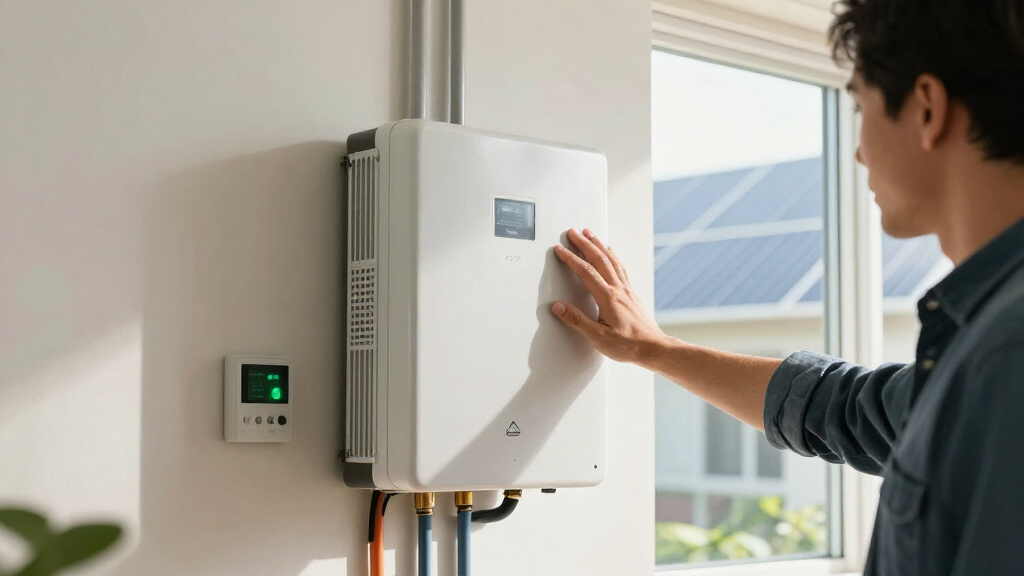
I compared these options as parts of a home energy storage decision, not as interchangeable batteries. The ranking considers stated capacity, voltage and inverter details, BMS and communication features, expansion support, included equipment, mounting format, and the likely amount of integration work a buyer must handle. I gave more weight to products that make their system role clear and offer a practical path to matching storage with power conversion.
The order also reflects tradeoffs between flexibility and simplicity. A standalone rack battery can suit buyers who already have compatible equipment, but it should not rank ahead of a more complete setup for someone starting from scratch without acknowledging the extra planning. Bundled systems and larger batteries earn attention for their broader scope or capacity, while unclear fit, limited stated system detail, or a more specialized format can make a product a better match for a narrower buyer rather than a universal choice.
Factors to Consider When Choosing Best Battery Energy Storage Systems
Before choosing a battery, I would map the loads and equipment it must serve. Capacity alone cannot tell you whether a system can start a pump, support split-phase appliances, or keep essential circuits running through a long outage. These factors help separate a battery that looks suitable on paper from one that fits the electrical plan.
Match storage capacity to the outage you want to cover
Start by listing the circuits you want powered and estimating their energy use over the length of an outage. A battery’s stated kilowatt-hours describe stored energy, not how long every appliance will run; inverter losses, reserve settings, and high-demand loads reduce usable runtime. Include surge-heavy equipment such as well pumps or refrigerators, since short startup demands can matter as much as daily consumption. Avoid sizing only for a typical day if your goal is overnight or multi-day backup. A smaller modular bank can work when you plan to add capacity later, but only if the battery, inverter, and controls support the planned expansion. For whole-home coverage, ask an installer to model actual loads rather than relying on a broad capacity estimate.
Check inverter power and household voltage requirements
Storage capacity and power output answer different questions: kilowatt-hours describe energy over time, while inverter output determines which loads can run at once. Confirm the inverter’s continuous rating, surge capability, and whether it supplies the voltage and phase your home needs. A 48V battery does not by itself provide household AC power, so a standalone battery may need a separate compatible inverter and related controls. Bundled systems can reduce component matching, but you still need to verify the supported loads and any limits on backup circuits. Do not assume a large battery bank can run a large appliance if the inverter is undersized. If you expect to power multiple high-demand devices simultaneously, size for peak load as well as daily energy.
Verify compatibility before mixing batteries and equipment
Compatibility involves more than matching a battery’s nominal voltage. Check inverter-approved battery models, charge and discharge limits, communication support, and whether CAN or RS485 settings are available for the equipment you own. A battery may operate without closed-loop communication in some setups, but the installer must confirm safe control and suitable charging behavior. Parallel expansion also depends on the manufacturer’s rules for matching battery models, age, capacity, firmware, and cable layout. Combining units that appear similar can create uneven charging or unreliable monitoring if the system does not support that configuration. Get written compatibility confirmation before ordering components from different product families.
Treat certifications and installation rules as system-level questions
Certifications can help establish whether equipment has been evaluated for particular safety standards, but check exactly which product and configuration the documentation covers. A battery certification does not automatically certify a complete installation or guarantee approval under local rules. Ask about required clearances, indoor or outdoor placement, enclosure ratings, fire-safety provisions, and any permitting steps that apply where you live. Rack batteries and wall-mounted units also differ in the space, support, and access they need. Have a qualified installer review the battery, inverter, disconnects, wiring, and mounting plan together. This step can prevent a technically compatible purchase from becoming a difficult or noncompliant installation.
Choose between a bundled system and a component-by-component build
A bundle can simplify planning by pairing storage with an inverter or solar equipment, and it gives beginners a clearer starting point. Its tradeoff is reduced freedom: you may have fewer choices for replacing one component, changing brands, or expanding beyond the package’s supported design. A standalone rack battery can suit a buyer who already has an inverter and knows the system requirements, but the missing components and integration work belong in the overall plan. Compare the complete bill of materials, including cables, mounting hardware, disconnects, monitoring, and installation labor. Do not judge a battery-only product against a full kit as if they deliver the same scope. Choose the format that matches your experience and the equipment already installed.
Plan for expansion, monitoring, and service access
Expansion is useful only when the system has a practical path for adding batteries without replacing key equipment. Check maximum parallel counts, inverter limits, available floor or wall space, and whether future units must match the original model. Monitoring should make it possible to track state of charge, alarms, and system performance without relying on guesswork. Ask how firmware updates, BMS support, replacement parts, and warranty service are handled, especially for a large multi-battery bank. Leave room for safe access to disconnects and for the ventilation or clearances required by the manufacturer. A purchase that fits the first installation but leaves no room for service or growth may cost more effort later.
Frequently Asked Questions
Can I connect one of these batteries to my existing solar inverter?
Possibly, but compatibility must be confirmed for the exact battery and inverter models. Match voltage, charge and discharge limits, supported communications, and the inverter’s approved battery list rather than relying on a shared 48V label alone. Some systems may allow a voltage-based configuration, while others depend on CAN or RS485 communication for coordinated control. Ask the inverter maker or a qualified installer to confirm the settings and wiring before purchase. If compatibility is uncertain, a system sold with its inverter can reduce component-matching risk.
How much battery capacity do I need to keep essential circuits running overnight?
Estimate the energy used by the specific circuits you plan to back up during the hours you need them. Add up appliance wattage multiplied by expected run time, then allow for inverter losses and a reserve so the battery is not planned around its full stated capacity. Refrigerators, pumps, and other cycling or motor-driven loads can be harder to estimate than steady lighting or electronics. The inverter must also handle the highest simultaneous load and startup surges. A load calculation is more reliable than choosing a battery based on home size alone.
Is a larger battery automatically better for home backup?
No: more stored energy helps extend runtime, but it does not solve an undersized inverter, poor compatibility, or installation constraints. A large bank can be a mismatch if your backup plan covers only a few low-use circuits. It may also require more space, heavier mounting support, and a more involved electrical design. Compare the usable energy and power output with your actual loads, then check whether the system can be expanded if your needs change. The right size is the one that meets the backup plan without adding capacity you cannot use effectively.
Should I choose a complete kit or buy a battery and inverter separately?
A complete kit can make sense if you want a more coordinated starting point and prefer fewer compatibility decisions. Separate components offer more choice and may fit better when you already own an inverter or have a specific design in mind. Compare the included equipment carefully: a kit may still omit wiring, protection devices, mounting parts, or installation work. For a custom setup, confirm that the inverter maker supports the battery’s communication and operating limits. If you are new to storage systems, ask an installer to compare the total system scope rather than just the battery specifications.
Can I add more batteries later if my backup needs grow?
Some systems are designed for parallel expansion, but adding units later is not guaranteed to be plug-and-play. Check the permitted battery count, inverter capacity, communication setup, and rules for mixing battery age or model revisions. The original wiring, protective devices, mounting area, and installation design must also allow for the added current and weight. Ask the manufacturer or installer whether future batteries need to be purchased from the same product line and how the system handles expansion. Planning the maximum intended size before installation can prevent costly changes to the inverter or electrical layout.
Conclusion
For buyers seeking a flexible system with a broad stated capacity range, I would start with the Anker SOLIX E10 Power Dock and Extra Battery as my best overall pick. The WattCycle 48V 100Ah battery and 12kW split-phase inverter system is my best value candidate for shoppers who want storage and power conversion in one package, while buyers with greater capacity needs should compare the WattCycle 20.48 kWh and ECO-WORTHY Cubix100 six-pack against their load plan. For beginners, the bundled ECO-WORTHY 10 kW off-grid kit offers a clearer system starting point than a battery-only purchase, though its equipment and installation fit still need verification. Choose a 5.12 kWh rack battery such as the MFUZOP or the 48V 100Ah server rack option when you already have compatible equipment and want a modular starting bank. For a wall-mounted format, consider the SUNGOLDPOWER CoreX 5 Elite; for a larger single battery, compare the ECO-WORTHY Powermega with the 400Ah options. My final recommendation is to confirm inverter compatibility, usable capacity, and installation requirements before choosing by battery size alone.