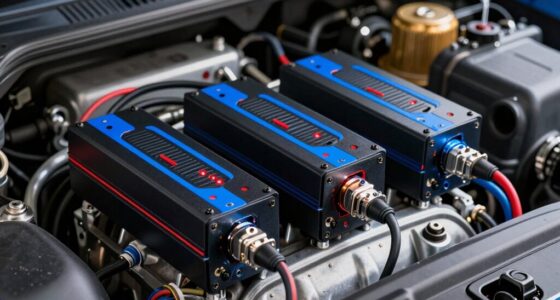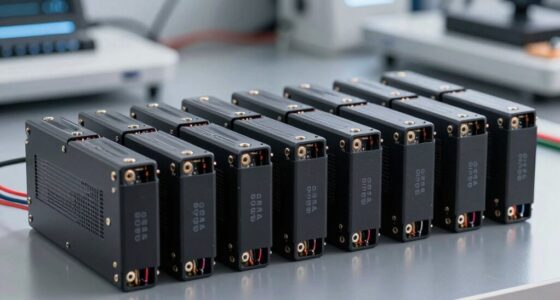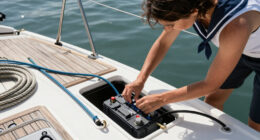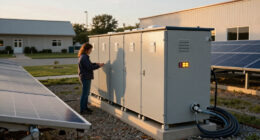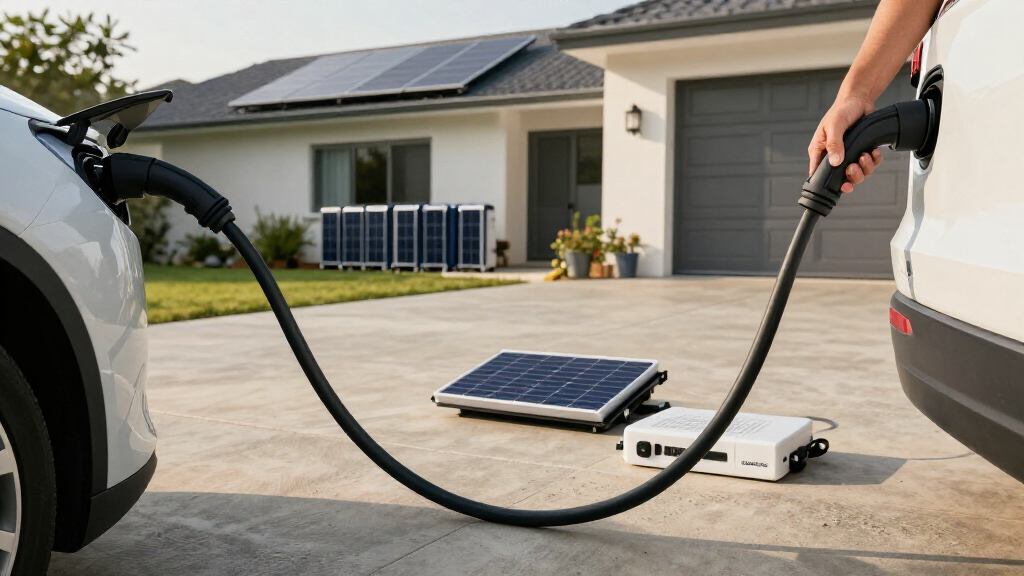
For buyers searching for the best MCS EV charging controllers, these three devices address a practical problem: managing EV charging against the capacity available at a home’s electrical service. My leading pick is the BLACKBOX EV Energy Management Device for its clearly stated 60–100A service range and weatherproof NEMA 3R enclosure. The EVEMS240-100 is a close alternative for that same service range, while the EVEMS240-200 is the candidate for larger services—but its listing contains conflicting service-size information that buyers should resolve before ordering.

Get backup power and energy gear delivered free with Prime
- Fast, free delivery on millions of items
- Prime Video, Amazon Music and more included
- Member-only deals all year
These are energy management devices, not complete chargers. Each is intended to monitor electrical load and manage a compatible 240V charger or load; each product description says the EV charger is sold separately. The main tradeoffs are service-size fit, how confidently the listing establishes compatibility, and enclosure details. I rank the BLACKBOX first for the clearest combination of a defined smaller-service use case and outdoor-rated housing, not because it is a stand-alone charging station.
Key Takeaways
BLACKBOX is my overall pick for 60–100A services: it states that range directly and adds a NEMA 3R weatherproof enclosure.
EVEMS240-100 is another 60–100A option, with a listed 16A charging-rate setting that the BLACKBOX product details do not mention.
EVEMS240-200 could suit a larger service, but its title says 125A–200A while the description also mentions 60A–100A; confirm the supported range with the manufacturer.
All three support charging rates up to 48A, but none includes an EV charger, so buyers must account for a compatible charger and its installation separately.
These devices call for electrical planning: product information recommends a qualified electrician, and buyers should confirm service fit, charger compatibility, and applicable code requirements before purchase.
| BLACKBOX EV Energy Management Device, 240V, NEMA 3R, for 60–100A Service |  | Best Overall for Clearly Defined 60–100A Service Fit | Service size: 60–100A | Input and output voltage: 240V | Listed amperage: 50A | VIEW LATEST PRICE | See Our Full Breakdown |
| EVEMS240-100 240V EV Energy Management Device |  | Best Alternative for 60–100A Services and Lower Listed Charging Settings | Service size: 60A to 100A | Input and output voltage: 240V | Listed amperage: 50A | VIEW LATEST PRICE | See Our Full Breakdown |
| EVEMS240-200 240V EV Energy Management Device for 125A–200A Services |  | Best Potential Fit for Larger Services—Only After Range Confirmation | Service size: Title: 125A–200A; description also mentions 60A–100A | Input and output voltage: 240V | Maximum charge rate: 48A (11.5kW) | VIEW LATEST PRICE | See Our Full Breakdown |
| MCS EV charging controller | Service size | Input and output voltage | Listed amperage | Supported charging rates |
|---|---|---|---|---|
| BLACKBOX EV Energy Management | 60–100A | 240V | 50A | 20/24A, 30/32A, 40A, and 48A |
| EVEMS240-100 240V EV Energy Ma | 60A to 100A | 240V | 50A | 16A, 20/24A, 30/32A, 40A, and 48A |
| EVEMS240-200 240V EV Energy Ma | Title: 125A–200A; description also mentions 60A–100A | 240V | 60A | 20A, 24A, 30A, 32A, 40A, and 48A |
More Details on Our Top Picks
BLACKBOX EV Energy Management Device, 240V, NEMA 3R, for 60–100A Service
The BLACKBOX EV Energy Management Device takes my top spot because its intended service range is stated plainly: 60–100A. For a buyer trying to manage a compatible EV charger without upgrading a smaller service, that clarity is a real advantage. Its job is to monitor electrical capacity and adjust charging or another supported load; it is not the EV charger itself. The product details list several charging rates, from 20/24A through 48A, giving an installer options for matching charging to the available capacity.
Its strongest distinction from the EVEMS240-100 is the NEMA 3R enclosure, which gives this model a clearer case where weather exposure is part of the installation plan. The two options otherwise overlap substantially: both target 60–100A services, support charging management up to 48A, and require a separate charger. BLACKBOX is the more persuasive pick when enclosure rating matters; the EVEMS240-100 may appeal more to buyers who specifically want its listed 16A charging-rate setting.
The listing also describes clip-on current monitors, which can be installed without disconnecting power according to the supplied details. That does not remove the need for a qualified electrician or make installation a casual do-it-yourself project. Its stated fail-safe design is another useful point for a system that controls a load, though buyers should ask an installer how that function applies to their planned setup. The main limitation is that the product cannot charge a vehicle alone, and compatibility claims should be checked against the exact charger and wiring arrangement.
I rank BLACKBOX ahead of the other two because it pairs a defined service range with a distinct weather-resistant enclosure, while avoiding the EVEMS240-200’s service-range contradiction. It makes the most sense when those details align with the installation. Buyers seeking a complete charging station, a unit for a service outside the 60–100A range, or an installation without professional review should look elsewhere.
Pros:- NEMA 3R enclosure is suited to installations where weather exposure is a concern.
- Clearly listed for 60–100A electrical services.
- Supports several charging rates, including settings up to 48A.
- Clip-on current monitors and a stated fail-safe design support its load-management role.
Cons:- The EV charger is sold separately, so this device does not provide charging on its own.
- A qualified electrician is recommended, adding planning and installation needs.
Best for: Homeowners with a 60–100A service who want a load-management device for a separate compatible 240V EV charger and value a NEMA 3R enclosure.
Not ideal for: Buyers who need an included EV charger, have a service outside the listed 60–100A range, or want to install and configure equipment without a qualified electrician.
- Service size:60–100A
- Input and output voltage:240V
- Listed amperage:50A
- Supported charging rates:20/24A, 30/32A, 40A, and 48A
- Enclosure and connector type:NEMA 3R
- Dimensions and weight:4 × 6 × 8 in; 8.2 lb
- Standards listed:CEC, ETL (UL 2594 compliant), NEC
- EV charger included:No
Our verdict“I recommend BLACKBOX for a clearly defined 60–100A installation where its NEMA 3R enclosure is useful and the buyer already plans to supply a compatible charger.”
EVEMS240-100 240V EV Energy Management Device
The EVEMS240-100 is the straightforward alternative for a 60–100A service when BLACKBOX’s weatherproof enclosure is not the deciding factor. It monitors electrical capacity and manages a compatible 240V charger, with supported rates ranging from 16A to 48A. That lower listed setting may help an electrician match charging to a constrained installation, though the right setting depends on the equipment and electrical design rather than the controller alone.
Compared with BLACKBOX, EVEMS240-100 has a broader published rate list: the supplied specifications include 16A as well as 20/24A, 30/32A, 40A, and 48A. BLACKBOX, by contrast, makes the stronger case for an outdoor location through its stated NEMA 3R enclosure. Neither product includes an EV charger, and both are presented for the same 60–100A service band, so the choice comes down to the value of that lower setting, the enclosure needs, and confirmation of the actual charger pairing.
The product page describes clip-on monitors, a compact 4 × 6 × 8-inch enclosure, and a fail-safe design intended to prevent the controlled device from remaining powered during a system failure. Those are relevant traits for a load-management device, but they do not replace a review by an electrician. The supplied compatibility list names brands including Autel, Grizzl-E, Tesla, ChargePoint, and others. I would treat that as a starting point, not a blanket guarantee for every charger model, connection method, or installation.
This model ranks second because it has a clear service range and useful charging-rate flexibility, but lacks the explicit NEMA 3R enclosure advantage that separates BLACKBOX. It is a better fit when a buyer wants a 60–100A controller and the listed 16A option is relevant to the installation. Skip it if you need a complete charger, need an explicitly outdoor-rated enclosure, or cannot verify compatibility and installation requirements before purchase.
Pros:- Clearly specified for 60A to 100A services.
- Lists charging settings from 16A up to 48A.
- Compact enclosure with clip-on current monitors.
- Describes a fail-safe design and lists several charger brands as compatible.
Cons:- EV charger is sold separately.
- The supplied specifications do not state a NEMA 3R enclosure rating.
- Compatibility and installation still need confirmation for the exact equipment and site.
Best for: Owners of 60–100A services who want a separate load-management device with a listed 16A rate option and whose electrician confirms the charger pairing.
Not ideal for: Buyers who need an EV charger in the box, prioritize a stated NEMA 3R enclosure, or need the listing to establish compatibility for a specific charger without further confirmation.
- Service size:60A to 100A
- Input and output voltage:240V
- Listed amperage:50A
- Supported charging rates:16A, 20/24A, 30/32A, 40A, and 48A
- Dimensions:4 × 6 × 8 in
- Compatible devices:Listed brands include Autel, Grizzl-E, Tesla, ChargePoint, and others
- Standards listed:CEC, NEC, ETL (UL 2594 equivalent)
- EV charger included:No
Our verdict“I would choose EVEMS240-100 over BLACKBOX when its listed 16A setting matters more than an explicitly stated NEMA 3R enclosure.”
EVEMS240-200 240V EV Energy Management Device for 125A–200A Services
The EVEMS240-200 has a distinct potential role: managing EV charging on a larger 125A–200A service. Its title states that range, and its description presents it as a way to manage charging when capacity is limited. It supports rates up to 48A and has a compact enclosure with current monitors that clip onto the main line. If the title’s service range is accurate for the intended installation, it covers a need that the two 60–100A models do not directly claim to serve.
There is a significant qualification: the supplied listing also mentions 60A–100A services in the description. That conflicts with the 125A–200A range in the title. Unlike BLACKBOX and EVEMS240-100, whose listed service ranges align with their stated roles, this model’s range is not clear enough for me to recommend on the title alone. Buyers should obtain written confirmation from the manufacturer or seller and ask their electrician to verify suitability before ordering.
On stated charging options, EVEMS240-200 looks flexible: its list includes 20A, 24A, 30A, 32A, 40A, and 48A, with a maximum of 11.5kW identified in the product details. The listing says it can pause charging when capacity is limited and claims compatibility with any EV charger or 240V plug. Those broad statements are useful leads, but they do not settle whether a particular connection and charger work together in a particular installation. The product is also not a charger, so a separate EV charging unit remains necessary.
I place this pick third, not because the feature set is plainly weaker, but because service-size accuracy matters more than a tempting range claim. It could be the right option for a buyer with a confirmed 125A–200A service who has checked the discrepancy and compatibility. It is a poor choice for anyone who needs unambiguous specifications before purchase or plans to assume the listing’s two service ranges are interchangeable.
Pros:- Title identifies a 125A–200A service range for buyers with a larger service.
- Supports listed charging rates up to 48A, or 11.5kW.
- Compact enclosure with current monitors that clip onto the main line.
- Description says charging can pause when electrical capacity is limited.
Cons:- Product information conflicts: the title says 125A–200A, while the description also mentions 60A–100A.
- EV charger is sold separately.
- A qualified electrician is recommended, and the range discrepancy needs resolution before installation.
Best for: Buyers with a larger service who are considering an EV load-management device and can confirm the correct supported service range directly before purchase.
Not ideal for: Anyone who needs a clear 60–100A or 125A–200A fit without additional verification, or anyone expecting the product to include a charger.
- Service size:Title: 125A–200A; description also mentions 60A–100A
- Input and output voltage:240V
- Maximum charge rate:48A (11.5kW)
- Listed amperage:60A
- Supported charging rates:20A, 24A, 30A, 32A, 40A, and 48A
- Dimensions and weight:4 × 6 × 8 in; 5.5 lb
- Standards listed:CEC, ETL (UL 2594 equivalent), NEC
- EV charger included:No
Our verdict“I would consider EVEMS240-200 for a larger-service installation only after the manufacturer confirms its supported range and an electrician approves the planned setup.”
How We Picked
I ranked these products around the job implied by the search: managing EV charging in response to available electrical capacity, especially when a buyer is trying to avoid a panel or service upgrade. That makes service-size clarity more useful than a broad compatibility claim by itself. BLACKBOX and EVEMS240-100 both identify a 60–100A service range; EVEMS240-200 may cover larger services, but conflicting range information weakens its fit until verified.
I also compared the stated charging-rate options, installation context, enclosure, and listing consistency. Each listing describes a device that can manage charging up to 48A and says the EV charger is separate. BLACKBOX earns the lead through its NEMA 3R outdoor-rated enclosure and straightforward service-range description. EVEMS240-100 follows for buyers who want a similar service range and a listed 16A setting. EVEMS240-200 has a distinct possible role for 125A–200A services, but the discrepancy in its product information keeps it third.
I have not treated broad compatibility language as a guarantee that every charger, plug, vehicle, or installation will work. Buyers should confirm the exact equipment combination with the manufacturer and a qualified electrician. I also gave no advantage for a feature that is not stated in the supplied product details. The ranking reflects the clarity and relevance of the available information, rather than independent testing or a claim that one device suits every electrical installation.
| MCS EV charging controller | Standards listed |
|---|---|
| BLACKBOX EV Energy Management | CEC, ETL (UL 2594 compliant), NEC |
| EVEMS240-100 240V EV Energy Ma | CEC, NEC, ETL (UL 2594 equivalent) |
| EVEMS240-200 240V EV Energy Ma | CEC, ETL (UL 2594 equivalent), NEC |
Factors to Consider When Choosing Best MCS EV Charging Controllers
I would start by treating these products as electrical load managers, not as substitutes for an EVSE or a service-capacity assessment. The choice depends on your service rating, charger, planned charging current, and installation location. A product’s maximum rate is not a recommendation to run at that rate in every home.
Match the device to the electrical service
Check the service rating on your electrical equipment and have an electrician verify what the installation can support. BLACKBOX and EVEMS240-100 both state 60–100A, making their intended range relatively easy to compare. EVEMS240-200 is described in its title as a 125A–200A device, but another part of the supplied description also lists 60A–100A. I would not select that model based on an assumption about which number is correct; ask the manufacturer to confirm the exact supported service range for your configuration.
Service size is only one part of the decision. Existing household loads, breaker and conductor requirements, the charger’s current draw, and local electrical rules all affect the design. A controller intended to manage capacity does not automatically make every panel or wiring arrangement suitable. Ask the electrician to assess the whole installation rather than treating a device’s stated range as a complete approval.
Separate charging rate from charging capability
All three listings describe charging management up to 48A, but maximum current is not the same as a guaranteed everyday charging rate. The charger, circuit, controller setup, vehicle, and available service capacity all play a part. BLACKBOX lists 20/24A, 30/32A, 40A, and 48A. EVEMS240-100 also lists a 16A setting, while EVEMS240-200 lists settings from 20A through 48A. That difference may matter if an installer needs a lower setting; it does not establish that a particular setting is right for a particular home.
Before buying, compare the controller’s supported settings with the charger you already own or plan to buy. Confirm how the controller communicates with or manages that charger, how it behaves when household demand rises, and whether the planned wiring supports the chosen configuration. For product-specific answers, use the exact charger model number rather than relying only on a brand name.
Remember that none of these is the charger
Each product description says the EV charger is sold separately. That matters for both equipment planning and installation: you still need a compatible charging unit, and the controller’s broad claims about supporting EV chargers or 240V plugs do not prove every pairing is suitable. Confirm whether your existing charger can work with the energy management device and whether the intended plug or hardwired arrangement matches the product documentation.
If you are starting without a charger, compare the controller and EVSE as a system rather than buying either part in isolation. Ask who will supply each component, whether the controller supports the EVSE’s charging modes, and who will configure and commission the complete installation. A controller can help manage available capacity, but it does not supply the cable, connector, or charging functions of an EVSE.
Use enclosure details to plan placement
BLACKBOX is the only one of these listings that explicitly gives an NEMA 3R enclosure. That makes its stated enclosure protection a differentiator for a location where weather exposure is part of the plan. The supplied descriptions for EVEMS240-100 and EVEMS240-200 list compact dimensions but do not establish the same enclosure rating. Do not infer outdoor suitability from a product photo, compact size, or a general claim about installation.
Ask the manufacturer and electrician whether the proposed location, exposure, clearances, conduit, and mounting arrangement are allowed for the specific model. If the device will be outside, verify the enclosure rating in the current product documentation and any installation restrictions. BLACKBOX has the clearest stated advantage here, but its enclosure rating still does not replace site-specific installation requirements.
Treat compatibility and installation as verification tasks
These listings mention compatibility with EV chargers and 240V plugs, and EVEMS240-100 names several charger brands. Those details help narrow a shortlist, but brand-level compatibility is not model-level confirmation. Ask whether your exact charger, wiring arrangement, and charging setting are supported. For EVEMS240-200, also resolve the service-range conflict before purchase rather than waiting until installation.
All three products recommend or strongly recommend a qualified electrician. That advice matters because the device interacts with electrical service capacity and charging loads. Have the installer review the service, panel, charger, conductors, protection, local requirements, and controller instructions. I would also ask how monitoring and fail-safe behavior are implemented in the selected configuration, since product descriptions do not replace the manufacturer’s installation instructions.
Frequently Asked Questions
What does an MCS EV charging controller do?
These products are described as energy management devices that monitor electrical capacity and manage a compatible EV charger or other 240V load. Their purpose is to respond to available capacity and help avoid an electrical service or panel upgrade in some installations. They are not EV chargers themselves, and the listings state that the charger is sold separately. Ask an electrician whether a particular controller can manage the load in your home and whether the planned equipment is supported.
Which of these controllers is best for a 60–100A service?
BLACKBOX and EVEMS240-100 both state a 60–100A service range. I rank BLACKBOX first because it adds a stated NEMA 3R enclosure, while EVEMS240-100 lists a 16A charging setting that may suit some configurations. The better fit depends on installation location, charger pairing, and the electrician’s design. EVEMS240-200 also mentions 60A–100A in its description, but its title says 125A–200A, so I would request clarification before treating it as a fit for either range.
Is the EV charger included with any of these products?
No. The supplied information says the EV charger is sold separately for all three devices. Buyers need to provide or purchase a compatible EVSE and confirm that it can work with the selected controller. A broad compatibility statement does not confirm every charger model or wiring method, so share the exact equipment details with the manufacturer and a qualified electrician before buying or installing the system.
Can these devices guarantee that I can avoid a panel or service upgrade?
No. The descriptions present these products as ways to manage charging based on available electrical capacity and potentially avoid an upgrade, but they do not guarantee that result for every home. A service’s existing loads, equipment condition, charger, wiring, local code, and installation design all matter. An electrician should determine whether load management is allowed and suitable for your site and whether any additional work is still needed.
What should I verify before buying EVEMS240-200?
Ask the manufacturer or seller to confirm the exact supported service range in writing. The product title identifies 125A–200A services, while its description also mentions 60A–100A, creating a material conflict. Confirm the exact charger and connection method as well, then have a qualified electrician check the service and installation plan. Until those points are clear, BLACKBOX or EVEMS240-100 offer a more directly stated 60–100A range for buyers in that service band.
Conclusion
My pick for most buyers comparing these three is BLACKBOX, provided the home has a 60–100A service and the installation benefits from its stated NEMA 3R enclosure. Choose EVEMS240-100 instead if that service range fits and its listed 16A setting is a more useful match than an explicitly stated weatherproof enclosure. For a 125A–200A service, EVEMS240-200 is the candidate to investigate, but I would not order it until the service-range discrepancy is resolved.
For all three, plan on buying a separate EV charger, confirming the exact charger-controller pairing, and getting a qualified electrician to review the installation. If you want a complete charging station rather than a capacity-management device, these products are not the right category. The best choice is the one whose verified service range, charging settings, enclosure, and installation requirements match your electrical system—not simply the one with the broadest claim.