The best electric boat battery overall in this roundup is the LiTime 36V 100Ah Bluetooth LiFePO4 Battery for Trolling Motors, which pairs high capacity with battery monitoring for compatible 36V setups. For a ready-to-use alternative, the LiTime 36V 100Ah Marine Battery with 25A Charger adds a charger, while the Hey Future 12V 100Ah Bluetooth LiFePO4 suits buyers who need a compact Group 24 option. The main tradeoffs are voltage and capacity fit, lithium versus AGM weight and maintenance, and whether a charger or breaker is included. A larger battery is not automatically a better match: the motor, boat wiring, available space, and charging plan all matter. Continue reading for the full comparison, selection criteria, and advice on choosing a battery for your setup.

Get backup power and energy gear delivered free with Prime
- Fast, free delivery on millions of items
- Prime Video, Amazon Music and more included
- Member-only deals all year
Key Takeaways
- 36V setups have the widest range of high-capacity choices: LiTime offers several 36V options, from 50Ah models to 100Ah models, so motor voltage and desired run time narrow the choice more than brand alone.
- Included equipment separates otherwise similar batteries: the LiTime 36V 100Ah Marine Battery Kit includes a charger, and the Marine Battery Kit with Charger and Breaker packages more installation gear; buyers should compare the exact bundle contents before purchasing.
- Bluetooth monitoring is concentrated in the lithium picks: several LiTime models, Hey Future, and DC HOUSE offer app-based status checks, while the AGM options prioritize a different chemistry and simpler monitoring.
- 12V capacity choices serve different space and power needs: options range from the 50Ah Newport AGM and 55Ah Mighty Max lead-acid battery to 100Ah, 120Ah, and 160Ah lithium models, but larger capacity can mean a harder fit and a different charging requirement.
- The right battery depends on system compatibility, not capacity alone: a 36V battery is not a substitute for a 12V battery, and the product name alone does not confirm fit, runtime, or charger compatibility.




| electric boat batterie | Capacity | Chemistry | Voltage | Weight |
|---|---|---|---|---|
| LiTime 36V 50Ah Bluetooth LiFe | 50Ah | LiFePO4 | 36V | 33.14 lb |
| Hey Future 12V 100Ah Bluetooth | 100Ah | LiFePO4 | 12.8V | 21.5 lb |
| Mighty Max Battery 12V 55Ah Po | 55Ah | Sealed lead acid (SLA/AGM) | 12V | — |
| LiTime 36V 100Ah LiFePO4 Marin | 100Ah | LiFePO4 | 36V | 63.1 lb |
| LiTime 12V 100Ah LiFePO4 Troll | 100Ah | LiFePO4 | 12.8V | 22.2 lb |
| LiTime 36V 50Ah LiFePO4 Trolli | 50Ah | LiFePO4 | 36V | 39.4 lb |
| HumsiENK 12V 160Ah LiFePO4 Lit | 160Ah | LiFePO4 | 12V | 41.23 lb |
| WannaPow 12V 120Ah LiFePO4 Dee | 120Ah | LiFePO4 | 12V | 19 lb |
| LiTime 36V 100Ah Bluetooth LiF | 100Ah | LiFePO4 | — | 67.46 lb |
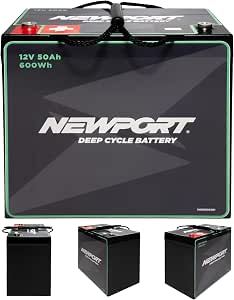
| Newport 12V 50Ah Deep Cycle AG | 50Ah | — | 12V | 32 lb |
| DC HOUSE 12V 100Ah Bluetooth L | 100Ah | LiFePO4 | 12.8V | 10.8 kg |
| LiTime 36V 100Ah Marine LiFePO | 100Ah | LiFePO4 | — | — |
| SUPER EMPOWER 12.8V 100Ah LiFe | — | LiFePO4 | 12.8V | 21.6 lb |
More Details on Our Top Picks
LiTime 36V 50Ah Bluetooth LiFePO4 Trolling Motor Battery
I’d shortlist this battery for boaters who need a purpose-built 36V supply without stepping up to the heavier 100Ah LiTime marine model. Its 50Ah capacity and 50A continuous discharge rating suit trolling motors up to 120lb thrust, while Bluetooth 5.0 monitoring lets you check battery status without relying only on a voltage reading. The IP65 rating and integrated BMS add protection against water exposure and electrical faults, and its 33.14-pound weight is more manageable than the 63.1-pound LiTime 36V 100Ah battery. The tradeoff is less stored energy for long outings, and this battery is not for engine starting. It also requires a specific charger-based startup procedure after first use or shutdown, so buyers seeking a simple drop-in replacement may prefer a less specialized setup.
Pros:- 36V, 50Ah configuration is designed for trolling motors up to 120lb thrust.
- Bluetooth 5.0 provides real-time status monitoring.
- IP65 protection and an integrated 50A BMS suit marine use.
- 33.14-pound weight is lower than the 36V 100Ah LiTime model.
Cons:- 50Ah capacity may limit runtime on longer or higher-demand outings.
- Not suitable for engine starting.
- Requires a specific charger-based startup procedure after initial use or shutdown.
Best for: Boaters with a compatible 36V trolling motor who want app-based battery monitoring and a lighter battery than a 100Ah marine model.
Not ideal for: Boaters needing engine-starting power, longer-range capacity, or a battery that works without following its startup procedure.
- Voltage:36V
- Capacity:50Ah
- Chemistry:LiFePO4
- Weight:33.14 lb
- Maximum discharge current:50A; 60A for 30 minutes
- Cycle life:4,000+ cycles
- Connectivity:Bluetooth 5.0
- Water resistance:IP65
- Dimensions:6.77 × 13 × 8.5 in
Our verdict“Choose this for a compatible 36V trolling motor when manageable weight and Bluetooth monitoring matter more than the longer runtime of a 100Ah battery.”
Hey Future 12V 100Ah Bluetooth LiFePO4 Deep Cycle Battery, Group 24
The Hey Future makes the most sense for buyers replacing a compatible Group 24 lead-acid battery who want to reduce carried weight without changing to a larger battery format. At 21.5 pounds, it is lighter than many traditional deep-cycle options, and its BMS covers common electrical and temperature hazards. Its 12.8V, 100Ah capacity suits a range of marine and backup-power jobs; series or parallel configurations can also scale a system up to 48V and 400Ah. Compared with the LiTime 12V 100Ah Bluetooth battery, this model puts more emphasis on Group 24 fit and system flexibility, while the LiTime listing specifies Bluetooth monitoring and IP65 protection. The Hey Future’s data does not list a waterproof rating or Bluetooth connection, and older lead-acid charging systems may need upgrading. Expanded configurations may call for professional installation.
Pros:- Group 24 format can fit compatible lead-acid replacement spaces.
- At 21.5 pounds, it is relatively light for a 100Ah battery.
- BMS includes overcharge, over-discharge, overcurrent, overheating, and low-temperature protection.
- Supports configurations up to 4S or 4P.
Cons:- Some older lead-acid charging systems may require an upgrade.
- The provided product data does not specify Bluetooth or a waterproof rating.
- Manufacturer recommends professional installation for expanded configurations.
Best for: Boat owners replacing a compatible Group 24 deep-cycle battery who want a lighter 12V option and may later build a series or parallel bank.
Not ideal for: Owners who need confirmed Bluetooth monitoring or a stated marine water-resistance rating, or who plan to use an older charger without checking compatibility.
- Voltage:12.8V
- Capacity:100Ah
- Chemistry:LiFePO4
- Group size:24
- Weight:21.5 lb
- Dimensions:6.61 × 10.24 × 8.3 in
- Terminals:M8
- Maximum configuration:4S or 4P; up to 48V 400Ah
Our verdict“Pick this Group 24 battery for a compatible 12V replacement when low weight and future bank expansion matter more than documented app monitoring or water protection.”
Mighty Max Battery 12V 55Ah Power Boat Pontoon Electric Trolling Motor Deep Cycle Battery
This Mighty Max is the conventional choice in a lineup otherwise led by lithium batteries: a 12V 55Ah sealed lead-acid unit for buyers who prefer a familiar deep-cycle format and do not need Bluetooth or lithium system expansion. Its sealed, spill-proof construction can be mounted in different positions and is described as resistant to shocks and vibration, useful traits for a small boat or pontoon. Compared with the Hey Future 12V 100Ah LiFePO4, it offers substantially less capacity and uses heavier lead-acid chemistry, but its simpler specification may suit a modest trolling-motor setup where lithium features are unnecessary. The listing includes only the battery and screws—no harness or mounting accessories—and gives no weight or cycle-life figure. Buyers should confirm the F2 terminal fit and available space before ordering.
Pros:- Sealed, spill-proof SLA/AGM construction.
- Can be mounted in any position according to the product description.
- Designed to resist shocks and vibration.
- UL Certified and supplied with a one-year warranty.
Cons:- 55Ah capacity is well below the 100Ah lithium options in this lineup.
- Lead-acid chemistry lacks the stated cycle-life advantage of LiFePO4 models.
- No wire harness or mounting accessories are included, and the listing provides no weight.
Best for: Small-boat and pontoon owners who need a basic 12V deep-cycle battery and prefer sealed lead-acid over lithium features.
Not ideal for: Boaters seeking high capacity in a compact, lightweight package, Bluetooth monitoring, or documented long cycle life.
- Voltage:12V
- Capacity:55Ah
- Chemistry:Sealed lead acid (SLA/AGM)
- Dimensions:9.06 × 5.43 × 8.98 in
- Terminal:F2
- Number of cells:6
- Mounting:Can be mounted in any position
- Warranty:One year
Our verdict“Choose the Mighty Max for a straightforward 12V lead-acid replacement in a modest setup, but look at the 100Ah lithium models for more capacity and lower carry weight.”
LiTime 36V 100Ah LiFePO4 Marine Battery with 25A Charger
For a boat that needs substantial 36V reserve, this LiTime pairs 100Ah capacity with a 25A charger, making it a stronger fit for extended runs than the 36V 50Ah LiTime. Bluetooth 5.0 helps you track battery status, while the IP65-rated housing and 100A BMS with more than 20 protections are aimed at marine and electric-outboard use. A stated 500A surge rating also gives it more headroom for brief high-demand loads than the smaller 50Ah model. That capacity comes with a real handling cost: at 63.1 pounds, it is considerably heavier and its 20.47-inch length needs careful fit checks. It also calls for an initial activation charge. I’d favor it for compatible systems that need reserve and surge capability, not for boats where battery weight or installation space is the main constraint.
Pros:- 100Ah capacity provides more stored energy than the 36V 50Ah LiTime.
- Includes a 25A charger.
- Bluetooth 5.0, IP65 rating, and a 100A BMS with more than 20 protections.
- Supports a stated 500A surge current.
Cons:- 63.1-pound weight makes handling and installation more demanding.
- Large dimensions require a careful compartment fit check.
- Requires an initial activation charge with a lithium or MPPT charger.
Best for: Owners of compatible 36V trolling motors or electric outboards who need more stored energy and surge capacity for longer outings.
Not ideal for: Boaters with tight battery compartments, limited ability to handle a 63.1-pound battery, or modest power needs better served by the 36V 50Ah LiTime.
- Voltage:36V
- Capacity:100Ah
- Chemistry:LiFePO4
- Included charger:25A
- BMS:100A; 20+ protections
- Surge current:500A
- Weight:63.1 lb
- Dimensions:20.47 × 10.55 × 8.66 in
- Connectivity:Bluetooth 5.0
Our verdict“Choose this for compatible 36V marine systems that need 100Ah capacity and high surge capability, provided the boat can accommodate its size and weight.”
LiTime 12V 100Ah LiFePO4 Trolling Motor Battery with Bluetooth
This LiTime is a practical step up from the 55Ah Mighty Max for boaters who want 100Ah at 12V without moving to a larger multi-battery system. Its 22.2-pound weight and Group 31 form make it easier to carry than a lead-acid battery with comparable capacity, while Bluetooth monitoring turns battery status into something you can check from a phone. The IP65 construction and low-temperature protection add useful safeguards for marine use, and the listed cycle life reaches up to 15,000 cycles at 60% depth of discharge. Compared with the Hey Future Group 24 battery, this model has a stated Bluetooth feature and water rating, but it is larger in format and the supplied data does not specify series or parallel expansion. Charging below 32°F is disabled, and activation may require a specific lithium or MPPT charger.
Pros:- 100Ah capacity in a 22.2-pound package.
- Bluetooth monitoring provides battery status through a smartphone.
- IP65 rating and salt-resistant construction suit marine environments.
- Cycle life listed up to 15,000 cycles at 60% depth of discharge.
Cons:- Not intended for engine starting, golf carts, or jacks.
- Charging is disabled below 32°F without an external heating solution.
- Bluetooth activation may require a specific lithium-activation or MPPT charger.
Best for: Trolling-motor owners who want a lightweight 12V, 100Ah lithium battery with app monitoring and stated marine water protection.
Not ideal for: Boaters who need engine-starting power, regular charging in freezing conditions, or a documented expandable battery configuration.
- Voltage:12.8V
- Capacity:100Ah
- Energy:1,280Wh
- Chemistry:LiFePO4
- Weight:22.2 lb
- Dimensions:13 × 6.77 × 8.5 in
- Cycle life:Up to 15,000 cycles at 60% DOD
- Connectivity:Bluetooth
- Warranty:5 years
Our verdict“Pick this for a lightweight 12V trolling-motor battery with app monitoring, but choose another model if cold-weather charging or engine starting is part of the job.”
LiTime 36V 50Ah LiFePO4 Trolling Motor Battery with 25A Charger
I’d choose this LiTime when a boat already uses a 36V trolling motor and the buyer wants a matched charger in the box. Its 36V, 50Ah capacity supports motors rated up to 120 lb thrust, while the included IP65 25A charger adds a practical convenience missing from the compact Newport 12V 50Ah AGM. The 60A BMS provides several battery protections, and the stated 4,000-plus-cycle life favors repeated seasonal use over a conventional lead-acid option. It can also grow to 36V 200Ah in a four-battery parallel setup. The tradeoff is that 50Ah offers less stored energy than the 100Ah LiTime models in this roundup, and at 39.4 lb it is not a featherweight. It is not for engine starting, and buyers should confirm their motor’s voltage and current needs before purchase.
Pros:- Includes an IP65-rated 43.8V 25A charger with LED status monitoring.
- 60A BMS includes overcharge, over-discharge, and temperature protection.
- Supports up to four batteries in parallel for a 36V 200Ah bank.
- Specified for more than 4,000 deep cycles.
Cons:- Not designed to start an engine.
- 50Ah capacity is modest beside the 100Ah 36V options in the roundup.
- Requires charger activation after first use.
Best for: Boat owners with a compatible 36V trolling motor who want an included waterproof charger and a battery they can expand later.
Not ideal for: Owners of 12V motors, engine-starting systems, or long-range setups that need more capacity than 50Ah provides.
- Chemistry:LiFePO4
- Voltage:36V
- Capacity:50Ah
- BMS:60A
- Included charger:43.8V, 25A, IP65 waterproof
- Weight:39.4 lb
- Cycle life:4,000+ deep cycles
- Expansion:Up to 4P; 36V 200Ah / 7.68kWh
- Warranty:5 years
Our verdict“I’d pick it for a compatible 36V trolling motor when included charging and future parallel expansion matter more than maximum range.”
HumsiENK 12V 160Ah LiFePO4 Lithium Battery with 150A BMS
The HumsiENK is the capacity-focused 12V choice here: its 160Ah and 2,048Wh give a marine house bank more stored energy than the WannaPow 12V 120Ah battery, which is better suited to buyers prioritizing a lighter, smaller unit. A 150A BMS and stated 1,920W continuous output make this a fit for substantial 12V loads, while the listed 6,000-plus cycles at 80% depth of discharge support frequent use. Its 4S4P expansion capability also leaves room to build a larger system. The tradeoff is a 41.23 lb package that is still a significant lift, and the 1,920W ceiling may restrict several high-draw appliances running together. I’d also plan for a LiFePO4-compatible charger; unlike the LiTime 36V 50Ah kit, this listing does not include one.
Pros:- 2,048Wh capacity provides more stored energy than the 120Ah WannaPow option.
- 150A BMS and 1,920W continuous output support sizable 12V loads.
- Specified for 6,000+ cycles at 80% depth of discharge.
- Supports up to 4S4P system configurations.
Cons:- A compatible LiFePO4 charger is required and none is listed as included.
- At 41.23 lb, it remains a substantial battery to move.
- Continuous output is limited to 1,920W, which can constrain simultaneous high-power loads.
Best for: Owners of 12V boats or marine house systems who need substantial stored energy for electronics and other sustained loads.
Not ideal for: Buyers seeking a compact portable battery, a 36V trolling-motor supply, or a complete battery-and-charger kit.
- Chemistry:LiFePO4
- Voltage:12V
- Capacity:160Ah
- Energy:2,048Wh
- BMS:150A
- Continuous output:1,920W
- Weight:41.23 lb
- Cycle life:6,000+ cycles at 80% DoD
- Maximum configuration:4S4P; 32.76kWh
Our verdict“I’d choose this for a 12V marine system that needs more capacity than a 120Ah battery, provided its weight and charger requirements suit the setup.”
WannaPow 12V 120Ah LiFePO4 Deep Cycle Battery for RV Marine Trolling Motor
At a listed 19 lb, the WannaPow is the portability-minded 12V option in this group, weighing less than half the 41.23 lb HumsiENK 160Ah. Its 120Ah, 1,536Wh capacity still gives a compatible trolling motor or boat electronics more reserve than a small 50Ah battery, and the 100A BMS lists overcurrent, short-circuit, and charge protections. The seller states 8,000-plus cycles, but the supplied information does not give a depth-of-discharge condition, so I would not compare that number directly with the HumsiENK’s cycle figure at 80% DoD. This listing also provides fewer detailed operating and compatibility limits. Buyers should verify charger requirements, installation fit, and motor draw before relying on it for a demanding marine setup. Its light weight is compelling, but the documentation is less complete than the LiTime 36V kits.
Pros:- Listed weight of 19 lb is far below the HumsiENK 160Ah battery.
- 1,536Wh capacity suits compatible trolling motors and marine electronics.
- 100A BMS lists overcharge, over-discharge, overcurrent, and short-circuit protections.
- M8 terminals and stated 5-year service support.
Cons:- The stated 8,000+ cycle life does not include a depth-of-discharge condition in the supplied data.
- Charger compatibility and operating limits are not specified here.
- Less capacity than the 160Ah HumsiENK for extended 12V loads.
Best for: Anglers and small-boat owners who need a relatively light 12V deep-cycle battery with more capacity than a basic compact unit.
Not ideal for: Buyers who need a fully specified high-current system, confirmed cycle-life conditions, or a bundled charger.
- Brand:WannaPow
- Chemistry:LiFePO4
- Voltage:12V
- Capacity:120Ah
- Energy:1,536Wh
- BMS:100A
- Weight:19 lb
- Dimensions:10.82 × 9.25 × 6.49 in
- Terminals:M8
Our verdict“I’d consider it for a weight-sensitive 12V boat setup, but I’d verify charger and motor compatibility before choosing it over better-documented alternatives.”
LiTime 36V 100Ah Bluetooth LiFePO4 Battery for Trolling Motors
For a compatible 36V motor and longer days on the water, this LiTime offers twice the capacity of the LiTime 36V 50Ah model: 100Ah and 3,840Wh provide a much larger energy reserve without requiring three separate 12V batteries in series. Bluetooth 5.0 monitoring lets an owner check charge state, voltage, and current from a phone, while the IP67 enclosure and low-temperature cutoff add useful marine protections. Those features make it a more integrated choice than the Newport 12V 50Ah AGM, though the Newport is simpler for a small 12V boat. The main tradeoff is handling: 67.46 lb is a heavy lift, and a 38.4V nominal system is not interchangeable with every product marketed as 36V. I’d confirm motor voltage and current limits before buying; this listing does not include a charger.
Pros:- 3,840Wh capacity doubles the 50Ah LiTime’s listed capacity.
- Bluetooth 5.0 provides app access to charge state, voltage, current, and battery status.
- IP67-rated enclosure and BMS low-temperature cutoff suit marine use.
- Replaces a three-battery 12V series arrangement in compatible systems.
Cons:- At 67.46 lb, moving and installing it can be difficult.
- Compatibility depends on the motor accepting its 38.4V nominal voltage and current.
- No charger is listed as included.
Best for: Owners of voltage-compatible 36V trolling motors or electric outboards who want extended capacity and app-based battery monitoring.
Not ideal for: Small-boat owners with a 12V system, buyers unable to handle a 67.46 lb battery, or anyone whose motor cannot accept the battery’s voltage and current.
- Chemistry:LiFePO4
- Nominal voltage:38.4V
- Capacity:100Ah
- Energy:3,840Wh
- Weight:67.46 lb
- Dimensions:15.35 × 7.99 × 10 in
- Bluetooth:5.0
- Ingress protection:IP67
- Cycle life:4,000+ cycles at 100% depth of discharge
Our verdict“I’d pick this for a compatible 36V boat that needs a large reserve and Bluetooth monitoring, if its weight is manageable.”
Newport 12V 50Ah Deep Cycle AGM Marine Battery
The Newport is the straightforward choice for a small 12V boat where a familiar sealed AGM battery matters more than lithium’s lower weight and longer stated cycle life. Its 12V, 50Ah deep-cycle design is aimed at trolling motors and marine electronics, and the sealed construction avoids routine battery-fluid maintenance. Compared with the LiTime 36V 50Ah LiFePO4, it is a simpler match for compatible 12V equipment, but it has less capacity than the WannaPow 12V 120Ah and does not offer lithium chemistry or a listed smart BMS. The 32 lb weight is manageable for a small craft, though the 19 lb WannaPow is easier to carry. I’d keep this pick for modest day trips and established 12V setups; buyers seeking longer run time or frequent deep cycling should look at the lithium alternatives instead.
Pros:- Sealed AGM construction is maintenance-free in normal use.
- Designed for deep-cycle trolling-motor and marine-electronics loads.
- 12V format suits compatible small-boat systems.
- 32 lb weight is lighter than the 67.46 lb LiTime 36V 100Ah.
Cons:- 50Ah capacity is substantially below the 120Ah WannaPow and 160Ah HumsiENK.
- At 32 lb, it is heavier than the listed 19 lb WannaPow lithium battery.
- Lead-acid chemistry lacks the stated cycle-life advantages of the LiFePO4 options.
Best for: Kayak, jon-boat, and small-boat owners with compatible 12V trolling motors who prefer sealed AGM simplicity.
Not ideal for: Boaters who need long run time, a lightweight battery, or lithium cycle life for frequent deep-discharge use.
- Battery type:Sealed lead-acid AGM
- Voltage:12V
- Capacity:50Ah
- Weight:32 lb
- Terminal:Marine terminal
- Intended applications:Trolling motors and 12V marine electronics
- Construction:Sealed, maintenance-free
Our verdict“I’d choose the Newport for a modest 12V small-boat setup that favors sealed AGM simplicity over lower weight and greater lithium capacity.”
DC HOUSE 12V 100Ah Bluetooth LiFePO4 Battery
I’d choose the DC HOUSE when a 12V boat setup needs app-based status checks and more specific cold-weather safeguards than a basic deep-cycle battery offers. Bluetooth 5.1 reports charge, voltage, current, and fault alerts, while its charging cutoff is listed at 19.4°F—lower than the SUPER EMPOWER cutoff of 32°F. That may give some cold-weather users more charging latitude, though charging still stops below the stated threshold. Its Group 24-style case suits compact installations, but it is slightly taller than standard, so I’d check box clearance before buying. The 100Ah capacity and series/parallel support allow system expansion; however, this battery is not for engine starting, requires a lithium charger, and does not permit a 4P4S arrangement. Its 5–10 m Bluetooth range also favors nearby monitoring, not remote checks from elsewhere on the boat.
Pros:- Bluetooth app reports state of charge, voltage, current, and fault alerts.
- Charging cutoff is specified at 19.4°F, below the SUPER EMPOWER’s 32°F cutoff.
- Compact Group 24-style footprint suits many small-boat battery spaces.
- Supports up to four batteries in series or four in parallel, subject to configuration limits.
Cons:- Not designed for engine starting or cranking.
- Requires a dedicated lithium battery charger.
- Cannot be configured as 4P4S, and its case is taller than a standard Group 24 battery.
Best for: Boat owners with a 12V trolling-motor or house-power setup who want nearby app monitoring, cold-weather cutoffs, and room to expand the battery bank.
Not ideal for: Boaters seeking a cranking battery, needing remote Bluetooth access from far away, or planning a 4P4S configuration.
- Chemistry:LiFePO4
- Voltage:12.8V
- Capacity:100Ah
- Bluetooth:Bluetooth 5.1; 5–10 m range
- Low-temperature cutoffs:Charging: 19.4°F; discharging: -4°F
- Dimensions:6.6 × 10.2 × 9.2 in
- Weight:10.8 kg
- Expansion:Up to 4 in series or 4 in parallel; maximum 8 batteries; 4P4S not allowed
Our verdict“Choose this DC HOUSE for a compact 12V boat system where Bluetooth status checks and a lower charging cutoff matter more than cranking ability or unrestricted bank layouts.”
LiTime 36V 100Ah Marine LiFePO4 Battery Kit with Charger and Breaker
For a 36V electric outboard or trolling motor, this LiTime kit stands apart by bundling the battery, waterproof 25A charger, breaker, and connecting cables. That is a more ready-to-assemble package than the 12V DC HOUSE or SUPER EMPOWER batteries, which are better fits for buyers building or replacing a single 12V bank. At 100Ah and 38.4V nominal, this option targets longer-running, higher-voltage motor systems; Bluetooth 5.0 adds convenient status checks, and moisture and salt-spray resistance suit marine use. The tradeoff is less flexibility for a small 12V installation: the voltage and included charger are intended for a compatible 36V setup. Its low-temperature cutoffs also stop charging at 32°F and discharging at -4°F, so buyers boating in cold conditions need to plan around those limits.
Pros:- Kit includes a 43.8V 25A waterproof charger, breaker, and connecting cables.
- 100Ah capacity and 38.4V nominal output are suited to compatible 36V marine motors.
- Bluetooth 5.0 provides battery status monitoring.
- Marine-oriented moisture and salt-spray resistance, plus a 100A BMS with multiple protections.
Cons:- Designed for compatible 36V systems, not a direct replacement for 12V batteries such as the DC HOUSE.
- Charging is disabled at or below 32°F, and discharging at or below -4°F.
- The 25A charger may be a limiting factor for buyers wanting faster charging.
Best for: Owners of compatible 36V electric outboards or trolling motors who want the battery, waterproof charger, breaker, and cables in one marine-focused kit.
Not ideal for: Boaters with 12V systems, buyers who already have a complete charging and wiring setup, or those who need operation below the specified temperature cutoffs.
- Chemistry:LiFePO4
- Nominal voltage:38.4V
- Capacity:100Ah
- Charger:43.8V, 25A, waterproof
- Continuous current:100A charge/discharge
- Peak current:500A for 1 second
- Battery management:100A BMS with 20+ protections
- Temperature cutoffs:Charging: 32°F; discharging: -4°F
- Included components:Battery, 25A charger, breaker, and connecting cables
Our verdict“Pick this LiTime kit for a compatible 36V motor when bundled marine charging and protection gear matter more than 12V flexibility.”
SUPER EMPOWER 12.8V 100Ah LiFePO4 Deep Cycle Battery, Group 24
The SUPER EMPOWER is a practical choice for buyers who want a standard-format 12V deep-cycle battery that can grow into a larger bank. Its 100A BMS and support for up to four batteries in series and four in parallel give it a clearer expansion path than the DC HOUSE, which rules out a 4P4S layout. The listed 1,280Wh capacity provides a useful baseline for estimating onboard energy needs, while Group 24 dimensions and M8 terminals can simplify fitment in compatible battery boxes. It lacks the DC HOUSE’s Bluetooth monitoring, so checking battery status requires another method. Cold-weather operation is another limit: charging stops below 32°F, and discharge stops below -4°F. I’d also keep it off engine-starting duty and use a lithium-compatible charger or charging system.
Pros:- Supports up to 4S4P configurations, unlike the DC HOUSE’s restriction on 4P4S.
- Group 24 dimensions and M8 terminals suit many standard battery boxes and connections.
- 100A BMS provides overcharge, over-discharge, overcurrent, short-circuit, and temperature protection.
- Compatible with lithium chargers, lithium-mode solar controllers, and generator charging through a lithium or DC-DC charger.
Cons:- No Bluetooth monitoring is listed, unlike the DC HOUSE.
- Not suitable for engine starting or cranking.
- Charging stops below 32°F and discharge below -4°F; non-lithium chargers are not recommended.
Best for: Boat owners building a 12V deep-cycle bank who value Group 24 fit, a 100A BMS, and straightforward series-parallel expansion.
Not ideal for: Buyers who want Bluetooth monitoring, need engine-starting capability, or must charge or discharge the battery below its stated temperature limits.
- Chemistry:LiFePO4
- Voltage:12.8V
- Capacity and energy:100Ah; 1,280Wh
- BMS current:100A
- Battery group:BCI Group 24
- Dimensions:6.49 × 10.24 × 8.98 in
- Weight:21.6 lb
- Temperature cutoffs:Charging below 32°F; discharging below -4°F
- Expansion:Up to 4S4P; maximum 51.2V, 400Ah, 20.48kWh
Our verdict“Choose the SUPER EMPOWER for a scalable 12V deep-cycle bank if standard Group 24 fit and 4S4P expansion matter more than app monitoring.”
How We Picked
I compared the 13 options by the factors that most affect an electric-boat battery purchase: voltage and capacity fit, battery chemistry, stated monitoring and protection features, physical format cues, and whether useful equipment such as a charger or breaker is included. I gave extra weight to options that make a clear case for a specific setup, such as a 36V trolling motor, a compact Group 24 installation, or a buyer who prefers AGM. I also treated capacity as a planning input rather than a performance guarantee: real run time depends on motor draw, speed, conditions, and the rest of the electrical system.
The ranking favors batteries with a strong blend of usable capacity, clearly stated features, and a practical role in a marine setup. That places the LiTime 36V 100Ah Bluetooth model first for buyers with a compatible 36V motor, while charger-equipped alternatives rank well for buyers who want fewer separate components. Lower-capacity and lead-acid models remain relevant for smaller systems or buyers with different constraints, but they rank below high-capacity lithium options for buyers prioritizing capacity and monitoring. I do not treat product names as proof of fit: buyers should verify manufacturer specifications, dimensions, wiring, and charging requirements before purchase.
| electric boat batterie | Chemistry |
|---|---|
| LiTime 36V 50Ah Bluetooth LiFe | LiFePO4 |
| Hey Future 12V 100Ah Bluetooth | LiFePO4 |
| Mighty Max Battery 12V 55Ah Po | Sealed lead acid (SLA/AGM) |
| LiTime 36V 100Ah LiFePO4 Marin | LiFePO4 |
| LiTime 12V 100Ah LiFePO4 Troll | LiFePO4 |
| LiTime 36V 50Ah LiFePO4 Trolli | LiFePO4 |
| HumsiENK 12V 160Ah LiFePO4 Lit | LiFePO4 |
| WannaPow 12V 120Ah LiFePO4 Dee | LiFePO4 |
| LiTime 36V 100Ah Bluetooth LiF | LiFePO4 |
| Newport 12V 50Ah Deep Cycle AG | — |
| DC HOUSE 12V 100Ah Bluetooth L | LiFePO4 |
| LiTime 36V 100Ah Marine LiFePO | LiFePO4 |
| SUPER EMPOWER 12.8V 100Ah LiFe | LiFePO4 |
Factors to Consider When Choosing Best Electric Boat Batteries
Before choosing among these batteries, start with the boat’s electrical system, not a capacity number. The details below address common mismatches that can lead to poor fit, unexpected charging needs, or a battery that cannot support the intended motor.
Match battery voltage to the motor and wiring
Check the trolling motor’s required voltage and the boat’s existing wiring before comparing battery capacities. A 36V model cannot replace a 12V battery in a 12V system simply because it offers more stored energy. Some boats use multiple batteries in series to reach a higher voltage, while others use separate batteries for propulsion and onboard electronics. Changing a system voltage can affect wiring, circuit protection, chargers, and connected equipment. Follow the motor and boat manufacturer requirements rather than adapting the setup around a battery listing. If the wiring arrangement is unclear, have a qualified marine electrician confirm it before buying.
Estimate capacity from actual motor use
Capacity helps estimate how long a battery may support a load, but it does not provide a guaranteed number of hours on the water. Motor draw changes with speed, boat load, wind, current, and how often the motor is used at high power. Write down a typical trip pattern and check the motor’s current draw at the speeds you use most. Leave room for conditions that demand more thrust, rather than planning to use every available amp-hour. A larger battery may extend time between charges, but it can also take up more space and add cost and weight. Compare capacity only after confirming that the battery suits the motor’s voltage and physical installation.
Choose chemistry with charging and upkeep in mind
LiFePO4 and AGM batteries differ in weight, charging behavior, maintenance, and system compatibility, so choose based on the whole boat rather than a single advertised advantage. Lithium models in this roundup often add Bluetooth monitoring and higher stated capacity, while AGM options offer a sealed lead-acid alternative. A charger designed for one chemistry may not be appropriate for another; check its settings and the battery maker’s instructions. Also verify any limits on charging temperature, storage, and use. If the boat already has a charger, confirm its compatibility before assuming it can be reused. When the charging system cannot be changed, that constraint may decide the battery choice.
Measure the battery compartment before selecting a format
Capacity and voltage do not tell you whether a battery will fit. Measure the available length, width, and height, including clearance for terminals, cables, covers, and ventilation or access needs specified by the manufacturer. Group 24 labeling can help identify a familiar format, but buyers should still confirm the exact product dimensions. A high-capacity 120Ah or 160Ah battery may not fit the same space as a smaller Group 24 option. Check mounting and restraint requirements as well, since boat motion can shift a poorly secured battery. Leave enough access to inspect connections and disconnect power safely.
Compare complete-system costs and included components
A battery bundle with a charger or breaker may reduce the number of separate parts to source, but only if those components match the boat’s system. Read the package contents carefully: similar model names can refer to a battery alone or a kit with additional equipment. Check charger output and compatibility, breaker specifications, cable requirements, and the boat maker’s recommendations. A lower-capacity battery may suit a shorter outing, while a larger model may require a more capable charging setup. Do not assume included gear is suitable for every installation just because it is sold as a kit. Compare the battery and necessary accessories as one system.
Plan monitoring, protection, and service access
Bluetooth monitoring can make it easier to check battery status without opening a compartment, but it does not replace correct wiring or a suitable battery monitor. Confirm what the app reports and whether you can view that information where the battery will be installed. Check the product documentation for battery management system limits, permitted loads, and charging instructions. A stated BMS rating should be compared with the motor’s electrical demands rather than treated as a general measure of quality. Keep terminals accessible and inspect connections for corrosion or looseness as directed by the manufacturer. If you depend on the battery for long trips, plan a backup power or return strategy instead of relying on an app reading alone.
Frequently Asked Questions
Can I use a 36V battery with a trolling motor that currently uses 12V?
No, not unless the motor and the boat’s electrical system are designed for 36V. Applying a higher voltage to a 12V motor can damage equipment and create a safety hazard. Check the motor’s manual and the boat wiring diagram; some systems create 36V using multiple batteries connected in series. A single 36V battery may replace a series bank only when the motor, wiring, charger, and protection components support that arrangement. If the system layout is uncertain, ask a marine electrician to verify it before changing batteries.
Will a charger I already own work with a LiFePO4 battery?
Do not assume it will. The charger must support the battery’s chemistry and match the required voltage and charging profile listed by its manufacturer. A charger made for AGM or another lead-acid battery may not charge LiFePO4 correctly, even if its connector fits. Check whether it has an appropriate lithium mode and whether its output is suitable for the battery capacity and the rest of the system. If the documentation does not clearly confirm compatibility, contact the battery or charger manufacturer before connecting them.
How much battery capacity do I need for a full day of trolling?
There is no single capacity that guarantees a full day because energy use depends on motor draw, speed, weather, current, boat load, and the number of hours spent under power. Start with the motor’s current draw at your typical operating speeds and estimate the hours you expect to use it. Add a reserve for higher-than-usual demand and avoid planning a trip around using the battery to its limit. Compare that estimate with the usable capacity allowed by the battery maker’s guidance. If the trip is long or conditions can change quickly, plan a way to return safely if the battery runs low.
Is a charger-and-breaker battery kit always the better choice?
No. A kit can simplify sourcing, but its included parts are useful only if their specifications match your motor and boat installation. Check the charger chemistry, output, and voltage, as well as the breaker’s rating and suitability for the wiring. You may already own compatible equipment, or your boat manufacturer may call for different components. Compare the kit contents against the system requirements rather than treating a bundle as automatically complete. If any component is unclear, confirm compatibility before installation.
Should I choose lithium or AGM for a small boat or kayak?
Choose based on the boat’s voltage, available space, charging setup, carrying limits, and expected use. The Newport 12V 50Ah AGM and Mighty Max 12V 55Ah lead-acid battery offer alternatives to the lithium models, while smaller boats may benefit from checking the weight and dimensions of every option. Lithium models often provide higher stated capacity and may include Bluetooth monitoring, but they require compatible charging and careful attention to manufacturer instructions. AGM may suit a buyer whose setup is built around sealed lead-acid batteries, though it still has its own weight and charging requirements. Compare the complete setup and verify the motor’s specifications before deciding.
Conclusion
For a compatible 36V trolling motor, I recommend the LiTime 36V 100Ah Bluetooth LiFePO4 Battery as the best overall choice in this lineup, with its capacity and monitoring making it the strongest all-around fit for that system. For best value, I would compare the LiTime 36V 50Ah models if their capacity matches your trips; choose the charger-equipped version when its included charger fits your setup. The LiTime 36V 100Ah Marine Battery Kit with Charger and Breaker is my premium pick for buyers who want a bundled installation path, provided every component is compatible. Beginners with a 12V system should start by confirming voltage and fit, then look closely at the Hey Future 12V 100Ah Group 24 Bluetooth battery for a clearly stated compact format. For specific needs, choose the Newport AGM or Mighty Max if lead-acid best matches your existing setup, or consider the HumsiENK 12V 160Ah when a larger stated capacity is useful and the space, charger, and system support it. Whichever you choose, verify voltage, dimensions, charging compatibility, and motor requirements before ordering.