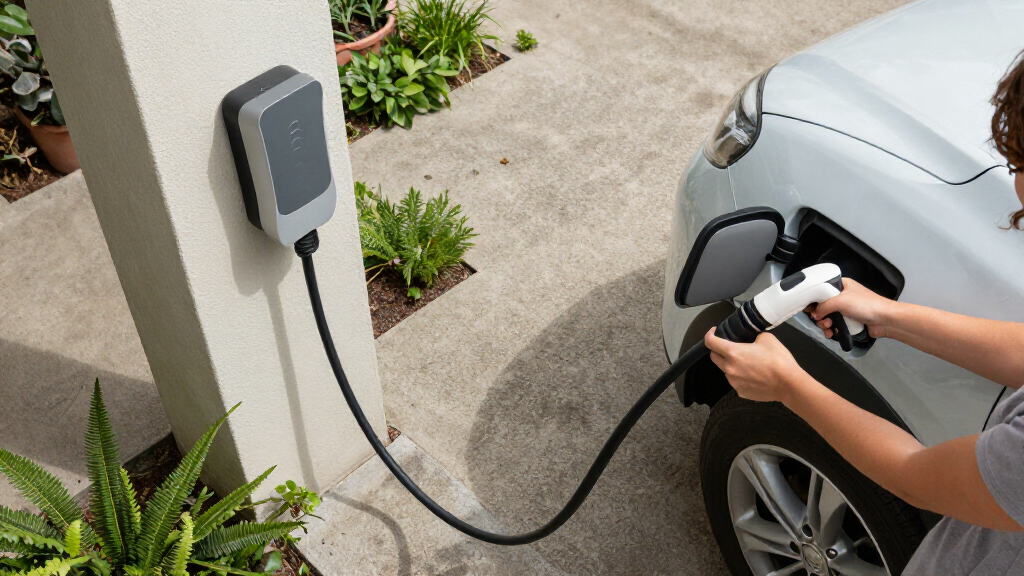
Choosing the best EV chargers requires balancing raw charging speed with installation complexity and smart features. The Wallbox Pulsar Plus stands out as the top overall pick for its compact size, reliable Wi-Fi connectivity, and broad vehicle compatibility. For those needing portability, the ChargePoint HomeFlex offers a versatile plug-in design that avoids permanent wiring, while the Emporia Pro appeals to tech-savvy users wanting granular energy tracking. The main tradeoff you face is between hardwired efficiency and plug-and-play flexibility. Continue reading to see how these fifteen options stack up against specific use cases like apartment living, heavy daily driving, or budget-conscious setups.

Get backup power and energy gear delivered free with Prime
- Fast, free delivery on millions of items
- Prime Video, Amazon Music and more included
- Member-only deals all year
Key Takeaways
- Hardwired units like the Wallbox Pulsar Plus generally offer higher amperage caps (48A+) compared to plug-in models, which are often limited by NEMA 14-50 circuit ratings.
- App connectivity is no longer a luxury but a standard; Wi-Fi enabled chargers allow for off-peak scheduling that can cut electricity costs by 30-50% depending on local utility rates.
- Cable length is a critical differentiator; 25-foot cables (common in Emporia and Autel models) provide significantly more parking flexibility than standard 20-foot options.
- NACS (Tesla) compatibility is emerging in non-Tesla brands like ChargePoint and Emporia, signaling a shift away from J1772-only connectors for future-proofing.
- Portable EVSEs like the EVDANCE and bokman are ideal for renters or travelers but lack the durable, weather-hardened build quality of dedicated home stations.


| EV charger | Cable length | Maximum current | Voltage | Connector |
|---|---|---|---|---|
| Wallbox Pulsar Plus Level 2 EV | 25 ft | 48 A | 240 V | J1772 |
| Level 2 Electric Vehicle | 25 ft | 32 A | 220–240 V | J1772 |
| EMPORIA Pro Level 2 EV Charger | 25 ft | 48 A | 240 V | J1772 |
| ChargePoint HomeFlex Level 2 E | — | — | 240 V | J1772 |
| Grizzl-E Level 2 EV Charger | 24 ft | 40 A | 240 V | — |
| EVDANCE Level 2 Portable EV Ch | 25 ft | 40A | 240V | J1772 |
| Level 2 EV Charger | 25 ft | 40A | 240V | J1772 |
| bokman Level 1 and Level 2 EV | 20 ft | 32A | — | J1772 |
| EMPORIA Level 2 EV Charger w/ | 25 ft | 48A | 240V | J1772 |
| Autel MaxiCharger 50A Level 2 | 25 ft | 50A | 240V | J1772 |
| Autel MaxiCharger Level 2 EV C | 25 ft | — | — | — |
| ChargePoint HomeFlex Level 2 H | — | 50 A | — | — |
| ELEGRP Level 2 Portable EV Cha | 25 ft | 40A | — | — |
| Emporia Level 2 NACS EV Charge | 24 ft | — | — | — |
| SEGUMA Level 2 EV Charger | 25 ft | — | — | — |
More Details on Our Top Picks
Wallbox Pulsar Plus Level 2 EV Charger, 48 A, J1772
I rank the Wallbox Pulsar Plus first for buyers who want a high-output, permanently installed home charger with useful app controls. Its 48 A output can deliver up to 11.5 kW when the vehicle and home circuit support it, while Wi-Fi and Bluetooth enable charging schedules and remote monitoring. The 25-foot cable gives more reach than many garage setups need, and its indoor/outdoor design adds installation flexibility. Compared with the plug-in ChargePoint HomeFlex, this Wallbox is a hardwired choice rather than an outlet-based one; that suits a dedicated installation but calls for an electrician. Its J1772 connector works with North American J1772 vehicles, though Tesla drivers need an adapter. The tradeoff is less installation flexibility than a portable plug-in unit, and its full output depends on the car and electrical service.
Pros:- Up to 48 A and 11.5 kW output for vehicles and circuits that can use the added capacity
- Wi-Fi and Bluetooth support app-based monitoring and charging schedules
- 25-foot J1772 cable offers flexible reach around a garage or driveway
- Weather-resistant indoor/outdoor design with UL and Energy Star certifications
Cons:- Hardwired installation requires an electrician and a compatible circuit
- Tesla vehicles need a separate J1772 adapter
- The charger’s maximum output may exceed what some vehicles or home electrical services can accept
Best for: EV owners with a suitable electrical circuit who want a permanent, app-controlled charger and a long cable for reaching different parking positions.
Not ideal for: Renters or drivers who want to move their charger between outlets, since this model is hardwired and needs electrician installation; Tesla owners without a J1772 adapter should also skip it.
- Voltage:240 V
- Maximum current:48 A
- Maximum power:Up to 11.5 kW
- Connector:J1772
- Cable length:25 ft
- Connectivity:Wi-Fi and Bluetooth
- Installation:Hardwired; electrician installation
- Use and certification:Indoor/outdoor; UL and Energy Star
- Warranty:3 years
Our verdict“Choose the Wallbox Pulsar Plus for a permanent, feature-rich home setup with 48 A capacity, provided hardwiring fits your home and vehicle.”
Level 2 Electric Vehicle (EV) Charger(WIFI APP/Plug-play), 32A, 25ft Cable ETL Certified, 220V-240V NEMA 14-50P Plug EVSE w/ J1772 Connector, Portable EV Car Charging Stations for Home Level 2
This AIMILER 32 A charger suits drivers who want adjustable output and app scheduling without committing to a hardwired installation. Its NEMA 14-50 plug can connect to a compatible 240 V outlet, and the current can be set at 16, 24, or 32 A to match the circuit’s capacity. That flexibility is useful when a household needs to limit charging draw, while the 25-foot cable and screen make setup and status checks straightforward. Unlike the hardwired Wallbox Pulsar Plus, this unit can be unplugged, but it tops out at 32 A rather than 48 A. The listing also describes a 120 V adapter option, but charging then falls to Level 1 speeds and the correct EV adapter cable is not included. Buyers should verify outlet, circuit, app, and adapter requirements before choosing it.
Pros:- Plug-in NEMA 14-50 design avoids a hardwired charger installation
- Selectable 16 A, 24 A, and 32 A settings help match charging draw to circuit capacity
- Wi-Fi app supports schedules, usage history, and charging status
- 25-foot cable and built-in display show charging information at the unit
Cons:- 32 A maximum output is lower than the 48 A Wallbox Pulsar Plus and EMPORIA Pro
- The 120 V adapter is not included, and Level 1 charging is much slower
- The listing advises against installation in direct sunlight or exposure to rain
Best for: Drivers with a NEMA 14-50 outlet who want a portable charger, selectable current settings, and app-based scheduling.
Not ideal for: Households seeking the fastest supported Level 2 charging or a hardwired outdoor installation; its output is limited to 32 A, and the listing advises against direct exposure to rain or sunlight.
- Voltage:220–240 V
- Maximum current:32 A
- Maximum power:Up to 7.68 kW
- Connector:J1772
- Plug:NEMA 14-50P
- Cable length:25 ft
- Current settings:16 A, 24 A, or 32 A
- Connectivity and display:Wi-Fi app and screen
- Certification:ETL and FCC
Our verdict“Pick this AIMILER when you have a suitable 14-50 outlet and value adjustable, portable charging more than 48 A output.”
EMPORIA Pro Level 2 EV Charger with PowerSmart – 48 amp Fast EV Charger for Home with Hardwire and J1772 Connector – 240v Electric Vehicle Charging Station and 25′ EV Charging Cable
The EMPORIA Pro earns its place for households where the electrical panel—not the car—is the main limit on charging. Its PowerSmart load management is designed to adjust charging against the home’s electrical use, potentially letting owners charge without an immediate panel upgrade; the included Vue home energy monitor adds whole-home usage insight. The charger can deliver up to 48 A and offers app schedules and consumption tracking, making it more energy-aware than the straightforward Grizzl-E 40 A. It also supports either a NEMA 14-50 plug or hardwiring, a useful installation choice not offered by the hardwired-only Wallbox in this lineup. This flexibility depends on configuring the system and having the monitor installed as required, so it is not the simplest pick for a basic charging setup. Tesla owners need an adapter, and the top charging rate still depends on vehicle and circuit limits.
Pros:- PowerSmart load management is designed to balance charger demand with household electrical use
- Includes a Vue home energy monitor for real-time and historical whole-home usage data
- Up to 48 A output with app scheduling and charging tracking
- Supports NEMA 14-50 plug-in or hardwired installation
Cons:- Load-management benefits depend on setup and the home’s electrical configuration
- Tesla vehicles require a separate J1772 adapter
- A more involved energy-monitoring system may be unnecessary for buyers who only need basic charging
Best for: Homeowners with constrained electrical service who want load balancing and whole-home energy data alongside a high-output charger.
Not ideal for: Buyers who want a basic, low-setup charger or do not need energy monitoring; its load-management features and included monitor add system complexity.
- Voltage:240 V
- Maximum current:48 A
- Connector:J1772
- Cable length:25 ft
- Installation:NEMA 14-50 plug or hardwired
- Load management:PowerSmart
- Included monitor:Vue home energy monitor
- Connectivity:Wi-Fi and Bluetooth
- Warranty:3 years
Our verdict“Choose the EMPORIA Pro if you want 48 A charging paired with load management and whole-home energy insight, rather than a simpler charger like the Grizzl-E.”
ChargePoint HomeFlex Level 2 EV Charger J1772 – NEMA 14-50 Plug
The ChargePoint HomeFlex is a strong fit for drivers who want their home charger connected to the same app ecosystem they use to find public charging. Its app supports charger controls, reminders, charging information, and access to ChargePoint’s network tools. This model uses a NEMA 14-50 plug, so it can work with a properly installed compatible outlet rather than requiring the hardwired installation used by the Wallbox Pulsar Plus. The listing describes charging up to 9 times faster than a 120 V outlet, with the actual rate depending on the vehicle. Compared with the more specialized EMPORIA Pro, it lacks the bundled whole-home energy monitor and PowerSmart load management. Its J1772 connector also means Tesla drivers need an adapter. Check the outlet and circuit requirements before buying, and note that its 50 A circuit requirement does not mean every vehicle will charge at that rate.
Pros:- ChargePoint app offers charger control, reminders, and charging information
- NEMA 14-50 plug avoids requiring a hardwired connection
- UL-certified design is rated for indoor or outdoor installation
- Cold-resistant cable is suited to use in colder conditions
Cons:- Requires a compatible 14-50 receptacle and a 40 A or 50 A circuit
- J1772 connector requires an adapter for Tesla vehicles
- Does not include the EMPORIA Pro’s whole-home energy monitor or load-management feature
Best for: Drivers with a compatible 14-50 outlet who want a smart home charger linked to ChargePoint app and network features.
Not ideal for: Homeowners who need built-in panel load balancing or a whole-home energy monitor; the EMPORIA Pro is a better match for those needs.
- Voltage:240 V
- Plug:NEMA 14-50
- Connector:J1772
- Ports:1
- Installation:Indoor or outdoor; electrician installation
- Circuit requirement:40 A or 50 A circuit
- Certification:UL
- Weight:13.8 lb
Our verdict“Choose the ChargePoint HomeFlex if app and network integration matter more to you than load balancing or a higher-output hardwired setup.”
Grizzl-E Level 2 EV Charger, 40A, NEMA 14-50 Plug, Avalanche Edition
The Grizzl-E Avalanche Edition prioritizes a robust, weather-resistant build and adjustable current over app-connected features. Its settings span 16 A to 40 A, letting owners select a draw that suits their circuit, while the 24-foot cable provides practical reach for many home parking arrangements. The unit is rated IP67 and includes built-in GFCI plus protections for faults, temperature, and voltage, which makes it a particularly appealing choice for exposed or demanding installation locations. Compared with the ChargePoint HomeFlex, the Grizzl-E offers more explicit current selection and a higher stated maximum of 40 A, but the provided product data does not list an app or scheduling controls. It also needs a compatible NEMA 14-50 outlet and circuit. Buyers who want smart energy monitoring should look at the EMPORIA Pro instead; this is the simpler, sturdier plug-in direction.
Pros:- Selectable 16 A, 24 A, 32 A, or 40 A output helps match the circuit
- IP67 ingress protection and weather-resistant construction
- 24-foot cable offers useful reach around a parking area
- Built-in GFCI and multiple electrical protections
Cons:- Requires a compatible NEMA 14-50 outlet and circuit breaker
- No app connectivity or smart scheduling is specified in the product data
- Charging rate depends on the selected current, circuit capacity, and vehicle
Best for: EV and plug-in hybrid owners who need a rugged plug-in charger with selectable current for a compatible 14-50 outlet.
Not ideal for: Drivers who want app scheduling, charging analytics, or load balancing; the EMPORIA Pro offers more energy-management tools.
- Voltage:240 V
- Maximum current:40 A
- Charging power:Up to 10 kW
- Current settings:16 A, 24 A, 32 A, or 40 A
- Plug:NEMA 14-50
- Cable length:24 ft
- Ingress protection:IP67
- Safety:Built-in GFCI and electrical protections
- Certification:UL and Energy Star
Our verdict“Pick the Grizzl-E for adjustable, weather-resistant plug-in charging, but choose the EMPORIA Pro if connected energy controls are a priority.”
EVDANCE Level 2 Portable EV Charger, 40A, 240V, 9.6 kW, NEMA 14-50 Plug, 25 ft Cable
The EVDANCE portable charger suits drivers who want a high-output Level 2 unit they can pack away or move between compatible outlets. Its 40A maximum output is higher than the bokman’s 32A ceiling, while six selectable current levels give owners room to match charging to the circuit. The 25-foot cable also offers more reach than bokman’s 20-foot lead, useful when the outlet is not near the parking spot. A delay timer and onboard display keep scheduling and basic status checks simple without relying on an app. The tradeoff is that this is not a dual-outlet solution: it needs a NEMA 14-50 outlet, and Tesla drivers need to supply their own adapter. Choose it for portable 40A capability, not smart-home controls.
Pros:- Up to 40A output with six selectable current settings
- 25-foot cable gives more parking-position flexibility than the bokman’s 20-foot cable
- Delay start timer and display provide useful controls without an app
- Includes a carry bag and holders for portable storage and cable management
Cons:- Requires a NEMA 14-50 outlet for charging
- J1772-to-Tesla adapter is not included
- No Wi-Fi or app-based energy tracking is specified
Best for: J1772 drivers with a NEMA 14-50 outlet who want a portable 40A charger, long cable, and simple timer controls.
Not ideal for: Tesla owners without a J1772 adapter, or drivers who need Wi-Fi scheduling or Level 1 charging from a standard household outlet.
- Maximum output:9.6 kW
- Maximum current:40A
- Voltage:240V
- Connector:J1772
- Plug:NEMA 14-50
- Cable length:25 ft
- Current settings:10A, 16A, 20A, 24A, 32A, 40A
- Delay start:1–12 hours
Our verdict“Pick the EVDANCE if you want a portable 40A J1772 charger with a long cable and already have a NEMA 14-50 outlet.”
Level 2 EV Charger, 40Amp/9.6KW/240V, NEMA 14-50P, Wi-Fi(2.4 GHz)
The IYILO 40A charger stands apart from the EVDANCE and bokman portable units by adding Wi-Fi app controls, scheduled charging, energy-use tracking, and RFID access. That makes it a better fit for households managing charging times or multiple drivers than a display-and-button charger. Its current can be adjusted in 1A steps from 6A to 40A, giving finer control than the EVDANCE’s six preset levels. The connector’s temperature monitoring and automatic stop protection add another layer of oversight. There is a meaningful installation caveat: the description associates full 40A output with hardwiring and a 50A breaker, while the title identifies a NEMA 14-50P plug, so buyers should confirm the intended setup before purchase. It also works only on 2.4 GHz Wi-Fi; Tesla adapters and the optional energy meter are separate.
Pros:- App supports schedules, energy tracking, cost monitoring, and multiple user accounts
- Current adjustment in 1A increments from 6A to 40A
- Connector temperature monitoring can stop charging if overheating is detected
- Power sharing is supported for two chargers on one circuit
Cons:- Wi-Fi support is limited to 2.4 GHz
- Product information describes both a NEMA 14-50 plug and a hardwired setup for full 40A output, so installation details need confirmation
- Tesla adapter and the energy meter for dynamic load balancing are not included
Best for: Connected households with J1772 vehicles that want app scheduling, energy tracking, RFID access, and fine-grained current adjustment.
Not ideal for: Buyers who want a straightforward plug-in setup without app dependence, use only 5 GHz Wi-Fi, or need Tesla compatibility without purchasing an adapter.
- Maximum output:9.6 kW
- Maximum current:40A
- Voltage:240V
- Connector:J1772
- Cable length:25 ft
- Current adjustment:6A–40A in 1A increments
- Wi-Fi:2.4 GHz
Our verdict“Choose the IYILO for app-led scheduling and monitoring, but confirm the installation configuration and your Wi-Fi band first.”
bokman Level 1 and Level 2 EV Charger, 32A, 20 ft Cable, NEMA 14-50P with 5-15 Adapter
The bokman’s distinguishing advantage is practical flexibility: it includes both a NEMA 14-50 plug for Level 2 and a NEMA 5-15 adapter for Level 1. That lets owners charge from a standard household outlet when a 240V outlet is unavailable, though at Level 1 speeds. Its seven current settings and 1–12-hour delay timer offer more adjustment choices than the EVDANCE’s six presets, and the LED display avoids the app setup required by the IYILO. The compromise is a 32A maximum, below the 40A EVDANCE and IYILO, and its 20-foot cable is shorter than theirs. This is the most adaptable pick for changing outlet access, not the strongest choice for drivers focused on the highest charging output.
Pros:- Includes adapters for Level 2 NEMA 14-50 and Level 1 NEMA 5-15 charging
- Seven current settings from 6A to 32A
- Delay timer and LED display work without Wi-Fi or an app
- IP65-rated enclosure and listed electrical protections support indoor or outdoor placement
Cons:- 32A maximum is lower than the 40A EVDANCE and IYILO options
- 20-foot cable is shorter than the 25-foot cables on several alternatives
- Tesla adapter is not included
Best for: J1772 drivers who may need to charge from either a NEMA 14-50 outlet or a standard household outlet and prefer physical controls.
Not ideal for: Drivers prioritizing higher output or a longer cable, and Tesla owners who do not already have a J1772 adapter.
- Charging levels:Level 1 and Level 2
- Maximum current:32A
- Level 2 plug:NEMA 14-50
- Level 1 adapter:NEMA 5-15 included
- Connector:J1772
- Cable length:20 ft
- Current settings:6A, 8A, 10A, 12A, 16A, 24A, 32A
- Certification:ETL
Our verdict“Choose the bokman if access to both household and 240V outlets matters more than reaching 40A or having a longer cable.”
EMPORIA Level 2 EV Charger w/ J1772 Connector — 48 Amp, 240V WiFi Enabled Electric Vehicle Charging Station, 25ft Cable, Hardwired with Whip, White
The Emporia 48A charger is a stronger fit for a permanent home setup than the plug-in EVDANCE or bokman: its hardwired connection supports up to 48A, while those portable models top out at 40A and 32A. The extra output can suit vehicles capable of accepting higher AC charging rates, though the vehicle and home electrical system set the actual speed. Emporia also adds 2.4 GHz Wi-Fi for live energy data and charging schedules, pairing convenience with a 25-foot cable. Its UL listing and ENERGY STAR certification offer useful documentation for buyers comparing fixed installations. The tradeoff is less portability and a need for a suitable hardwired circuit and professional installation; Tesla and other NACS vehicles need a different connector solution. Compared with the Autel 50A model, Emporia offers slightly less maximum current but a similar smart-charging focus.
Pros:- Hardwired output supports up to 48A at 240V
- Wi-Fi app provides energy data and charging schedules
- 25-foot cable offers useful reach around a home parking area
- UL listed and ENERGY STAR certified
Cons:- Hardwired installation calls for a suitable circuit and professional installation
- J1772 connector is not the native option for Tesla or other NACS vehicles
- Wi-Fi connectivity is specified for 2.4 GHz networks
Best for: J1772 EV owners planning a permanent hardwired installation who want up to 48A output and app-based scheduling and energy data.
Not ideal for: Renters, drivers who need a plug-in portable charger, or Tesla/NACS owners seeking a native connector.
- Maximum current:48A
- Voltage:240V
- Connection:Hardwired with whip
- Connector:J1772
- Cable length:25 ft
- Connectivity:2.4 GHz Wi-Fi
- Certifications:UL listed and ENERGY STAR certified
- Warranty:3 years
Our verdict“Choose Emporia for a hardwired, app-connected J1772 setup when 48A capacity matters more than portability.”
Autel MaxiCharger 50A Level 2 EV Charger, Hardwired, J1772, Wi-Fi and Bluetooth, 25-Foot Cable
For a high-capacity fixed installation, the Autel MaxiCharger 50A leads this group on stated current and connectivity. It reaches up to 12 kW, compared with Emporia’s 48A maximum, and offers Wi-Fi, Bluetooth, and Ethernet rather than Wi-Fi alone. That range of connections can help owners choose a setup that fits their home network, while the 25-foot cable is designed to remain flexible in cold weather. Its NEMA Type 4 enclosure supports indoor or outdoor placement, making it a more convincing outdoor-installation pick than the portable EVDANCE or bokman. Those benefits come with a clear cost in flexibility: it is hardwired, so moving it or using it at another outlet is not the point, and installation requires an electrician. It also uses J1772, so NACS vehicles need an adapter.
Pros:- Up to 50A and 12 kW output
- Wi-Fi, Bluetooth, and Ethernet provide several connection options
- NEMA Type 4 enclosure is suited to indoor or outdoor use
- 25-foot cable is designed to stay flexible in cold temperatures
Cons:- Hardwired installation requires an electrician and a suitable circuit
- J1772 connector may require an adapter for NACS vehicles
- Fixed installation is less portable than the EVDANCE and bokman plug-in chargers
Best for: Homeowners with a suitable electrical circuit who want a high-output, hardwired J1772 charger for indoor or outdoor installation.
Not ideal for: Renters, drivers who need a portable plug-in unit, or NACS-vehicle owners who want a charger with a native NACS connector.
- Maximum output:12 kW
- Maximum current:50A
- Voltage:240V
- Connection:Hardwired
- Connector:J1772
- Cable length:25 ft
- Connectivity:Wi-Fi, Bluetooth, Ethernet
Our verdict“Choose the Autel for a permanent, higher-output installation with broad connectivity and an outdoor-rated enclosure.”
Autel MaxiCharger Level 2 EV Charger
The Autel MaxiCharger stands out for buyers who demand maximum amperage and robust construction. Unlike the Emporia Level 2 NACS, which caps at 48 amps, this unit delivers a full 50 amps, translating to up to 46 miles of range per hour for compatible vehicles. The 25-foot cable is engineered for extreme flexibility, remaining pliable even in sub-zero temperatures, which is a significant advantage over standard cables that stiffen in winter. Its NEMA Type 4 enclosure ensures durability for outdoor installations, resisting dust and water effectively. However, the hardwired nature means it lacks the portability of plug-in models like the ELEGRP unit. You will need a professional electrician for installation, adding to the upfront cost. If you prioritize raw charging speed and long-term durability over flexibility, this is a strong contender.Pros:- Delivers the maximum 50A current allowed for Level 2 charging
- Cable remains flexible in temperatures as low as -40°C
- Robust NEMA Type 4 enclosure for harsh outdoor environments
- Extensive connectivity options including Wi-Fi, Bluetooth, and Ethernet
Cons:- Requires professional hardwired installation
- J1772 connector requires an adapter for Tesla vehicles
- Higher upfront installation cost compared to plug-in units
Best for: Homeowners with a dedicated garage space who want maximum charging speed and plan to keep the same EV for many years.
Not ideal for: Renters or homeowners who move frequently, as the hardwired installation is permanent and costly to remove.
- Maximum Power:12 kW
- Connector Type:J1772
- Installation:Hardwired
- Cable Length:25 ft
- Amperage:Adjustable 16–50 A
- Certification:CSA
- Warranty:3 Years
Our verdict“This is the right choice if you want the fastest possible Level 2 charging speed and have a permanent parking spot.”
ChargePoint HomeFlex Level 2 Hardwired EV Charger
Designed specifically for the Tesla ecosystem, the ChargePoint HomeFlex features a native NACS connector, eliminating the need for adapters that plague J1772 options like the Autel MaxiCharger. This direct compatibility ensures a seamless plug-and-charge experience for Tesla drivers. The unit is UL-certified for both indoor and outdoor use, offering peace of mind regarding safety standards. While it delivers up to 45 miles of range per hour, it falls slightly short of the 50A max seen in the Autel, though this difference is negligible for most daily driving needs. The cold-resistant cable is a thoughtful addition for northern climates. However, the hardwired requirement means it lacks the plug-and-play convenience of portable units like the SEGUMA. If you drive a Tesla and want a clean, integrated look without extra dongles, this is a logical choice.Pros:- Native NACS connector eliminates adapter clutter for Teslas
- UL-certified for safe indoor and outdoor installation
- Cold-resistant cable designed for winter performance
- Intuitive app controls with reminders and diagnostics
Cons:- Hardwired installation requires an electrician
- Limited to NACS vehicles without an adapter
- Maximum 45A output is slightly lower than 50A competitors
Best for: Tesla owners who want a native NACS connector and a permanent, hardwired charging solution.
Not ideal for: Drivers of non-Tesla EVs using J1772 connectors, as this unit requires a separate adapter for those vehicles.
- Connector Type:NACS (Tesla)
- Maximum Current:50 A
- Installation:Hardwired
- Charging Speed:Up to 45 miles/hour
- Certification:UL-Certified
- Dimensions:7.06 x 11.19 x 5.2 in
- Warranty:3 Years
Our verdict“This is the definitive hardwired choice for Tesla owners seeking a streamlined, adapter-free charging experience.”
ELEGRP Level 2 Portable EV Charger
The ELEGRP Level 2 offers exceptional flexibility for those who cannot commit to a hardwired unit. Unlike the Autel MaxiCharger, this portable charger plugs into a standard NEMA 14-50 outlet, making it ideal for renters or users who charge at multiple locations. It supports five current settings from 16A to 40A, allowing you to match your home’s electrical capacity precisely. The IP67 rating provides superior water and dust protection compared to the IP66 rating on the SEGUMA model, making it more resilient in heavy rain. While it lacks the built-in display of the SEGUMA, its 25-foot cable ensures ample reach. The main trade-off is the need for a dedicated 240V outlet, which may require installation if you don’t already have one. For a balance of portability and ruggedness, this is a smart buy.Pros:- Portable design with NEMA 14-50 plug for easy relocation
- IP67 rating offers high water and dust resistance
- Five adjustable current settings for flexible power usage
- ETL certified with built-in overheat protection
Cons:- Requires a 240V NEMA 14-50 outlet
- Tesla vehicles require a separate adapter
- No built-in display for real-time charging data
Best for: Renters, RV owners, or anyone needing a charger that can be easily moved between locations.
Not ideal for: Homeowners with permanent garages who want a sleek, wall-mounted aesthetic and maximum amperage.
- Connector Type:J1772
- Plug Type:NEMA 14-50
- Maximum Current:40A
- Ingress Protection:IP67
- Cable Length:25 ft
- Certification:ETL
- Weight:13.2 lbs
Our verdict“This portable charger is the best value for users who need high durability and the ability to charge on the go.”
Emporia Level 2 NACS EV Charger
The Emporia Level 2 distinguishes itself with ENERGY STAR certification, a feature rare in this category that signals superior energy efficiency and reduced standby power consumption. For Tesla owners, the native NACS connector offers the same convenience as the ChargePoint HomeFlex but with the added benefit of WiFi-enabled energy monitoring. This allows users to track exactly how much electricity their EV consumes, a level of detail the Autel MaxiCharger provides less transparently. The 48-amp output is nearly identical to the 50-amp max of competitors, resulting in negligible daily differences. However, the 24-foot cable is slightly shorter than the 25-foot cables on the ELEGRP and SEGUMA models, which might matter in larger garages. If you are data-driven and care about energy metrics as much as charging speed, this unit offers a compelling package.Pros:- ENERGY STAR certified for proven energy efficiency
- Native NACS connector works seamlessly with Teslas
- WiFi connectivity enables detailed energy monitoring
- Hardwired design ensures a clean, permanent installation
Cons:- WiFi is limited to 2.4 GHz networks
- 24-foot cable is shorter than many competitors
- Requires professional hardwired installation
Best for: Tech-savvy EV owners who want to monitor energy consumption and prefer a native NACS connector.
Not ideal for: Users with limited garage space who need a compact unit, or those who prefer a portable plug-in solution.
- Connector Type:NACS
- Maximum Amperage:48 A
- Certification:ENERGY STAR, UL Listed
- Connectivity:2.4 GHz WiFi
- Cable Length:24 ft
- Power Output:11.5 kW
- Installation:Hardwired
Our verdict“This charger is ideal for data-driven Tesla owners who prioritize energy efficiency and monitoring capabilities.”
SEGUMA Level 2 EV Charger
The SEGUMA Level 2 appeals to users who want immediate, on-device feedback. It features a 2.4-inch TFT display that shows real-time voltage, amperage, and power, a feature absent in the ELEGRP and many hardwired competitors. This transparency helps users diagnose charging issues or understand their power draw without opening an app. Like the ELEGRP, it is a portable unit with a NEMA 14-50 plug, offering flexibility for those who cannot install hardwired equipment. The adjustable current range from 10A to 40A is wider than the ELEGRP’s 16A minimum, providing more granular control for older home electrical systems. However, its IP66 rating is slightly less robust than the IP67 rating of the ELEGRP, making it marginally less suitable for prolonged exposure to heavy rain. For those who value visual data and portability, this is a strong option.Pros:- Built-in 2.4-inch display shows real-time charging data
- Wider adjustable current range (10A-40A) for older homes
- Includes cable holder and carry bag for easy storage
- ETL certified with multiple electrical protections
Cons:- Requires a separate adapter for Tesla vehicles
- IP66 rating is less water-resistant than IP67 models
- No WiFi connectivity for remote app control
Best for: Users who want a portable charger with a built-in display for real-time charging metrics.
Not ideal for: Tesla owners without a J1772-to-NACS adapter, or those who prefer a sleek, wall-mounted hardwired look.
- Display:2.4-inch TFT
- Connector Type:J1772
- Plug Type:NEMA 14-50
- Adjustable Current:10 A – 40 A
- Ingress Protection:IP66
- Certification:ETL, FCC
- Cable Length:25 ft
Our verdict“This portable charger is the best choice for users who want visual confirmation of charging status without relying on a smartphone app.”
How We Picked
I evaluated these fifteen EV chargers based on three primary pillars: charging performance, installation flexibility, and smart feature integration. Performance was judged by maximum amperage output, cable length, and connector type (J1772 vs. NACS). I prioritized units that offer at least 40A output, as this ensures a full overnight charge for most modern electric vehicles. Installation flexibility weighed heavily; I distinguished between hardwired units requiring an electrician and plug-in models that offer DIY potential or portability. Finally, I assessed the usability of companion apps, looking for features like energy monitoring, scheduling, and over-the-air updates that add long-term value beyond basic power delivery.
The ranking logic favors versatility and reliability. Models that support both hardwired and plug-in configurations, or those with robust smart features at a mid-range price, were ranked higher than basic, non-connected units. I also penalized chargers with reported connectivity issues or limited customer support networks. This approach ensures that the recommendations serve a wide variety of buyers, from homeowners with dedicated garages to renters needing portable solutions.
Factors to Consider When Choosing Best EV Chargers
Selecting the right charger involves more than just picking the highest amperage. You must align the hardware with your home’s electrical capacity, daily driving habits, and local utility incentives. Here are the key factors to weigh before making a purchase.Hardwired vs. Plug-in Configurations
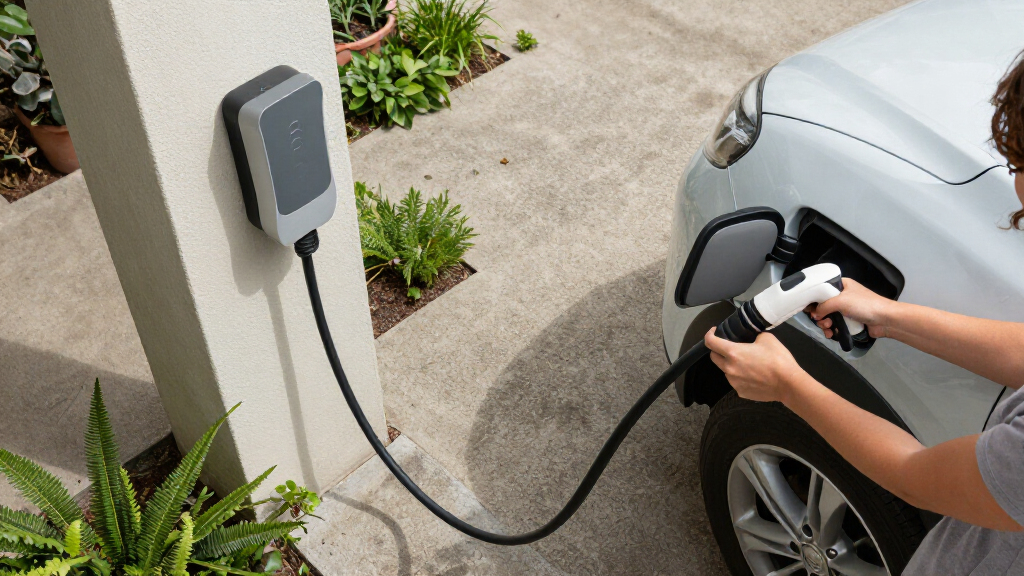
Hardwired chargers connect directly to your home’s electrical panel, eliminating the need for a heavy-duty outlet. This method is often preferred for permanent installations because it supports higher amperage levels (up to 80A or more) and reduces fire risks associated with high-current plugs. However, it requires professional installation and makes moving the charger difficult. Plug-in models, typically using a NEMA 14-50 outlet, offer the convenience of portability and easier DIY setup if you already have the outlet. If you plan to move or need to take the charger on road trips, a plug-in unit like the ChargePoint HomeFlex is the smarter choice, despite the slight limitation in maximum power output.
Amperage and Charging Speed Realities
Many buyers assume 50A chargers are always faster than 32A models, but the bottleneck is often the vehicle’s onboard charger, not the wall unit. Most EVs accept a maximum of 11.5kW or 19.2kW AC input. If your car’s onboard charger maxes out at 11.5kW, buying a 48A or 50A wall unit won’t speed up charging compared to a 32A unit. Check your vehicle’s specifications before paying extra for high-amperage hardware. For vehicles with larger batteries or faster onboard chargers, such as the Ford Mustang Mach-E or Hyundai Ioniq 5, a 40A-48A unit like the Emporia Pro ensures you get the fastest possible home charge times.
Smart Features and Energy Management
Basic chargers just deliver power; smart chargers manage it. Features like scheduling allow you to delay charging until off-peak hours, which can drastically reduce electricity bills if your utility offers time-of-use rates. Energy monitoring gives you visibility into exactly how much power your vehicle consumes, helping you track efficiency. Some advanced models even integrate with home energy systems to balance loads if you have solar panels or multiple EVs. If you lack these features, you’re leaving money on the table. Look for robust apps with reliable Wi-Fi connectivity, as inconsistent connections can prevent scheduled charging from starting.
Cable Length and Parking Constraints
Standard EVSE cables range from 16 to 25 feet, and this difference matters more than you might think. A 16-foot cable might barely reach your car if the outlet is far from the driveway, forcing you to use unsafe extension cords or rearrange your parking. A 25-foot cable, found on models like the Autel MaxiCharger, provides a comfortable buffer, allowing you to park further from the wall or charge two cars from a single station if space permits. Measure the distance from your electrical panel or outlet to your typical parking spot before buying. If you have a long driveway, prioritize longer cables or plan for conduit runs to bring the power source closer.
Connector Type and Future-Proofing
Currently, J1772 is the standard for non-Tesla EVs, while NACS (formerly Tesla) is becoming the industry norm due to Tesla’s open standard adoption. If you own a Tesla, you might use an adapter, but many new chargers now offer native NACS connectors. Buying a charger with a swappable connector or a native NACS port, like the ChargePoint HomeFlex NACS version, can save you from needing adapters as the market shifts. However, if you drive a legacy J1772 vehicle, a standard J1772 cable is sufficient and often cheaper. Consider how long you plan to keep your current vehicle; if you intend to upgrade to a newer EV in the next few years, NACS compatibility adds significant resale value and convenience.
Frequently Asked Questions
Can I install a Level 2 EV charger myself?
If you choose a plug-in charger and already have a NEMA 14-50 outlet installed, you can likely plug it in yourself. However, if you need to install a new outlet or hardwire the unit, hiring a licensed electrician is strongly recommended and often required by local building codes. DIY hardwiring involves working with 240V high-voltage lines, which poses a severe safety risk. Furthermore, improper installation can void your home insurance policy and the charger’s warranty. Always check local permits before starting any electrical work.Do I need a 50-amp charger if my car only accepts 32 amps?
No, you do not need a 50-amp charger if your vehicle’s onboard charger is limited to 32 amps. The car will only draw the maximum current it can handle, so a 50-amp unit will not charge your car any faster than a 32-amp unit. In this scenario, paying for a higher-amperage charger is an unnecessary expense. You should only invest in higher amperage if you plan to upgrade to a vehicle with a faster onboard charger or if you want to charge multiple vehicles sequentially with shorter wait times.Is it safe to use an extension cord with my EV charger?
Manufacturers and safety experts generally advise against using standard extension cords with EV chargers. Most EVSEs require a dedicated circuit with thick-gauge wire to handle continuous high loads without overheating. A standard extension cord can melt, cause voltage drops that damage your car’s battery, or even start a fire. If the cable is too short, the correct solution is to install the outlet or hardwire closer to your parking spot. Some portable chargers come with specific, heavy-duty extension kits designed for EV use, but these should be the exception, not the rule.How does Wi-Fi connectivity benefit my EV charging?
Wi-Fi connectivity allows the charger to communicate with a smartphone app, enabling features that go beyond simple power delivery. You can schedule charging to occur during off-peak hours when electricity rates are lower, potentially saving hundreds of dollars annually. The app also provides real-time status updates, error codes, and energy usage statistics. Additionally, manufacturers can push over-the-air firmware updates to improve security and add new features. Without Wi-Fi, your charger is a ‘dumb’ device that cannot adapt to your utility rate plans or be remotely monitored.What is the difference between J1772 and NACS connectors?
J1772 is the current standard connector for Level 2 AC charging for most non-Tesla electric vehicles in North America. NACS (North American Charging Standard), originally developed by Tesla, is gaining rapid adoption as the future standard for both AC and DC fast charging. Many new EVs are shipping with NACS ports, and automakers are transitioning to this standard. If you buy a charger with a J1772 cable, you may need an adapter for future NACS vehicles. Conversely, a NACS charger might require an adapter for current J1772 cars. Assess your current vehicle and future upgrade plans to decide which connector type offers better long-term utility.Conclusion
Choosing the right EV charger depends on your specific living situation and driving needs. For most homeowners seeking a reliable, smart, and compact solution, the Wallbox Pulsar Plus remains the Best Overall choice due to its balance of performance and aesthetics. If you are a renter or need a charger that travels with you, the ChargePoint HomeFlex is the Best for Portability thanks to its plug-in design and robust app. For tech enthusiasts who want detailed energy insights and solar integration capabilities, the Emporia Pro is the Best Premium option. Budget-conscious buyers looking for straightforward 40A charging without fancy features should consider the SEGUMA or EVDANCE models as the Best Value picks. Finally, if you have a long driveway or want to future-proof for Tesla standards, the ChargePoint HomeFlex NACS or Emporia NACS models are the Best for Future-Proofing. Evaluate your electrical setup and daily mileage to make the final decision.