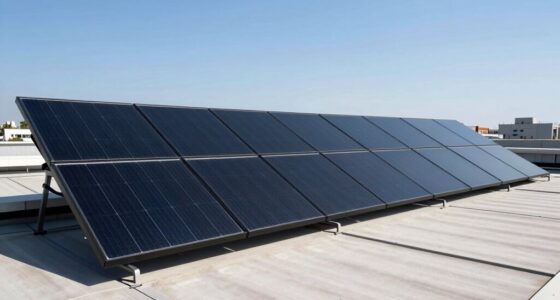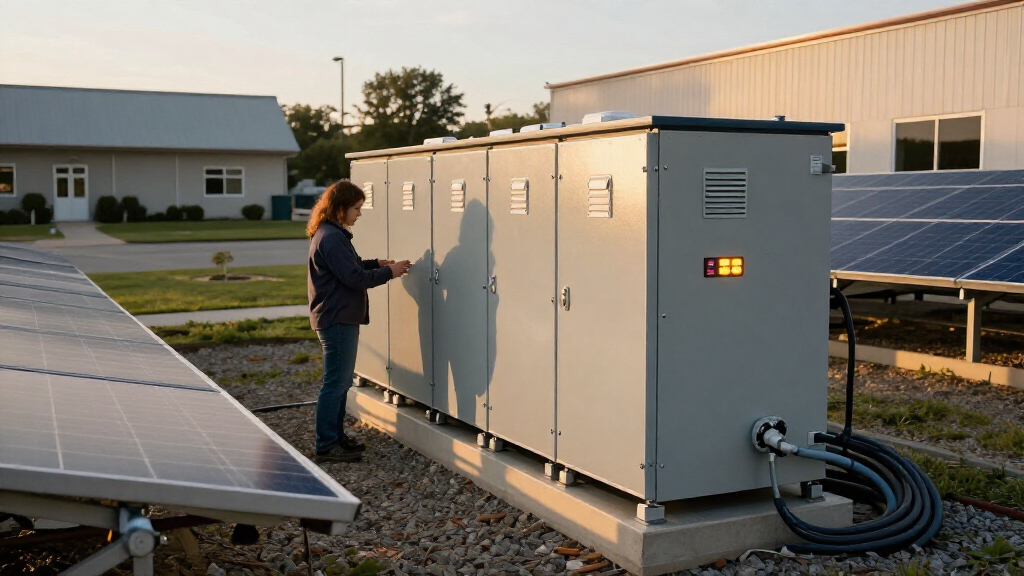
Choosing the best commercial energy storage systems requires balancing raw capacity with inverter capability and system scalability. My top overall pick is the ECO-WORTHY Powermega 48V 314Ah LiFePO4, which stands out for its robust 18kW three-phase inverter that handles heavy industrial loads without hesitation. For those needing modular flexibility, the AOUSK 48V 314Ah LiFePO4 offers excellent density and integration ease, while the EF EcoFlow TITAN Plus remains the strongest choice for mobile commercial applications. The primary tradeoff you will face is between fixed-rack systems that offer higher total kilowatt-hours and portable units that provide ease of deployment. Continue reading to see how these options compare on longevity, connectivity, and real-world utility.

Get backup power and energy gear delivered free with Prime
- Fast, free delivery on millions of items
- Prime Video, Amazon Music and more included
- Member-only deals all year
Key Takeaways
- Three-phase inverters are non-negotiable for heavy commercial machinery, making single-phase options unsuitable for industrial workshops.
- Modular rack-mounted batteries allow for incremental capacity scaling, whereas portable units lock you into fixed capacity limits.
- LiFePO4 chemistry dominates this category due to its superior cycle life and thermal stability compared to older NMC alternatives.
- Inverter surge capacity often matters more than continuous rating when starting commercial motors, compressors, or pumps.
- Integration complexity varies wildly; rack-mounted systems require professional BMS configuration, while portable units offer plug-and-play simplicity.
| ECO-WORTHY Powermega 48V 314Ah LiFePO4 Energy Storage System with 18kW Three-Phase Inverter |  | Best for Three-Phase Commercial Loads | Battery chemistry: LiFePO4 | Battery configuration: Two 48V 314Ah batteries | Total battery capacity: 32.15kWh | VIEW LATEST PRICE | See Our Full Breakdown |
| AOUSK 48V 314Ah LiFePO4 Lithium Battery, 16.08 kWh |  | Best for Flexible Battery-Bank Expansion | Battery chemistry: LiFePO4 | Voltage: 48V (51.2V model) | Capacity: 314Ah | VIEW LATEST PRICE | See Our Full Breakdown |
| ECO-WORTHY 48V Home Backup Power System with 10kW Inverter and Six LiFePO4 Batteries |  | Best for Expandable Split-Phase Backup | Battery chemistry: LiFePO4 | Battery configuration: Six 51.2V 100Ah batteries | Total battery capacity: 30,720Wh | VIEW LATEST PRICE | See Our Full Breakdown |
| ECO-WORTHY Cubix100 48V 600Ah LiFePO4 Battery and 12,000W Hybrid Inverter System |  | Best for Dual-Voltage Site Flexibility | Battery chemistry: LiFePO4 | Battery configuration: 6 × 51.2V 100Ah | Total battery capacity: 30.72kWh | VIEW LATEST PRICE | See Our Full Breakdown |
| Wirentech 51.2V 314Ah LiFePO4 Battery, 16.07kWh, 300A BMS |  | Best for High-Current Modular Battery Builds | Battery chemistry: LiFePO4 | Voltage: 51.2V | Capacity: 314Ah | VIEW LATEST PRICE | See Our Full Breakdown |
| ECO-WORTHY Cubix100 48V 600Ah LiFePO4 Server Rack Battery System, 6-Pack |  | Best for Modular Capacity | Chemistry: LiFePO4 | System voltage: 51.2V | Capacity per battery: 100Ah | VIEW LATEST PRICE | See Our Full Breakdown |
| EF EcoFlow TITAN Plus Portable Power Station, 5017Wh |  | Best for Portable Split-Phase Backup | Battery capacity: 5,017Wh | Chemistry: LiFePO4 | Continuous output: 7,200W | VIEW LATEST PRICE | See Our Full Breakdown |
| ECO-WORTHY 48V Home Backup Power System, 10,240Wh LiFePO4 Battery and 5000W Inverter |  | Best Integrated Inverter-and-Battery Kit | Battery chemistry: LiFePO4 | Battery configuration: Two 51.2V 100Ah batteries | Total battery capacity: 10,240Wh | VIEW LATEST PRICE | See Our Full Breakdown |
| Anker SOLIX S5000 Portable Power Station, 5,024Wh, 4,500W, 120V/240V |  | Best for Fast-Response Backup | Capacity: 5,024Wh | Peak output: 8,000W | Voltage: 120V/240V | VIEW LATEST PRICE | See Our Full Breakdown |
| ECO-WORTHY Powermega 48V 314Ah LiFePO4 Battery, 16.07kWh |  | Best Single-Battery Capacity | Voltage: 51.2V (48V nominal) | Capacity: 314Ah | Energy: 16.07kWh | VIEW LATEST PRICE | See Our Full Breakdown |
| commercial energy storage system | Battery chemistry | Weight | Voltage |
|---|---|---|---|
| ECO-WORTHY Powermega 48V 314Ah | LiFePO4 | 713.2 lb | — |
| AOUSK 48V 314Ah LiFePO4 Lithiu | LiFePO4 | 291 lb | 48V (51.2V model) |
| ECO-WORTHY 48V Home Backup Pow | LiFePO4 | 677.5 lb | — |
| ECO-WORTHY Cubix100 48V 600Ah | LiFePO4 | — | — |
| Wirentech 51.2V 314Ah LiFePO4 | LiFePO4 | — | 51.2V |
| ECO-WORTHY Cubix100 48V 600Ah | — | — | — |
| EF EcoFlow TITAN Plus Portable | — | 121.3 lb | 120V/240V |
| ECO-WORTHY 48V Home Backup Pow | LiFePO4 | 236.9 lb | — |
| Anker SOLIX S5000 Portable Pow | — | 97 lb | 120V/240V |
| ECO-WORTHY Powermega 48V 314Ah | — | — | 51.2V (48V nominal) |
More Details on Our Top Picks
ECO-WORTHY Powermega 48V 314Ah LiFePO4 Energy Storage System with 18kW Three-Phase Inverter
I rank the Powermega first for sites that need three-phase output, substantial storage, and an inverter in one package. Its two batteries provide 32.15kWh, while the 18kW inverter and 28.8kW solar input give commercial users room to serve larger loads and pair the system with a sizeable PV array. Compared with the ECO-WORTHY 10kW Home Backup System, this model offers higher inverter output and explicit 120/208V three-phase support, making it a better fit for compatible commercial equipment. The tradeoff is its 713.2-pound weight and the logistics of palletized, multi-package delivery. Its 40–60V battery operating range and 48V architecture also mean buyers should confirm compatibility with their electrical design before purchase. This is a capable integrated system, but not a light-touch installation.
Pros:- 32.15kWh of stated LiFePO4 storage for backup or off-grid operation.
- 18kW inverter supports 120/208V three-phase output.
- Up to 28.8kW solar input with dual MPPT.
- Supports parallel connection of up to six inverters.
Cons:- At 713.2 pounds, placement and installation require substantial planning.
- Batteries may arrive on a pallet in multiple packages.
- Three-phase output and system integration require compatibility checks with the site’s electrical equipment.
Best for: Small commercial sites or workshops with compatible 120/208V three-phase loads, substantial solar capacity, and space for a heavy battery system.
Not ideal for: Businesses with single-phase-only equipment, limited delivery access, or no suitable location and installation plan for a 713.2-pound system.
- Battery chemistry:LiFePO4
- Battery configuration:Two 48V 314Ah batteries
- Total battery capacity:32.15kWh
- Inverter output:18,000W
- Output voltage:120/208Vac three-phase
- Peak output:36,000W for 10 seconds
- Maximum solar input:28.8kW
- Weight:713.2 lb
Our verdict“Choose the Powermega when your site needs an integrated, high-capacity system with three-phase output and can accommodate its weight and installation demands.”
AOUSK 48V 314Ah LiFePO4 Lithium Battery, 16.08 kWh
The AOUSK is a standalone 16.08kWh battery, not a complete storage system, so its appeal is flexibility for buyers already selecting an inverter and controls. Its RS485, CAN, and RS232 connections offer more integration routes than the Wirentech 51.2V battery, which lists CAN and RS485, while Bluetooth and Wi-Fi add local monitoring options. AOUSK also specifies parallel connection of up to 15 units, useful for building storage in stages, though the finished system still depends on compatible equipment and installation. The 200A BMS and dual breakers provide defined protection features, but its stated cycle life is up to 6,000 cycles at 80% state of health—not a promise of identical service life in every operating setup. At 291 pounds and over 33 inches tall, it needs a deliberate placement plan.
Pros:- 16.08kWh capacity in a single battery.
- RS485, CAN, and RS232 interfaces support multiple integration paths.
- Bluetooth, Wi-Fi, and an onboard display provide monitoring options.
- Supports parallel connection of up to 15 units.
Cons:- An inverter and other system components must be selected separately.
- The 291-pound weight makes moving and installation challenging.
- Its 33.54-inch height may restrict rack or equipment-room placement.
Best for: Commercial solar installers or facility owners who already have a compatible 48V inverter and want to expand storage with modular batteries.
Not ideal for: Buyers seeking a turnkey system with an inverter included, or sites where a 291-pound, 33.54-inch-tall battery is difficult to position.
- Battery chemistry:LiFePO4
- Voltage:48V (51.2V model)
- Capacity:314Ah
- Energy capacity:16.08kWh
- BMS:200A with six-layer protection
- Cycle life:Up to 6,000 cycles at 80% state of health
- Communication:RS485, CAN, RS232, Bluetooth, and Wi-Fi
- Parallel connection:Up to 15 units
- Weight:291 lb
Our verdict“Pick the AOUSK when you need a monitorable, expandable battery for a compatible system you are configuring separately.”
ECO-WORTHY 48V Home Backup Power System with 10kW Inverter and Six LiFePO4 Batteries
This package combines six batteries, a 10kW inverter, and a server rack, so it suits buyers who want a coordinated backup platform rather than a battery alone. Its 30.72kWh capacity is close to the Cubix100 system’s stated storage, but the Cubix100 adds a 12kW inverter and offers a listed three-phase output option. This ECO-WORTHY model instead covers 120V or 120V/240V split-phase, a practical match for compatible backup circuits, and supports expansion to six inverters and 32 batteries. App monitoring and dual MPPT controllers help with system oversight and solar charging. The main compromises are the 10kW inverter rating, which is below the Powermega’s 18kW, and a total weight of 677.5 pounds. Separate shipments also call for coordination before installation.
Pros:- 30.72kWh of storage from six 51.2V 100Ah batteries.
- 10kW pure sine wave inverter supports 120V or 120V/240V split-phase output.
- Dual MPPT controllers and a battery charger rated up to 200A.
- Expansion supports up to six inverters and 32 batteries.
Cons:- The 10kW inverter has less output than the Powermega’s 18kW unit.
- The 677.5-pound system needs careful delivery and installation planning.
- Components ship separately, requiring coordination before setup.
Best for: Property operators seeking a packaged, expandable battery-and-inverter system for compatible 120V or 120V/240V backup loads.
Not ideal for: Sites requiring 120/208V three-phase output or more than 10kW of inverter output from the included unit.
- Battery chemistry:LiFePO4
- Battery configuration:Six 51.2V 100Ah batteries
- Total battery capacity:30,720Wh
- Inverter output:10,000W
- Peak power:20,000W
- Output:120V single-phase or 120V/240V split-phase
- Expansion:Up to 6 inverters and 32 batteries in parallel
- Weight:677.5 lb
Our verdict“Choose this package for substantial split-phase backup storage with room to expand, but look to the Powermega for higher inverter output or three-phase service.”
ECO-WORTHY Cubix100 48V 600Ah LiFePO4 Battery and 12,000W Hybrid Inverter System
The Cubix100 earns its place for sites where output configuration matters as much as storage. Its six-battery bank provides 30.72kWh, and the 12kW hybrid inverter can supply either 120V/240V split-phase or 120V/208V three-phase. That makes it more adaptable across electrical setups than the ECO-WORTHY 10kW Home Backup System, which lists split-phase output but not three-phase. The Cubix100 also has dual MPPT controllers, a 200A maximum battery charger, and expansion support for more batteries and inverters. It does not match the Powermega’s 18kW inverter output, however, and the product information says the batteries and inverter ship separately. Buyers should also confirm the listed test claims and installation requirements with the supplier and their qualified installer before relying on them for a commercial project.
Pros:- 30.72kWh of stated LiFePO4 storage.
- Supports both 120V/240V split-phase and 120V/208V three-phase output.
- Dual MPPT controllers and a maximum 200A battery charger.
- Supports parallel expansion with up to six inverters and 32 batteries.
Cons:- Its 12kW inverter output is lower than the Powermega’s 18kW rating.
- Batteries and inverter ship separately.
- Installation coordination is required, and the stated test claims should be verified for the intended project.
Best for: Facility owners who need one battery system to support compatible split-phase or 120/208V three-phase applications and may expand later.
Not ideal for: Sites requiring more than 12kW of inverter output, or buyers who need a single-shipment, ready-to-connect installation.
- Battery chemistry:LiFePO4
- Battery configuration:6 × 51.2V 100Ah
- Total battery capacity:30.72kWh
- Inverter output:12,000W
- Peak power:24,000W
- Output options:120V/240V split-phase or 120V/208V three-phase
- Expansion:Up to 6 inverters and 32 batteries
- Warranty:Battery: 10 years; inverter: 5 years
Our verdict“Choose the Cubix100 when its split-phase and three-phase flexibility fits your site better than the higher-output Powermega.”
Wirentech 51.2V 314Ah LiFePO4 Battery, 16.07kWh, 300A BMS
Wirentech’s standalone battery is the strongest fit here for buyers who prioritize a 300A BMS and a long stated warranty in a modular 51.2V bank. Its 16.07kWh capacity is close to the AOUSK battery’s 16.08kWh, but Wirentech specifies active cell balancing, app access to battery and individual-cell data, and a 10-year warranty. It can also scale to 16 batteries, though the listing’s approximate 257kWh expansion figure does not replace checking the chosen inverter’s limits and system design. CAN and RS485 connections, plus a Pylontech inverter protocol, support integration only when the connected equipment is compatible. Unlike the ECO-WORTHY Powermega package, this is not a complete inverter-and-battery system; commercial buyers must source those components and confirm fit. Truck delivery and floor-standing placement also need planning.
Pros:- 16.07kWh capacity with a 300A BMS.
- Active cell balancing and app monitoring that includes individual-cell data.
- Supports CAN and RS485 communication and a Pylontech inverter protocol.
- Up to 16 batteries can be connected in parallel; listed battery warranty is 10 years.
Cons:- An inverter and other system components are not included.
- Communication features depend on compatible inverter equipment.
- Large-capacity battery ships by truck, and local pickup availability may vary.
Best for: Commercial solar integrators or operators building a compatible 51.2V battery bank who value active balancing, cell-level app data, and a 10-year battery warranty.
Not ideal for: Buyers seeking a turnkey storage system, or those without an inverter confirmed to work with its CAN, RS485, and Pylontech protocol options.
- Battery chemistry:LiFePO4
- Voltage:51.2V
- Capacity:314Ah
- Energy capacity:16.07kWh
- BMS current:300A
- Monitoring:Mobile app with battery and individual-cell data
- Communication:CAN and RS485; Pylontech inverter protocol
- Maximum parallel batteries:16
- Warranty:10 years
Our verdict“Pick the Wirentech battery for a compatible, expandable 51.2V build where its 300A BMS and cell-level monitoring matter more than a bundled inverter.”
ECO-WORTHY Cubix100 48V 600Ah LiFePO4 Server Rack Battery System, 6-Pack
The Cubix100 six-pack suits commercial sites that want a substantial battery bank assembled from separate 51.2V modules. Its 30.72 kWh total capacity is more storage than the EcoFlow TITAN Plus or Anker SOLIX S5000 provide in their base configurations, and the batteries can be paralleled up to 32 units as demand grows. CAN/RS485 connections and Bluetooth and Wi-Fi monitoring give buyers several ways to connect and track the system. The tradeoff is that this is a battery package, not a ready-to-run power system: the rack is not included, and the supplied information does not include an inverter. Compared with ECO-WORTHY’s 10,240Wh backup kit, this pick offers a much larger battery bank but leaves more system integration to the buyer. Multiple-package delivery may also complicate receiving and installation.
Pros:- Six batteries provide 30.72 kWh of total storage.
- Parallel expansion supports up to 32 units.
- CAN/RS485 plus Bluetooth and Wi-Fi monitoring offer flexible system connections.
- Package includes parallel and communication cables and installation accessories.
Cons:- Rack is not included, adding a separate equipment and installation requirement.
- A compatible inverter is not listed as part of the package.
- Large system may arrive in multiple packages, complicating delivery coordination.
Best for: Commercial installers or facility operators building a scalable 48V battery bank who already have a compatible inverter and rack plan.
Not ideal for: Buyers seeking a turnkey backup system, or sites without a rack and compatible inverter; neither is included in this battery package.
- Chemistry:LiFePO4
- System voltage:51.2V
- Capacity per battery:100Ah
- Battery count:6
- Total energy:30.72 kWh
- Communications:CAN/RS485
- Monitoring:Bluetooth and Wi-Fi via ECO-WORTHY app
- Maximum parallel units:32
- Rack included:No
Our verdict“Choose this six-pack for a scalable commercial battery bank if you can supply the rack and compatible inverter yourself.”
EF EcoFlow TITAN Plus Portable Power Station, 5017Wh
The EcoFlow TITAN Plus is the most portable-style choice here for buyers who need substantial output without starting with a fixed battery rack. It delivers 7.2kW continuous output and 120V/240V split-phase power from a 5,017Wh battery, with expansion up to 30kWh. AC, solar, and generator charging give operators more ways to replenish it than the ECO-WORTHY Cubix100 battery pack, which is a larger storage bank but requires a separate inverter. That flexibility comes with limits: the TITAN Plus weighs 121.3 lb, and expanded capacity and generator charging depend on additional equipment. Its five-year warranty is also shorter than the ten-year terms listed for the ECO-WORTHY battery options. This makes more sense for mobile backup or a site that values an integrated power station than for a permanent, high-capacity commercial installation.
Pros:- Provides 7.2kW continuous output with 120V/240V split-phase power.
- Supports expansion up to 30kWh.
- Accepts AC, solar, and generator charging.
- UL 9540 certified and tested to UL 9540A.
Cons:- The 121.3 lb unit is difficult to move without suitable handling.
- Expansion batteries and Smart Home Panel 10 are needed for expanded capacity and the specified generator charging.
- Five-year warranty is shorter than the ten-year warranties listed for several ECO-WORTHY battery products.
Best for: Small businesses, mobile service operators, and off-grid users who need 120V/240V output with several charging options and room to expand.
Not ideal for: Facilities planning a permanent, high-capacity battery bank or frequent solo relocation; its base storage is 5,017Wh and the unit weighs 121.3 lb.
- Battery capacity:5,017Wh
- Chemistry:LiFePO4
- Continuous output:7,200W
- Voltage:120V/240V
- Expansion capacity:Up to 30kWh
- AC input:Up to 7.6kW
- Solar input:Up to 8kW
- Weight:121.3 lb
- Warranty:5 years
Our verdict“Pick the TITAN Plus when flexible charging and split-phase output matter more than a large base battery bank or easy portability.”
ECO-WORTHY 48V Home Backup Power System, 10,240Wh LiFePO4 Battery and 5000W Inverter
This ECO-WORTHY kit is a practical starting point for a small commercial site that wants batteries and an inverter in one package. Its 10,240Wh battery bank pairs two 51.2V 100Ah batteries with a 5,000W inverter and a built-in 100A MPPT charge controller, reducing the component matching required compared with the battery-only Cubix100 six-pack. The inverter also supports parallel expansion, so buyers can grow output and storage rather than replace the initial setup. A key limitation is voltage: one inverter outputs 120V, while other listed output voltages require multiple inverters in parallel. At 236.9 lb, the kit also calls for careful site planning and handling. Compared with the EcoFlow TITAN Plus, it is less suited to portable use but gives buyers a more conventional inverter-and-battery configuration.
Pros:- Includes two 51.2V 100Ah batteries and a 5,000W inverter.
- Built-in 100A MPPT charge controller supports solar charging.
- Supports parallel expansion to as many as six inverters and 32 batteries.
- Bluetooth, Wi-Fi, CAN, and RS485 support monitoring and system communication.
Cons:- One inverter provides 120V; other listed output voltages require multiple inverters in parallel.
- The 236.9 lb system requires substantial handling and installation planning.
- Items ship separately, which can complicate delivery and setup scheduling.
Best for: Small businesses or workshops seeking a fixed 48V backup setup with an included inverter, MPPT charging, and a path to parallel expansion.
Not ideal for: Sites that require 240V output from a single inverter or buyers needing a lightweight, portable power station.
- Battery chemistry:LiFePO4
- Battery configuration:Two 51.2V 100Ah batteries
- Total battery capacity:10,240Wh
- Inverter output:5,000W
- Peak output:10,000W
- Waveform:Pure sine wave
- MPPT charge controller:100A
- PV input range:120–500V DC
- Weight:236.9 lb
Our verdict“Choose this kit for a fixed, expandable 48V backup installation if 120V from one inverter meets your load requirements.”
Anker SOLIX S5000 Portable Power Station, 5,024Wh, 4,500W, 120V/240V
The Anker SOLIX S5000 stands out for pairing 120V/240V output with a stated 10 ms UPS response, a useful combination for equipment that needs backup power with minimal interruption. Its 5,024Wh capacity and 4,500W rated output make it more capable than a basic portable battery, while expansion to 30kWh and AC, solar, car, generator, or mixed charging support a range of site setups. Against the EcoFlow TITAN Plus, the Anker is lighter at 97 lb and lists a faster UPS function, but its rated output is lower than EcoFlow’s 7.2kW continuous figure. Neither is easy to move casually, and capacity expansion or generator charging requires additional compatible equipment. I would favor the S5000 for backup-sensitive loads, not as a substitute for a large fixed battery bank like the Cubix100 six-pack.
Pros:- Provides 4,500W rated output with 120V/240V support.
- Lists a 10 ms UPS backup response.
- Supports expansion up to 30kWh and several charging methods.
- LFP cells are rated for 10,000 charge cycles.
Cons:- At 97 lb, it is heavy for frequent relocation.
- Expansion and generator charging require additional compatible equipment.
- Its 4,500W rated output is lower than the EcoFlow TITAN Plus’s 7.2kW continuous output.
Best for: Small offices, retail sites, and service businesses that need split-phase backup with a stated 10 ms UPS response and multiple charging paths.
Not ideal for: Facilities with sustained loads above 4,500W or buyers who want large storage without adding compatible expansion equipment.
- Capacity:5,024Wh
- Peak output:8,000W
- Voltage:120V/240V
- Battery type:LFP
- Expandable capacity:Up to 30kWh
- UPS backup:10 ms
- Weight:97 lb
- Operating noise:30 dB
Our verdict“Choose the SOLIX S5000 for split-phase backup where fast UPS response matters more than higher continuous output or a large base capacity.”
ECO-WORTHY Powermega 48V 314Ah LiFePO4 Battery, 16.07kWh
For buyers who want substantial storage in one battery rather than assembling a six-unit bank, the Powermega 314Ah offers 16.07kWh per unit and supports parallel expansion up to 15 units. Its 200A smart BMS with active cell balancing, circuit breaker, and aerosol fire-suppression modules make protection features a prominent part of the package. A 7-inch touchscreen plus Wi-Fi and Bluetooth monitoring also gives operators local and remote visibility. Compared with the Cubix100 six-pack, this is a simpler single-battery starting point, but the Cubix package offers 30.72kWh out of the box and includes cabling for its battery bank. The Powermega still needs a compatible inverter for a complete storage system, and its truck delivery requirement makes access and receiving logistics part of the buying decision.
Pros:- Provides 16.07kWh of storage in a single battery.
- 200A smart BMS includes active cell balancing.
- Aerosol fire-suppression modules and an external two-pole circuit breaker add protection features.
- Touchscreen, Wi-Fi, Bluetooth, RS485, and CAN support monitoring and system integration.
Cons:- A compatible inverter is not listed as included.
- Large size and weight require pallet delivery by truck.
- Delivery location must accommodate truck access.
Best for: Commercial operators who want a high-capacity 51.2V battery with onboard monitoring and protection features, and who have a compatible inverter and truck-accessible delivery site.
Not ideal for: Buyers with restricted delivery access, limited battery-handling equipment, or a need for a complete inverter-and-battery system in one package.
- Voltage:51.2V (48V nominal)
- Capacity:314Ah
- Energy:16.07kWh
- Chemistry:LiFePO4
- BMS:200A smart BMS with active cell balancing
- Maximum parallel units:15
- Certification:UL 1973
- Monitoring:7-inch HD touchscreen, Wi-Fi, and Bluetooth
- Communications:RS485 and CAN
Our verdict“Choose the Powermega when you want high storage in one expandable battery and can provide the inverter and suitable delivery access.”
How We Picked
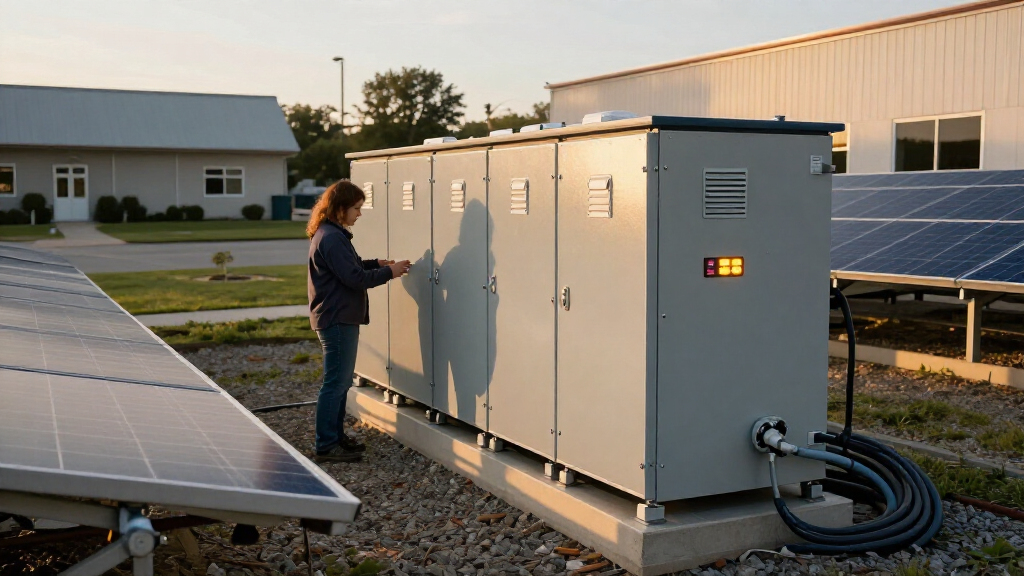
I evaluated these systems based on energy density, inverter output stability, and scalability potential. Commercial buyers rarely need just one battery, so I prioritized units with clear expansion paths and robust Battery Management Systems (BMS) that prevent cell imbalance during parallel operation. I also weighed the importance of three-phase power output, which is essential for running commercial-grade equipment like HVAC units and large motors, distinguishing true commercial-grade gear from oversized residential kits.
Furthermore, I considered deployment flexibility. A fixed server-rack system serves a different purpose than a portable power station used for mobile job sites. By categorizing these systems into fixed-infrastructure and mobile-use cases, I could judge them against relevant benchmarks. This approach ensures that a small business owner looking for backup power isn’t misled by a system designed for off-grid industrial use, and vice versa.
Factors to Consider When Choosing Best Commercial Energy Storage Systems
Selecting the right energy storage solution involves more than just looking at the total kWh. You must align the technical specifications with your specific operational load profiles and physical constraints.Phase Compatibility and Inverter Power
Most commercial facilities operate on three-phase power, while many smaller storage units only offer single-phase output. If you connect a single-phase inverter to a three-phase load, you risk damaging equipment or tripping breakers immediately. Always verify that the inverter matches your facility’s electrical infrastructure. For heavy machinery with high startup currents, check the surge wattage rating, not just the continuous output. A system might handle a 5kW motor continuously but fail to start it if the surge rating is too low.
Scalability and Modular Design
Commercial energy needs often grow over time. Rack-mounted systems allow you to add more battery modules as your demand increases, spreading the initial capital expenditure. Portable power stations, by contrast, offer fixed capacity; if you need more power, you must buy an entirely new unit. Look for systems with parallel connection capabilities that allow multiple units to communicate via CAN bus or RS485 protocols. This ensures synchronized charging and discharging, preventing one unit from draining faster than the others.
Cycle Life and Depth of Discharge
The longevity of a commercial system is determined by its LiFePO4 cell chemistry and BMS quality. I looked for systems rated for at least 4,000 to 6,000 cycles at 80% depth of discharge (DoD). A system that degrades quickly will incur high replacement costs, negating the savings from energy arbitrage. Check if the manufacturer provides capacity retention curves over time. A lower price tag on a unit with poor cycle life is a false economy for any business relying on daily charge-discharge cycles.
Integration with Solar and Grid
Many commercial users pair storage with existing solar arrays. You need an hybrid inverter or a separate AC-coupled system to manage both solar input and grid draw seamlessly. Verify compatibility with major inverter brands like Victron, SMA, or Growatt if you plan to integrate with existing hardware. Poor integration leads to energy waste, where excess solar is curtailed rather than stored. Open communication protocols are vital here, as they allow your energy management system to optimize when to store, use, or sell power.
Physical Footprint and Installation Complexity
Commercial spaces are often constrained. Server-rack compatible batteries save floor space and simplify wiring into existing electrical panels. Portable units, while flexible, require dedicated storage areas and heavy-duty extension cords or transfer switches for backup use. Consider the weight of the units; a 50kWh rack system can weigh over 500 pounds, requiring reinforced flooring or specialized lifting equipment. Ease of installation is a hidden cost; plug-and-play systems save labor hours, while modular racks require certified electricians for safe commissioning.
Frequently Asked Questions
Can I use residential battery systems for small commercial applications?
You can, but with significant caveats. Many ‘home’ systems lack the three-phase output and surge capacity needed for commercial motors and HVAC units. If your business only runs lighting, computers, and small appliances, a high-capacity residential unit like the ECO-WORTHY Home Backup might suffice. However, if you have welding equipment, heavy pumps, or large air compressors, you need a commercial-grade inverter with higher surge ratings. Always check the inverter’s continuous and peak power output against your largest load before deciding.
What is the difference between LiFePO4 and other lithium chemistries in commercial storage?
Lithium Iron Phosphate (LiFePO4) is the standard for commercial storage due to its exceptional thermal stability and long cycle life. Unlike NMC (Nickel Manganese Cobalt) batteries, LiFePO4 does not suffer from thermal runaway as easily, making it safer for indoor installations near personnel. It also lasts 2-3 times longer in terms of charge cycles. While NMC has higher energy density, the weight savings are rarely worth the safety risks and shorter lifespan in a fixed commercial installation. For portable needs, LiFePO4 remains the preferred choice for its durability during transport and handling.
How do I calculate the right battery capacity for my business?
Start by auditing your critical loads in watts and the number of hours you need backup power. Multiply these to get Watt-hours (Wh), then convert to Kilowatt-hours (kWh) by dividing by 1,000. Add a 20-30% buffer for efficiency losses and battery degradation. For example, if you need to run a 2,000W server rack for 5 hours, you need 10kWh of usable capacity. Since most LiFePO4 systems recommend an 80% DoD for longevity, you should install a system with at least 12.5kWh of total rated capacity. This calculation prevents undersizing, which leads to premature shutdowns during outages.
Are portable power stations viable for commercial use cases?
They are ideal for mobile commercial applications such as film crews, outdoor events, or temporary construction sites where grid access is unreliable or nonexistent. Units like the EF EcoFlow TITAN Plus offer rapid deployment and ease of transport. However, they are not suitable for permanent facility backup because their capacity is limited and they lack the permanent wiring integration of rack-mounted systems. Using portable units for fixed backup often results in higher long-term costs due to the need for multiple units to match the capacity of a single large rack system. Choose them for flexibility, not for permanent infrastructure.
What maintenance do commercial energy storage systems require?
Modern LiFePO4 systems are largely maintenance-free regarding the cells themselves. Your primary responsibility is monitoring the Battery Management System (BMS) via the manufacturer’s app or local display to check for cell imbalance or temperature anomalies. Ensure ventilation fans are clear of dust and debris, as overheating is the primary enemy of battery longevity. For rack-mounted systems, periodically check terminal connections for tightness to prevent arcing. Unlike lead-acid batteries, you do not need to top off electrolytes or perform equalization charges, which significantly reduces operational overhead for facility managers.
Conclusion
My recommendation depends entirely on your operational profile. For fixed commercial facilities requiring high-power three-phase output, the ECO-WORTHY Powermega 48V 314Ah is the best overall choice due to its robust inverter and scalability. If you need a cost-effective entry point for smaller loads, the AOUSK 48V 314Ah provides excellent value and reliable LiFePO4 performance. For mobile businesses or event organizers, the EF EcoFlow TITAN Plus is the definitive premium portable option, offering unmatched ease of use and rapid charging. Avoid single-phase systems if you run heavy machinery, and prioritize modular rack designs if you anticipate growing your energy needs in the coming years.