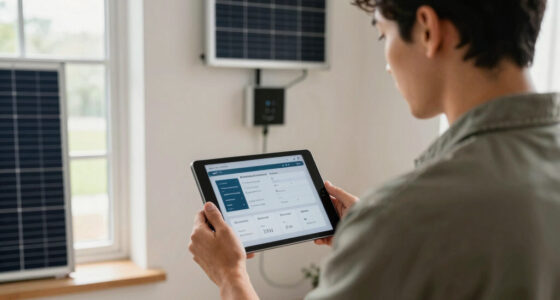

Solar-powered laptop chargers split into two camps: power stations with fold-out panels that can fully recharge a laptop multiple times, and solar power banks that trade capacity for pocketable convenience. After comparing capacity, output wattage, and real-world solar recharge times across 12 popular models, the Portable Solar Generator 300W with 60W Solar Panel stands out as the best overall pick for laptop users, thanks to its 60W panel and enough watt-hours to run a laptop through a full workday. For tighter budgets, the Takki Solar Generator 120W delivers genuine AC charging at a lower price, while the YELOMIN 10000mAh suits anyone who wants something light enough to carry daily. The main tradeoff you will face is weight versus capability: bigger units recharge laptops faster from the sun but weigh five to ten times as much. Read on for the full breakdown, including which models struggled with slower laptops and which earn their spot on this list.

Get backup power and energy gear delivered free with Prime
- Fast, free delivery on millions of items
- Prime Video, Amazon Music and more included
- Member-only deals all year
Complete the kit


Key Takeaways
- Panel wattage, not battery capacity, separates the serious laptop chargers from the rest — only the 300W generator with its 60W panel and the 100W generator with its 40W panel can realistically recharge their batteries from the sun in a single day.
- Bare solar power banks like the 40000mAh and 48000mAh models carry huge headline capacity, but their tiny built-in panels function more as emergency trickle chargers than real solar input — their capacity numbers are also frequently overstated in practice.
- Anything under 45W of output will not charge most modern laptops while in use; the Selore&S-Global 65W bank and the two 300W stations handle full-size laptops, while 10,000–20,000mAh banks only work reliably for ultrabooks and Chromebooks.
- LiFePO4 models like the Daran 89.6Wh trade weight and cost for battery lifespan measured in thousands of cycles, which matters more than raw capacity if you plan to use the charger weekly for years.
- The bundled solar panels included with budget generators are often the weakest link — pairing a mid-range station with a better third-party panel sometimes costs less and performs better than buying a premium all-in-one kit.
| MARBERO 200W Portable Power Station 148Wh |  | Best Value Power Station | Capacity: 148Wh | Power Output: 200W (270W peak) | Weight: 3.3 lbs | VIEW LATEST PRICE | See Our Full Breakdown |
| Solar Power Bank 40000mAh PD20W Fast Charging Portable Solar Charger |  | Best Emergency Capacity | Capacity: 40000mAh | Fast Charging: 20W PD USB-C | Built-in Cables: Type-C, iOS, Micro USB | VIEW LATEST PRICE | See Our Full Breakdown |
| YELOMIN Solar Power Bank 10000mAh with Foldable Solar Panels |  | Best Solar-First Design | Capacity: 10000mAh (50Wh) | Solar Panels: 4 foldable panels | Wireless Charging: 15W | VIEW LATEST PRICE | See Our Full Breakdown |
| Selore&S-Global 65W Power Bank for Laptop, 18400mAh |  | Best for Frequent Travelers | Capacity: 18400mAh | Power Output: 65W | Input: 65W USB-C | VIEW LATEST PRICE | See Our Full Breakdown |
| Daran Portable Power Station 89.6Wh LiFePO4 |  | Best Battery Longevity | Battery Capacity: 89.6Wh | Battery Type: LiFePO4 (3,500+ cycles) | Max Output: 100W | VIEW LATEST PRICE | See Our Full Breakdown |
| Portable Solar Generator 300W with 60W Solar Panel |  | Best Solar Charging Kit | Power Output: 300W | Solar Panel: 60W foldable monocrystalline | AC Outlets: 2 x 300W max | VIEW LATEST PRICE | See Our Full Breakdown |
| Portable Power Station 300W, 220Wh Solar Generator Backup Battery Pack |  | Best for Multi-Device Households | Power Output: 300W (600W peak) | Battery Capacity: 220Wh / 60000mAh | Outputs: 2x110V AC, 3 USB, 1 USB-C, 1 DC vehicle | VIEW LATEST PRICE | See Our Full Breakdown |
| Portable Solar Power Bank with AC Outlet 65W 110V |  | Best Hybrid Power Bank | Battery Capacity: 24000mAh | AC Output: 65W, 110V | Solar Panel: 30W | VIEW LATEST PRICE | See Our Full Breakdown |
| Portable Power Station with 40W Solar Panel, 100W Solar Powered Generator |  | Best Budget Starter Kit | Power Output: 100W | Solar Panel Power: 40W foldable | Solar Panel Efficiency: 22.8% | VIEW LATEST PRICE | See Our Full Breakdown |
| Takki Solar Generator 120W Peak Portable Power Station with 21W Solar Panel, 88.8Wh Battery |  | Best Ultralight Pick | Battery Capacity: 88.8Wh | Peak Power: 120W | Solar Panel Power: 21W | VIEW LATEST PRICE | See Our Full Breakdown |
| SOARAISE Solar Power Bank 48000mAh Wireless Portable Charger with 4 Cables |  | Best for Multi-Device Charging Off the Grid | Capacity: 48000mAh | Solar Panels: 4 high-efficiency fold-out panels | Ports: 2x USB-A, 1x USB-C (input/output) | VIEW LATEST PRICE | See Our Full Breakdown |
| Portable Power Station 146Wh 100W Solar Powered Power Bank with AC Outlet |  | Best Lightweight AC Power for Emergencies | Capacity: 146Wh / 39600mAh | Weight: 3.3 lbs | AC Output: 2x 110V outlets, 100W continuous | VIEW LATEST PRICE | See Our Full Breakdown |
| solar-powered laptop charger | Capacity | Weight |
|---|---|---|
| MARBERO 200W Portable Power St | 148Wh | 3.3 lbs |
| Solar Power Bank 40000mAh PD20 | 40000mAh | — |
| YELOMIN Solar Power Bank 10000 | 10000mAh (50Wh) | — |
| Selore&S-Global 65W Power Bank | 18400mAh | 14.53 oz |
| Daran Portable Power Station 8 | — | 2.54 lbs |
| Portable Solar Generator 300W | — | — |
| Portable Power Station 300W | — | 5 lbs |
| Portable Solar Power Bank with | — | — |
| Portable Power Station with 40 | — | — |
| Takki Solar Generator 120W Pea | — | 2.29 lbs (station), 0.92 lbs (panel) |
| SOARAISE Solar Power Bank 4800 | 48000mAh | — |
| Portable Power Station 146Wh 1 | 146Wh / 39600mAh | 3.3 lbs |
More Details on Our Top Picks
MARBERO 200W Portable Power Station 148Wh
For buyers who want a real AC outlet without paying power-station prices, the MARBERO hits a sweet spot. Its 148Wh capacity is enough for roughly two full laptop charges, and the mix of two-prong/three-prong sockets plus four USB-A ports means most setups work without adapters. Compared with the Daran 89.6Wh station, it nearly doubles runtime for camping trips, though it gives up the Daran’s faster USB-C recharging and long-life LiFePO4 chemistry. The honest tradeoff: solar charging requires a separate panel purchase, which pushes the true cost closer to the bundled 300W generators elsewhere in this roundup. Slow car charging (up to 9 hours) is another frustration if off-grid recharging is the plan.
Pros:- 148Wh capacity delivers roughly two full laptop recharges
- Both 2-prong and 3-prong AC sockets for flexibility
- Four USB-A ports plus USB-C PD cover mixed device loads
- Dual LED flashlights with multiple modes for camp use
Cons:- Solar panel not included, adding hidden cost
- 200W ceiling rules out kettles, hair dryers, and similar appliances
- Car charging can take up to 9 hours
Best for: Campers and home-backup buyers who need laptop-class AC power on a budget and already own or will buy a solar panel separately
Not ideal for: Buyers wanting an all-in-one solar kit out of the box — the panel is sold separately, unlike the Takki 120W bundle
- Capacity:148Wh
- Power Output:200W (270W peak)
- Weight:3.3 lbs
- AC Outlets:2-prong and 3-prong sockets
- USB Ports:4 USB-A, 1 USB-C PD
- Recharging:Wall outlet, 12V car, solar (panel not included)
- LED Flashlights:2, multiple brightness and modes
Our verdict“The smart pick if you want affordable AC laptop power and don’t mind sourcing your own solar panel.”
Solar Power Bank 40000mAh PD20W Fast Charging Portable Solar Charger
When the priority is maximum stored power in a grab-and-go format, this 40000mAh bank outmuscles everything portable in the lineup. That’s roughly 3–4 laptop charges from a single fill, and the built-in Type-C, iOS, and Micro USB cables eliminate the cable clutter that plagues the MARBERO and Daran stations. The IP67 rating is a genuine differentiator — it shrugs off rain and dust that would sideline the YELOMIN. But the solar function is best treated as a trickle-top-up rather than a real charging strategy; it can’t compare to purpose-built panels like the Takki’s bundled 21W array. At this capacity it’s also a chunky, heavy brick, and 20W output means slower laptop charging than the Selore&S-Global’s 65W delivery.
Pros:- 40000mAh holds multiple laptop and phone charges
- IP67 waterproof, shockproof, dustproof housing
- Three built-in cables cover most devices without extras
- Dual LED flashlights with SOS and strobe modes
Cons:- Solar recharging is slow and emergency-grade only
- Bulky and heavy compared to standard power banks
- 20W PD output limits laptop charging speed
Best for: Emergency-preparedness buyers who want days of stored laptop and phone power in one rugged, waterproof package
Not ideal for: Daily commuters and ultralight hikers — the size and weight make it impractical to carry regularly
- Capacity:40000mAh
- Fast Charging:20W PD USB-C
- Built-in Cables:Type-C, iOS, Micro USB
- Waterproof Rating:IP67
- Flashlights:Dual, 4 modes including SOS
- Material:ABS housing
Our verdict“A capacity-first emergency reserve for buyers who value stored runtime over solar input speed.”
YELOMIN Solar Power Bank 10000mAh with Foldable Solar Panels
Most solar power banks treat the panels as an afterthought; the YELOMIN builds the product around them. Four foldable panels give it dramatically more solar collection area than the single small panel on the 40000mAh bank above, so it actually recovers meaningful charge during a day hike rather than trickling. Add built-in USB-C and Lightning cables plus 15W wireless charging, and it covers an entire gadget kit with nothing extra to pack. The catch is math: 10000mAh is only about half a laptop charge, so this suits topping up a Chromebook or extending runtime rather than full off-grid work sessions. Compared with the MARBERO station, you trade AC outlets and capacity for genuine sunlight dependence at a fraction of the weight budget.
Pros:- Four foldable panels collect far more sunlight than single-panel rivals
- Built-in USB-C and Lightning cables reduce packing
- 15W wireless charging for compatible phones
- Military-grade housing handles rough trail conditions
Cons:- 10000mAh provides only partial laptop charging
- Heavy for its capacity class due to the panels
- Needs direct, angled sunlight for meaningful solar input
Best for: Hikers and backpackers who want sunlight-driven recharging for a phone, tablet, or small laptop without carrying a panel separately
Not ideal for: Remote workers needing full laptop recharges — 10000mAh won’t complete a full cycle on most machines
- Capacity:10000mAh (50Wh)
- Solar Panels:4 foldable panels
- Wireless Charging:15W
- Built-in Cables:USB-C, Lightning
- Flashlight Modes:Constant, Strobe, SOS
- Housing:Military-grade material
Our verdict“The right choice when the goal is staying charged indefinitely on the trail, not powering a workday.”
Selore&S-Global 65W Power Bank for Laptop, 18400mAh
Full disclosure up front: this is the roundup’s solar-optional pick — there’s no panel, and that’s precisely why it earns a slot. For travelers who spend more time in airports than campsites, the 65W output charges a laptop at near-wall speed, something the 20W 40000mAh bank simply can’t do. The dual built-in USB-C and Lightning cables mean one pocketable brick covers a laptop and an iPhone, and the 18400mAh capacity stays under the 100Wh airline limit without anxiety. The LCD display showing exact percentage beats the vague LED dots on cheaper banks. The tradeoff is philosophical: pair it with a separate folding panel if off-grid capability matters, or accept that it’s a conventional power bank with no self-recharging — unlike the YELOMIN’s four integrated panels.
Pros:- 65W output matches wall-charger laptop speeds
- Built-in USB-C and Lightning cables eliminate packing extras
- LCD display shows precise charge status
- Compact 14.5 oz build slips into any bag
Cons:- No integrated solar charging whatsoever
- Some laptops and devices require separate adapters
Best for: Business travelers and digital nomads who need fast, full-speed laptop charging in carry-on-friendly form
Not ideal for: Off-grid campers — with no solar input of its own, it’s depleted after roughly one laptop charge with no way to refill by sunlight unless you add a panel
- Capacity:18400mAh
- Power Output:65W
- Input:65W USB-C
- Dimensions:5.2 x 2.2 x 2.1 inches
- Weight:14.53 oz
- Cables:Built-in USB-C and Lightning
Our verdict“Buy it for the speed and travel convenience; treat solar as a future add-on rather than a feature.”
Daran Portable Power Station 89.6Wh LiFePO4
The Daran’s headline feature is invisible on the spec sheet but decisive over years of ownership: a LiFePO4 battery rated for 3,500+ cycles, versus the few hundred cycles typical of the MARBERO’s standard lithium chemistry. For someone buying a station they’ll recharge weekly, that’s the difference between a multi-year asset and a two-season purchase. It also recharges to 80% in about 1.2 hours — dramatically faster than the MARBERO’s leisurely wall and car times — and offers seven outlets in a 2.5 lb frame. The limitations are real, though: 89.6Wh delivers only about one full laptop charge, and the 100W ceiling narrows device compatibility. Like the MARBERO, the solar panel is a separate purchase, so budget accordingly against the bundled Takki kit.
Pros:- LiFePO4 chemistry rated for 3,500+ charge cycles
- Reaches 80% charge in roughly 1.2 hours
- Seven outlets in a 2.54 lb package
- Silent operation with 12-layer BMS safety protection
Cons:- 89.6Wh capacity limits it to about one laptop recharge
- Solar panel sold separately
- 100W output cap excludes power-hungry devices
Best for: Buyers who recharge frequently and want a station that lasts years — weekly campers, van lifers, and emergency-kit builders
Not ideal for: Extended off-grid trips — 89.6Wh runs dry after roughly one laptop charge, half the MARBERO’s runtime
- Battery Capacity:89.6Wh
- Battery Type:LiFePO4 (3,500+ cycles)
- Max Output:100W
- Outlets:7 total
- Weight:2.54 lbs
- Charging Time:~1.2 hours to 80%
- Recharging:AC, USB-C PD, car, solar (panel not included)
- Flashlight:4-level LED with SOS
Our verdict“The durability play — less capacity than rivals, but it will still be holding a charge long after cheaper stations fade.”
Portable Solar Generator 300W with 60W Solar Panel
This pairing of a 300W power station with a 60W foldable monocrystalline panel makes it the strongest solar-recharging bundle in this batch. Compared with the Portable Power Station 220Wh model, which is sold without a panel, this kit can actually sustain itself off-grid rather than slowly draining after one charge. The 20.5% conversion efficiency is respectable, and the three-way recharge via AC, car, or sun means the battery rarely has to sit empty. The tradeoff is weight and bulk — this is a basecamp solution, not something you toss in a daypack like the Takki 88.8Wh unit. Buyers should also note the 300W ceiling: laptops are fine, but gaming rigs and power tools are out, and the non-waterproof junction box means the panel needs careful placement in wet weather.
Pros:- 60W solar panel included, not sold separately
- Three recharge methods: AC, car, and solar
- Built-in BMS with short-circuit, over-current, and overheat protection
- 2 x 300W AC outlets plus multiple USB options
Cons:- 300W output ceiling excludes high-power appliances
- Solar panel junction box is not waterproof
- Enters protection mode if left uncharged for long stretches
Best for: Campers and off-grid workers who want a self-sustaining power loop with a real solar panel included
Not ideal for: Anyone needing to run appliances over 300W, like mini-fridges or power tools
- Power Output:300W
- Solar Panel:60W foldable monocrystalline
- AC Outlets:2 x 300W max
- USB Ports:3 x 5V/3A, 1 x quick charge
- Charging Methods:AC outlet, solar panel, carport
- Conversion Efficiency:20.5%
- Battery Management System:Yes
Our verdict“This is the pick for buyers who want a complete solar kit out of the box rather than assembling a station and panel separately.”
Portable Power Station 300W, 220Wh Solar Generator Backup Battery Pack
What separates this unit from the Portable Solar Generator 300W kit is capacity and port selection: 220Wh against roughly half that in smaller models here, with seven devices chargeable at once across two AC outlets, three USB-A ports, USB-C, and a DC vehicle socket. At 5 lbs it stays carryable for car camping, and the 600W peak rating means brief laptop startup surges won’t trip it. Unlike the Takki or the 100W generator kit, however, no solar panel is included — solar is a compatibility feature, not a bundled one, so budget for a panel if off-grid recharging matters. The 1000+ cycle battery rating also outlasts cheaper banks in this roundup, making it a better long-term emergency shelf option.
Pros:- Charges up to 7 devices simultaneously
- 220Wh capacity with 600W peak surge handling
- Rated for over 1000 battery cycles
- Built-in bright LED light for emergencies
Cons:- No solar panel included despite solar compatibility
- 300W limit rules out most kitchen appliances
Best for: Families or small groups who need to keep phones, a laptop, and small gear running during outages or camping trips
Not ideal for: Buyers expecting solar recharging out of the box — the panel is sold separately
- Power Output:300W (600W peak)
- Battery Capacity:220Wh / 60000mAh
- Outputs:2x110V AC, 3 USB, 1 USB-C, 1 DC vehicle
- Recharge Methods:AC wall, car, solar
- Battery Cycles:Over 1000
- Weight:5 lbs
- Dimensions:8.5 x 6.7 x 4.1 inches
Our verdict“The best choice if you need capacity and port variety today and can add a solar panel later.”
Portable Solar Power Bank with AC Outlet 65W 110V
This is the most laptop-friendly pocketable option in the batch — a 24,000mAh power bank that folds its own 30W solar panel into a slim 1.89-inch-thick body, unlike the Takki or 300W generator kits where panel and battery are separate pieces. The 65W AC outlet comfortably covers most ultrabooks and MacBooks, though gaming laptops will exceed it. Compared with the Selore&S-Global 65W power bank, this one trades some charging polish for true solar self-recharging in the field. Two annoyances temper the appeal: the AC outlet needs manual activation every time, and the panel’s junction box can’t get wet. It’s a bridge product — more capable than a phone power bank, less capable than a station.
Pros:- 65W AC outlet covers most thin-and-light laptops
- Integrated 30W foldable solar panel — no separate parts to carry
- Fits in a backpack at under 7 inches long
- BMS protection against overcharge and short circuits
Cons:- AC output must be manually switched on each use
- Hard 65W device ceiling
- Junction box of the solar panel is not waterproof
Best for: Ultrabook and MacBook owners who want a laptop charger that fits in a backpack and recharges itself by sunlight
Not ideal for: Gaming laptop users or anyone needing more than 65W of continuous AC output
- Battery Capacity:24000mAh
- AC Output:65W, 110V
- Solar Panel:30W
- DC Output:9V~12.6V/10A max
- USB Ports:5V/2.4A max, Quick Charge 5V/3A 9V/2A
- Size:6.89 x 3.98 x 1.89 inches
Our verdict“The right pick when a full power station is overkill but a standard power bank can’t charge your laptop.”
Portable Power Station with 40W Solar Panel, 100W Solar Powered Generator
For buyers dipping a toe into solar power, this kit hits a sensible middle ground: a 100W station plus a 40W panel at 22.8% efficiency — the most efficient panel in this batch, meaning better output on cloudy days than the 60W kit accompanying the 300W generator. The obvious compromise is raw capacity: 100W of output and a modest battery mean one laptop charge session and a few phone top-ups before you’re waiting on the sun. Compared with the Takki 88.8Wh unit, you get a bigger panel and similar port variety, but the Takki wins on weight disclosure and fast AC charging. The maintenance requirement — recharging at least twice a month — makes this a kit for regular users, not a set-and-forget emergency box.
Pros:- 22.8% panel efficiency performs well in low light
- Complete kit: station and foldable panel included
- BMS protection across charge and discharge
- Varied outputs including QC USB and USB-C
Cons:- 100W ceiling excludes anything beyond small devices
- Battery requires recharging every two weeks when idle
- Junction box is not waterproof
Best for: First-time solar buyers who want a low-cost station-and-panel kit for weekend camping
Not ideal for: Emergency-prep buyers who want shelf storage — it needs recharging every two weeks or the battery degrades
- Power Output:100W
- Solar Panel Power:40W foldable
- Solar Panel Efficiency:22.8%
- AC Outlets:2 x 100W max
- USB Outputs:USB1, USB2, QC USB, USB-C
- DC Output:9V~12.6V/10A max
- Built-in BMS:Yes
Our verdict“A fair-value entry point for occasional campers, as long as you’re willing to maintain the battery between trips.”
Takki Solar Generator 120W Peak Portable Power Station with 21W Solar Panel, 88.8Wh Battery
At 2.29 lbs for the station and under a pound for the panel, nothing else in this lineup comes close on weight — the 220Wh power station is more than double the heft. The Takki pairs an 88.8Wh battery with two 110V AC outlets and a 21W panel, and its 2-hour AC recharge to 80% is quicker than most rivals here. The catch is scope: devices are capped at 80W, the battery empties after roughly one laptop charge, and — the quirk worth knowing — you cannot charge devices while the station itself recharges, which rules out pass-through use as a home hub. Solar recovery is slow at 5–7 hours to 80%. It’s a deliberate trade: maximum portability, minimum capacity.
Pros:- Featherweight combo under 3.3 lbs total including panel
- Fast 2-hour AC recharge to 80%
- Two 110V AC outlets despite the small size
- LED flashlight with SOS mode for emergencies
Cons:- 80W device limit, the lowest AC ceiling in this batch
- Cannot charge devices while the station recharges
- 88.8Wh capacity covers only short trips
Best for: Hikers, bikers, and solo travelers who prioritize pack weight over capacity
Not ideal for: Anyone wanting pass-through charging or multi-day laptop power — capacity and the no-while-charging rule get in the way
- Battery Capacity:88.8Wh
- Peak Power:120W
- Solar Panel Power:21W
- AC Outlets:2 x 110V
- Charging Time (AC):2 hours to 80%
- Charging Time (Solar):5-7 hours to 80%
- Weight:2.29 lbs (station), 0.92 lbs (panel)
Our verdict“The clear choice when every ounce matters and one laptop charge per day is enough.”
SOARAISE Solar Power Bank 48000mAh Wireless Portable Charger with 4 Cables
Most solar power banks in this roundup, like the YELOMIN 10000mAh, force you to choose between capacity and portability. This option refuses that compromise — and pays for it in weight. With 48000mAh on tap and four fold-out solar panels, it can genuinely top up a laptop multiple times while also feeding phones, earbuds, and a tablet through its seven simultaneous device connections. Compared with the Solar Power Bank 40000mAh, the extra panels make solar recovery meaningfully faster, though neither will fully recharge from sunlight in a single day. The built-in wireless pad and four attached cables mean fewer things to forget at home.
The tradeoff is honest: this is a brick. It belongs in a backpack, not a jacket pocket, and solar input still works best as a trickle rather than a primary charging method.
Pros:- Massive 48000mAh capacity can recharge a laptop multiple times
- Four solar panels recover charge noticeably faster than single-panel rivals
- Charges up to seven devices at once with built-in cables and wireless pad
- Fast 3A USB-C output keeps laptop top-ups reasonably quick
Cons:- Heavy and bulky — this is a basecamp item, not everyday-carry gear
- Solar charging remains a slow trickle even with four panels
- Wireless charging drains the battery faster than wired options
Best for: Group campers and off-grid travelers who need to keep a laptop, phones, and accessories alive for days without a wall outlet
Not ideal for: Minimalists and day-hikers — at this size and weight, a compact option like the YELOMIN covers a single phone far more comfortably
- Capacity:48000mAh
- Solar Panels:4 high-efficiency fold-out panels
- Ports:2x USB-A, 1x USB-C (input/output)
- Wireless Charging:Yes
- Fast Charging:Yes, 3A via USB-C
- Devices Charged Simultaneously:Up to 7
- Included Accessories:4 built-in charging cables
Our verdict“Buy this if you’re powering a small camp of devices for days; skip it if you only need to keep one phone alive.”
Portable Power Station 146Wh 100W Solar Powered Power Bank with AC Outlet
This power station occupies a smart middle ground that most of the roundup misses. It’s lighter than the MARBERO 200W at roughly the same capacity, yet it offers two 110V AC outlets where simpler power banks like the SOARAISE 48000mAh offer none. For laptop users, that means plugging in your actual charger rather than negotiating USB-C power delivery — useful for older laptops with barrel connectors. The triple recharge options (wall, car, solar) make it a sensible emergency backup, and the built-in LED flashlight with SOS mode adds genuine home-outage value.
Two caveats shape who should buy it. The solar panel is not included, unlike the Takki 88.8Wh bundle, so budget accordingly. And the 100W AC ceiling rules out anything hungrier than a laptop or small appliance.
Pros:- Two 110V AC outlets run a standard laptop charger, not just USB-C
- Lightweight 3.3 lb build is easy to keep in a car or emergency kit
- Recharges via wall, car, or solar for flexible top-ups
- LED flashlight with SOS mode adds emergency utility
Cons:- Solar panel not included — you must buy it separately
- 100W AC limit (200W peak) can’t run power-hungry appliances
- 146Wh capacity drains quickly under sustained AC loads
Best for: Homeowners and campers who want true AC outlet power for a laptop and small devices during outages or road trips without hauling a heavy generator
Not ideal for: Anyone expecting solar capability out of the box — the panel is sold separately, so it’s not a complete solar charging solution
- Capacity:146Wh / 39600mAh
- Weight:3.3 lbs
- AC Output:2x 110V outlets, 100W continuous
- Peak Power:200W
- Other Outputs:3x USB-A, USB-C, DC 12V
- Recharge Options:AC wall, car, solar (panel not included)
- Extras:LED flashlight with SOS mode, battery management system
Our verdict“The lightest way in this lineup to get real AC outlets for laptop charging in an emergency, as long as you already own or plan to buy a solar panel.”

How We Picked
My ranking starts with one question: can this product actually charge a laptop, and can the sun refill it? That meant checking sustained AC and USB-C output against real laptop requirements — 45W minimum for most modern machines, 65W or more for gaming and pro laptops — and then evaluating solar input separately, since a 5W panel on a power bank and a 60W folding panel are entirely different tools despite similar marketing language. I also weighed watt-hour capacity honestly, because several 40,000mAh+ banks advertise numbers that translate to less usable laptop energy than a modest 100Wh station.
Beyond raw specs, I ranked on portability, battery chemistry, and versatility. A unit that lives in a backpack needs to weigh under two pounds; one that lives in a car or camping bin can justify six. LiFePO4 batteries scored higher than older lithium-ion chemistry for cycle life and heat tolerance. Finally, I factored in output variety — multiple USB-C ports, a pure sine wave AC outlet, and pass-through charging push a product up the list because laptop users rarely carry only one device. Products are ordered by how well they balance all five factors, not by capacity alone.
Factors to Consider When Choosing Solar-powered Laptop Chargers
Choosing a solar-powered laptop charger is mostly about matching three numbers — your laptop’s wattage draw, your daily energy need, and how fast sunlight can replace what you use. This guide covers the factors that decide whether a charger becomes a daily tool or a drawer relic.Match the Panel to Your Patience
The single most misunderstood spec in this category is panel wattage. A 5–10W panel — standard on nearly every solar power bank — takes 30 to 60 hours of direct sunlight to refill a 20,000mAh battery, which means it is a trickle charger for emergencies, not a solar solution. Folding panels of 40W and above can realistically recharge a small power station during a six-hour sunny day, which is the threshold where solar actually keeps pace with laptop use. Before buying, decide whether solar input is your primary charging method or just a supplement to wall charging; if it is primary, budget for at least 40W of panel, even if that means buying a better panel separately from the battery unit.
Watt-Hours Beat Milliamp-Hours
Buyers often compare a 40,000mAh power bank against a 150Wh power station as if they were similar, but the math says otherwise. Milliamp-hour ratings are measured at 3.7V cell voltage, so a 40,000mAh bank holds roughly 148Wh in theory — often less in practice after conversion losses and optimistic labeling. A 100–150Wh power station delivers that energy through an efficient AC inverter and delivers it honestly. As a rule of thumb, a 13-inch laptop consumes 30–60Wh for a full charge, so a 150Wh unit gives you two to three laptop recharges regardless of which format you choose. Airline travel caps lithium batteries at 100Wh, which is one more reason mid-size stations hit a sweet spot.
Output Wattage and Outlet Type
Check your laptop’s charger brick before shopping — the number on it is the minimum sustained output you need. A 45W charger will run most ultrabooks and Chromebooks; MacBooks and many Windows laptops want 60–65W; gaming laptops and 16-inch pro machines demand 100W or more. Also pay attention to outlet type: modified sine wave AC inverters can cause buzzing or heat in some laptop chargers, while pure sine wave outlets behave exactly like a wall socket. USB-C Power Delivery is usually the most efficient path, losing less energy to conversion than going through the AC inverter, so a strong USB-C PD port often matters more than an AC outlet for laptop-only users.
Battery Chemistry and Lifespan
Most cheap power banks use standard lithium-ion cells rated for 300–500 charge cycles before capacity fades to about 80%. LiFePO4 (lithium iron phosphate) chemistry, found in the Daran and some larger stations, is rated for 2,000–3,000 cycles, tolerates heat better, and holds capacity for years longer. The tradeoff is weight and price: LiFePO4 delivers less energy per pound, which is why you rarely see it in pocketable banks. If you will drain and recharge the unit weekly — van life, frequent camping, field work — the chemistry difference can decide whether the product lasts two years or eight.
Weight, Size, and Where It Lives
Be honest about how the charger will travel. A six-pound power station sounds portable until it is in a daypack alongside a laptop and water. My practical cutoffs: under 1.5 pounds for daily carry, 2–4 pounds for weekend trips, and anything heavier belongs in a car trunk or base camp. Also check whether the solar panel is detachable — separating panel and battery lets you charge in the sun while keeping the battery and laptop in the shade, which protects both from heat. Folded panel thickness matters too if the unit rides in a bag with fragile screens.
Common Mistakes to Avoid
The most frequent error is buying a high-capacity solar power bank and expecting it to be a solar device — the small panels on these banks rarely produce enough energy to matter, and some units lose charge to idle electronics faster than the panel replaces it. The second mistake is ignoring pass-through charging: if you want to run a laptop off the battery while the panel recharges it, confirm the unit supports simultaneous input and output, because many budget models do not. Third, avoid assuming an AC outlet rating equals its actual sustained output — many budget stations advertise peak wattage that the inverter can only hold for seconds. Reading the sustained output spec, usually buried in the manual, prevents the most disappointing purchases.
Frequently Asked Questions
Can a solar power bank alone keep a laptop charged, or do I need a power station with a separate panel?
For occasional top-ups of an efficient laptop, a high-output power bank like the Selore&S-Global 65W can work — but its own solar panel is too small to recharge itself meaningfully, so it is really a wall-charged bank with a solar bonus feature. If your goal is staying off-grid for days, you need a separate folding panel of 40W or more paired with a station that accepts that input. The 300W generator with its 60W panel is the entry point where solar input genuinely replaces daily laptop consumption. A hybrid approach also works: carry a bank for the laptop and a panel-and-station combo as your recharging base camp.
How many laptop charges will I actually get from these products?
Expect roughly one full charge from a 65Wh-capable laptop using most 100–150Wh stations, accounting for inverter losses of 15–25%, and up to three charges from a 220Wh unit with an efficient ultrabook. The 40,000mAh and 48,000mAh banks theoretically hold 148–178Wh, but real-world usable output usually lands closer to 90–110Wh after conversion losses and label optimism. Small 10,000mAh banks like the YELOMIN will typically deliver 40–60% of a single charge on a 13-inch laptop. If you work full days off-grid, size for at least twice your laptop’s battery capacity so you are not recharging in the field.
Is it safe to charge a laptop through a cheap modified sine wave AC outlet?
Most modern laptop chargers handle modified sine wave output without damage, since they convert incoming AC to DC internally, but you may hear coil whine, feel extra heat from the brick, or see slightly slower charging. Pure sine wave outlets — more common on stations from established brands — behave identically to household power and avoid these issues. The bigger safety consideration is heat buildup: charging through an inefficient conversion path wastes energy as heat inside both the station and the charger, which shortens battery life over time. For frequent use, charging via USB-C Power Delivery instead of the AC outlet is both safer and roughly 10–15% more efficient.
Why do LiFePO4 power stations cost more, and is the premium worth it?
LiFePO4 cells cost more per watt-hour but are rated for 2,000–3,000 cycles versus 300–500 for standard lithium-ion, meaning they should retain useful capacity for five to eight years of regular use instead of two. They also resist thermal runaway better, which matters for a device sitting in the sun all day by design. The Daran 89.6Wh is the clear example in this lineup: lower capacity than some cheaper options, but a much longer service life. If you charge the unit from a wall socket most of the time and only deploy it a few times a year, standard lithium-ion saves money and weight. If solar charging is a weekly routine, the chemistry upgrade pays for itself.
What should I do if my laptop charges slowly or not at all from one of these chargers?
The first culprit is almost always the cable — laptop charging at 60W+ requires an e-marked USB-C cable rated for 5A, and a cheap 3A cable silently caps output at around 60W or less. The second is negotiation: some laptops only draw full power from chargers offering specific PD profiles, so a station advertising 65W may deliver 30W to certain models. Try a different port, a different cable, and check whether the laptop charges faster while asleep, which isolates a capacity problem from a negotiation problem. If the unit supports it, disable the AC inverter while using USB-C, since running both simultaneously can throttle total output on budget stations.
Conclusion
For most laptop users going off-grid, the Portable Solar Generator 300W with 60W Solar Panel is the best overall choice — it is one of the few products here where the solar input can genuinely keep pace with laptop consumption. The best value pick is the Takki 120W generator, which offers real AC output and a functional panel at a budget price, while the Portable Power Station 300W (220Wh) earns the premium slot for users who need maximum capacity and headroom for gear beyond a laptop. Beginners should start with the YELOMIN 10000mAh — it is cheap, light, and a low-risk way to learn what you actually need before spending more. For specific needs: the Selore&S-Global 65W bank suits daily commuters who want wall-charged laptop power in a bag, the Daran LiFePO4 station rewards long-term frequent use with its durable battery chemistry, and the SOARAISE 48000mAh covers multi-device households that mainly want maximum emergency capacity. Whatever you choose, size for at least twice your laptop’s battery capacity and treat anything under a 40W panel as a supplement rather than a power source.
Halloween Picks
halloween
As an affiliate, we earn on qualifying purchases.