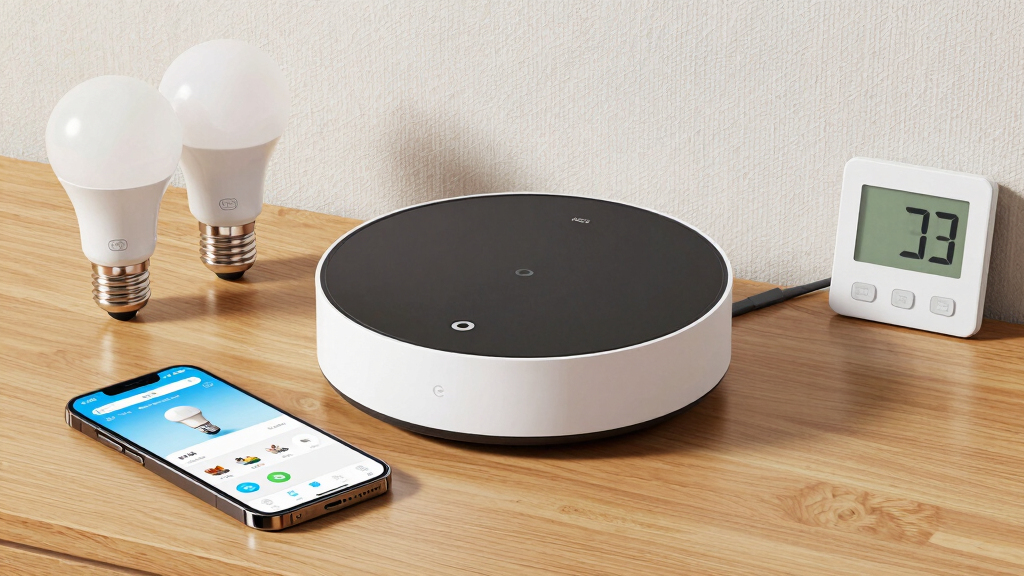

Smart home automation devices are transforming the way we manage our living spaces, offering convenience, energy savings, and enhanced security. The best options in 2026 combine seamless integration, user-friendly controls, and reliable performance. The Amazon Echo Hub stands out for its extensive compatibility, while the Amazon Smart Thermostat excels in energy savings—though both require different levels of setup and investment. Buyers often face tradeoffs between affordability, compatibility, and ease of use. Continue reading for a detailed breakdown of the top 15 devices and what makes each unique.

Get backup power and energy gear delivered free with Prime
- Fast, free delivery on millions of items
- Prime Video, Amazon Music and more included
- Member-only deals all year
Key Takeaways
- The most versatile systems support multiple protocols like Z-Wave, Zigbee, and Matter, increasing compatibility with various smart devices.
- Most top picks require some form of integration hub or control panel, emphasizing the importance of planning your ecosystem upfront.
- Affordable options often have limited compatibility or fewer advanced automation features, suitable for simple setups.
- Higher-end devices tend to offer more robust control options, better build quality, and future-proofing through standards like Matter.
- Ease of use varies widely—products designed for beginners tend to have simpler setup processes but may lack customization options.






More Details on Our Top Picks
Amazon Smart Thermostat – Save money and energy – Works with Alexa and Ring – C-wire required
The Amazon Smart Thermostat stands out for its seamless integration with Alexa, making it an excellent choice for those already invested in Amazon’s ecosystem. Compared with other thermostats like the Nest, it offers straightforward DIY installation with an emphasis on energy savings—Amazon claims up to $90 annually—thanks to programmable schedules and automatic routines. However, its reliance on a C-wire means it’s not compatible with all homes, which can be a significant limitation. Its energy dashboard and air filter automation add extra convenience, but the absence of a display on the device itself means all controls are app or voice-based. This pick makes the most sense for existing Alexa users seeking a budget-friendly, energy-efficient upgrade, provided their system supports C-wire connections.
Pros:- Deep integration with Alexa and Ring for voice and routine control
- Energy savings estimated at $90 per year
- Guided DIY installation with app support
- Includes energy dashboard and air filter automation
Cons:- Requires a C-wire, limiting compatibility for some homes
- No on-device display for manual adjustments
Best for: Homeowners who want an easy-to-install, Alexa-compatible thermostat that emphasizes energy savings and routine automation.
Not ideal for: People without a C-wire or those seeking a touchscreen device for manual control, as this model lacks a display and requires compatible wiring.
- Size:3.56 x 3.56 x 0.84 inches
- Weight:3.86 oz
- Compatibility:Most 24V HVAC systems with C-wire
- Network:2.4 GHz Wi-Fi
- Certifications:ENERGY STAR, ECOLOGO Gold
- Control:App, Alexa voice, touch buttons
Bottom line: This thermostat is ideal for Alexa users wanting a cost-effective, energy-saving smart upgrade with routine automation capabilities.
Smart Home Starter Kit | Includes Echo Hub, Amazon Smart Plug and 4 Amazon Basics Smart Bulbs, Designed for Alexa+
The Smart Home Starter Kit offers an all-in-one approach, making it perfect for newcomers looking to establish a connected home with minimal fuss. Unlike the standalone Amazon Smart Plug or Bulbs, this kit combines a central hub—the Echo Hub—with multiple smart bulbs and a plug, enabling immediate control over lights and devices via Alexa. Compared to the more advanced hubs like the Aeotec Smart Home Hub, the Echo Hub simplifies setup with a touchscreen and straightforward app navigation, but it’s limited to Alexa-compatible devices and doesn’t support Z-Wave or Zigbee directly. The included bulbs are dimmable, multicolor, and easy to control, but the system’s reliance on Wi-Fi and Alexa means it’s less suited to users wanting broader protocol support or local control options.
Pros:- Simple setup with quick guided instructions
- Includes hub, bulbs, and plug for immediate automation
- Supports Alexa routines and voice control
- Multicolor, dimmable bulbs for ambiance customization
Cons:- Limited to Alexa-compatible devices, lacks Z-Wave or Zigbee support
- Less flexible for advanced automation or protocol integration
Best for: First-time smart home users wanting an easy, all-in-one starter kit compatible with Alexa.
Not ideal for: Advanced users seeking Z-Wave, Zigbee, or broader smart protocol support, or those who want a more customizable system.
- Display:8-inch touchscreen
- Connectivity:Wi-Fi 802.11a/b/g/n/ac, Bluetooth
- Supported Protocols:Wi-Fi, Bluetooth, Zigbee, Thread, Matter
- Size:7.9 x 5.4 inches
- Warranty:1-year limited
- Audio:Stereo speakers
Bottom line: Ideal for beginners looking to create a basic smart home environment with Alexa and a simple setup process.
Amazon Smart Air Quality Monitor – Know your air, Works with Alexa
The Amazon Smart Air Quality Monitor provides valuable insights into indoor pollutants, making it a smart addition for health-conscious households. It tracks five key factors—PM 2.5, VOCs, CO, humidity, and temperature—delivering real-time updates via color-coded LEDs and detailed app reports. Compared to standalone sensors like the Tapo Smart IR & IoT Hub, this monitor focuses specifically on air quality, with Alexa notifications for poor conditions, enabling quick responses such as activating air purifiers or fans. Its auto-calibration ensures ongoing accuracy, but the device’s limited range (indoor only) and reliance on 2.4 GHz Wi-Fi can restrict its utility in larger or multi-story homes. This monitor makes the most sense for users eager to monitor air quality actively and automate responses based on sensor data.
Pros:- Tracks multiple indoor pollutants and environmental factors
- Color-coded LED for immediate status indication
- Supports Alexa notifications and routines
- Auto-calibrates for consistent accuracy
Cons:- Indoor use only, limited to smaller spaces
- Relies on 2.4 GHz Wi-Fi, which may affect connectivity in larger homes
Best for: Health-conscious homeowners wanting real-time indoor air quality monitoring with Alexa alerts and automation.
Not ideal for: Households seeking comprehensive smart home control or multi-room air quality monitoring across larger spaces.
- Dimensions:65 x 65 x 45 mm
- Connectivity:2.4 GHz Wi-Fi, Bluetooth 4.2
- Sensors:PM 2.5, VOCs, CO, humidity, temperature
- Power:5V, 1A
- Warranty:1-year limited
- Material:Recycled thermoplastic
Bottom line: Best suited for users who want to keep a close eye on indoor air quality and automate responses via Alexa routines.
SONOFF NSPanel Pro 120 Smart Home Control Panel (Black)
The SONOFF NSPanel Pro offers a comprehensive touchscreen control experience, making it ideal for those who want a centralized smart home interface. Its 4.7-inch display enables quick adjustments of lighting, security modes, and energy consumption, with the ability to view live camera feeds—features that set it apart from simpler hubs like the Amazon Echo Hub. Unlike hubs supporting Z-Wave or Zigbee, the NSPanel focuses on Wi-Fi and supports custom web browsing, music, and notifications, but it’s limited to SONOFF-compatible devices and requires some familiarity with setup. Its local control, visual interface, and integrated security modes make it perfect for users seeking a dedicated room control panel that consolidates multiple functions, but it’s less suited for expansive protocol support or multi-room management.
Pros:- Large, intuitive 4.7-inch touchscreen interface
- Supports live camera viewing and web browsing
- Customizable security modes with alarms and notifications
- Energy use tracking over time
Cons:- Limited to SONOFF ecosystem and Wi-Fi devices
- Requires some technical setup and configuration
Best for: Homeowners wanting a dedicated, customizable in-wall or stand-alone control panel for local device management.
Not ideal for: Users seeking a broader protocol support like Z-Wave or Zigbee, or those without the technical confidence for setup.
- Size:4.8 x 3 x 1.7 inches
- Display:4.7-inch touchscreen
- Connectivity:Wi-Fi
- Supported Devices:SONOFF-compatible, cameras
- Warranty:1-year
- Features:Camera viewing, web browsing, security modes
Bottom line: This control panel is excellent for users who want a visual, centralized in-room control with flexible customization within the SONOFF system.
Amazon Smart Plug, Works with Alexa, Simple Setup, Endless Possibilities
The Amazon Smart Plug offers straightforward voice and app control of any connected device, making it a versatile addition for home routines. Its simple plug-in design means it doesn’t require a hub, and it integrates smoothly with Alexa for voice commands and routines—ideal for lamps, fans, or coffee makers. Compared to multi-outlet smart strips, it keeps your second outlet free, providing flexibility. However, its single socket design limits its use for powering multiple devices simultaneously, and it only supports 2.4 GHz Wi-Fi, which can cause connectivity issues in busy networks. Still, its affordability and ease of use make it a practical choice for automating everyday appliances without complicated setup or protocols.
Pros:- Simple setup with no hub required
- Works seamlessly with Alexa routines
- Compact design keeps outlets free for other devices
- Reliable reconnects after outages
Cons:- Limited to a single outlet per device
- Supports only 2.4 GHz Wi-Fi networks
Best for: Users seeking easy, reliable voice-controlled outlets to automate individual devices.
Not ideal for: Households needing multi-outlet strips or multi-protocol support like Z-Wave or Zigbee.
- Size:3.2 x 1.5 x 2.2 inches
- Electrical:120V, 15A
- Connectivity:Wi-Fi 2.4 GHz
- Compatibility:Alexa
- Warranty:1-year limited
- Control:App, voice
Bottom line: Perfect for users wanting an effortless way to automate individual appliances via Alexa routines.
Amazon Basics Smart Plug, Works with Alexa Only, Voice Control, Remote APP Control, Schedule, Compact Design, Versatile, 2.4 GHz Wi-Fi, No Hub Required, 4-Pack, White
This Amazon Basics Smart Plug stands out for its affordability and seamless Alexa integration, making it an excellent choice for those who want quick setup and reliable voice control. Compared to the Amazon Smart Plug, it offers similar functionality but is typically more budget-friendly, though it lacks compatibility with other voice assistants like Google Assistant. Its compact design ensures it fits into most outlets without blocking adjacent sockets, and scheduling features add convenience for automating lamps, fans, or appliances. However, it only works with Alexa, limiting flexibility for multi-platform households. The 2.4 GHz Wi-Fi connection is stable, but the absence of a hub means it relies solely on your Wi-Fi network, which could be a drawback in crowded wireless environments. This pick makes the most sense for budget-conscious Alexa users who prioritize simplicity over cross-platform compatibility.
Pros:- Affordable price point for a 4-pack
- Simple, fast setup with Alexa
- Compact design leaves other outlets free
- Supports scheduling and remote control via app
Cons:- Limited to Alexa ecosystem; no Google Assistant support
- No hub required, which can reduce reliability in congested Wi-Fi environments
- Lacks advanced automation features found in more integrated systems
Best for: Budget-conscious households already using Alexa for smart home control
Not ideal for: Users seeking compatibility with Google Assistant or Zigbee devices, as it is Alexa-only
- Connector Type:2 Pin
- Number Of Wires:2
- Plug Type:Type B
- Amperage:15 Amps
- Wi-Fi Frequency:2.4 GHz
- Size:2.7″D x 2.1″W x 1.5″H
- Included Components:(4) Amazon Basics Smart Plugs
- Warranty:1 year limited
Bottom line: This plug is ideal for Alexa users looking for a cost-effective, straightforward solution to control devices remotely and on a schedule.
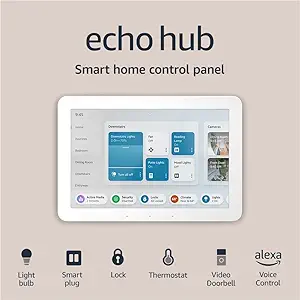
Amazon Echo Hub, 8” smart home control panel, Designed for Alexa+, Compatible with thousands of devices
This Echo Hub offers a dedicated in-wall control panel with an 8-inch touch screen, providing a centralized interface for managing your smart home devices. Unlike the Amazon Basics Smart Plug, it consolidates control of lights, locks, cameras, and routines into one device, reducing app clutter. Its compatibility with thousands of Alexa+ devices and support for Zigbee, Thread, and Matter make it versatile, especially for larger or more complex setups. The device supports both Wi-Fi and Ethernet, providing flexibility in installation. While its setup is straightforward, it requires wall mounting and might involve more installation effort than a simple plug. Compared to the MOES Touchscreen Panel, which is more in-wall focused, the Echo Hub’s emphasis on Alexa ecosystem integration makes it the best choice for those seeking a robust, voice-controlled control center. However, it isn’t portable or battery-powered, limiting placement options.
Pros:- Large, clear 8-inch touch screen interface
- Supports thousands of compatible devices and routines
- Built-in Zigbee, Thread, and Matter support
- Flexible connection options with Wi-Fi and Ethernet
Cons:- Requires wall mounting, less portable
- Installation is more involved than a plug
- Higher cost compared to basic smart plugs
Best for: Smart home enthusiasts wanting a dedicated, voice-enabled control panel integrated with Alexa
Not ideal for: Renters or those seeking portable control solutions, as it requires wall mounting
- Display:8-inch 1280 x 800 resolution
- Connectivity:Wi-Fi, Ethernet, Zigbee, Thread, Matter
- Supported Devices:Lighting, locks, cameras, sensors
- System Compatibility:Alexa, Google Assistant
- Size:7.9″W x 5.4″H x 0.6″D
- Weight:12.9 ounces
- Warranty:1-year limited
Bottom line: This control panel is perfect for homeowners who want a centralized, voice-controlled hub for managing a wide range of smart devices via Alexa.
MOES Smart Home Touchscreen Control(1-Switch Panel), In-wall Smart Panel with Alexa Built-in, Compatible with Smart Life devices, Manage and Control Home Devices and Scenes with Touch and Voice
The MOES Touchscreen Control Panel provides a versatile in-wall solution compatible with a wide array of Smart Life devices, including switches, bulbs, and locks. Unlike the Echo Hub, which is primarily Alexa-centric, this panel offers built-in Alexa voice control along with Zigbee gateway functionality, making it suitable for households using diverse platforms. Its 5-inch full touch screen enables easy management of scenes and devices directly on the wall, reducing reliance on multiple apps. While installation can be straightforward with wired or wireless options, it requires some electrical work, making it more suitable for permanent setups rather than portable control. Compared to the Aeotec Smart Home Hub, which emphasizes Z-Wave and Zigbee connectivity, MOES’s focus on Smart Life compatibility and local control offers broader device support. However, its in-wall design limits flexibility in placement and can be more costly to install.
Pros:- In-wall touchscreen with touch and voice control
- Compatible with a broad range of Smart Life devices
- Built-in Alexa and Zigbee gateway
- Supports wired and wireless installation
Cons:- Requires electrical work for installation
- Less portable than plug-in controllers
- Higher upfront cost and complexity
Best for: Homeowners seeking a customizable, in-wall control panel compatible with multiple device ecosystems
Not ideal for: Renters or those preferring portable, plug-and-play solutions, as it requires installation and wiring
- Screen Size:5-inch full touch
- Compatibility:Smart Life, Alexa, Zigbee
- Connectivity:Wired, Wireless
- Supported Devices:Switches, bulbs, locks
- Size:1″ x 1″ x 1″
- Weight:13.1 ounces
- Warranty:Not specified
Bottom line: This panel is ideal for users wanting a permanent, wall-mounted control interface with extensive device compatibility and voice control features.
Aeotec Smart Home Hub, Works as a SmartThings Hub, Z-Wave, Zigbee, Matter Gateway, Compatible with Alexa, Google Assistant, WiFi
The Aeotec Smart Home Hub is a powerful, versatile control center designed for advanced users who want to integrate multiple protocols like Z-Wave, Zigbee, and Matter. Unlike the MOES Panel or Echo Hub, it functions primarily as a hub, supporting local automations and broad device compatibility, including popular voice assistants. Its ability to support Z-Wave Plus, Zigbee, and Matter ensures future-proofing and extensive device support, making it suitable for complex smart homes. Setup is straightforward via the SmartThings app, and it supports both Wi-Fi and Ethernet connections. While it does not feature a display or direct control panel like the Echo Hub or MOES, it excels in automating and coordinating a large ecosystem of devices. This makes it ideal for tech-savvy users aiming to build a highly integrated, multi-protocol smart home system. The main tradeoff is the lack of a dedicated user interface, which means managing devices still requires a smartphone or compatible smart apps.
Pros:- Supports Z-Wave, Zigbee, and Matter protocols
- Works with Alexa and Google Assistant
- Supports local automations for reliability
- Ethernet and Wi-Fi support for flexible setup
Cons:- No built-in display or touchscreen
- Requires smartphone or app for device management
- Installation and setup are more complex
Best for: Advanced smart home users wanting multi-protocol support and extensive automation capabilities
Not ideal for: Beginners or those preferring an all-in-one touchscreen control or plug-in device
- Supported Protocols:Z-Wave, Zigbee, Matter, Wi-Fi
- Connectivity:Ethernet, Wi-Fi
- Compatibility:Alexa, Google Assistant
- Size:Approximately 7.9″W x 5.4″H x 0.6″D
- Weight:1.1 pounds
- Warranty:1 year
Bottom line: This hub is perfect for experienced users seeking a highly customizable, multi-protocol automation platform for complex smart home setups.
MOES WiFi Smart IR Remote Controller Smart Home Infrared Universal Remote Blaster, One for All Control AC TV DVD CD AUD SAT etc, Compatible with Alexa and Google Assistant, No Hub Required
The MOES WiFi Smart IR Remote Controller offers a practical solution for controlling multiple infrared devices such as TVs, air conditioners, and DVD players with a single app and voice commands. Unlike the previous hubs, it specializes in IR device control, making it ideal for households with many remote-controlled appliances. Its compatibility with Alexa and Google Assistant allows hands-free control, and the DIY copy function enables custom remotes if your device isn’t listed. While its maximum range of 15 meters and IR support make it versatile, IR signals cannot penetrate walls, limiting control to within the same room. It does not support RF or Zigbee protocols, so it’s not suitable for broader automation. This device makes the most sense for users who want to replace multiple remote controls with a single voice or app-based system.
Pros:- Universal IR support for multiple devices
- Works with Alexa and Google Assistant via Wi-Fi
- DIY copy function for unsupported remotes
- No hub required, easy setup
Cons:- Limited to IR devices within 15 meters line of sight
- No support for RF or other protocols
- IR signal strength can be blocked by walls
Best for: Homeowners wanting to automate IR-controlled devices without extra hubs or wiring
Not ideal for: Smart home users seeking integration with Z-Wave, Zigbee, or Matter devices
- Max Range:15 meters
- Supported Devices:AC, TV, DVD, Satellite, etc.
- Connectivity:Wi-Fi (2.4GHz)
- Button Quantity:12
- Supported Protocols:IR (38kHz)
- Size:Not specified
- Warranty:30 days
Bottom line: This IR remote blaster is ideal for users wanting to replace multiple remotes with a voice-controlled, Wi-Fi-connected device for household appliances.
Kasa Smart Light Switch HS200, Single Pole, Needs Neutral Wire, 2.4GHz Wi-Fi Light Switch Works with Google Home, UL Certified, No Hub Required, White
This pick stands out for its straightforward installation process, especially for those with existing neutral wiring, which makes it a strong choice over the Lutron Caseta hub for simple setups. Its app-guided installation and remote control capabilities deliver convenience, but it requires a neutral wire, which can be a limitation in older homes. Unlike the Amazon Smart Switch, which offers similar voice control, the HS200’s UL certification provides added safety reassurance. The device supports scheduling and voice commands via Alexa and Google Assistant, but lacks the Zigbee or Thread protocols found in more integrated hubs like the Aqara Hub M3. Tradeoffs include a dependence on 2.4 GHz Wi-Fi and a somewhat basic design. It makes the most sense for homeowners who want reliable, no-hub smart lighting with straightforward installation without advanced automation needs.
Pros:- App-guided, step-by-step installation simplifies setup
- Works seamlessly with Google Home and Alexa for voice commands
- UL certified for safety and reliability
- No hub required, reducing additional costs
Cons:- Requires neutral wire, limiting compatibility in older homes
- Limited to single-pole switching, not suitable for multi-way setups
Best for: Homeowners who want easy, reliable smart lighting control and have neutral wiring in place.
Not ideal for: Renters or homes without neutral wiring, since installation might be difficult or impossible.
- Control Method:Remote, Voice, Scheduling
- Wi-Fi Frequency:2.4 GHz
- Wiring Requirement:Neutral wire needed
- Certifications:UL Certified
- Dimensions:4.13 x 1.71 x 1.74 inches
- Compatibility:Google Home, Alexa
Bottom line: Ideal for users seeking a dependable, straightforward smart switch with safety certification and no hub dependency.
Tapo Smart IR & IoT Hub with Chime – Universal Remote for TVs, ACs, & 18+ Device Types, Matter-Certified, Supports 8,000+ Infrared Brands, Voice & App Control, Custom Schedules & Automations, H110
This hub excels at consolidating control of IR-based appliances like TVs and ACs, making it a standout over the Amazon Smart Plug for legacy electronics. Its support for over 18 device types and compatibility with Matter and voice assistants enables seamless integration across platforms, setting it apart from simpler IR controllers. The built-in chime and alert features add a layer of security, unlike basic IR remotes that lack automation and alert capabilities. However, it’s more complex to set up and may be overkill for users only needing simple outlet control, and it doesn’t support third-party Zigbee devices, limiting its ecosystem compared to the Aqara Hub M3. The device is best for those who want to automate and control a wide array of IR appliances with reliable voice and app control, while accepting a more involved setup process.
Pros:- Supports 18+ appliance types and 8,000+ IR brands
- Matter-certified for broad ecosystem compatibility
- Includes built-in alarm and alert system for security
- Supports custom schedules and location-based automation
Cons:- Setup complexity may be daunting for beginners
- Limited to IR and IoT devices, no Zigbee support for third-party sensors
Best for: Tech-savvy users with multiple IR-based devices who want integrated voice control and automation.
Not ideal for: Users seeking a simple smart outlet or plug without extensive device control needs.
- Device Support:TVs, ACs, Fans, Media Devices
- Connectivity:Wi-Fi 2.4 GHz
- Supports:Infrared, Matter, Voice
- Alarm:Built-in 93dB alarm
- Compatibility:Alexa, Google, Siri
Bottom line: Best suited for users who want comprehensive IR device control and automation within a Matter-compatible ecosystem.
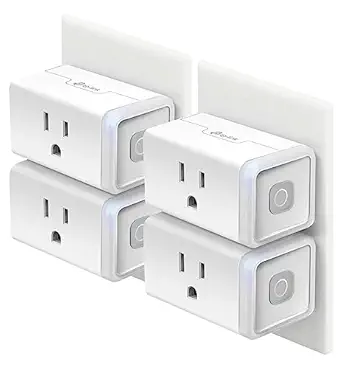
Kasa Smart Plug HS103P4, Smart Home Wi-Fi Outlet Works with Alexa, Echo, Google Home & IFTTT, No Hub Required, Remote Control, 15 Amp, UL Certified, 4-Pack, White
This 4-pack of plugs offers an excellent balance of affordability and functionality, making it ideal over single-outlet options like the Amazon Smart Plug for multiple devices. Its reliable Wi-Fi connection and app control, combined with voice compatibility with Alexa and Google, deliver convenience at a competitive price, though it lacks Zigbee or Thread protocols for broader smart home integration. The UL certification provides peace of mind regarding safety, but the reliance on 2.4 GHz Wi-Fi could be a drawback in congested networks. It’s best suited for users looking to expand their smart outlets across several devices without extra hub costs, but it may not satisfy those wanting advanced automation features or third-party ecosystem support.
Pros:- Four outlets in a cost-effective pack
- Works with Alexa, Google, and IFTTT for voice and automation
- UL certified for safety
- No hub required for setup
Cons:- Limited to 15A, not suitable for high-power appliances
- Dependent on a stable 2.4 GHz Wi-Fi connection
Best for: Budget-conscious users wanting multiple Wi-Fi smart outlets for remote control and automation.
Not ideal for: Smart home enthusiasts seeking Zigbee or Thread support for broader ecosystem integration.
- Control Method:App, Voice, Schedule
- Number of Outlets:4
- Current Rating:15 Amps
- Wi-Fi Frequency:2.4 GHz
- Certifications:UL
- Connectivity:Alexa, Google, IFTTT
Bottom line: Great choice for users who want multiple reliable Wi-Fi outlets at an affordable price for basic automation.
Lutron Caseta Smart Lighting Smart Hub for Light Bulbs and Fans, Compatible w/ Amazon Alexa, Apple Homekit, Google Home, 75 Device Capacity, L-BDG2-WH, White
This hub targets users who want extensive control over lighting, shades, and fan devices, surpassing the Amazon Echo Hub in capacity and automation complexity. Its compatibility with multiple ecosystems—including Apple HomeKit, Alexa, and Google—offers flexibility, while its support for up to 75 devices makes it a strong choice for larger, more integrated smart homes. Its simple plug-in setup and robust app allow for sophisticated scenes, scheduling, and geo-fencing, making it ideal for those who value customization. However, it’s more expensive and less suited for basic smart plug needs, and its reliance on a dedicated hub may be a drawback for minimalist setups. This hub is perfect for users seeking a scalable, reliable, and deeply integrated lighting automation system.
Pros:- Supports up to 75 devices for advanced automation
- Compatible with Alexa, Apple HomeKit, Google Assistant
- Easy plug-in installation with robust app control
- Supports scene creation, scheduling, and geo-fencing
Cons:- Higher cost compared to simple smart switches or plugs
- Requires a dedicated hub, adding complexity
Best for: Homeowners with complex lighting and shade automation needs looking for broad ecosystem support.
Not ideal for: Casual users or renters without the need for extensive automation or shade control.
- Device Capacity:75 devices
- Compatibility:Alexa, Apple HomeKit, Google
- Setup:Plug-in, app-based
- Automation Features:Scenes, Scheduling, Geo-fencing
- Hub Required:Yes
Bottom line: Best for users seeking a scalable, feature-rich lighting and shade control system with multi-platform support.
Aqara Smart Home Hub M3 for Advanced Automation, Matter Controller, Thread Border Router, Features Zigbee, Bluetooth, Wi-Fi, PoE, IR, Supports Apple HomeKit, Alexa, SmartThings, Home Assistant, IFTTT
This hub excels at supporting a wide array of protocols, including Zigbee, Thread, Wi-Fi, and IR, making it ideal over the Sonoff NSPanel Pro for advanced local automation. Its Matter compatibility provides seamless integration with ecosystems like Home Assistant and Apple HomeKit, with a focus on local control and privacy. The PoE port and USB-C support add versatility and stability that surpass many competitors, but its complexity and higher price tag mean it’s best suited for tech-savvy users aiming for a future-proof, multi-protocol setup. Unlike hubs that rely solely on Wi-Fi, the Aqara M3 emphasizes local automation, reducing latency and dependency on cloud services, but setup may require more technical knowledge. It’s perfect for dedicated smart home enthusiasts seeking broad protocol support and local control.
Pros:- Supports Zigbee, Thread, Wi-Fi, IR for extensive device compatibility
- Matter controller for seamless ecosystem integration
- Edge automation with local control prioritization
- Includes PoE, USB-C for power and stability
Cons:- Higher price and setup complexity compared to basic hubs
- Limited third-party Zigbee device support (only Aqara devices)
Best for: Advanced smart home users wanting multi-protocol support with local automation and privacy focus.
Not ideal for: Casual users or those with simple automation needs who prefer plug-and-play solutions.
- Protocols Supported:Zigbee, Thread, Wi-Fi, IR, Bluetooth
- Automation:Local Edge, Scenes, Scenes
- Connectivity:PoE, USB-C, Wi-Fi
- Compatibility:Apple HomeKit, Alexa, SmartThings
- Device Limit:127 Zigbee, 127 Thread
Bottom line: Ideal for users seeking a future-proof, multi-protocol hub with local automation and privacy controls.
How We Picked
I evaluated these smart home automation devices based on their performance reliability, ease of setup, compatibility breadth, build quality, and value for money. Devices that seamlessly integrate with popular voice assistants like Alexa, Google Assistant, and Apple HomeKit received higher scores. I also prioritized products that offer future-proofing through support for standards like Matter and Zigbee. Finally, I considered user feedback and expert reviews to gauge real-world usability, ensuring that the ranked list reflects options suitable for a broad range of buyers with different needs and technical skills.Factors to Consider When Choosing Smart Home Automation Devices
Choosing the right smart home automation devices involves understanding several key factors that impact compatibility, usability, and long-term value. While many products promise convenience, the devil is in the details—such as protocol support, ecosystem integration, and installation requirements. Making informed decisions can prevent costly mistakes and ensure your setup works smoothly now and in the future.Compatibility and Protocol Support
When selecting devices, consider which ecosystems and protocols they support. Devices supporting multiple protocols like Zigbee, Z-Wave, and Matter tend to offer broader compatibility, reducing the risk of obsolescence. Avoid systems that lock you into a single platform unless you’re fully committed to that ecosystem. Compatibility issues often lead to frustration, especially if you want to expand your setup later.
Ease of Installation and Use
Ease of setup varies dramatically—from plug-and-play devices to complex control panels requiring professional installation. For most homeowners, intuitive app interfaces and clear instructions are essential, especially if you’re new to smart home tech. Keep in mind that more advanced systems may offer greater customization but can be daunting for beginners, so weigh your comfort level carefully.
Automation Capabilities and Flexibility
The value of automation features depends on how much control you need. Basic devices like smart plugs or switches provide simple scheduling, while advanced hubs and controllers enable complex routines involving multiple devices and sensors. Decide whether you prefer straightforward automation or require a deeply integrated system that adapts to your routines and preferences.
Build Quality and Reliability
Durability and consistent performance are essential, especially for devices intended for daily use like switches, hubs, or thermostats. Cheaper, lower-quality products may fail prematurely or have connectivity issues. Investing in well-built hardware can save money and frustration over time, particularly if you plan a large or critical automation setup.
Cost and Future-Proofing
While budget-friendly options are tempting, they often lack the longevity or scalability of higher-end products. Consider whether the device supports future standards like Matter, which ensures longer compatibility as new devices and protocols emerge. Sometimes paying more upfront results in better integration, fewer headaches, and a more resilient smart home ecosystem.
Frequently Asked Questions
Can I mix different brands of smart home devices?
Yes, it is often possible to mix brands, especially if they support common standards like Zigbee, Z-Wave, or Matter. However, compatibility isn’t guaranteed, and some devices may not interact as smoothly as those within the same ecosystem. To minimize issues, it’s best to prioritize products that explicitly support multiple protocols or are compatible with your central hub or voice assistant.
Do I need a hub for all smart home devices?
Not all smart devices require a hub—many, like smart plugs and bulbs, connect directly via Wi-Fi and are easy to set up. However, hubs or control panels can enhance compatibility, allow for more complex automations, and reduce network congestion. For large or complex setups, investing in a hub like the Aeotec Smart Home Hub or Echo Hub can streamline management and improve reliability.
Are smart home devices secure from hacking?
Security varies across products, but reputable brands typically implement encryption and regular firmware updates to protect your network. Devices that support standard protocols like Zigbee, Z-Wave, or Matter often have better security features. Always keep your firmware up to date, use strong, unique passwords, and segregate your smart home devices on a separate network for added security.
How do I know if my existing Wi-Fi can support smart devices?
Most smart home devices operate on 2.4 GHz Wi-Fi, which is widely supported by standard routers. However, if you have a crowded network with many devices, performance can suffer. Ensure your Wi-Fi network has sufficient bandwidth and coverage, possibly using mesh extenders or upgrading your router if you plan a large setup. Adequate network capacity helps keep all devices responsive and reliable.
Is it worth investing in a smart home automation hub?
A hub can centralize control and improve automation complexity, especially if you plan to expand your system. Hubs like the SmartThings or Aeotec models support numerous protocols and integrate many device types, reducing compatibility issues. Although they add a cost and setup step, hubs often provide more reliable connections and a unified interface, making them worthwhile for larger or more advanced smart homes.
Conclusion
For those new to smart home tech or seeking simplicity, the Amazon Smart Plug offers straightforward automation without the need for a hub. If you want the best overall experience, the Amazon Echo Hub provides broad compatibility and advanced control, ideal for tech-savvy users. Buyers prioritizing energy savings should consider the Amazon Smart Thermostat for its efficiency benefits. For premium installations, the Aqara Smart Home Hub M3 offers extensive protocol support and future-proofing. Ultimately, your choice depends on your budget, technical comfort, and specific automation needs.
Columbus Day / Indigenous Peoples' Day Picks
long weekend sales
As an affiliate, we earn on qualifying purchases.