
TL;DR

Get backup power and energy gear delivered free with Prime
- Fast, free delivery on millions of items
- Prime Video, Amazon Music and more included
- Member-only deals all year
Helleniq Renewables has completed a 100 MW/200 MWh battery energy storage system at Helleniq Energy’s facilities in Thessaloniki, Greece. The project is the group’s first operational utility-scale battery system; the report identifies Huawei as the supplier, while the company’s statement did not name one.
Helleniq Renewables has completed a 100 MW/200 MWh battery energy storage system at Helleniq Energy’s industrial facilities in Thessaloniki, northern Greece, marking the energy group’s first operational utility-scale battery project. The system is connected to Greece’s national transmission network; Energy Storage reported that it was supplied by Huawei, although Helleniq Energy’s statement did not identify the supplier.
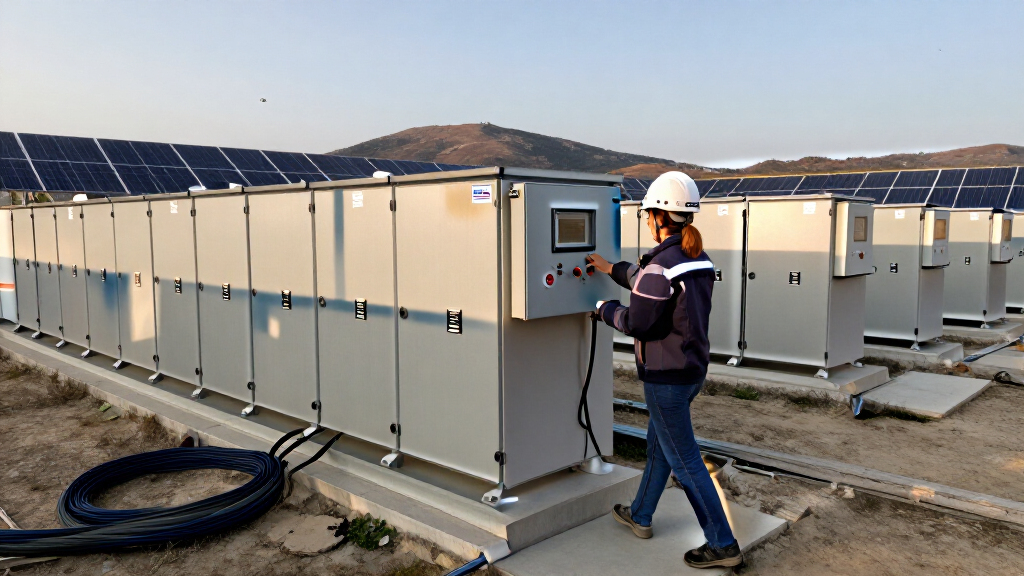
The project uses lithium iron phosphate (LFP) batteries arranged in 56 liquid-cooled containers across three battery system areas. It occupies about 100,000 square meters, according to the report. Helleniq Energy said the investment cost approximately €50 million, or about US$56 million.
The company said the installation is designed to complete at least one full charge-discharge cycle per day. Grid connection works included a new 33/150 kV substation and an approximately five-kilometer underground high-voltage transmission line linking the site to the Thessaloniki extra-high-voltage center.
The project was selected in the first competitive tender organized by Greece’s Regulatory Authority for Waste, Energy and Water, known as RAAEY. Energy Storage identified the equipment as a Huawei LUNA2000-series system, but said the supplier was not named in the company statement and attributed that identification to its own understanding.
A First Battery for Helleniq Energy
The project gives Helleniq Energy an operating, grid-connected battery asset as it seeks to expand its electricity and renewables business beyond its established energy activities. Storage systems can charge and discharge electricity at different times, providing flexibility to the power system; the company says this installation will cycle at least once each day. The announcement does not specify how the battery will be dispatched or quantify its expected revenues or effects on grid reliability.
Its 100 MW power rating describes how quickly it can charge or deliver electricity, while its 200 MWh capacity describes the amount it can store. The project is among Greece’s larger storage installations, according to the company’s characterization as reported by Energy Storage, and adds a substantial battery asset to the country’s transmission network.
The investment also signals a move from development plans to operation for Helleniq Energy’s storage business. The company is pursuing another battery project in Florina and has set renewable-energy capacity targets for the end of the decade. The Thessaloniki plant is one project toward those broader ambitions, not evidence that the targets have already been met.
lithium iron phosphate (LFP) battery storage system
As an affiliate, we earn on qualifying purchases.
As an affiliate, we earn on qualifying purchases.
From Tender to Grid Connection
The Thessaloniki system was selected through Greece’s first competitive storage tender, organized by RAAEY. The project’s completion adds a battery system to Helleniq Energy’s portfolio and marks the group’s first operational utility-scale BESS. The source report describes the site as one of the largest energy storage projects in Greece and southeast Europe, a characterization attributed to the company rather than an independently verified ranking.
Helleniq Energy is also developing a 50 MW/200 MWh battery project in Florina, in northern Greece. The company expects that project to be completed in the near future, but the report gives no specific date. Its stated aim is to have 1.5 GW of renewable energy capacity operating by 2028 and more than 2 GW by 2030.
Helleniq Renewables CEO Sotiris Kapellos said the company’s renewable-energy and storage development portfolio exceeds 6 GW, with more than 700 MW already in operation. Those figures refer to the company’s reported portfolio and operating capacity; they are not measures of the Thessaloniki battery’s output.
““With the completion of its first electricity storage project, Helleniq Energy is taking another decisive step in implementing its strategy to build a strong power and renewables pillar, as an integrated Group with a strong presence across the full spectrum of energy activities.””
— George Alexopoulos, Helleniq Energy deputy CEO
Supplier and Operating Details
Huawei’s role is not confirmed in the company statement cited by Energy Storage. That publication reported that it understood the system to be a Huawei LUNA2000-series product. The available material does not include a direct confirmation from Helleniq Energy or Huawei, nor details on the specific equipment configuration or contract.
The company has not provided a detailed operating plan, including the battery’s expected use in energy markets, its dispatch arrangements, or projected financial returns. The report also does not give a precise date on which the plant began operating, beyond stating that it has been completed and is operational. No performance data from the system are included.
Florina and Capacity Targets
The next named storage development for Helleniq Energy is its 50 MW/200 MWh Florina project, which the company expects to complete in the near future. No firm completion date or further construction milestones were provided in the source report.
Helleniq Energy’s stated targets are to bring 1.5 GW of renewable capacity into operation by 2028 and more than 2 GW by 2030. The Thessaloniki battery is now operating, but the company has not provided a project-by-project schedule showing how it will reach those targets or how much battery storage it plans to add beyond the Florina development.
Key Questions
What has Helleniq Energy brought online?
Helleniq Renewables completed a 100 MW/200 MWh battery energy storage system at Helleniq Energy’s industrial facilities in Thessaloniki. The report describes it as the group’s first operational utility-scale battery project.Did Helleniq Energy confirm Huawei supplied the battery?
Not in the company statement described in the report. Energy Storage reported Huawei as the supplier and identified the equipment as a LUNA2000-series system, but attributed that identification to its own understanding.How large is the Thessaloniki battery project?
It has a 100 MW power rating and 200 MWh of storage capacity. The installation uses 56 liquid-cooled LFP battery containers and is designed for at least one full charge-discharge cycle per day, according to the company.What is Helleniq Energy’s next battery project?
The company is developing a 50 MW/200 MWh battery in Florina and expects it to be completed in the near future. No specific completion date was provided.Source: rss
Halloween Picks
halloween
As an affiliate, we earn on qualifying purchases.