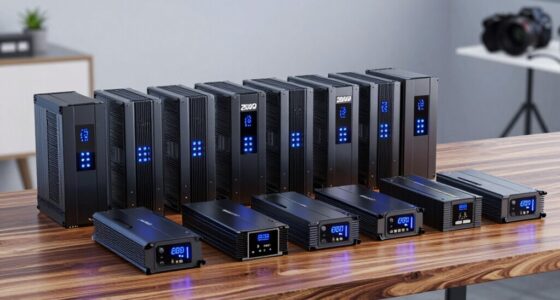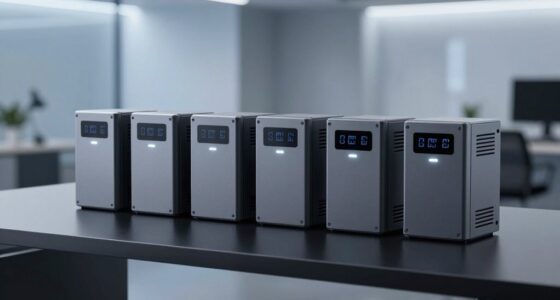
The best electric car batteries depend on your vehicle’s voltage, battery layout, and intended use; for a 48V golf cart, the Mehrpow 48V 100Ah LiFePO4 kit stands out for its included charger, monitor, and app. The Bolt Energy USA 72V 105Ah battery is a stronger match for compatible MOKE America EVs, while its heated GEM version addresses cold-weather use. These are replacement batteries and battery components for specific vehicles, not universal packs for modern road cars. The main tradeoffs are fit and system compatibility, lithium’s lower maintenance and integrated features, and AGM’s familiar multi-battery format. Read on for a comparison of all nine options and guidance on choosing a pack your vehicle can safely use.

Get backup power and energy gear delivered free with Prime
- Fast, free delivery on millions of items
- Prime Video, Amazon Music and more included
- Member-only deals all year
Key Takeaways
- Voltage and vehicle fit outrank capacity alone: the 48V golf-cart batteries, 72V MOKE and GEM packs, and 12V starter battery serve different electrical systems and are not interchangeable.
- Mehrpow is the most complete 48V kit in this group: its charger, touch monitor, app, and 200A BMS reduce the need to source key accessories separately.
- Cold-weather needs change the shortlist: Bolt Energy USA’s heated GEM battery is the lineup’s purpose-built choice for compatible GEM vehicles used in low temperatures.
- AGM remains a distinct 72V route: the VMAX six-pack suits compatible GEM setups built around multiple 12V batteries, but differs from the single-pack lithium options in chemistry and upkeep.
- Not every listed battery is a traction pack: T.E.T LITHIUM’s 12.8V Group 48 H6 battery is a 12V car battery, while ExpertPower’s eight cells are components for a correctly engineered custom pack.


| electric car batterie | Voltage | Capacity | Chemistry | Energy |
|---|---|---|---|---|
| HumsiENK 48V 150Ah Golf Cart L | 51.2V | 150Ah | LiFePO4 | 7,680Wh |
| Bolt Energy USA 72V LiFePO4 Ba | 73.6V | 105Ah | LiFePO4 | 7.728kWh |
| Enjoybot 72V 65Ah LiFePO4 Lith | 76.8V | 65Ah | LiFePO4 | 4,992Wh |
| VMAX XTR31-135 Group 31 AGM Ba | 12V each; six-battery 72V system | 135Ah each | — | — |
| Mehrpow 48V 100Ah LiFePO4 Golf | 48V | 100Ah | LiFePO4 | 5.12kWh |
| ExpertPower 8-Pack 3.2V 304Ah | 3.2V per cell | 304Ah per cell | LiFePO4 | — |
| Power Queen 48V 100Ah LiFePO4 | 51.2V | 100Ah | LiFePO4 | 5.12kWh |
| Bolt Energy USA 72V Heated LiF | 73.6V | 105Ah | LiFePO4 | 7.728kWh |
| T.E.T LITHIUM 12.8V 60Ah LiFeP | 12.8V | 60Ah | LiFePO4 | 768Wh |
More Details on Our Top Picks
HumsiENK 48V 150Ah Golf Cart LiFePO4 Battery
The HumsiENK is the capacity-first choice here: its 7,680Wh rating and 150Ah capacity are suited to carts that need more energy between charges than the Mehrpow 48V 100Ah kit provides. The manufacturer claims 60–80 miles, but actual range depends on vehicle setup, terrain, load, and driving habits, so I would treat that figure as a guide rather than a guarantee. A 200A BMS, Bluetooth monitoring, and a low-temperature charging cutoff add useful protections and visibility. Its metal casing is a practical fit for utility-oriented use, though the battery weighs 139.3 lb and its long, wide footprint can complicate installation. This makes the most sense when capacity is the priority and the cart can accommodate the size; buyers who need a lighter or more compact pack should compare the Enjoybot.
Pros:- 7,680Wh capacity is higher than the Mehrpow 48V 100Ah kit’s 5.12kWh
- Bluetooth app reports capacity, voltage, and cell health
- 200A continuous BMS and rugged metal casing
- Low-temperature charging cutoff helps protect cells from charging below freezing
Cons:- 139.3 lb weight makes handling and installation difficult
- 26.77-inch length may not fit some battery compartments
- The 60–80-mile range is a manufacturer claim and will vary with use
Best for: Golf-cart and utility-vehicle owners who want a high-capacity 48V-class pack and have verified the tray can fit its dimensions and weight.
Not ideal for: Owners of compact carts or anyone who needs to lift and install a battery without help; its 139.3 lb weight and large footprint are limiting.
- Chemistry:LiFePO4
- Voltage:51.2V
- Capacity:150Ah
- Energy:7,680Wh
- Continuous BMS current:200A
- Dimensions:26.77 × 12.60 × 10.31 in
- Weight:139.3 lb
- Claimed cycle life:6,000+ cycles
- Warranty:5 years
Our verdict“Choose the HumsiENK if your compatible cart has room for a heavy, high-capacity battery and longer claimed range matters more than easy installation.”
Bolt Energy USA 72V LiFePO4 Battery for MOKE America EV, 105Ah with 18A Charger and Accessory Kit
This Bolt Energy USA pack is the clearest fit-specific option in the group: it is designed for MOKE America EVs, rather than being a broadly positioned 48V replacement like the HumsiENK or Mehrpow. Its 73.6V, 105Ah rating supplies 7.728kWh, while the included 18A smart charger and accessory kit reduce the need to source charging equipment separately. Bluetooth monitoring and OTA updates offer a way to check battery status and receive software updates, and the stated 12-year warranty includes six years of full replacement coverage followed by six prorated years. The tradeoff is substantial mass at 165 lb, plus limited usefulness outside its intended vehicle fit. I would pick it over the Enjoybot only when MOKE compatibility and included equipment matter more than a lighter, more versatile pack.
Pros:- Designed for MOKE America electric vehicles
- 18A smart charger and accessory kit are included
- Bluetooth monitoring and OTA updates provide connected battery management
- 12-year warranty has six years of full replacement coverage followed by six prorated years
Cons:- 165 lb weight makes installation and handling demanding
- Vehicle-specific fit limits its appeal for other EVs
- Product data does not specify a continuous BMS current or cycle-life rating
Best for: MOKE America EV owners seeking a vehicle-specific LiFePO4 replacement with a charger, accessory kit, app monitoring, and stated long-term warranty coverage.
Not ideal for: Golf-cart owners without a confirmed MOKE-compatible system, or buyers who need a lighter battery; this pack weighs 165 lb and its fit is vehicle-specific.
- Chemistry:LiFePO4
- Voltage:73.6V
- Capacity:105Ah
- Energy:7.728kWh
- Charger:18A smart charger
- Dimensions:20.08 × 10.75 × 10.39 in
- Weight:165 lb
- Connectivity:Bluetooth app monitoring and OTA updates
- Warranty:12 years: 6-year full replacement, then 6 prorated years
Our verdict“For MOKE America owners who can accommodate the weight, this is the most purpose-built kit here, with charger and warranty coverage included.”
Enjoybot 72V 65Ah LiFePO4 Lithium Battery with Bluetooth and Low-Temperature Protection
The Enjoybot offers a useful middle ground for buyers who need a 72V-class system but cannot accommodate the 165 lb Bolt Energy MOKE battery. At 77.8 lb, it is far easier to handle, and its compact dimensions suit carts and utility vehicles where tray space or installation effort matters. Its 4,992Wh capacity is lower than the Bolt Energy pack’s 7.728kWh and the HumsiENK’s 7,680Wh, so I would not choose it for buyers seeking maximum stored energy. The 120A continuous discharge rating, brief 500A peak, Bluetooth monitoring, and IP67 enclosure target demanding vehicle use while adding protection against water and dust. Low-temperature cutoffs are helpful, but the peak current lasts only 3–5 seconds. This is a more flexible fit for several vehicle types, not a like-for-like high-capacity replacement.
Pros:- 77.8 lb weight is substantially lower than the Bolt Energy USA MOKE battery
- IP67-rated enclosure resists water and dust ingress
- Bluetooth monitoring, cell balancing, and low-temperature cutoffs are specified
- 120A continuous discharge with a stated 500A peak for 3–5 seconds
Cons:- 4,992Wh capacity is lower than the HumsiENK and Bolt Energy USA packs
- 500A peak current is available only for 3–5 seconds
- 77.8 lb is still a substantial load for one-person installation
Best for: Golf-cart, LSV, NEV, and UTV owners who need a relatively manageable 72V-class LiFePO4 battery with app monitoring and a sealed enclosure.
Not ideal for: Drivers prioritizing maximum range or sustained high current; its 65Ah capacity is below the two 105–150Ah options, and 500A peak output is brief.
- Chemistry:LiFePO4
- Voltage:76.8V
- Capacity:65Ah
- Energy:4,992Wh
- Continuous discharge:120A
- Peak current:500A for 3–5 seconds
- Water and dust resistance:IP67
- Dimensions:20.4 × 10.6 × 8.66 in
- Warranty:10 years
Our verdict“Choose the Enjoybot for a more manageable, sealed 72V-class battery when broad vehicle compatibility matters more than the highest capacity.”
VMAX XTR31-135 Group 31 AGM Batteries, 12V 135Ah, 6-Pack for 72V GEM Cars
The VMAX set is the traditional lead-acid alternative for compatible 72V GEM cars and other vehicles designed for six 12V batteries. Its sealed AGM construction is maintenance-free and resists shock and vibration, which can suit owners who prefer a familiar multi-battery setup over a single lithium pack. Compared with the Enjoybot or Bolt Energy USA batteries, this option requires six separate units and each weighs 78 lb, making the full set a heavy installation. Its estimated 1,000 cycles at 50% depth of discharge also trails the cycle-life claims of the lithium options, and its warranty is only 12 months. The advantage is compatibility with systems built around Group 31 batteries and a specified 72V configuration. I would skip it if you want fewer components, lower handling weight, or a longer stated service life.
Pros:- Six 12V units form the specified 72V setup for compatible vehicles
- Sealed AGM design is listed as maintenance-free
- Designed to resist shock and vibration
- 135Ah capacity per battery
Cons:- Each battery weighs 78 lb, making the six-unit set difficult to handle
- Estimated life is 1,000 cycles at 50% depth of discharge
- 12-month warranty is shorter than the stated warranties on the lithium options
Best for: Owners of 72V GEM cars or other compatible vehicles built for six Group 31 AGM batteries who want a sealed, maintenance-free lead-acid setup.
Not ideal for: Buyers replacing a single lithium pack, seeking lower installation weight, or prioritizing longer stated cycle life; this set has six heavy batteries and a 12-month warranty.
- Battery type:Lead-acid AGM deep-cycle
- Quantity:6 batteries
- Voltage:12V each; six-battery 72V system
- Capacity:135Ah each
- Size group:Group 31
- Dimensions per battery:12.9 × 6.77 × 8.66 in; 9.84 in high including terminals
- Weight per battery:78 lb
- Estimated cycle life:1,000 cycles at 50% depth of discharge
- Warranty:12 months
Our verdict“Choose this VMAX set only if your vehicle requires six Group 31 AGM batteries and you prefer that format over a lighter, single lithium pack.”
Mehrpow 48V 100Ah LiFePO4 Golf Cart Battery Kit with 200A BMS, Charger, Touch Monitor, and App
Mehrpow makes the most straightforward all-in-one 48V kit in this group: the battery comes with a 58.4V 18A charger, an LCD touch monitor, and Bluetooth app access. That bundle can simplify setup compared with the HumsiENK, which offers greater 150Ah capacity but does not list an included charger or touch display. At 5.12kWh, Mehrpow stores less energy than the HumsiENK, so it suits buyers who value an integrated monitoring and charging package more than maximum range. Its 200A BMS, IP65 rating, and stated 10,000-plus cycles at 80% depth of discharge make the feature set appealing on paper, though those are manufacturer specifications rather than a guarantee of real-world service life. The firm limit is important: it supports parallel connections but not series connections. Verify the vehicle’s voltage and installation requirements before buying.
Pros:- Includes an 18A charger, LCD touch monitor, and Bluetooth app
- 200A BMS with listed overcharge, over-discharge, overload, temperature, and short-circuit protections
- IP65-rated design
- Manufacturer rates it for over 10,000 cycles at 80% depth of discharge
Cons:- Series connection is not supported
- 100Ah and 5.12kWh capacity are below the HumsiENK 150Ah battery
- 82.89 lb weight can make installation difficult
Best for: 48V golf-cart owners who want a ready-to-use kit with a charger, touchscreen monitor, app connectivity, and a high stated cycle-life rating.
Not ideal for: Owners who need a series-connected battery bank or more capacity than 100Ah; the battery cannot be connected in series and holds less energy than the HumsiENK.
- Chemistry:LiFePO4
- Voltage:48V
- Capacity:100Ah
- Energy:5.12kWh
- BMS:200A intelligent BMS
- Charger:58.4V 18A
- Dimensions:20.47 × 10.51 × 8.6 in
- Weight:82.89 lb
- Connection support:Parallel supported; series not supported
Our verdict“Choose Mehrpow for a feature-rich 48V kit with charging and monitoring included, provided your vehicle does not require series-connected batteries.”
ExpertPower 8-Pack 3.2V 304Ah LiFePO4 Rechargeable Battery Cells
I’d choose the ExpertPower 304Ah cells when the priority is building a large-capacity battery around a specific vehicle or storage setup, rather than buying a ready-to-install pack. Their 3.2V LiFePO4 chemistry, high capacity, and stated 4,000–7,000-cycle life suit deep-cycle use, while the rigid aluminum cases and safety valves add practical protection at the cell level. Unlike the Power Queen 48V battery, this set does not arrive with an integrated BMS or a finished vehicle-ready configuration: you must select and install a compatible BMS and handle the pack design. The UL 2580 listing is a useful credential, but it does not remove the need for careful system integration. I’d also want cell dimensions before planning a tight enclosure, since they are not provided.
Pros:- 304Ah capacity per cell supports high-capacity custom pack designs.
- Designed for high-current and deep-cycle applications.
- Rigid aluminum body and built-in safety valve.
- UL 2580 listed, with stated cycle life of 4,000–7,000 cycles.
Cons:- A compatible battery management system is required and not included.
- Cell dimensions are not specified, complicating enclosure planning.
- Eight individual cells require pack design and integration before vehicle use.
Best for: Experienced EV, golf-cart, or energy-storage builders who need high-capacity cells and can design a compatible pack and BMS setup.
Not ideal for: Buyers seeking a drop-in vehicle battery, or anyone without the expertise and equipment to configure cells with a suitable BMS.
- Chemistry:LiFePO4
- Voltage:3.2V per cell
- Capacity:304Ah per cell
- Pack size:8 cells
- Cycle life:4,000–7,000 cycles
- Safety listing:UL 2580 listed
- Required equipment:Battery management system
Our verdict“Choose these cells for a carefully planned custom battery build, but pick the Power Queen if you want an assembled pack with an integrated BMS.”
Power Queen 48V 100Ah LiFePO4 Golf Cart Battery with Bluetooth and 200A BMS
The Power Queen 51.2V pack is the more straightforward choice for compatible golf-cart owners who want a complete battery system rather than loose cells. Its integrated 200A BMS includes protective functions and pre-charge, while Bluetooth monitoring lets owners check battery information through an app instead of relying only on a basic indicator. The stated 5.12kWh capacity and 40–47-mile range target vehicle use, though actual distance depends on the cart, load, terrain, and conditions. Compared with the ExpertPower cells, this is far closer to a usable replacement pack; compared with the Bolt Energy GEM battery, it is lighter and aimed at a different vehicle voltage and fit. At 82.3 pounds, installation still takes planning, and buyers should confirm compatibility rather than treating the stated range as a guarantee.
Pros:- Integrated 200A BMS with multiple protections and pre-charge function.
- Bluetooth 5.0 app monitoring provides battery information.
- 5.12kWh capacity and compatibility with motors up to 5,000W.
- Maintenance-free design with a stated cycle life over 4,000 cycles.
Cons:- At 82.3 pounds, handling and installation may require help.
- The stated 40–47-mile range varies with vehicle setup and driving conditions.
- Fit and electrical compatibility must be confirmed for the specific cart.
Best for: Golf-cart owners with a compatible 48V-class system who want an integrated BMS, app monitoring, and a maintenance-free LiFePO4 pack.
Not ideal for: Owners of GEM cars requiring a 72V-class battery, or buyers who cannot accommodate an 82.3-pound battery and its stated dimensions.
- Chemistry:LiFePO4
- Voltage:51.2V
- Capacity:100Ah
- Energy:5.12kWh
- BMS:200A
- Stated range:40–47 miles per charge
- Dimensions:20.47 × 10.55 × 8.66 inches
- Weight:82.3 lb
- Motor compatibility:Up to 5,000W
Our verdict“Pick the Power Queen for a compatible golf cart when an integrated BMS and app monitoring matter more than the lighter, vehicle-specific fit of a custom cell build.”
Bolt Energy USA 72V Heated LiFePO4 Battery for GEM Cars (2000–2015), 105Ah with 18A Charger and Accessory Kit
For owners of a compatible 2000–2015 GEM car, this Bolt Energy battery’s main advantage is that it is designed around that specific vehicle rather than a broad range of golf carts. The heated 73.6V, 105Ah pack is intended to support cold-weather charging, and its 250A BMS adds electrical and temperature protections. The included 18A charger, monitoring components, and installation hardware also make the package more complete than the Power Queen, which targets a different voltage class and vehicle fit. That convenience comes with a firm limit: this is not a general-purpose 72V battery, so buyers with other vehicles should look elsewhere. Its 165-pound weight calls for careful installation, and the extensive accessory list does not eliminate the need to verify model-year and connection compatibility before ordering.
Pros:- Heated design is intended to support cold-weather charging and operation.
- 250A BMS provides electrical and temperature protections.
- Includes an 18A smart charger and a broad installation accessory kit.
- App-based monitoring includes battery health, charge, temperature, and usage information.
Cons:- Compatibility is limited to GEM cars from 2000–2015.
- The 165-pound weight makes handling and installation more demanding.
- Vehicle fit and included accessories should be checked against the specific GEM configuration.
Best for: Owners of GEM cars from 2000–2015 who need a vehicle-specific lithium replacement and expect to charge or operate in colder conditions.
Not ideal for: Owners of other EVs or golf carts, and buyers who need a lighter battery that is easier to handle during installation.
- Vehicle compatibility:GEM cars, 2000–2015
- Chemistry:LiFePO4
- Voltage:73.6V
- Capacity:105Ah
- Energy:7.728kWh
- BMS:250A
- Weight:165 lb
- Dimensions:20.08 × 10.75 × 10.39 inches (D × W × H)
- Included charger:18A smart charger
Our verdict“Choose this Bolt Energy pack for a compatible GEM car used in cold weather, but skip it if your vehicle falls outside the stated model range.”
T.E.T LITHIUM 12.8V 60Ah LiFePO4 Car Battery, BCI Group 48 H6, 1500 CCA
The T.E.T LITHIUM Group 48 H6 serves a different job from the high-voltage golf-cart packs here: it is a 12.8V starting battery for compatible passenger cars, not a traction battery for an EV conversion. Its stated 1,500 CCA and built-in BMS make it a candidate for compatible start-stop applications, while Bluetooth monitoring and maintenance-free operation add visibility without routine upkeep. Compared with the Power Queen, this pack is far smaller and intended for the vehicle’s 12V system, not driving the motor. Buyers should be especially careful about fit: the product information gives conflicting dimensions, and terminal orientation, CCA, and vehicle requirements all need checking. Its 1,500-cycle rating is also not directly comparable to the longer stated cycle-life figures on the deep-cycle packs.
Pros:- BCI Group 48 (H6) format targets compatible passenger-car battery compartments.
- Stated 1,500 CCA for starting applications.
- Built-in BMS protection against overcharge, over-discharge, and overcurrent.
- Bluetooth monitoring and maintenance-free design.
Cons:- Published dimensions conflict, so physical fit needs confirmation.
- Vehicle compatibility depends on terminal position and required CCA as well as group size.
- Designed as a 12V starting battery, not a high-voltage EV traction battery.
Best for: Passenger-car owners whose vehicle calls for a BCI Group 48 (H6) 12V start-stop battery and whose fit, terminal layout, and CCA requirements match.
Not ideal for: EV conversion or golf-cart buyers seeking a high-voltage traction battery, and anyone unable to confirm the battery’s actual dimensions before purchase.
- Chemistry:LiFePO4
- Voltage:12.8V
- Capacity:60Ah
- Energy:768Wh
- Cold cranking amps:1,500 CCA
- BCI group size:48 (H6)
- Dimensions:Conflicting listings: 11 × 6.93 × 7.5 inches and 6.93 × 6.88 × 7.5 inches
- Cycle life:1,500 cycles at 100% depth of discharge
- Warranty:2 years
Our verdict“Choose this only when your passenger car specifically matches its H6 fit, terminal layout, and starting requirements; it is not a substitute for a traction pack.”

How We Picked
I compared these products by intended vehicle and system fit first: voltage, stated application, battery format, and whether the listing describes a ready-to-install pack or separate cells. A battery that does not match the vehicle’s electrical architecture cannot be rescued by higher capacity or a longer feature list.
Within compatible applications, I weighed chemistry, usable system features, and cold-weather provisions, including BMS, charging equipment, monitoring, and heating where specified. I also considered how much integration work a buyer may face and whether the format suits a replacement or a custom build. The ranking gives more weight to application-specific completeness than headline capacity: the all-in-one 48V kit leads its segment, vehicle-matched 72V packs rank well for their stated uses, and raw cells or a 12V starter battery rank lower for buyers seeking a complete EV traction replacement. These options span different vehicle types, so their positions reflect role and readiness rather than a claim that one battery fits every electric car.
Factors to Consider When Choosing Best Electric Car Batteries
Before comparing amp-hours or battery chemistry, I would confirm that a candidate matches the vehicle’s electrical system and installation requirements. These broader checks help prevent buying a capable battery that is still wrong for the car.
Match Voltage, Battery Layout, and Vehicle
Start with the vehicle manual or the label on the existing pack and confirm the system voltage, battery count, and connection layout. A 48V golf-cart battery does not replace a 72V pack, and a 12V starting battery is not a traction battery. Some vehicles reach their system voltage by connecting several smaller batteries in series, while others use a single integrated pack. Check physical dimensions, terminal orientation, cable reach, and hold-down requirements as well as voltage. A mismatch can cause installation problems or harm vehicle electronics, even if the battery chemistry looks suitable. When the vehicle model or year is uncertain, verify fit with the manufacturer or a qualified installer before ordering.
Choose Chemistry Around the Whole System
LiFePO4 and AGM differ in charging needs, maintenance, weight, and how they fit into a vehicle’s existing battery arrangement. A lithium pack may include a BMS that monitors and protects the battery, but that does not automatically make it compatible with an older charger or vehicle controller. AGM may suit owners who want to retain a multi-battery configuration, though the full bank’s condition and charging behavior matter. Do not assume that a charger designed for one chemistry will work correctly with another. Check charger specifications, controller limits, and any manufacturer guidance before changing chemistry. A battery swap is a system decision, not just a chemistry preference.
Use Capacity to Estimate Range, Not Guarantee It
Amp-hour figures can help compare batteries with the same nominal voltage, but they do not predict real-world range on their own. Vehicle weight, speed, hills, tire pressure, temperature, and accessory use all affect energy consumption. A higher-capacity pack may add size or weight, and the vehicle may not have space or controls suited to it. Compare capacity only after confirming that voltage, pack configuration, and charging equipment match. If your use involves long routes or frequent passengers, allow more range margin than a short, flat neighborhood trip requires. Ask the seller or installer for vehicle-specific compatibility and performance guidance rather than treating a capacity figure as a range promise.
Check Cold-Weather Charging and Storage
Cold conditions affect battery performance and can place limits on charging, particularly for lithium batteries. A low-temperature protection feature and a heated battery are not necessarily the same thing: protection may restrict charging, while heating is designed to bring a pack into a suitable temperature range. Read the product documentation for operating and charging temperature limits, not just the feature name. Consider where the vehicle and battery will be stored, how often it will be charged outdoors, and whether a charger has its own temperature requirements. For vehicles used through winter, a purpose-built heated pack may simplify cold starts, but it still needs to match the vehicle and installation. Warm-weather buyers may not benefit enough from that feature to justify choosing a specialized pack.
Decide How Much Integration You Want
A kit with a charger, monitor, or app can reduce parts shopping and make battery status easier to check, but included accessories still need to suit the vehicle. Confirm connector type, charger output, mounting needs, and whether the monitor communicates with the battery system you plan to use. A battery-only replacement may be a better fit when you already have compatible equipment. Raw cells can suit an experienced builder who needs a custom configuration, but they require suitable cell balancing, enclosure design, wiring, protection, and commissioning. Buyers unfamiliar with pack design should not treat cells as a plug-in battery. Choose the amount of integration based on your skills and the support available for the finished installation.
Plan for Service, Warranty, and End-of-Life
Before purchase, check the written warranty, what it covers, how claims are handled, and whether support applies to your vehicle installation. Ask about replacement parts or service for the BMS, charger, and monitoring equipment rather than focusing only on the cells. Battery banks with several units may require matching replacements and careful maintenance across the whole set. Find out how the manufacturer recommends storage and periodic checks, especially if the vehicle sits unused for long periods. Also plan for responsible battery recycling; lithium packs and lead-acid batteries follow different handling routes. A slightly less feature-rich option may be the easier ownership choice if local service and clear support are stronger.
Frequently Asked Questions
Can I use a 48V golf-cart battery in a 72V vehicle?
No. A 48V battery is not a direct replacement for a 72V vehicle battery system. The difference can affect the controller, charger, motor, and other electrical components, so adapting a pack is not a safe shortcut. Confirm the vehicle’s required voltage and battery configuration in its documentation. Choose a battery specifically approved for that system, or consult a qualified EV technician if the original setup has been modified.
Is a 12V car battery suitable for powering an electric car?
A 12V battery generally serves the vehicle’s low-voltage electrical system or starting needs; it is not a substitute for a high-voltage traction pack. The T.E.T LITHIUM Group 48 H6 product is a 12.8V battery, so its stated format should not be confused with a 48V golf-cart battery. Some electric vehicles do use a separate 12V battery alongside their main drive battery. Check your owner’s manual to identify which battery has failed before buying a replacement.
Can I replace a multi-battery AGM bank with one lithium battery?
Only if the lithium pack is approved for the vehicle’s voltage, current demands, charger, controller, and physical layout. Replacing several AGM batteries with one lithium unit changes more than chemistry; it can alter wiring, weight distribution, charging behavior, and protection requirements. Confirm whether the vehicle maker or battery supplier supports that conversion for your model. Do not assume that matching the bank’s nominal voltage is enough. A specialist can check the full system before installation.
Do I need a heated battery if I use my vehicle in winter?
That depends on the temperatures where the vehicle is stored, charged, and driven, along with the battery maker’s operating limits. A low-temperature protection feature may stop or restrict charging when the battery is too cold, while a heated pack is designed to warm the cells under specified conditions. Check the manual for separate limits for charging and discharging. If the vehicle is stored indoors and charged in mild conditions, heating may add little practical value. For outdoor winter use, confirm that the pack’s heating approach and charger suit your routine.
Are loose battery cells a practical option for a first-time replacement?
Usually not. Individual cells require a correctly designed pack, including suitable connections, balancing, protection, enclosure, and compatible charging equipment. A mistake in pack assembly can create safety and reliability risks that a complete battery kit is designed to reduce. Cells make more sense for a qualified builder who can verify specifications and take responsibility for the finished system. For a straightforward replacement, choose a complete pack made for your vehicle and get professional installation if fit or wiring is unclear.
Conclusion
For a best overall 48V golf-cart kit, I would start with the Mehrpow because its charger, monitor, app, and BMS bring several useful pieces together. The best value-style pick for an established 48V setup is the Power Queen, particularly for buyers who want Bluetooth monitoring and a 200A BMS without choosing the more accessory-rich Mehrpow package; confirm the exact vehicle fit and included equipment. For a premium, application-specific 72V replacement, Bolt Energy USA’s standard MOKE pack is the clearest match for compatible MOKE America EVs, while its heated GEM version is the specific choice for cold-weather GEM use. Beginners should favor a complete, vehicle-matched kit and get fit and charger compatibility confirmed before buying; the Mehrpow is the most integrated 48V option here. Choose the VMAX AGM bank if your compatible GEM setup calls for a six-battery 72V arrangement, the Enjoybot if its 72V 65Ah format and low-temperature protection fit your needs, or ExpertPower cells only for a properly engineered custom build. The T.E.T LITHIUM battery is for a compatible 12V Group 48 H6 application, not an EV traction pack.
Halloween Picks
halloween
As an affiliate, we earn on qualifying purchases.