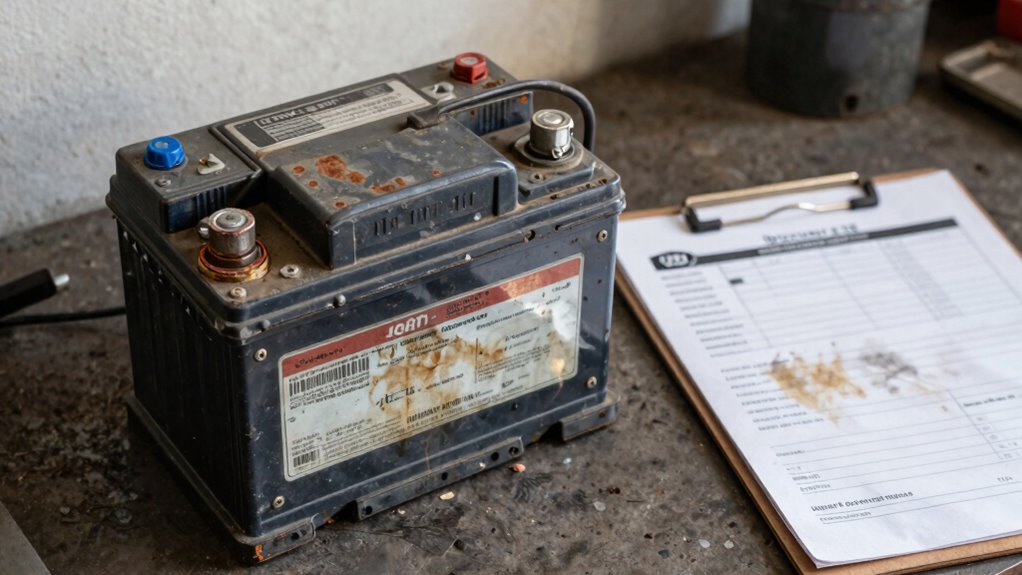
As your vehicle ages, keeping detailed battery service records becomes more essential because they help you monitor its health and predict potential issues. Over time, batteries naturally weaken, and external factors like temperature and driving habits affect their lifespan. Regularly tracking service history can prevent unexpected breakdowns and costly repairs, ensuring you stay ahead of problems. If you want to understand how these records can protect your vehicle in the long run, there’s more to uncover.

Get backup power and energy gear delivered free with Prime
- Fast, free delivery on millions of items
- Prime Video, Amazon Music and more included
- Member-only deals all year
Key Takeaways
- Battery health indicators become more critical as the vehicle ages to prevent unexpected failures.
- Detailed records help identify degradation patterns influenced by external factors over time.
- Tracking service history ensures timely maintenance and replacements, extending battery lifespan.
- Accurate records improve warranty claim success, especially as warranties approach expiration.
- Long-term data supports proactive decisions, reducing costly repairs and breakdown risks.

Keeping detailed battery service records is essential for maintaining the performance and longevity of your vehicle’s battery. Over time, these records become invaluable tools that help you understand the health and potential issues of your battery. One of the key reasons they matter more as your vehicle ages is because they offer insight into the battery’s lifespan. By tracking every service, recharge, and replacement, you can identify patterns that indicate when your battery is nearing the end of its normal life cycle. This proactive approach allows you to plan for replacements before a complete failure occurs, saving you time and unexpected breakdowns.
Keeping detailed battery records helps predict lifespan and prevents unexpected breakdowns.
Service history analysis is at the core of why these records are so crucial. When you review past maintenance logs, you can see how often your battery required attention and what kinds of problems arose. Frequent recharges or early signs of corrosion could signal underlying issues that might shorten your battery’s life. Conversely, consistent performance and regular maintenance can extend the lifespan, helping you avoid premature replacements. With detailed records, you gain a clearer picture of your battery’s overall health, enabling smarter decisions about repairs, replacements, or upgrades.
As your vehicle gets older, the importance of these records only grows. Batteries naturally degrade over time, and external factors like temperature, driving habits, and maintenance routines all influence their longevity. When you have a thorough service history, you can better assess whether your current battery is still reliable or if it’s time for a new one. Without detailed documentation, you might either replace a battery prematurely or overlook signs of impending failure, risking inconvenient breakdowns or costly repairs. Additionally, understanding battery degradation factors can help you make more informed maintenance choices. Recognizing how external influences impact battery health highlights the importance of regular inspections to catch early signs of deterioration. Moreover, maintaining accurate records can improve your ability to manage warranty claims, ensuring you maximize coverage if your battery needs replacement within warranty periods.
car battery maintenance log book
As an affiliate, we earn on qualifying purchases.
As an affiliate, we earn on qualifying purchases.
Frequently Asked Questions
How Often Should I Review My Battery Service Records?
You should review your battery service records at least once a year or after every significant maintenance session. Regular reviews help you track the battery’s lifespan and guarantee proper maintenance frequency. By keeping an eye on these records, you can identify early signs of wear, avoid unexpected failures, and extend your battery’s life. Staying proactive with reviews ensures your vehicle runs smoothly and prevents costly replacements down the line.
Can Poor Service History Affect My Vehicle’s Resale Value?
Poor service history can considerably lower your vehicle’s resale value, like a tarnished badge of reliability. When buyers see inconsistent maintenance, they worry about the battery’s lifespan and potential future maintenance costs. This skepticism makes your vehicle less attractive, forcing you to accept lower offers. Proper, documented service records show you’ve maintained the car well, reassuring buyers and helping preserve your vehicle’s value over time.
Are Digital Records More Reliable Than Paper Logs?
Digital records are generally more reliable than paper logs because they offer better digital security and improved data accuracy. You can easily access, update, and share digital service histories without risking loss or damage. Plus, digital files are less prone to human error and tampering. This guarantees your battery service records stay complete and trustworthy over time, making them more dependable when proving maintenance history or selling your vehicle.
What Specific Details Should I Look for in Service Records?
Think of service records as the heartbeat of your battery’s story. You should look for details on battery degradation patterns, noting any consistent drops in performance. Check for records of maintenance or replacements, especially those covered under warranty. Also, verify if the records show proper charging cycles and voltage checks; these clues help forecast future issues and guarantee your warranty coverage stays intact, giving you peace of mind.
How Long Are Battery Service Records Typically Kept?
Battery service records are typically kept for at least 3 to 5 years, depending on the manufacturer and local regulations. Good record keeping involves tracking your battery maintenance, inspections, and replacements, which helps you monitor its health over time. Maintaining detailed records guarantees you have a clear history for warranty claims or future assessments, making it easier to identify potential issues early and extend your battery’s lifespan.
Conclusion
Think of your battery service records as the heartbeat of your vehicle’s health. Over time, they tell a story of wear, care, and resilience—like a tree’s rings revealing its history. By paying attention to these records, you’re not just maintaining a battery; you’re nurturing a trusted companion that quietly powers your daily journey. Keep track, stay vigilant, and let these records be your guide through the quiet, steady rhythm of reliable driving.
Halloween Picks
halloween
As an affiliate, we earn on qualifying purchases.