

Gigafactories considerably impact battery lifecycle management by streamlining production, recycling, and resource recovery processes. They are strategically located to reduce transportation costs and support sustainable practices. Inside, they facilitate battery reuse, recycling, and material extraction, which reduce environmental impact and costs. These facilities promote a circular economy, ensuring a steady flow of recycled materials and sustainable design innovations. Continue exploring how gigafactories bring together manufacturing and recycling for a greener future.

Get backup power and energy gear delivered free with Prime
- Fast, free delivery on millions of items
- Prime Video, Amazon Music and more included
- Member-only deals all year
Key Takeaways
- Gigafactories facilitate integrated recycling processes to recover valuable materials from end-of-life batteries.
- They optimize supply chains by locating near raw material sources and recycling centers, reducing transportation impacts.
- Gigafactories promote sustainability through designing batteries for easier recycling and reuse.
- They enable resource reuse, minimizing environmental damage and reducing need for new raw material extraction.
- By supporting circular economy practices, gigafactories enhance battery lifecycle management efficiency.
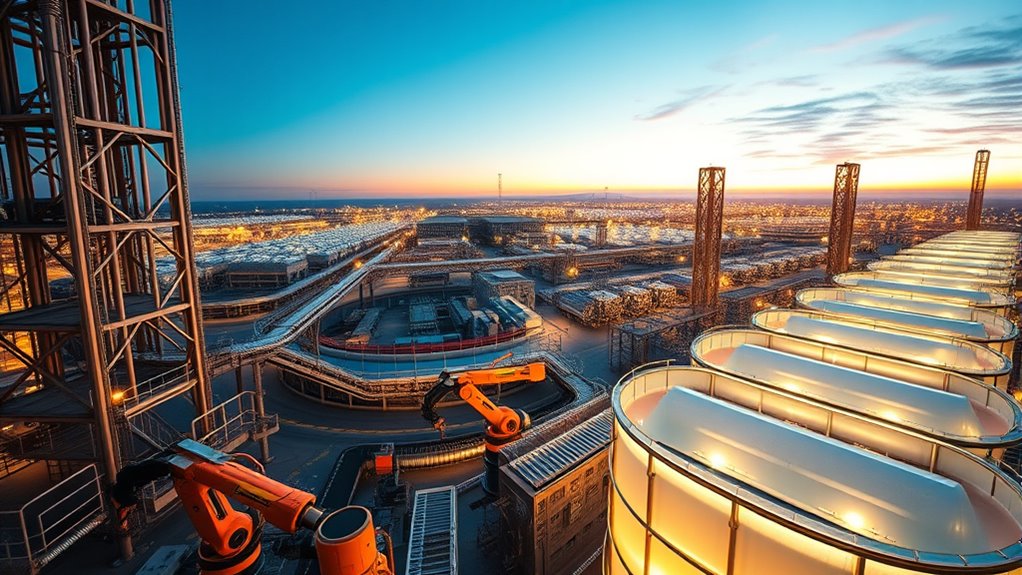
Gigafactories are transforming the way we produce and supply batteries, making clean energy more accessible and affordable. These massive manufacturing hubs are not just about cranking out batteries at scale—they’re also pivotal in managing the entire battery lifecycle. One key area where gigafactories make an impact is in battery recycling. As the demand for electric vehicles and renewable energy storage grows, so does the volume of used batteries. Instead of letting these end-of-life batteries go to waste, gigafactories are increasingly equipped to handle battery recycling efficiently. This process involves extracting valuable materials like lithium, cobalt, and nickel from old batteries, reducing the need for environmentally damaging mining. By integrating recycling into their operations, gigafactories help close the loop, ensuring that valuable resources are reused rather than lost, which supports both sustainability and cost reduction.
In addition to recycling, supply chain logistics play an essential role in the lifecycle management within gigafactories. The location and scale of these facilities are carefully planned to optimize the flow of raw materials and finished products. You benefit directly from this streamlined logistics system because it means batteries can be produced, distributed, and recycled more quickly and efficiently. When raw materials are sourced closer to gigafactories, transportation costs drop, and the carbon footprint shrinks, making the entire process more sustainable. Similarly, with advanced supply chain logistics, used batteries can be swiftly collected and transported back to recycling centers integrated within or near these facilities. This tight integration minimizes delays and reduces the risk of bottlenecks, ensuring a steady supply of recycled materials for future battery production. An increased focus on battery recycling and reuse further enhances the sustainability of the entire battery lifecycle.
Furthermore, gigafactories are pushing innovation in battery design to facilitate easier recycling. They’re developing batteries with modular components and standardized formats, making disassembly and recycling simpler and more cost-effective. This proactive approach means that at the end of a battery’s life, you’re more likely to see higher recovery rates of critical materials, which feeds back into the supply chain. The cycle becomes more efficient and sustainable because these innovations reduce waste and reliance on virgin raw materials, ultimately lowering costs for consumers.
lithium-ion battery recycling kit
As an affiliate, we earn on qualifying purchases.
As an affiliate, we earn on qualifying purchases.
Frequently Asked Questions
How Do Gigafactories Impact Global Battery Supply Chains?
Gigafactories substantially impact your global battery supply chains by boosting supply chain resilience and optimizing raw material sourcing. They enable you to produce batteries at scale, reducing dependence on imports and minimizing disruptions. With localized manufacturing, you experience quicker turnaround times and better control over raw material flows. This ultimately strengthens your access to essential materials, making your supply chain more stable and capable of meeting rising demand efficiently.
What Innovations Are Emerging in Gigafactory Sustainability Practices?
Imagine a gigafactory that uses advanced battery recycling techniques to recover valuable materials, reducing waste and environmental impact. Innovations like integrating renewable energy sources, such as solar and wind, power operations sustainably. These practices lower carbon footprints and promote a circular economy. By adopting such innovations, gigafactories lead the way in sustainable battery production, ensuring future supply chains are greener, more efficient, and less resource-dependent.
How Do Gigafactories Influence Local Economies and Job Creation?
Gigafactories boost local economies by creating numerous jobs, fostering economic growth, and attracting investments. You benefit from increased local employment opportunities, from construction to operational roles, which can improve community living standards. These factories also stimulate local businesses and infrastructure development, further supporting economic dynamism. As a result, your community experiences a positive cycle of job creation and economic expansion driven by gigafactory activities.
What Are the Challenges in Scaling Gigafactory Production Capacity?
You face challenges in scaling gigafactory production capacity, mainly with manufacturing scalability and raw material sourcing. Increasing output requires expanding facilities and streamlining processes, which can be complex and costly. Securing reliable supplies of raw materials like lithium and cobalt is critical, but geopolitical issues and environmental concerns often hinder consistent sourcing. Balancing these factors while maintaining quality and safety makes scaling gigafactories a significant, ongoing challenge.
How Do Gigafactories Collaborate With Recycling Facilities for Battery Reuse?
Think of gigafactories as the heart, pumping life into recycling collaboration for battery reuse. You’ll see them working closely with recycling facilities to streamline the collection and disassembly of used batteries. This partnership guarantees valuable materials are recovered efficiently, reducing environmental impact. By sharing data and resources, gigafactories optimize processes, turning old batteries into new energy sources. Together, they create a closed-loop system, making battery lifecycle management sustainable and effective.
Conclusion
As you look ahead, remember that gigafactories are the backbone of sustainable battery lifecycle management, shaping a greener future. By streamlining production and recycling, they guarantee batteries serve their purpose from cradle to grave. Think of it as a modern-day alchemy, transforming raw materials into clean energy. Like the wise Tinkerbell once whispered, “Second star to the right and straight on ‘til morning,” embracing innovation now guides us toward a brighter, more sustainable tomorrow.
Fall Picks
fall essentials
As an affiliate, we earn on qualifying purchases.