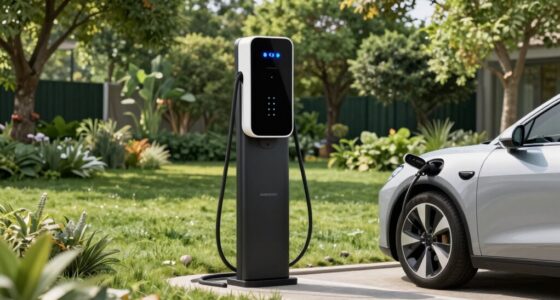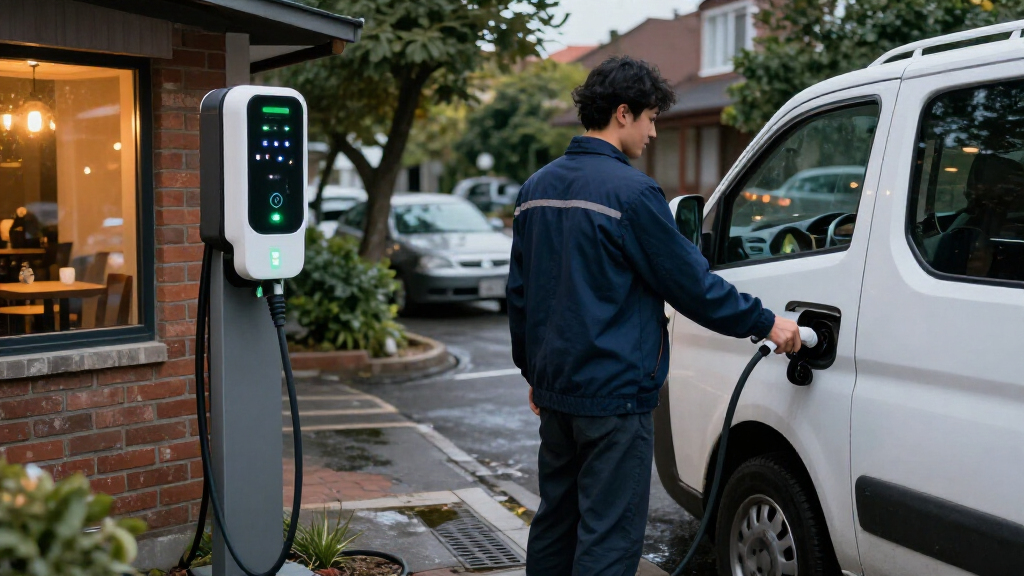
Choosing among the best commercial AC EV chargers depends on whether a site needs public payments, high charging output, or straightforward charging for a workplace or fleet. I put the EV Range AC1 first for businesses that need driver access controls, payment features, and usage reporting. The Autel MaxiCharger 80A stands out for high-output charging backed by a five-year warranty, while the Grizzl-E Ultimate 80A pairs similar output with load balancing for sites adding multiple units.

Get backup power and energy gear delivered free with Prime
- Fast, free delivery on millions of items
- Prime Video, Amazon Music and more included
- Member-only deals all year
Those strengths serve different operations. EV Range is the clearest fit for a managed charging service, but its pedestal is sold separately and its warranty is shorter. The 80-amp Grizzl-E and Autel can deliver more power than the 48-amp Leviton or 50-amp ChargePoint HomeFlex, but they call for a 100-amp circuit at full output. I ranked these options by their stated commercial capabilities, electrical requirements, access and management features, installation flexibility, and the tradeoffs a site operator should understand before choosing.
Key Takeaways
- EV Range is the most business-ready pick here for paid charging, RFID or app access, custom pricing, idle fees, and usage reports; its pedestal is not included.
- Autel and Grizzl-E both reach 80 amps and 19.2 kW, but Autel lists a five-year warranty while Grizzl-E specifically describes automatic power balancing across multiple chargers.
- Leviton offers 48 amps and 11.6 kW with optional RFID access, a more modest output level that avoids the 100-amp circuit requirement specified for the 80-amp units.
- ChargePoint HomeFlex is a compact, adjustable 16–50A option with app controls, but its product description identifies it as a home charger rather than a dedicated commercial station.
- All five use a single J1772 port; Tesla drivers need a compatible adapter, and connector planning should account for the vehicles expected at the site.
| EV Range Commercial Level 2 EV Charging Station, 32A, J1772, OCPP 1.6J |  | Best Overall for Managed Commercial Charging | Output: 32A, 240 V AC | Connector: Single J1772 port | Cable: 25 ft | VIEW LATEST PRICE | See Our Full Breakdown |
| Autel MaxiCharger Level 2 EV Charger, 80A, Hardwired, J1772 |  | Best Premium High-Output Option | Maximum output: 80A / 19.2 kW | Circuit: 100A recommended for full output | Connector and cable: J1772; 25 ft | VIEW LATEST PRICE | See Our Full Breakdown |
| Grizzl-E Ultimate 80A Level 2 EV Charger, 19.2 kW, Hardwired, J1772 |  | Best for Multi-Charger Load Balancing | Maximum output: 80A / 19.2 kW | Voltage: 240 V | Connector and cable: J1772; 25 ft | VIEW LATEST PRICE | See Our Full Breakdown |
| Leviton EV480 Level 2 Electric Vehicle Charger, 48A, 11.6 kW, White |  | Best Mid-Output Option with Optional RFID | Output: 48A / 11.6 kW | Voltage: 208/240 VAC | Connector and cable: J1772; 18 ft | VIEW LATEST PRICE | See Our Full Breakdown |
| ChargePoint HomeFlex Level 2 Smart EV Charger, J1772, Hardwired, 50A | 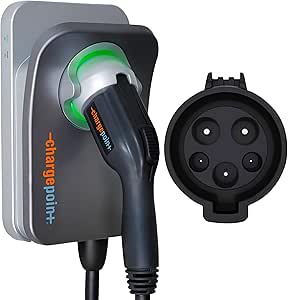 | Best for Small Workplaces Using App Controls | Adjustable output: 16–50A | Voltage: 240V AC | Connector and cable: J1772; 23 ft cold-resistant cable | VIEW LATEST PRICE | See Our Full Breakdown |
| commercial AC EV charger | Connector and cable | Installation | Voltage |
|---|---|---|---|
| EV Range Commercial Level 2 EV | — | — | — |
| Autel MaxiCharger Level 2 EV C | J1772; 25 ft | Hardwired; professional electrician suggested | — |
| Grizzl-E Ultimate 80A Level 2 | J1772; 25 ft | Hardwired | 240 V |
| Leviton EV480 Level 2 Electric | J1772; 18 ft | Hardwired | 208/240 VAC |
| ChargePoint HomeFlex Level 2 S | J1772; 23 ft cold-resistant cable | Hardwired by an electrician | 240V AC |
More Details on Our Top Picks
EV Range Commercial Level 2 EV Charging Station, 32A, J1772, OCPP 1.6J
For an operator who wants charging to function as a managed service, EV Range AC1 has the most directly relevant feature set in this group. Its software supports driver payments, custom pricing, idle fees, usage reports, and monthly revenue deposits, and drivers can gain access through RFID or an app. That separates it from the other four: their descriptions emphasize charging power and individual controls, while EV Range explicitly addresses how a business can manage shared access and collect revenue.
Its 32A output is the main compromise. It cannot match the 48A Leviton or the 80A Autel and Grizzl-E on maximum current, so it may be a poor fit where vehicles need the fastest AC charging available or parking time is short. For a workplace, hospitality property, or parking operator where cars remain parked for longer periods, access and reporting may matter more than peak output. Its OCPP 1.6J support adds a stated network protocol, though I would confirm that the desired management platform supports this unit and that all software and payment terms fit the site.
The station’s NEMA 4 enclosure and IK10 impact rating speak to a robust installation, and the 25-foot J1772 cable gives drivers room to reach a port from different parking positions. It can mount to a wall or pedestal, but the pedestal is sold separately. The two-year warranty is shorter than Autel’s five years and the three years listed for Grizzl-E and ChargePoint. Tesla vehicles need an adapter. I rank EV Range first for its commercial management tools, not for raw charging speed or warranty length.
Pros:- Payment, custom pricing, idle-fee, and usage-reporting features support managed charging.
- RFID and app-based access give operators options for controlling driver access.
- NEMA 4 enclosure and IK10 impact resistance suit shared charging locations.
- OCPP 1.6J support and a 25-foot J1772 cable are useful commercial details.
Cons:- 32A output is lower than the 48A Leviton and 80A Autel and Grizzl-E.
- Pedestal is sold separately, and the listed warranty is two years.
- Tesla drivers need an adapter.
Best for: Parking operators, workplaces, and property owners who need controlled access, payment options, idle fees, and usage reporting.
Not ideal for: Sites that prioritize the highest AC output, need a pedestal included in the package, or require a longer listed warranty.
- Output:32A, 240 V AC
- Connector:Single J1772 port
- Cable:25 ft
- Network protocol:OCPP 1.6J
- Access and payments:RFID or app access; payments, custom pricing, idle fees, usage reports, and monthly revenue deposits
- Enclosure:NEMA 4 polycarbonate; IK10 impact resistance
- Mounting:Wall or pedestal; pedestal sold separately
- Certifications and warranty:CTEP, UL, Energy Star; 2 years
Our verdict“I recommend EV Range for commercial operators who value access management and payment features more than the highest charging current.”
Autel MaxiCharger Level 2 EV Charger, 80A, Hardwired, J1772
Autel MaxiCharger is the strongest choice here when the goal is to give compatible vehicles more AC power and pair it with remote controls. It reaches 80A and up to 19.2 kW, matching the Grizzl-E Ultimate’s maximum output. Autel also lists a five-year warranty, longer than the three years supplied for Grizzl-E and ChargePoint or the two years listed for EV Range and Leviton. Scheduling, remote operation, energy monitoring, and remote locking give an operator useful ways to check or control a charger without standing at the unit.
That capacity carries a significant site requirement: Autel recommends a 100A circuit for full 80A output, and the charger is hardwired, with professional installation suggested. A site with less electrical capacity may need a lower output setting or an electrical upgrade. In that situation, the 48A Leviton or adjustable ChargePoint may be an easier match to the available circuit, while EV Range may make more sense if payment management is the central need.
Wi-Fi and Wi-SUN connectivity, temperature monitoring, and indoor or outdoor use add useful operational detail, though the supplied information does not describe payment collection or commercial driver billing. This distinction keeps it behind EV Range for public or revenue-generating charging. It may fit a company fleet, staff parking area, or property with a clear need for higher output and remote oversight. The 25-foot J1772 cable reaches many parking positions, but Tesla vehicles need a separate NACS adapter. I rank Autel ahead of Grizzl-E for its longer listed warranty and broader set of named remote controls; Grizzl-E has the clearer stated multi-charger load-balancing feature.
Pros:- Up to 80A and 19.2 kW, on par with the Grizzl-E’s maximum output.
- Five-year listed warranty is longer than the other products in this lineup.
- App controls include scheduling, remote operation, and energy monitoring.
- Wi-Fi, Wi-SUN, temperature monitoring, and remote locking are specified.
Cons:- A 100A circuit is recommended for full 80A output.
- Hardwired installation is suggested to be completed by a professional electrician.
- Tesla vehicles require a separate NACS adapter; payment tools are not listed.
Best for: Fleet and workplace operators with electrical capacity for high-output charging who value remote monitoring and a longer warranty.
Not ideal for: Sites that need built-in payment management, lack a suitable circuit, or want to avoid a hardwired professional installation.
- Maximum output:80A / 19.2 kW
- Circuit:100A recommended for full output
- Connector and cable:J1772; 25 ft
- Connectivity:Wi-Fi and Wi-SUN
- Controls:Scheduling, remote operation, energy monitoring, and remote locking
- Installation:Hardwired; professional electrician suggested
- Certifications:CSA and UL
- Warranty:5 years
Our verdict“I recommend Autel for sites that can support 80A charging and want remote controls with the longest listed warranty in this comparison.”
Grizzl-E Ultimate 80A Level 2 EV Charger, 19.2 kW, Hardwired, J1772
The Grizzl-E Ultimate 80A shares the lineup’s highest listed output with Autel, reaching 19.2 kW at up to 80A. Its distinguishing commercial feature is automatic power balancing across multiple chargers. That can help a site plan several units around available electrical capacity instead of treating every charger as an isolated installation. For a workplace or fleet that expects to expand charging stalls, that capability is more directly relevant than the EV Range’s payment features or Leviton’s simpler 48A setup.
Grizzl-E also offers adjustable current settings, Wi-Fi monitoring, scheduling, and energy statistics. Those controls provide flexibility when a site cannot run every charger at maximum power all the time. However, the listed maximum requires a 100A circuit breaker and the unit is hardwired. A buyer should have an electrician assess the panel and installation plan before treating the full 80A rating as usable. The 48A Leviton has a lower peak, but its stated 60A breaker requirement may better match a site that does not need the highest available output.
The weather-resistant metal enclosure, built-in GFCI, and other listed electrical protections support indoor or outdoor use. Its three-year warranty is respectable but shorter than Autel’s five years. The product description names load balancing, but does not list the driver payment and revenue tools specified by EV Range. That makes Grizzl-E better for charging capacity management than for public billing. Its 25-foot J1772 cable suits North American EVs and PHEVs; Tesla vehicles need a compatible adapter. I place it just behind Autel because the two have the same maximum output, while Autel lists a longer warranty and more remote control functions.
Pros:- Up to 80A and 19.2 kW, matching the Autel’s maximum output.
- Automatic load balancing is specifically described for multiple chargers.
- Adjustable current, Wi-Fi monitoring, scheduling, and energy statistics add flexibility.
- Weather-resistant metal enclosure and listed safety protections support indoor or outdoor use.
Cons:- Full 80A output requires a 100A circuit breaker.
- Hardwired installation requires planning with an electrician.
- Three-year warranty is shorter than Autel’s five years; payment tools are not listed.
Best for: Workplaces and fleets planning multiple chargers that want adjustable high output and automatic power balancing.
Not ideal for: Operators seeking integrated payment tools, a lower-capacity electrical installation, or the longest warranty available here.
- Maximum output:80A / 19.2 kW
- Voltage:240 V
- Connector and cable:J1772; 25 ft
- Installation:Hardwired
- Circuit requirement:100A breaker for maximum output
- Connectivity:Wi-Fi monitoring, scheduling, and energy statistics
- Multi-unit feature:Automatic power balancing across multiple chargers
- Certification and warranty:UL tested and certified; 3 years
Our verdict“I recommend Grizzl-E for multi-unit sites that need high output and automatic load balancing more than payment management.”
Leviton EV480 Level 2 Electric Vehicle Charger, 48A, 11.6 kW, White
Leviton EV480 offers a useful middle ground for a commercial site that needs more output than EV Range’s 32A station but does not need to install an 80A charger. It supplies up to 48A and 11.6 kW and lists a 60A breaker requirement. That makes it a simpler power proposition than the 80A Autel and Grizzl-E, which specify a 100A circuit for maximum output. It is also the only option besides EV Range that explicitly mentions RFID access, though Leviton’s RFID is optional rather than presented as part of a payment and pricing system.
The difference matters to operators. A site that needs to identify users or limit access may find optional RFID useful, but the supplied product details do not say that the EV480 supports driver payments, idle fees, or usage reports. EV Range is the better documented fit for public charging management. Leviton instead suits a business that wants a straightforward J1772 station with moderate charging power, a hardwired connection, and indoor or outdoor installation.
Its NEMA Type 3R enclosure and 18-foot cable are practical, although the cable is shorter than the 25-foot leads on EV Range, Autel, and Grizzl-E, and the 23-foot ChargePoint cable. The package includes a pre-attached input cable and mounting hardware, which may simplify the physical setup, but professional electrical planning remains necessary. The two-year limited warranty is the shortest alongside EV Range’s listed term. Tesla vehicles can use a Tesla-supplied adapter. I rank Leviton above ChargePoint for commercial fit because optional RFID is specified, while ChargePoint is described as a home charger; ChargePoint does offer app controls and adjustable amperage.
Pros:- 48A and 11.6 kW provide more output than the 32A EV Range station.
- Optional RFID access may suit sites that need controlled use.
- NEMA Type 3R enclosure supports indoor or outdoor installation.
- Pre-attached input cable and mounting hardware are included.
Cons:- Requires hardwiring and a 60A breaker.
- 18-foot cable is shorter than the cables on the other listed chargers.
- Two-year limited warranty; payment and usage reporting features are not specified.
Best for: Small workplaces and properties seeking 48A charging, outdoor-rated installation, and the option to add RFID access.
Not ideal for: Public charging operators who need stated payment and reporting tools, or sites where a longer cable or warranty is a priority.
- Output:48A / 11.6 kW
- Voltage:208/240 VAC
- Connector and cable:J1772; 18 ft
- Installation:Hardwired
- Breaker requirement:60A
- Access control:Optional RFID
- Enclosure:NEMA Type 3R
- Certifications and warranty:UL, Energy Star; 2-year limited
Our verdict“I recommend Leviton for a site that wants solid mid-range output and optional RFID without the 100A circuit listed for 80A units.”
ChargePoint HomeFlex Level 2 Smart EV Charger, J1772, Hardwired, 50A
ChargePoint HomeFlex is the most residentially positioned product in this roundup, but its adjustable 16–50A output can still suit a small workplace or a limited shared parking area. Its app provides charging controls, reminders, and charging information, and the 23-foot cold-resistant cable is longer than Leviton’s 18-foot lead. The adjustable current can help an installer set output to suit the available circuit, while the 50A ceiling falls just short of the Leviton’s 48A listing only by two amps and remains well below the 80A Autel and Grizzl-E units.
That distinction should guide the choice. Compared with EV Range, HomeFlex offers app-based charging information but does not list commercial payments, RFID access, idle fees, or revenue reporting. Compared with Leviton, it has a longer cable and explicitly named app features, but no RFID option in the supplied information. Its stated circuit requirement spans 20A or 80A circuits, so I would ask ChargePoint and an electrician to confirm the exact circuit and output configuration for the planned installation.
The unit is UL-certified and Energy Star, and is rated for indoor or outdoor installation. It is hardwired and requires an electrician, and some app features depend on Wi-Fi. Tesla drivers need a separate adapter. A three-year warranty is longer than the two-year terms listed for Leviton and EV Range, but shorter than Autel’s five-year term. I give it the final position because its flexible output and connected controls are appealing, yet the product description identifies it as a home charger rather than a dedicated commercial station. It makes the most sense where that distinction is acceptable and sophisticated site management is unnecessary.
Pros:- Adjustable 16–50A output can be set to match installation needs.
- App provides charging controls, reminders, and charging information.
- Cold-resistant 23-foot cable reaches farther than Leviton’s 18-foot cable.
- UL-certified, Energy Star, and rated for indoor or outdoor installation.
Cons:- Product is positioned as a home charger rather than a dedicated commercial station.
- Some app features require Wi-Fi; payment and RFID features are not specified.
- Hardwired installation by an electrician is required; Tesla vehicles need an adapter.
Best for: Small offices or shared parking areas seeking adjustable output, app controls, and a longer cable without dedicated billing tools.
Not ideal for: Public charging operators who need commercial payment management, RFID access, or the higher output and multi-unit features of the 80A models.
- Adjustable output:16–50A
- Voltage:240V AC
- Connector and cable:J1772; 23 ft cold-resistant cable
- Installation:Hardwired by an electrician
- Circuit requirement:20A or 80A circuit, as listed
- App features:Charging controls, reminders, and charging information; some features require Wi-Fi
- Certifications and location:UL-certified, Energy Star; indoor or outdoor
- Warranty:3 years
Our verdict“I recommend HomeFlex for a small workplace that wants adjustable app-controlled charging and does not need commercial billing features.”
How We Picked
I ranked these chargers for buyers looking to install commercial AC charging, so I gave the most weight to the work a station must do at a shared site: control who can charge, manage usage, support installation outdoors or at a parking space, and provide enough power for the intended dwell time. I also considered the electrical work implied by each model’s listed amperage. An 80-amp rating is useful only if the site can support the required circuit and the vehicles can accept that charging rate.
The supplied product information sets the boundaries of this comparison. EV Range is the only option here that clearly describes driver payments, custom pricing, idle fees, usage reporting, and monthly revenue deposits. Its OCPP 1.6J protocol, RFID or app access, NEMA 4 enclosure, and IK10 impact rating give it the strongest stated fit for a managed commercial charging service. I placed Autel and Grizzl-E next because both offer 80A output; Autel lists a five-year warranty and remote controls, while Grizzl-E names automatic load balancing for multiple chargers. Those details can matter more to a fleet or workplace adding stations in stages.
I treated the 48A Leviton as a practical middle-output option, especially where optional RFID access and a 60A breaker align with the planned installation. ChargePoint HomeFlex rounds out the list because its adjustable output and connected controls may suit a small workplace or limited-use site, but its stated positioning is residential. That makes it a less direct match for commercial operators than the dedicated EV Range station. I did not infer network capabilities, uptime commitments, payment terms, operating costs, or compatibility beyond the descriptions and specs provided. Before purchase, a site operator should confirm the current electrical requirements, network service, local code compliance, and vehicle compatibility with the manufacturer and a qualified electrician.
| commercial AC EV charger | Connector and cable | Installation |
|---|---|---|
| EV Range Commercial Level 2 EV | — | — |
| Autel MaxiCharger Level 2 EV C | J1772; 25 ft | Hardwired; professional electrician suggested |
| Grizzl-E Ultimate 80A Level 2 | J1772; 25 ft | Hardwired |
| Leviton EV480 Level 2 Electric | J1772; 18 ft | Hardwired |
| ChargePoint HomeFlex Level 2 S | J1772; 23 ft cold-resistant cable | Hardwired by an electrician |
Factors to Consider When Choosing Best Commercial AC EV Chargers
I would start by defining the job the charger needs to do at the site. A station for public paid charging has different needs from one reserved for employee vehicles or a fleet. Then match the electrical supply, connector, access method, and cable reach to the actual parking layout.Decide whether you need payments or just charging controls
If drivers will pay to charge, EV Range is the only product in this lineup that explicitly lists payment support, custom pricing, idle fees, usage reports, and revenue deposits. Its RFID or app access provides a stated way to control who starts a session. The other products list app controls, energy monitoring, or optional RFID in varying combinations, but the supplied descriptions do not establish payment and billing support. I would confirm the software service, payment processing terms, and ongoing connectivity needs with EV Range before treating those features as ready for a particular business model.
For staff or fleet parking, payment tools may add unnecessary complexity. In that case, remote monitoring and scheduling on Autel or Grizzl-E, or app charging controls on ChargePoint, may be more relevant. Leviton’s optional RFID may be useful for access control, though buyers should confirm how it works and whether it is included or requires additional equipment.
Match amperage to the electrical service and dwell time
Maximum output is only useful when the circuit, wiring, installation, and vehicle can support it. Autel and Grizzl-E both reach 80A and 19.2 kW, with a 100A circuit recommended or required for full output according to their supplied descriptions. Leviton reaches 48A and lists a 60A breaker. EV Range is 32A, while ChargePoint is adjustable from 16A to 50A and has circuit details that should be confirmed for the chosen setting.
For vehicles parked through a workday or overnight, a lower-current charger may meet the practical need while avoiding some electrical upgrades. For rapid vehicle turnover, more output can help, but the vehicle’s onboard AC charging limit also matters. I would have a qualified electrician assess panel capacity and confirm the circuit, conductor, and local code requirements before choosing a unit or promising a charging rate.
Plan around connector compatibility
All five chargers in this comparison use a single J1772 connector. The listed compatibility covers North American EVs and plug-in hybrids, while Tesla drivers require an adapter. Autel specifies a NACS adapter for Tesla vehicles, ChargePoint says a separate adapter is needed, and EV Range says Tesla vehicles require an adapter. Check each vehicle’s inlet and the adapter requirements before opening a shared site to multiple driver types.
One port means one vehicle can connect to each station at a time. A site with high demand may need multiple units or a charging layout that moves vehicles after sessions. Grizzl-E’s stated automatic power balancing across multiple chargers is relevant when adding units. I would also ask how any selected network handles session limits and driver notifications; those operating details are not provided for every charger here.
Check the mounting location and cable reach
Cable length changes where a station can serve a parked car. EV Range, Autel, and Grizzl-E list 25-foot cables, ChargePoint lists 23 feet, and Leviton lists 18 feet. Measure from the planned mounting point to the vehicle inlet at each stall, including the route around the vehicle, without assuming drivers will park perfectly. A shorter lead can limit which spaces a single unit can reach.
For outdoor or shared locations, compare the enclosure details and installation guidance. EV Range specifies NEMA 4 and IK10 impact resistance; Leviton lists NEMA Type 3R; Grizzl-E describes a weather-resistant metal enclosure; Autel and ChargePoint are rated for indoor or outdoor use. These descriptions do not replace confirming suitability for the site’s exposure, mounting surface, local electrical codes, and any protection required around the parking area.
Compare warranties and support before rollout
The listed warranties range from two to five years: Autel lists five years; Grizzl-E and ChargePoint list three; EV Range lists two; and Leviton lists a two-year limited warranty. A longer stated term can be helpful, but it does not answer every service question. Ask what parts and labor are covered, what happens if a unit loses network service, how replacement is handled, and whether support is available to the people managing the site.
For a multi-station rollout, document the expected number of chargers, circuit capacity, network coverage, mounting plan, and operating model before ordering. That lets the electrician and charger provider identify mismatches early. If the site depends on payments or reports, verify the software workflow directly. If it depends on fleet readiness, confirm charging schedules and output settings for the vehicles that will use the stalls.
Frequently Asked Questions
Which charger in this roundup is best for paid public charging?
I would start with the EV Range AC1 because its stated software features include driver payments, custom pricing, idle fees, usage reports, and monthly revenue deposits. It also supports RFID or app-based access and OCPP 1.6J. Its 32A output is lower than the 48A and 80A choices, and the pedestal is sold separately, so confirm that its charging rate and mounting options fit the location before selecting it.
Which models offer the highest AC charging output?
Autel MaxiCharger and Grizzl-E Ultimate both list up to 80A and 19.2 kW. Their full output comes with a major electrical requirement: Autel recommends a 100A circuit, and Grizzl-E specifies a 100A breaker for maximum output. A qualified electrician should confirm the site’s capacity, and the vehicle’s onboard charger must also support the intended AC rate.
Do these J1772 chargers work with Tesla vehicles?
The listed chargers use J1772 connectors, and Tesla vehicles need a compatible adapter to connect. The supplied information says Tesla drivers need an adapter for EV Range, ChargePoint, and Leviton; Autel specifies a separate NACS adapter that is not included. I would verify the adapter needed for each vehicle and confirm that drivers can access one when charging at a shared site.
Which option is a better fit for installing several chargers?
Grizzl-E is the clearest fit from the supplied details because it specifically describes automatic power balancing across multiple chargers. That feature can help coordinate available power among units, although the site still needs an electrical design that supports the planned installation. EV Range may be a better match if multi-stall operation centers on payments, driver access, and usage reporting; confirm the capabilities of its software and network for the planned number of stations.
What should I check before buying a commercial AC charger?
I would confirm the circuit and amperage with an electrician, choose the access and payment tools the site actually needs, measure cable reach from the proposed mounting position, and check connector compatibility for the vehicles that will use it. Also confirm outdoor suitability, mounting hardware, network requirements, warranty coverage, and local code requirements. The product information here does not establish ongoing service costs, uptime commitments, or every software term, so ask the manufacturer or provider directly.
Conclusion
For a business that wants paid charging, driver access controls, and usage reporting, I would choose EV Range first, provided its 32A output suits the parking dwell time and the site can accommodate the separately sold pedestal if needed. For a fleet or workplace with the electrical service to support high current, Autel is my premium output pick: it matches Grizzl-E at 80A and lists the longest warranty. Choose Grizzl-E instead when automatic balancing across multiple chargers is the more important feature.
For a smaller property that wants mid-range output and optional access control, Leviton offers a clear 48A setup with a listed 60A breaker. ChargePoint HomeFlex makes more sense for a small shared area that values adjustable output and app controls but does not need dedicated commercial billing. I would settle the electrical and operating requirements first, then select the charger whose limits and management features fit how drivers will use the site.
Fall Picks
fall essentials
As an affiliate, we earn on qualifying purchases.