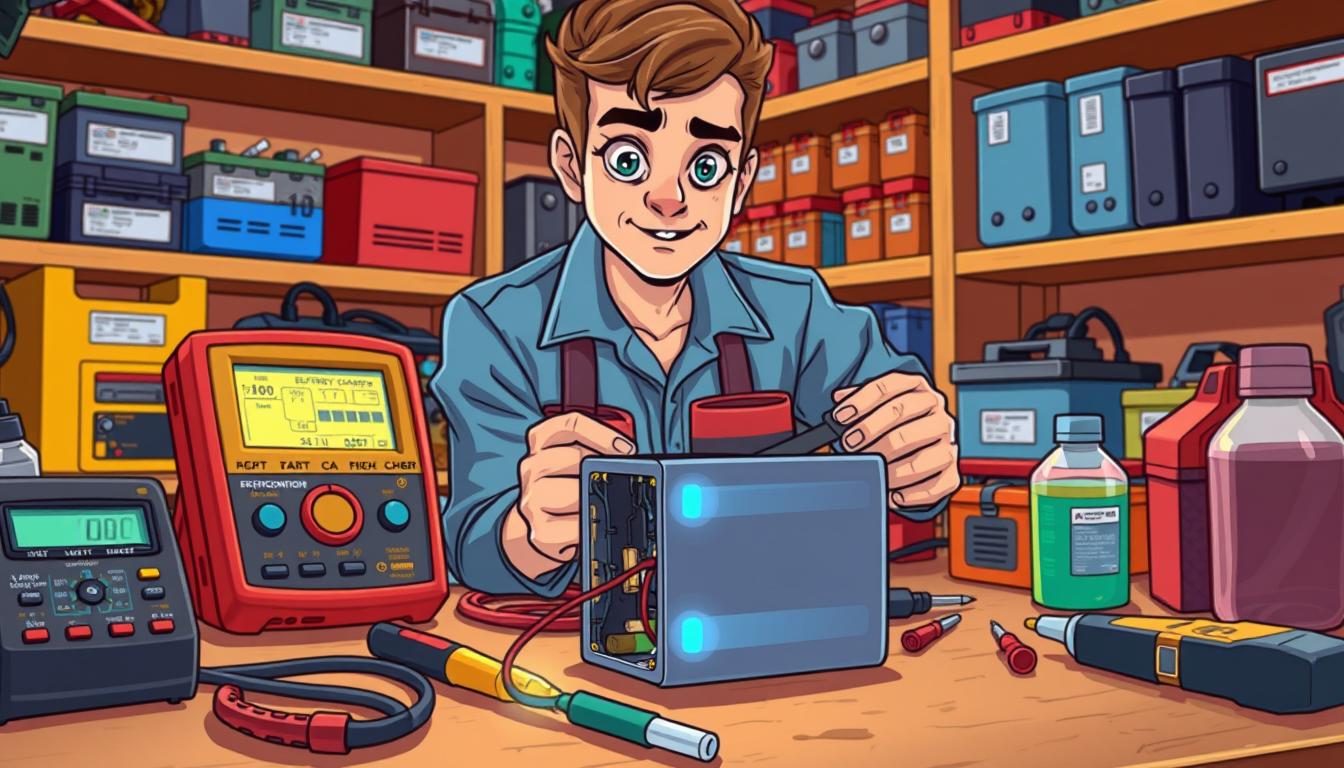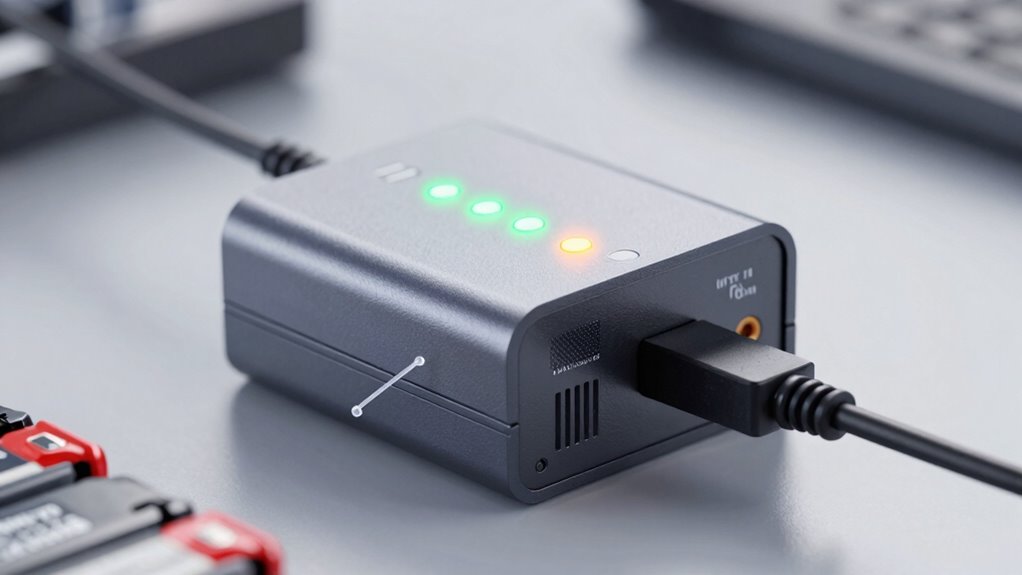

Equalization charging is a controlled process where you apply a bit more power to your batteries to keep them balanced and working well. It helps fix small issues like weak or sulfated cells that can cause uneven wear. By carefully monitoring the voltage and temperature, you prevent damage and extend your battery’s life. If you want to understand how this simple maintenance step can improve your batteries’ health, keep exploring to learn more.
Key Takeaways
- Equalization is a controlled overcharge to balance and improve battery cells.
- It helps remove build-up that reduces battery capacity, making it more reliable.
- The process involves applying a higher voltage for a set time safely.
- Proper voltage regulation ensures the battery isn’t damaged during equalization.
- Regular equalization keeps batteries healthy, lasts longer, and performs better.

Equalization charging is basically a controlled overcharge designed to balance out the cells inside your batteries. Over time, some cells tend to become weaker or more sulfated, which affects overall performance. When this happens, the battery’s voltage regulation gets disrupted, leading to uneven charging and discharging. Equalization helps correct this imbalance by applying a higher voltage for a set period, gently breaking down sulfates and equalizing the charge across all cells. This process not only boosts capacity but also prevents early battery failure, ultimately enhancing battery longevity. Proper voltage regulation during equalization is essential to avoid damaging the batteries. During equalization, you don’t just turn up the charger randomly; it’s a carefully controlled process. You need to monitor the voltage and temperature to prevent overcharging, which can damage the batteries. Proper voltage regulation during equalization ensures that you don’t push the batteries beyond safe limits. When done correctly, this process helps remove accumulated sulfates that diminish capacity and cause uneven wear. As a result, your batteries perform more reliably and maintain their ability to deliver consistent power over a longer period. It’s important to note that not all batteries require equalization, and some types, like sealed lead-acid or lithium batteries, may have specific guidelines. But for traditional flooded lead-acid batteries, regular equalization can greatly improve their health. By maintaining proper voltage regulation and carefully managing the process, you can prevent premature aging and maximize your investment. Think of equalization as a routine tune-up—keeping your batteries balanced, healthy, and capable of serving you well for years to come. In essence, understanding and applying equalization charging isn’t complicated, but it’s vital for preserving your batteries’ capacity and efficiency. When you get it right, you’ll enjoy longer-lasting power and fewer replacements, saving you money and frustration in the long run. Proper maintenance, including this controlled overcharge, is the secret to keeping your batteries performing at their best, ensuring reliable energy whenever you need it most. Proper battery maintenance can extend the lifespan of your batteries significantly.

NOCO GENIUS1: 1A 6V/12V Smart Battery Charger – Automatic Maintainer, Trickle Charger & Desulfator with Overcharge Protection & Temperature Compensation – for Lead-Acid & Lithium Batteries
MEET THE GENIUS1 — Similar to our G750, just better. It's 35% smaller and delivers over 35% more…
As an affiliate, we earn on qualifying purchases.
As an affiliate, we earn on qualifying purchases.
Frequently Asked Questions
How Often Should I Perform Equalization Charging?
You should perform equalization charging about once every 1 to 3 months, depending on your battery’s usage and type. Regular battery maintenance and following proper charging protocols help keep your batteries in top shape. If you notice reduced performance or uneven voltages, it’s a good sign it’s time for an equalization. Always consult your battery manufacturer’s recommendations to make sure you’re maintaining it correctly and extending its lifespan.
Can Equalization Damage My Batteries?
Think of equalization as tending to a garden—done right, it nurtures, but overdoing it can harm your plants. Yes, improper or too frequent equalization can damage your batteries, shortening their lifespan. Stick to a solid maintenance schedule, and use the correct settings. When performed properly, equalization cleans and balances your batteries, extending their life, but rushing or neglecting warnings can lead to damage.
Is Equalization Necessary for All Battery Types?
Equalization isn’t necessary for all battery types. You should follow your battery manufacturer’s recommendations, as some batteries benefit from regular equalization to improve battery longevity and prevent sulfation. Incorporate equalization into your maintenance schedule only if your batteries require it; otherwise, overdoing it can cause damage. Always check your battery specifications to determine whether equalization is recommended and how often to perform it for best performance.
What Signs Indicate Equalization Is Needed?
About 80% of battery failures result from poor maintenance, so spotting signs early matters. You’ll notice uneven charging, decreased capacity, or frequent gassing, which signals equalization is needed. Regular battery maintenance and proper charging safety help prevent damage. If your batteries aren’t holding a full charge or show inconsistent voltage levels, it’s time to equalize, ensuring longevity and peak performance. Don’t ignore these signs to keep your system reliable.
How Long Does an Equalization Charge Typically Last?
An equalization charge usually lasts about 4 to 8 hours, depending on your battery’s size and condition. During this time, you’re following proper battery maintenance and charging protocols to guarantee all cells are balanced. You should monitor the battery closely, checking for temperature changes or overcharging signs. Properly timing this process helps extend battery life, improve performance, and prevent issues caused by uneven cell chemistry.

Golf Cart/Deep Cycle Battery Jug Water Filler Bottle w/Auto Shut Off
Shuts off automatically when battery cell is at proper level, no over filling
As an affiliate, we earn on qualifying purchases.
As an affiliate, we earn on qualifying purchases.
Conclusion
Now that you understand equalization charging, think of it as tuning a finely crafted instrument, ensuring every string is perfectly balanced. Just like a skilled conductor brings harmony to an orchestra, equalization keeps your batteries singing in unison, prolonging their life and performance. With this knowledge, you’re equipped to keep your energy sources energized and resilient, transforming a complex process into a simple dance of balance and care. Your batteries will thank you with a symphony of reliable power.

Azocek 300W Adjustable Voltage Regulator Compatible with Dewalt 20V Battery(Battery Not Included), 2–30V DC Output, Up to 25A, 140W Type-C PD Fast Charging, 15W Wireless Charger, 1.9" LCD Display
Azocek Adjustable 2-30V dc Voltage Regulator Compatible with Dewalt 20V Batteries:Designed to be compatible with Yellow 20V lithium-ion…
As an affiliate, we earn on qualifying purchases.
As an affiliate, we earn on qualifying purchases.

Kivner 12V Lead-Acid Battery Regeneration Life Extender Sulfation Removal Desulfator KVN-BTF12-BK New Version Low Voltage Protection Lead-Acid Battery Desulfator(12, Volt)
The main reason for the deterioration of lead-acid battery:When lead-acid battery is repeatedly charged and discharged for a…
As an affiliate, we earn on qualifying purchases.
As an affiliate, we earn on qualifying purchases.