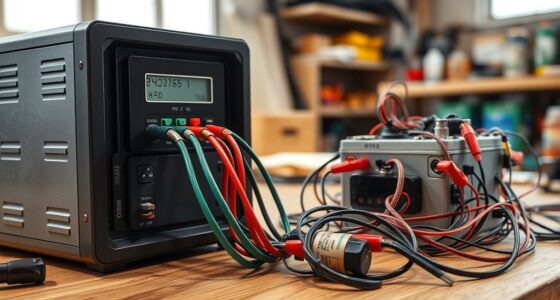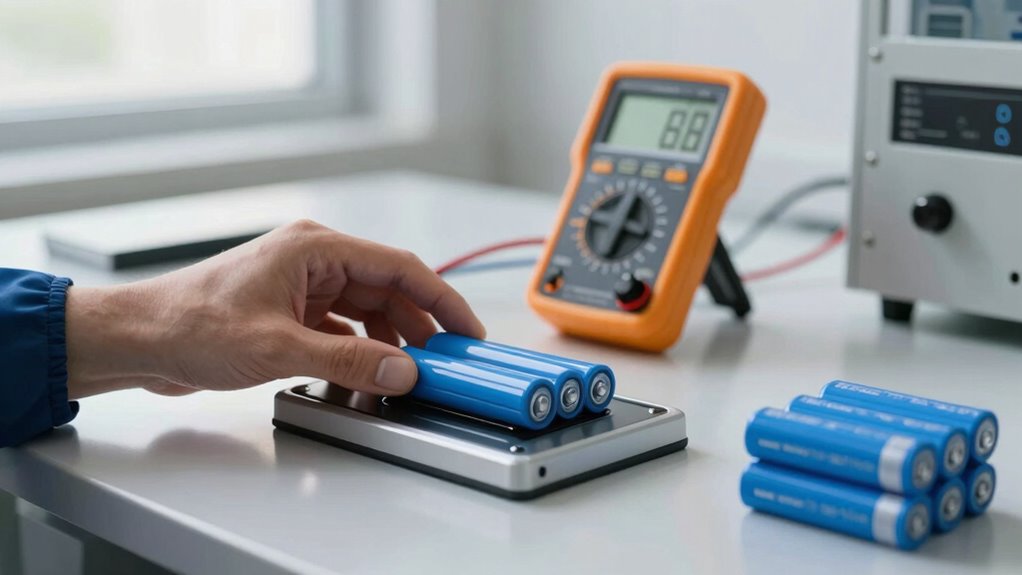

Allowing your battery to rest before testing is essential because it helps stabilize the voltage and eliminates temporary spikes caused by recent use or charging. If you test immediately after use, the results can be misleading, making the battery seem healthier or weaker than it truly is. Resting guarantees your measurements reflect the battery’s real capacity and health. Keep going to discover even more tips to get accurate, reliable results from your tests.

Get backup power and energy gear delivered free with Prime
- Fast, free delivery on millions of items
- Prime Video, Amazon Music and more included
- Member-only deals all year
Key Takeaways
- Rest time allows voltage stabilization, reflecting the battery’s true charge level accurately.
- It prevents misleading results caused by temporary voltage spikes after recent use or charging.
- Proper rest ensures chemical reactions settle, improving test reliability across different temperatures.
- Rest periods reduce the influence of external factors like recent activity or temperature fluctuations.
- Allowing sufficient rest helps avoid premature conclusions about battery health or capacity.

Before testing a battery, it’s important to give it adequate rest time to guarantee accurate results. When you skip this step, you risk misinterpreting the battery’s true condition, which can lead to unnecessary replacements or overlooked issues. Rest time allows the battery’s charge stability to settle after recent use or charging cycles. If you test a battery immediately after charging or heavy usage, its voltage can temporarily spike, giving a false impression of its health. Waiting ensures that the battery’s voltage stabilizes, reflecting a more precise state of charge and overall performance. This rest period also helps to prevent premature conclusions about the battery’s capacity. This is especially vital because charge stability can fluctuate based on recent activity, and testing too soon might not provide a genuine picture of how the battery will perform under normal conditions.
Allow batteries to rest before testing for accurate, reliable results and true health assessment.
Temperature effects also play a significant role in battery testing accuracy. When a battery is hot or cold, its internal chemistry reacts differently, influencing the voltage and current readings you get. Testing a cold battery might suggest it’s weaker than it actually is, while a hot battery could appear healthier than it truly is. Allowing the battery to reach ambient temperature helps normalize these effects, leading to more consistent and reliable test results. Additionally, understanding the chemical reactions within the battery can help you better interpret the test outcomes, especially when external conditions are not ideal. External factors such as temperature fluctuations can cause voltage variations that do not accurately represent the battery’s true capacity or health. If you fail to account for temperature effects, you could falsely diagnose a battery as faulty or healthy, causing unnecessary concern or missed problems.
Furthermore, a proper rest period can help mitigate the influence of recent activity on test results, ensuring you are assessing the battery’s inherent capacity rather than transient states. Additionally, giving your battery adequate rest time helps to prevent premature conclusions. Batteries can exhibit temporary changes in voltage due to recent charge or discharge cycles, so testing immediately afterward might not reflect their true capacity. Resting the battery for a few hours or overnight, especially in moderate temperature conditions, helps the internal chemical reactions return to equilibrium. This process guarantees that your measurements are based on the battery’s inherent characteristics rather than transient states caused by recent activity. By doing so, you extend the reliability of your test results, saving you time and money in the long run.
In short, waiting before testing a battery isn’t just about patience; it’s a vital step for accuracy. Proper rest improves charge stability, minimizes temperature effects, and provides a true assessment of your battery’s health. When you make testing a routine that includes sufficient rest, you enhance your ability to make informed decisions about maintenance, replacement, or usage, ultimately protecting your investment in the long term.
As an affiliate, we earn on qualifying purchases.
Frequently Asked Questions
How Long Should the Rest Period Be for Different Battery Types?
You should give different batteries enough rest duration for proper battery recovery. For lithium-ion batteries, a rest period of around 30 minutes to an hour often suffices. Lead-acid batteries may require 2 to 4 hours for full recovery. Always consider the battery’s age, usage, and manufacturer’s guidelines. Adequate rest guarantees accurate testing results and prolongs battery life by preventing false readings caused by incomplete recovery.
Does Temperature Affect the Optimal Rest Time Before Testing?
Yes, temperature substantially affects the ideal rest time before testing. Higher temperatures can accelerate thermal effects and speed up chemical stabilization, meaning batteries may need less rest time. Conversely, lower temperatures slow these processes, requiring longer rest periods to ensure accurate results. Always consider the battery’s operating temperature, as thermal effects influence chemical stabilization, impacting the reliability of your test outcomes.
Can Insufficient Rest Time Lead to Inaccurate Battery Test Results?
Insufficient rest time can definitely lead to inaccurate battery test results. When you don’t allow enough rest for the battery to stabilize, the calibration isn’t precise, and your readings may be skewed. The rest period importance is to guarantee the battery reaches a steady state, giving you reliable data. Proper rest helps avoid false readings, guaranteeing your battery calibration is accurate and your test results truly reflect the battery’s health.
Is There a Recommended Rest Time for High-Capacity Batteries?
For high-capacity batteries, it’s recommended to wait at least 2-4 hours of rest after charging cycles before testing. This rest period allows the battery to undergo proper calibration, ensuring accurate results. During this time, the battery stabilizes, and its voltage levels settle. Skipping this rest can lead to skewed testing outcomes, so always give your battery adequate downtime for reliable calibration and precise performance assessment.
How Does Rest Time Impact Battery Lifespan During Testing?
Just like a knight needs a break after a joust, your battery benefits from rest time before testing. Rest allows the battery chemistry to stabilize, reducing stress on internal components. Skipping this step can accelerate wear and shorten lifespan, especially during rigorous testing protocols. Proper rest ensures accurate results and prolongs battery life, so taking that break is a smart move to keep your batteries healthy over time.
Conclusion
Remember, giving your battery proper rest time before testing is like letting a sprinter catch their breath before the final lap. Skipping this step can lead to inaccurate results, leaving you in the dark about your battery’s true health. So, take a moment, be patient, and let your battery settle. This small pause can make a big difference, ensuring you get the most reliable reading—turning an uncertain guess into a clear, confident answer.
Halloween Picks
halloween
As an affiliate, we earn on qualifying purchases.