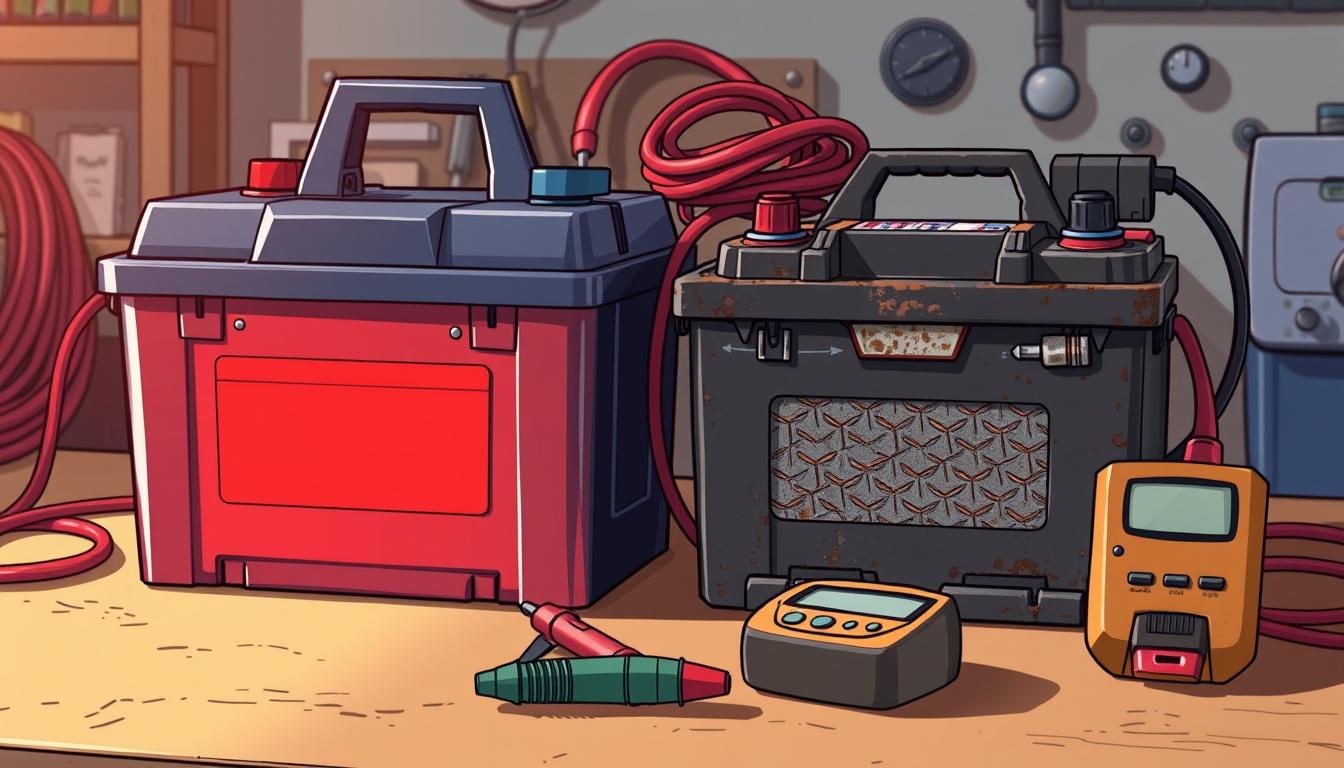
To recondition a lithium-ion battery using balancing and cycling techniques, start by carefully discharging the battery to a safe cutoff voltage, then recharge it fully. Repeat this process several times to recalibrate the cells and improve capacity. Balancing involves ensuring all cells are equally charged, either with specialized chargers or manual methods, reducing the risk of overheating. Continuing with these techniques will equip you with essential steps to extend your battery’s lifespan safely.

Get backup power and energy gear delivered free with Prime
- Fast, free delivery on millions of items
- Prime Video, Amazon Music and more included
- Member-only deals all year
Key Takeaways
- Use chargers with balancing features to equalize cell voltages during charging cycles.
- Perform controlled discharge cycles to reset capacity and improve overall battery performance.
- Monitor individual cell voltages regularly to identify and address imbalance issues.
- Avoid deep discharges below the manufacturer’s recommended voltage to maintain battery safety.
- Repeat balancing and cycling procedures periodically to sustain optimal battery health and longevity.

Lithium-ion batteries are vital for powering our daily devices, but over time, their performance declines, leading many to contemplate replacement. Before tossing them out, consider reconditioning as a practical alternative. Properly balancing and cycling your batteries can extend their lifespan considerably. When working with lithium-ion batteries, battery safety should always be your top priority. These batteries contain flammable electrolytes, so avoid puncturing or exposing them to extreme heat. Always handle them in a well-ventilated area, wear protective gear, and follow manufacturer guidelines. Reconditioning involves carefully cycling the battery to restore capacity, but improper techniques can pose safety risks, so proceed with caution.
One effective method to recondition is through proper balancing. Over time, individual cells within a battery can become unevenly charged, reducing overall performance and safety. To address this, use a compatible charger with balancing features, or manually balance the cells by carefully discharging and charging the battery in controlled cycles. This process helps guarantee all cells are equally charged, preventing overwork on weaker cells and reducing the risk of overheating or failure. Balancing also improves battery safety by minimizing the chances of thermal runaway, which can occur if one cell overheats due to imbalance.
Cycling is another vital technique for reconditioning lithium-ion batteries. It involves fully discharging the battery to a safe cutoff point and then recharging it to full capacity. Repeating this process a few times can help recalibrate the battery’s capacity and improve its overall health. However, avoid deep discharges that go below the manufacturer’s recommended voltage, as this can damage the cells. Instead, aim for shallow cycles, and always use a charger with current control to prevent overcharging or overheating during the process. Regular cycling can help break down capacity fade and restore a degree of original performance.
When considering reconditioning, it’s also worth thinking about recycling methods for batteries that are beyond repair. Many communities have specific recycling programs for lithium-ion batteries. Proper recycling ensures that hazardous materials are safely handled and that valuable components are recovered and reused. This reduces environmental impact and promotes sustainable practices. Additionally, understanding the AI Security landscape can help ensure that battery management systems incorporate robust safety and security features to prevent malicious exploits. If you notice your battery no longer holds a charge after multiple reconditioning attempts, it’s better to dispose of it responsibly through certified recycling centers rather than risking safety hazards or environmental harm.
Frequently Asked Questions
Can Lithium-Ion Batteries Be Safely Reconditioned at Home?
Yes, you can recondition lithium-ion batteries at home, but you must prioritize DIY safety. Always wear protective gear and work in a well-ventilated area. Proper battery disposal is essential for safety and environmental reasons, so don’t forget to dispose of damaged or unusable batteries responsibly. If you’re unsure, consult experts or follow detailed guides to avoid risks like fires or chemical leaks.
How Long Does a Typical Reconditioning Process Take?
Reconditioning a lithium-ion battery typically takes between 2 to 8 hours, depending on its condition. During this process, you’ll focus on restoring battery capacity and increasing cycle count, making it almost like giving your battery a second life. Sometimes, it can feel like waiting for paint to dry on a sunny day! Patience is key—you want to make certain each step is done carefully for the best results.
What Are the Signs That a Battery Needs Reconditioning?
You’ll notice your battery needs reconditioning when it shows signs of battery degradation, like shorter usage times or frequent charging. If the charge capacity drops markedly below its original level, it’s a clear indicator. Also, if your device takes longer to charge or the battery feels unusually hot, these signs suggest reconditioning could restore performance. Addressing these issues early helps prolong your battery’s lifespan and maintains peak function.
Does Reconditioning Extend the Overall Lifespan of the Battery?
It’s no coincidence that reconditioning can extend your battery’s lifespan. By restoring battery capacity and optimizing charging cycles, you reduce strain on the cells, helping them last longer. When you recondition, you effectively refresh the internal chemistry, delaying deterioration. This process keeps your battery performing well, meaning you get more use out of it before needing a replacement, ultimately saving you money and time.
Are There Risks of Fire or Explosion During Reconditioning?
Yes, there are fire hazards and explosion risks during reconditioning if you don’t follow proper safety precautions. You should always work in a well-ventilated area, wear protective gear, and avoid overcharging or short-circuiting the battery. Carefully monitor the process and use appropriate tools to prevent accidents. Taking these safety precautions minimizes risks, ensuring a safer reconditioning experience and reducing the chance of fire or explosion.
Conclusion
By balancing and cycling your lithium-ion battery, you can substantially extend its lifespan and improve performance. Some believe reconditioning can even restore batteries to near-original capacity, but don’t expect miracles—it’s more about optimizing what you’ve got. When you understand the science behind these techniques, you’ll see they’re practical ways to save money and reduce waste. So, give it a try, stay cautious, and enjoy the satisfaction of breathing new life into your batteries!
Halloween Picks
halloween
As an affiliate, we earn on qualifying purchases.