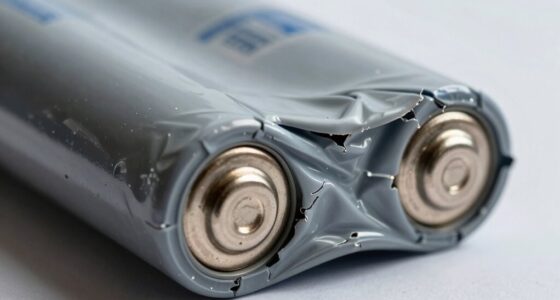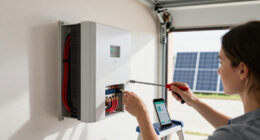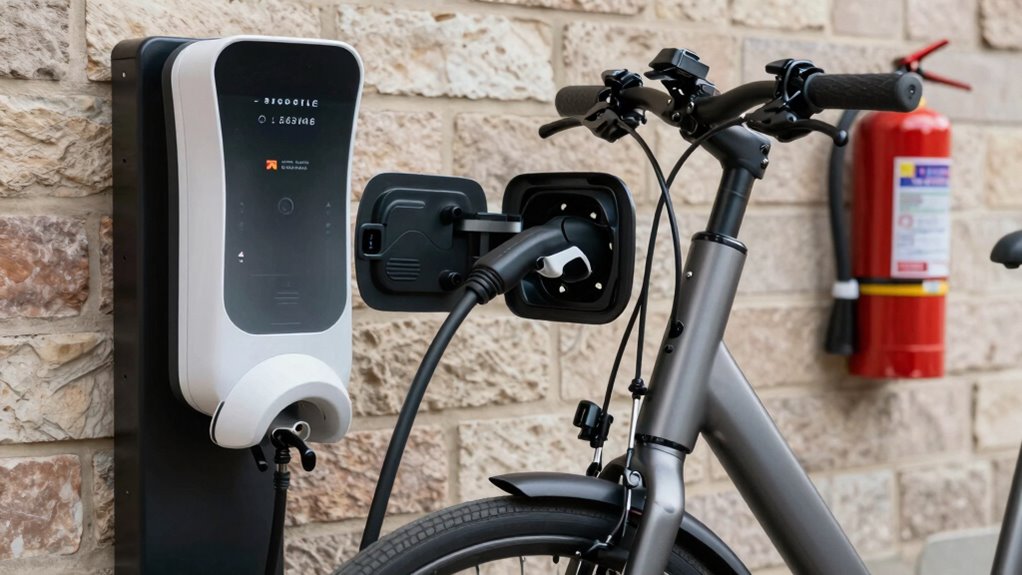

To prevent e-bike fires, always inspect your battery regularly for damage and keep it clean and dry. Use the recommended charger that matches your battery’s specifications, and avoid third-party or uncertified chargers. Never leave your e-bike unattended while charging, especially overnight, and choose a well-ventilated area away from flammable materials. Careful habits like these can drastically reduce fire risks—continue exploring ways to keep your e-bike safe and reliable.

Get backup power and energy gear delivered free — and shop member deals
- Fast, free delivery on millions of items
- Access to Prime Big Deal Days deals on October 6–7
- Prime Video, Amazon Music and more included
Key Takeaways
- Always use the original or manufacturer-approved charger to ensure compatibility and safety.
- Avoid charging in flammable or poorly ventilated areas, and never leave charging unattended.
- Regularly inspect the battery and charger for damage, corrosion, or swelling before charging.
- Ensure the battery is cooled down and connections are secure before plugging in.
- Unplug the charger promptly once charging is complete to prevent overcharging and overheating.
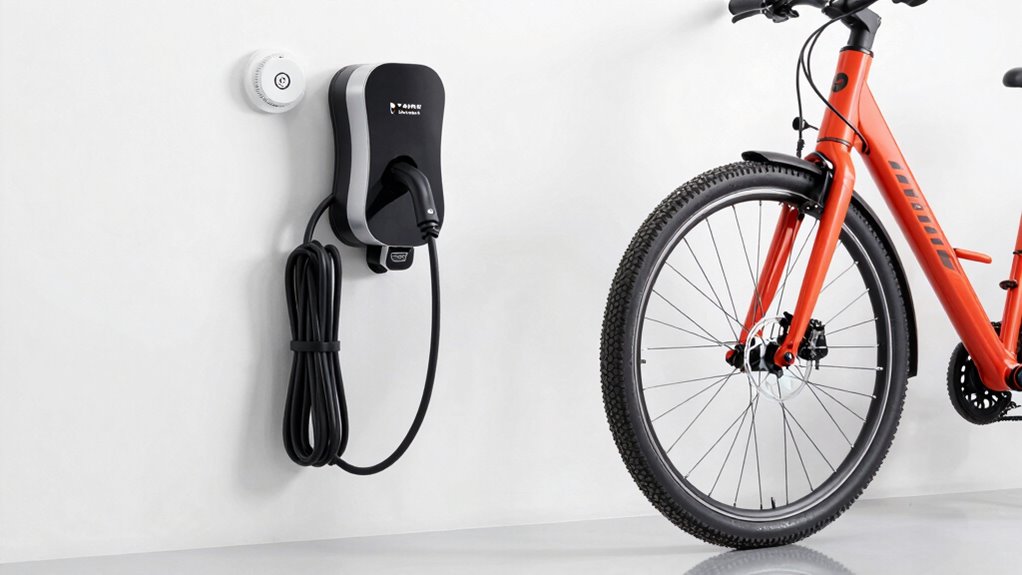
Charging your e-bike safely is vital to prevent accidents and extend the lifespan of your battery. Proper habits during charging can make a significant difference in avoiding fire hazards and maintaining your bike’s performance. One of the most important steps is practicing good battery maintenance. Regularly inspecting your battery for signs of damage, such as swelling, leaks, or corrosion, helps identify potential issues early. Never ignore these warning signs, as they can lead to dangerous malfunctions if left unchecked. Keeping your battery clean and dry also plays a role in its longevity. Always store it in a cool, dry place, away from direct sunlight or extreme temperatures, which can accelerate deterioration. When it’s time to recharge, guarantee that your battery is properly cooled down before plugging in the charger—charging a hot battery can increase the risk of overheating and fire.
Charger compatibility is another vital factor in safe e-bike charging. Using the charger that came with your bike or one recommended by the manufacturer guarantees that the voltage and current are appropriate for your battery. Mismatched chargers can deliver incorrect power levels, causing overheating, damage, or even fires. Always double-check the specifications before connecting a charger to your e-bike. Avoid using cheap, third-party chargers that lack proper safety certifications, as they may not regulate power effectively. When you connect your e-bike to the charger, ensure all connections are secure and snug. Loose or faulty plugs can generate sparks or cause short circuits, which are serious fire risks. Additionally, choosing a charger with built-in safety features can further reduce the risk of malfunctions.
While charging, never leave your e-bike unattended for extended periods, especially overnight or when you’re not at home. Overcharging can happen if the charger doesn’t have an automatic shutoff feature, leading to overheating. Modern chargers often include this safety feature, but if yours doesn’t, make it a habit to unplug the bike once charging is complete. Keep your charging area well-ventilated and away from flammable materials like paper, cloth, or aerosols. Always follow the manufacturer’s instructions carefully, and avoid modifying or tampering with the charger or battery. Proper handling and adherence to safety guidelines reduce the chance of electrical faults that could cause fires. Ultimately, staying vigilant about battery maintenance and charger compatibility guarantees you enjoy your e-bike safely and reliably, protecting both yourself and your investment.
E-bike battery charger safety certification
As an affiliate, we earn on qualifying purchases.
As an affiliate, we earn on qualifying purchases.
Frequently Asked Questions
Can Using Third-Party Chargers Increase Fire Risk?
Yes, using third-party chargers can increase fire risk if they aren’t compatible with your e-bike. You need to verify charger compatibility to avoid electrical issues. Also, check for firmware updates, as they can improve charging safety and performance. Using the wrong charger or outdated firmware may cause overheating or short circuits, risking a fire. Always stick to original or certified chargers and keep your firmware up to date for safe charging.
How Often Should I Replace My E-Bike Charger?
You should replace your e-bike charger every 2 to 3 years, as regular charger maintenance helps guarantee safety and efficiency. Studies show that over time, chargers can degrade, increasing fire risk. Keep an eye on signs like frayed cords, overheating, or inconsistent charging. Following a proper replacement schedule minimizes hazards, and using original or certified chargers maintains peak performance. Regular checks are key to preventing potential electrical issues.
Are There Specific Storage Tips for Safe Charging?
To store your e-bike charger safely, you should place it in a cool, dry spot away from direct sunlight and moisture. Keep the charger on a stable surface, avoiding places where it could fall or be damaged. Use proper cable management by neatly coiling the cable to prevent kinks or frays, and avoid bending the cord sharply. This helps prevent damage and reduces fire risk during charging.
What Are Early Signs of Charging-Related Battery Issues?
You should watch for signs like battery swelling or abnormal heating during charging. If the battery feels puffed up or looks swollen, stop charging immediately. Similarly, if it becomes unusually hot to the touch or emits an odd smell, disconnect it right away. These early signs indicate potential issues that could lead to fires if overlooked. Always monitor your e-bike’s battery closely to ensure safe charging habits.
Is It Safe to Leave My E-Bike Charging Overnight?
You shouldn’t leave your e-bike charging overnight. Battery overheating can occur if the charging duration is too long, increasing fire risk. To stay safe, unplug the charger once the battery is full, avoid charging in extreme temperatures, and monitor for signs of overheating. By following these habits, you protect your bike and home, ensuring a safer charging routine every time.
Conclusion
So, next time you plug in your e-bike, remember that your safety habits are the real ignition point—literally. It’s ironic how a simple act of charging, meant to power your ride, can turn into a fire risk if you’re careless. Maybe it’s time to treat your charging routine with the seriousness it deserves. After all, a quick check now could save you from a fiery surprise later—who knew safety could be so electrifying?
Fall Picks
fall essentials
As an affiliate, we earn on qualifying purchases.