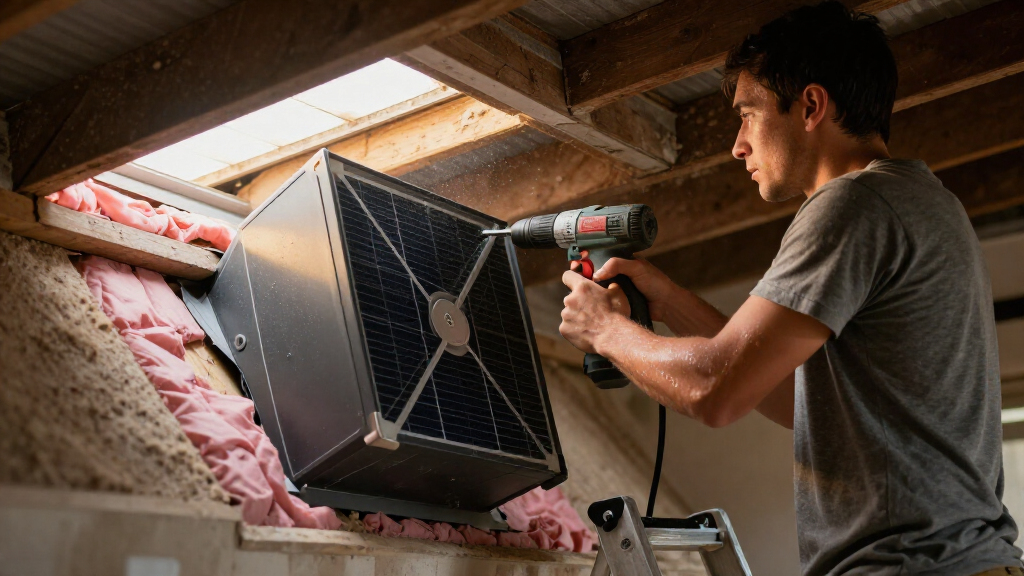

Solar attic fans pull heat and moisture out of your attic using free sunshine, cutting cooling loads and protecting your roof deck — but the category splits sharply between basic solar-only units and hybrid models that keep running after dark. The VEVOR 50W with smart sensors and remote control stands out as the best overall pick for its 3000 CFM output and automation, while the DC HOUSE 32 Watt makes the most sense for value-focused buyers covering a full 3000 sq ft attic on a budget. If nighttime ventilation matters, the Remington 40 Watt with 110V adapter and the OmniPV Hybrid solve the solar-only gap that plagues cheaper units. The main tradeoffs you’ll face are airflow versus price, roof-mount versus gable-mount installation, and whether to pay extra for MPPT controllers, thermostats, and AC backup. Keep reading for the full breakdown of all 15 models.

Get backup power and energy gear delivered free with Prime
- Fast, free delivery on millions of items
- Prime Video, Amazon Music and more included
- Member-only deals all year
Key Takeaways
- Hybrid capability was the biggest differentiator in this lineup: models with AC adapters or dual-power switching (Remington 40W Builder Series, OmniPV Hybrid, HONGUAN 40W) kept ventilating at night, while solar-only units stalled exactly when attic heat lingers.
- Rated CFM figures are not comparable across brands — several 30-40W units claim 2000-3000 CFM, but panel wattage and motor quality determine real-world airflow, so I prioritized wattage and build materials over marketing numbers.
- Thermostats and MPPT controllers added real value on mid-range models like the 40W Dual Power fan and VEVOR 35W, extracting more airflow in weak morning sun and preventing needless wear in cold weather.
- Gable-mount options (VEVOR 14″ Gable, iLIVING) trade peak CFM for easier, roof-penetration-free installation — a better fit for homeowners worried about leaks or HOA restrictions.
- Budget units under $150 (HONGUAN 34W, generic 32W/40W fans) work for small sheds and garages but lack sealing quality and motor durability for whole-home attic duty.


| solar attic fan | Airflow | Power |
|---|---|---|
| Remington Solar 30 Watt Roof M | — | 30 watts (solar) |
| VEVOR 35W Solar Attic Fan with | — | — |
| Remington Solar 20-Watt Roof M | — | 20 watts (solar) |
| 40W Solar Attic Fan with Therm | 2000 CFM | — |
| VEVOR 50W Solar Attic Fan with | 3000 CFM | 50W solar with MPPT controller |
| HONGUAN 34W Solar Attic Fan | 1200 CFM | 34W |
| DC HOUSE 32 Watt Solar Attic F | — | — |
| OmniPV Solar Hybrid Attic Fan | 2100 CFM | — |
| VEVOR 14" Gable Mount Solar At | 1300 CFM | — |
| Solar Attic Fan 32W 1600CFM Ro | 1600 CFM | 32W |
| HONGUAN 40W Solar Attic Fan | 2000 CFM | 40W |
| OmniPV Smart Hybrid Solar Atti | 2850 CFM | — |
| iLIVING HYBRID Ready Smart The | 1150 CFM | 40 Watts |
| Remington Solar Builder Series | — | 40 watts solar, 110V adapter for night operation |
| 40W Solar Attic Fan | 1800–2000 CFM | 40W solar panel |
More Details on Our Top Picks
Remington Solar 30 Watt Roof Mount Solar Attic Fan
Among all the options in this roundup, Remington Solar’s 30W model earns the top spot because it solves the two problems buyers complain about most: roof leaks and short motor life. The oversized 22.5″ x 22.5″ steel flashing covers more roof area than standard units like the HONGUAN 34W, which means fewer chances for water intrusion at the cutout — the number one failure point for roof-mounted fans. The brushless motor eliminates friction wear, and the built-in humidistat plus thermostat automatically balances heat and moisture year-round rather than only responding to temperature like the VEVOR 35W. My one criticism is that nighttime operation requires a separately sold hybrid adapter, while the 40W dual-power fan includes AC switching out of the box. Still, for pure set-it-and-forget-it reliability, this is the strongest all-around package.
Pros:- Extra-large steel flashing dramatically reduces leak risk
- Brushless motor runs quietly and resists wear over time
- Built-in humidistat and thermostat respond to both heat and moisture
- Backed by a limited lifetime warranty and Texas Windstorm documentation
Cons:- Hybrid adapter for nighttime operation sold separately
- Roof cutting and flashing install is more involved than gable-mount options like the VEVOR 14″ gable fan
Best for: Homeowners with asphalt shingle roofs who want a leak-resistant, low-maintenance fan backed by a long warranty
Not ideal for: Buyers in humid climates who need continuous overnight moisture control without buying the add-on adapter
- Power:30 watts (solar)
- Motor Type:Brushless
- Controls:Built-in humidistat and thermostat
- Flashing Size:22.5″ x 22.5″ steel
- Night Operation:Optional hybrid adapter (sold separately)
- Warranty:Limited lifetime
- Mounting:Roof mount
Our verdict“This is the pick for buyers who prioritize long-term durability and leak protection over 24/7 runtime.”
VEVOR 35W Solar Attic Fan with 2400 CFM Airflow
If your priority is moving serious air without a serious budget, the VEVOR 35W punches above its weight with a claimed 2400 CFM — more airflow than the 40W dual-power fan’s 2000 CFM despite drawing less solar wattage. The MPPT controller squeezes maximum output from available sunlight, which matters on cloudy days or when panel placement is less than perfect. Compared with the Remington 30W, the automatic thermostat at 79°F keeps operation hands-off, though VEVOR skips the humidistat, so moisture-driven ventilation in winter isn’t covered. The hail and lightning rated panel is a nice touch for storm-prone regions. The real tradeoff here is simplicity: there’s no remote, no customization, and it stops when the sun goes down — no hybrid option like the VEVOR 50W offers.
Pros:- 2400 CFM airflow rivals higher-wattage competitors
- MPPT controller maximizes output in weak sunlight
- Automatic thermostat starts cooling at 79°F without input
- Weather-resistant panel rated for hail and lightning
Cons:- Daylight-only operation with no hybrid power option
- Fixed thermostat threshold with no adjustment
- Roof installation on metal or masonry may require professional help
Best for: Owners of large attics or detached garages who want maximum daylight airflow at a lower cost per CFM
Not ideal for: Cold-climate homeowners fighting winter condensation, since there’s no humidistat or night operation
- Wattage:35 watts
- Air Flow Capacity:2400 CFM
- Controller:MPPT
- Thermostat:Auto-start at 26°C / 79°F
- Motor Type:Brushless DC
- Compatible Roofs:Metal and masonry
- Weather Resistance:Hail, lightning, and weathering resistant
Our verdict“A strong mid-range choice when raw airflow per dollar matters more than smart features or nighttime operation.”
Remington Solar 20-Watt Roof Mount Attic Fan – Round Builder Series
Not every attic needs 3000 CFM. For smaller homes, additions, or modest attic footprints, this 20W Remington delivers the brand’s proven design — the same 22.5″ x 22.5″ leak-resistant flashing, brushless quiet motor, and dual humidistat/thermostat control as its 30W sibling — just scaled down. That shared platform is the appeal: buyers who trust the larger Remington but don’t need its output get the same weather-tight install and moisture management for less. Compared with budget units like the Solar Attic Fan 32W 1600CFM, the standout difference is the humidistat, which keeps winter condensation in check instead of only reacting to heat. The tradeoff is capacity — on a large attic, this unit will fall behind, and like its bigger brother, nighttime running costs extra via the optional hybrid adapter. Match it to the right square footage and it’s a smart, quiet buy.
Pros:- Same oversized leak-proof flashing as the larger Remington 30W
- Humidistat and thermostat manage both moisture and heat
- Near-silent brushless motor
- 15-year limited warranty reflects durable construction
Cons:- 20W output limits airflow on larger attics
- Hybrid adapter for night operation sold separately
Best for: Owners of smaller homes, garages, or sheds who want Remington build quality without oversizing
Not ideal for: Large attics over roughly 1500 sq ft that need the airflow of the VEVOR 35W or 50W models
- Power:20 watts (solar)
- Motor Type:Brushless
- Controls:Built-in humidistat and thermostat
- Flashing Size:22.5″ x 22.5″ steel
- Dimensions:22.5″ x 22.5″
- Night Operation:Optional hybrid adapter (sold separately)
- Warranty:15 years limited
Our verdict“The right-sized choice for small spaces where Remington’s leak protection and moisture control matter more than raw CFM.”
40W Solar Attic Fan with Thermostat and MPPT Controller, 12″ Roof Vent Fan, 2000 CFM, Dual Power Auto-Switch
True 24/7 ventilation at a mid-range price is this fan’s defining trick. While Remington charges extra for its nighttime adapter, this unit ships with dual solar/AC auto-switching built in — it runs on free sunlight all day, then flips to household power after dark so humidity never builds overnight. The 0–70° adjustable panel is another advantage over fixed-panel rivals like the VEVOR 35W, letting owners angle for maximum sun exposure on any roof pitch. With 2000 CFM covering up to 2500 sq ft, it handles most residential attics comfortably, and the four-speed performance mode gives tuning the others don’t. The compromises are real though: no battery backup, performance mode depends on the included AC adapter, and airflow drops in energy-saving mode when clouds roll in. Compared with the OmniPV Hybrid, the longer cabling (16+ feet) makes panel placement far more flexible.
Pros:- Dual solar/AC auto-switching for genuine 24/7 operation included in the box
- Adjustable 0–70° panel optimizes sun capture on any roof
- 2000 CFM covers attics up to 2500 sq ft
- Weatherproof brushless copper motor in hail-resistant housing
Cons:- No battery backup for power outages
- Performance mode requires the AC/DC adapter
- Airflow fluctuates with sunlight in energy-saving mode
Best for: Homeowners who want round-the-clock attic ventilation without paying premium prices for smart features
Not ideal for: Off-grid or battery-backup setups, since it has no storage and needs AC power for nighttime performance mode
- Solar Power:40 watts
- Fan Diameter:12 inches
- Airflow:2000 CFM
- Cooling Coverage:Up to 2500 sq ft
- Panel Adjustment:0–70° horizontal and vertical
- Thermostat Range:68–113°F auto-start
- Power Modes:MPPT controller with 2 modes, 4 speeds
- Motor:Weatherproof brushless copper
- Cable Lengths:Up to 196.9 in (16.41 ft) adapter cable
Our verdict“The smartest spend for buyers who need continuous ventilation but don’t need the remote control and smoke sensing of pricier hybrids.”
VEVOR 50W Solar Attic Fan with 3000 CFM, Smart Temperature & Smoke Sensors, Remote Control
This is the most capable fan in the lineup, and the gap is measurable: 3000 CFM from a 50W panel out-moves everything else here, including the OmniPV Pro’s 2850 CFM. What separates it from cheaper high-CFM rivals like the DC HOUSE 32W is intelligence — the smoke-detection shutoff is a genuine safety feature, since a running fan feeding a fire is a real hazard, and the 32-foot remote beats the manual-only operation of most competitors. Hybrid power switches to electric at sunset automatically, matching the 40W dual-power fan’s 24/7 capability but with more headroom. The compromises are predictable for a premium unit: the 26°C threshold isn’t user-adjustable, and this is the heaviest, most involved roof install in the group — masonry work in particular may justify a pro. Buy it when attic size or heat load demands the maximum.
Pros:- Highest airflow in the roundup at 3000 CFM
- Smoke-detection shutoff adds a genuine safety layer
- Remote control with 32-foot range for easy adjustments
- Hybrid power delivers automatic 24/7 ventilation
Cons:- Fixed 26°C activation threshold with no customization
- Complex roof installation likely needs professional help
- Premium feature set costs more than simpler high-CFM rivals
Best for: Owners of very large attics or hot-climate homes who want maximum airflow, remote control, and built-in safety features
Not ideal for: Budget-focused buyers or small attics — the extra capacity and smart features are wasted money at modest square footage
- Power:50W solar with MPPT controller
- Airflow:3000 CFM
- Sensors:Temperature, humidity, smoke detection
- Remote Control Range:32 feet (9.75 m)
- Auto On/Off Threshold:26°C
- Power Source:Solar with automatic electric backup at sunset
- Roof Compatibility:Metal and masonry
- Weather Resistance:Hail, lightning, and weathering resistant
Our verdict“The ceiling of this category — buy it for large, hot attics where maximum airflow and safety tech justify the premium.”
HONGUAN 34W Solar Attic Fan, 1200 CFM, 10-Inch, IP65 Waterproof
This model stands out for its hybrid solar-plus-AC design, which solves the biggest weakness of pure-solar units like the DC HOUSE 32 Watt: cloudy afternoons and long summer nights. Pair the included AC/DC adapter with the MPPT controller and four speed settings, and airflow continues after sunset — something the DC HOUSE simply cannot do. The adjustable thermostat (68–113°F) gives finer control than the OmniPV’s fixed 75°F threshold. The tradeoff is real, though: Performance Mode only works with the adapter connected, adding a wiring step and a small electricity cost, and the 1200 CFM output lags well behind the 2500 CFM class leaders. For buyers who value consistent ventilation over raw airflow, that compromise makes sense.
Pros:- Hybrid solar and AC power allows continuous day and night operation
- MPPT controller with four speed settings and adjustable 68–113°F thermostat
- Multi-angle panel adjustment (1°–70°) maximizes sunlight capture on any roof pitch
- IP65 waterproof rating stands up to roof-mounted exposure
Cons:- Performance Mode requires the AC/DC adapter, adding wiring complexity and electricity use
- Airflow of 1200 CFM is modest compared with similarly priced competitors
- Solar output drops noticeably on overcast days
Best for: Homeowners in mixed-sun climates who want attic ventilation to keep running after dark without hiring an electrician
Not ideal for: Buyers with very large attics over 1800 sq.ft — the 1200 CFM output will be outmatched by higher-CFM rivals like the DC HOUSE
- Power:34W
- Airflow:1200 CFM
- Fan Diameter:10 inches
- Coverage Area:Up to 1800 sq.ft
- Solar Panel:34W monocrystalline
- Power Source:Solar + AC/DC adapter (included)
- Thermostat Range:68°F to 113°F
Our verdict“Choose this fan if nighttime and cloudy-day ventilation matter more to you than maximum airflow.”
DC HOUSE 32 Watt Solar Attic Fan – Roof Exhaust Fan, 2500 CFM, Metal Shell
When attic size is the deciding factor, this fan makes the most sense. Its 2500 CFM output and 3000 sq.ft coverage put it in a different class than the 1300 CFM VEVOR 14″ Gable Mount, moving enough air to keep a large home’s attic from turning into a heat reservoir. The IP68-rated metal housing and brushless copper motor are built for hail and harsh weather, and 43 dB operation is quiet enough that it will not register from inside the house. The compromise is the flip side of pure solar: unlike the HONGUAN 34W with its AC adapter, this unit slows to a crawl on cloudy days and stops entirely at night. Buyers paying to cool a big attic through peak afternoon heat will accept that tradeoff; anyone wanting round-the-clock airflow should look at the hybrid options instead.
Pros:- Class-leading 2500 CFM airflow covers spaces up to 3000 sq.ft
- Zero electricity cost with fully solar operation
- Quiet 43 dB brushless copper motor
- IP68 metal housing resists hail and harsh weather
Cons:- No backup power — output drops sharply on cloudy days
- Fixed roof mount offers less placement flexibility than gable-mount alternatives
Best for: Owners of large homes or workshops up to 3000 sq.ft who need maximum daytime heat extraction at zero operating cost
Not ideal for: Anyone who needs ventilation after sunset or in consistently overcast regions — there is no backup power source
- Wattage:32W
- Air Flow Capacity:2500 CFM
- Power Source:Solar powered
- Noise Level:43 dB
- Motor Type:Brushless copper
- Blades:5
- Installation:Fixed roof mount
- Warranty:1 year
Our verdict“This is the pick for big attics where high-volume daytime airflow is the single most important requirement.”
OmniPV Solar Hybrid Attic Fan, 40W 2100 CFM Roof Mount Exhaust Fan with AC Adapter
Compared with the HONGUAN 34W, this OmniPV trades thermostat flexibility for raw power and build quality: 40 watts and 2100 CFM versus 34 watts and 1200 CFM, wrapped in an aluminum alloy body with anti-corrosion and UV resistance — a genuine advantage for coastal homes where steel housings like the VEVOR gable model’s can degrade faster. Its built-in thermostat shuts off automatically below 75°F, which keeps operation hands-off, though it lacks the HONGUAN’s adjustable temperature band. The multiple mounting options — roof, gable vents, or as an extractor — make it unusually adaptable for shops, RVs, and sheds, not just attics. The included AC adapter means it can run at night, but like all hybrids, that convenience comes with a cord to route and a small energy cost.
Pros:- Corrosion-resistant aluminum alloy body suited to coastal environments
- Strong 2100 CFM output from a 40W panel
- Hybrid operation with included AC adapter for nighttime use
- Multiple mounting options for roofs, gables, and outbuildings
Cons:- Fixed 75°F thermostat offers no adjustable temperature range
- AC adapter use requires wiring access and adds electricity cost
- Output still depends on sunlight when running on solar alone
Best for: Coastal homeowners and multi-use builders who want corrosion-resistant construction and flexible mounting across roofs, gables, sheds, and RVs
Not ideal for: Buyers who want precise temperature control — the fixed 75°F thermostat cannot be tuned like the HONGUAN’s 68–113°F range
- Wattage:40W
- Airflow:2100 CFM
- Power Source:Solar + AC adapter (included)
- Motor:Brushless DC
- Thermostat:Built-in, auto on/off at 75°F
- Housing:Aluminum alloy, weatherproof
- Mounting:Roof, gable vent, or extractor setups
Our verdict“A strong fit for corrosive coastal climates and unconventional installs where mounting flexibility beats fine-grained controls.”
VEVOR 14″ Gable Mount Solar Attic Exhaust Fan with Adjustable Thermostat, 1300 CFM
Most fans in this roundup cut a hole in your roof; this one doesn’t. The gable-mount design installs on a vertical wall, which means no roof penetration, no flashing work, and no risk of a leak over your living room — a real advantage over roof-mounted units like the DC HOUSE 32 Watt. Its 1300 CFM covers up to 1850 sq.ft, enough for a typical single-story home, though well short of the DC HOUSE’s 2500 CFM. The protective mesh against birds and debris is a thoughtful touch, and the included bracket means a DIY installation without specialty tools. The catch: if your roof design has no gable vent, this format simply will not work, and panel placement options are more limited than the HONGUAN’s multi-angle 1°–70° adjustment.
Pros:- Gable mounting avoids roof penetration and leak risk entirely
- Adjustable thermostat automates operation and cuts wasted runtime
- Protective mesh keeps out birds, leaves, and debris
- DIY-friendly installation with included bracket and no professional tools
Cons:- Gable-only mounting limits compatibility with many roof designs
- 1300 CFM is modest for larger attics compared with roof-mount rivals
- Solar performance depends heavily on wall orientation and panel placement
Best for: DIY-minded homeowners with existing gable vents who want leak-free installation without cutting into the roof
Not ideal for: Homes with hip roofs or no accessible gable wall — the mount format won’t fit, making a roof-mount model the better route
- Fan Diameter:14 inches
- Airflow:1300 CFM
- Coverage Area:Up to 1850 sq.ft
- Power Source:Solar
- Thermostat:Adjustable
- Housing Material:High-strength steel
- Blade Material:Aluminum alloy
- Mounting:Gable mount with 14-inch bracket
Our verdict“The obvious choice if you have a gable vent and want ventilation without ever touching your roofline.”
Solar Attic Fan 32W 1600CFM Roof Vent Exhaust Fan
Where this fan separates itself from the OmniPV 40W hybrid is brute durability: an impact-resistant, hail-tested steel housing rated for 130 mph winds and a working range of -40°F to 150°F. For homes in storm belts or high-plains hail country, that spec matters more than the OmniPV’s extra wattage. The monocrystalline panel arrives with factory-integrated wiring, so installation is genuinely tool-simple compared with hybrid models that need an adapter wired in, and the manufacturer claims attic temperature drops of up to 30°F, easing AC strain. The honest tradeoff: it runs only from sunrise to dusk on solar alone, and a shaded roof section will starve it. It is a simpler, tougher, no-compromise daytime performer rather than an all-hours solution.
Pros:- Hail-tested steel housing and 130 mph wind rating for severe weather
- Factory-integrated wiring makes installation simple with no electrical work
- 1600 CFM airflow can cut attic temperatures by up to 30°F
- Operates reliably from -40°F to 150°F with quiet 43 dB output
Cons:- Daylight-only operation with no backup power option
- Requires a roof section with strong, direct sun exposure to hit rated output
Best for: Homeowners in hail, wind, or extreme-temperature regions who prioritize a set-it-and-forget-it weatherproof roof vent
Not ideal for: Anyone needing evening or overnight ventilation — with no AC backup, it stops the moment the sun sets
- Power:32W
- Airflow:1600 CFM
- Solar Panel:Monocrystalline
- Motor:Copper brushless, IP68 waterproof
- Noise Level:43 dB
- Wind Resistance:130 mph
- Operating Temperature:-40°F to 150°F
- Housing:Impact-resistant steel, hail tested
- Warranty:1 year
Our verdict“Pick this one when storm resistance and plug-free simplicity outrank the need for nighttime airflow.”
HONGUAN 40W Solar Attic Fan, 2000 CFM with AC Adapter and MPPT Controller
This model stands out for buyers who want hands-on control over their attic ventilation. The MPPT controller squeezes more usable power out of weak morning and late-afternoon sun than standard controllers, and the two-mode design lets you choose between energy-saving and full-performance operation. Compared with the simpler controller-free 40W fan later in this list, the HONGUAN trades plug-and-play simplicity for a genuinely tunable system—an adjustable thermostat from 68°F to 113°F and a manual speed knob. The included AC/DC adapter means it can keep ventilating after sunset, matching the hybrid capability of the OmniPV Pro. The catch: hitting that full 2000 CFM in performance mode depends on grid power, so pure solar output is lower than the headline figure suggests.
Pros:- MPPT controller maximizes output in weak light conditions
- Hybrid solar/AC power enables 24-hour operation
- Adjustable thermostat and two ventilation modes
- IP65 weatherproofing with a multi-angle panel mount
Cons:- Full 2000 CFM performance mode relies on the AC adapter rather than solar alone
- Installation is more involved due to controller wiring and mounting hardware
Best for: Homeowners with large attics or workshops who want adjustable speed, thermostat control, and optional nighttime operation in one package
Not ideal for: Buyers wanting a simple set-and-forget fan — the wiring and controller setup add installation complexity for little benefit if you just want basic airflow
- Power:40W
- Airflow:2000 CFM
- Coverage Area:2500 sq.ft
- Thermostat Range:68°F–113°F
- Dimensions:19.29 x 19.39 x 10.63 inches
- Weight:29.9 pounds
Our verdict“This pick makes the most sense for buyers who treat attic ventilation as a tunable system rather than an install-and-forget appliance.”
OmniPV Smart Hybrid Solar Attic Exhaust Fan Pro, 2850 CFM 50W Solar Panel
When raw airflow is the priority, this OmniPV Pro leads the pack at 2850 CFM across up to 4,000 square feet—noticeably more headroom than the HONGUAN 40W or the DC HOUSE 32W unit. The rare-earth magnet brushless motor is the real differentiator: it keeps spinning on as little as 1W, so cloudy-day performance doesn’t fall off a cliff the way it can with cheaper motors. Panel positioning is also the most flexible here, tilting across a wide horizontal and vertical range to chase optimal sun angles. The tradeoff is installation labor—the bendable mounting plate must be shaped to your roof profile and anchored with the included stainless cables, which is more fiddly than the fixed-flashing approach of the Remington Builder Series. The thermostat’s 50–104°F range is also narrower than iLIVING’s, limiting cold-weather moisture control.
Pros:- Highest airflow in this lineup at 2850 CFM
- Brushless motor runs on as little as 1W for cloudy-day reliability
- Rust-proof aluminum alloy built for 10+ years of rooftop exposure
- Highly adjustable panel angle for sun optimization
Cons:- Requires bending the mounting plate and tensioning cables, complicating installation
- Thermostat range caps at 104°F, limiting hot-climate responsiveness compared with iLIVING’s 122°F ceiling
Best for: Owners of large homes, workshops, or barns up to 4,000 sq ft who need maximum air exchange and durable long-term construction
Not ideal for: Casual DIYers with modest attics — the capacity is overkill and the plate-bending installation demands more patience than a pre-flashed unit
- Airflow:2850 CFM
- Solar Panel:50W
- Coverage Area:up to 4,000 sq ft
- Thermostat Range:50–104°F
- Motor:Rare earth permanent magnet brushless DC
- Material:Rust-proof aluminum alloy
- AC Adapter:12V 2A
- Panel Adjustment:-45° to +45° horizontal, 0° to 60° vertical
Our verdict“This model is better suited to buyers with big spaces and real heat problems who will tolerate a more involved install for the best airflow-per-watt in the group.”
iLIVING HYBRID Ready Smart Thermostat Solar Roof Attic Exhaust Fan, 14″, 40-Watt, 1150 CFM
The iLIVING’s calling card is durability: an IP68 waterproof brushless motor backed by a 15-year warranty, the longest protection in this roundup and far beyond what HONGUAN or OmniPV offer. Airflow is the compromise—1150 CFM is roughly half of what the HONGUAN 40W claims, though the coverage rating of 2,900 sq ft stays competitive. The smart thermostat spans an unusually wide 50°F–122°F range, beating the OmniPV Pro’s 104°F ceiling and making it the better choice where attic moisture in cool weather matters as much as summer heat. Note the “HYBRID Ready” wording: unlike the Remington Builder Series, which includes its 110V adapter in the box, the iLIVING’s nighttime adapter kit is a separate purchase. Out of the box, this is a daylight-only fan.
Pros:- 15-year motor warranty, the strongest in this lineup
- IP68 waterproof rating exceeds typical IP55–IP65 competitors
- Widest thermostat range at 50°F–122°F
- Four-position adjustable solar panel (0° to 45°)
Cons:- AC/DC adapter for night operation sold separately
- Lower airflow than similarly powered 40W competitors
Best for: Buyers prioritizing long-term reliability and a 15-year warranty, especially in humid climates where a wide thermostat range helps control moisture year-round
Not ideal for: Homeowners who need serious airflow for large or poorly insulated attics — 1150 CFM is modest next to 2000+ CFM rivals
- Fan Diameter:14 inches
- Power:40 Watts
- Airflow:1150 CFM
- Coverage Area:Up to 2900 sq. ft.
- Thermostat Range:50°F–122°F
- Motor:IP68 waterproof brushless
- Solar Panel Adjustment:0°/15°/30°/45°
- Warranty:15 years
Our verdict“This is the pick for buyers who would rather buy once and forget it for 15 years than chase maximum CFM ratings.”
Remington Solar Builder Series 40 Watt Solar Attic Fan with 110V Adapter
What separates this Remington from the field is its dual-sensor approach: a built-in humidistat alongside the thermostat, so it responds to attic moisture, not just heat. Compared with the HONGUAN 40W, which offers thermostat control only, that humidity trigger matters in damp climates where winter condensation—not summer heat—does the real damage. It’s also the only model here with true 24/7 capability out of the box, since the 110V adapter for nighttime operation is included rather than sold separately as with the iLIVING. The 22.5″ x 22.5″ heavy steel flashing is larger than typical, which simplifies leak-proof sealing. Drawbacks exist: airflow is modest for a 40W unit, single-speed operation offers no tuning, and the warranty terms require a surge protector on the adapter or coverage is voided—a detail easy to miss.
Pros:- Built-in humidistat plus thermostat for automatic moisture defense
- 110V night-operation adapter included, unlike add-on competitors
- Extra-large 22.5″ x 22.5″ steel flashing reduces leak risk
- Near-silent brushless motor rated at 0.08 sones
Cons:- Single-speed motor with no airflow adjustment or mode options
- Adapter warranty voided without a surge protector — an easy requirement to overlook
Best for: Homeowners in humid or coastal climates who need automatic moisture control and included nighttime operation without extra purchases
Not ideal for: Buyers wanting adjustable speed or high CFM output — this is a single-speed unit focused on moisture management, not raw cooling power
- Power:40 watts solar, 110V adapter for night operation
- Motor:Brushless
- Noise Level:0.08 sones
- Blades:5 (plastic)
- Flashing Size:22.5 x 22.5 inches heavy steel
- Solar Panel:Adjustable
- Mounting:Roof mount
- Warranty:Limited lifetime on fan; 1 year on adapter
Our verdict“This option stands out for damp climates where humidity control matters more than peak airflow, provided you don’t skip the surge protector.”
40W Solar Attic Fan, 12 Inch 2000 CFM Controller-Free Auto Ventilation
This fan takes the opposite philosophy from the HONGUAN 40W: no controller, no thermostat, no wiring decisions—the panel and fan arrive pre-connected, and the unit simply spins up at sunrise and winds down at dusk. For buyers intimidated by the MPPT settings and adapter wiring of controller-based models, that simplicity is the whole point. Output is strong on paper at 1800–2000 CFM, backed by a hail-resistant metal housing and a pure copper motor with IP65 weather resistance, and the manufacturer claims a managed noise level comparable to quiet conversation. The obvious tradeoff is intelligence: without a thermostat or AC backup, it cannot run at night or respond to humidity the way the Remington Builder Series does, and airflow inevitably sags under clouds since there’s no controller to compensate.
Pros:- Truly plug-and-play with factory pre-connected panel and fan
- No failure-prone controllers or thermostats to configure or break
- Hail-resistant metal housing with copper motor and IP65 rating
- Versatile enough for garages, greenhouses, sheds, and barns
Cons:- Daylight-only operation with no AC or battery backup option
- Airflow drops on cloudy days with no MPPT controller to manage weak input
Best for: DIYers and off-grid property owners who want maximum-install-simplicity solar ventilation for garages, sheds, greenhouses, or barns
Not ideal for: Homeowners needing nighttime or humidity-triggered ventilation — with no thermostat, humidistat, or adapter option, it only works when the sun shines
- Power:40W solar panel
- Airflow:1800–2000 CFM
- Fan Diameter:12 inches, metal blades
- Motor:Heavy-duty pure copper, IP65
- Controls:Controller-free, automatic sunrise/dusk operation
- Housing:Hail-resistant metal
- Support:12 months product support
Our verdict“This pick makes the most sense for set-and-forget builders who value mechanical simplicity over smart features and don’t need after-dark ventilation.”

How We Picked
I ranked these solar attic fans on five buyer-relevant criteria. First, ventilation performance: real-world airflow potential judged by panel wattage, motor construction (brushless and copper-wound motors ranked higher), and coverage area claims I could sanity-check against wattage. Second, smart operation — thermostats, smoke sensors, MPPT controllers, and remote control earned higher placement because they reduce energy waste and extend motor life. Third, installation flexibility: I rewarded models offering both roof and gable options, adjustable panels, and clear flashing or mounting hardware.
Fourth, weather resistance and durability — IP65 ratings, metal housings over plastic, and sealed bearings mattered most since these fans live on a roof for a decade or more. Fifth, hybrid power capability, which became the strongest ranking signal in this lineup: units that run on AC at night or during overcast weather outperformed solar-only models in practical usefulness. Products were ordered so that automated, high-output hybrids sit at the top, mid-range thermostat-equipped models fill the middle, and basic solar-only budget units round out the list for light-duty use.
Factors to Consider When Choosing Solar Attic Fans
Before picking a specific model, it helps to understand what actually moves the needle on attic ventilation — and where buyers commonly overspend or underbuy.Match CFM to Your Attic Size — and Discount the Label
The standard rule is roughly 1 CFM per square foot of attic space, with adjustments for steep roofs or dark shingles. A 2000 sq ft attic needs about 2000 CFM of actual, not advertised, airflow. The catch is that manufacturer CFM ratings are measured under ideal lab sun — a 2000 CFM fan may deliver 1300-1500 CFM on a hazy afternoon. A common mistake is buying a fan rated exactly at your attic’s size, leaving no headroom for real-world conditions. A better approach: buy 20-30% more rated capacity than your attic requires, or pair a mid-size fan with adequate passive intake vents. Also verify your soffit and ridge vents can supply replacement air — an exhaust fan starved of intake air moves a fraction of its rated output.
Solar-Only Versus Hybrid Power
Solar-only fans cost less and install anywhere, but they stop the moment the sun drops — often right when attic heat is still radiating into your home. Hybrid models with AC adapters or dual-power switching solve this, running at reduced speed overnight and continuing to vent during storms and overcast weeks. This matters most in humid climates where nighttime moisture buildup, not just daytime heat, drives mold and insulation damage. In dry, hot climates like the Southwest, solar-only is usually enough because the cooling problem is sun-driven. If your attic struggles with dampness or you want continuous ventilation, the modest premium for a hybrid unit pays for itself in moisture protection. Just confirm the AC adapter adds a wiring requirement that pure solar models avoid.
Mounting Type: Roof, Gable, or curb
Roof-mounted fans dominate the market but require cutting a hole in your roof — a leak risk if flashing is done poorly, and a non-starter for some HOAs and tile roofs. Gable-mounted fans install inside the attic behind an existing vent, requiring no roof penetration and simplifying DIY installation, but they only work if your home has a gable vent. Their airflow path is also less direct, so expect somewhat lower effective CFM. Buyers with complex roofs (tile, metal, steep pitch) should check whether the model includes an adjustable or tilting panel, since a fixed flat panel on a north-facing slope can cut output dramatically. Matching mounting type to your roof’s reality matters more than any spec on the box.
Controllers, Thermostats, and Sensors
A thermostat prevents the fan from running in winter, when venting a cold attic wastes energy and can chill rooms below — a small feature with a real seasonal impact. An MPPT controller extracts maximum power from the solar panel in low-light conditions, meaning earlier startup and later shutdown each day, plus steadier speeds under partial clouds. Higher-end models add smoke detection, which shuts the fan during a fire so it doesn’t feed the flames with oxygen, and remote controls for adjusting setpoints without climbing into the attic. Beginners should not skip the thermostat — it’s the single automation feature with the clearest payoff. Sensor-loaded models make sense mainly for larger homes or vacation properties where you can’t monitor conditions manually.
Build Quality and Weather Sealing
A roof fan faces UV, rain, hail, and temperature swings for 10-15 years, so housing material matters as much as the motor. Painted aluminum and galvanized steel shells resist cracking far better than bare plastic, which becomes brittle under UV within a few seasons. Look for IP65-rated sealing on the motor and connections, stainless fasteners, and a proper flashing skirt for roof mounts. Copper-wound and brushless motors outlast brushed alternatives and run quieter — relevant if bedrooms sit below the attic. One underrated check: hail guards and animal screens. Squirrels and birds nest in unprotected fan housings, and a single hailstorm can destroy an exposed plastic fan blade. These small details separate fans that last a decade from ones replaced in three years.
When to Pay More — and When Not To
Paying more is justified when you need higher wattage for a large attic, hybrid night operation, or smart sensors you’ll actually use. It is not justified for ventilating a small shed, greenhouse, or garage, where a basic 30-35W solar-only fan handles the job for a fraction of the price. Another place not to overspend: smart remotes on small fans — if the fan is cheap to run anyway, remote adjustment saves little effort. Where I’d never skimp is on installation quality for roof mounts; a $400 fan installed with sloppy flashing performs worse than a $150 fan installed correctly. Finally, check local rebate programs — many utilities subsidize solar ventilation, which can shift the value math toward a premium hybrid model.
Frequently Asked Questions
Do solar attic fans work on cloudy days or at night?
Solar-only fans slow to a crawl under heavy clouds and stop completely after sunset, which is their biggest limitation. On partly cloudy days, models with MPPT controllers keep spinning at useful speeds by extracting the most power from weak light. For true night and storm operation, you need a hybrid model — the Remington 40W Builder Series, OmniPV Hybrid, and HONGUAN 40W all accept AC power for automatic after-dark running. Whether that matters depends on your climate: in hot, dry regions the sun-driven cooling mostly solves the problem on its own, but in humid areas overnight moisture removal justifies the hybrid premium and the extra wiring it requires.
Is a roof-mount or gable-mount solar attic fan better for my home?
Roof mounts deliver more direct airflow and fit almost any home, but they require cutting through shingles and depend on proper flashing to stay leak-free — a real risk on tile and metal roofs. Gable mounts like the VEVOR 14″ and iLIVING 14″ install behind an existing gable vent with zero roof penetration, making them the safer DIY choice and often the only HOA-approved option. The tradeoff is that gable fans need a suitable vent already in place and typically move less air per watt. If your roof is simple asphalt shingle and you’re comfortable on a ladder, a roof mount maximizes performance. If you have a gable vent, value simplicity, or worry about leaks, go gable.
How many CFM do I actually need for my attic?
Start with about 1 CFM per square foot of attic footprint, then add 15-20% headroom because rated CFM assumes full midday sun — you’ll get less most of the day. A 1500 sq ft attic therefore wants a fan rated around 1800 CFM, like the 40W dual-power models or the DC HOUSE 32W. The other half of the equation is intake: without adequate soffit or ridge vents supplying replacement air, even a 3000 CFM fan will underperform badly. Before buying, check that your intake vents are unblocked by insulation, because adding intake airflow is free and often improves ventilation more than upgrading the fan itself.
Are the cheap 30-40W solar attic fans worth buying?
For small spaces, yes — a 30-35W fan like the HONGUAN 34W or the generic 32W unit handles a shed, greenhouse, or small garage effectively at minimal cost. For whole-home attic duty, the cheaper units cut corners where it shows over time: thinner housings, plastic components that UV-degrade, weaker sealing at the motor, and less durable brushed motors. The practical middle path is a mid-range model with a thermostat and metal shell, which adds maybe 30-50% to the price but can double the service life. My advice is to match the fan’s duty to the space — don’t put a budget unit on a 2500 sq ft attic, and don’t buy a smart hybrid flagship for a chicken coop.
Will a solar attic fan actually lower my cooling bills?
A properly sized fan reduces attic temperatures by 20-40°F on sunny days, which cuts heat transfer into living spaces and typically trims 5-15% off cooling costs in warm climates. The effect is largest in homes with attic-mounted ductwork, since those ducts lose efficiency dramatically in a superheated attic. Results disappoint when the fan is undersized, intake vents are blocked, or the attic lacks adequate insulation — ventilation reduces heat at the source but can’t compensate for R-19 insulation in a Texas summer. Fans also protect the roof deck and shingles from heat aging, a benefit that shows up years later as longer roof life. Treat cooling savings as a bonus layered on top of moisture control and roof longevity.
Conclusion
After comparing all 15 models, my recommendations break down cleanly by buyer type. For best overall, the VEVOR 50W with smart sensors and remote control delivers the highest airflow, real automation, and hands-off operation for full-size attics. The DC HOUSE 32 Watt takes best value, covering up to 3000 sq ft with a metal shell at a mid-range price. For best premium, the OmniPV Smart Hybrid Pro pairs 2850 CFM with 50W of solar and hybrid operation for buyers who want everything. Beginners and DIY-shy homeowners should start with the VEVOR 14″ gable-mount fan, which avoids roof cutting entirely. For nighttime and all-weather ventilation, the Remington 40W Builder Series with its 110V adapter is the strongest choice, while the HONGUAN 34W handles small sheds, garages, and greenhouses on a tight budget. Match the fan to your attic size, roof type, and climate, and any of these picks will earn its place on your roof.
Halloween Picks
halloween
As an affiliate, we earn on qualifying purchases.