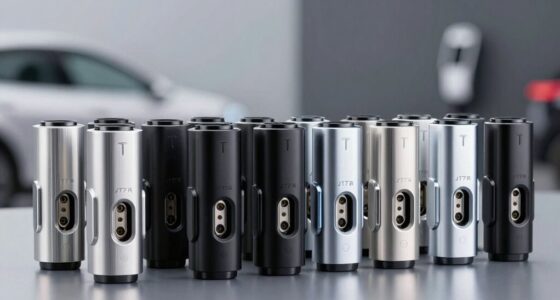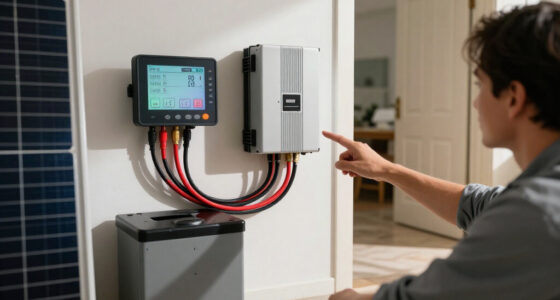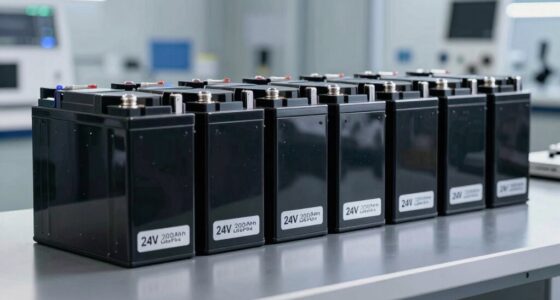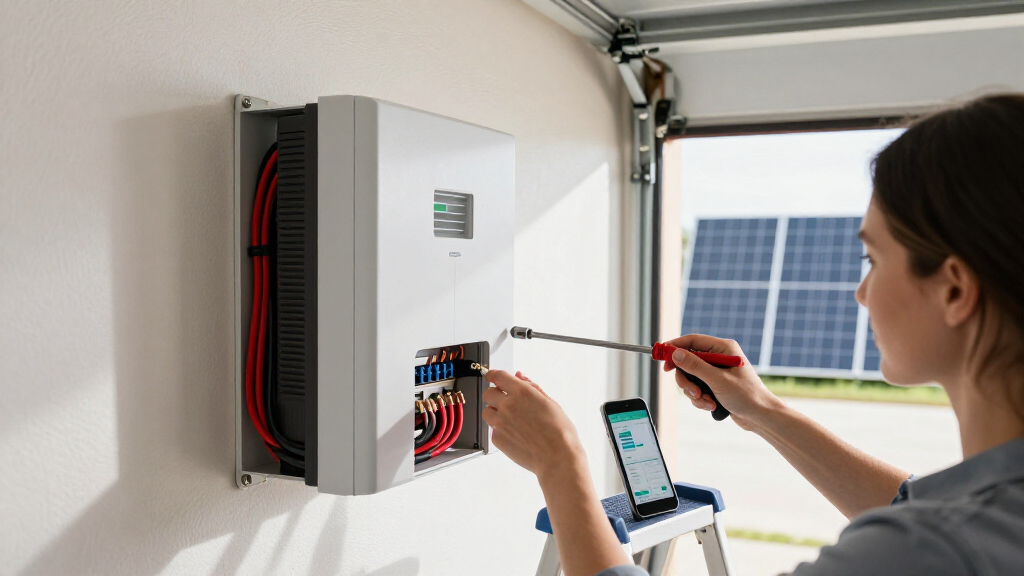

Whole house solar inverters vary widely: some are inverter-only units, while others are off-grid kits with panels and batteries. Among the listed products, the ECO-WORTHY 10kW complete system stands out as the most complete starting point for a whole-home setup, while the GROWATT 10,000W hybrid and HumsiENK 12,000W hybrid offer higher-power inverter options for buyers assembling their own systems. The main tradeoffs are system completeness, 120/240V split-phase output, battery and solar compatibility, and the work needed to size and install each setup. A large wattage number alone does not show whether an inverter can start your loads or sustain them through an outage. Read on for the full comparison, selection criteria, and guidance on matching an inverter to your home.

Get backup power and energy gear delivered free with Prime
- Fast, free delivery on millions of items
- Prime Video, Amazon Music and more included
- Member-only deals all year
Key Takeaways
- Complete kits reduce component guesswork: The ECO-WORTHY 10kW kit bundles an inverter, battery, and solar panels, while most other listings are inverter-only.
- Split-phase output is a key whole-home filter: Several 48V models list 120/240V output, but smaller 24V SUMRY models are aimed at more limited loads.
- Higher inverter wattage does not equal more backup time: Runtime depends on battery capacity, and the inverter-only listings require buyers to plan that storage separately.
- Solar input and battery charging distinguish similar power classes: MPPT count and charging specifications vary, so buyers should match these limits to their array and battery plan.
- Off-grid kits and hybrid inverters solve different problems: The ECO-WORTHY kits suit buyers seeking bundled components; hybrid inverter listings suit those who need more control over system design and sourcing.


| whole house solar inverter | AC output |
|---|---|
| GROWATT 10000W Hybrid Solar In | — |
| ECO-WORTHY 10KW 9.36KWH Off-Gr | — |
| SUNGOLDPOWER 10,000W 48V Pure | — |
| HumsiENK 12000W 48V Hybrid Sol | 120/240V split phase or 120V single phase |
| SUMRY 4000W Hybrid Solar Inver | 120V |
| ECO-WORTHY 6KW 48V Split-Phase | 120/240V split phase |
| Ampinvt 5000W 48V Off-Grid Pur | 120V; supports 120/208/240VAC configurations with parallel units |
| SUNGOLDPOWER 10000W 48V Split | 120/240V split phase or 120V single phase |
| Ampinvt 10000W Hybrid Solar In | 120/240V split phase |
| EcoSolLi 10000W Hybrid Solar I | 110V/240V settable split phase |
| ECO-WORTHY 10000W Complete Off | 120V/240V split phase |
| SUMRY Hybrid Solar Inverter Ch | 110V/120V, 60Hz |
| ECO-WORTHY 5KW Off Grid Solar | 120V |
| SUNGOLDPOWER SPH8048P 8000W 48 | 120V/240V settable; single or split phase |
| POWLAND 12000W Hybrid Solar In | 120V/240V split phase |
More Details on Our Top Picks
GROWATT 10000W Hybrid Solar Inverter, 48V Split-Phase & Three-Phase
The Growatt SPH 10000TL-HU-US (B) is my strongest fit for a whole-house system that may need to grow: it accepts 15kW of solar, has three MPPT trackers, and can link up to six units for a 60kW system. Its choice of 120/240V split phase or 120/208V three phase gives it more installation flexibility than the HumsiENK 12000W, which is listed for split-phase or single-phase output. A transfer time under 10ms also suits backup circuits where brief interruptions matter. The tradeoff is that this inverter’s broad capabilities come with a battery ecosystem caveat: the description says peak performance is best with Growatt batteries. Its US-only warranty support also makes it a weaker choice for buyers outside the United States.
Pros:- Three MPPT trackers and up to 15kW solar input allow flexible array design
- Supports split-phase and three-phase output options
- Up to six units can be paralleled for a 60kW system
- 10-year US product warranty and under-10ms backup transfer
Cons:- Warranty and after-sales support are limited to the United States
- Best performance may depend on pairing with Growatt batteries
Best for: US homeowners planning a grid-connected whole-house system with room to add solar capacity or parallel inverters over time
Not ideal for: Buyers outside the United States or households that want to use a different battery brand without checking system compatibility
- Model:SPH 10000TL-HU-US (B)
- Output power:10kW
- Output voltage:120/240V split phase or 120/208V three phase
- Solar input:15,000W
- MPPT trackers:3, with 2 strings per tracker
- Battery voltage:48V
- Efficiency:Up to 97.5%
- Parallel capacity:Up to 6 units, 60kW total
- Certifications:UL 1741 (SA/SB), IEEE 1547
Our verdict“Choose the Growatt for a US whole-house installation that needs flexible output and a clear path to larger solar and inverter capacity.”
ECO-WORTHY 10KW 9.36KWH Off-Grid Solar System Complete Kit
For a buyer starting an off-grid property from scratch, the ECO-WORTHY complete kit bundles the main system pieces: panels, a split-phase inverter, two lithium batteries, and mounting hardware. That makes planning more straightforward than assembling a system around an inverter such as the SUNGOLDPOWER 10,000W 48V, which is an inverter rather than a panel-and-battery package. The listed 2,340W of solar and 9.36kWh daily production estimate, however, depend on four hours of full sunshine; this is a modest array for a claim of whole-house coverage. Two batteries may also leave limited reserve for overnight loads or extended cloudy periods. I would treat it as a bundled starting point for a cabin or selected household circuits, not assume it can power every home load without careful load planning.
Pros:- Bundles panels, inverter, batteries, and mounting hardware
- 120/240V split-phase inverter output supports common household circuits
- Includes two 48V 100Ah lithium batteries
- Panels use N-Type bifacial cells and are listed with a 30-year lifespan
Cons:- The 2,340W panel array is limited for broad whole-home energy needs
- Daily production estimate depends on four hours of full sunshine
- Professional installation is recommended, so it is not a simple novice DIY system
Best for: Cabin, farm, or rural-property owners who want panels, batteries, and a split-phase inverter in one off-grid package
Not ideal for: Households expecting dependable whole-home energy through long cloudy periods or buyers who need a larger battery reserve from day one
- Inverter output:10kW
- AC output voltage:120/240V split phase
- Solar panels:12 × 195W N-Type bifacial panels, 2,340W total
- Daily energy estimate:Up to 9.36kWh with 4 hours of full sunshine
- Battery bank:2 × 48V 100Ah lithium batteries
- Inverter certification:UL 1741
- Panel efficiency:25%
- Parallel support:Up to 6 units, 60kW total
Our verdict“Choose this kit for a small off-grid home or cabin when bundled equipment matters more than high daily energy production or long-duration storage.”
SUNGOLDPOWER 10,000W 48V Pure Sine Wave Solar Inverter with Dual MPPT
The SUNGOLDPOWER 10,000W stands out for buyers who want to choose among several battery chemistries or run solar without a battery. Its two MPPT controllers, 200A charging capability, and time-slot charge and discharge settings give owners useful control over when stored energy is used. Compared with the Growatt SPH 10000TL-HU-US (B), this model is more open-ended about battery choices, while Growatt offers three MPPTs and a stated path to six-unit expansion. SUNGOLDPOWER lists 10kW rated output and 20kW peak output, but peak capacity is not a substitute for continuous power when sizing whole-house loads. Its 54-pound weight and 48V battery requirement also call for deliberate installation planning. I would check the home’s continuous and startup loads, plus the energy specification’s exact meaning, before treating it as a whole-house solution.
Pros:- 10kW rated output with 20kW peak output listed
- Dual MPPT controllers and up to 200A battery charging
- Supports multiple battery chemistries and user-configured batteries
- Offers battery-free operation and time-slot charging and discharging
Cons:- Battery use requires a 48V system
- At 54 pounds, the unit needs a suitable mounting location
- The supplied data does not specify a transfer time or parallel capacity
Best for: Off-grid homeowners who already have a 48V battery plan and want support for several battery types or daytime battery-free solar operation
Not ideal for: Buyers seeking a lightweight installation, a documented three-phase option, or a turnkey whole-house package with panels and storage included
- Peak output:20,000W
- Battery voltage:48V DC
- Solar controllers:2 MPPT
- Maximum PV open-circuit voltage:500V DC
- Battery charging current:Up to 200A
- Output voltage:120/240V split phase or 120V single phase
- Dimensions:26 × 17.9 × 4.9 in
- Weight:54 lb
Our verdict“Choose this inverter if battery flexibility and scheduling matter more to you than a bundled system or Growatt’s three-tracker and parallel expansion options.”
HumsiENK 12000W 48V Hybrid Solar Inverter, 120/240V Split Phase Pure Sine Wave with MPPT Charger, UL1741 Certified
The HumsiENK 12000W is aimed at homeowners who want one wall-mounted unit to combine inversion, solar charging, and battery charging. Its native 120/240V split-phase output fits typical US household service, and the listed UPS switchover of 10ms or less is useful for backup loads that should see little interruption. Compared with the ECO-WORTHY 10KW complete kit, this is an inverter component rather than a package with panels and batteries; compared with the Growatt SPH 10000TL-HU-US (B), it lists a higher 220A battery charger but only two independent MPPT channels. It can parallel up to six units, yet the advanced settings may demand an experienced installer. At nearly 52 pounds, it also needs a sturdy mounting surface.
Pros:- Combines inverter, MPPT solar charging, and battery charging in one unit
- Native 120/240V split-phase output supports household 240V loads
- UPS switchover time is listed at 10ms or less
- Supports up to six parallel units and several battery chemistries
Cons:- At 51.81 pounds, installation requires sturdy mounting
- The feature set may be difficult for inexperienced installers to configure
- Two MPPT channels provide fewer array inputs than the Growatt’s three trackers
Best for: Homeowners upgrading an existing 48V battery and solar setup who prioritize split-phase backup with quick transfer
Not ideal for: First-time DIY installers or buyers who need an all-in-one panel-and-battery kit with simpler setup
- Continuous output:10,000W
- Surge output:12,000W
- DC input:48V
- AC output:120/240V split phase or 120V single phase
- MPPT solar charger:12,000W, dual independent channels
- Battery charger:220A
- UPS switchover:≤10ms
- Parallel capability:Up to 6 units, 60kW total
- Certifications:UL 1741, FCC Part 15 Class B
Our verdict“Choose the HumsiENK for an existing 48V home backup system where fast transfer and integrated charging matter more than beginner-friendly setup.”
SUMRY 4000W Hybrid Solar Inverter, DC 24V to AC 120V Pure Sine Wave with MPPT Charge Controller
The SUMRY 4000W is the clear small-system pick in this group, not a match for most whole-house inverter needs. Its 24V input and 120V output suit a cabin, workshop, or selected backup circuits, while the 140A MPPT controller and battery-free daytime mode add flexibility for a modest off-grid setup. The Growatt SPH 10000TL-HU-US (B) is better suited to whole-house planning: it delivers 10kW, supports 120/240V split phase, and allows parallel expansion. SUMRY’s 4kW rated output cannot run the same breadth of simultaneous household loads, and its single 120V output does not serve 240V appliances. The large touchscreen makes local settings easier to read, but buyers should account for its 24V battery requirement and the specific conditions attached to battery-free operation.
Pros:- Pure sine wave output with 4,000W rated and 8,000W peak power
- Built-in 140A MPPT charge controller supports up to 5,600W PV input
- Can operate without a battery under specified solar-input conditions
- 6.25-inch LCD touchscreen provides local system controls
Cons:- 24V input is incompatible with 48V systems such as the Growatt and HumsiENK
- 120V output does not support household 240V appliances
- Battery-free operation has specific PV and grid conditions
Best for: Cabin owners or homeowners backing up a few 120V circuits with a 24V battery system and daytime solar
Not ideal for: Households seeking whole-house 120/240V service, substantial simultaneous loads, or compatibility with a 48V battery bank
- Peak output:8,000W
- DC input:24V
- AC output:120V
- Waveform:Pure sine wave
- MPPT charge controller:140A
- Maximum PV input:5,600W / 350V DC
- Maximum conversion efficiency:98%
- Display:6.25-inch LCD touchscreen
Our verdict“Choose SUMRY for a compact 120V off-grid or backup setup, and skip it if you need whole-house split-phase power.”
ECO-WORTHY 6KW 48V Split-Phase All-in-One Solar Inverter with 9kW MPPT Charge Controller
The 9,000W MPPT controller is the standout here: it gives a 6,000W inverter room to accept a substantial solar array, which can suit an off-grid home with strong daytime production. Its 120/240V split-phase output supports household appliances that need either voltage, while the touchscreen and built-in WiFi add local and remote monitoring. Compared with the Ampinvt 5000W, this ECO-WORTHY offers more continuous output and far greater stated PV controller capacity, but the Ampinvt can expand through parallel units. The tradeoff is the system setup: this unit needs a 48V battery bank and a high-voltage array, and its listed footprint is substantial. I’d shortlist it for a fixed home backup or off-grid installation, not a compact or lightly equipped system.
Pros:- 9,000W MPPT capacity and up to 500VDC PV open-circuit voltage accommodate a substantial solar array
- 6,000W continuous split-phase output supports 120V and 240V household appliances
- Touchscreen displays operating information and error codes
- Built-in WiFi and BMS communication support monitoring and battery integration
Cons:- Requires a 48V battery bank and high-voltage solar array, adding system design complexity
- Its 18.58 × 16.22-inch footprint can be difficult to fit in a small equipment space
Best for: Off-grid homeowners pairing a 48V battery bank with a large solar array and 120/240V household loads
Not ideal for: Small homes or first-time solar buyers seeking a compact unit or a simpler, lower-voltage array setup
- Continuous output:6,000W
- Peak output:12,000W
- Battery input:48V DC
- AC output:120/240V split phase
- MPPT controller capacity:9,000W
- Maximum PV open-circuit voltage:500VDC
- Maximum solar charging current:120A
- Monitoring:LED capacitive touchscreen and built-in WiFi
Our verdict“Choose this ECO-WORTHY when a large solar array and 120/240V loads matter more than a compact installation.”
Ampinvt 5000W 48V Off-Grid Pure Sine Wave Solar Inverter with 100A MPPT Charger
This 5,000W all-in-one combines the inverter, MPPT charger, AC charger, and transfer switch, keeping the core components together for an off-grid system. Its most distinctive feature for a whole-house plan is parallel support for up to six units, allowing capacity to grow or multiple units to support split-phase and three-phase configurations. Compared with the ECO-WORTHY 6KW, it starts with less continuous output and a smaller stated PV input, but offers a clearer path to scaling beyond one inverter. It also supports both lead-acid and LiFePO4 batteries. The tradeoffs are practical: WiFi and RS485 monitoring need optional modules, and PC setup calls for a manually installed CH340T driver. I’d choose it when staged expansion matters more than getting higher output from one unit.
Pros:- Combines inverter, MPPT controller, AC charger, and transfer switch in one unit
- Up to six units can operate in parallel for expanded capacity and different phase configurations
- Supports 48V lead-acid and LiFePO4 batteries
- 98% stated MPPT tracking efficiency
Cons:- 5,000W continuous output is lower than the 6,000W ECO-WORTHY and 10,000W options in this batch
- WiFi and RS485 monitoring require optional modules
- USB PC configuration requires manual CH340T driver installation
Best for: Off-grid homeowners who want to start with one 48V inverter and add units as household demand grows
Not ideal for: Buyers who need high continuous output from a single inverter or want built-in WiFi monitoring without extra modules
- Continuous output:5,000W
- Battery voltage:48V DC
- AC output:120V; supports 120/208/240VAC configurations with parallel units
- MPPT charging current:100A
- Maximum PV input power:5,500W
- Battery compatibility:Lead-acid and LiFePO4
- Parallel capability:Up to 6 units
- Transfer efficiency:>92%
Our verdict“Pick the Ampinvt if you want an off-grid system that can scale through parallel units and can accept optional monitoring hardware.”
SUNGOLDPOWER 10000W 48V Split Phase Pure Sine Wave Solar Inverter with 2 MPPTs (SPH10048P)
For a home needing substantial single-unit capacity, the 10,000W output and dual MPPT controllers make the SPH10048P the most balanced pick in this group. Two MPPTs can manage separate solar inputs, while support for up to 11,000W of PV gives a large array room to contribute. Its settable 120/240V split-phase output suits mixed household loads, and the listing also specifies UL1741 certification. Compared with the Ampinvt 10000W, SUNGOLDPOWER lists a higher maximum PV input and more explicit communication options, including CAN and dry contact; Ampinvt, by contrast, states support for up to six parallel units. This is a substantial system, and split-phase wiring and battery integration call for careful installation planning. I’d favor it for a well-equipped home over smaller 5,000W or 6,000W units.
Pros:- 10,000W output with settable 120/240V split phase
- Dual MPPT controllers and up to 11,000W maximum PV input
- Supports AGM, gel, flooded, and lithium batteries, plus battery-free operation
- WiFi, CAN, USB, RS485, and dry-contact communication options
Cons:- High capacity can be excessive for small homes and modest backup loads
- Split-phase wiring and battery integration can make installation complex
Best for: Homeowners designing a high-capacity 48V system with a large PV array, split-phase loads, and varied monitoring needs
Not ideal for: Small residences with modest loads or buyers who want a simple plug-in installation
- Peak power:20,000W
- Battery voltage:48V DC
- AC output:120/240V split phase or 120V single phase
- MPPT controllers:2 built-in
- Maximum PV input:11,000W
- Maximum battery charging current:200A
- Maximum open-circuit voltage:500VDC
- Certification:UL1741
Our verdict“Choose the SPH10048P for a large home system that needs high single-unit output, dual solar inputs, and broad communications.”
Ampinvt 10000W Hybrid Solar Inverter 48VDC to 120/240VAC, 2 Built-in MPPT Controllers, 200A Battery Charging, Split Phase Pure Sine Wave
The Ampinvt’s clearest advantage is its stated path from 10,000W to as much as 60,000W by running up to six units in parallel. That makes it a compelling foundation for a large property with plans to add capacity, while its dual MPPT controllers and 200A charging support give a single unit a strong home-system starting point. Compared with the SUNGOLDPOWER SPH10048P, it specifies parallel scaling and a broad range of battery chemistries, while SUNGOLDPOWER lists a higher maximum PV input and more communication types. Monitoring here is less ready out of the box: WiFi is optional, and computer setup requires a CH340T driver. At nearly 57 pounds, installation also takes planning. I’d choose it for an expandable system where future capacity matters more than simple setup.
Pros:- 10,000W stated output with 20,000W peak power
- Supports up to six parallel units for a stated maximum of 60,000W
- Dual MPPT controllers with up to 200A solar charging current
- Supports lead-acid, LiFePO4, lithium-ion, and user-defined battery types
Cons:- At 56.9 pounds, the unit needs a sturdy mounting location and careful handling
- WiFi monitoring requires an optional module
- USB PC configuration requires CH340T driver installation
Best for: Homeowners building a 48V split-phase system that may grow through additional parallel inverters
Not ideal for: Buyers who need built-in WiFi, a lightweight unit, or a system with straightforward computer configuration
- Continuous output:10,000W
- Peak output:20,000W
- Battery input:48V DC
- AC output:120/240V split phase
- Maximum PV power:5,500W + 5,500W
- Maximum PV charging current:200A
- Parallel support:Up to 6 units
- Weight:56.9 lb
Our verdict“Pick this Ampinvt if you want 10,000W now and a documented route to much higher output through parallel units.”
EcoSolLi 10000W Hybrid Solar Inverter, 48V DC to 110V/240V Settable AC Split Phase, Pure Sine Wave with 2 MPPTs, UL1741
EcoSolLi pairs 10,000W output with two MPPTs rated for up to 220A and stated tracking efficiency of up to 99%. That combination suits a home system where solar collection and the option to add parallel units matter, although the supplied details don’t state a maximum PV wattage. Compared with the SUNGOLDPOWER SPH10048P, EcoSolLi specifies higher MPPT efficiency and parallel support, while SUNGOLDPOWER gives a clearer 11,000W PV input figure and lists more communication connections. Both offer UL1741 certification and split-phase capability. EcoSolLi’s app monitoring needs a separate WiFi/GPRS module, and a 10kW inverter still calls for a substantial battery bank to serve loads when solar production falls. I’d shortlist it for a scalable home or RV installation where its operating modes fit the system plan.
Pros:- 10,000W output with settable 110V/240V split-phase AC
- Two MPPTs with stated tracking efficiency up to 99%
- Supports up to six parallel units
- Compatible with lead-acid and lithium batteries
Cons:- WiFi/GPRS monitoring requires a separately sold module
- The supplied specifications do not state maximum PV input wattage
- A 10,000W system requires substantial battery capacity to support heavy loads
Best for: Homeowners or RV owners seeking a 10kW 48V inverter with dual MPPTs and the option to parallel units
Not ideal for: Buyers who need included WiFi monitoring or a clearly stated maximum PV input before sizing their array
- Power output:10,000W
- Peak output:12,000W
- Battery voltage:48V DC
- AC output:110V/240V settable split phase
- MPPT controllers:2 built-in, maximum 220A
- MPPT efficiency:Up to 99%
- Parallel support:Up to 6 units
- Certification:UL1741
Our verdict“Choose EcoSolLi if you want a scalable 10kW inverter with dual MPPTs and can plan around separate monitoring hardware.”
ECO-WORTHY 10000W Complete Off-Grid Solar Panel Kit for Home
This is the most complete whole-house package here: it pairs a 10kW inverter with split-phase output, 2,950W of panels, and a 16.1kWh LiFePO4 battery. That battery gives it a substantial storage head start over the ECO-WORTHY 5KW kit, whose included battery is 48V 100Ah. The 10kW output and 20kW peak also suit larger loads better than the SUMRY 3600W inverter, though the panel array is modest beside the system’s inverter capacity. Battery expansion to 241kWh leaves room to grow for longer backup periods, and the display plus wireless monitoring help keep system status visible. The tradeoff is a large, technically involved installation that calls for professional planning; buyers seeking a simpler, smaller system may find the ECO-WORTHY 5KW kit easier to fit.
Pros:- 10kW continuous output with 120V/240V split-phase support
- Included 16.1kWh LiFePO4 battery scales to 241kWh
- Battery includes a 7-inch display and Bluetooth and Wi-Fi monitoring
- Dual MPPT controllers and support for up to six parallel inverters
Cons:- Installation is complex and professional help is strongly recommended
- The 2,950W panel array is modest relative to the 10kW inverter
- Large, heavy equipment can complicate delivery and placement
Best for: Homeowners planning an off-grid whole-house system who want a large included battery and a path to substantial storage expansion
Not ideal for: Buyers who need a compact, straightforward installation or want a panel array sized more closely to a 10kW inverter
- Continuous inverter output:10,000W
- Peak inverter output:20,000W
- AC output:120V/240V split phase
- Solar array:2,950W; five 590W monocrystalline panels
- Battery:48V 314Ah LiFePO4; 16.076kWh
- Battery expansion:Up to 15 batteries in parallel; 241kWh
- Charging:Dual MPPT; up to 200A battery charging
- Monitoring:7-inch display, Bluetooth, Wi-Fi, and PC connectivity
Our verdict“Choose this kit for a high-output off-grid home that needs substantial included storage and room to expand.”
SUMRY Hybrid Solar Inverter Charger 3600W DC 24V to AC 110V
The SUMRY is a compact inverter-charger for modest loads, rather than a whole-house power hub. Its 3,600W pure sine wave output, 120A MPPT controller, and 100A AC charger combine functions that otherwise require separate equipment. It can also run from solar without a battery under specified conditions, giving a 24V system some flexibility that the battery-included ECO-WORTHY 5KW kit does not emphasize. But its 110V/120V output and lower power ceiling make it a poor match for homes that need 240V split-phase circuits or heavier simultaneous loads. Compared with the 8,000W SUNGOLDPOWER SPH8048P, this unit is lighter and simpler in scope, while giving up split-phase support and substantial output capacity. No battery or remote monitoring module is included, so those capabilities add equipment and setup decisions.
Pros:- Combines a 3,600W inverter, 120A MPPT controller, and 100A AC charger
- Pure sine wave output suits sensitive electronics
- Supports several 24V battery chemistries, including LiFePO4
- Can operate without a battery when solar input conditions are met
Cons:- 110V/120V output does not provide whole-house 120V/240V split phase
- No battery is included
- Remote monitoring module is sold separately
Best for: Cabin owners or homeowners assembling a small 24V solar backup system for 120V loads
Not ideal for: Households that need 240V split phase, high simultaneous load capacity, or an included battery
- Continuous inverter output:3,600W
- Peak output:7,200W
- DC input:24V
- AC output:110V/120V, 60Hz
- Waveform:Pure sine wave
- MPPT controller:120A
- Maximum PV input:4,200W; 60V–500V DC
- AC battery charger:100A
- Weight:8.5kg (18.7lb)
Our verdict“Pick the SUMRY for a smaller 24V, 120V setup, and skip it if your home needs split-phase power or larger loads.”
ECO-WORTHY 5KW Off Grid Solar System Complete Kit – 2340W
This kit is the more approachable whole-house starting point for a small, low-demand property: it includes 2,340W of N-type panels, a 5kW 48V inverter, and a 48V 100Ah LiFePO4 battery. Its included components make it more ready to assemble than the SUNGOLDPOWER SPH8048P inverter, which is an inverter rather than a complete panel-and-battery package. Yet its 120V AC output and smaller inverter and battery capacity place it below the ECO-WORTHY 10kW kit for homes with larger loads or 240V appliances. The 12-panel array also needs meaningful roof or ground area, even though each panel is relatively small. It fits cabins and modest backup needs better than a full-size home; buyers should check the load plan and available space before treating it as a whole-house solution.
Pros:- Includes panels, a 5kW inverter, and a LiFePO4 battery
- 48V architecture suits a range of off-grid installations
- N-type monocrystalline panels are specified at 25% efficiency
- Panel weight is 21.9lb each
Cons:- 120V output does not provide 240V split phase
- The 100Ah battery is much smaller than the 16.1kWh battery in the ECO-WORTHY 10kW kit
- Twelve panels require considerable roof or ground area
Best for: Cabin owners and DIY-minded buyers seeking a complete 48V kit for modest 120V loads
Not ideal for: Households needing 240V split phase, long-duration high-load backup, or a compact panel footprint
- Solar array:2,340W total; twelve 195W panels
- Panel type:N-type monocrystalline
- Panel efficiency:25%
- Inverter:48V, 5,000W off-grid
- Battery:48V 100Ah Cubix LiFePO4 (51.2V)
- AC output:120V
- Panel dimensions:58.86 × 26.18 × 1.18in
- Panel weight:21.9lb each
- Panel connector:MC4
Our verdict“Choose this complete kit for a modest cabin or backup system, not a home that needs 240V circuits and larger storage.”
SUNGOLDPOWER SPH8048P 8000W 48V Pure Sine Wave Solar Inverter
The SPH8048P is a capable inverter for buyers building around their own battery and panels. Its 8,000W output, selectable 120V/240V operation, dual MPPT controllers, and 200A charging support a more substantial home system than the SUMRY 3600W, which is limited to 110V/120V output. Time-slot charging and discharging can help owners coordinate battery use with changing utility schedules, while Wi-Fi monitoring adds visibility. Unlike the complete ECO-WORTHY 10kW kit, this product does not include panels or a battery, so sizing and sourcing those components fall to the buyer. Its 16,000W peak output and broad battery compatibility give room to shape a system, but the many modes can challenge beginners, and the 53.5lb chassis takes planning to mount safely.
Pros:- Selectable 120V/240V output with 8,000W continuous and 16,000W peak power
- Dual MPPT controllers and up to 200A battery charging
- Time-slot charging and discharging with Wi-Fi app monitoring
- Supports AGM, Gel, flooded, lithium, and battery-free operation
Cons:- Panels and battery must be sourced separately
- At 53.5lb, installation may require help
- Configuration options can be challenging for beginners
Best for: Experienced solar buyers upgrading a 48V home system who want split-phase support and control over component selection
Not ideal for: Beginners looking for a complete kit, or installers who need a lighter unit with simpler configuration
- Model:SPH8048P
- Continuous output:8,000W
- Peak output:16,000W
- System voltage:48V DC
- AC output:120V/240V settable; single or split phase
- MPPT controllers:Two built-in
- Maximum battery charging:200A
- Maximum PV open-circuit voltage:500V DC
- Weight:53.5lb
Our verdict“Choose the SPH8048P for a customizable 48V split-phase system if you can handle component selection and setup.”
POWLAND 12000W Hybrid Solar Inverter with WiFi
The POWLAND leads this group on stated inverter capacity, with 12,000W output, 120V/240V split phase, and a parallel ceiling of six units. That gives it a higher single-unit output and larger stated expansion potential than the SUNGOLDPOWER SPH8048P, which offers 8,000W and 16,000W peak output. Its battery-free operating design can send solar power to loads without first adding storage, though grid export requires an optional CT sensor. The dual MPPT controllers and Wi-Fi support add control, while the 45dB noise figure may matter if the inverter sits near living space. This is an inverter, not a whole-house kit: buyers still need to choose compatible panels and batteries, and the substantial electrical requirements call for careful system planning.
Pros:- 12,000W output with 120V/240V split-phase support
- Parallel operation supports up to six units and 72,000W stated output
- Dual built-in 200A MPPT controllers with 90–500V DC solar input range
- Battery-free operation and Wi-Fi monitoring are supported
Cons:- Panels and batteries are not included
- Grid export requires an optional CT sensor
- High-capacity installation can require substantial electrical planning
Best for: Homeowners and system designers planning a high-load 48V split-phase build with potential to parallel multiple inverters
Not ideal for: Buyers seeking a complete solar kit, included batteries, or grid export without purchasing the optional CT sensor
- Output power:12,000W
- DC input:48V
- AC output:120V/240V split phase
- MPPT controllers:Dual built-in 200A
- MPPT efficiency:99.9%
- Solar input range:90–500V DC
- Battery compatibility:48V LiFePO4 or lead-acid
- Parallel capability:Up to six units; 72,000W stated output
- Noise level:45dB
Our verdict“Pick the POWLAND when high split-phase output and parallel expansion matter more than an included kit.”

How We Picked
I compared the 15 listings for their fit with whole-home solar and backup, giving priority to clearly stated 120/240V split-phase output, usable inverter capacity, battery voltage, and solar charging provisions. I also looked at whether a listing supplies only an inverter or includes panels and batteries, since those products ask buyers to take on very different amounts of system planning. Kit completeness, stated certifications, and features such as dual MPPT inputs informed the comparison where product names provided those details.
The ranking favors options that make a practical path to a whole-home setup clear, then distinguishes flexible high-capacity inverters from smaller or more limited systems. A product title alone cannot confirm surge performance, grid-interconnection approval, compatibility with a particular battery, or local code compliance, so I do not treat unlisted details as proven capabilities. Buyers should verify the manufacturer specifications and installation requirements before choosing; the listed wattage is only one part of the decision.
Factors to Consider When Choosing Whole House Solar Inverters
A whole-home system is a coordinated electrical design, not just an inverter purchase. I would start with the loads that must run during an outage, then check the home’s service, solar array, batteries, and local installation rules against the inverter’s documented limits.
Choose Which Loads Need Backup
“Whole house” can mean backing up every circuit, or keeping selected essentials running through a properly designed backup panel. Write down the appliances you expect to use together, including well pumps, HVAC, cooking equipment, and EV charging. Their combined running load matters, while motors and compressors can also draw a higher starting surge. A unit rated for a large continuous load may still be a poor match if its surge capacity is too low. Prioritizing circuits can let you choose a smaller system and reduce the battery capacity required. Ask an electrician to assess the home’s actual loads before buying around a headline wattage.
Check 120/240V Output and Service Fit
Many homes use both 120V and 240V circuits, so check that the inverter’s output configuration matches the circuits you plan to back up. Split-phase output is a useful sign, but it does not by itself show that a unit can connect to every home’s electrical service or feed every panel. Confirm whether the system supports the intended wiring arrangement, transfer equipment, neutral configuration, and grounding method. Do not assume that two 120V outputs can power a 240V appliance. A licensed installer can check panel compatibility and identify circuits that need dedicated backup wiring. This step can rule out a seemingly powerful inverter before you buy it.
Size Batteries for Runtime, Not Inverter Power
The inverter sets how much power can be delivered at once; the battery bank largely determines how long it can be delivered. Estimate daily energy use for backup circuits and decide how many hours or days of autonomy you want. Account for battery usable capacity, temperature limits, discharge limits, and conversion losses rather than treating the battery’s stated capacity as fully available AC energy. Also verify that the battery’s voltage, communication protocol, and charge and discharge current limits match the inverter. A bundled kit simplifies sourcing, but it still needs to suit your expected loads. Buyers assembling a system should get written compatibility details for each component.
Match Solar Input to the Array
MPPT inputs help an inverter manage solar strings, but the number of trackers alone does not tell you how many panels it can accept. Check the maximum PV voltage, input current, power limit, and permitted string design in the technical manual. Cold weather can raise panel string voltage, so sizing from a panel’s nominal voltage can lead to an unsafe configuration. More than one MPPT can help when roof sections face different directions or experience different shading. It does not remove the need to design each string within the inverter’s limits. Have the proposed array checked against both the panel specifications and the inverter manual.
Decide Between a Kit and an Inverter-Only System
A kit can save time on sourcing and make it easier to see what components the seller intends to pair together. Its included panel capacity or battery storage may still be too small for your goals, and bundled parts do not automatically guarantee a straightforward installation. An inverter-only purchase gives more freedom to select panels and batteries, but shifts compatibility checks and system design onto you. Compare the complete bill of materials, including mounting, wiring, disconnects, protection devices, and any backup panel. Ask who provides support across the full system when the components come from different manufacturers. Choose the format that fits your design experience and installer support.
Plan for Grid Rules, Installation, and Service
Off-grid operation and grid-connected backup have different equipment and approval requirements. If you intend to export power or connect the inverter to utility service, confirm the exact model’s certification, permitted use, and local utility requirements before purchase. A certification named in a listing is a reason to check the documentation, not a substitute for confirming that the specific installation is approved. Also ask about warranty coverage, replacement parts, monitoring, and who handles troubleshooting. Hybrid features may not be available in every wiring configuration. Installation planning early can prevent a mismatch between a device listing and what your electrician or utility will accept.
Frequently Asked Questions
Can a 10,000W inverter run my entire house during an outage?
It may support many household loads, but the rating alone cannot confirm that it will run every appliance at once. Add up the running demand of the circuits you plan to back up and check the inverter’s continuous and surge ratings in its manual. Large motors, HVAC units, ovens, and EV chargers can consume a substantial share of capacity. You also need enough battery power and suitable transfer equipment. A load assessment is the best way to tell whether whole-panel backup is realistic or whether selected circuits make more sense.
Should I choose a complete off-grid kit or buy an inverter separately?
A kit is a reasonable fit when its included battery and panel capacity match your use and you value having components packaged together. It can still leave gaps in mounting hardware, wiring, protective devices, or installation support, so review the full contents list. Buying an inverter separately gives you more freedom to choose storage and panels, but makes you responsible for checking compatibility and sizing. Compare the full installed system plan rather than the inverter or kit label alone. If you lack experience with battery and PV design, involve an installer before ordering either option.
Are 24V solar inverters suitable for whole-home backup?
They can suit modest or carefully selected loads, but a 24V battery system must supply substantial current to deliver high AC power. That can require appropriately sized cables, overcurrent protection, and battery components designed for the load. The listed 24V SUMRY models have lower stated output than many 48V split-phase choices in this roundup, which makes them a less direct fit for broad whole-house coverage. Check output voltage and circuit needs as well as wattage. For larger loads, compare the complete system design with a qualified installer before choosing a lower-voltage platform.
Does an inverter with two MPPTs always produce more solar power?
No. Two trackers can help manage separate panel strings with different orientations or shading, but they do not raise production beyond the panels’ available energy and the inverter’s input limits. Maximum PV voltage, current, and power still constrain the array. A well-designed single-tracker array may outperform a poorly configured two-tracker system. Read the technical manual and check that each string stays within its operating range across expected temperatures. Choose tracker count based on roof layout and string design, not as a standalone measure of performance.
What should I verify before connecting a hybrid inverter to utility power?
Confirm that the exact model is approved for the intended grid-connected use in your location and that your utility accepts its interconnection design. Check the manufacturer’s documentation for transfer behavior, anti-islanding protections, and supported wiring configuration. A product title mentioning hybrid operation or a certification does not settle local approval by itself. Your electrician should also confirm panel compatibility, grounding, disconnects, and required permits. Get those answers before purchase so you do not end up with equipment that cannot be used as planned.
Conclusion
For buyers who want a clearer starting point with major components bundled, I would look first at the ECO-WORTHY 10kW complete system, while checking its included battery and solar capacity against the home’s backup plan. Buyers who want an inverter-only design can compare the GROWATT 10,000W hybrid and HumsiENK 12,000W hybrid for high-capacity split-phase options, then verify their full specifications and installation fit. The ECO-WORTHY 6kW all-in-one may suit a more constrained system, while the smaller SUMRY models fit buyers with narrower loads and a 24V design. For a premium choice, prioritize the inverter whose documented capacity, charging limits, and support fit your actual system; the product names alone do not establish premium performance. Newcomers are better served by a complete, installer-reviewed kit, while experienced system planners may prefer the flexibility of a standalone inverter. Match the choice to your backed-up circuits, runtime goal, and local installation requirements.
Halloween Picks
halloween
As an affiliate, we earn on qualifying purchases.