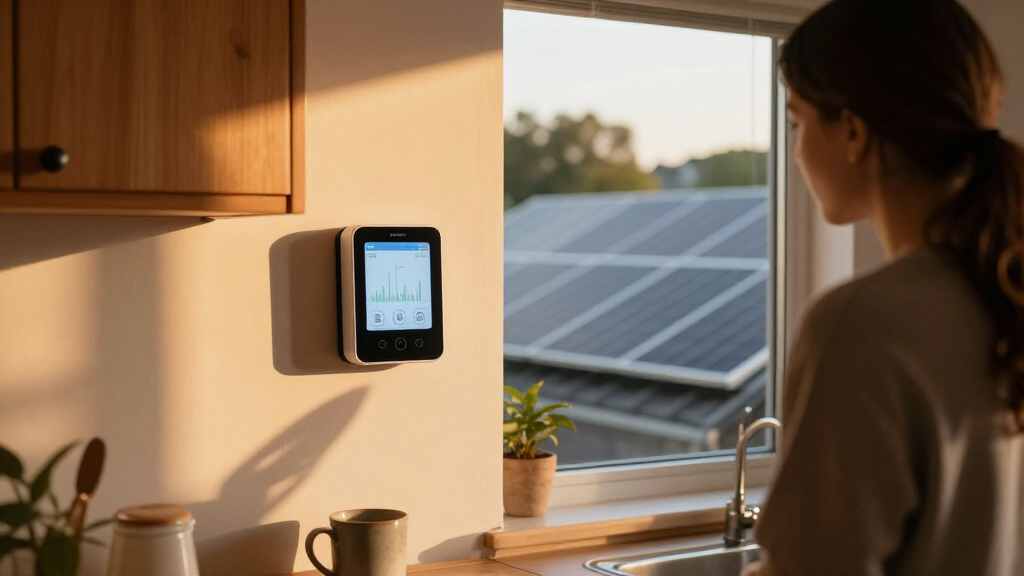

Home energy monitors show how much electricity your home or individual circuits use, helping you spot major loads and understand when consumption rises. My best overall pick is the Emporia Vue 3 with 16 Circuit Sensors, which pairs whole-home monitoring with detailed circuit-level data. The Eyedro 200A stands out for flexible Wi-Fi and Ethernet connectivity, while the Refoss EM16P suits buyers who want open API and Home Assistant support. The main tradeoffs are how many circuits you can track, how much setup your panel requires, and whether you prefer cloud features or local control. Read on for the full comparison and guidance on matching a monitor to your home.

Get backup power and energy gear delivered free with Prime
- Fast, free delivery on millions of items
- Prime Video, Amazon Music and more included
- Member-only deals all year
Key Takeaways
- Emporia Vue 3 with 16 Circuit Sensors is my best overall pick because it combines whole-home measurement with broad branch-circuit visibility in one system.
- Eyedro 200A differentiates itself with both Wi-Fi and Ethernet, making it a strong fit when connection flexibility matters more than tracking a large number of individual circuits.
- Several models offer 16 circuit sensors, but sensor count alone does not settle the choice: Refoss EM16P adds open API and Home Assistant support, while the standard Refoss model emphasizes local control.
- Emporia Vue 3 packages vary: the 8-sensor kit may suit a smaller monitoring plan, while the 16-sensor option covers more circuits; the version with smart plugs adds another way to measure compatible devices.
- The lineup spans whole-home-only or main-sensor-focused options and systems with branch-circuit monitoring, so panel fit and the loads you need to identify should guide the purchase more than a long feature list.
| WiFi Home Energy Monitor with 2 × 120A CTs |  | Best for Solar Export Monitoring | Brand: Blindsmart | Model: SDM02T-TW-120A/IEC-ZM | Electrical system: Single-phase, 3-wire | VIEW LATEST PRICE | See Our Full Breakdown |
| Emporia Vue 3 Home Energy Monitor with 16 Circuit Sensors |  | Best for Circuit-Level Tracking | Manufacturer: Emporia Corp. | Model: EMV3A-2P-16 | Circuit sensors: 16 branch sensors, 50A each | VIEW LATEST PRICE | See Our Full Breakdown |
| Eyedro Smart Home Energy Monitor, 200A, WiFi and Ethernet |  | Best for Wired Connectivity | Manufacturer: Eyedro Green Solutions Inc. | Model: EYEDRO-HOME | Sensors: Two 200A directional current sensors | VIEW LATEST PRICE | See Our Full Breakdown |
| Smart Home Energy Monitor with 16 Circuit Sensors |  | Best for Local Home Assistant Integration | Model: SEM-Meter | Circuit sensors: 16 included, 50A each | Voltage compatibility: Single-phase up to 240VAC line-neutral; split-phase 120/240VAC; three-phase up to 415Y/240VAC, no Delta | VIEW LATEST PRICE | See Our Full Breakdown |
| Refoss Smart Home Energy Monitor with 16 Circuit Sensors and Local Control |  | Best for Long-Term Local Data | Manufacturer: Refoss | Model: EM16P | Main sensors: 2, up to 200A | VIEW LATEST PRICE | See Our Full Breakdown |
| EdgeAnt Smart Home Energy Monitor with 80A Clamps |  | Best for Solar Tracking on a Budget | Brand: EdgeAnt | Connectivity: 2.4 GHz Wi-Fi | App: SmartLife | VIEW LATEST PRICE | See Our Full Breakdown |
| Emporia Whole-Home Energy Monitor with 16 Sensors and 4 Smart Plugs |  | Best for Room-by-Room Energy Management | Brand: Emporia | Included sensors: 16 | Circuit monitoring: Whole-home and up to 16 individual circuits | VIEW LATEST PRICE | See Our Full Breakdown |
| Meross Smart Home Energy Monitor, 18-Circuit |  | Best for Local Data and Home Assistant | Brand and model: Meross EM16 | Circuit monitoring: 2 main circuits up to 200A and 16 branch circuits up to 60A | Accuracy: ±2% | VIEW LATEST PRICE | See Our Full Breakdown |
| Siemens Inhab Smart Home Energy Monitor with Circuit and Main Sensors |  | Best for Siemens Panel-Based Energy Management | Manufacturer and model: Siemens INHEM1216 | Main sensors: 2 x 200A CTs | Circuit sensors: 16 x 50A CTs | VIEW LATEST PRICE | See Our Full Breakdown |
| Emporia Vue 3 Home Energy Monitor |  | Best Starter Monitor for Solar Households | Manufacturer and model: Emporia Corp. EMV3A-2P-WH | Connectivity: 2.4 GHz Wi-Fi with internet connection | Sensor accuracy: ±2% | VIEW LATEST PRICE | See Our Full Breakdown |
| Sungrass eMonHub Home Energy Monitor for Home Assistant |  | Best for Home Assistant and Flexible Wiring | Model: eMonHub-HNA0A-HA | Circuits monitored: 10 per unit; up to 30 with 2–3 units | Connectivity: Wi-Fi and Ethernet | VIEW LATEST PRICE | See Our Full Breakdown |
| Emporia Vue 3 Whole Home Energy Monitor with 8 Circuit Sensors |  | Best App-Led Pick for Smaller Circuit Counts | Model: EMV3A-2P-8 | Circuit sensors: 8 | Connectivity: 2.4 GHz Wi-Fi and internet connection required | VIEW LATEST PRICE | See Our Full Breakdown |
| Meross Smart Home Energy Monitor with 16 Branch Circuit Sensors | | Best for Broad Circuit Coverage | Model: EM16 | Main circuit capacity: 2 circuits, 200A | Branch circuit capacity: 16 circuits, 60A | VIEW LATEST PRICE | See Our Full Breakdown |
| Refoss EM16P Smart Home Energy Monitor with Open API and Home Assistant |  | Best for Local Integrations and Open Access | Model: EM16P | Main circuit sensors: 2 sensors, 2–200A each | Branch circuit sensors: 16 sensors, 1–60A each | VIEW LATEST PRICE | See Our Full Breakdown |
| home energy monitor | Connectivity | Model | Warranty | Dimensions |
|---|---|---|---|---|
| WiFi Home Energy Monitor with | 2.4 GHz Wi-Fi | SDM02T-TW-120A/IEC-ZM | — | — |
| Emporia Vue 3 Home Energy Moni | 2.4 GHz Wi-Fi with internet connection | EMV3A-2P-16 | 1 year | 10 × 5 × 5 inches |
| Eyedro Smart Home Energy Monit | 2.4 GHz Wi-Fi or Ethernet | EYEDRO-HOME | — | 8 × 8 × 3 inches |
| Smart Home Energy Monitor with | 2.4 GHz Wi-Fi; local MQTT supported | SEM-Meter | 1 year | 3.1 × 1.2 × 4.18 inches |
| Refoss Smart Home Energy Monit | — | EM16P | 2 years | — |
| EdgeAnt Smart Home Energy Moni | 2.4 GHz Wi-Fi | — | — | 2.3 x 3.5 x 3.69 inches |
| Emporia Whole-Home Energy Moni | — | — | — | — |
| Meross Smart Home Energy Monit | — | — | 2 years | — |
| Siemens Inhab Smart Home Energ | Wi-Fi | — | — | 1.1 x 5.71 x 2.76 inches |
| Emporia Vue 3 Home Energy Moni | 2.4 GHz Wi-Fi with internet connection | — | 1 year | — |
| Sungrass eMonHub Home Energy M | Wi-Fi and Ethernet | eMonHub-HNA0A-HA | — | 4.73 × 3.15 × 1.22 inches |
| Emporia Vue 3 Whole Home Energ | 2.4 GHz Wi-Fi and internet connection required | EMV3A-2P-8 | 1 year | — |
| Meross Smart Home Energy Monit | — | EM16 | 2 years | 4.5 × 3.48 × 1.1 inches |
| Refoss EM16P Smart Home Energy | Wi-Fi, Open API, and MQTT | EM16P | 2 years | — |
More Details on Our Top Picks
WiFi Home Energy Monitor with 2 × 120A CTs
This Blindsmart monitor is a focused choice for homeowners who want to track household use and power flowing back from solar or a battery. Its two directional 120A split-core CTs support bidirectional readings, while Smart Life adds live data, alerts, and automation. Compared with the Emporia Vue 3 Home Energy Monitor with 16 Circuit Sensors, it emphasizes power flow and load-balancing features rather than detailed readings across many individual circuits. That makes it better suited to understanding import and export than identifying which branch circuit drives consumption. Dynamic load balancing and zero grid export mode add appeal for compatible setups, but the product is specified for single-phase, 3-wire systems only. It also depends on 2.4 GHz Wi-Fi, so buyers seeking wired connectivity or broader circuit coverage should look at other options.
Pros:- Tracks household consumption and bidirectional solar or battery power flow
- Smart Life app offers live data, alerts, and automation
- Supports dynamic load balancing and zero grid export mode
- Split-core CTs and pluggable terminals simplify installation
Cons:- Limited to single-phase, 3-wire electrical systems
- Requires 2.4 GHz Wi-Fi
- Does not provide the 16-branch-circuit coverage of the Emporia Vue 3
Best for: Owners of compatible single-phase homes with solar or battery systems who want bidirectional monitoring and Smart Life alerts.
Not ideal for: Households needing individual circuit breakdowns, wired networking, or support for electrical systems other than single-phase, 3-wire.
- Brand:Blindsmart
- Model:SDM02T-TW-120A/IEC-ZM
- Electrical system:Single-phase, 3-wire
- Current transformers:2 × 120A split-core CTs
- Connectivity:2.4 GHz Wi-Fi
- App compatibility:Smart Life
- Accuracy:Class 1
- Power source:Battery powered
Our verdict“Choose this monitor if tracking solar or battery export in Smart Life matters more than seeing usage by individual circuit.”
Emporia Vue 3 Home Energy Monitor with 16 Circuit Sensors
The Emporia Vue 3 earns this role by combining whole-home monitoring with readings from 16 branch circuits. That circuit-level view can help pinpoint whether an HVAC system, water heater, or other major load is driving consumption—something the Blindsmart monitor, which focuses on bidirectional whole-home flow, does not offer in its listed configuration. It also supports solar and net metering, making it a versatile panel-based option for homes that want both usage detail and energy management through an app. The tradeoff is setup: installation requires access to the electrical panel, and its 2.4 GHz Wi-Fi and internet connection are required for the stated app experience. Accuracy is listed at ±2%, and some supported systems need an additional 200A sensor sold separately. Buyers who prioritize local controls may prefer the Smart Home Energy Monitor with 16 Circuit Sensors instead.
Pros:- Tracks whole-home use and 16 individual branch circuits
- Supports solar and net metering
- App provides real-time data and energy management tools
- UL and CE listed
Cons:- Requires 2.4 GHz Wi-Fi and an internet connection
- Installation requires access to the circuit panel
- An additional 200A sensor is sold separately for some supported systems
Best for: Homeowners who want to identify consumption across individual circuits and review whole-home or solar data in the Emporia app.
Not ideal for: Buyers who need local MQTT control, do not have reliable 2.4 GHz Wi-Fi and internet, or want to avoid panel installation.
- Manufacturer:Emporia Corp.
- Model:EMV3A-2P-16
- Circuit sensors:16 branch sensors, 50A each
- Accuracy:±2%
- Connectivity:2.4 GHz Wi-Fi with internet connection
- Certifications:UL and CE listed
- Dimensions:10 × 5 × 5 inches
- Warranty:1 year
Our verdict“Pick the Emporia Vue 3 if circuit-by-circuit visibility and app-based monitoring are your priorities.”
Eyedro Smart Home Energy Monitor, 200A, WiFi and Ethernet
Eyedro stands apart for buyers who want a choice between 2.4 GHz Wi-Fi and Ethernet. A wired connection can suit a utility area where Wi-Fi coverage is unreliable, while the MyEyedro cloud presents real-time watts, amps, volts, and costs without a subscription. Its two 200A directional sensors can monitor grid energy, solar generation, or net metering, but one meter handles only one of those monitoring configurations at a time. That limitation matters for solar households seeking simultaneous grid and generation readings: the product data says net metering that separates the two requires two meters. Compared with the Emporia Vue 3, Eyedro gives up individual branch-circuit tracking in favor of flexible network access and whole-system monitoring. It is a simpler fit for whole-home readings, not a circuit-by-circuit energy audit.
Pros:- Supports both 2.4 GHz Wi-Fi and Ethernet
- Includes two directional 200A sensors
- MyEyedro cloud access has no subscription
- Reports real-time watts, amps, volts, and costs
Cons:- A single meter monitors grid energy, solar, or net metering at a time
- Separating grid use from solar generation for net metering requires two meters
- Does not provide the 16-circuit breakdown offered by the Emporia Vue 3
Best for: Homeowners who want whole-home or solar monitoring with the option to use Ethernet where Wi-Fi is unreliable.
Not ideal for: Buyers who need simultaneous grid and solar readings from one meter or want individual circuit-level usage data.
- Manufacturer:Eyedro Green Solutions Inc.
- Model:EYEDRO-HOME
- Sensors:Two 200A directional current sensors
- Connectivity:2.4 GHz Wi-Fi or Ethernet
- Power source:AC
- Cloud access:MyEyedro cloud, no subscription
- Use:Indoor electricity monitoring
- Dimensions:8 × 8 × 3 inches
Our verdict“Choose Eyedro for whole-home monitoring with Ethernet flexibility, but look elsewhere if you need simultaneous grid-and-solar readings or branch-circuit detail.”
Smart Home Energy Monitor with 16 Circuit Sensors
This SEM-Meter is a strong fit for homeowners who want 16-circuit monitoring without making cloud connectivity the centerpiece. Alongside 2.4 GHz Wi-Fi, it supports local MQTT operation and Home Assistant, giving technically inclined buyers a path to integrate energy data into a local smart-home setup. Its stated 1% measurement accuracy and time-of-use cost tracking add useful detail for comparing circuit loads and electricity rates. Compared with the Emporia Vue 3, this model offers local MQTT and broader stated voltage-system compatibility, including certain three-phase Wye systems; Emporia instead specifies UL and CE listings and a familiar app-based approach. The SEM-Meter still needs installation inside the panel, does not support Delta three-phase systems, and requires separately sold flexible sensors for some busbar-only panels. Its history exports also have different retention periods depending on the time range.
Pros:- Monitors up to 16 circuits with 50A sensors
- Supports local MQTT operation and Home Assistant
- Tracks real-time usage and costs, including time-of-use rates
- Lists 1% measurement accuracy
Cons:- Requires installation in the electrical circuit panel
- Does not support Delta three-phase systems
- Flexible sensors for panels with busbar-only access are sold separately
Best for: Home Assistant users who want local MQTT access, detailed circuit readings, and time-of-use cost tracking.
Not ideal for: Buyers unable to access their electrical panel, using a Delta three-phase system, or needing flexible sensors included for busbar-only access.
- Model:SEM-Meter
- Circuit sensors:16 included, 50A each
- Voltage compatibility:Single-phase up to 240VAC line-neutral; split-phase 120/240VAC; three-phase up to 415Y/240VAC, no Delta
- Connectivity:2.4 GHz Wi-Fi; local MQTT supported
- Measurement accuracy:1%
- Data history:Hourly exports for 90 days; day, month, and year exports permanent
- Dimensions:3.1 × 1.2 × 4.18 inches
- Warranty:1 year
Our verdict“Choose the SEM-Meter if local Home Assistant integration and circuit-level tracking matter more than a simple app-only setup.”
Refoss Smart Home Energy Monitor with 16 Circuit Sensors and Local Control
Refoss is the most capable choice here for owners who want local control, broad integrations, and a long record of energy data. It combines two 200A main sensors with 16 branch sensors rated up to 60A, and supports single-phase, split-phase, and three-phase 4-wire Wye systems. Local web controls, Open API, MQTT, WebSocket, and Home Assistant offer more integration routes than the Smart Home Energy Monitor with 16 Circuit Sensors, whose listed local integration centers on MQTT and Home Assistant. Refoss also stores daily data for up to five years with CSV export, a useful advantage for tracking seasonal patterns outside an app. The tradeoff is a hands-on panel installation, and the stated precision and supported system types still need to match the buyer’s setup. Its claimed utility-bill savings depend on household behavior, not the monitor alone.
Pros:- Monitors up to 18 circuits with two main sensors and 16 branch sensors
- Offers local web controls, Open API, MQTT, WebSocket, and Home Assistant integration
- Stores daily data for up to five years with CSV export
- Supports single-phase, split-phase, and three-phase 4-wire Wye systems
Cons:- Installation requires placing sensors in the breaker panel
- Does not list support for Delta three-phase systems
- Potential utility-bill savings depend on household usage and changes
Best for: Home Assistant and data-focused homeowners who want local controls, multiple integration options, and years of exportable history.
Not ideal for: Buyers who want a plug-in monitor, do not want panel work, or have an electrical system outside the listed single-phase, split-phase, or Wye support.
- Manufacturer:Refoss
- Model:EM16P
- Main sensors:2, up to 200A
- Branch sensors:16, up to 60A
- Supported electrical systems:Single-phase, split-phase, and 3-phase 4-wire Wye
- Connectivity and integrations:Local Web UI, Open API, MQTT, WebSocket, Home Assistant
- Data storage:Daily data stored for up to 5 years; CSV export
- Warranty:2 years
Our verdict“Pick Refoss if you want extensive local integrations and long-term data exports, and are comfortable installing sensors in your panel.”
EdgeAnt Smart Home Energy Monitor with 80A Clamps
The EdgeAnt earns its place for homeowners who want whole-home readings and bidirectional energy tracking without moving straight to a more expansive circuit-by-circuit setup. Its SmartLife app can show real-time use and retain up to a year of hourly, daily, and monthly history, with export options for closer analysis. That makes it a simpler fit than the Meross EM16, which is designed to monitor up to 16 branch circuits and store data locally for longer. EdgeAnt instead keeps the focus on overall household flow and solar production. The tradeoffs are meaningful: it needs 2.4 GHz Wi-Fi and internet, excludes Delta wiring, and its listing conflicts on whether two or three clamps are included. I’d confirm the clamp count and wiring fit before choosing it.
Pros:- Bidirectional measurement can track both household consumption and solar flow.
- SmartLife app provides real-time readings and historical views by hour, day, and month.
- Historical data can be retained for up to one year and exported.
- Clamp-on sensors are designed for installation at the electrical panel.
Cons:- App monitoring depends on 2.4 GHz Wi-Fi and an internet connection.
- Not compatible with Delta electrical systems.
- The listing is inconsistent about whether two or three 80A clamps are included.
Best for: Solar-owning households with a supported single-phase or split-phase panel that want app-based whole-home tracking and exportable history.
Not ideal for: Homes with Delta wiring, buyers who need local data storage, or anyone who requires a confirmed clamp count before purchase.
- Brand:EdgeAnt
- Connectivity:2.4 GHz Wi-Fi
- App:SmartLife
- Clamps:Professional 80A clamps; listing conflicts on whether two or three are included
- Measurement:Bidirectional energy measurement; stated accuracy ±2%
- Supported systems:Single-phase, split-phase, 2-wire, and 2-phase 3-wire Wye with neutral; excludes Delta
- Historical data:Up to one year
- Dimensions:2.3 x 3.5 x 3.69 inches
Our verdict“Choose EdgeAnt for straightforward solar-aware whole-home tracking if your panel is supported and you verify the clamp count.”
Emporia Whole-Home Energy Monitor with 16 Sensors and 4 Smart Plugs
This Emporia bundle is the strongest match here for households that want to act on energy data, not just watch it. Alongside whole-home monitoring, its 16 sensors track individual circuits, while four smart plugs add outlet-level measurements and remote control, scheduling, and automation. Compared with the Emporia Vue 3 sold without a full sensor-and-plug bundle, this package offers more ways to connect readings to everyday devices. Alexa compatibility and solar net-metering support add flexibility for connected homes. The main compromise is that the bundle relies on cloud-stored energy data, which may not suit buyers who prefer local records. Panel installation also takes more planning than a plug-in monitor, and the sensors do not remove the need to work inside the electrical panel. I’d choose it for granular control, not for the simplest installation.
Pros:- Tracks whole-home usage and up to 16 individual circuits.
- Includes four smart plugs with outlet-level energy tracking and remote control.
- Supports scheduling and energy-management automations.
- Works with iOS, Android, Alexa-enabled devices, and solar net metering.
Cons:- Energy data is stored in the cloud.
- Installing the circuit sensors involves the home’s electrical panel.
- The bundle offers more components and setup work than a whole-home-only monitor.
Best for: Households that want to track individual circuits and selected appliances, then use schedules or Alexa to manage energy use.
Not ideal for: Buyers who want local-only data storage, avoid electrical-panel installation, or need a basic whole-home reading without added controls.
- Brand:Emporia
- Included sensors:16
- Circuit monitoring:Whole-home and up to 16 individual circuits
- Included smart plugs:4 Wi-Fi smart plugs
- Smart plug functions:Remote control, scheduling, and outlet-level energy tracking
- App:Emporia app for iOS and Android
- Compatibility:Alexa-enabled devices and solar systems
- Solar support:Supports solar net metering
Our verdict“Pick this Emporia bundle if you want circuit-level detail plus smart-plug control in one energy-management setup.”
Meross Smart Home Energy Monitor, 18-Circuit
The Meross EM16 is a compelling choice for buyers who want broad circuit coverage while keeping energy records stored locally. It monitors two main circuits and up to 16 branch circuits, pairing real-time readings and customizable alerts with Home Assistant integration and solar-surplus detection. That makes it a better fit for a privacy-minded smart-home setup than the Emporia Whole-Home Monitor bundle, whose energy data is cloud-stored and whose smart plugs focus on outlet-level control. Meross also specifies up to five years of data history and a two-year warranty. The tradeoff is a more involved panel installation, and its supported wiring list excludes Delta systems. If you need the Emporia bundle’s four smart plugs, Meross does not provide that same outlet-control package; its strength is local circuit monitoring instead.
Pros:- Monitors two main circuits and up to 16 branch circuits.
- Stores data locally, with history available for up to five years.
- Integrates with Home Assistant and supports solar-surplus detection.
- Includes real-time monitoring, customizable alerts, and a two-year warranty.
Cons:- Does not support Delta electrical systems.
- Installation requires access to the electrical panel.
- Does not include the smart plugs offered in the Emporia bundle.
Best for: Home Assistant users who want to monitor many circuits, retain data locally, and track solar surplus.
Not ideal for: Homes with Delta wiring, renters without panel access, or buyers seeking included smart plugs for appliance control.
- Brand and model:Meross EM16
- Circuit monitoring:2 main circuits up to 200A and 16 branch circuits up to 60A
- Accuracy:±2%
- Supported systems:Single-phase 2-wire, split-phase 3-wire, and 3-phase 4-wire Wye; excludes Delta
- Integration:Home Assistant
- Data storage:Local storage; up to five years of data
- Warranty:2 years
- Certifications:ETL-certified; compliant with UL 61010 testing standard
Our verdict“Choose the Meross EM16 for local, Home Assistant-friendly monitoring across a large number of circuits, provided your wiring is supported.”
Siemens Inhab Smart Home Energy Monitor with Circuit and Main Sensors
Siemens Inhab suits homeowners who want a main-plus-circuit view with energy-management functions beyond basic usage charts. It includes two 200A main sensors and 16 50A circuit sensors, so buyers can compare overall household demand with readings from individual circuits. The app adds historical data and customizable alerts, while support for solar, net metering, peak-demand management, and compatible-device load shedding gives the monitor a broader role than the EdgeAnt, which centers on whole-home and bidirectional solar tracking. That breadth comes with a narrower fit: the Inhab is specified for the USA and Canada and requires panel installation. The provided details also don’t specify a data-retention period or a local-storage option, so buyers who prioritize those points may prefer the Meross EM16, which lists local storage and up to five years of history.
Pros:- Includes two 200A main sensors and 16 50A circuit sensors.
- Provides real-time and historical readings through a mobile app.
- Customizable alerts can flag high use or unusual activity.
- Supports solar, net metering, peak-demand management, and compatible-device load shedding.
Cons:- Specified for use in the USA and Canada only.
- Installation requires access to the electrical panel.
- The provided product details do not specify data-retention duration or local storage.
Best for: Homeowners in the USA or Canada who want whole-home and 16-circuit monitoring with solar and load-management features.
Not ideal for: Buyers outside the USA and Canada, anyone avoiding panel installation, or shoppers who require specified local storage and retention details.
- Manufacturer and model:Siemens INHEM1216
- Main sensors:2 x 200A CTs
- Circuit sensors:16 x 50A CTs
- Connectivity:Wi-Fi
- Compatibility:USA and Canada
- Dimensions:1.1 x 5.71 x 2.76 inches
- Weight:4.8 pounds
- Energy-management features:Peak-demand management, solar management, net metering, and load shedding for compatible devices
Our verdict“Choose Siemens Inhab if you’re in the USA or Canada and want circuit-level monitoring tied to wider energy-management features.”
Emporia Vue 3 Home Energy Monitor
The Emporia Vue 3 is the straightforward entry point in this group for households that want whole-home use, solar production, and net metering in one app. It includes the monitor and current transformers, while optional sensors let owners add circuit-level detail later. That modular path is less immediately complete than the Siemens Inhab, which includes 16 circuit sensors, but it avoids paying for circuit coverage a buyer may not need. Its UL- and CE-listed design and stated ±2% sensor accuracy add useful product details; the app depends on 2.4 GHz Wi-Fi and an internet connection. The main tradeoffs are clear: individual circuits require separately purchased sensors, some three-phase setups need an additional sensor, and the warranty is one year. I’d pick it for a solar-aware whole-home view, not for a ready-to-go 16-circuit breakdown.
Pros:- Tracks real-time household electricity use, solar production, and net metering.
- Optional sensors support monitoring of up to 16 branch circuits.
- UL- and CE-listed.
- Includes current transformers and installation components.
Cons:- Requires 2.4 GHz Wi-Fi and an internet connection.
- Branch sensors for individual-circuit monitoring are sold separately.
- Some three-phase configurations require an additional sensor; warranty is one year.
Best for: Solar households that want app-based whole-home and net-metering data now, with the option to add circuit sensors later.
Not ideal for: Buyers who need 16 circuit readings included, require local monitoring without internet, or have a three-phase setup needing extra hardware.
- Manufacturer and model:Emporia Corp. EMV3A-2P-WH
- Connectivity:2.4 GHz Wi-Fi with internet connection
- Sensor accuracy:±2%
- Branch sensors supported:Up to 16 50A sensors, sold separately
- Solar features:Solar production and net-metering monitoring
- Certifications:UL and CE
- Warranty:1 year
- Included components:Energy monitor, current transformers, wire harness, Wi-Fi antenna assembly, wire nuts, and splicing wires
Our verdict“Choose the Vue 3 if you want solar-aware whole-home monitoring first and are comfortable adding circuit sensors only if needed.”
Sungrass eMonHub Home Energy Monitor for Home Assistant
The Sungrass eMonHub is a strong fit for buyers building their energy view around Home Assistant rather than a vendor app. It monitors 10 circuits per unit, supports bidirectional readings, and can track solar, battery storage, and grid feed-in—useful for seeing how energy moves, not just what the home consumes. Local data storage and a choice of Wi-Fi or Ethernet also give it more control over connectivity than the Emporia Vue 3 with 8 Circuit Sensors, which requires internet access and 2.4 GHz Wi-Fi.
The tradeoff is a smaller circuit count per unit than the Meross EM16, which includes 16 branch sensors. The eMonHub can scale to 30 circuits by combining units, but that adds hardware and setup. It also requires circuit-panel installation, and less common power-system configurations may need software adjustments.
Pros:- Home Assistant integration supports energy monitoring and automation
- Bidirectional metering can track solar generation and grid feed-in
- Local data storage and both Wi-Fi and Ethernet connectivity
- Can scale to monitor up to 30 circuits with multiple units
Cons:- Requires installation inside the circuit panel
- Some supported electrical configurations may need software setup
- Monitoring more than 10 circuits requires additional units
Best for: Home Assistant users who want local energy data, solar or battery tracking, and the option to expand beyond 10 circuits.
Not ideal for: Buyers who want a simple app-led installation or need 16 branch circuits monitored from a single unit.
- Model:eMonHub-HNA0A-HA
- Circuits monitored:10 per unit; up to 30 with 2–3 units
- Connectivity:Wi-Fi and Ethernet
- Installation:Circuit panel
- Supported systems:North American split-phase, Brazil two-phase three-wire, single-phase, and three-phase (3P4W)
- Weight:2.8 pounds
- Dimensions:4.73 × 3.15 × 1.22 inches
- Certifications:FCC and CE
Our verdict“Choose the eMonHub if Home Assistant, local data, and flexible expansion matter more than getting 16 circuit readings from one device.”
Emporia Vue 3 Whole Home Energy Monitor with 8 Circuit Sensors
The Emporia Vue 3 with 8 circuit sensors suits households that want whole-home and selected-circuit readings through a familiar app. It reports real-time electricity use, solar production, and net metering, while notifications and energy-management features can help users respond to changing consumption. Its stated ±2% measurement accuracy and UL and CE listings give buyers concrete specifications to weigh against the Sungrass eMonHub, which emphasizes Home Assistant and local storage instead of an internet-dependent app setup.
Eight sensors make this a more focused choice than the Meross EM16, which includes 16 branch sensors for broader circuit coverage. The Emporia also requires 2.4 GHz Wi-Fi and an internet connection, and one-second data is retained for only three hours. Some wiring arrangements need an additional sensor, so check the panel configuration before choosing it.
Pros:- Tracks real-time household use, solar production, and net metering
- App includes energy-management automation and notifications
- Cloud data can be exported
- UL and CE listed, with a one-year warranty
Cons:- Requires 2.4 GHz Wi-Fi and an internet connection
- One-second readings are retained for only three hours
- Some wiring configurations require an additional sensor
Best for: Households that want app-based whole-home, solar, and up to eight selected-circuit readings with notifications.
Not ideal for: Buyers who need local-only operation, long-term one-second data, or extensive branch-circuit coverage out of the box.
- Model:EMV3A-2P-8
- Circuit sensors:8
- Connectivity:2.4 GHz Wi-Fi and internet connection required
- Supported systems:Single phase, single-split phase, 2-wire; certain 3-wire and 3-phase Wye systems with an additional sensor
- Measurement accuracy:±2%
- Compatible devices:iPhone, Android, and web app
- Certifications:UL and CE listed
- Warranty:1 year
Our verdict“Pick this Emporia model for app-based energy and solar monitoring across a modest number of circuits, provided cloud connectivity suits your setup.”
Meross Smart Home Energy Monitor with 16 Branch Circuit Sensors
The Meross EM16 stands out for buyers who want detailed readings across many loads without giving up Home Assistant compatibility. Its package includes sensors for two 200A main circuits and 16 branch circuits, giving it broader branch coverage than the Sungrass eMonHub’s 10 circuits per unit. The stated ±1% accuracy, charts, and alerts help turn readings into a clearer view of where household electricity goes; local storage for up to five years also supports longer-term comparisons without a subscription.
Compared with the Refoss EM16P, the Meross offers a similar 16-branch layout and Home Assistant support, while its listed data emphasizes local retention and a two-year warranty. The main limitation is wiring compatibility: it does not support Delta systems. Installation also involves wiring and fitting multiple current transformers, so this is a panel project rather than a plug-in monitor.
Pros:- Includes sensors for two main circuits and 16 branch circuits
- Stated ±1% measurement accuracy
- Stores local data for up to five years without a subscription
- Works with Home Assistant and includes charts and alerts
Cons:- Does not support Delta wiring systems
- Installation requires fitting current transformers and making wiring connections
- Circuit-panel installation may call for qualified help
Best for: Homeowners with compatible wiring who want Home Assistant support and readings from up to 16 branch circuits plus both mains.
Not ideal for: Households with Delta wiring or buyers who want to avoid circuit-panel work and multiple sensor connections.
- Model:EM16
- Main circuit capacity:2 circuits, 200A
- Branch circuit capacity:16 circuits, 60A
- Measurement accuracy:±1%
- Data storage:Up to 5 years
- Compatibility:Home Assistant; supported single-phase, split-phase, and 3-phase Wye systems
- Dimensions:4.5 × 3.48 × 1.1 inches
- Warranty:2 years
Our verdict“Choose the Meross EM16 for extensive branch-circuit coverage and long local history if your wiring is compatible and panel installation is acceptable.”
Refoss EM16P Smart Home Energy Monitor with Open API and Home Assistant
The Refoss EM16P is aimed at buyers who want direct access to energy data and control over how it connects to their smart home. It combines native Home Assistant integration, an Open API, and MQTT with local web access, so it can suit setups that avoid relying on a vendor cloud. Its two main sensors and 16 branch sensors also match the Meross EM16’s circuit coverage, while historical data can be stored for up to five years and exported.
The difference is its explicit local-access toolkit, which makes the EM16P the more integration-focused pick beside the Meross. The tradeoffs are hands-on circuit-panel installation and reduced accuracy at low current: the stated figure shifts from ±1% to ±2%. Buyers who mainly want app notifications and a straightforward cloud experience may find the Emporia Vue 3 with 8 sensors a simpler, though less expansive, fit.
Pros:- Local web access with Open API, MQTT, and native Home Assistant integration
- Monitors two main circuits and up to 16 branch circuits
- Stores historical data for up to five years with export support
- ETL certified and compliant with UL 61010
Cons:- Requires installation in the home circuit panel
- Accuracy is ±2% at low current rather than the stated ±1% level
- Wi-Fi connectivity may not suit buyers seeking a wired connection
Best for: Smart-home builders who want local energy access, MQTT or API integrations, and monitoring across up to 16 branch circuits.
Not ideal for: Buyers seeking a no-panel-install setup or who need the stated ±1% accuracy to hold at low current.
- Model:EM16P
- Main circuit sensors:2 sensors, 2–200A each
- Branch circuit sensors:16 sensors, 1–60A each
- Accuracy:±1%; ±2% at low current
- Connectivity:Wi-Fi, Open API, and MQTT
- Data storage:Up to 5 years
- Certification:ETL; compliant with UL 61010
- Warranty:2 years
Our verdict“Pick the EM16P if open, local smart-home integrations matter more than app simplicity and you can accommodate circuit-panel installation.”
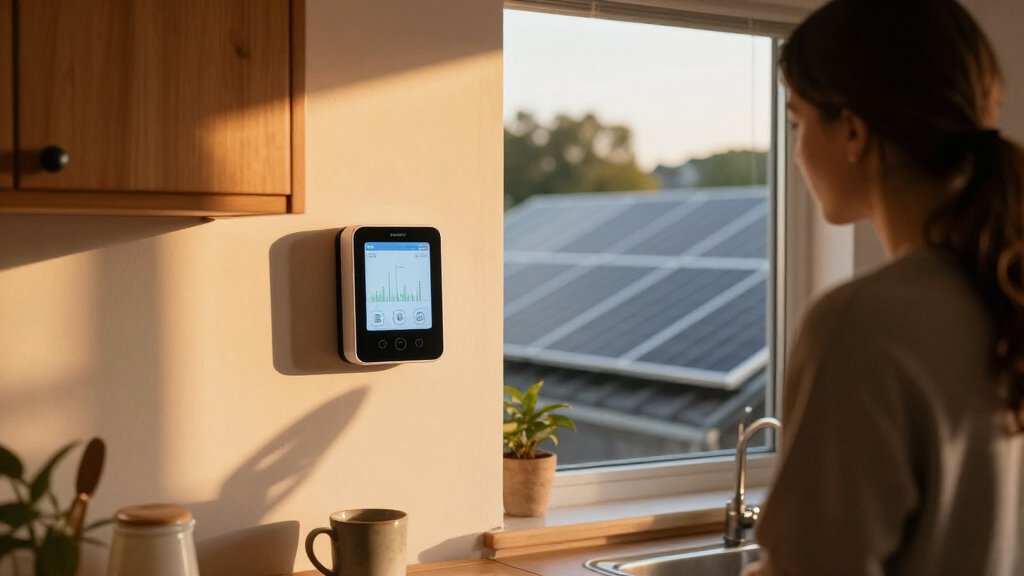
How We Picked
I compared these home energy monitors on the details that shape everyday usefulness: whether they measure whole-home consumption, how many branch circuits they can track, and what connectivity or smart-home options they offer. I also weighed setup demands and fit, since sensor count is only useful when the hardware suits the electrical panel and the circuits a buyer wants to follow. Models with clear whole-home and circuit-level coverage rank ahead for most households because they can help connect total usage to specific loads.
The ranking gives extra weight to versatility and the usefulness of the monitoring setup, then accounts for distinct needs such as Ethernet, local control, open API access, Home Assistant compatibility, and bundled smart plugs. A specialized monitor can be a better choice for a particular buyer even if it is less broadly suited than the top pick. I did not treat a higher circuit count as an automatic win; buyers should confirm panel compatibility and installation requirements before choosing.
Factors to Consider When Choosing Home Energy Monitors
Before choosing a home energy monitor, decide what you need the data to answer. The right fit depends on whether you want a whole-home total, a breakdown by circuit, integration with a smart-home setup, or a simpler view of major loads. These broader checks can prevent paying for sensors or integrations that do not match your panel or priorities.
Decide Whether You Need Whole-Home Data, Circuit Detail, or Both
A whole-home reading tells you how much electricity the house uses overall, but it cannot always explain which loads account for that use. Branch-circuit sensors add that detail, making it easier to separate HVAC, kitchen, or other panel circuits when they are wired distinctly. Before shopping, list the questions you want the monitor to answer rather than assuming you need a sensor on every circuit. Some circuits may combine several rooms or devices, so circuit-level data is not always the same as appliance-level data. Buyers who only need a total may prefer a simpler setup, while those diagnosing usage patterns should prioritize branch coverage. Avoid choosing by sensor count alone; unused sensors do not improve the readings you actually need.
Check Panel Compatibility and Installation Before Buying
Monitors that use current transformer clamps are installed inside or near the electrical panel, so available space and the arrangement of conductors matter. A sensor count on a product page does not tell you whether those sensors will fit your panel or reach the circuits you want to monitor. Review the manufacturer’s panel and wiring guidance before ordering, and ask a qualified electrician if you are unsure about working around live electrical equipment. Do not assume that every breaker layout supports the same sensor placement. A kit with more sensors can be less useful than a smaller one that fits cleanly. Build installation help into your decision if your panel is crowded or its layout is unfamiliar.
Choose Connectivity for Your Network and Data Preferences
Wi-Fi makes setup convenient when the electrical panel is within reliable network range, but a weak signal can interrupt data reporting. Ethernet, where available, can be preferable when a stable wired connection is practical. Local control and open API access matter to buyers who want to connect readings to their own systems or limit reliance on a vendor’s cloud services. These features can bring more setup work, so they are not automatically the best choice for someone who only wants a straightforward app. Check what functions depend on internet access and which remain available locally. A connectivity feature is valuable only if it matches the network and privacy preferences you already have.
Plan for Smart-Home Integration Rather Than Assuming It
Energy monitoring and home automation are related, but a monitor that reports usage may not directly control appliances or trigger every automation you want. If you use Home Assistant or another platform, verify supported integrations, data access, and whether the connection is local or cloud-based. An open API can offer flexibility, but it may require configuration and ongoing maintenance. Smart plugs can add device-level readings for compatible appliances, though they do not replace panel monitoring for hardwired loads. Avoid buying an integration-focused model solely because a platform is mentioned; confirm the exact data and actions it supports. Buyers who prefer minimal setup should prioritize a clear, standalone monitoring experience.
Match Sensor Quantity to the Circuits You Will Actually Track
Counting breakers is a useful starting point, but it does not always translate directly into the number of sensors needed. Some systems use paired sensors or have specific measurement arrangements, so read the installation instructions before comparing kit sizes. Think about which circuits matter most, such as large or frequently used loads, and whether you may want to expand coverage later. A smaller kit can be a sensible fit when only a few circuits need attention, while a larger set offers more room to investigate usage across the panel. Do not pay for a maximum-coverage setup without checking whether the extra sensors can be installed and interpreted usefully. Coverage should follow your monitoring goals, not just the largest number listed.
Set Expectations for What the Readings Can Tell You
A monitor can show patterns in electricity use, but interpreting those patterns takes time and does not always identify a specific appliance by name. Circuit readings are most helpful when a circuit serves a known group of loads; shared circuits can make the source less obvious. Use the data to compare time periods and investigate changes rather than treating every fluctuation as a diagnosis. Consider whether you need historical charts, alerts, or export options, since those features affect how useful the information is after installation. Buyers seeking appliance-level insight may need compatible smart plugs for some devices. A realistic goal—such as spotting a high-use circuit—will lead to a better choice than expecting the monitor to solve every energy question automatically.
Frequently Asked Questions
Do I need a home energy monitor with branch-circuit sensors?
Choose branch-circuit sensors if you want to connect whole-home usage to specific parts of your electrical panel. They can help narrow down which monitored circuits account for a change, but they may not identify an individual appliance when several loads share a circuit. If your main goal is simply to see overall consumption, a whole-home reading may be enough. Before buying a multi-sensor kit, check how many circuits you can realistically monitor and whether the sensors fit your panel. A larger kit is most useful when you have a clear plan for the extra readings.
Can I install a home energy monitor myself?
Installation depends on the monitor, your electrical panel, and your comfort with electrical work. Many systems use clamps in the panel, but that does not make installation risk-free: panel covers can expose dangerous electrical components. Read the manufacturer’s instructions and local requirements before starting, and use a qualified electrician if you are uncertain or the panel layout is difficult. Also confirm the monitor’s sensor arrangement and physical fit before purchase. A professional installation can be a better tradeoff than choosing a kit that is hard to place safely.
Will a home energy monitor tell me which appliance is using electricity?
Not necessarily. A whole-home monitor reports total usage, and circuit sensors show readings for the circuits they cover rather than naming every appliance connected to them. If a circuit serves several devices, you may need to compare usage patterns or measure compatible devices separately with smart plugs. The Emporia bundle with smart plugs addresses a different need from panel sensors: it can add readings for supported plug-in loads. Check whether the appliances you care about are plug-in or hardwired before deciding what kind of measurement you need.
Should I choose local control or a cloud-connected energy monitor?
The right choice depends on how you want to access and use your data. Cloud-connected features may offer a straightforward app experience, while local control or open API access can suit buyers building their own smart-home workflows. Local options may require more configuration, and integration support can differ by model and software setup. Check which features continue to work without an internet connection and what data is available to third-party systems. If you do not plan to automate or export readings, a simpler connected setup may be easier to maintain.
Is a 16-sensor kit always a better choice than an 8-sensor kit?
No. A 16-sensor kit can monitor more branch circuits, but it is only an advantage if your panel and monitoring goals call for that coverage. A smaller kit may fit a buyer focused on a handful of major circuits and can avoid installing sensors that go unused. Compare how each system counts and places sensors, since a listed sensor total may not map one-to-one to breakers. The Emporia Vue 3 options in this roundup make the coverage difference especially clear: choose the kit size around the circuits you want to study. If you expect your needs to grow, check whether you can add compatible sensors later.
Conclusion
For most households seeking both total usage and a useful circuit breakdown, I recommend the Emporia Vue 3 with 16 Circuit Sensors as the best overall choice. The WiFi Home Energy Monitor with 2 × 120A CTs is my best value-style pick for buyers whose priority is straightforward whole-home measurement rather than broad circuit tracking. Beginners should start by matching a simple monitoring plan to their panel and may prefer the Emporia Vue 3 with 8 Circuit Sensors if that coverage is enough. For premium connectivity flexibility, the Eyedro 200A with Wi-Fi and Ethernet is the standout; for smart-home tinkerers, the Refoss EM16P or Sungrass eMonHub is better suited to a Home Assistant-focused setup. Choose based on the circuits you need to understand, the integrations you will use, and the installation your panel can support.
Halloween Picks
halloween
As an affiliate, we earn on qualifying purchases.